In this guide
- 01One Dance Here Became An Entire Art Form
- 02The Myth That Links Takachiho To Togakushi Shrine In Nagano
- 03How Do You View The Sacred Cave At Amano Iwato Shrine?
- 04Amano-Yasukawara: A Cave Where Visitors Changed The Landscape
- 05What Makes Takachiho Gorge So Dramatic, Even Before You Get In A Boat?
- 06Manai Falls: A 17-Meter Waterfall Named In The Kojiki
- 07How Do You Reserve A Rowboat At Takachiho Gorge Without Missing Your Window?
- 08When Is Takachiho Gorge Illuminated At Night?
- 09Plan Your Takachiho Journey With Us
There are places in Japan where the story is not merely remembered. It is still performed. Takachiho, in northern Miyazaki Prefecture, is one of them.
You come, at first, for a gorge cut into dark rock, where the Gokase River runs cold beneath cliffs that look hand-chiseled by some unseen craftsman. Then you learn what happened nearby—how a single, audacious dance in front of a sealed cave became the founding scene of kagura. And suddenly the landscape changes shape. Quietly. All at once.
Our team at Japan Royal Service built this guide for travelers who want Takachiho to feel precise, not rushed. Myth, geology, and logistics—held in the same hand. No noise, no crowds you did not choose. This is the kind of Japan that Google cannot quite find on its own, and much of what makes it worth reaching sits behind a quiet word of introduction.
One Dance Here Became An Entire Art Form
Ame-no-Uzume’s comedic, provocative dance in front of the cave where Amaterasu hid is credited as the origin story of kagura, a living performing-art tradition still tied to this site today.
The myth is specific, and the specificity is part of its power. Amaterasu, the sun goddess, shut herself inside a stone cave, and the world fell into darkness. The gods gathered, but persuasion failed. So Ame-no-Uzume overturned a tub, stomped a rhythm, and danced with a bold, joking energy that made the assembled gods erupt in laughter.
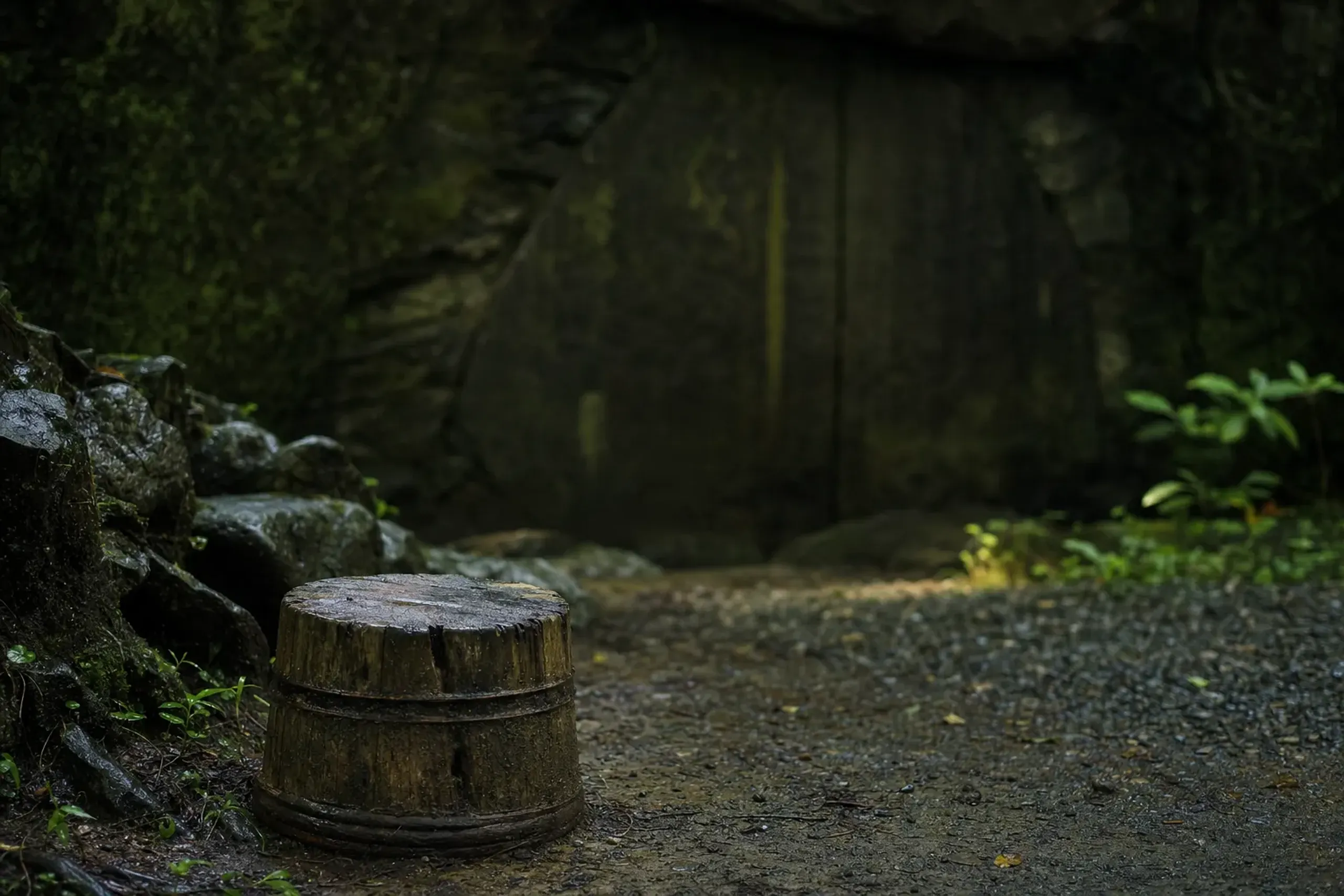
That laughter mattered. It changed the temperature of the moment.
Amaterasu, curious how joy could possibly exist in total dark, peeked out. In that instant, Ame-no-Tajikarao seized the opening and pulled the cave door wide—light returning like a held breath finally released. A single scene. A single performance. And a lineage that still echoes through shrine stages across Japan, carried down by the hands of local keepers who learned it from the generation before them.
The Myth That Links Takachiho To Togakushi Shrine In Nagano
After the cave was opened, the stone door is said to have flown far away and landed in Nagano Prefecture—an origin link associated with Togakushi Shrine, whose principal deity is Ame-no-Tajikarao.
This is what makes Takachiho feel larger than its valley. The story is not trapped in one prefecture. It stretches across the map, tying Kyushu to the mountains of central Japan by a shared cast of deities and one decisive act.
For repeat Japan travelers, that cross-regional thread is quietly useful. It turns a “pretty gorge day trip” into a thematic anchor—a mythology you can follow across islands and seasons, not just read about on a placard. For those who like their journeys to have a spine, this is one worth building an itinerary around.
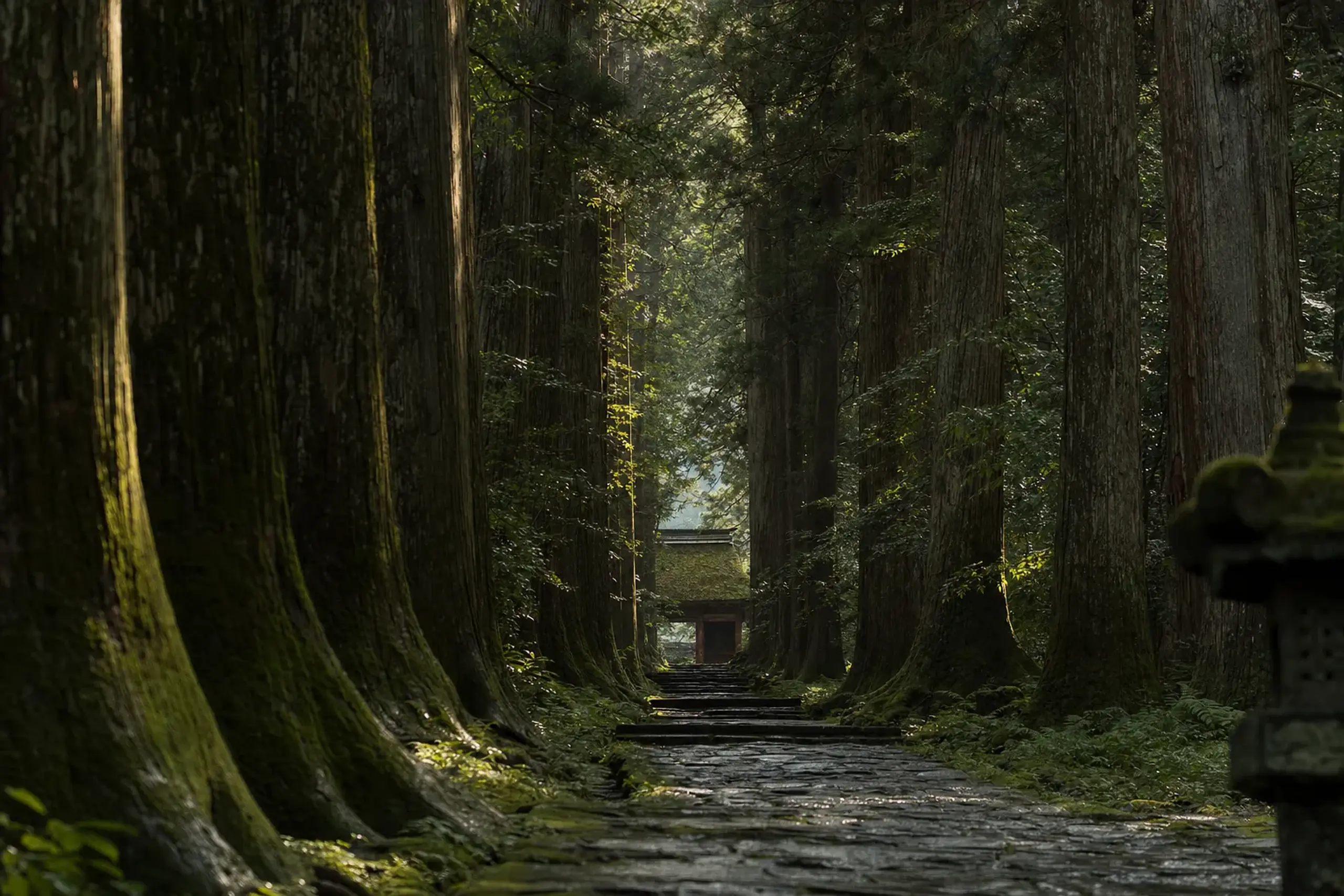
How Do You View The Sacred Cave At Amano Iwato Shrine?
You cannot enter or directly approach the sacred cave; it is viewed from a distance only during Shinto priest-guided visits held at roughly 30-minute intervals from Amano Iwato Shrine’s Nishi Hongū.
Amano Iwato Shrine is split into two main areas: Nishi Hongū (West Main Shrine) and Higashi Hongū (East Main Shrine), set on opposite banks of the Iwato River. The separation is not a gimmick. It gives the visit a slow, two-part rhythm—crossing water, reorienting, returning.
Nishi Hongū is where the priest-guided viewing takes place. The cave itself—treated as the physical embodiment of the deity—is not a photo opportunity. It is not “open for entry.” That constraint is precisely the point. You are meant to accept distance, and to listen. There is a wabi restraint to it: no spectacle, no gold leaf, only the discipline of standing back and paying attention.
Higashi Hongū marks the place where Amaterasu is said to have resided after emerging. In practice, it often feels like the exhale after the intensity of the cave viewing. Softer. More human-scale. For those who have quietly arranged a priest to accompany them for a fuller viewing, the whole sequence lands with a depth that a self-guided visit rarely reaches.
Amano-Yasukawara: A Cave Where Visitors Changed The Landscape
Upstream from the shrine sits Amano-Yasukawara, also called Gyōbogaiwaya.
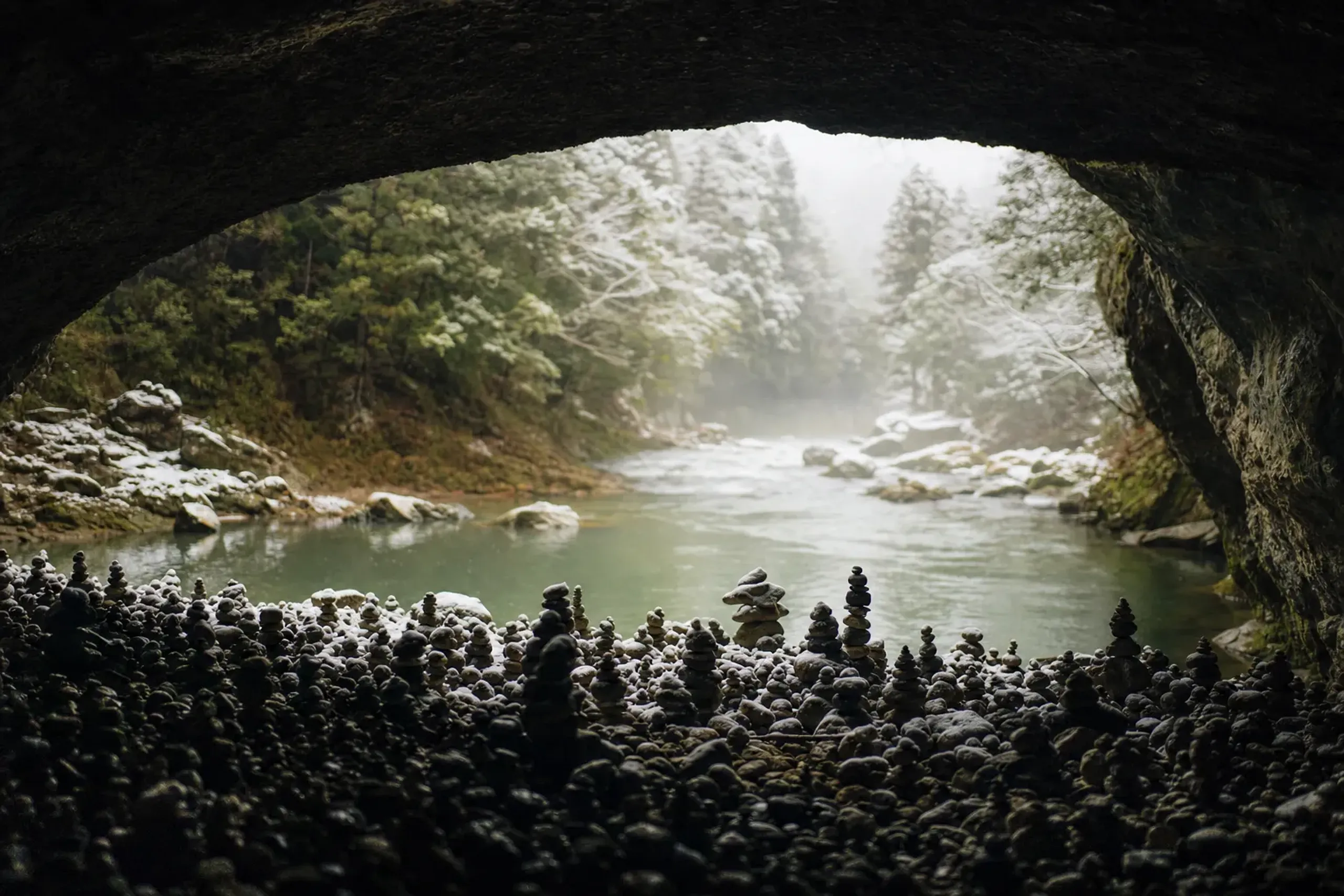
It is a large cave—about 40 meters wide and 30 meters deep—where the “eight million” gods are said to have gathered to decide how to lure Amaterasu out.
What you see today is not only ancient narrative. It is accumulated human gesture. Over time, visitors began stacking small stones throughout the cave as wish-prayers, and the practice has become part of the atmosphere—an evolving, visitor-made topography.
It is easy to dismiss the stone stacks as tourist behavior. Don’t. Stand still for a minute. You will notice how quiet the cave becomes when people stop talking, and how each small stack reads like a sentence left unfinished—a moss-and-stone silence that no amount of engineering could design.
Key fact: Amano-Yasukawara’s stone-stacking is an organic, visitor-shaped practice that grew over time; it is now central to how the cave feels, even though it was not “designed” that way.
What Makes Takachiho Gorge So Dramatic, Even Before You Get In A Boat?
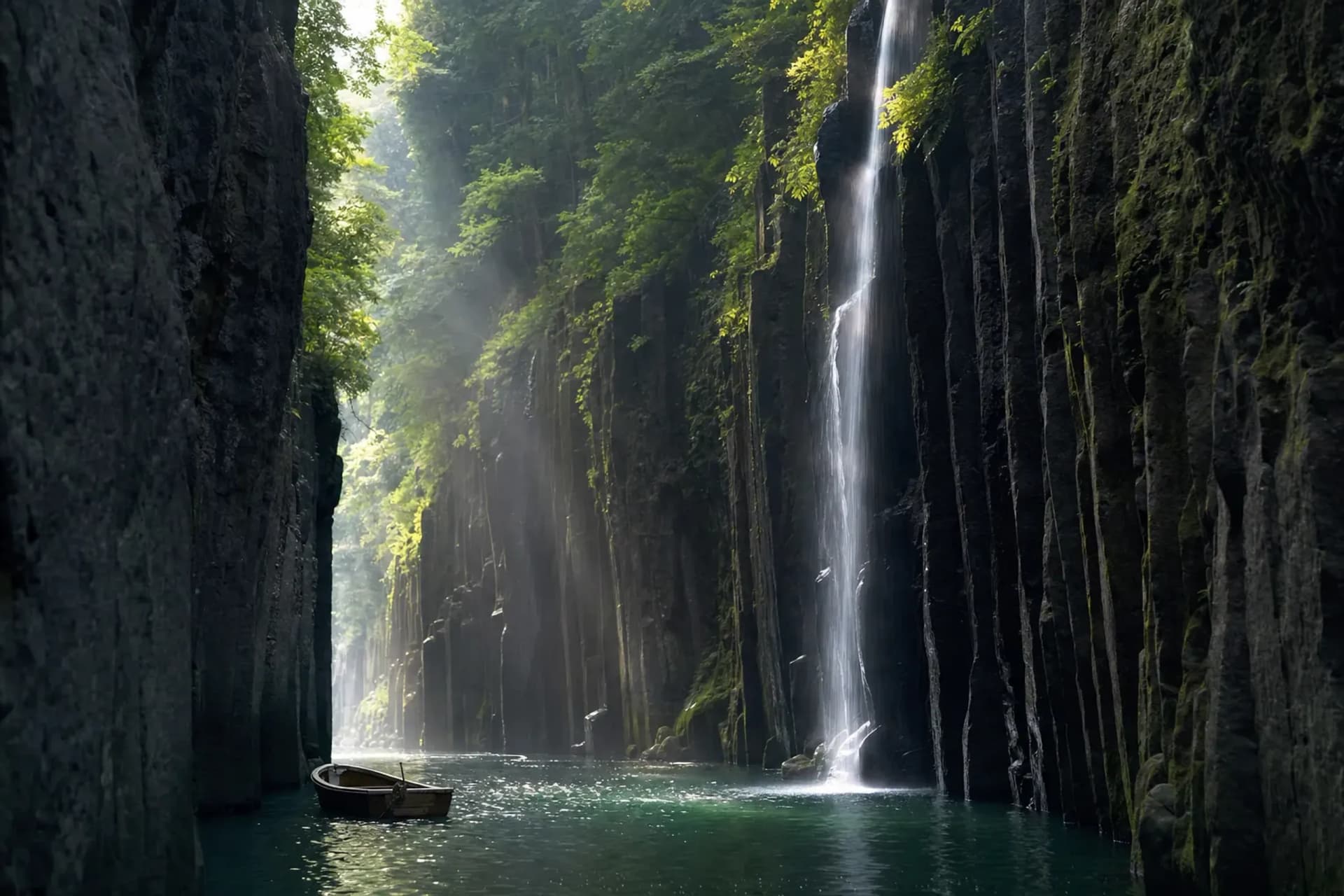
Takachiho Gorge was formed when Mount Aso’s pyroclastic flow followed the Gokase River and cooled rapidly, creating striking columnar jointing cliffs that rise directly from the water.
The rock faces look engineered. They are not. The columns run vertically like organ pipes, dark and wet after rain, and in certain light they take on a blue-black sheen that makes the gorge feel narrower than it truly is.
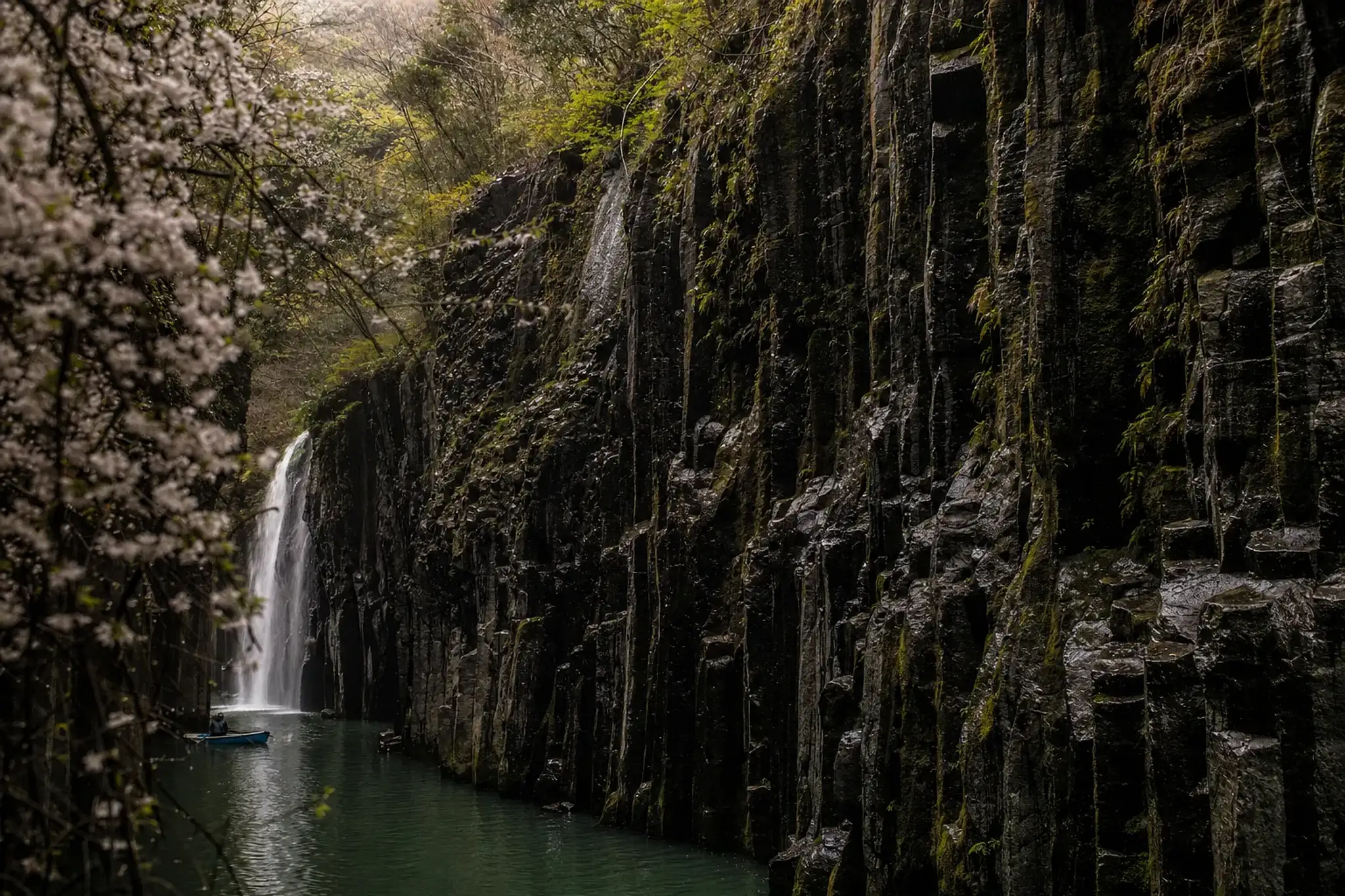
You do not need to romanticize it. Just look. This is geology with genuine stage presence.
Two viewing styles matter here: from below, at river level, and from above on the paved walking path. The path runs about 1 kilometer along the gorge and continues toward Takachiho Shrine, which makes it practical for travelers who want movement without committing to a boat slot. A discreet private chauffeur can hold the day loosely around you, so nothing hinges on a parking lot or a bus timetable.
Manai Falls: A 17-Meter Waterfall Named In The Kojiki
Manai Falls in Takachiho Gorge is about 17 meters high and is notably referenced in the Kojiki, giving the gorge’s signature sight a rare, direct link to Japan’s earliest written myth-history.
This is not a “nice waterfall” in the generic sense. Manai Falls—also known as Minainotaki—sits within the gorge like a statement, a ribbon of white against the basalt walls. It is also listed among Japan’s 100 Best Waterfalls, which explains why it draws cameras even on gray days.
For travelers who care about text and place aligning, the Kojiki mention matters. You are not projecting meaning onto scenery. The meaning has been pinned here for centuries, older than most of the words used to describe it.
How Do You Reserve A Rowboat At Takachiho Gorge Without Missing Your Window?
Rowboat reservations open online exactly two weeks before your ride date at 09:00 JST and close two days before at 09:00 JST; some busy dates may have no same-day ticket sales.
The official rules are strict for a reason: demand is high, and conditions can change with water levels. Standard operating hours are commonly stated as 08:30–17:00, with final reception around 16:30, though the reception cutoff can move earlier if waiting times grow.
Two details catch luxury travelers off guard. First: no phone reservations are accepted under the published rules. Second: some periods operate on a reservation-first basis where walk-ups may not be available at all. That is how people end up “in Takachiho” without ever getting on the water. A costly miss, and an avoidable one.
If boating is your priority, build the day around it. Arrive earlier than you think you need to. And keep a Plan B that still feels meaningful—this is exactly the kind of quiet contingency that separates a smooth day from a frustrated one, and the kind of thing we handle so you never feel the seams.
When Is Takachiho Gorge Illuminated At Night?
Takachiho Gorge is illuminated in the evenings from mid-May to November, typically running until 22:00.
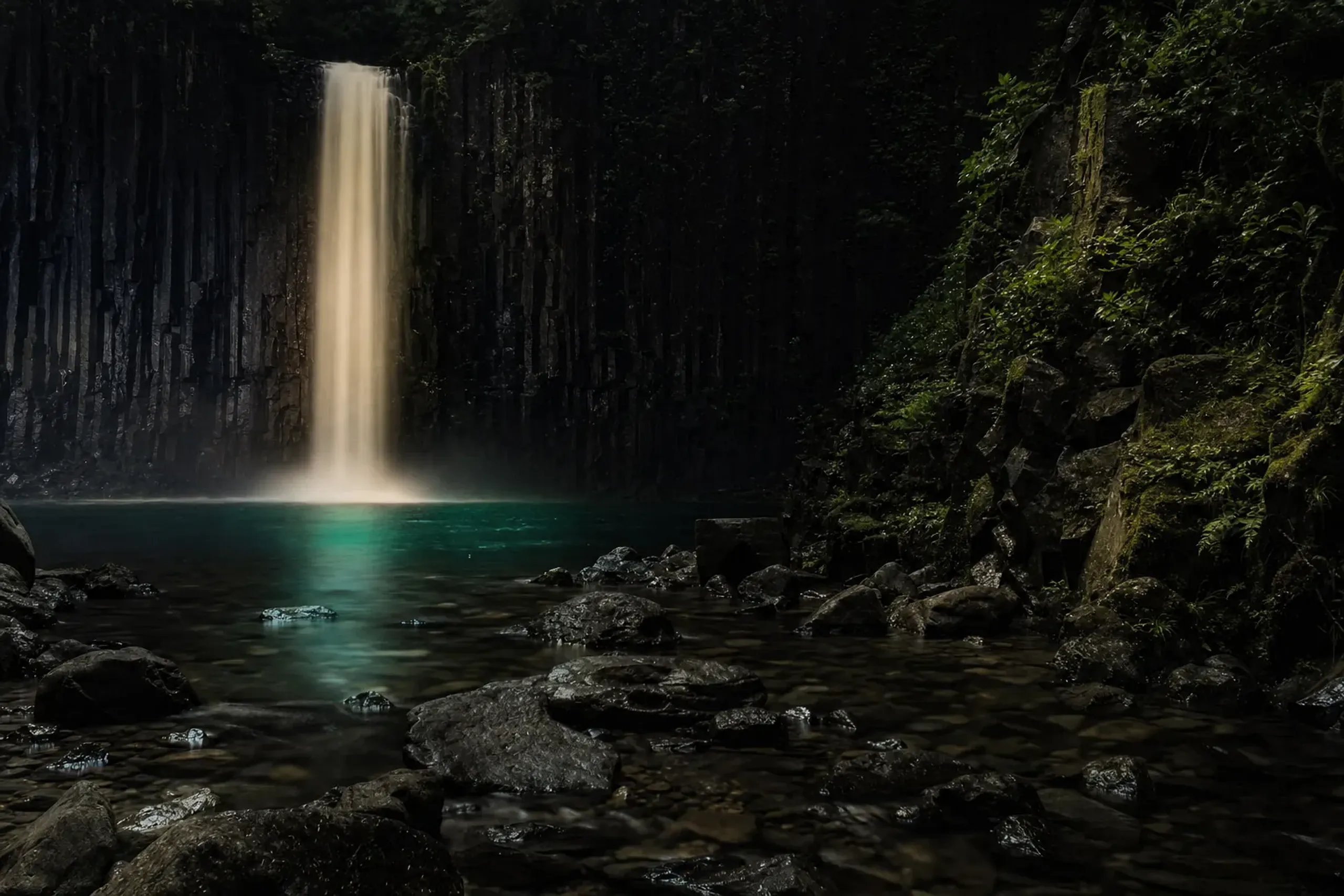
Most visitors experience Takachiho as a daytime scene—sunlight, rowboats, and a fast lunch before driving on. Night changes the pace entirely. The water darkens, the cliffs stop reading as merely “scenic,” and the gorge becomes more like a corridor of stone.
For many discerning travelers, this is the upgrade that requires no extravagance at all. It requires timing—the Japanese instinct for shun, for knowing what to experience where, and precisely when. Stay nearby at a ryokan few outside the region can name, eat quietly, then return when the day-trippers are long gone and the gorge is almost yours.
Plan Your Takachiho Journey With Us
Takachiho rewards those who arrive with intention: a priest arranged for the sacred viewing, a rowboat window that never slips away, a ryokan reached by introduction rather than search engine, and an evening at the illuminated gorge that belongs to you alone. This is the Takachiho that most guidebooks gesture at but cannot deliver—entered through the right doors, at the right season, with your identity and itinerary held in complete confidence.
If you would like Takachiho woven into a wider journey across Kyushu and central Japan—following the myth from cave to stone door—our specialists will design a bespoke itinerary around your dates, your pace, and the details you care about. To begin the conversation, contact us here.