In this guide
- 01A Foundry Became One Of Kyoto’s Three Great Ryokan Houses
- 02Is Sumiya Ryokan The Same As Sumiya Kiho-an In Yunohana Onsen?
- 03What Does “Kyoto Gosanke” Mean For Your Stay?
- 04How Do Urasenke Tea Ties Shape Sumiya’s Culture?
- 05Inside The Threshold: The Garden Approach And The Rooms’ Changing Views
- 06Ichigo Ichie: The One-Time Moment That Sumiya Tries To Protect
- 07What To Eat At Sumiya: Seasonal Kyoto Cuisine Without Noise
- 08How To Plan A Two-Night Sumiya Stay In Central Kyoto
- 09Private Tea At Sumiya: What It’s Like And How To Show Respect
- 10Kyoto 2026 Planning Notes: Taxes And Demand Pressure
- 11How Far In Advance Should HNW Travelers Plan Sumiya?
- 12How To Get To Sumiya Without Stress: Transfers And Arrival Tactics
- 13What Japan Royal Service Coordinates For A Sumiya Stay (And What We Keep Private)
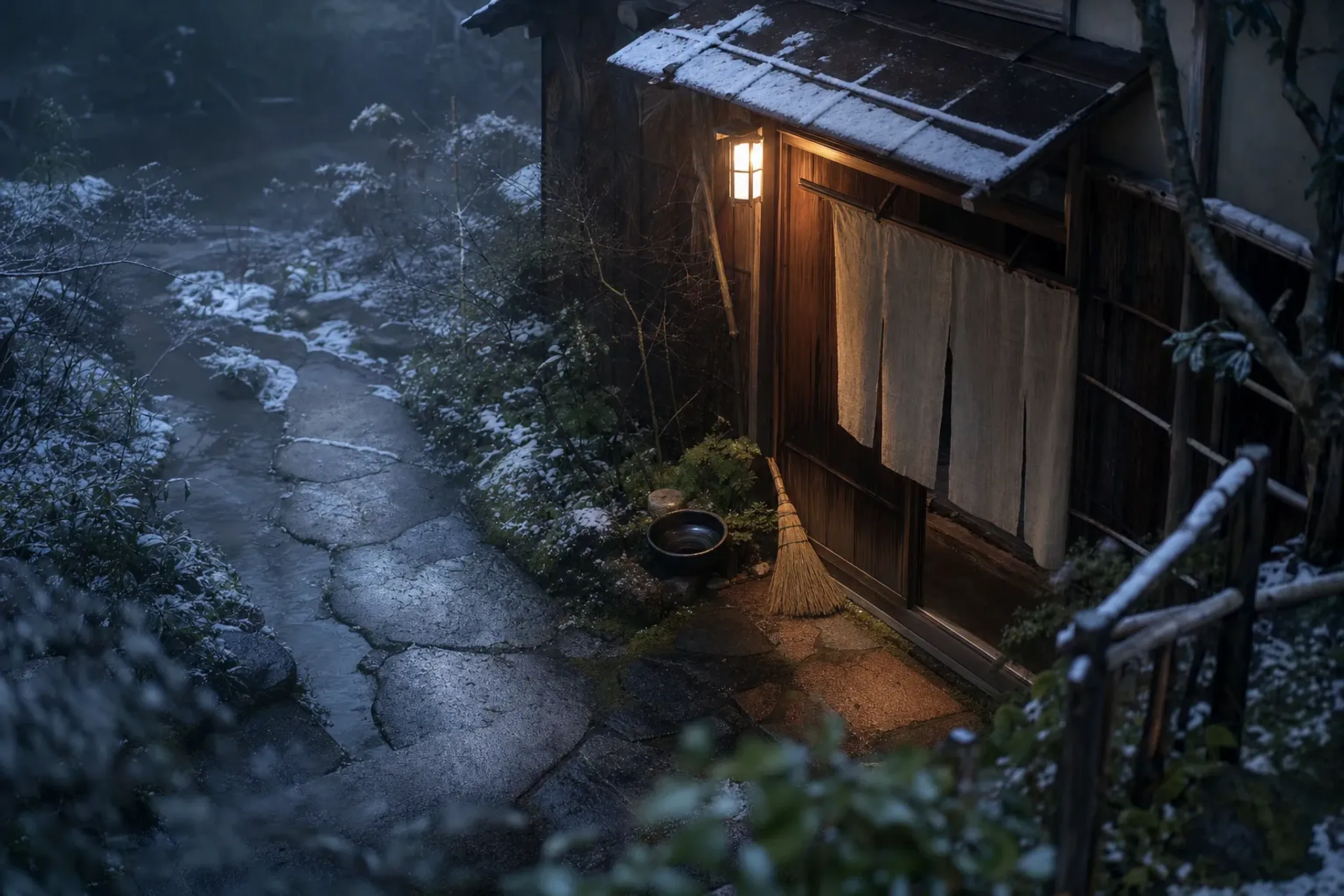
The lane is ordinary until it isn’t.
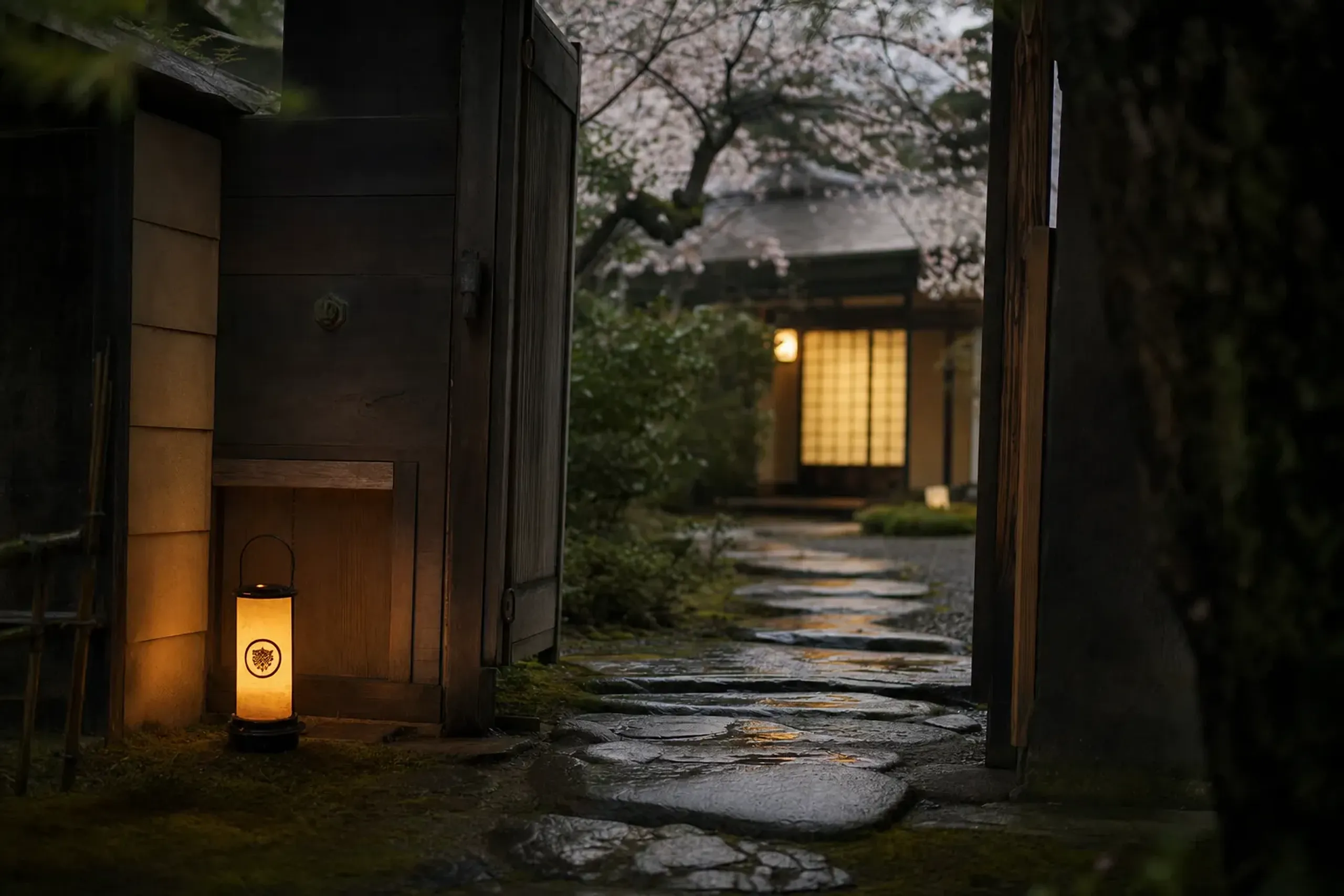
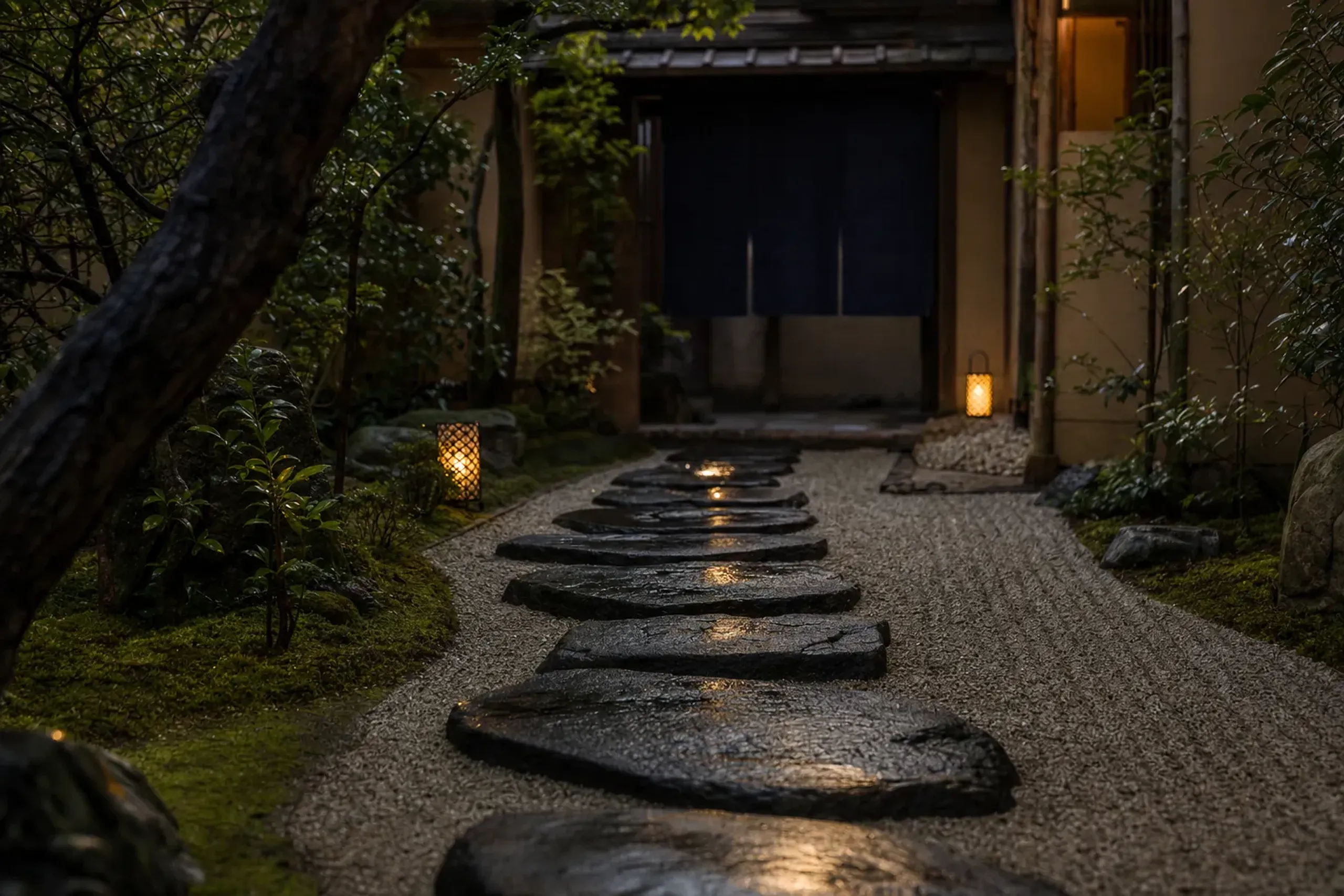
You step off the noise of central Kyoto and onto a short garden approach that has been lightly water-sprinkled, the way tea people do to settle dust and sharpen the air. One breath later, your shoulders drop. Small shift. Big effect.
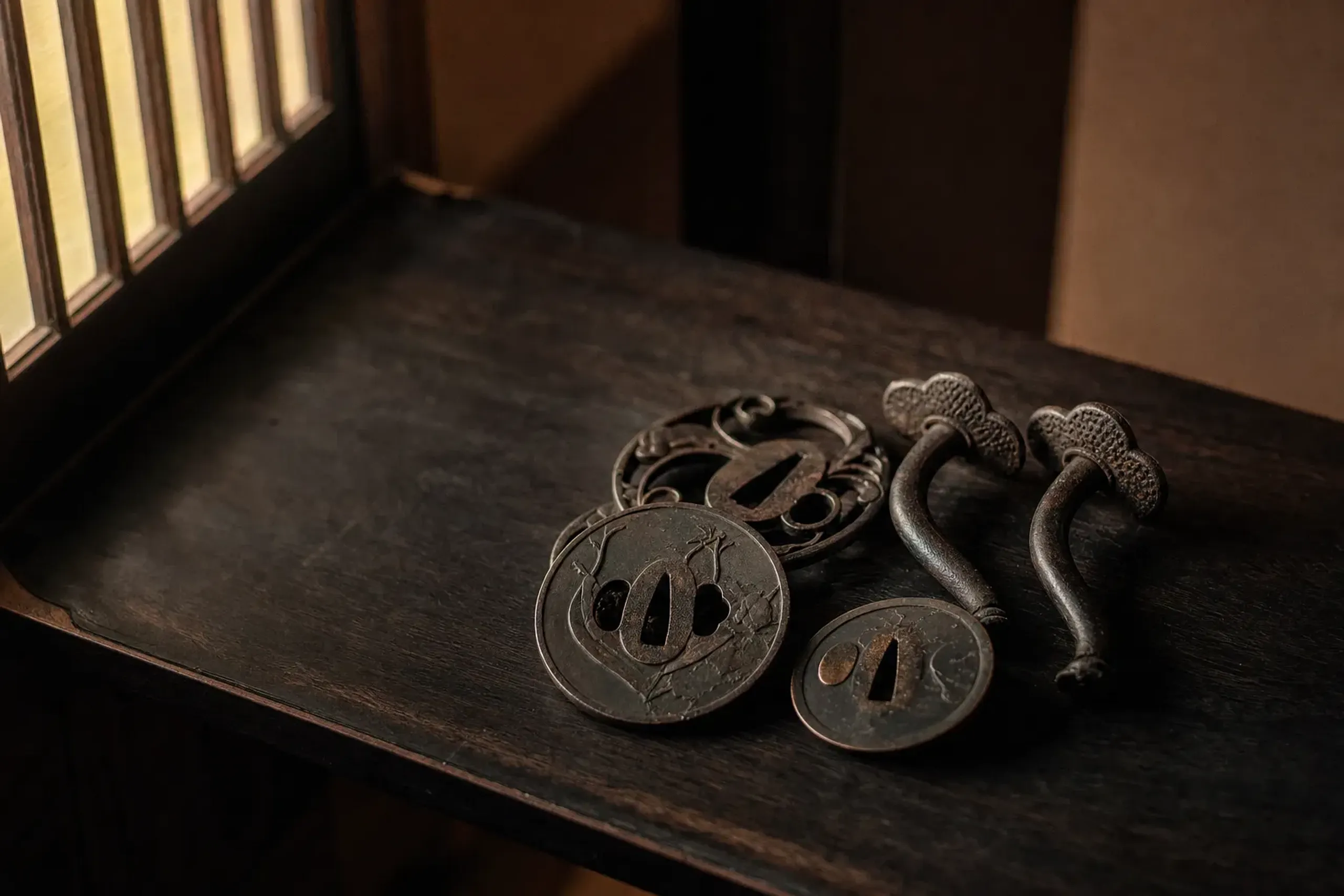
That threshold matters at Sumiya (炭屋). Because Sumiya was not born as an inn. It began as a foundry and metal shop—known for the things you held in your hand, not for hospitality: sword fittings, and the hardware that gives sliding doors their quiet weight.
Our team at Japan Royal Service wrote this guide to be precise, not dreamy. Sumiya is often confused online with another property that shares the name. Different place. Different purpose. If you want the Kyoto Gosanke story—the foundry that became a ryokan through tea—this is the Sumiya you mean.
A Foundry Became One Of Kyoto’s Three Great Ryokan Houses
Sumiya’s defining story is simple: a metal foundry gradually became a ryokan in the early Taishō era (roughly 1912–1926) because tea practitioners needed a place to stay.
The pivot was not a marketing idea. It was a life lived in tea. Horibe Einosuke, a serious practitioner with deep ties to the Urasenke school, hosted the Urasenke head family and fellow tea people day after day at his shop. Students and guests came from around Japan. They needed lodging nearby. The metal shop adapted—and, quietly, a house of hospitality was born.
That origin still shows in the atmosphere. Not as nostalgia. As discipline. Rooms feel composed rather than “decorated,” and service feels shaped by tea timing—quiet, watchful, never pushy. This is the aesthetic of restraint the Japanese call wabi: beauty found in what is withheld rather than displayed.
If you collect Kyoto stays the way some people collect watches, this is a different category. Sumiya is not trying to be a resort. It is a house with a tea spine.
Is Sumiya Ryokan The Same As Sumiya Kiho-an In Yunohana Onsen?
No—Sumiya Ryokan is in central Kyoto, while Sumiya Kiho-an is in Yunohana Onsen (Kameoka); they are separate properties that are frequently mixed up online.
This mix-up creates planning mistakes. Wrong expectations. Wrong packing list. Sometimes even the wrong train.
Sumiya Ryokan (Kyoto city) is known for a tea-ceremony spirit in its hospitality and is listed by Kyoto City’s official travel guide as an accommodation in Kyoto. It is also listed by the Japan Ryokan and Hotel Association as being in Kyoto’s Nakagyo-ku.
Sumiya Kiho-an (Kameoka) is a different ryokan in Yunohana Onsen, a hot-spring area in Kyoto Prefecture. If your must-have is soaking in onsen waters outside the city, Kiho-an may be the fit. If your must-have is the Kyoto Gosanke lineage and tea-driven stillness in the middle of town, you want Sumiya Ryokan.
| Point | Sumiya Ryokan (Central Kyoto) | Sumiya Kiho-an (Yunohana Onsen, Kameoka) |
|---|---|---|
| Where It Is | Kyoto City (Nakagyo-ku listing) | Kameoka City, Yunohana Onsen area |
| Core Identity | Tea-ceremony spirit; Kyoto Gosanke context | Onsen-focused countryside escape |
| Best For | Quiet, culture-first Kyoto days; walkable city time | Hot-spring recovery; slower rhythm outside the city |
| Typical Stay Pattern | 1–3 nights as a central base | 1–2 nights as an add-on retreat |
Key fact: When you search “Sumiya Kyoto,” confirm you are viewing Sumiya Ryokan (炭屋) in central Kyoto—not the Yunohana Onsen property with a similar name.
What Does “Kyoto Gosanke” Mean For Your Stay?
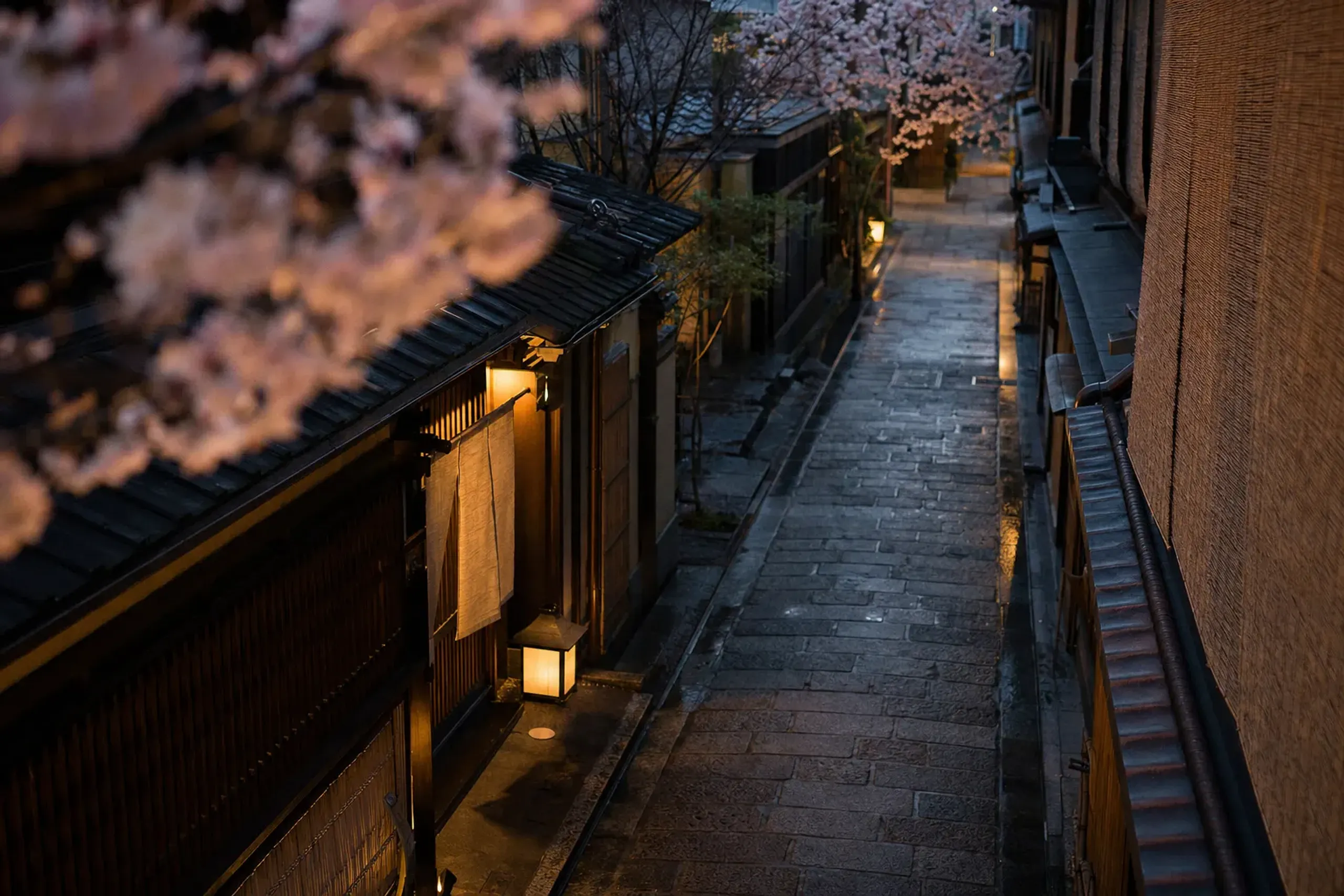
The Kyoto Gosanke are Sumiya, Hiiragiya, and Tawaraya—three legendary ryokan houses in central Kyoto, clustered along or near Fuyachō-dori.
It is not a trophy label you “use” for status. It is a practical signal. These houses grew up around long-stay guests, formal visiting patterns, and an older Kyoto sense of how to host without chatter.
Sumiya sits in that same lineage. The three houses have hosted foreign VIPs, literary figures, and, across their respective histories, Bakumatsu-era loyalist samurai. Names, however, are less important than the habit these houses share: privacy, restraint, and a pace that does not bow to trends. This is discretion practiced as a house tradition—the kind of confidentiality that travelers accustomed to being noticed learn to treasure.
For the HNW traveler, this matters because it changes what you are buying. Not spectacle. Not lobby buzz. You are paying for controlled quiet in the center of a crowded city—the Japan that guidebooks describe but rarely deliver.
How Do Urasenke Tea Ties Shape Sumiya’s Culture?
Two successive generations—Horibe Einosuke and Horibe Kimichika—held deep Urasenke tea-ceremony credentials that shaped Sumiya’s hospitality and reputation.
This is not “tea-themed.” It is tea-trained. Timing, restraint, and attention to where a guest’s gaze lands—these habits travel from the tearoom into the rest of the property.
In our experience, this is why Sumiya can feel unusually composed even by Kyoto standards. There is a lightness to it. Service arrives when needed, then disappears, leaving you alone with tatami scent and garden hush—care that anticipates the need before you voice it, then withdraws before it intrudes.
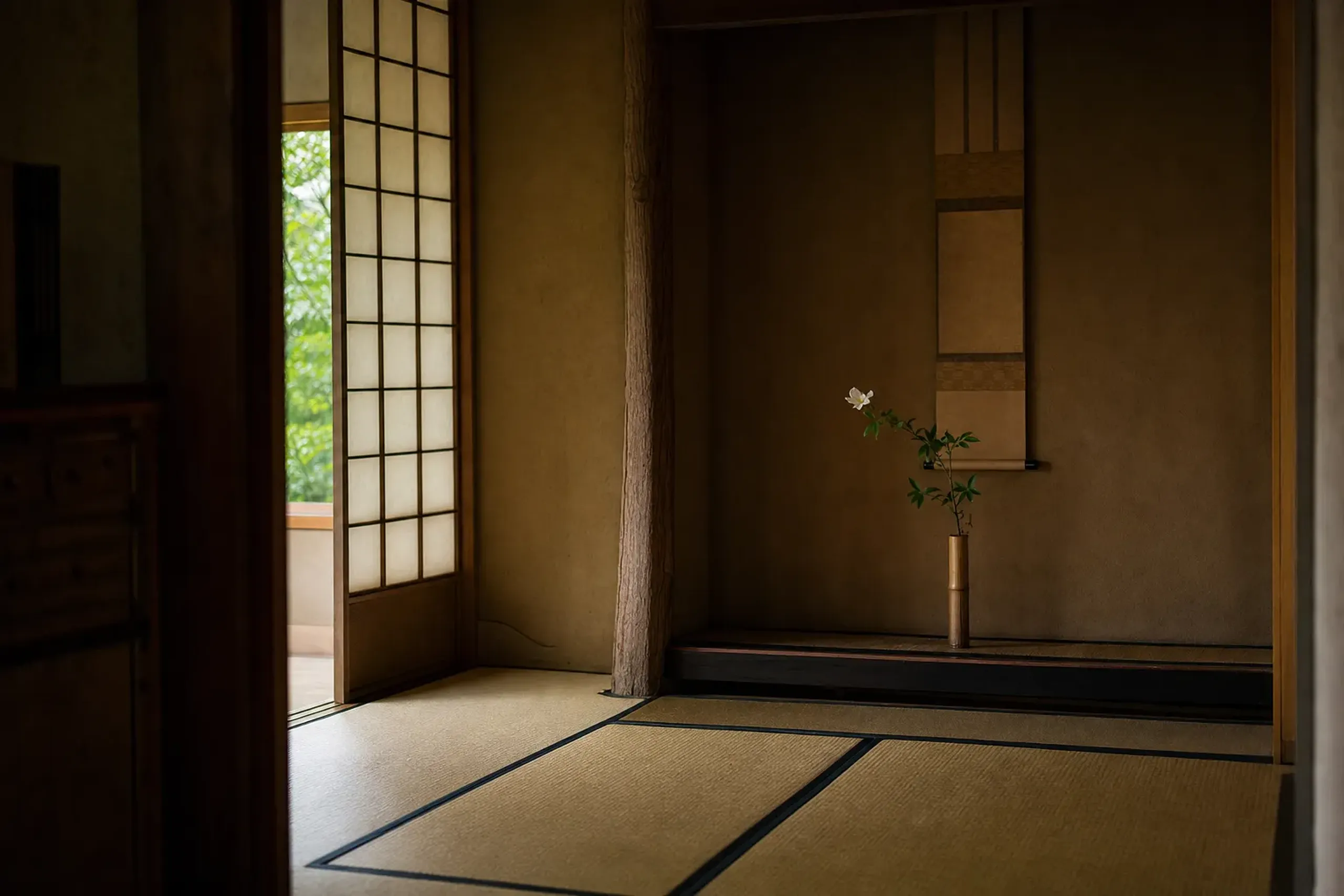
If you have ever sat through a formal tea gathering, you know the rhythm: nothing is rushed, but nothing is idle. Sumiya holds that same line.
Inside The Threshold: The Garden Approach And The Rooms’ Changing Views
That sprinkled approach garden is not a photo spot. It is a switch.
You move from street to path to doorway, and the air changes—cooler, cleaner, slightly mineral from water on stone. A few steps later, you are inside a house that uses gardens the way some places use art: as a frame that shifts with where you sit.
Sumiya is known for gardens that change in composition from room to room and season to season. This is not a single “main view.” It is multiple small scenes, each tuned to a different angle and distance.
One room gives you moss and stone close-up. Another pulls your eyes toward a deeper pocket of green. The moss-covered stone and the silence around it are not accidents; they are the sabi that Kyoto craftsmen spend lifetimes composing. You learn, quickly, to stop rearranging the day and simply sit.
Ichigo Ichie: The One-Time Moment That Sumiya Tries To Protect
Sumiya explicitly frames its hospitality around ichigo ichie—treating each meeting as unrepeatable, a guiding idea at the center of tea ceremony.
It sounds poetic until you feel it in practice. Staff do not force conversation. They do not fill every silence. They create the conditions for your moment to be yours.
For a couple, it can be a late return to the room after Kyoto’s evening cools down, when the corridor light is low and the garden is almost black-green.
For a solo traveler, it may be breakfast taken slowly, with the day still undecided.
For families, ichigo ichie becomes a kind of recalibration. Phones down. One story at a time.
What To Eat At Sumiya: Seasonal Kyoto Cuisine Without Noise
Meals at Sumiya follow the same seasonal philosophy that shapes tea: what is at its peak now, treated with respect, served without drama. This is the Kyoto sense of shun—the right ingredient at the right moment—expressed on a plate rather than announced.
Do not come expecting a performance. Come expecting pacing. Dishes arrive in a thoughtful sequence, and the room stays calm—no clinking soundtrack, no table-side speeches.
If you have dietary needs, plan early. Important. Kyoto kitchens can accommodate many requests, but last-minute surprises narrow what is possible, especially at smaller traditional inns.
Our concierge team often suggests keeping your day gentle before a ryokan dinner. A long temple sprint can blunt your palate. A short walk and a quiet bath do the opposite.
How To Plan A Two-Night Sumiya Stay In Central Kyoto
If you are staying at Sumiya, the goal is not to “do Kyoto.” It is to let Kyoto happen in a quieter register.
Here is a pacing framework our team at Japan Royal Service uses for HNW travelers who want depth without fatigue. Adjust it to your style, not the other way around.
Night 1: Arrival, Reset, And A Private Pace
Arrive before dusk if you can. Better light. Less friction.
Check in, then give yourself an hour with no agenda.
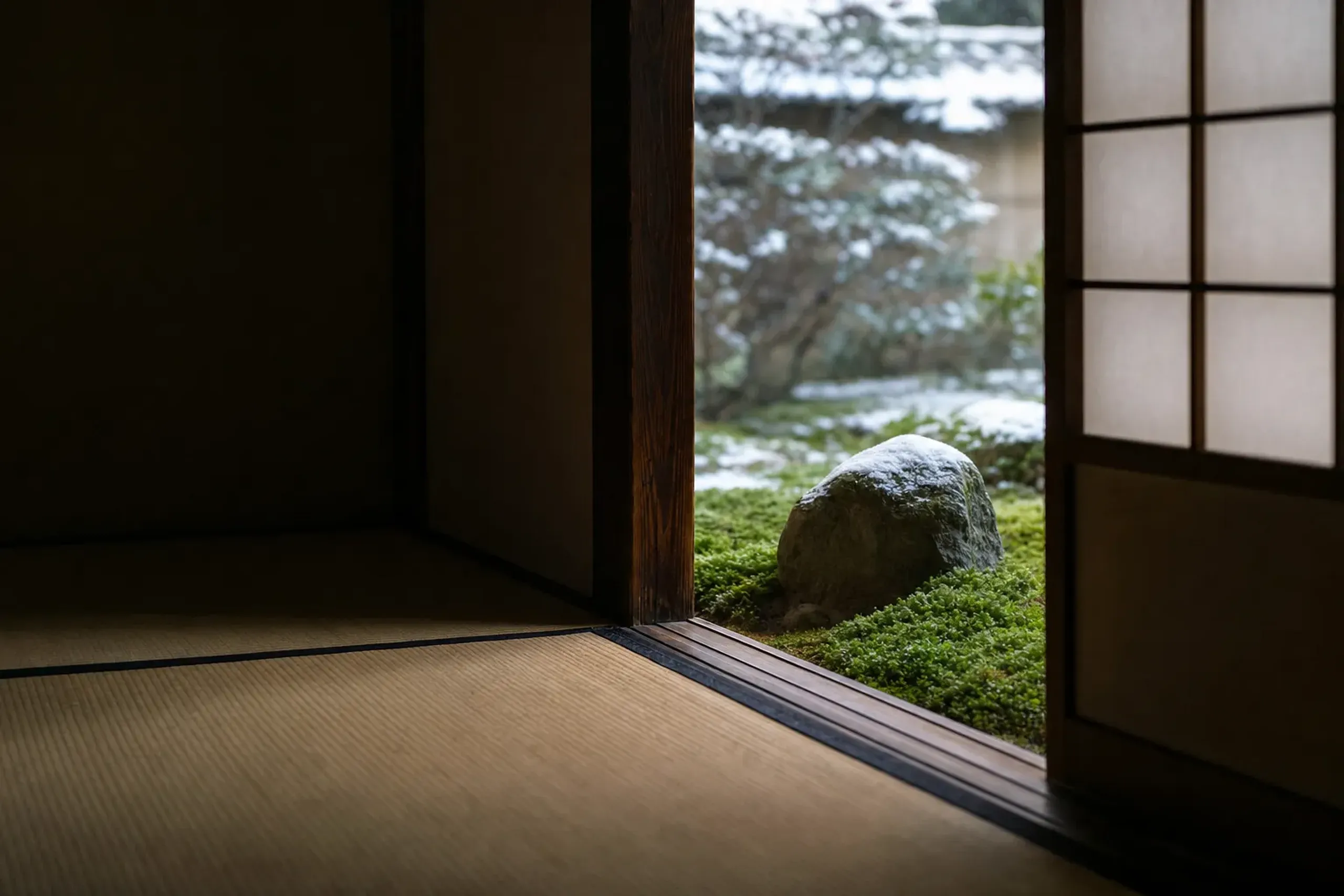
Sit by the garden. Let the city drain off. Dinner feels different when you have actually arrived.
Day 2 Morning: Kyoto Before It Turns Loud
Start early. Non-negotiable.
Kyoto’s popular areas compress fast after mid-morning, especially in peak seasons. A dawn visit to a major shrine or temple zone can feel like a private appointment, even when it isn’t.
Day 2 Afternoon: Return To The House
Come back to Sumiya between 2:00 and 4:00 pm if your schedule allows. This is when many travelers are still out. The property feels even quieter.
Tea, a book, a nap, a bath. Choose one. That choice is the luxury.
Night 2: A Longer Dinner, A Shorter Day
Keep the day shorter so dinner can be longer. Simple.
Sumiya is at its best when you are not checking your watch. If you want one “signature” evening in Kyoto that does not involve crowds, this is a strong candidate.
Private Tea At Sumiya: What It’s Like And How To Show Respect
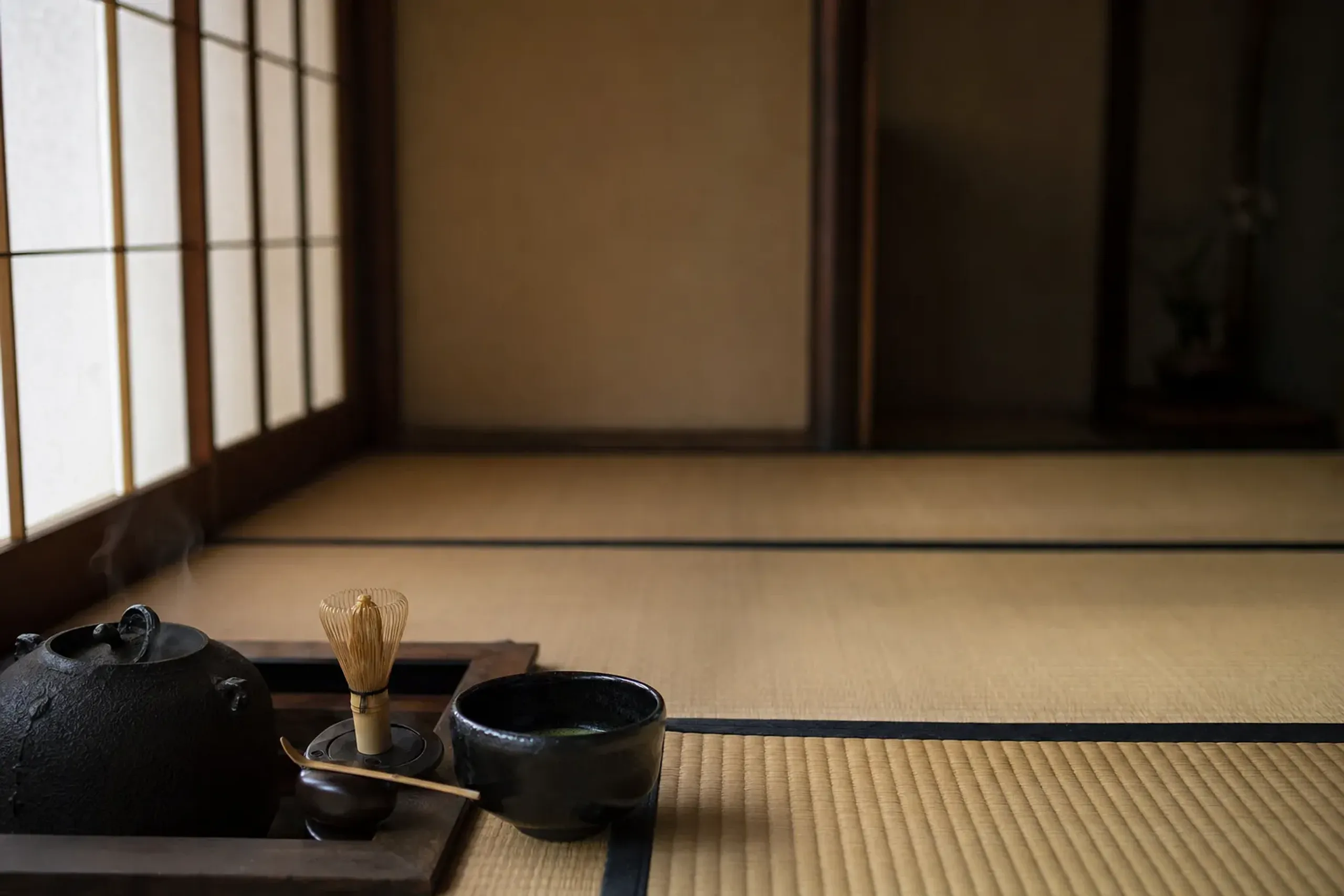
Sumiya is closely associated with tea culture, and a private tea experience at the ryokan is commercially offered through established platforms like Wabunka.
Think of it as a concentrated Kyoto lesson. You sit close. You watch the hands. You learn how quiet can be structured, not accidental—how a lifetime of practice compresses into a single, unhurried sequence of movements.
Etiquette is not hard. It is precise. Arrive on time. Wear socks you don’t mind removing. Avoid heavy perfume. If you are unsure, mirror the host’s pace.
Guests who want tailored guidance on the right tea format—private, small group, or a more formal setting—can reach our concierge for context and timing advice that fits your overall Kyoto rhythm.
Kyoto 2026 Planning Notes: Taxes And Demand Pressure
Kyoto City’s accommodation tax rates change starting March 1, 2026, and Japan’s International Tourist Tax has been updated to JPY 3,000 per traveler (per the Japan Tourism Agency/MLIT notice updated May 21, 2026).
These are not deal-breakers. They are clarity items. HNW travelers tend to dislike “surprise line items,” so we flag them early in planning conversations.
Demand is also a reality. Kyoto City Tourism Association publishes monthly accommodation performance reports, and the broad signal remains what you feel on the ground: strong occupancy, especially around high seasons and weekends.
Practical takeaway: choose dates first, then shape the itinerary around them—not the other way around.
How Far In Advance Should HNW Travelers Plan Sumiya?
For peak Kyoto seasons, plan several months ahead to improve your room-type options and keep your daily schedule calm.
Kyoto’s center does not get bigger. Availability tightens in predictable waves: cherry blossom weeks, autumn foliage weeks, long weekends, and holiday periods. Even experienced travelers underestimate how quickly “good rooms” disappear at small, tradition-forward properties.
If your travel calendar is fixed by school terms or board meetings, aim to start planning earlier than you feel is necessary. Counterintuitive. Very effective.
Our team at Japan Royal Service can also suggest date shifts that keep the same atmosphere with less crowd pressure—sometimes a two-day slide changes everything.
How To Get To Sumiya Without Stress: Transfers And Arrival Tactics
Arrive in Kyoto with margin. That is the trick.
If you are coming from Tokyo by Shinkansen, the trip is straightforward, but station exits and taxis can still create friction at the end of a long day. Many HNW travelers prefer a pre-planned arrival flow, especially with luggage, gifts, or a multi-stop day.
For a more controlled arrival, consider private transportation / chauffeur service for the Kyoto portion of your journey. The goal is not speed. It is quiet continuity.
Once you near the property, keep voices low and phone calls for later. The neighborhood is residential-feeling, and Sumiya’s threshold is designed to calm the senses. Don’t break it right at the door.
What Japan Royal Service Coordinates For A Sumiya Stay (And What We Keep Private)
Japan Royal Service supports Sumiya-focused Kyoto travel with accommodation guidance, private guiding, and transportation, with details coordinated privately after inquiry.
Discretion is not an add-on for us. It is the default. Guest identity, preferences, and daily movements are treated as confidential, and we avoid broadcasting itinerary specifics in public planning documents.
If you want to build a full Kyoto stay around Sumiya’s tea-rooted pace, we also help shape the day so it fits the house: early starts, quiet neighborhoods, and time that is left unfilled on purpose.
For multi-city journeys, we can fold Sumiya into a tailor-made / bespoke itinerary that stays calm even when it is complex.
When you are ready to translate this quiet into an actual set of dates, our concierge team will handle the introductions, the timing, and the confidentiality—so all that remains for you is to arrive, cross the water-sprinkled threshold, and let Kyoto slow down. To begin shaping your stay, contact us here.