In this guide
- 01A Promenade Garden That Fits The Tōkaidō In One Glance
- 02The Garden Is Named For A Temple That Isn’t There
- 03How Long Does It Take To Visit Suizenji Jōjuen Comfortably?
- 04Three Generations, One Garden: The Hosokawa Timeline
- 05Jōjuen’s Name Comes From Tao Yuanming, Not Marketing
- 06The Miniature Landscape: Lake Biwa, Chikubushima, And Two Nihonbashi Bridges
- 07What Makes Suizenji Feel “Hidden” Even Though It’s In The City?
- 08Kokin-denju-no-ma: A Room That Once Held A Court Secret
- 09Izumi Shrine: Built After Fire, Kept For Memory
- 10When Is The Best Time Of Day To Visit Suizenji Jōjuen For Quiet Photos?
- 11Current Status, Opening Hours, And Access (2026 Update)
- 12Lux Night KUMAMOTO 2026: Suizenji After Dark
- 13How To Visit Suizenji Jōjuen Elegantly: A Simple Plan
- 14What Japan Royal Service Can Handle In Kumamoto (And What We Keep Private)
- 15Plan Your Suizenji Jōjuen Visit With Us
- 16Frequently Asked Questions
The first thing most visitors photograph at Suizenji Jōjuen is not a building.
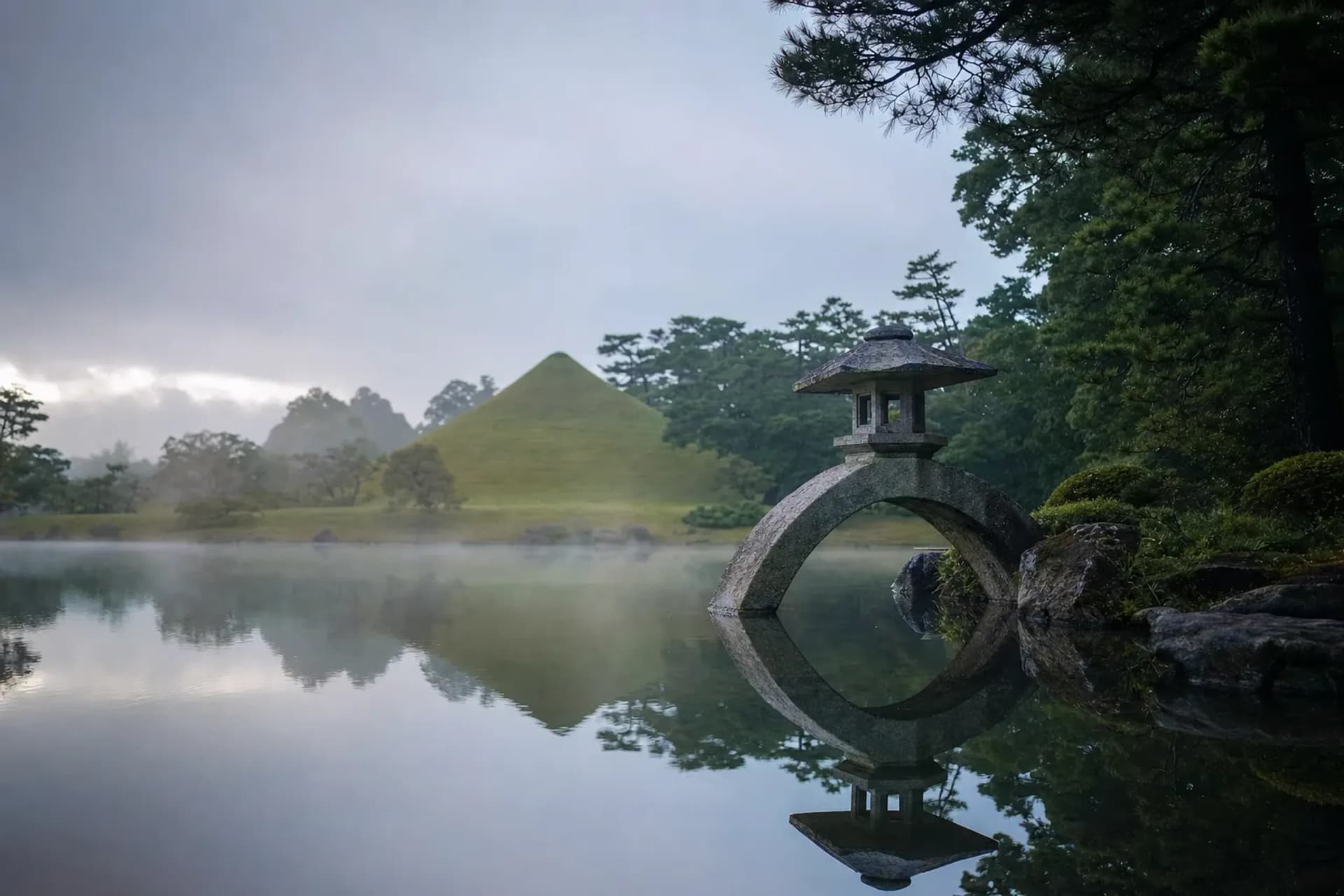
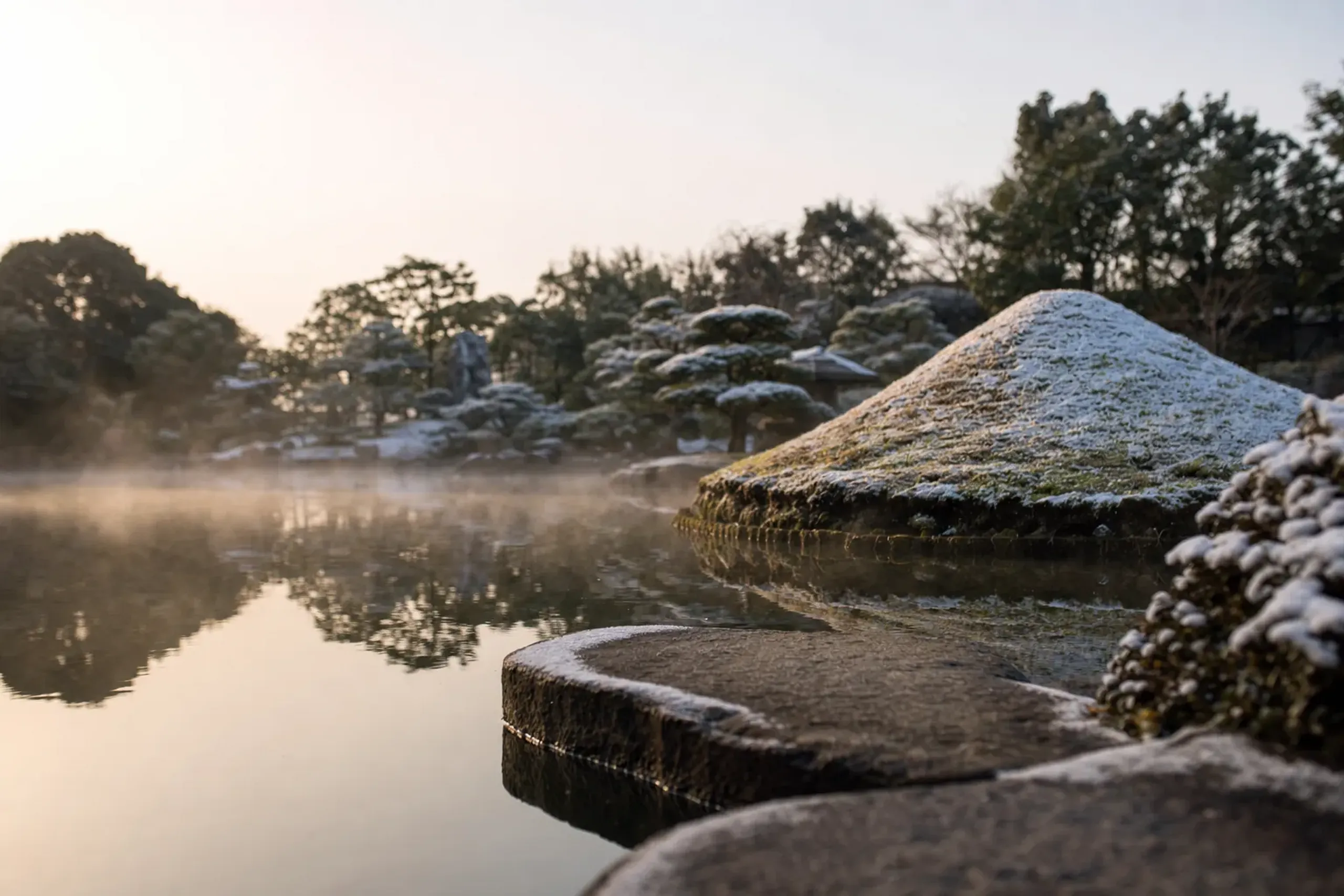
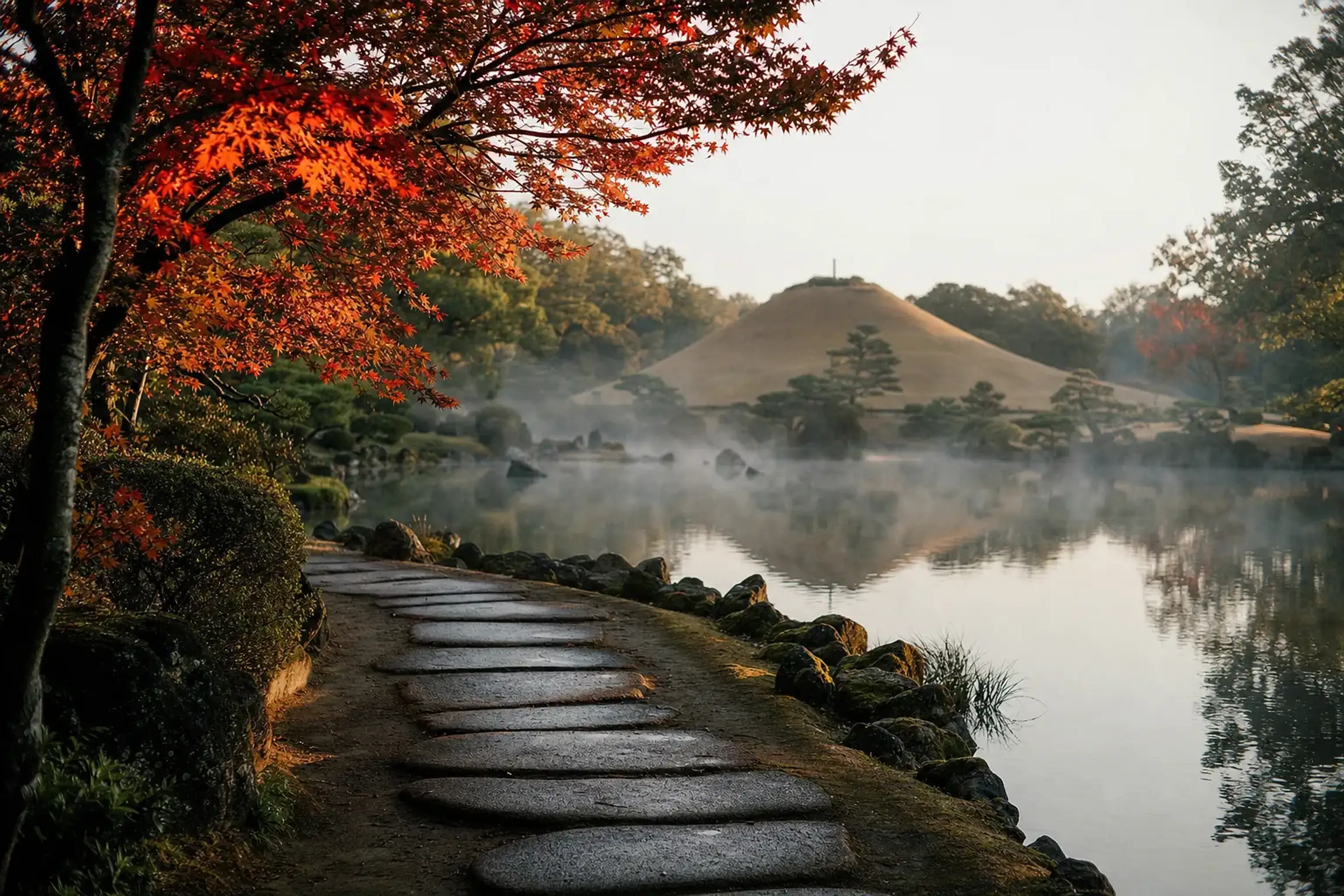
It is a mound. A quiet rise of earth shaped as Mount Fuji, set against water so clear it seems to hold light rather than merely reflect it. One lap around the pond and the scale trick reveals itself: the entire Tōkaidō road has been folded into a stroll you could finish in under an hour, if you did not stop. You will stop.
A Promenade Garden That Fits The Tōkaidō In One Glance
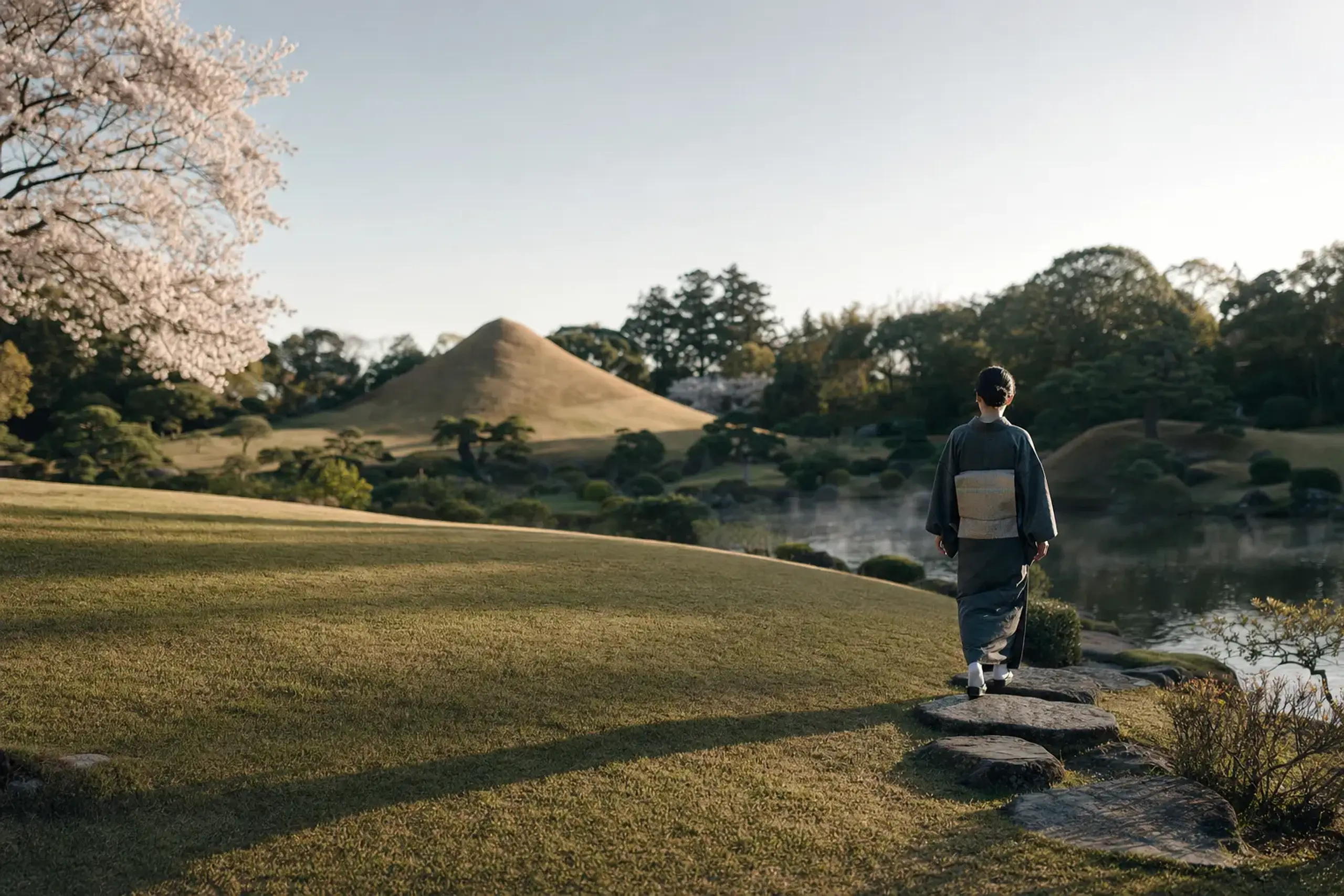
Suizenji Jōjuen is a kaiyū-shiki (promenade) garden in Kumamoto City, designed to be experienced on foot as the scenery shifts with each step.
There is a single best way to meet it. Slow. The path curves around a spring-fed pond, and the view keeps changing because the garden is built to rearrange itself within your sightline.
Look for the miniature geography. A mound shaped as Mount Fuji anchors the composition, while the broader design models famous sights along the Tōkaidō’s 53 post stations. It is an old idea with a surprisingly modern effect: your eye understands “journey” even when your body has walked only a few minutes.
The Garden Is Named For A Temple That Isn’t There
Suizenji Jōjuen carries the name of a temple that was physically moved away in 1636, leaving the original site empty for a lord’s villa.
In 1632, Hosokawa Tadatoshi—first lord of the Hosokawa clan’s Kumamoto Domain—invited a monk named Gentaku from a temple in Buzen to Higo.
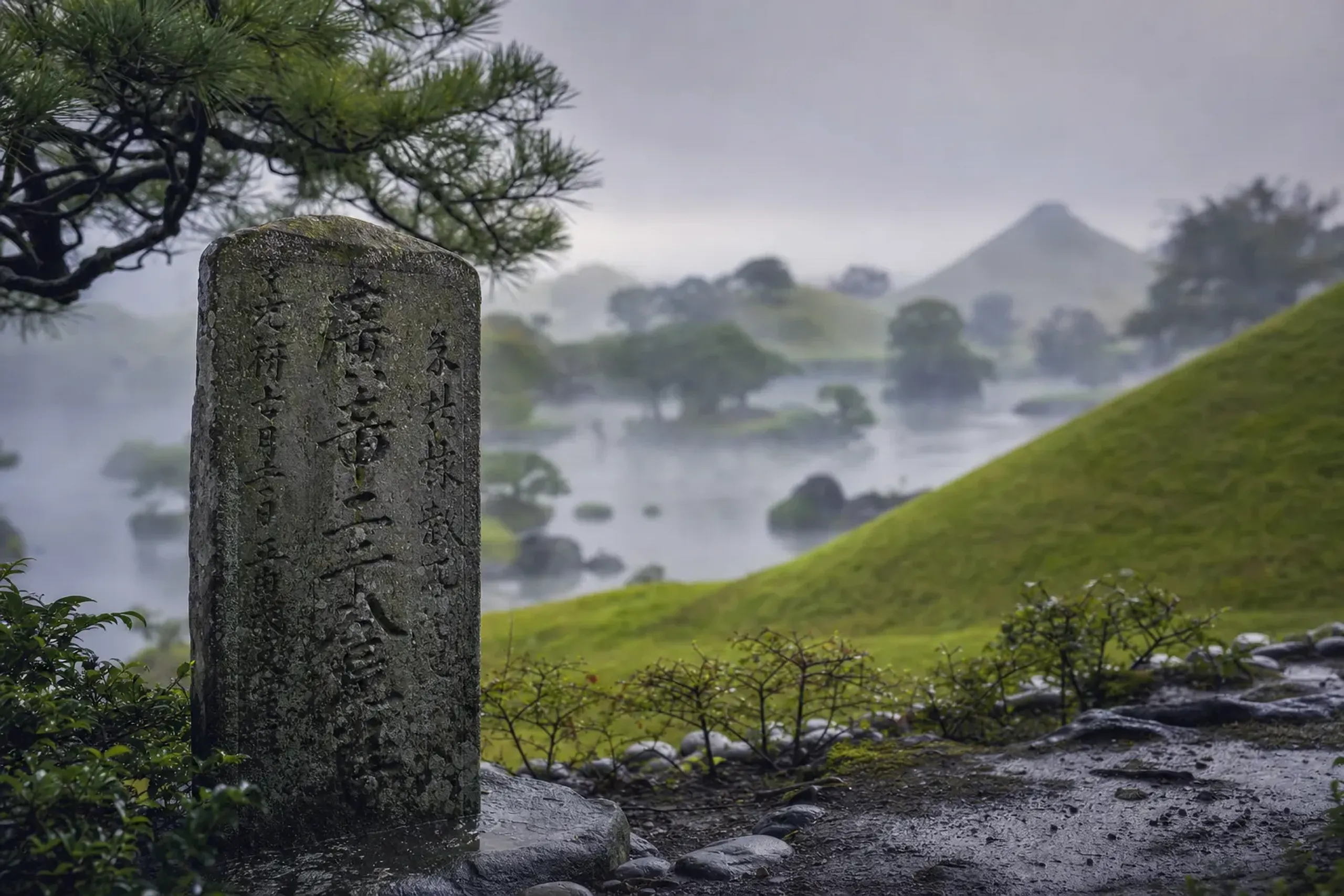
On this exact ground, he built a new temple and named it Suizenji.
Then comes the twist that most guidebooks mention only in passing. Four years later, in 1636, Tadatoshi relocated that temple itself to another spot nearby. The cleared original site became the place for his own resting villa, remembered as “Suizenji Ochaya.” The name stayed, even after the building that first carried it had left.
So when you say “Suizenji,” you are speaking in layers. Temple. Relocation. Villa. Garden. A name that refused to disappear.
How Long Does It Take To Visit Suizenji Jōjuen Comfortably?
Plan 60–90 minutes for Suizenji Jōjuen, including the main loop, a pause at the pond, and time to step into Izumi Shrine.
Yes, you can walk the circuit faster. Big mistake. The garden works through pacing: small rises that hide and reveal, bridges that force you to change angle, water that draws you to the edge, then releases you back to the path.
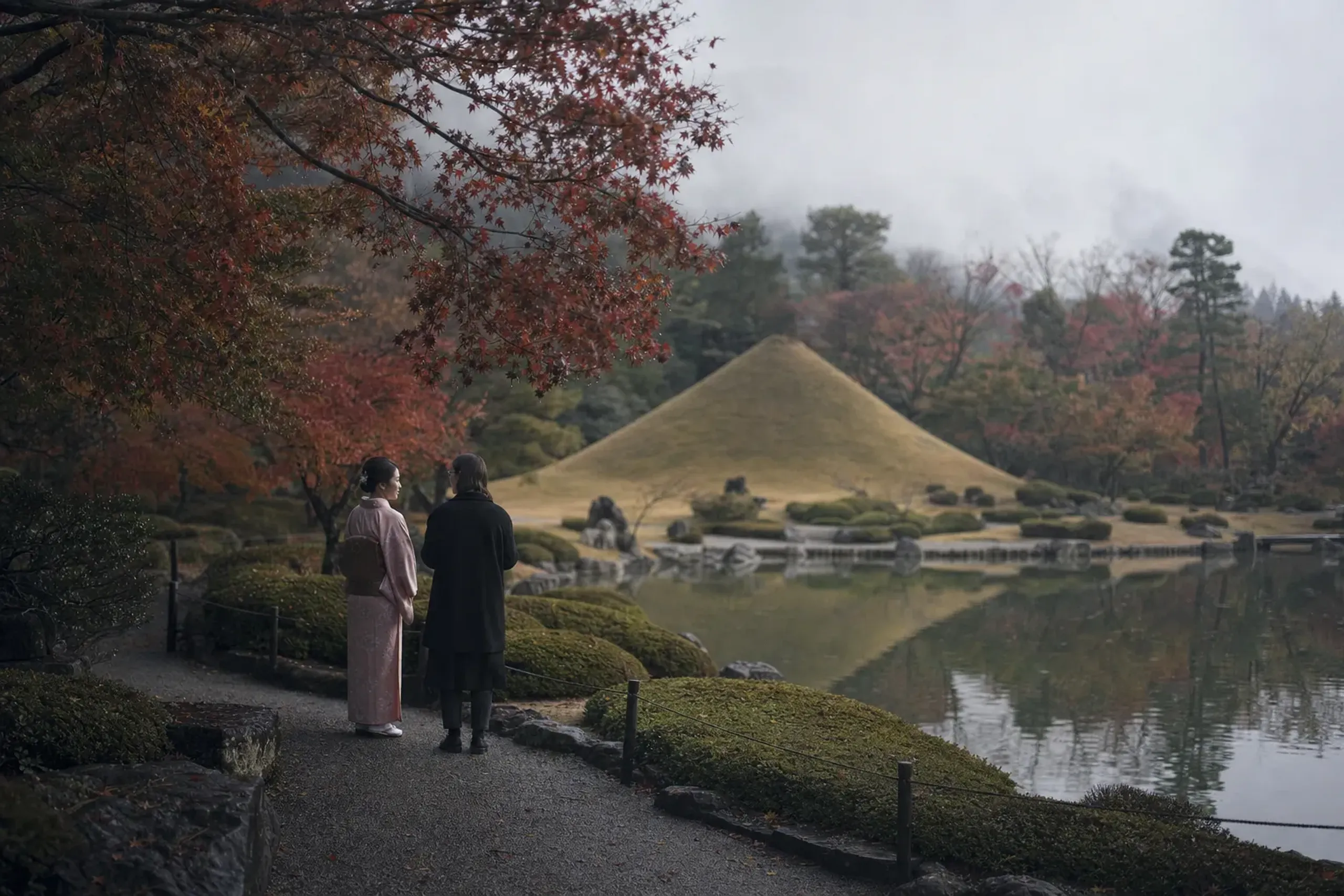
For HNW travelers, we like to build in a margin. Arrive with enough time to sit for a few minutes and let the place settle, especially if you have come from a busy schedule or a long transfer day. The difference shows in your photos—and in your mood at dinner. This is where the quiet Japanese sense of shun matters too: the same garden read in different months, from the pines of a still winter morning to the softened greens of early summer, is never quite the same visit twice.
Three Generations, One Garden: The Hosokawa Timeline
Suizenji Jōjuen did not appear as a finished “project.” It grew the way real power once built: across lifetimes.
Construction began under Hosokawa Tadatoshi after 1636, on the grounds of the former Suizenji temple site. His son, the second lord, carried the work forward. Completion came under the third lord, Hosokawa Tsunatoshi, in 1671—roughly 35 to 39 years, depending on which starting date you count.
That timeline matters when you walk the grounds. The garden is not trying to impress you with one loud gesture. It is a sequence of measured decisions, refined over decades, with the patience of a household that expected to remain. This is the essence of wabi: authority expressed through restraint rather than display.
Jōjuen’s Name Comes From Tao Yuanming, Not Marketing
“Jōjuen” is not a pretty sound chosen for tourists. It is a literary reference.
The name derives from a poem by Tao Yuanming, a Chinese poet of the Six Dynasties period. That kind of borrowing was a statement in itself: a cultured domain did not merely rule land, it curated language and taste.
When we guide guests here, we mention this once, then let the atmosphere do the work. Words can open a door. After that, water and wind take over.
The Miniature Landscape: Lake Biwa, Chikubushima, And Two Nihonbashi Bridges
Suizenji Jōjuen is designed as a shukkei (condensed miniature landscape), including a landform representing Lake Biwa with an island evoking Chikubushima.
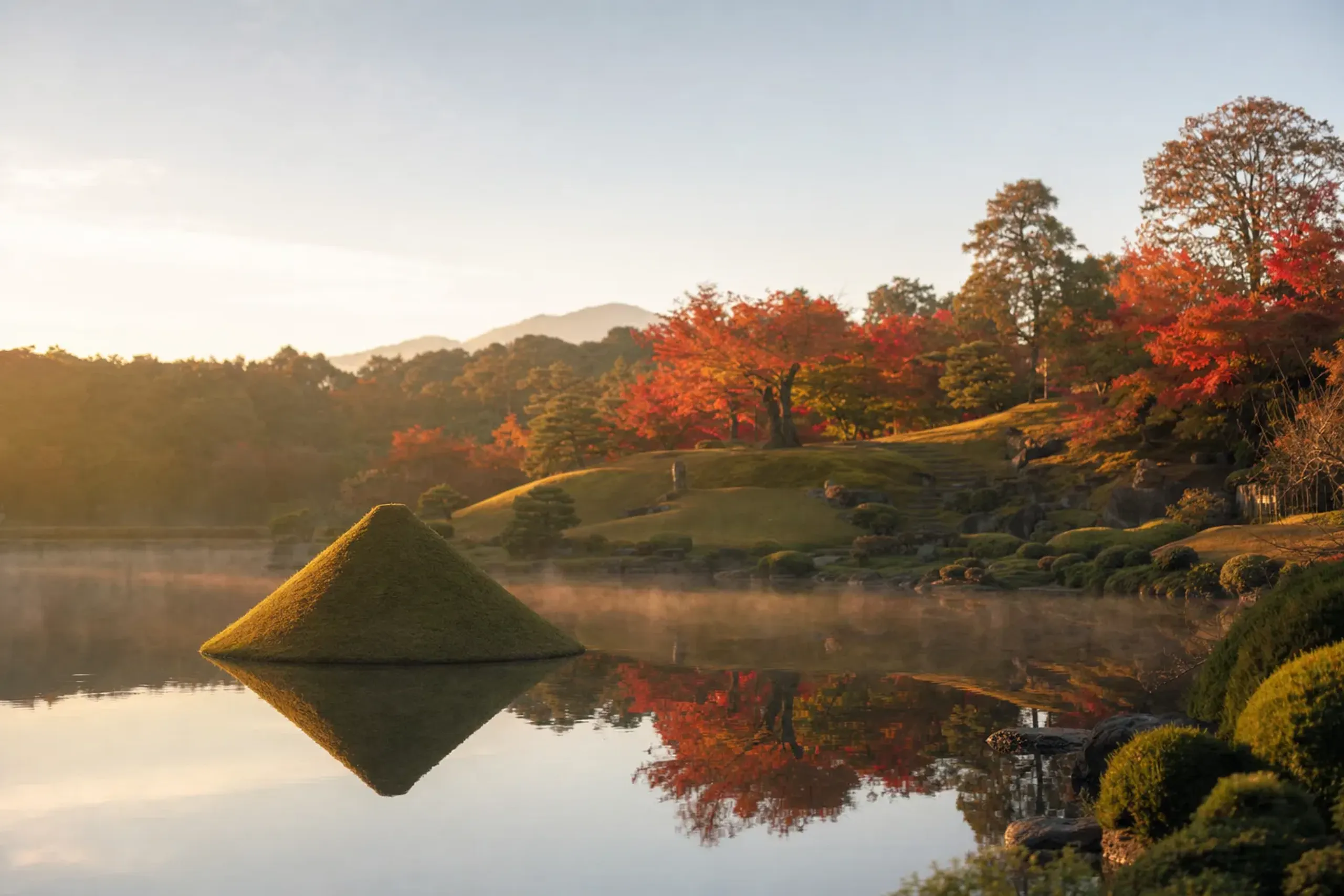
If you have seen Lake Biwa at full scale, the idea of shrinking it can sound like a novelty. It is not. The miniature does something subtler: it teaches you how the daimyo household wished to remember Japan—as a set of emblematic scenes that could be “visited” without ever leaving home.
In the garden, Lake Biwa appears as a shaped landform, and Chikubushima is suggested as an island within it. The effect is unmistakable once you know what you are looking for. It also connects Suizenji to a wider geography of pilgrimage and courtly memory.
Two stone bridges represent Nihonbashi, the Tōkaidō’s starting point in Edo. They sit with a kind of calm authority, like a reminder that the road begins with a crossing.
If you enjoy this kind of encoded landscape, read our related piece on Chikubushima context and island travel sensibilities and how Japanese places carry meaning beyond what a map shows. It will make Suizenji feel less like a park and more like a sentence written in earth.
What Makes Suizenji Feel “Hidden” Even Though It’s In The City?
Suizenji feels “hidden” because the design controls sightlines and tempo, creating privacy-by-landscape even when other visitors are present.
This is where our team at Japan Royal Service leans into a Japan-specific idea: hidden Japan is not always a secret address. Sometimes it is an experience that stays quiet because most people rush through it.
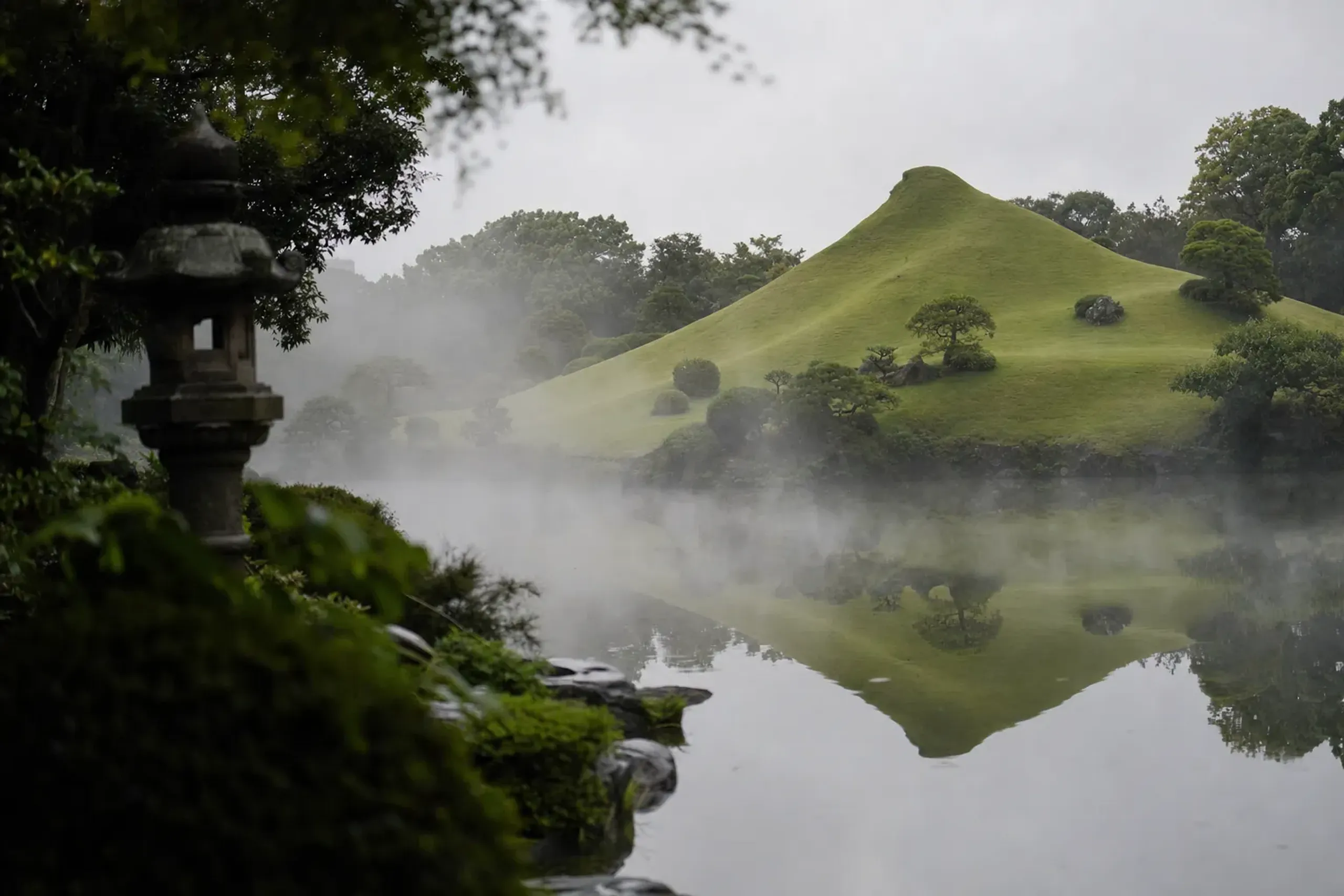
The Japan that Google cannot find is often not a place you cannot see, but a way of seeing that most travelers never slow down enough to receive.
Suizenji’s pond edge is a lesson in restraint. No gold. No spectacle. You get trimmed pines, a long curve of water, and the sense that someone cared enough to shape what you would notice—and what you would miss. Moss-covered stone silence, held in the middle of a working city.
For many HNW travelers, that is the luxury. Not more stimulation. Less.
Kokin-denju-no-ma: A Room That Once Held A Court Secret
Kokin-denju-no-ma is the kind of structure that changes the tone of a garden visit. Suddenly, Suizenji is not only about scenery. It is about transmission.
This building was originally a teahouse belonging to Imperial Prince Hachijō-no-miya Toshihito. It is historically associated with Hosokawa Yūsai, a senior ancestor of the Hosokawa clan, who used it to formally transmit the deepest secret teachings of Kokin Wakashū interpretation to the prince—a rare thread of imperial-class history woven directly into the garden’s fabric.
The structure did not always stand here. It was relocated to Nagaokakyō, and later moved again—arriving at Suizenji Jōjuen in 1912. Even the buildings in this garden have traveled.
We like to pause here with guests who care about literature, court culture, or the shokunin side of preservation. The craftsmanship is not loud. It is watchful. You feel it in the joinery, in the way the room holds stillness without feeling empty—the quiet signature of the master carpenters who kept it intact across the centuries.
Izumi Shrine: Built After Fire, Kept For Memory
Within the garden grounds you will find Izumi Shrine. The founding story is unusually specific, and worth knowing before you step through.
Izumi Shrine was established in 1877 by former Kumamoto domain retainers, in the aftermath of the Satsuma Rebellion, which left Kumamoto City burned to the ground. It was an act of civic recovery, created to honor the domain’s successive lords.
The shrine’s presence reframes the garden. You are not only walking through a preserved daimyo landscape; you are walking through layers of local resolve, built into the site when the political world had already changed.
When Is The Best Time Of Day To Visit Suizenji Jōjuen For Quiet Photos?
For quieter photos at Suizenji Jōjuen, arrive near opening at 8:30 AM or in the last 90 minutes before the 4:30 PM last admission.
Midday can be pleasant, but it is rarely private. Early morning gives you calmer water, fewer bodies near the pond edge, and a softer tone on the Mount Fuji mound. Late afternoon brings longer shadows and a slightly hushed energy as day-trippers thin out.
If you are traveling as a couple or a family, timing is the easiest “upgrade” you can make. It costs nothing. It changes everything.
Current Status, Opening Hours, And Access (2026 Update)
Suizenji Jōjuen was closed for one day on 29 July 2026 for a safety inspection following an earthquake, and it reopened on 30 July 2026 with no facility damage found.
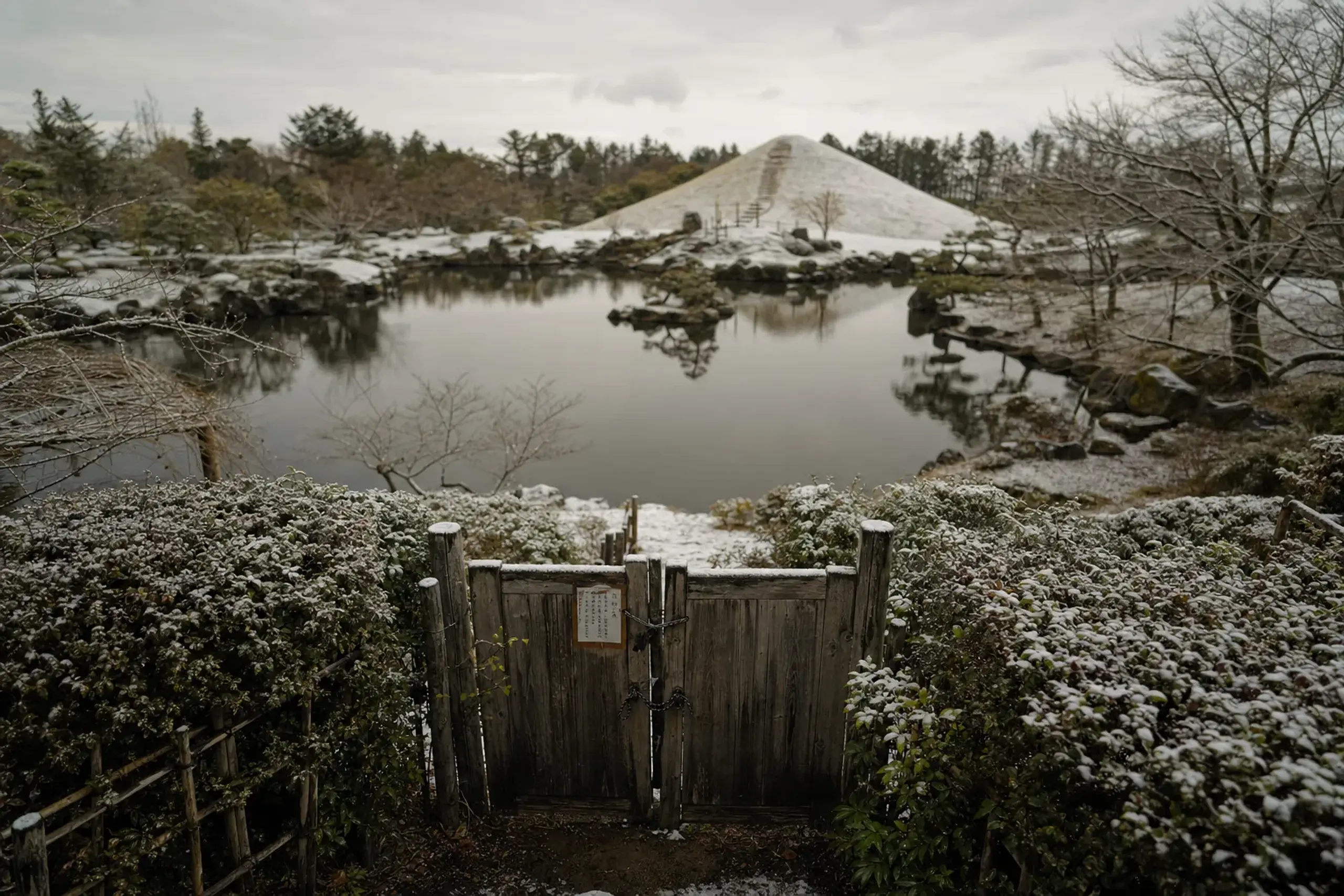
The garden is open daily, year-round. Official visitor hours are 8:30 AM–5:00 PM, with last admission at 4:30 PM.
Address: 8-1 Suizenji Koen, Chuo-ku, Kumamoto City, Kumamoto, Japan.
On foot: About a 4-minute walk from the “Suizenji Park” tram stop. About a 10-minute walk from “Shin-Suizenji Station” on the JR Hōhi Main Line.
Key fact: Damage from the 2016 earthquakes has been fully recovered; a smaller commemorative torii, rebuilt in 2020 using local cypress, marks that recovery.
There is also a dedicated Noh stage within the grounds, and an open-air, torch-lit Noh performance is held each August. Schedules can shift year to year.
In our experience, the cleanest way to visit is to treat Suizenji as an appointment, not an “extra.” Our concierge team verifies current opening status and any seasonal event scheduling privately, in advance of a client’s visit—quietly, and without your name ever leaving the arrangement.
Lux Night KUMAMOTO 2026: Suizenji After Dark
Lux Night KUMAMOTO 2026 runs from Friday, November 6 to Sunday, December 6, 2026, from 18:00–21:00, with last admission at 20:30.
Seeing Suizenji at night changes the garden’s personality entirely. Water becomes a mirror first, a pond second. The Mount Fuji mound reads as silhouette, and the path feels like a stage direction rather than a route.
For HNW travelers who have “done” the classic Japan gardens, this is a fresh angle on a historic site—with dates you can actually plan around.
It also rewards precision: you need to watch the last-admission time, dinner timing, and transfer flow across the city.
We treat this as a discretion-forward evening. No fanfare. Just an elegant arrival, a calm walk, and a quiet exit before crowds bunch at the gates.
How To Visit Suizenji Jōjuen Elegantly: A Simple Plan
Start with one decision: daytime calm or nighttime atmosphere. Everything else follows.
Option A: A Daytime Visit Built Around Light
This is the classic approach, done with better timing.
- Arrive: Near 8:30 AM for the quietest circuit.
- Walk: One full loop around the pond, stopping at the Mount Fuji mound viewpoint.
- Pause: Spend a few minutes at Izumi Shrine for context and stillness.
- Leave: Before midday foot traffic thickens, especially on weekends.
Option B: Lux Night KUMAMOTO 2026 As The Centerpiece
This is for travelers who want Suizenji to feel like a once-only memory.
- Arrive: Early enough to avoid last-admission pressure (20:30 is firm).
- Walk: Slow, with deliberate stops for reflections and silhouette shots.
- Exit: Leave with a buffer so your driver is not hunting for you in a crowd.
If you prefer not to think about pacing, transfers, or where to stand for the “Fuji” angle, our team can advise on a private timetable and routing. When private transportation is part of the plan, learn more about our chauffeured transportation standards and fleet options.
What Japan Royal Service Can Handle In Kumamoto (And What We Keep Private)
Japan Royal Service supports Suizenji Jōjuen visits with guiding and transfers, while private coordination is handled discreetly after you inquire.
On the public page, we keep our promises deliberately modest. Discretion is not only about your identity; it is also about how arrangements are discussed, and where.
If you are building a broader Kyushu journey, we typically start from a tailor-made itinerary and then refine it down to the hour. Tight timing. Soft landings. The goal is that your day feels unforced.
For guests who like places that most itineraries skip, you may also enjoy our writing on how to travel thoughtfully in recovery regions—a different part of Japan, but the same discipline: go gently, and go informed.
Plan Your Suizenji Jōjuen Visit With Us
A garden built over three generations deserves more than a rushed hour squeezed between other stops. Whether you want the hush of an early-morning circuit or the mirrored silence of Lux Night, we will quietly confirm the timing, arrange your arrival, and let you simply walk—unhurried, unbothered, and entirely at ease.
To begin shaping a Kumamoto day, or a wider Kyushu journey, around Suizenji Jōjuen, contact us here for a tailored proposal.
Frequently Asked Questions
Is Suizenji Jōjuen Open Right Now After The July 2026 Earthquake?
Suizenji Jōjuen reopened on 30 July 2026 after a one-day precautionary closure, and no facility damage was found.