
In this guide
- 01What Shokunin Actually Means
- 02The Texture Of A Working Room
- 03The Craft Categories, And What You Can Actually See
- 04What To Ask For: The Questions, Verbatim
- 05What To Avoid: The Structural Markers Of A Staged Visit
- 06The Craft Access Ladder
- 07Kaga: Kutani Porcelain and Yamanaka Lacquer
- 08Ishikawa In 2026: Craft As A Living Industry, Not A Performance
- 09Conduct In A Working Atelier
- 10Honest Limits, And What An Introduction Actually Changes
- 11Why Choose Japan Royal Service
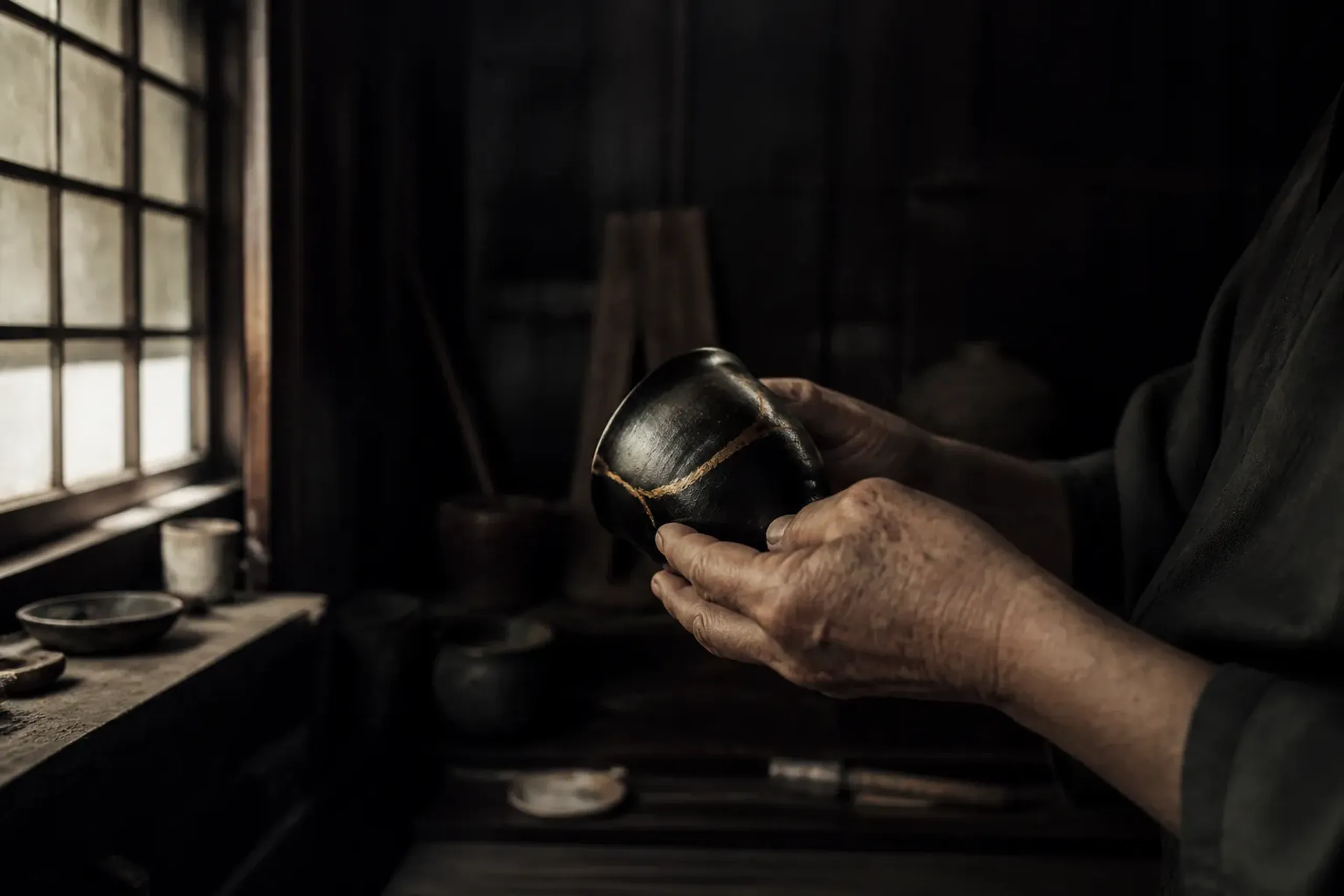
Most visitors who ask for a "craft experience" in Japan end up in a room built for them. A pre-cut kit. A fixed thirty-minute slot. A smiling host who is not, in fact, making anything for sale that day. It photographs well. But it is not the thing itself, and the gap between what you were handed and what was available a few streets away can be enormous.
This guide is about closing that gap. Not by spending more. By learning to read a workshop the way a buyer does, so you can tell a working atelier from a staged one, ask the right questions, and behave in a way that earns a maker's time rather than borrowing it. Read this and you should finish able to evaluate an atelier visit yourself.
What Shokunin Actually Means
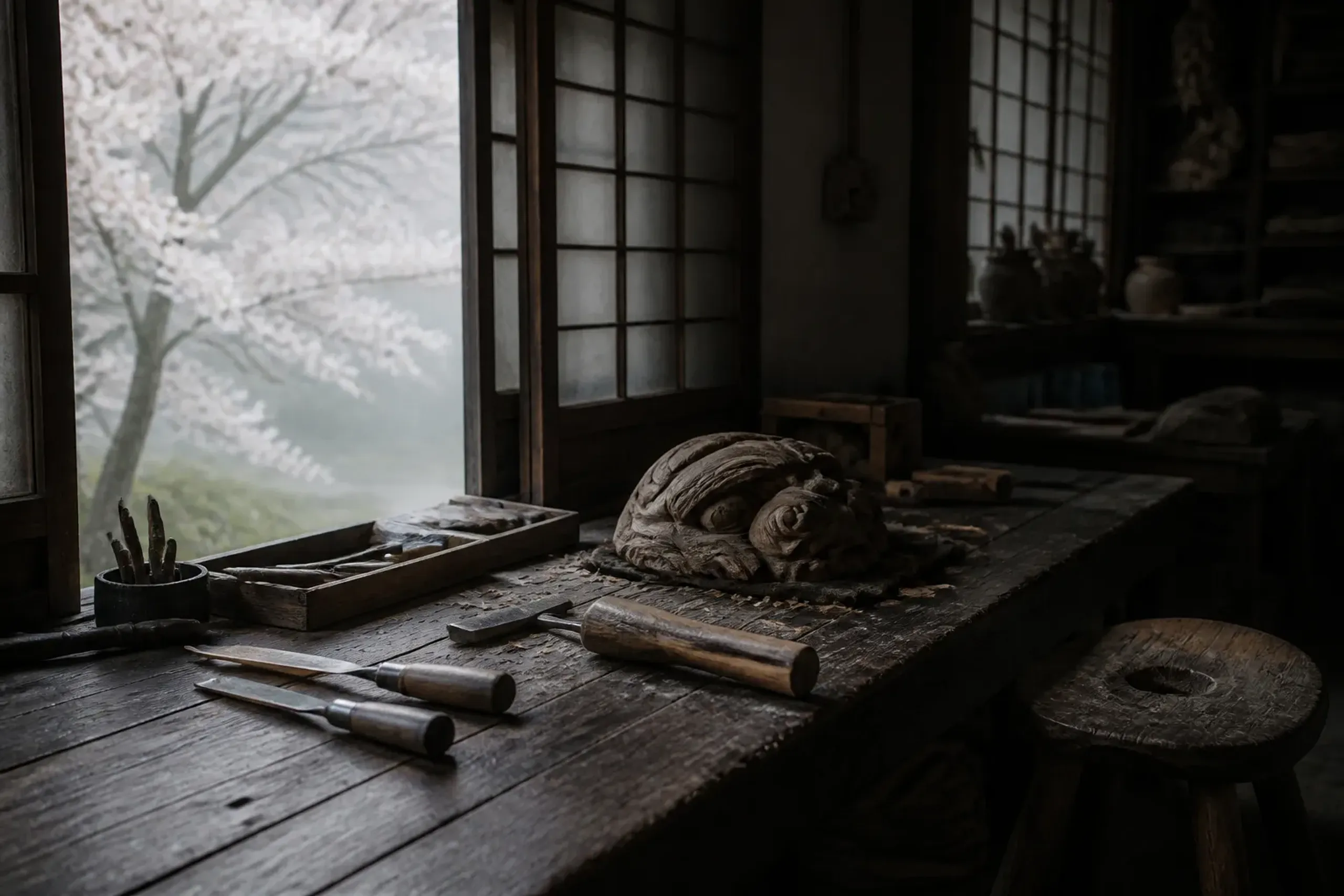
The word gets stretched to cover anything handmade and expensive. That is a mistake. Shokunin refers to a skilled craftsperson who has committed to a single discipline over a long horizon, usually with formal training and a working practice that produces real goods. It carries a sense of obligation to the work and to the people the work serves.
What it does not mean: automatically old, automatically famous, automatically for sale to visitors. Some of the most serious makers keep no public hours. Others are two generations into a family workshop and still learning. Age of technique is not the point. Whether production is genuinely happening is the point.
Here is the quiet truth the reverent copy skips. A workshop is a business. The maker is feeding a household and buying materials that are not cheap. When you treat a visit as scenery for your trip, you cost them working hours. When you treat it as a real encounter, you can actually support them. The difference is almost entirely in how you show up.
The Texture Of A Working Room
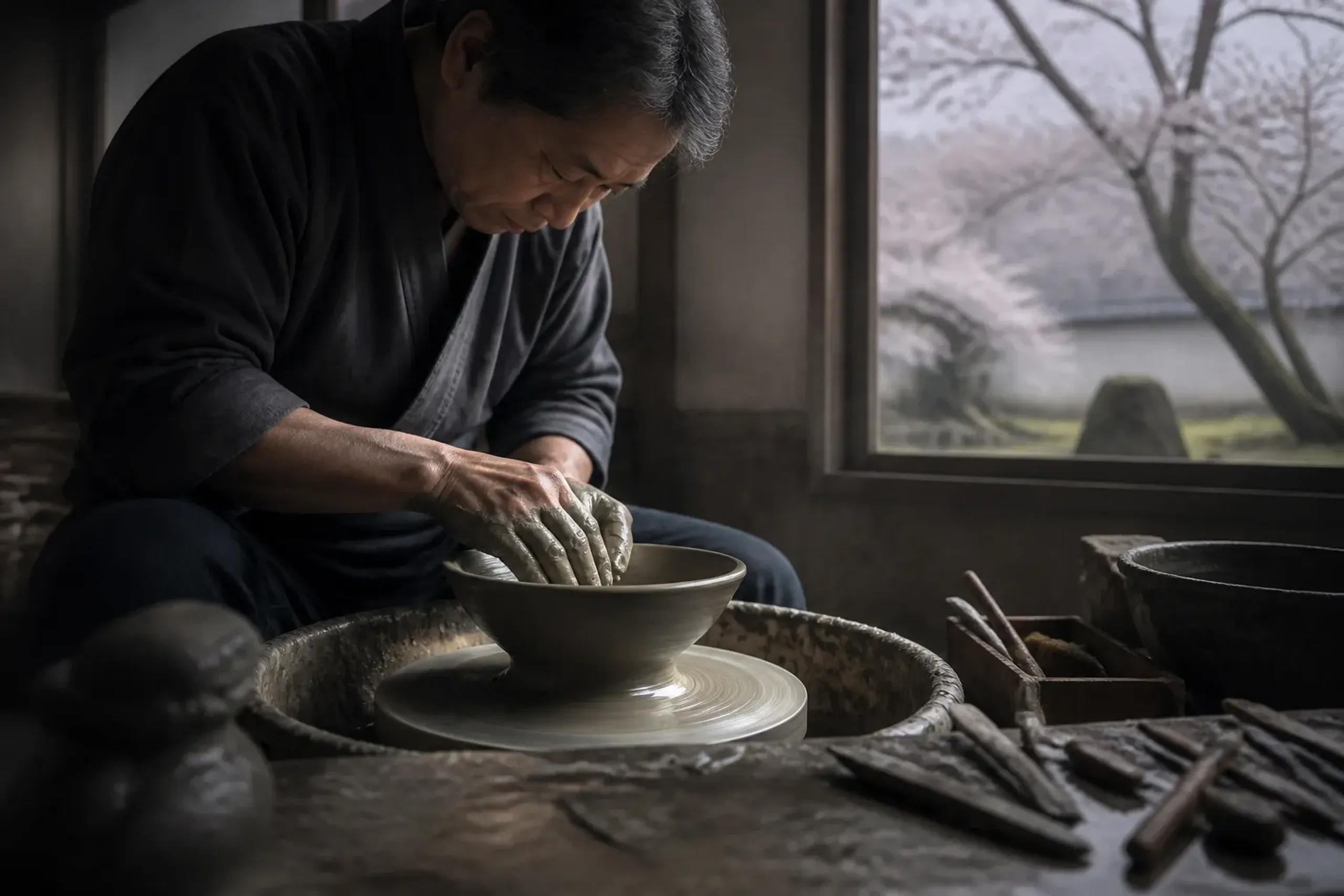
Step into a room where work is happening and the first thing you notice is that no one performs for you. There is a rhythm already in progress. The scrape of a plane on wood. A wheel turning under wet hands, the maker's eyes on the clay, not on you. Dust in a shaft of light. A radio, maybe. Someone finishes a pass, sets the piece down, and does not explain it, because explaining is not the job.
That indifference is a good sign. A working atelier absorbs a guest without reorganizing itself. A staged one rearranges around you the moment you arrive.
The Craft Categories, And What You Can Actually See
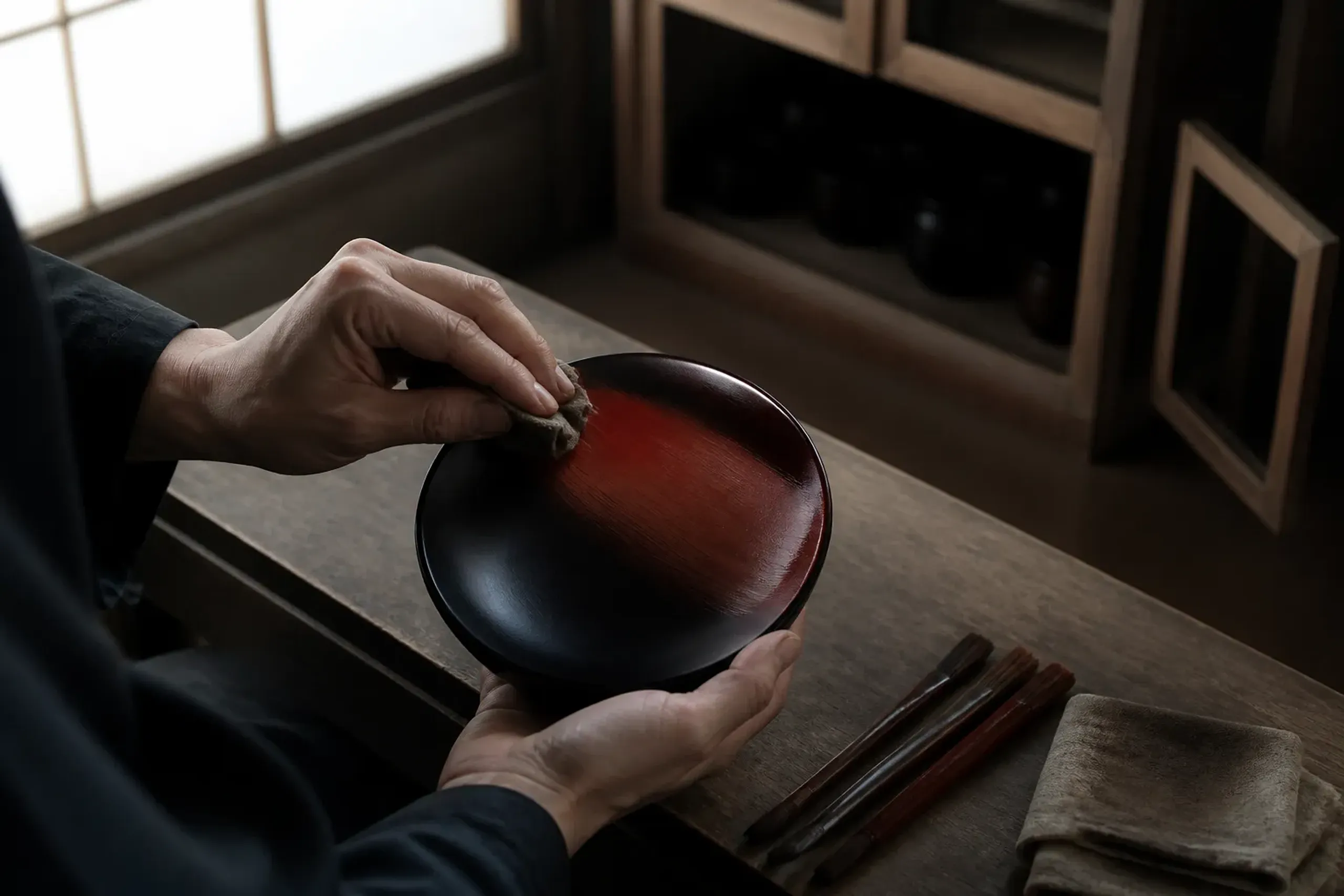
Each material moves at its own pace. Knowing what is visible in an hour, and what takes years you will never watch, changes what you ask for.
Ceramic
The visible part is seductive: clay rising on a wheel, a form appearing in minutes. The hard part is invisible. Glaze chemistry, kiln control, the long odds of a firing. A wood kiln can run for days and lose much of its load. In an hour you can watch throwing or trimming. You cannot watch a firing, and you should not expect to. Ask about the last firing instead.
Lacquer (Urushi)
Lacquerware rewards patience more than almost anything. Urushi is applied in many thin coats, each cured slowly in humidity, then polished. A single piece can take months across a year. What you see on a visit is one stage, frozen out of a long sequence. This matters right now: Ishikawa's lacquer regions, including Wajima, are rebuilding after the Noto Peninsula earthquake, and 2026 brings serious public programming around urushi, which we will come to.
Textile
Dyeing, weaving, resist work, embroidery. The loom is watchable and mesmerizing. The dye vats, the thread preparation, the design planning are slower and often out of sight. Indigo has its own biology; a living vat is fed and tended like sourdough. You can see a weaver at the loom. You cannot see the months of setup behind a single length of cloth.
Metal
Forging, casting, chasing, inlay. Some of this is dramatic and visible. Some is fine, still, and slow enough to look like nothing is happening. Tool-making and blade work reward close observation of a single repeated motion. Do not expect a full object in one sitting.
Paper (Washi)
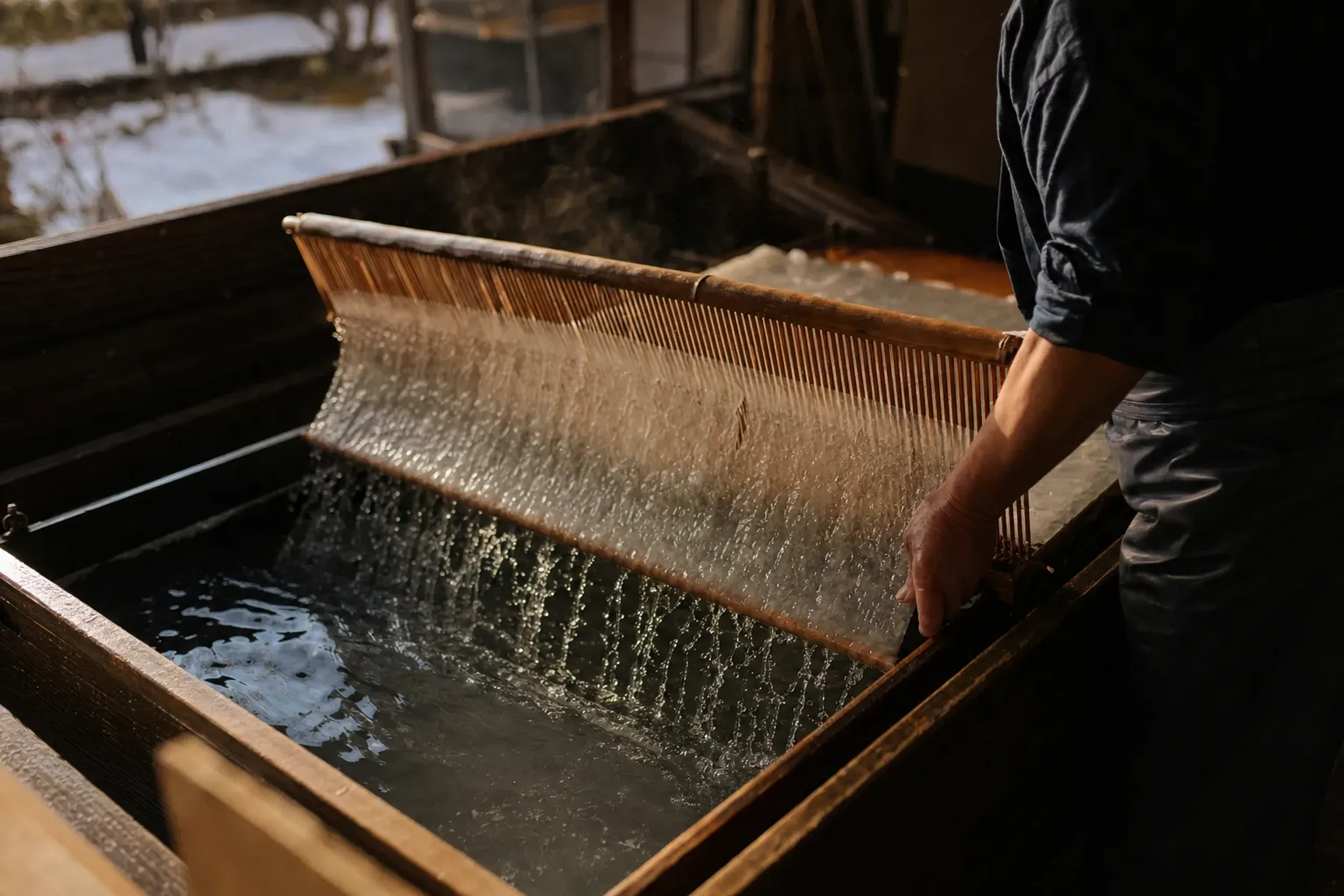
Papermaking is seasonal and physical. Fibers are cooked, beaten, and formed by hand in cold water, which is why much of it happens in winter. The forming motion is quick and beautiful and takes years to do evenly. If a maker offers to show it, understand you are watching skill compressed into seconds.
Knives And Blades
Bladesmithing and sharpening are among the most watchable crafts and among the hardest to judge. Forging is theatrical. The real skill is in heat treatment, grinding geometry, and the final edge, which you cannot see with the eye. Ask what steel, ask what the blade is for.
What To Ask For: The Questions, Verbatim
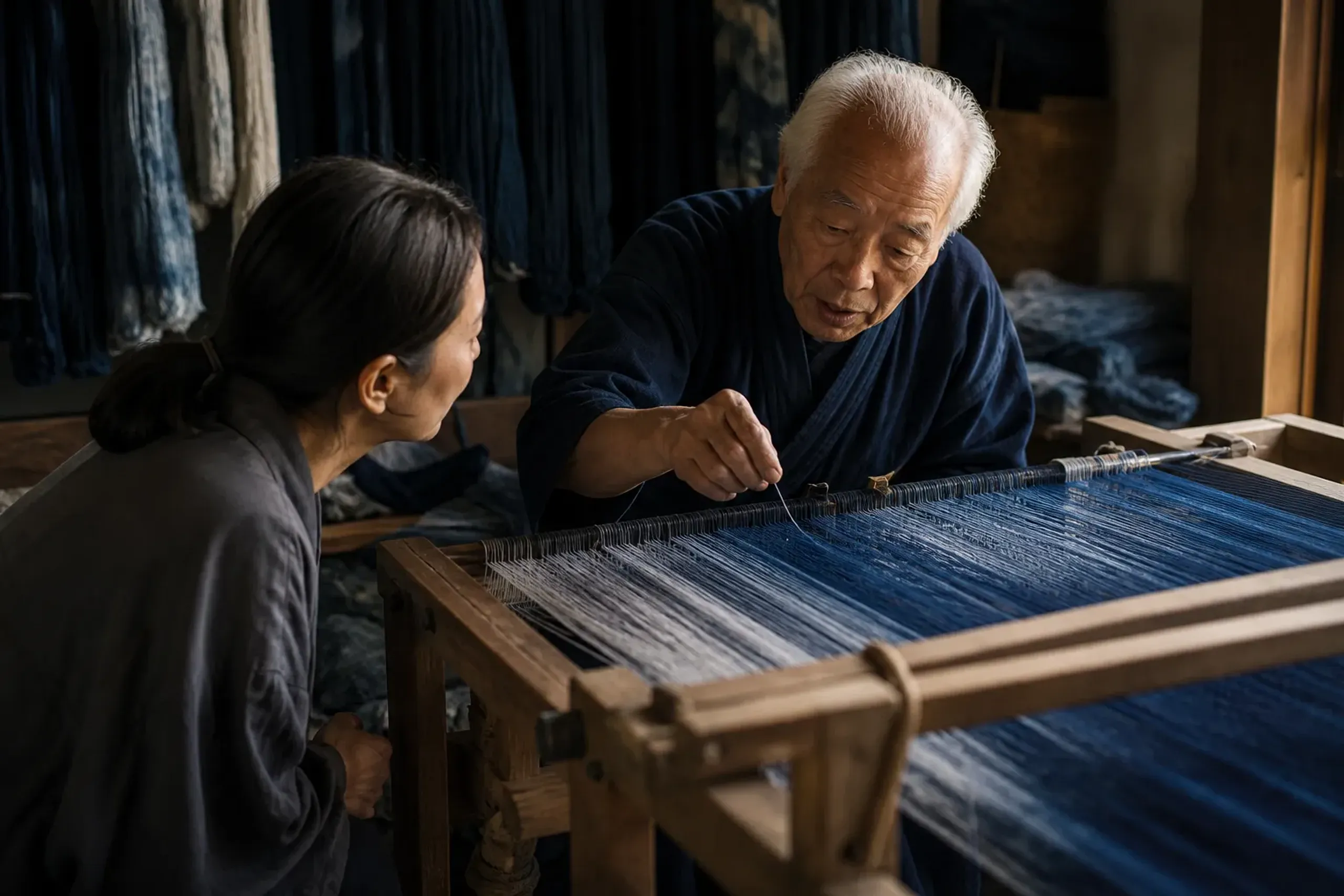
This is the part that separates a tourist from a guest. Good questions signal that you understand you are in a workplace. They open the maker up. Weak questions ("How long have you been doing this?" "Is this a dying art?") close them down. Here are the ones worth carrying, and why each one works.
About Today's Work
"What are you making today?" Simple, and it tells you everything. In a working atelier there is an answer, because something is underway. In a staged one the answer is often "whatever visitors want to try," which is its own signal.
"What stage is this piece at right now?" This shows you understand that craft is a sequence, not a single act. It invites the maker to explain where you have caught them, which is far more revealing than a general history.
"How long has this particular piece been in progress?" For lacquer or complex textile work the answer might be months, and hearing that reframes the whole room.
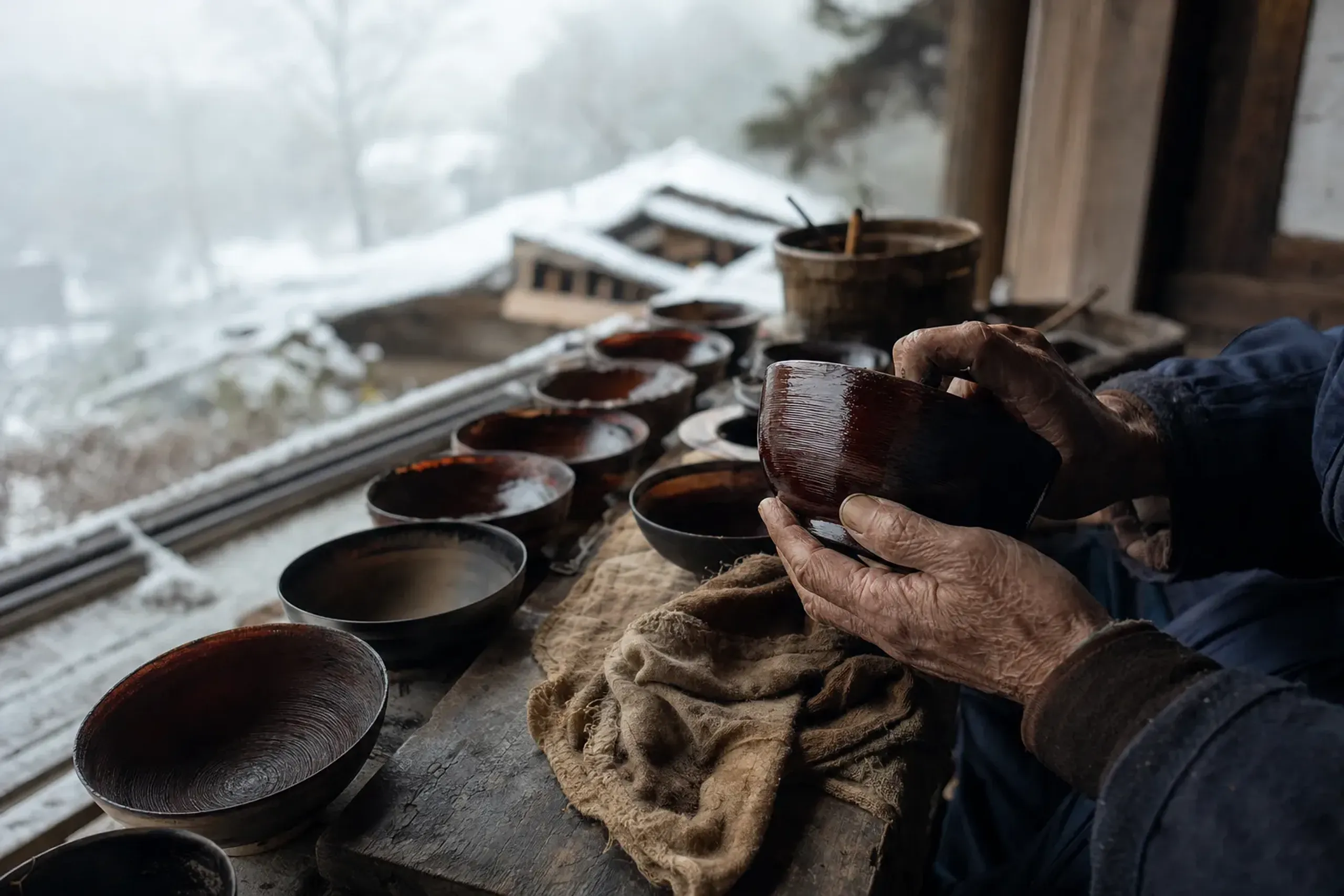
For faster work it tells you the day's rhythm.
About Material
"What material is this, and where does it come from?" Provenance matters to serious makers, and many are proud of a specific clay, a specific wood, a locally grown fiber, a particular steel. The question also quietly flags that you care about the real thing.
"Does the material change what you can do with it?" This is a maker's question. It gets you past appearance and into constraint, which is where craft actually lives.
About The Process And Its Difficulty
"Which part of this took the longest to learn?" Better than "how many years have you trained," because it points at a specific skill rather than a résumé. The answers are often surprising and honest.
"What goes wrong most often?" Failure is the truest window into a craft. A maker who fires a kiln, or cures lacquer, or dyes cloth lives with loss, and talking about it is talking about the real work.
"What can't I see today that goes into this?" This one earns respect. It admits that an hour is a keyhole, and it invites the maker to name the invisible stages, which is where most of the labor hides.
About The Object In Front Of You
"Is this piece spoken for, or is it available?" Ask before you admire too openly. It draws a clean line between viewing and buying and spares everyone an awkward assumption.
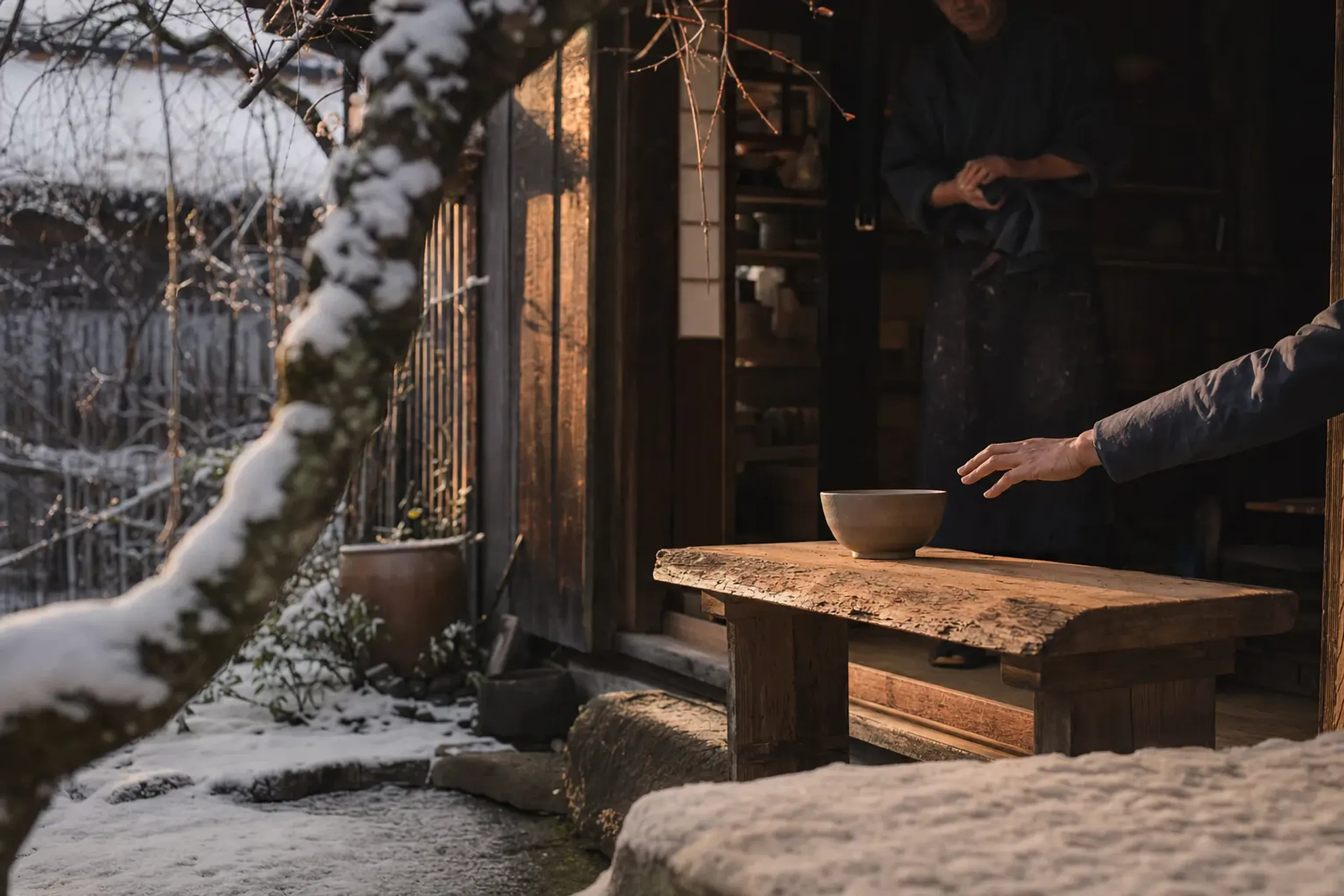
"If I wanted something made, how does that work?" The commissioning question. In a real workshop this opens a serious conversation about lead time, material, and cost. Handled well, it is the deepest form of support you can offer, and we will come back to how it works.
What To Avoid: The Structural Markers Of A Staged Visit
You do not need to name names to protect yourself. Staged experiences share a shape. None of these markers is shameful, and there is nothing wrong with having enjoyed one. But if you want the real thing, learn to read them.
Red-flag checklist: the more of these you see, the further you are from a working atelier.
- No production is actually happening. If nothing is being made except by visitors, you are in a classroom, not a workshop.
- The maker is performing, not working. A demonstration paced entirely to your attention, restarted for each group, is theater. A maker who keeps working while you watch is not.
- A fixed visitor circuit. Roped paths, numbered stations, a set route through the space. Working rooms are not designed for foot traffic.
- High turnover. Groups cycling through on a timetable, one after another, means the day is built around visitors, not around making.
- Everything is for sale, and selling is the point. A shop attached to a workshop is normal and good. A visit that funnels relentlessly toward the till is not.
- Large group size. Serious work does not tolerate a crowd in the room. Two to four people is a visit. Twenty is an audience.
The honest test is simple.
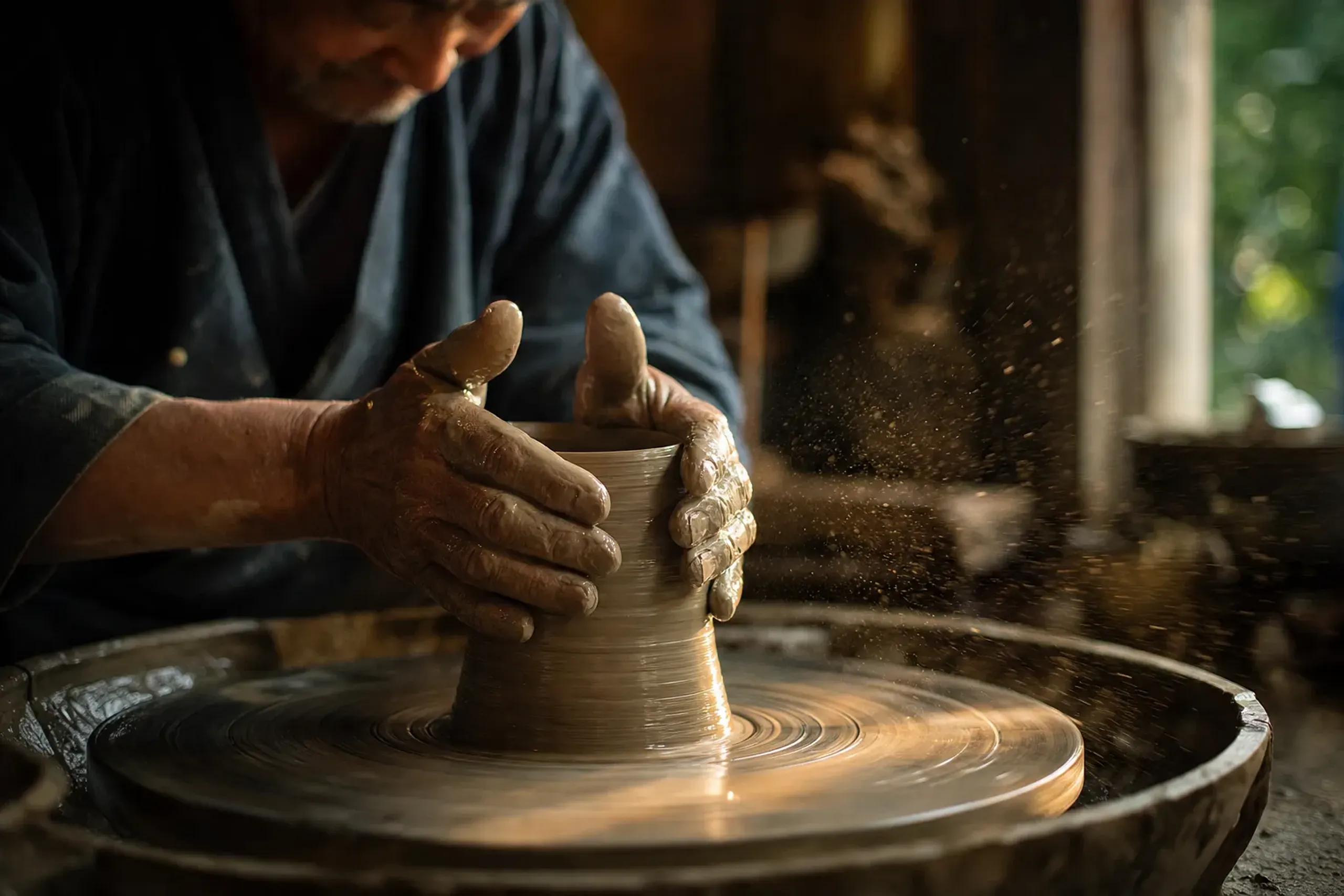
If your presence changed nothing about what the maker was doing, you were probably somewhere real.
The Craft Access Ladder
You do not have to walk into a private studio on day one, and often you should not. Craft literacy builds in stages, and each rung is worthwhile on its own.
1. Museum And Context
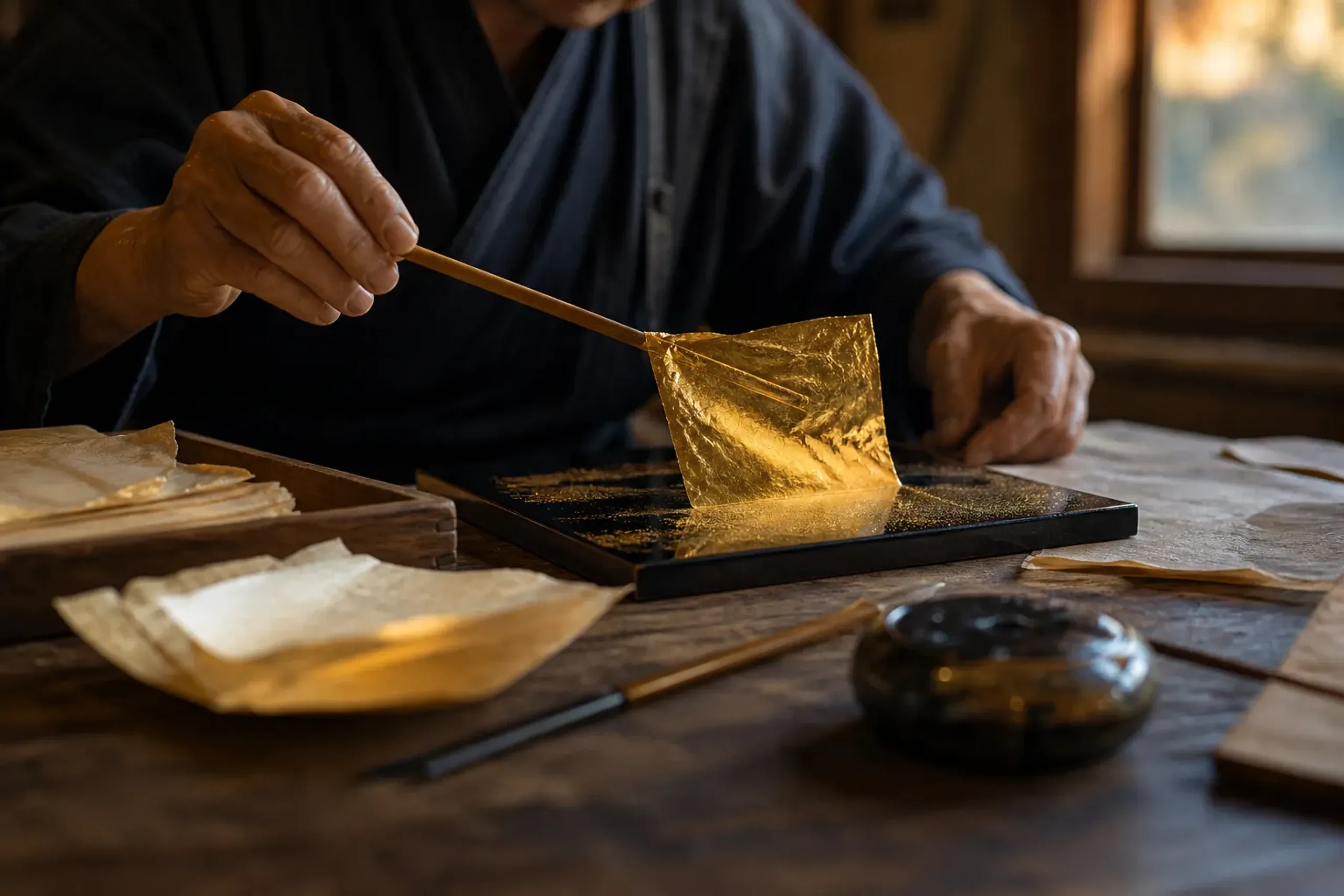
Start where the work is explained and no one's time is at stake. In Kanazawa, the Kanazawa Yasue Gold Leaf Museum sets out the city's gold-leaf tradition clearly. Museum context teaches you what to look for before you look at a maker.
2. Gallery With Provenance
A good gallery shows finished work with real attribution and can talk about who made what and how. KOGEI Art Fair Kanazawa, described by its organizers as Japan's only art fair dedicated to crafts, is a concentrated place to see serious work and meet the people around it. The fair has been calling for exhibitors for its 2026 edition.
3. Studio Visit To Observe
Watching real production, quietly, without touching. This is the heart of it. It requires an introduction, and it requires that you behave as a guest.
4. Hands-On, Only Where Appropriate
Some makers welcome a supervised attempt at a stage of their work. Many do not, and that is not a failing. Do not treat hands-on as the goal.
It is one option, not the summit.
5. Commissioning And Collecting
The deepest rung. You order a piece, wait months, and take on the aftercare, shipping, and insurance. This is where your interest becomes tangible support for a livelihood.
Kaga: Kutani Porcelain and Yamanaka Lacquer
Move south from Kanazawa and you reach Kaga, a single city that holds two distinct traditions: porcelain around Daishōji, and lacquer up in the mountains at Yamanaka Onsen. Few places in Japan let you observe two unrelated disciplines within the same day's drive, which is part of what makes the area worth routing deliberately rather than passing through.
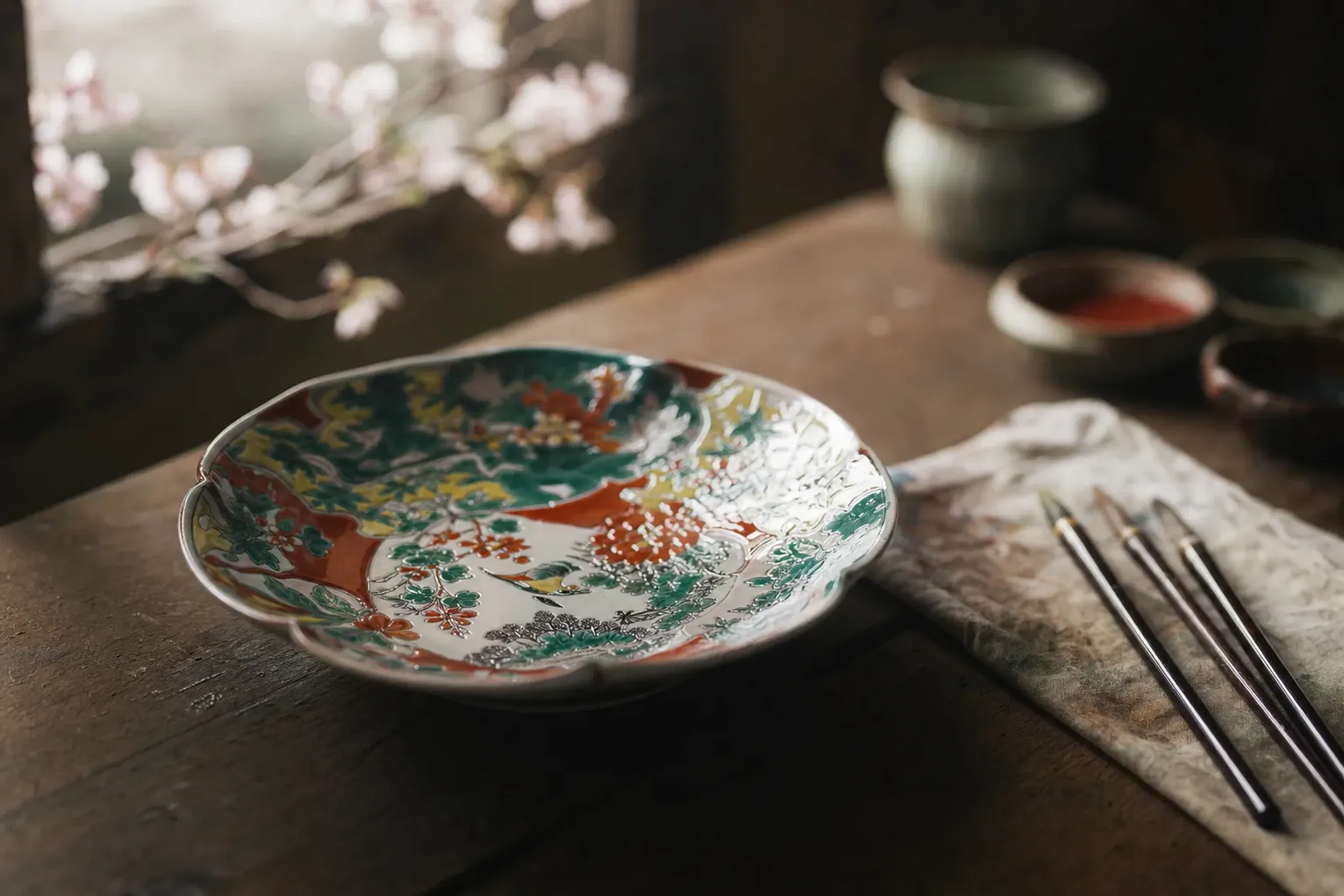
Kutani ware is the porcelain. The name belongs to the village of Kutani, where a kiln was set up after porcelain stone was found nearby; it first appears in the record in 1655. The earliest ware, known as Ko-Kutani or Old Kutani, dates to the 17th and early 18th centuries. Production stopped in the early 18th century and was revived in the early 19th. Where exactly the Old Kutani pieces were made remains a matter of scholarly debate, which is itself part of the fascination. The style most people recognize is Kutani gosai, a five-colour palette of green, yellow, blue, purple and red laid over the white body. Today the ware is produced across Kaga, Komatsu and Nomi, and Kaga City keeps a Kutani ware art museum where you can read the tradition before you stand in front of a working wheel.
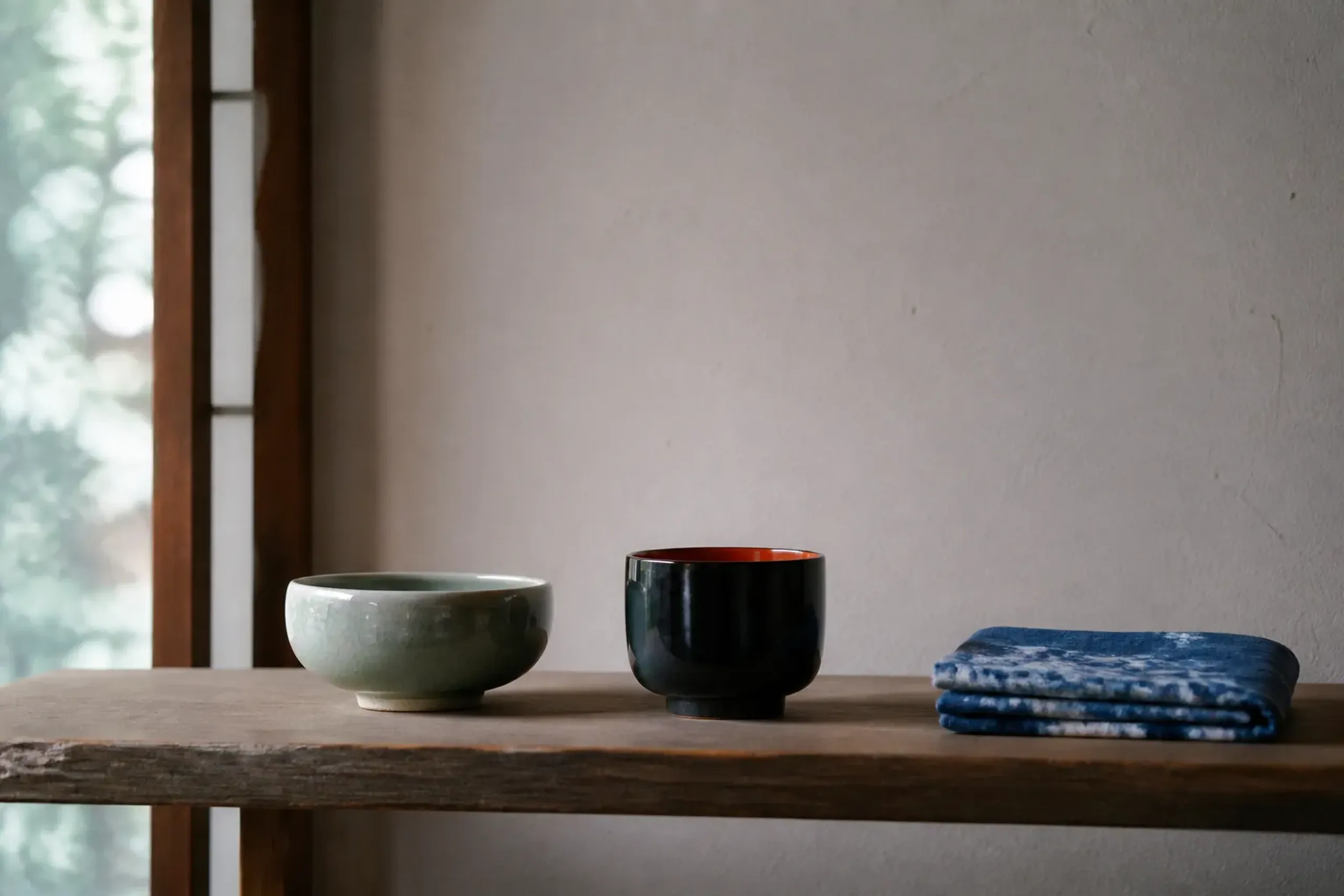
Yamanaka lacquer comes from the mountain area around Yamanaka Onsen and dates to the Azuchi-Momoyama period of the late 16th century. It is defined by woodturning: artisans often leave the wood grain visible beneath the lacquer rather than hiding it, and many workshops still turn on foot-powered lathes with hand-forged tools. Lacquer goes on in several layers, and a single coat can take weeks to dry; maki-e, the gold-powder decoration, was adopted here in the 1800s. The Ishikawa Prefectural Institute for Yamanaka Lacquerware is described as Japan's only training centre for the discipline. Visitors who want to feel the resistance of wood on a lathe for themselves can try woodturning at Rokuro-no-Sato, the town's arts and crafts hall.
Taken together, Kaga's porcelain and lacquer sit alongside Kanazawa's gold leaf and Wajima's lacquer, so that a single prefecture covers the main Hokuriku crafts. If blades interest you, Echizen in neighbouring Fukui carries that further, as we cover in our look at the art of the knife in Japan. We arrange workshop and atelier visits here as part of a wider stay, and timing matters: see Hokuriku by season for when each phenomenon actually peaks, and our Noto guide for the coast beyond Wajima.
Ishikawa In 2026: Craft As A Living Industry, Not A Performance
If you want a single region where craft is a real economy rather than a show, look to Ishikawa in 2026. The programming is unusually meaningful this year, and much of it carries a recovery dimension after the Noto Peninsula earthquake and the heavy rain that followed.
The Ishikawa International Urushi Exhibition 2026, the 14th edition of an event established in 1989, spans the prefecture's major urushi areas of Wajima, Yamanaka, and Kanazawa, and openly frames itself in part around recovery for the Wajima-nuri region. Separately, the Ishikawa Prefectural Museum of Art has scheduled a Wajima-nuri exhibition running June 27 to August 2, 2026.
This is craft framed as industry and livelihood, which is the correct frame. Japan's Ministry of Economy, Trade and Industry issued a public call in January 2026 for its FY2026 traditional craft industries support subsidies, and the Japan Tourism Agency has been funding work to raise the quality of local guides and cultural content in the regions. The Japan National Tourism Organization, in a March 2026 release, put its weight behind meaningful journeys beyond the crowds, naming community-led craft revival directly. When you route a trip and your spending toward Ishikawa, you are participating in something the country itself is trying to sustain.
Conduct In A Working Atelier
How you behave is most of what you bring. The rules are not complicated, but they are firm.
- Photography. Ask first, every time, and accept no as a full answer. Some processes, some designs, and some works-in-progress are not to be photographed. Never photograph a maker's face without permission.
- Touching work. Do not touch anything unless you are invited to. Wet clay, curing lacquer, and dyed cloth are all ruinable by a fingertip. Assume everything is fragile and everything is someone's month of labor.
- Timing. Arrive when asked, not early, not late. A short, well-conducted visit of thirty to sixty minutes respects the day. Do not linger to fill your own schedule.
- Talking. Ask your questions in the pauses, not over the work. Silence while a maker concentrates is not awkward; it is correct.
- Purchase. Sometimes buying is welcome and sometimes it is beside the point. A studio visit is not a shop. If you want to buy, ask plainly. If nothing is offered, do not press. Never assume that watching entitles you to acquire.
Honest Limits, And What An Introduction Actually Changes
Be clear-eyed about the ceilings here. Some workshops receive no visitors at all, by choice, and no amount of interest changes that. Some processes are seasonal: papermaking clusters in winter, certain dye work follows the plant. Some masters do not demonstrate, ever, because demonstrating is not their practice. A commission may take the better part of a year, and a firing may fail. These are not obstacles to work around. They are the shape of the real thing.
So what does a good introduction actually do? It does not buy you access that money alone cannot. It vouches for you. It tells a maker that you understand the difference between a workplace and an attraction, that you will keep to the time agreed, that you will not photograph what you were asked not to, and that if you buy or commission, you will honor the terms. It protects the maker's time as much as it opens their door. That is the whole value, and it is considerable.
Why Choose Japan Royal Service
Our work at Japan Royal Service is not to stage a craft experience for you. It is to understand what genuinely interests you, then match it to the right maker and the right rung of the ladder, at a pace that respects the workshop. Some guests want a single, quiet studio hour. Others want to build toward a commission over a year, with the translation, aftercare, and shipping handled properly. A few want to plan a whole itinerary around Ishikawa's 2026 lacquer programming or the KOGEI fair in Kanazawa, moving away from the peak-season crush of Kyoto's greatest hits.
We arrange introductions privately, and we confirm them close to travel to protect both your discretion and the maker's. When a private, English-speaking guide and chauffeured transport matter to reach a rural workshop without friction, our concierge coordinates that too, and each tailor-made itinerary is built around fewer, deeper encounters rather than a checklist. Our team speaks English, Japanese, Thai, and Filipino, and works quietly.
If you would like us to match your interests to appropriate makers, reach our team privately via WhatsApp or LINE, or contact us here. Tell us the material that draws you, and we will begin from there.