In this guide
- 01Why Did Japan Start Growing Olives On Shōdoshima?
- 02Why Did The Olives Survive On Shōdoshima When Others Failed?
- 03Japan Had Already Failed At Olives Several Times
- 04The Honest Rise, Fall, And Return
- 05An Olive-Colored Wind: Culture And The Named Sites
- 06How Do You Visit Shōdoshima As A Luxury Traveler?
- 07Frequently Asked Questions
- 08Why Choose Japan Royal Service
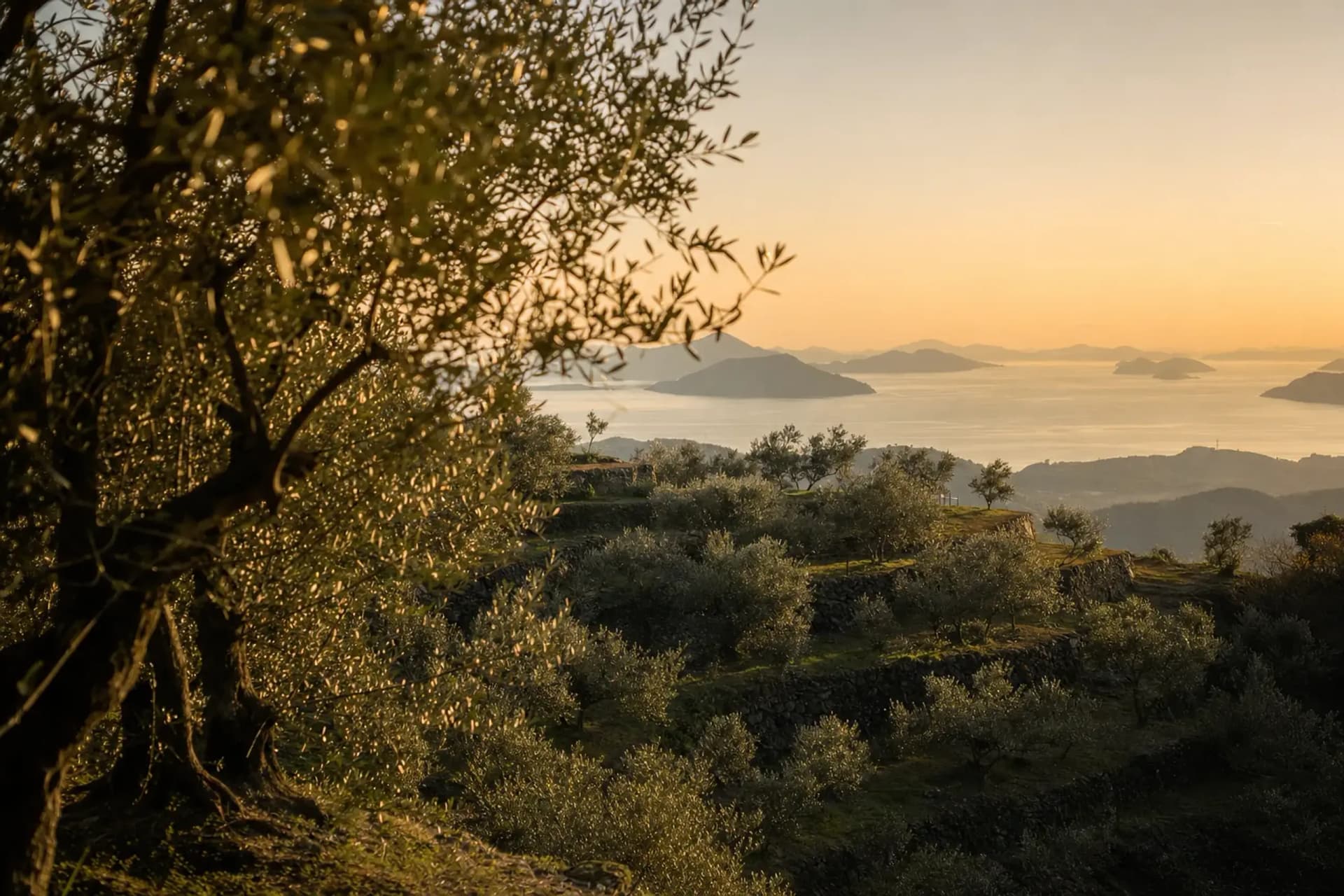
Stand in the Nishimura district of Shōdoshima on a dry summer morning and the light does something strange. It falls hard and clean, the way it falls over a Greek hillside, and the olive leaves flip silver in the wind. This is the exact ground where, in 1908, the first olive saplings in Japan managed to live. Not the first ones planted. The first ones to survive.
Most visitors arrive believing a tidy story: Shōdoshima grows olives because it looks like the Mediterranean, so someone tried, and it worked. Half of that is true. The climate is why it worked. But it explains nothing about why anyone bothered in the first place. The real reason is stranger, and it has almost nothing to do with cooking.
It has to do with fish.
Why Did Japan Start Growing Olives On Shōdoshima?
Japan began cultivating olives on Shōdoshima in 1908 to produce oil for preserving canned fish, after a 1904–05 war victory expanded Japanese fishing rights into distant Russian waters.
Here is the chain of events, because it matters. Japan defeated Russia in the war of 1904–05. A treaty in 1908 handed Japanese fishermen the right to work the cold, rich waters of the Sea of Okhotsk and the Bering Sea. Suddenly the fleet was hauling catches thousands of kilometres from home.
Fish caught that far away has to survive the long voyage back.
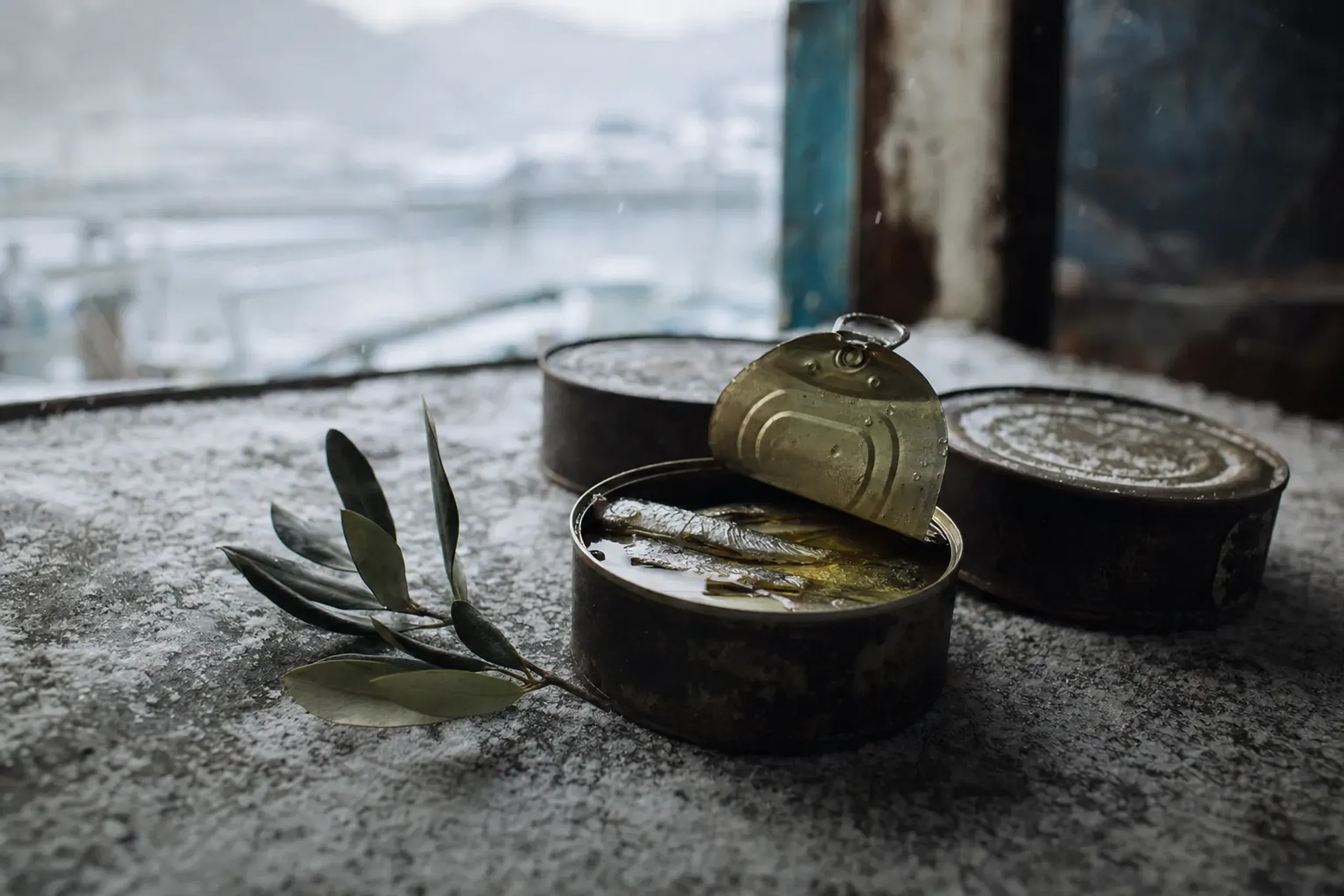
In that era, olive oil was the preservative of choice for canned fish. So demand for olive oil climbed sharply, driven not by kitchens but by an expanding fishing industry and its canneries. The government looked at the numbers and decided it needed a domestic source. That decision — bureaucratic, industrial, entirely unromantic — is what put the first olive tree in Japanese soil with any real intent behind it.
Nobody planted olives here to drizzle over salad. They planted them to keep mackerel from rotting on the way home from the Bering Sea.
Why Did The Olives Survive On Shōdoshima When Others Failed?
Shōdoshima's olives survived because its climate — strong dry summer sun and mild year-round temperatures — closely mirrors the Mediterranean, unlike the two rival trial sites, which both failed.
In 1907 the Ministry of Agriculture and Commerce chose three prefectures for a controlled experiment: Mie, Kagoshima, and Kagawa. Each received the same start in 1908 — roughly 1.2 hectares of trial planting. A fair race, three horses, one finish line.
Only Kagawa's trees, in Shōdoshima's Nishimura district, took hold. Mie failed. Kagoshima failed. The island won not by luck but by weather it could not take credit for.
The early figures are worth stating precisely, because they are small and stubborn and human. Of 519 saplings planted, 507 were still standing after three years.
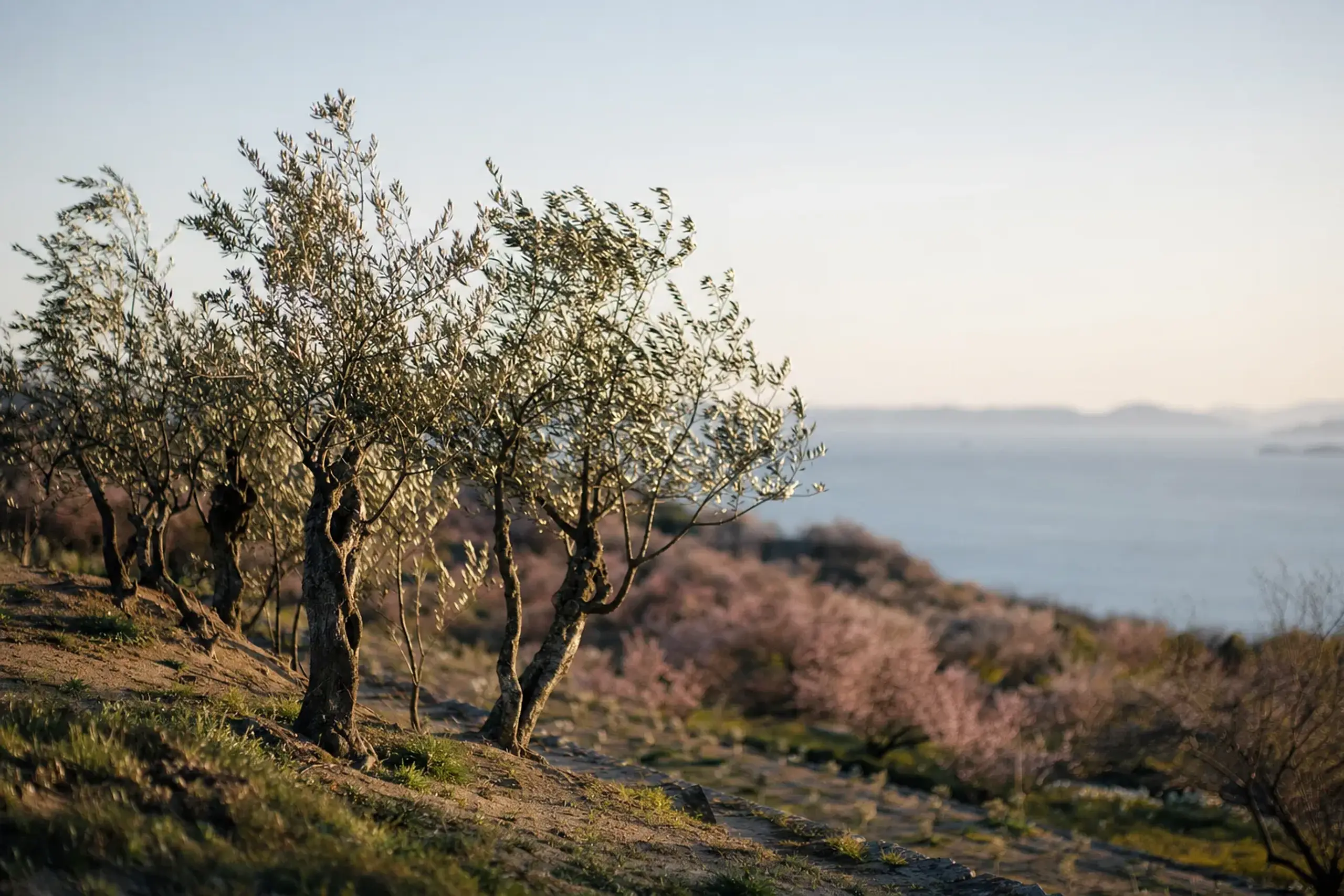
That handful of survivors produced 7 kilograms of harvest. Seven. From that modest yield, an entire regional identity grew.
Key fact: 519 saplings planted in 1908, 507 alive after three years, 7 kg of first harvest. Shōdoshima was the only one of three government trial sites where olives took root.
And even that was not smooth. An olive weevil native to East Asia found the young orchard and chewed through it. The early cultivators had no manual. They spent years on trial and error, losing trees, learning the pest, adjusting, replanting. Success on Shōdoshima was not a single triumphant harvest. It was a slow, itchy, decade-long argument with an insect.
Japan Had Already Failed At Olives Several Times
Shōdoshima was not Japan's first attempt. It was the first that stuck. The country had been trying, and failing, for nearly half a century.
The very first introduction dates to 1862, when the Tokugawa shogun's personal physician brought olive plants from France — for medicine, not food. That effort died. Over the following decades, more attempts followed in Tokyo, Wakayama, and Hyōgo. Some got surprisingly far. Wakayama's trees actually fruited. Hyōgo's operation even managed to press oil.
None of them lasted. Fruit once, press oil once, then falter. Continuous cultivation eluded every one of them until a small island in the Seto Inland Sea, with its dry Mediterranean sun, finally held on.
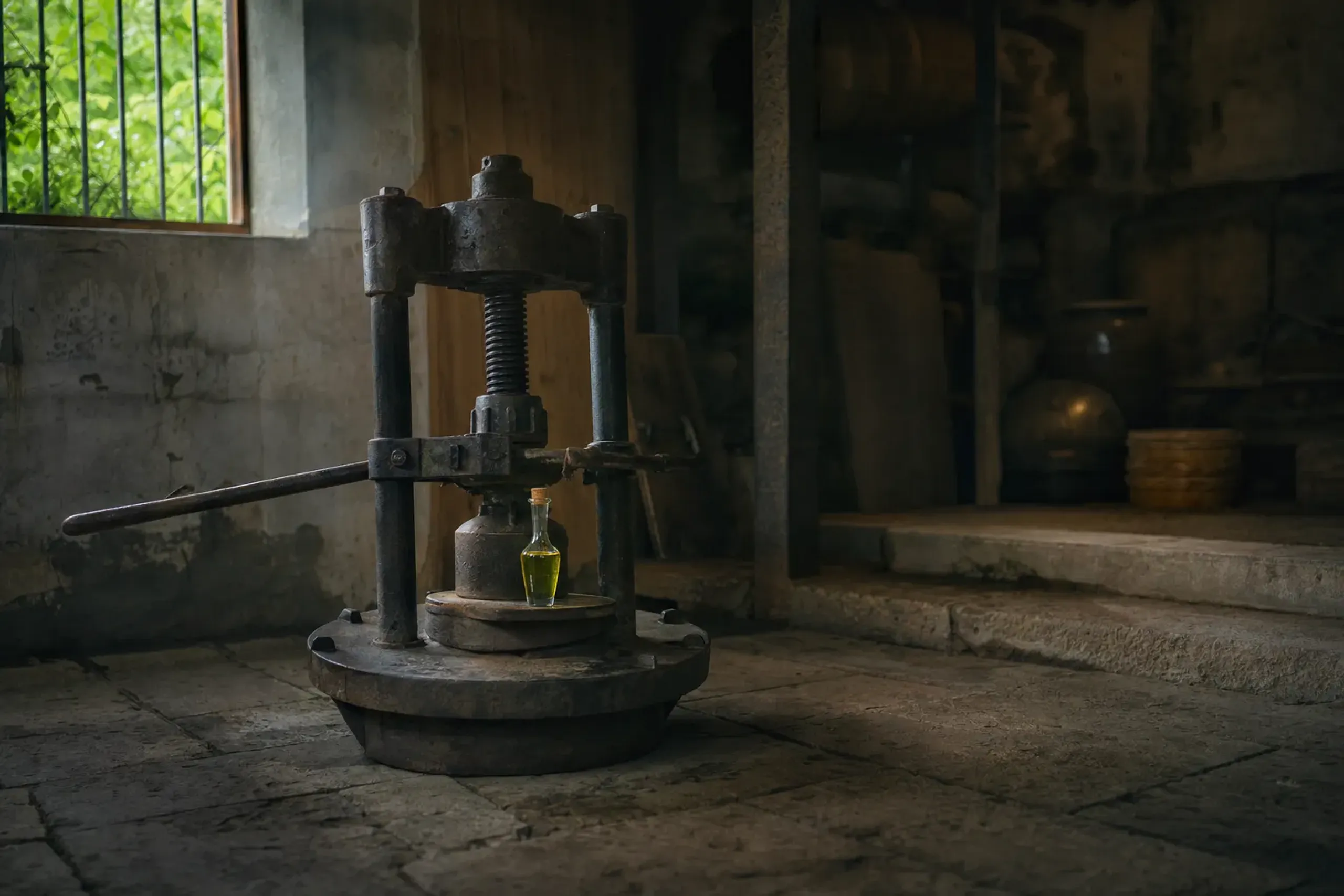
Shōdoshima did not invent Japanese olives. It refused to let them die.
The Honest Rise, Fall, And Return
What happened next is a story the island's own sources tell without gilding, which is refreshing.
For decades the industry grew. Then, in 1959, trade liberalization opened the gates to cheap foreign olive products. Imports flooded in. Domestic cultivation slumped hard, and Shōdoshima's orchards thinned.
The revival is dated with unusual precision: 1989. An Italian-food and health-food boom swept through Japan, and consumers rediscovered a taste for home-grown olives. Momentum built from there. In 2003 the town became Japan's first designated "Special Zone for Structural Reform," allowing companies to enter agriculture directly. Further land-law reform from 2009 brought still more local firms into olive growing.
Now for the honest part. The island's own official material admits something most destinations would bury. Because growing olives on abandoned farmland has spread across Japan in recent years, Shōdoshima can no longer really claim to be the country's single, exclusive olive region. It says so plainly. We repeat it plainly. Shōdoshima was first, and it remains the origin — but "the only one" is a title it has quietly, honestly let go.
There is more character in that admission than in any oversold superlative. Our concierge team tends to trust a place that tells the truth about itself.
An Olive-Colored Wind: Culture And The Named Sites
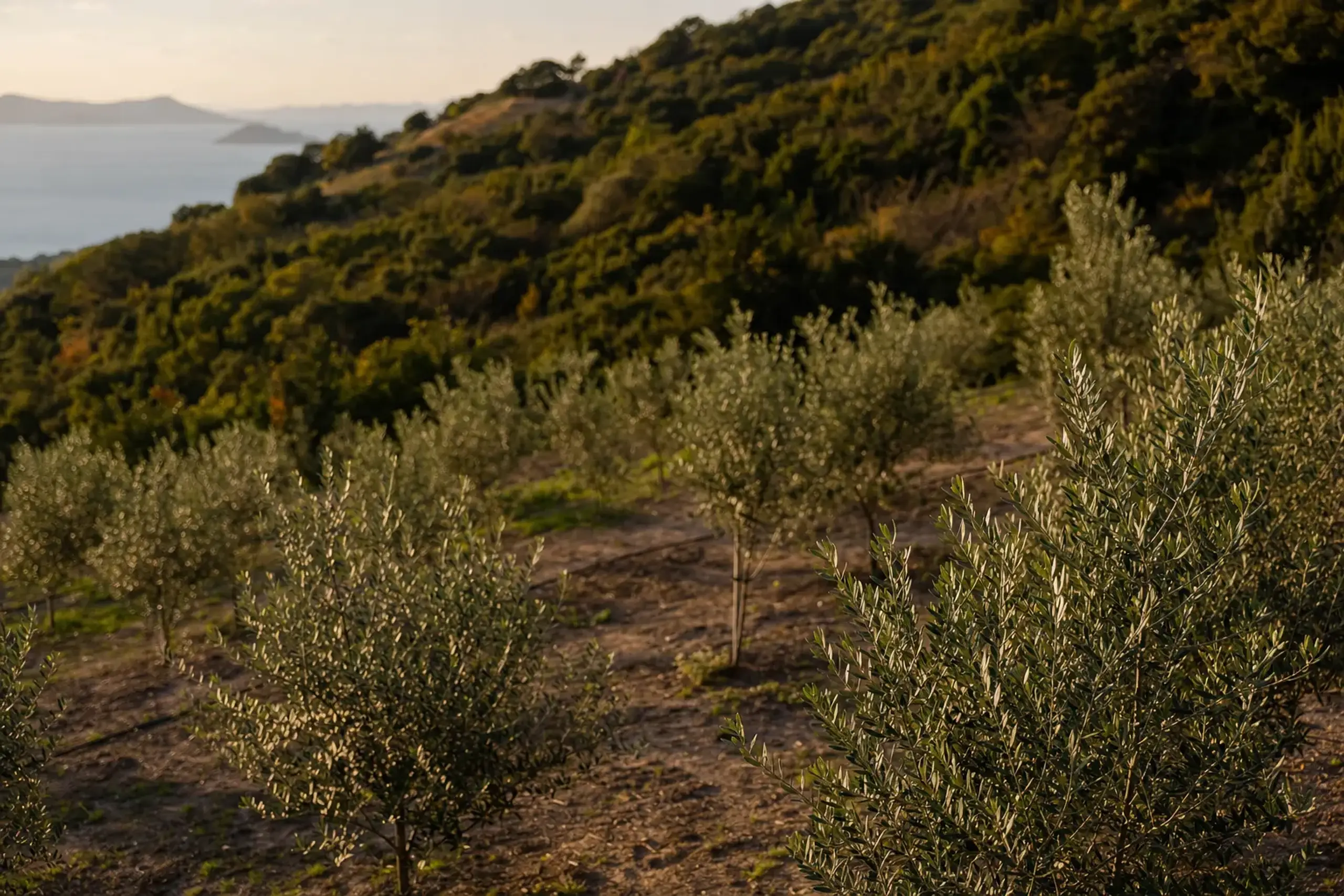
The novelist Tsuboi Sakae set her celebrated book Twenty-Four Eyes on this island. She described its color as so gently constant through the seasons that, in her words, "one might think an olive-colored wind is blowing." Spend a slow afternoon here and the phrase stops sounding like literature and starts sounding like a plain observation.
What follows is a bounded, practical guide to the island's principal sites and how to reach them.
Olive Park
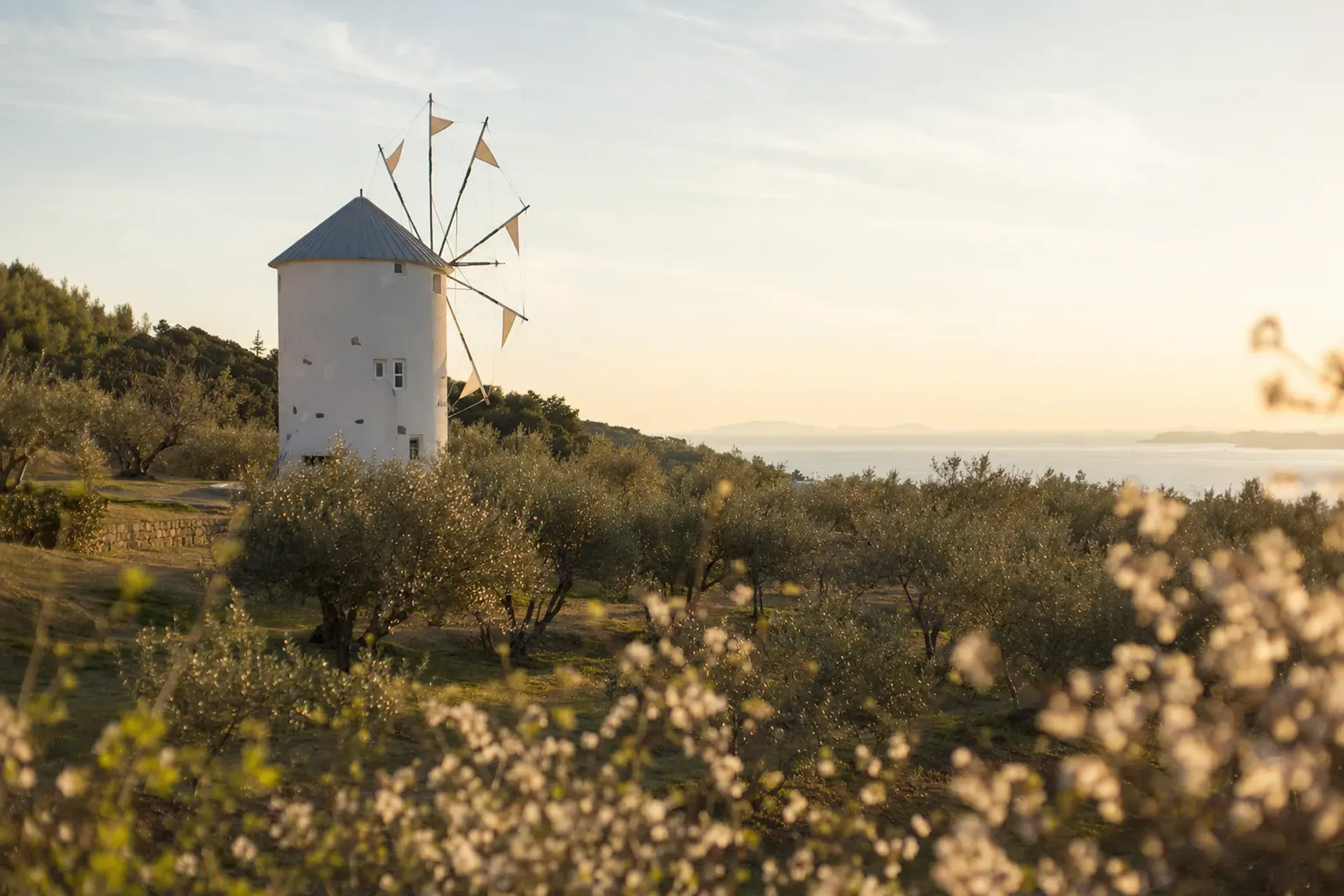
Olive Park occupies the original 1908 trial ground in the Nishimura district — the exact place the first surviving trees grew. It holds roughly 2,000 olive trees and around 120 herb varieties, and it was built deliberately in a Greek key, with an olive museum, a Greek-style windmill, and a hot spring. The hillside setting over the sea rewards a visit near golden hour.
Olive Jinja
Perhaps the island's oddest, most quietly wonderful detail: a Greek-style Shinto shrine. Olive Jinja was established in 1973, its columns in the Doric order — a Greek temple silhouette housing a Japanese kami. That same year, a separate private olive orchard beside it first opened to the public, free to wander. A Greek shrine on a Japanese island, keeping watch over the trees that came here to save the fishing fleet. Few things capture the island better.
Dofuchi Strait
Recognized as the world's narrowest strait, Dofuchi measures just 9.93 metres at its tightest point.
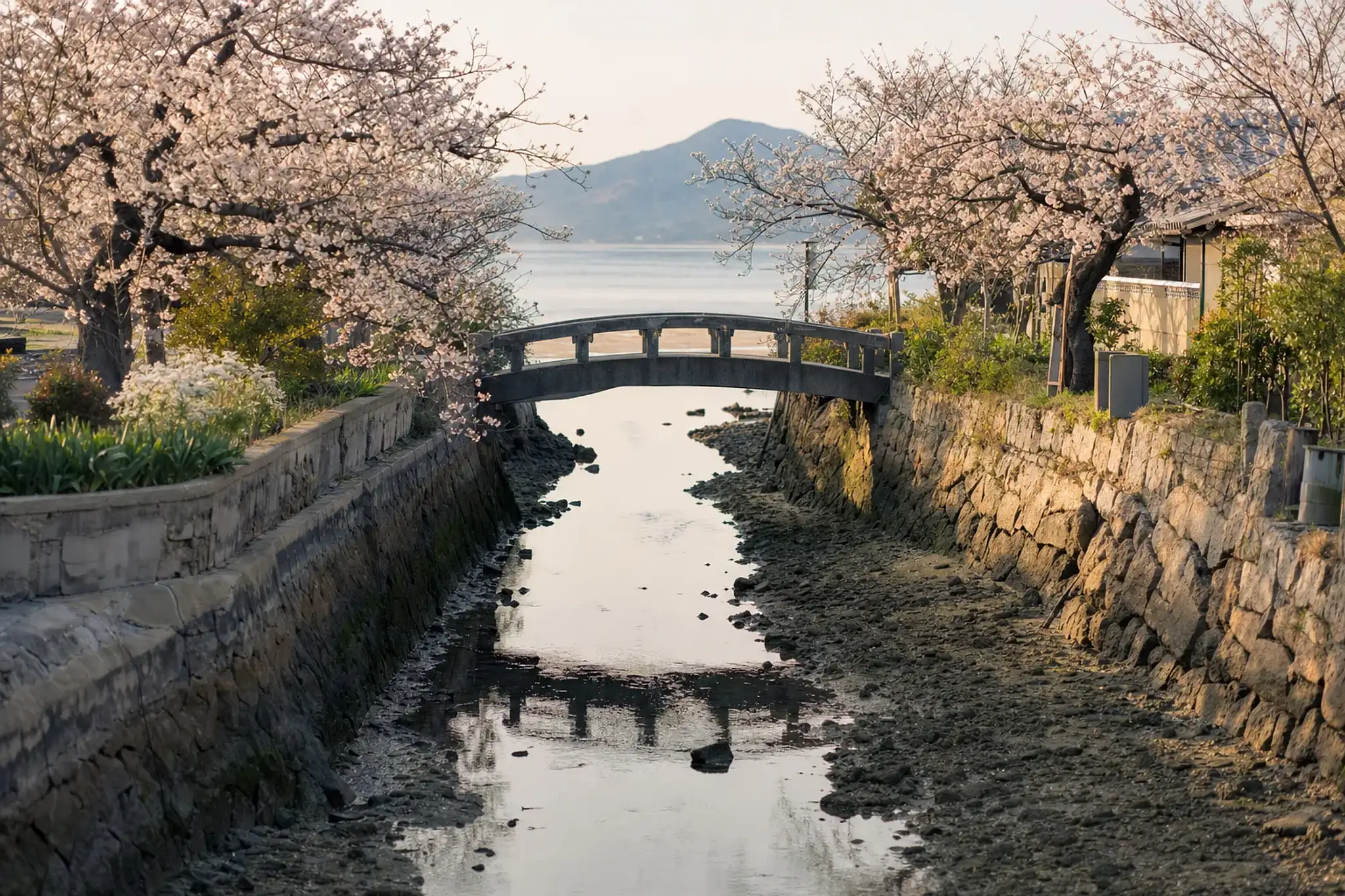
It is the kind of superlative you can stand beside and take in at a glance.
Twenty-Four Eyes Movie Studio
Tied to Tsuboi Sakae's novel, this preserved film-set village on the island's eastern shore lets you walk into the world of the book — a wooden schoolhouse, a coastline, and that same soft, unchanging light she wrote about.
Soy Sauce And The Harvest Festival
Distinct from the olives entirely, Shōdoshima has brewed soy sauce since the early twentieth century, and shōyu remains a major local industry — the island's fermentation quarter still carries the deep, malty scent of aging barrels. Each October and November, an annual Olive Harvest Festival marks the year's crop. Dates and site hours shift year to year; our concierge team confirms current festival timing and opening hours on your behalf before you travel.
How Do You Visit Shōdoshima As A Luxury Traveler?
Reach Shōdoshima by ferry from Takamatsu, Shin-Okayama, or Teshima — roughly 30 to 60 minutes — then explore the island by private car with a guide who knows its history, sites, and timing.
Shōdoshima rewards a stay-based approach rather than a rushed day trip. Two nights lets the island breathe: the trial-site slope at Olive Park in soft evening light, the Greek shrine, the soy-sauce quarter, and Kankakei Gorge without a stopwatch running.
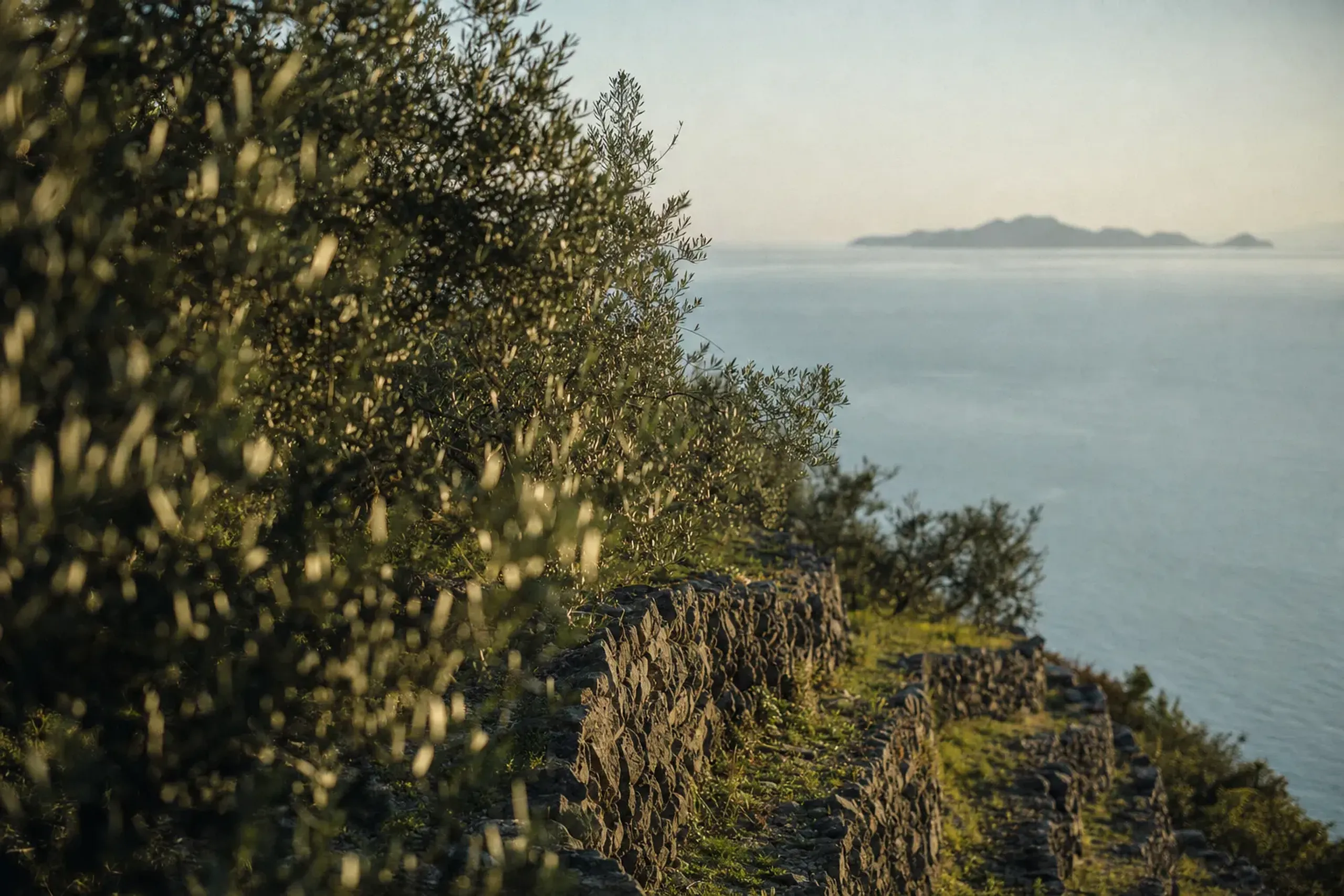
For those weighing Setouchi as a whole, it makes a fine quiet counterpoint to the museum-heavy days of Naoshima and Teshima — a place to decompress between them.
For our guests, Japan Royal Service arranges private guiding on the island and private chauffeured transport to weave the sites into an unhurried day. We also shape the surrounding bespoke itinerary and handle accommodation across the wider Setouchi route. If you are pairing Shōdoshima with the mainland, our Kanazawa to Takayama guide shows how we thread a longer journey together.
Frequently Asked Questions
Why did olives first come to Shōdoshima if not for cooking?
Olives arrived in 1908 to make oil for preserving canned fish. A 1908 treaty after Japan's war victory over Russia expanded fishing into distant northern waters, and the long-voyage catch needed preservation. Culinary use came far later.
Is Shōdoshima still the only place in Japan that grows olives?
No — and the island says so honestly. Shōdoshima was Japan's first successful olive region and remains its origin, but olive growing on reused farmland has since spread nationwide, so the "only one" claim no longer strictly holds.
How many nights should I spend on Shōdoshima?
Two nights suits most travelers. That pace covers Olive Park, Olive Jinja, Kankakei Gorge, the soy-sauce quarter, and Dofuchi Strait without rushing, and positions the island as a calm counterpoint to art-heavy Naoshima and Teshima.
When is the Olive Harvest Festival held on Shōdoshima?
The annual Olive Harvest Festival runs across October and November. Exact dates and site opening hours vary each year, so our concierge team verifies the current schedule ahead of your visit.
How do I get to Shōdoshima?
By ferry, typically 30 to 60 minutes from Takamatsu, Shin-Okayama, or Teshima. Once on the island, a private car with a guide is the most comfortable way to link the widely spread sites.
Why Choose Japan Royal Service
Shōdoshima is a public island, not a hidden estate — anyone can board the ferry. What separates a good visit from a memorable one is knowing which slope of Olive Park to stand on at dusk, why a Doric shrine sits among the trees, and how a scattering of 507 saplings became a regional identity. In our experience, that context is what turns sightseeing into understanding.
Our team at Japan Royal Service builds the day around you: a knowledgeable private guide, unhurried transport, and a hand on the practical details — festival timing, opening hours, the wider Setouchi route. We keep our guests' plans entirely confidential, and we tell the truth about a place, the way this island tells the truth about itself.
To plan a private Shōdoshima journey, reach our team directly via WhatsApp or LINE, or contact us here.