In this guide
- 01The Approach Through Tadasu No Mori Is The Experience
- 02What Is Tadasu No Mori, And Why Does It Matter?
- 03How Much Of Tadasu No Mori Was Lost Since The Heian Period?
- 04What Still Lives Here: Species, Age, And Water
- 05Spring At Shimogamo Shrine: The Verified Calendar
- 06The Quiet Center: The Citizens’ Tree-Planting Festival (29 April)
- 07How Can You See Yabusame At Shimogamo Shrine On May 3?
- 08What Time Does The Aoi Matsuri Procession Reach Shimogamo Shrine?
- 09The Honest Note On Timing: Golden Week Crowds, And The April Alternative
- 10A Short, Precise Note On Access And Etiquette
- 11How Do You Plan A Chauffeured Visit To Shimogamo Shrine In Spring?
- 12What Japan Royal Service Can Coordinate For This Experience
- 13Frequently Asked Questions
- 14Why Choose Japan Royal Service
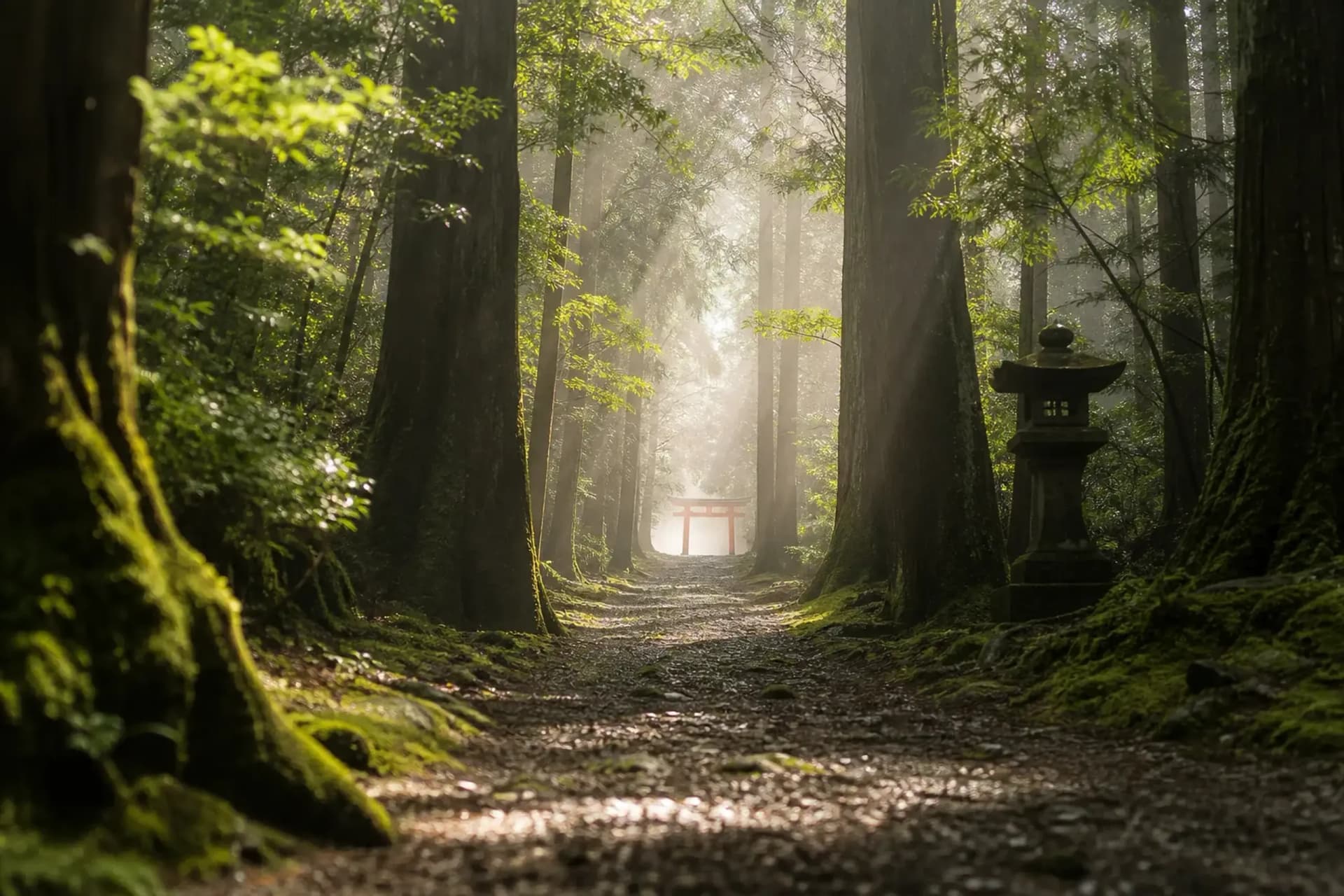
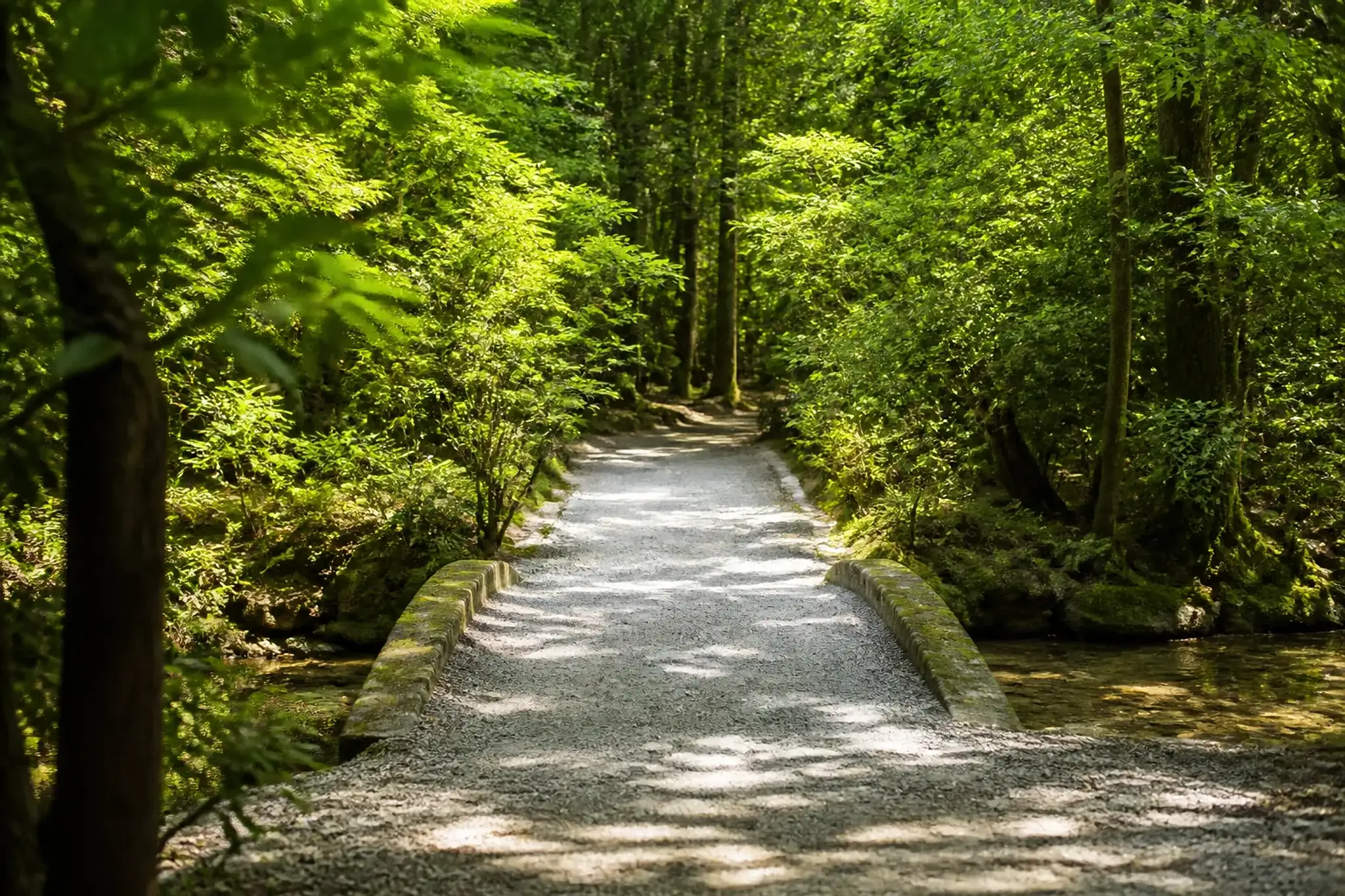
The street noise fades fast at the edge of Tadasu no Mori. One step. Then another. Gravel underfoot, a cooler draft under the canopy, and the sense that Kyoto has been politely left outside the trees.
This is not the usual shrine approach, bordered by shops and signs. It is woodland first. The arrival is a walk. By the time the torii appears, you have already crossed into a different register of time.
Shimogamo-jinja (Kamomioya-jinja) is ancient by any measure. Still, the quiet shock is that the forest is older than the city. Tadasu no Mori is said to preserve the vegetation of the Yamashiro plain as it stood three to four thousand years ago—before the capital, before the buildings, before Kyoto had a name.
The Approach Through Tadasu No Mori Is The Experience
Kyoto teaches you to expect thresholds. A lane turns, a gate frames, a courtyard opens. Here, the threshold is green.
The path runs through old-growth trees on the delta where the Takano and Kamo rivers meet, and the air carries water even when you cannot see it. Different soundscape. Different pace. The city feels suddenly staged, as if it had been waiting for you somewhere behind the trunks.
Four streams thread the forest: the Mitarashi, the Izumi, the Nara-no-ogawa, and the Semi-no-ogawa. You notice them as you walk—light on ripples, a hush where the path crosses, the tiny temperature change that makes spring feel like spring.
What Is Tadasu No Mori, And Why Does It Matter?
Tadasu no Mori is an old-growth forest surrounding Shimogamo Shrine, forming the shrine’s approach and defining the visit more than any single building.
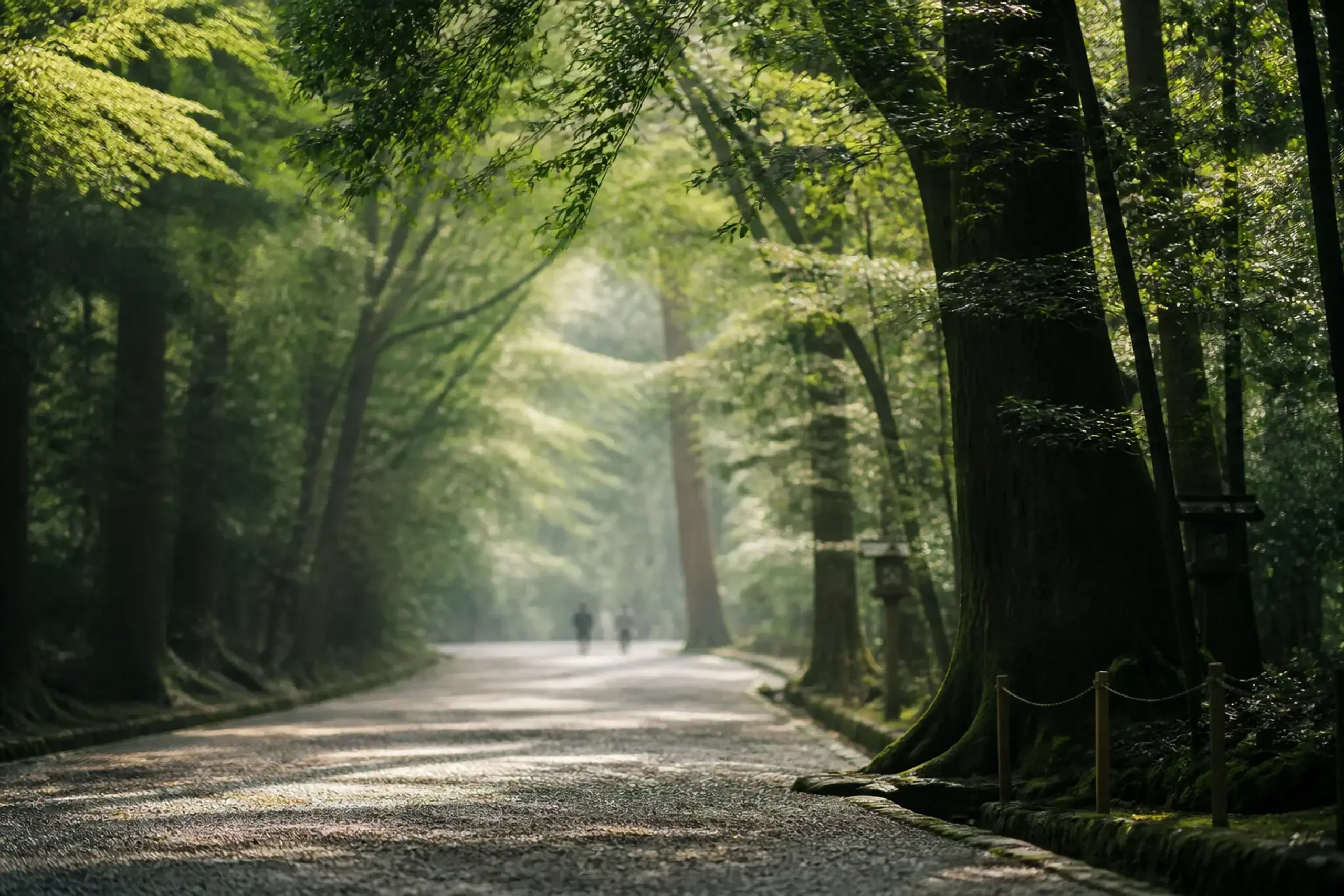
At Shimogamo-jinja, the approach begins in woodland, not on a street.
Visitors often arrive searching for the “World Heritage site,” and leave remembering the trees. It’s a fragment of landscape, not a curated park. The forest is also a survivor, shaped by fire, policy, and decades of replanting that never makes headlines.
Today the forest covers about 124,000 square metres—roughly three Tokyo Domes. That number is easy to hold in your head. The harder number follows.
How Much Of Tadasu No Mori Was Lost Since The Heian Period?
Tadasu no Mori is now around one fortieth of its Heian-period area.
In the Heian period, the forest is understood to have covered about 4,950,000 square metres. The reduction is not a footnote. It changes how you look at every trunk.
One date anchors the loss. On 14 June 1470, fire from the Ōnin War destroyed about seventy percent of the total area in a single episode. One day. That is the kind of compression time delivers when a city is burning.
Later, more land was taken under the Meiji land-reversion edicts. The forest that remains is not a museum piece sealed behind glass. It is what was spared, what was restored, and what continues to be protected in plain sight.
What Still Lives Here: Species, Age, And Water
There is a steadiness to the canopy in April. New leaves appear, but the structure underneath is older than any spring you have known.
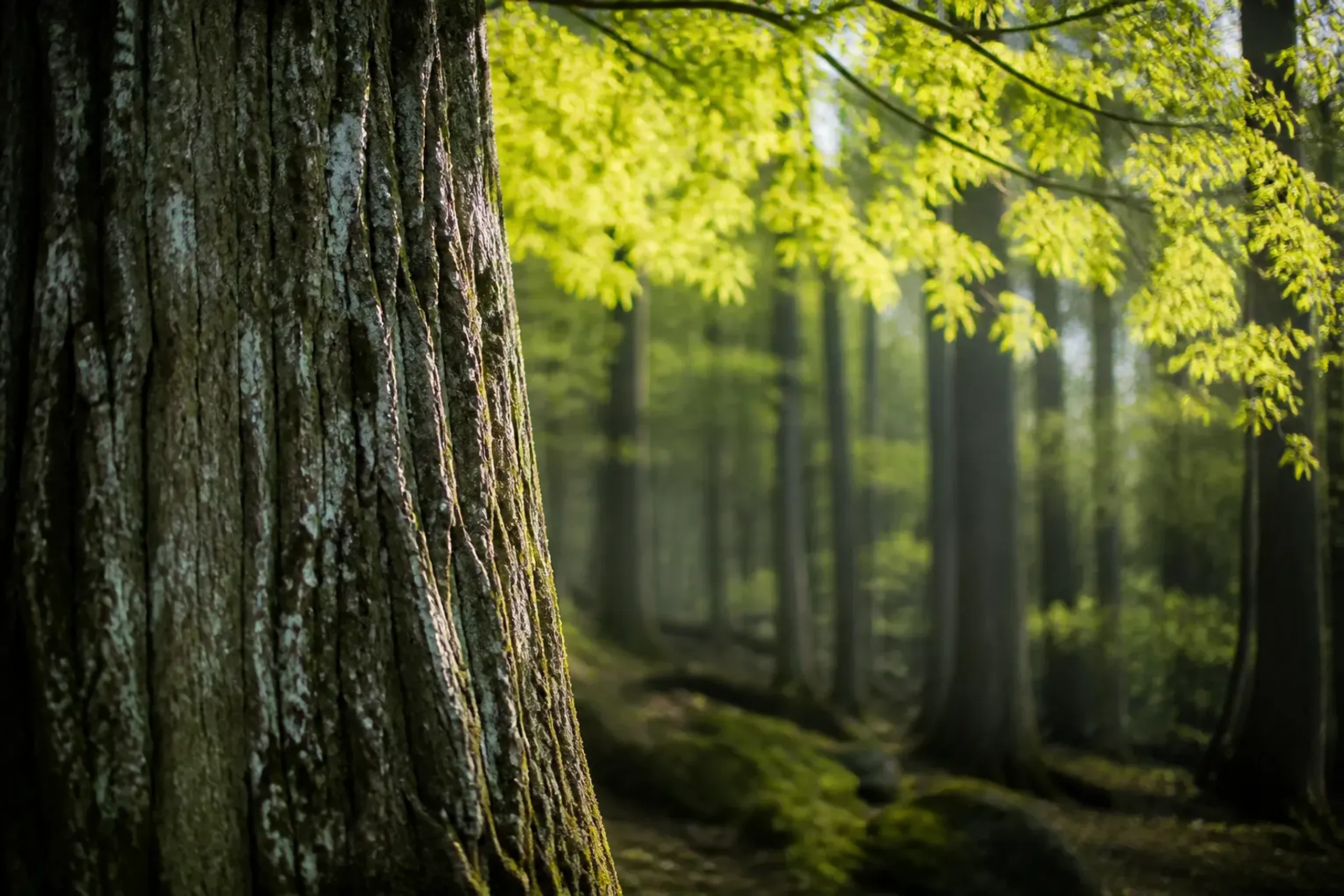
One fortieth remains—enough to quiet the city, small enough to feel precious.
Roughly forty species grow in Tadasu no Mori, dominated by the elm family. Zelkova stands with a heavy, gathered posture. Chinese hackberry and muku appear again and again, not as specimens but as a repeating rhythm along the path.
Many trees are estimated to be between two hundred and six hundred years old. Old enough to carry multiple Kyotos inside them. Wars, reforms, floods, rebuilding—then a morning like this, with wedding parties and schoolchildren threading between trunks.
Archaeology here is not abstract, either. Excavations between 1990 and 1992 found traces of old watercourses exactly where a medieval map of the shrine precinct had drawn them, and ritual pottery in others. The forest remembers in layers: soil, streambeds, and human habit.
For official designations, the forest was designated a National Historic Site in 1983. Shimogamo Shrine, in its entirety, was inscribed as a UNESCO World Heritage site in 1994 as part of the Historic Monuments of Ancient Kyoto.
Spring At Shimogamo Shrine: The Verified Calendar
Spring at Shimogamo is not one event. It is a sequence. Some days feel like an ordinary morning walk—until a drumbeat arrives through the trees.
All dates below are the fixed, public calendar items commonly published for the shrine precinct in late April and May. Rites may change in timing or handling year to year, and some elements have alternating locations across years.
- 29 April: Tadasu no Mori Citizens’ Tree-Planting Festival
- 3 May: Yabusame Shinji (mounted archery), held along the forest approach as a preliminary rite connected to Aoi Matsuri
- 4 May: Saiō-dai purification rite (alternates between Shimogamo and Kamigamo in alternate years; confirm for your travel year before planning around it)
- 5 May: Dedication of classical martial arts
- 12 May: Mikage Matsuri, including the Kirishiba rite with Azuma-asobi dance performed in the forest
- 15 May: Kamo Matsuri (Aoi Matsuri), with the Saiō-dai procession passing through the forest to reach the shrine
- Through May: Tea and flower dedications (various small-scale offerings)
Just past this post’s season, early June brings the firefly tea gathering.
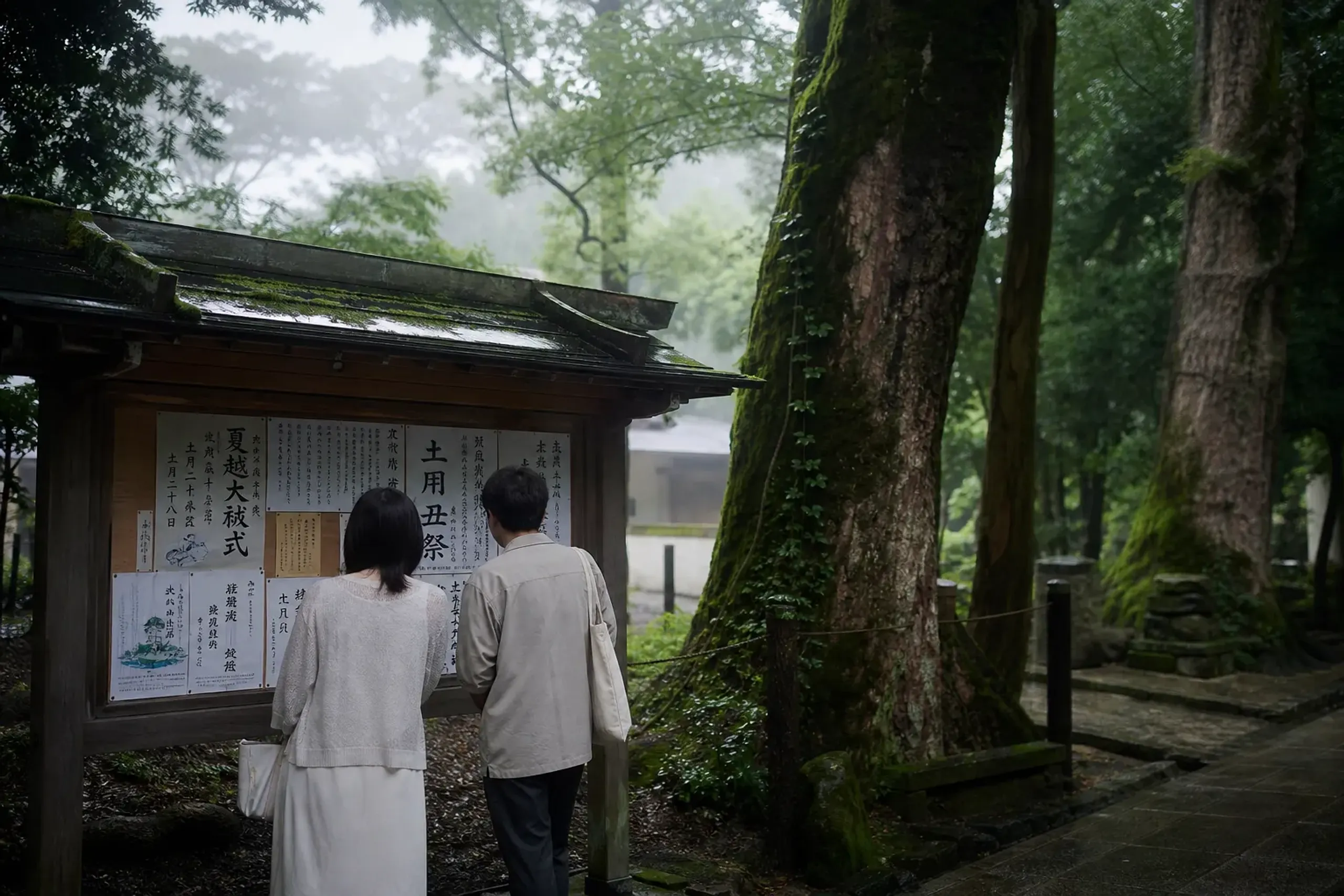
Spring here is a sequence of rites, not a single headline day.
One line is enough. It matters because it shows continuity: the forest is not a stage built for tourists, then dismantled.
The Quiet Center: The Citizens’ Tree-Planting Festival (29 April)
It is easy to admire an old forest. It is harder to accept that it needs work.
On 29 April, the Tadasu no Mori Citizens’ Tree-Planting Festival makes the maintenance visible. Kyoto replants its own heritage, one sapling at a time, with local hands doing the unglamorous part: digging, tamping, watering, returning.
In our experience, this is the moment that stays with thoughtful travelers. Not because it is grand. Because it is honest. The “one fortieth” figure stops being historical trivia and becomes a living obligation.
Key fact: Tadasu no Mori is about 124,000 square metres today, roughly three Tokyo Domes—around one fortieth of its Heian-period size.
How Can You See Yabusame At Shimogamo Shrine On May 3?
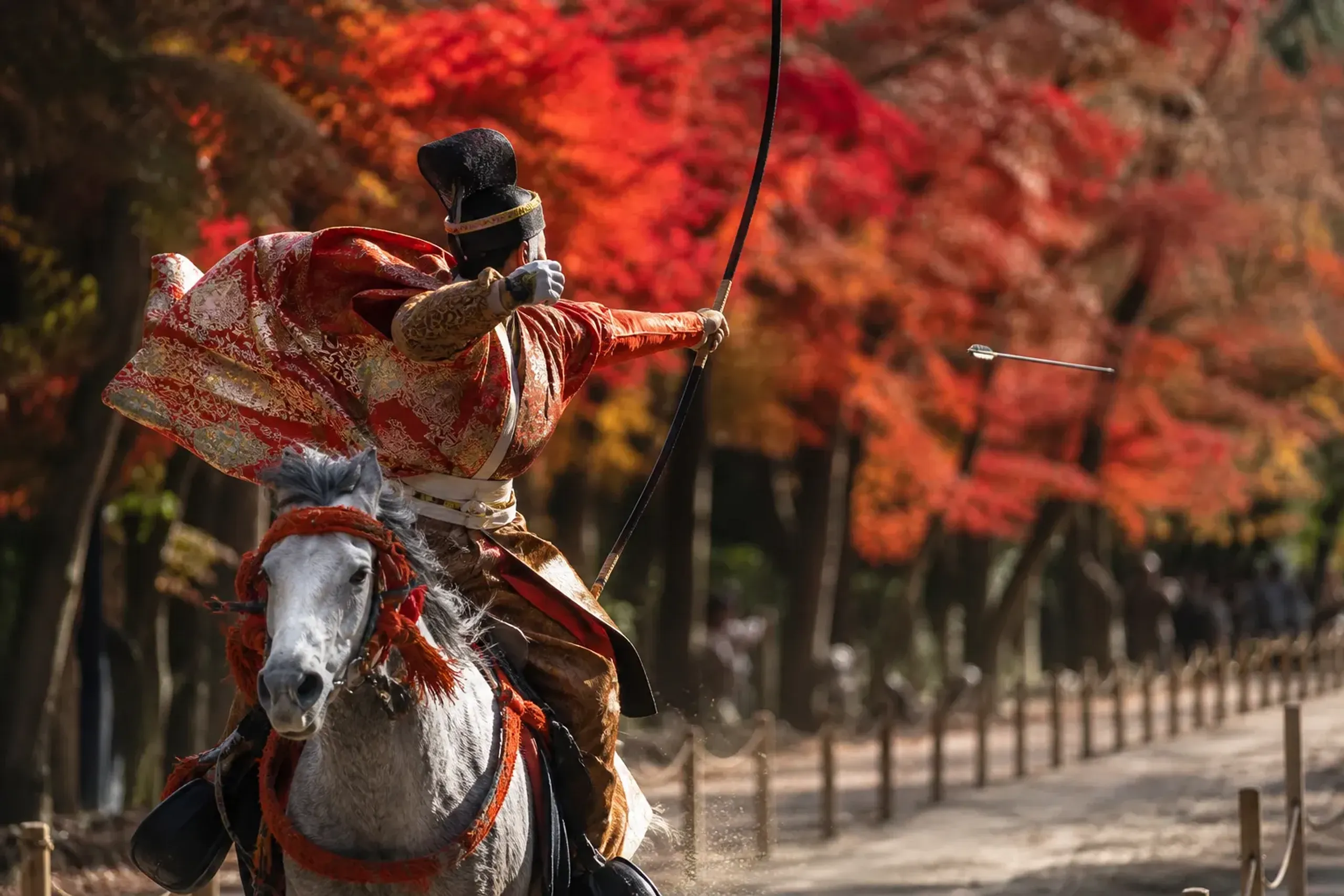
Shimogamo Shrine’s Yabusame Shinji is held on May 3, with mounted archers shooting along a corridor through Tadasu no Mori.
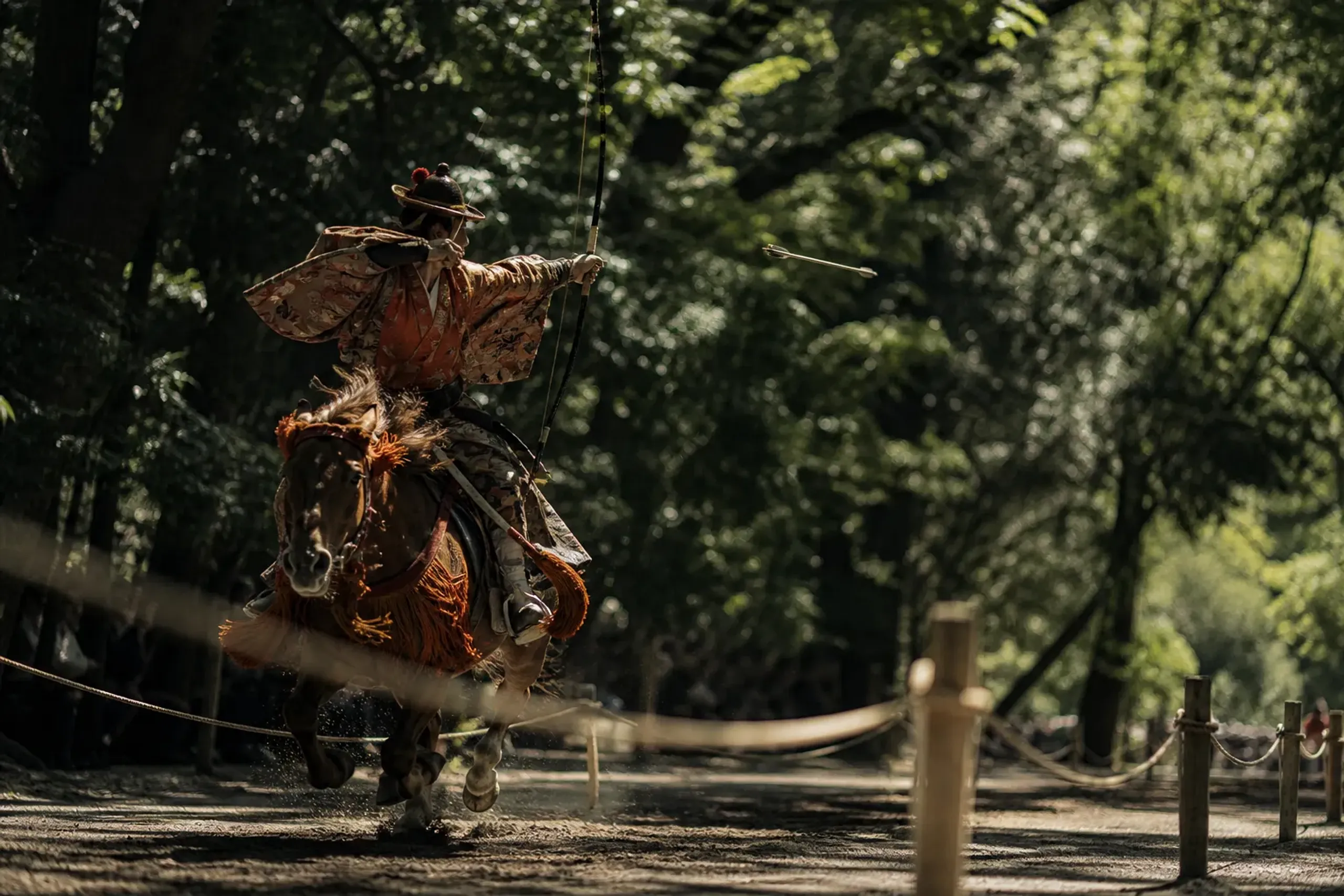
Yabusame at Shimogamo is felt as speed moving through a corridor of trees.
The setting changes everything. In many places, mounted archery reads as open field spectacle. Here it is compressed by trees, like speed passing through a green hallway, where the hooves strike a ground that has been walked for centuries.
For 2026, a Kyoto Shimbun video report confirms the rite was held at Shimogamo-jinja on May 3, 2026 as a pre-ceremony connected to Aoi Matsuri. If you are timing a Kyoto spring return, that single confirmation matters. Dates anchor plans.
Practical note: rites are not performances. Photography rules can be strict, and some moments should not be photographed at all without permission. The best way to “take it home” is to watch closely, then walk the approach again when the sound has faded.
What Time Does The Aoi Matsuri Procession Reach Shimogamo Shrine?
For 2026, Kyoto.travel lists the Aoi Matsuri head-of-procession timing at Shimogamo-jinja as arriving at 11:40 and departing at 14:20.
That window is wide for a reason. There is formal choreography, pauses, and dense crowd movement. The forest approach becomes both passage and gathering place, and the experience is shaped as much by where you stand as by what passes.
Aoi Matsuri (Kamo Matsuri) is an annual festival of Shimogamo-jinja and Kamigamo-jinja, held on May 15, with postponement to May 16 in case of rain (per Kyoto.travel). This is one of Kyoto’s most iconic processions, and it draws the kind of numbers that can flatten the subtlety of a place.
If your goal is the procession itself, plan for waiting.
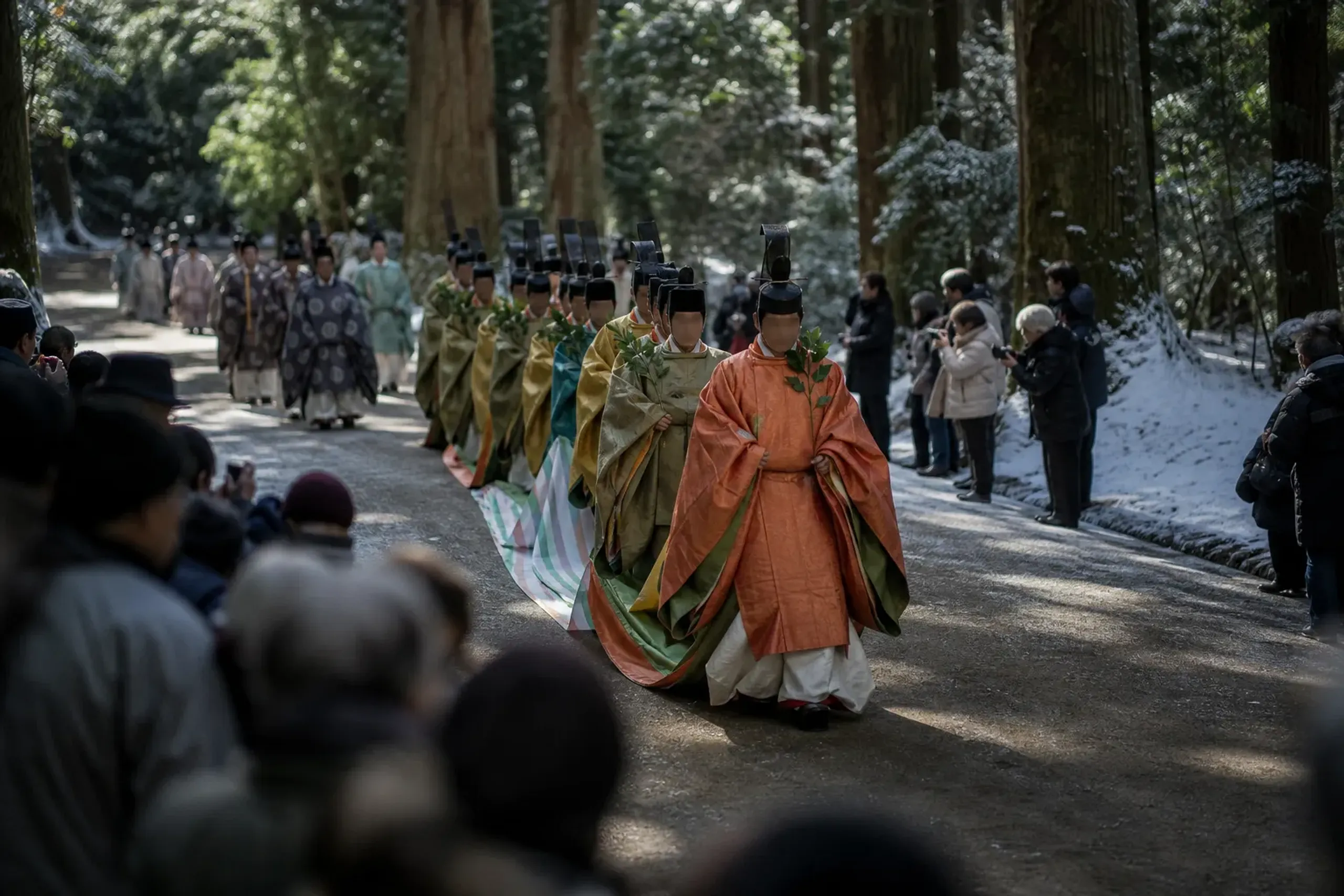
On May 15, the forest becomes a passageway for Kyoto’s most formal spring procession.
If your goal is Tadasu no Mori, read the next section twice.
The Honest Note On Timing: Golden Week Crowds, And The April Alternative
Late April into early May is Kyoto’s most congested stretch of the year. No workaround. Golden Week compresses the country into a few days, and Aoi Matsuri adds its own gravity.
We tell HNW travelers this plainly because it changes the entire feel of a forest approach. You can still have a meaningful visit on event days, but you should expect bottlenecks, long waits, and a louder atmosphere than the photographs suggest.
Our quiet recommendation is April, before the major rites. New leaf. Running water. And space between footsteps. You get the place rather than the pageant, and the “older than Kyoto” idea lands with more force when you can hear the streams.
If you are building a seasonal Kyoto plan, this post is the April counterpart to our early-spring pacing: Twelve Generations: Tawaraya Ryokan in Kyoto After Satō Toshi. Different subject. Same principle of restraint.
A Short, Precise Note On Access And Etiquette
Shimogamo-jinja is an active place of worship. That sounds obvious. It is easy to forget when you arrive with a camera and a schedule.
Dress with quiet respect. Speak lower than you think you need to. When a rite is underway, treat it as a religious act, not a photo opportunity.
There are also premium cultural programs and private prayer-style visits described publicly by third parties.
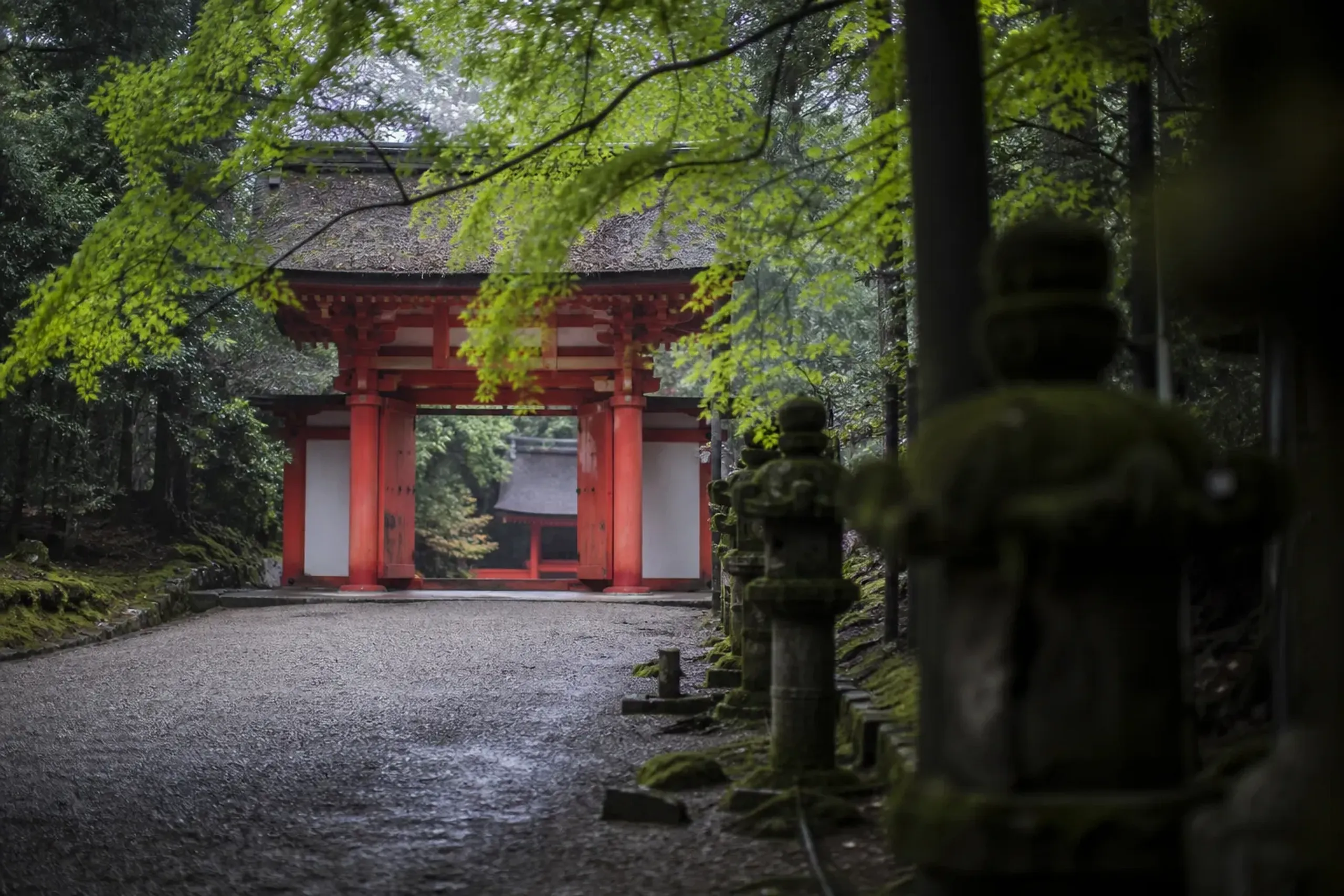
For example, a luxury-positioned “VIP Prayer and Special Viewing” experience is described online as priest-led, about 90 minutes, with access to areas not usually open. Information helps you plan, and it also helps you recognize what is truly special when you see it.
How Do You Plan A Chauffeured Visit To Shimogamo Shrine In Spring?
A chauffeur-led visit works best with an early start and a clear exit plan, because the forest approach is calming and the festival days are not.
The forest is at its best when you arrive before the city is fully awake. The light is flatter, the streams are louder, and the path belongs to walkers rather than crowds. If you are traveling as a couple or family, that timing creates a different kind of privacy—quiet, not cordoned.
For the drive itself, many guests choose a private chauffeur so the day stays spacious rather than logistical; our first mention of private transportation is here because arrival mood matters as much as arrival time. Park once. Walk slowly. Leave without hunting for taxis.
When you want the day to feel designed rather than rushed, our team at Japan Royal Service also builds a tailor-made itinerary around the forest’s rhythm: early entry, time for observation, and a deliberate buffer for rites and crowds.
What Japan Royal Service Can Coordinate For This Experience
Japan Royal Service can coordinate guiding and transfers, private prayer, reserved viewing for the Yabusame on 3 May and for Aoi Matsuri on 15 May, and access outside public hours.
We keep this simple on the public page. Specific coordination is always discussed privately, because shrine schedules, permissions, and the etiquette around rites deserve careful handling.
Frequently Asked Questions
Is Tadasu No Mori Really Older Than Kyoto?
Tadasu no Mori is said to preserve vegetation from the Yamashiro plain as it stood three to four thousand years ago, which predates the establishment of Kyoto as Japan’s capital.
Even if you arrive skeptical, the idea is useful: it reframes the visit away from architecture and toward landscape. You are walking through a remnant of what existed before the city’s grid, before its names, before its signature views.
How Big Is Tadasu No Mori Today Compared With The Past?
Tadasu no Mori covers about 124,000 square metres today—roughly three Tokyo Domes—and is around one fortieth of its Heian-period area.
This is why the forest feels both generous and fragile. It is large enough to swallow street noise, but small enough that a single historic event—like the 1470 fire—still shapes what you see.
When Should I Visit Shimogamo Shrine If I Want Quiet In Spring?
Visit in April, before the late-April and May rites, for new leaves, cooler shade, and fewer crowds.
Golden Week brings heavy congestion across Kyoto, and major dates like May 3 and May 15 pull large numbers into the forest approach. If your priority is the atmosphere of Tadasu no Mori, April mornings are the cleanest answer.
Where Can I Find Official Timing For Aoi Matsuri At Shimogamo Shrine?
Kyoto.travel publishes the Aoi Matsuri route timings, including the 2026 head-of-procession arrival at Shimogamo-jinja at 11:40 and departure at 14:20.
We recommend using official sources for time-sensitive planning, then designing your day around the human reality: waiting, crowd movement, and the fact that rites are not built for tourist efficiency.
Why Choose Japan Royal Service
Luxury at Shimogamo is not velvet ropes. It is pace, access handled with discretion, and interpretation that respects the shrine as a living place.
Our team at Japan Royal Service plans this visit around what most people miss: the forest as the main act, the “one fortieth” truth, and the spring calendar’s pressure points. We work quietly, protect your identity and itinerary, and keep the experience focused on what is real.
If you would like a private planning conversation for spring at Shimogamo-jinja and Tadasu no Mori, reach our team privately via WhatsApp or LINE, or contact us here.