In this guide
- 01What Is The Shimanami Kaido Route, And Where Does It Go?
- 02Do You Need To Be A Serious Cyclist To Ride The Shimanami Kaido?
- 03How Does The Support Car Change The Trip?
- 04Riding With A Guide Who Knows The Islands
- 05Two Days, Three Days, Or By Car
- 06How The Shimanami Kaido Fits Into Setouchi
- 07How Japan Royal Service Arranges The Ride
- 08Frequently Asked Questions
- 09Why Choose Japan Royal Service
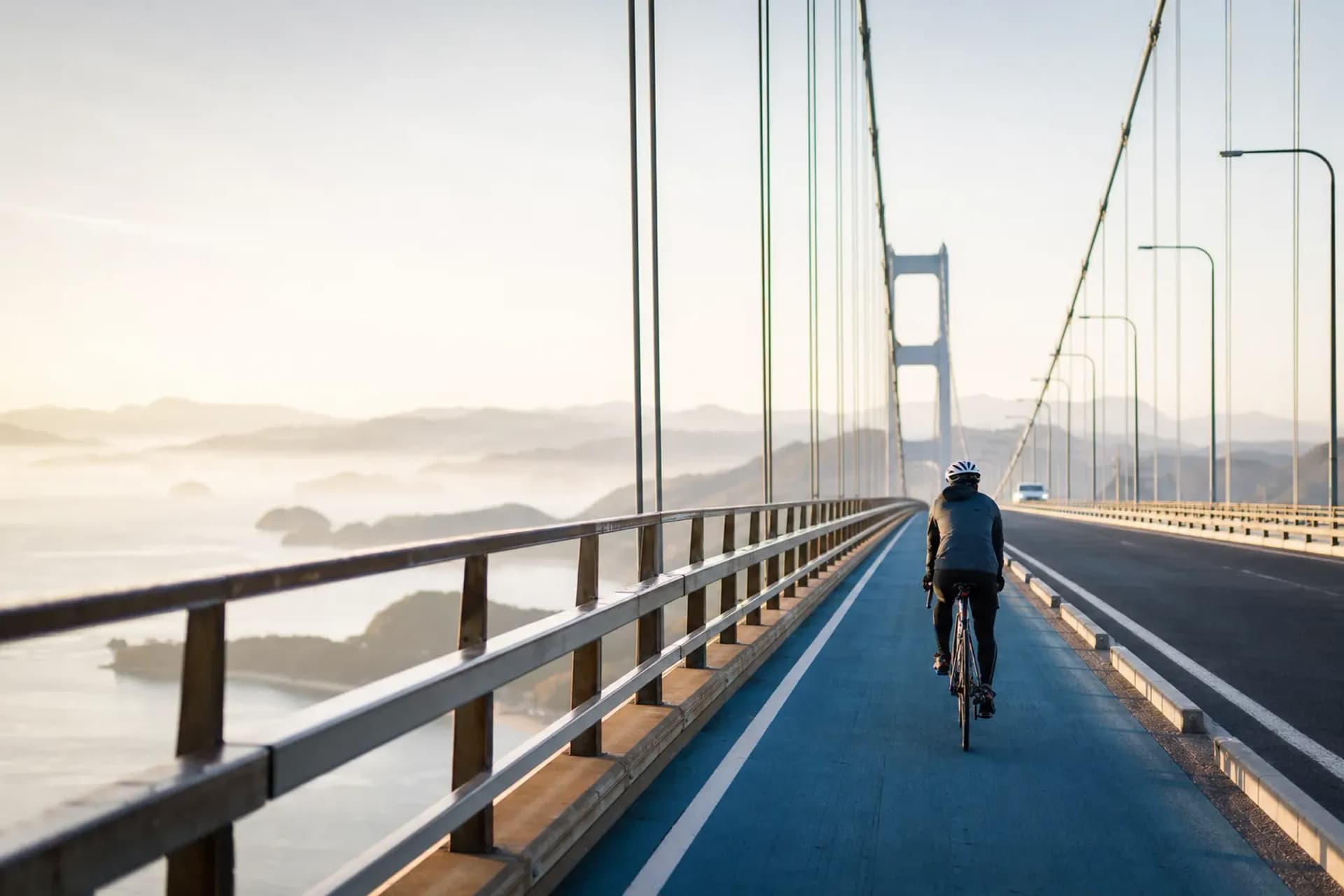
There are few ways to cross from Honshu to Shikoku under your own power. The Shimanami Kaido is one of them. About 70 kilometres link Onomichi in Hiroshima Prefecture with Imabari in Ehime, stitched together by six islands and the bridges between them. You ride on quiet island roads, then cross each channel on a path set beside the expressway, the Seto Inland Sea opening on both sides.
Most guides assume a self-guided trip on a rental bike. Our team at Japan Royal Service builds a supported version instead. An e-bike that flattens the climbs. A guide riding alongside you. A car behind to carry your bags and anyone who has had enough. And, for guests who would rather not ride at all, the same route by car.
What Is The Shimanami Kaido Route, And Where Does It Go?
The Shimanami Kaido is a roughly 70-kilometre cycling route from Onomichi (Honshu) to Imabari (Shikoku), crossing six islands of the Seto Inland Sea. The road opened in May 1999.
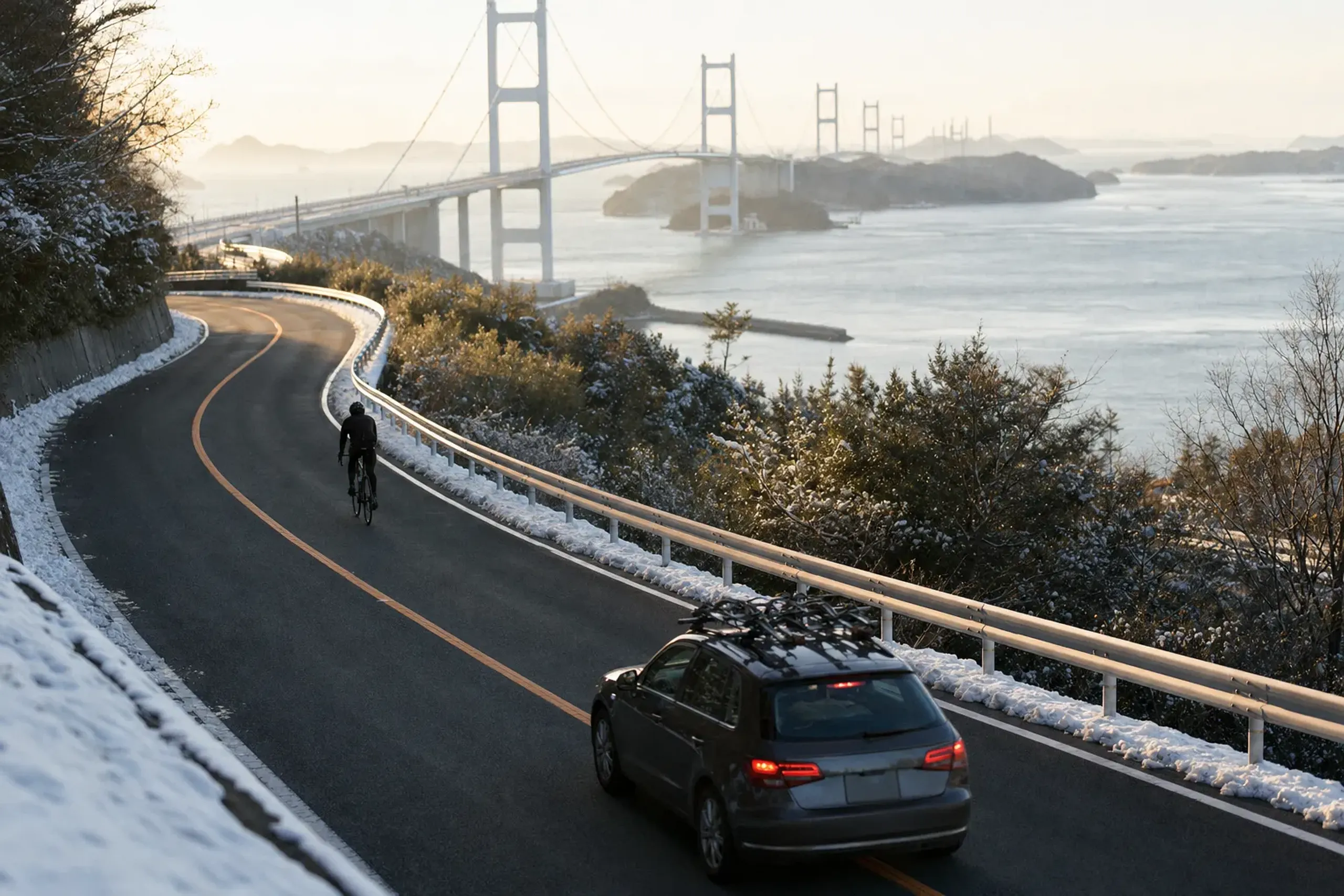
The cycling line is mostly local island roads, set apart from the expressway traffic. You pass through small ports, citrus groves, and stretches where the water is the only sound. Only on the bridges do you ride close to the highway, on designated paths built alongside it.
The six islands, west to east, are Mukaishima, Innoshima and Ikuchijima on the Hiroshima side, then Ōmishima, Hakatajima and Ōshima on the Ehime side. Each has its own character. Ikuchijima holds the town of Setoda, a slow place for a lunch stop. Ōmishima is home to Oyamazumi Shrine, which keeps Japan's largest collection of historical armour and weaponry — eight items designated National Treasures among hundreds of Important Cultural Properties.
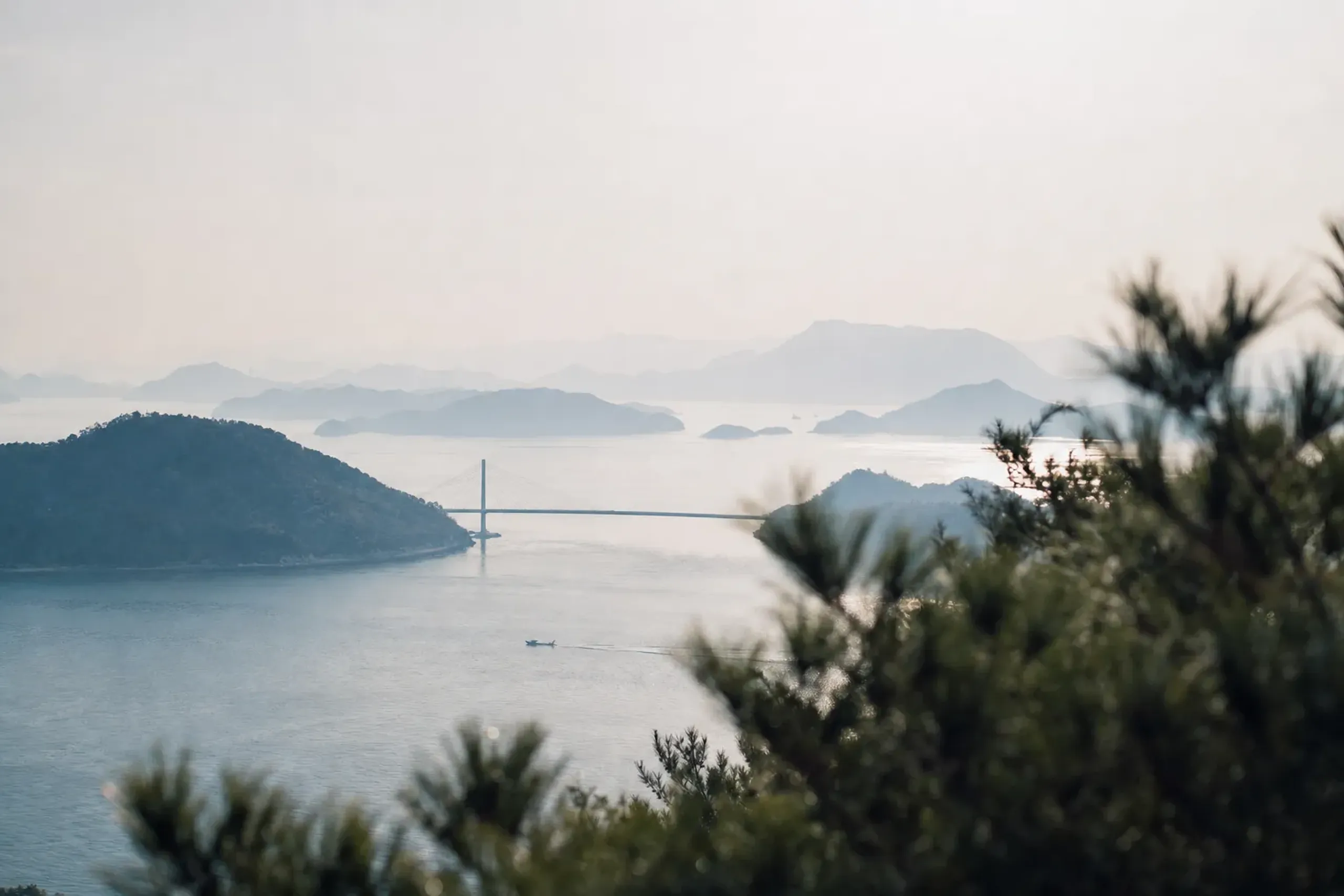
The bridges are the drama of the route. At the Imabari end, the Kurushima Kaikyō Bridge is not one span but three suspension bridges in a row, carrying you over fast tidal water toward Shikoku. Onomichi, on the Honshu side, is a retro port town of temples and narrow lanes. Imabari is a shipbuilding city. The ride is the thread between them.
JNTO lists the Shimanami Kaido as a National Cycling Route. That designation matters less than what it feels like on the saddle: open sea, citrus air, and bridges that pull you from one island to the next.
Do You Need To Be A Serious Cyclist To Ride The Shimanami Kaido?
No. On an electric-assist bike, mixed-fitness groups ride the Shimanami Kaido together comfortably, because the motor evens out the bridge approaches that tire unassisted riders.
The approaches to each bridge rise gently so the paths stay gradual. On a standard bike, those ramps add up over a long day. An e-bike absorbs them. You still pedal, still feel the distance, but the hard moments soften. That single difference changes who can enjoy the route.
It also keeps a group intact. Couples with different stamina, families with teenagers, friends who train at different levels — all can stay on the same stretch of road without one person waiting at the top of every rise. The network of rental terminals along the route offers electric-assist models and, at some points, tandems.
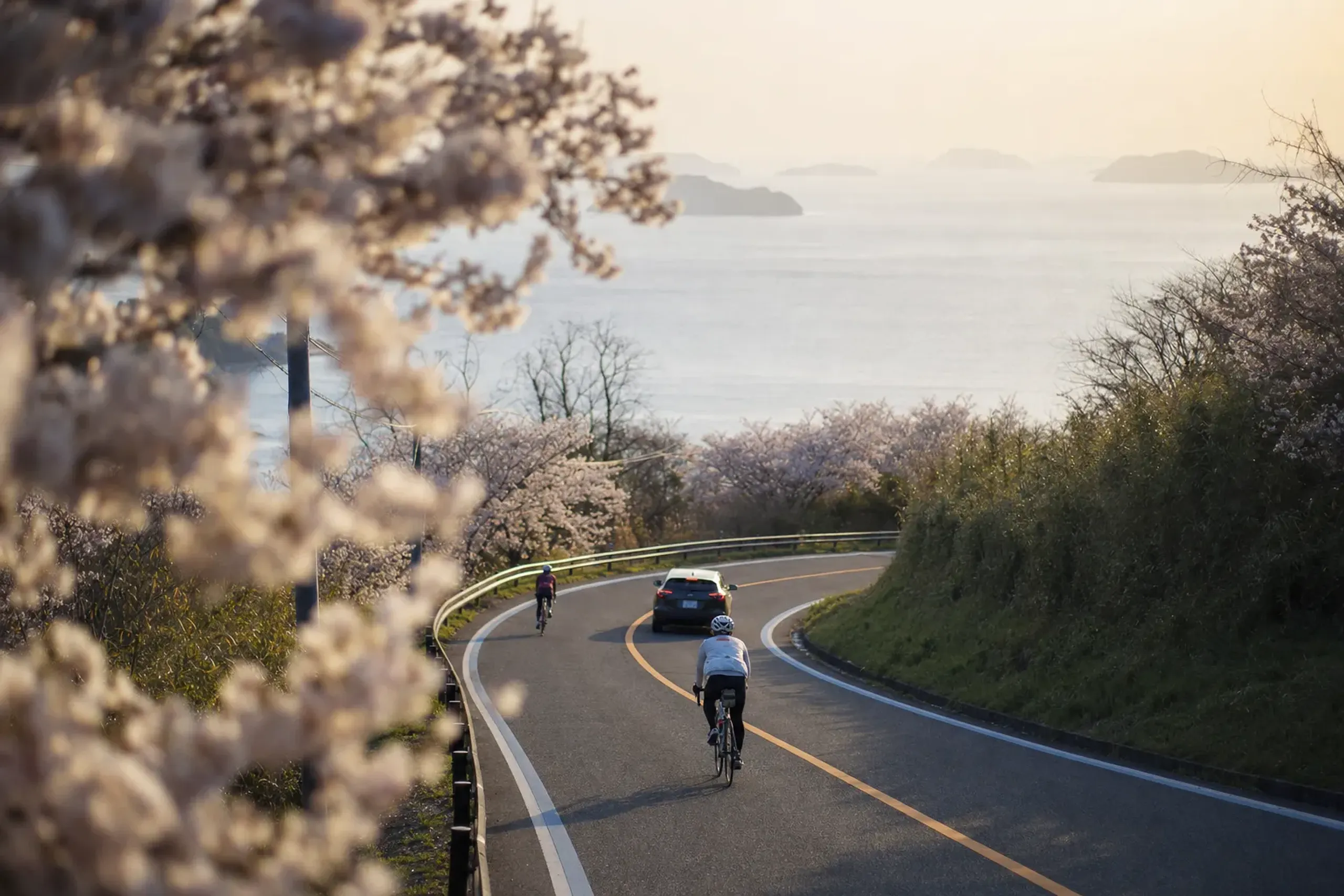
Certain models allow one-way rental, so you end where you finish rather than doubling back.
Our concierge confirms which bike types and sizes are available for your dates, since the fleet varies by terminal and season. The point is simple. You do not need to arrive fit. You need the right bike.
How Does The Support Car Change The Trip?
The support car carries your bags and shadows the route, so a rider who has had enough steps into the vehicle at any island and continues in comfort. Nothing is forced.
This is the quiet pivot of the whole plan. On a self-guided ride, your bag is strapped to the bike or left behind, and once you start, you are committed to the full distance. With a car behind, neither is true.
Your luggage travels two ways. It rides in the support vehicle, or it is forwarded ahead to your island lodging through the terminal network, waiting for you when you arrive. You ride with nothing but water and a light layer. The weather can turn in the Seto Inland Sea, and if rain settles in, the car is simply there. For a wider look at building flexibility into a trip, see our note on planning when the weather turns.
Key point: With a support car behind, no one is locked into the full 70 kilometres. A rider can stop at any island, load the bike, and ride on in the car — no negotiation, no stranded guest.
For a group of varied ability, this removes the central worry.
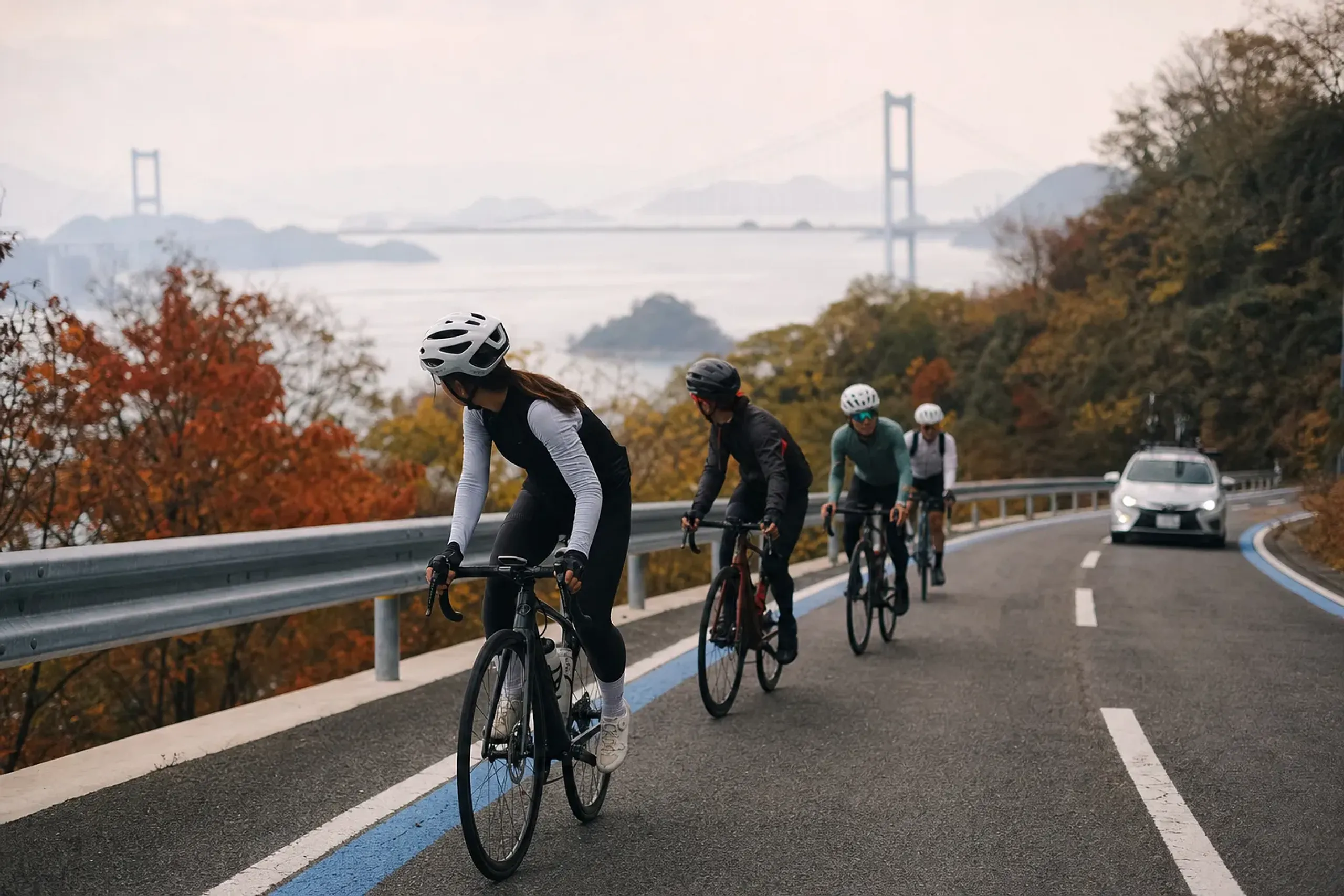
The strong riders push on. Anyone who wants to rest a leg, warm up, or simply watch the water for a while, can. The car makes the ride optional at every island, which is exactly what turns a demanding route into a relaxed one.
Riding With A Guide Who Knows The Islands
A guide who rides alongside you handles the navigation, so you never stop to check a map or wonder which turn leads to the next bridge. That alone changes the rhythm of the day.
The route is well signed, but signs are not the same as a person who knows where the quiet lunch is, which lookout is worth the short detour, and how to time Setoda so the town is calm. Our riding guides keep the pace honest, read the group, and fold in the island stops without turning the day into a schedule.
They also carry the small practical knowledge that smooths a ride — where to pause before the Kurushima Kaikyō crossing, when to let the strong riders go ahead, how to coordinate with the support car so it meets you at the right port. You ride; they manage the rest.
Two Days, Three Days, Or By Car
The supported Shimanami Kaido works in a few shapes. Choose by how much you want to ride and how slowly you want to move.
Two Days With One Island Night
Start in Onomichi and ride west across the islands to a night midway, then continue to Imabari the next day, finishing across the Kurushima Kaikyō Bridge.
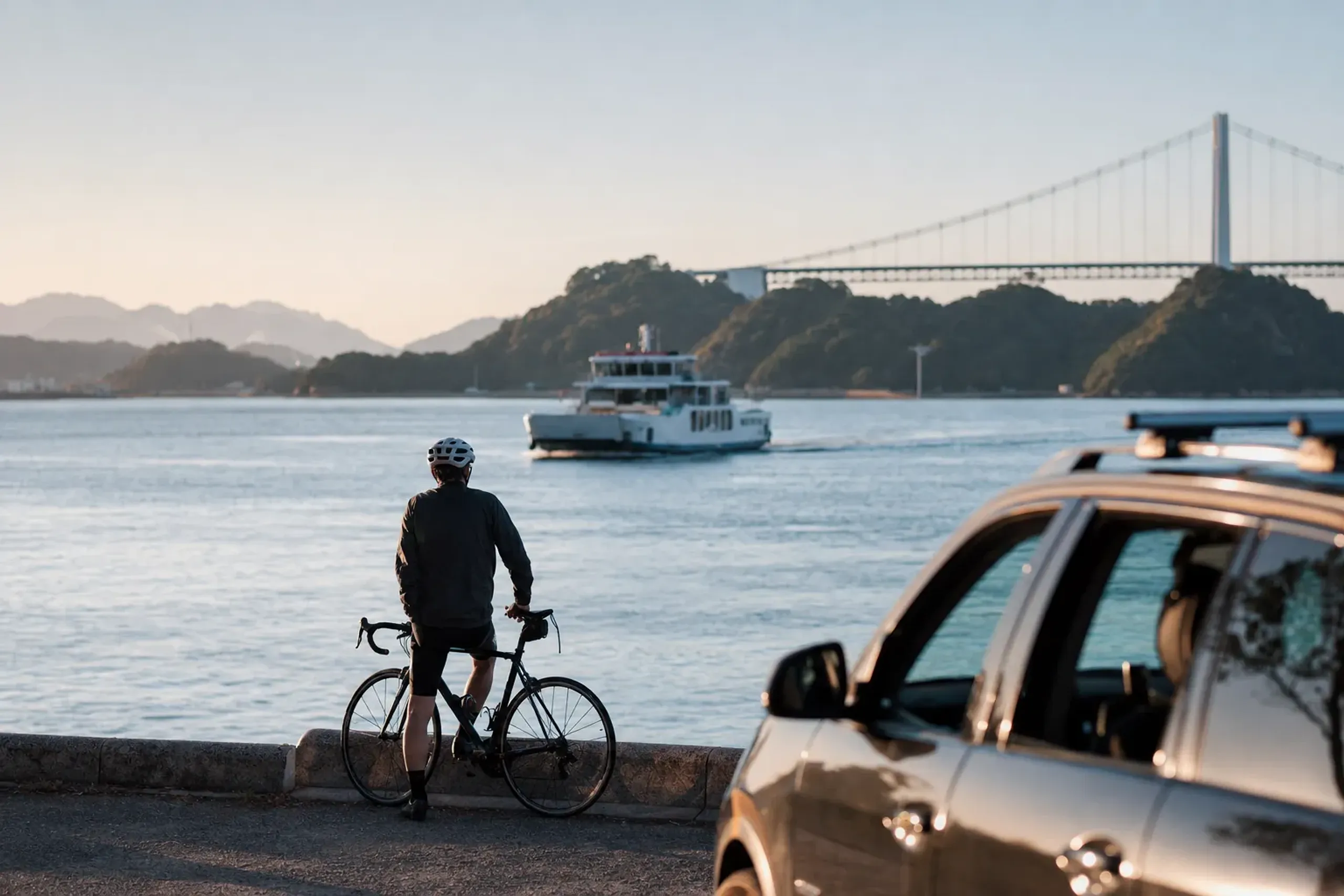
This is the shape that suits most guests. You cover the full route, you sleep on an island with the sea outside, and neither day is a marathon with the e-bike and support car in play.
Three Days With Two Island Nights
The same route, stretched. Two island nights mean shorter riding days and real time for the stops that reward it — Oyamazumi Shrine on Ōmishima, the town streets of Setoda on Ikuchijima, a slow morning by the water before you set off. If the ride is only part of why you came, three days is the kinder frame.
By Car, Without Riding
The whole route can be driven in a day, with stops on the islands. Guests who do not want to ride still get the islands, the shrine, the port towns, and the sweep of the Kurushima Kaikyō Bridge from the car. It is also the natural fallback if someone's plans change at the last moment — the chauffeured support vehicle is already part of the arrangement.
A note on timing for 2026. The official Cycling Shimanami 2026 event is set for Sunday, 25 October 2026, with participant check-in the day before, and a World Summit at the Imabari City Auditorium on 24 October. The main line of the Shimanami Kaido closes on the morning of the event for the ride. If you are not entered, we plan around that date; if you want to witness the event, we build the week to suit. Event rules are specific — disc wheels are barred for the crosswinds, and riders must carry a passport — and our concierge confirms the current detail directly with you.
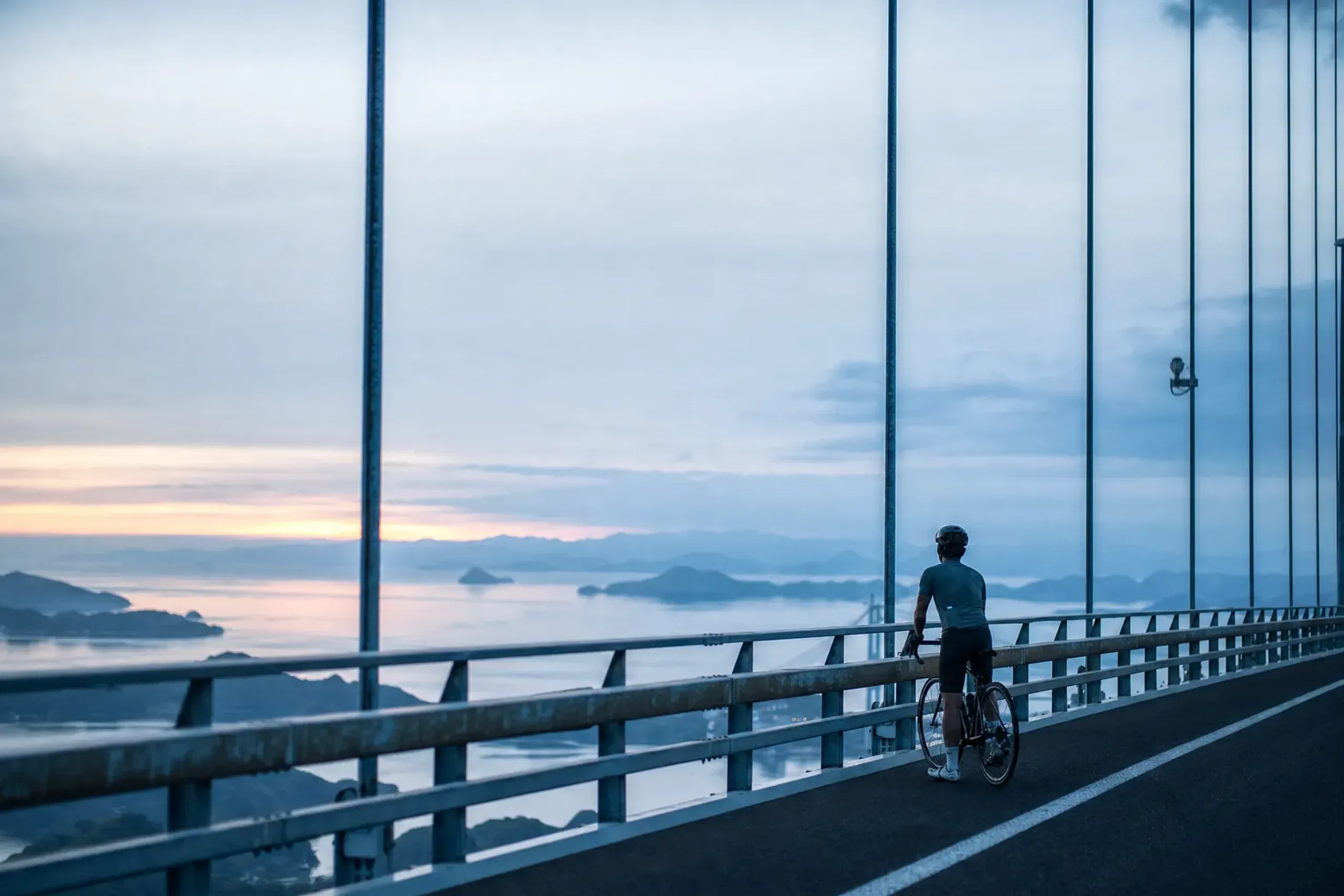
Whether to use a private driver or rail to reach the start is covered in our earlier Shimanami Kaido piece.
How The Shimanami Kaido Fits Into Setouchi
The route does not end the trip. It opens onto the wider Seto Inland Sea, which rewards slow travel on both sides.
East of Imabari lies the art island of Naoshima and the city of Takamatsu, with its garden and nearby islands. West, on the Honshu side, Onomichi itself is worth a day of temple lanes and port views before or after the ride. The sea is the connecting idea, and the Shimanami Kaido is one way to feel its scale from the water line rather than a train window.
If you are shaping a longer Setouchi journey around the ride, these pair naturally:
- Quiet island and mountain routes for guests who want stillness alongside the activity.
- Takamatsu as a base, with Ritsurin Garden, Kotohira and Shodoshima within reach.
- The art islands of Naoshima, for a day built around architecture and sea.
We treat the Shimanami Kaido as one movement inside a Setouchi itinerary, not a standalone errand.
How Japan Royal Service Arranges The Ride
Our team at Japan Royal Service assembles the supported Shimanami Kaido as a single, coordinated trip. We arrange the e-bike rental sized to each rider, a cycling guide who rides with you, a partner-supplied support vehicle with driver, luggage forwarding or in-car carriage, and lodging on the route chosen to your taste.
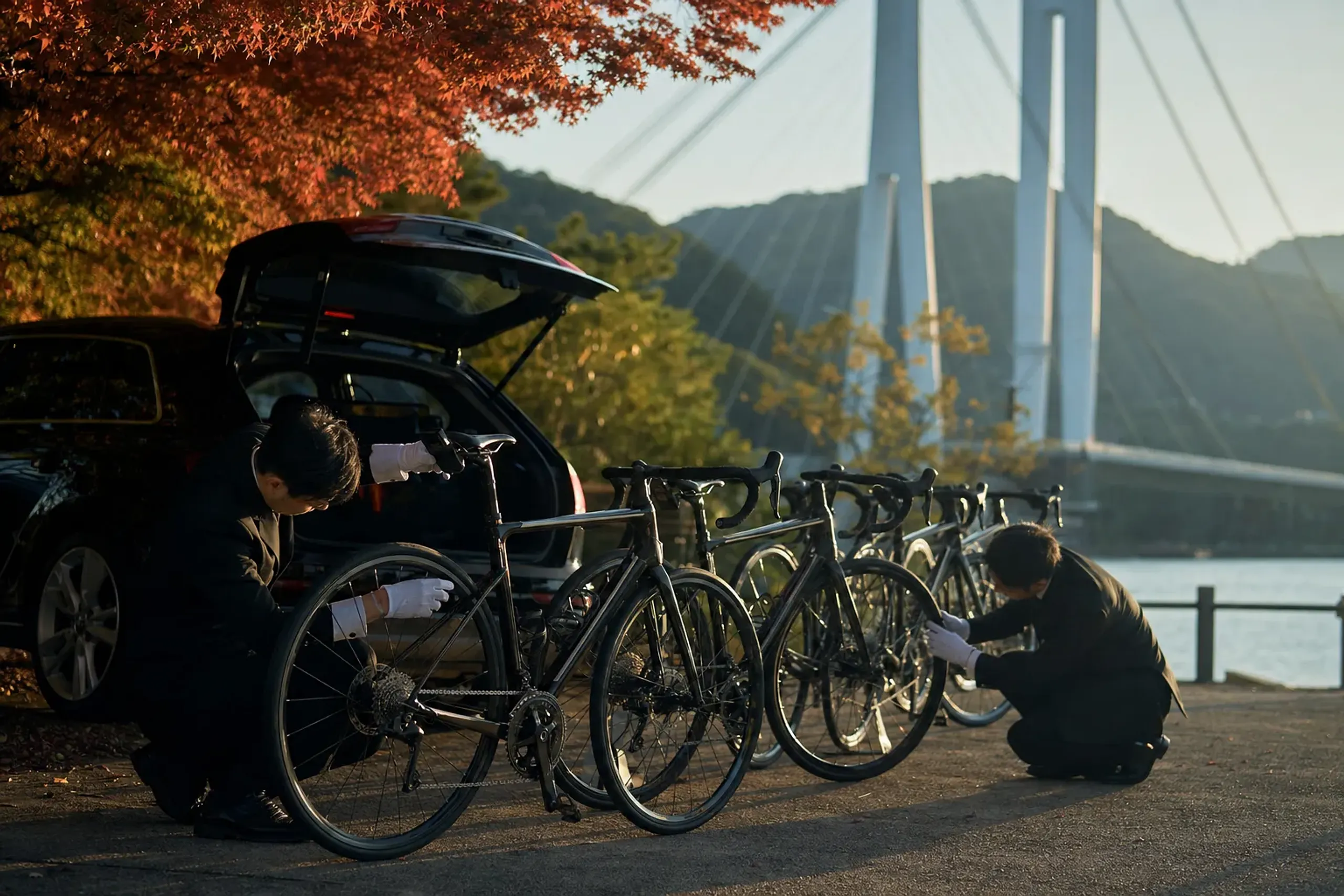
Because availability shifts — bike types, one-way terminal rules, luggage cut-off times, and weather windows — our concierge confirms every moving part with you directly when we plan the dates. We do not ask you to chase rental shops or ferry schedules. You tell us how far you want to ride, who is in the party, and how slowly you want to move; we build the tailor-made itinerary around that.
Discretion runs through all of it. Your itinerary, your party, and your pace stay private, which is why well-travelled guests — the sort competitors like Remote Lands or the Relais & Châteaux circuit also serve — come to us for the Setouchi islands.
Frequently Asked Questions
Can A Family With Mixed Cycling Ability Ride The Shimanami Kaido Together?
Yes. On e-bikes, with a support car shadowing the route, a mixed-ability family rides together comfortably. Anyone who tires steps into the car at the next island and continues, so no one is left behind or forced to finish.
How Long Does The Shimanami Kaido Take, Two Days Or Three?
Fit riders can complete the full 70 kilometres in a single day, but most guests take two days with one island night, or three days with two nights for a slower pace and time at Oyamazumi Shrine and Setoda.
What If It Rains On The Shimanami Kaido During My Trip?
The support car is already part of the plan, so if rain settles in, you simply ride in the vehicle to the next island or your lodging.
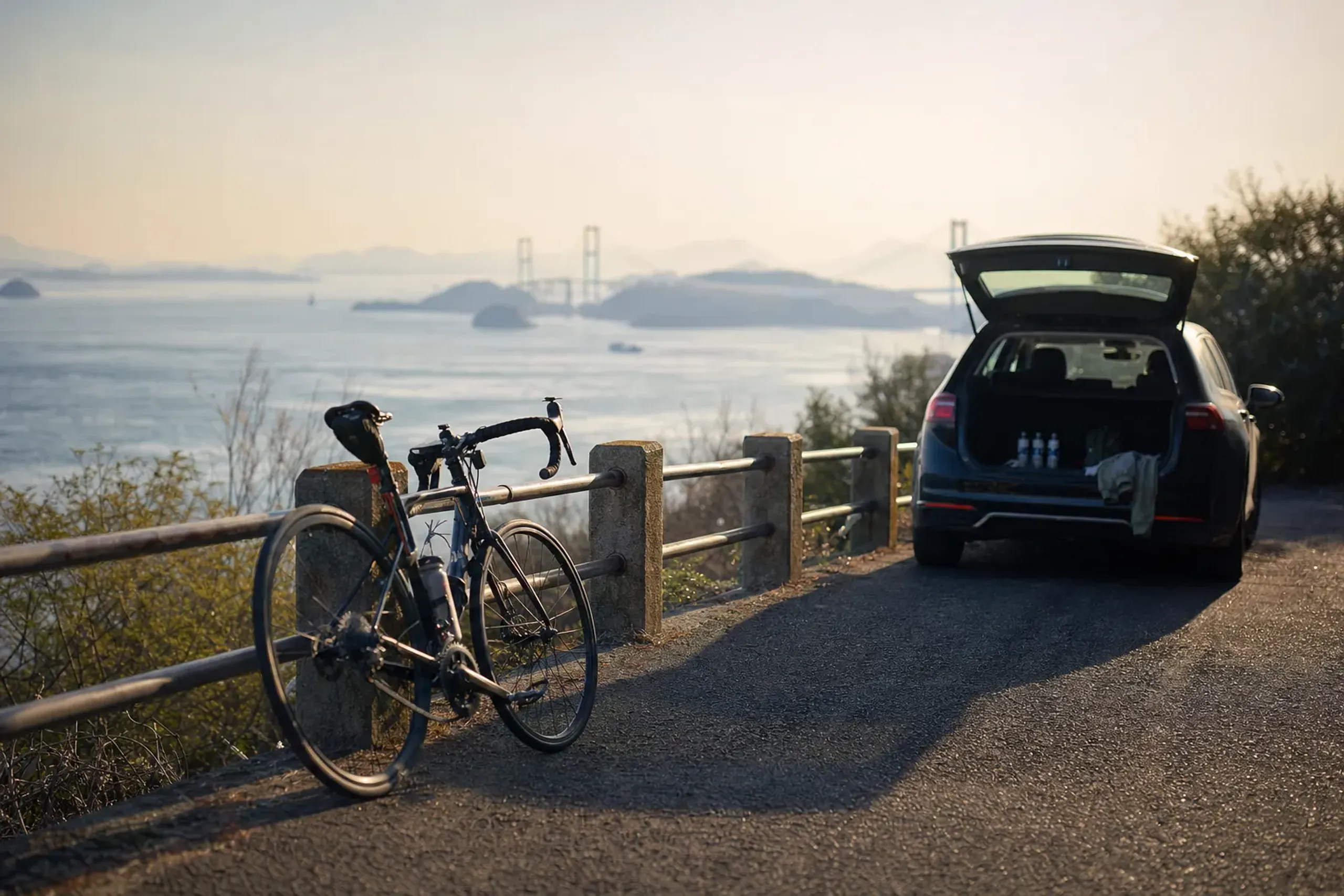
Our concierge tracks conditions and adjusts the day's shape with you.
Is The Cycling Shimanami 2026 Event Date Going To Affect My Trip?
Cycling Shimanami 2026 is on 25 October 2026, and the main route closes that morning for the event. If you are not participating, we plan your ride around the date; if you want to witness it, we build the week to suit.
Can I Experience The Shimanami Kaido Without Cycling At All?
Yes. The entire route can be driven by chauffeured car in a day, with stops on the islands for the shrine, the port towns, and the Kurushima Kaikyō Bridge. Non-riders see everything riders do, from the comfort of the vehicle.
Why Choose Japan Royal Service
The difference is not the route. Anyone can ride the Shimanami Kaido. The difference is that our team removes every point of friction — the sizing of the bikes, the guide who knows where to pause, the car that carries your bags and waits for whoever needs it, the lodging that suits your pace. You arrive, you ride as far as you like, and the logistics simply happen behind you.
Our concierge is based in Japan, works in-house, and plans with the discretion that well-travelled guests expect. We do not hand you a rental voucher and a map. We shape the whole crossing of the Seto Inland Sea around the party in front of us.
To plan a supported Shimanami Kaido crossing, reach our team privately via WhatsApp or LINE, or contact us here.