In this guide
- 01Oze At A Glance: What You’re Walking Into
- 02Where Do Private Cars Stop In Oze (Gunma And Fukushima Trailheads)?
- 03How Long Is The Walk From Hatomachi Pass To Ozegahara Marsh?
- 04A Summer Day On The Marsh: Flowers, Light, And Weather
- 05What Are The Rules For Walking The Oze Boardwalks?
- 06Huts, Bears, And Thunder: The Three Things That Shape Your Summer Plan
- 07Getting There And Getting Back: Timing, Shuttles, And The Reality Of “Last Return”
- 08How Our Concierge Team Plans An Oze Summer Walk
You hear it before you see it.
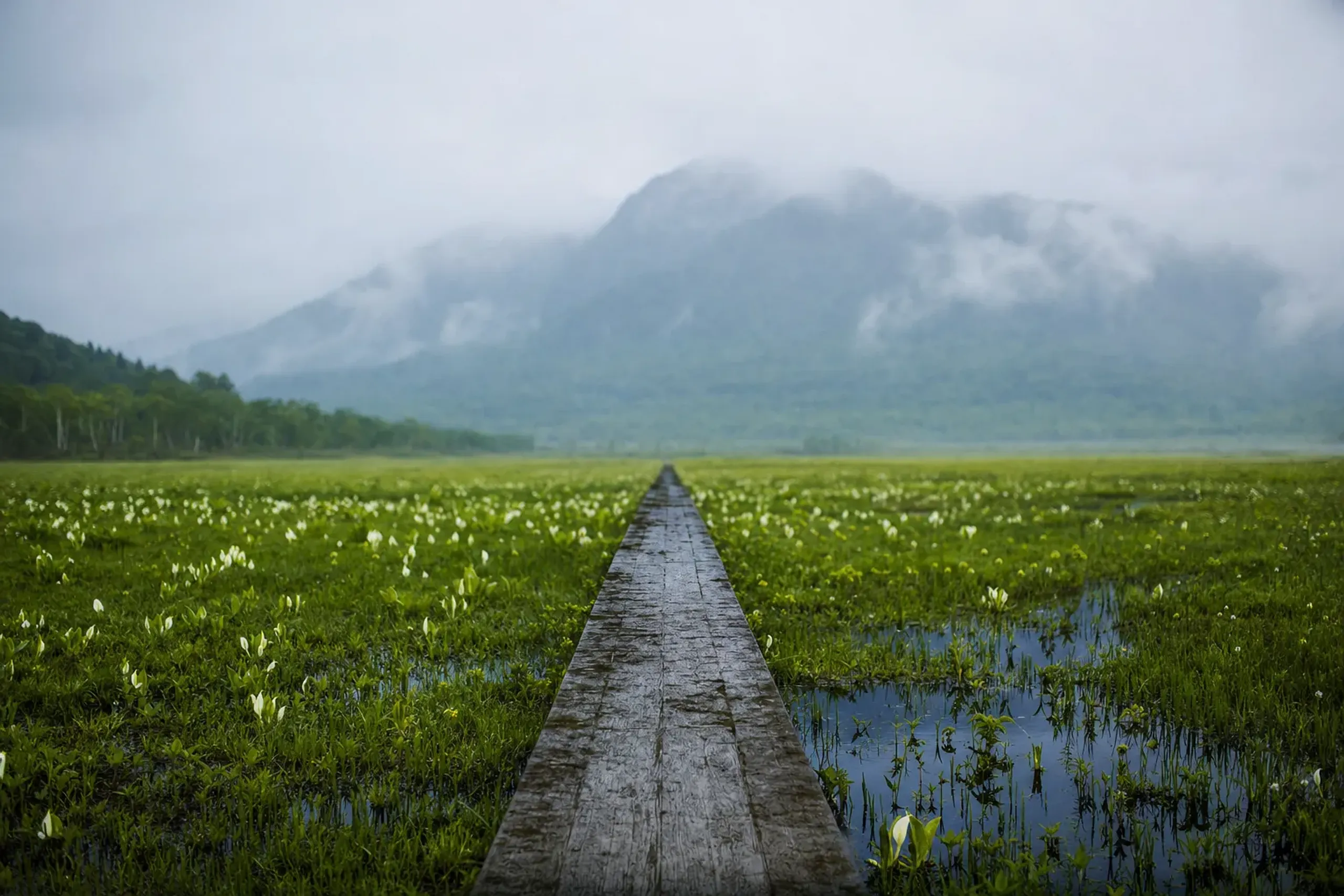
The hollow knock of boots on wet timber. The small squeak of boardwalk planks flexing underfoot. Then the marsh opens—wide, level, and luminous—while the mountains step back to the edges like quiet sentries keeping their distance.
This is Oze in summer. You do not arrive by car. You earn it on foot.
For many first-time visitors, Oze looks simple in photographs and proves surprisingly intricate in practice. Trailheads carry vehicle limits. Shuttles run only in set windows. Weather turns in minutes, and bears live in the forest band that rings the wetlands. The reward is real—but it belongs only to those who plan around how Oze actually works. That restraint, that willingness to move within nature's terms rather than override them, is itself the quietest kind of luxury: a day shaped by wabi, where the beauty lies in the pared-down and the unhurried.
Oze At A Glance: What You’re Walking Into
Oze National Park is a highland wetland landscape of roughly 37,200 hectares that spans Fukushima, Tochigi, Gunma, and Niigata prefectures.
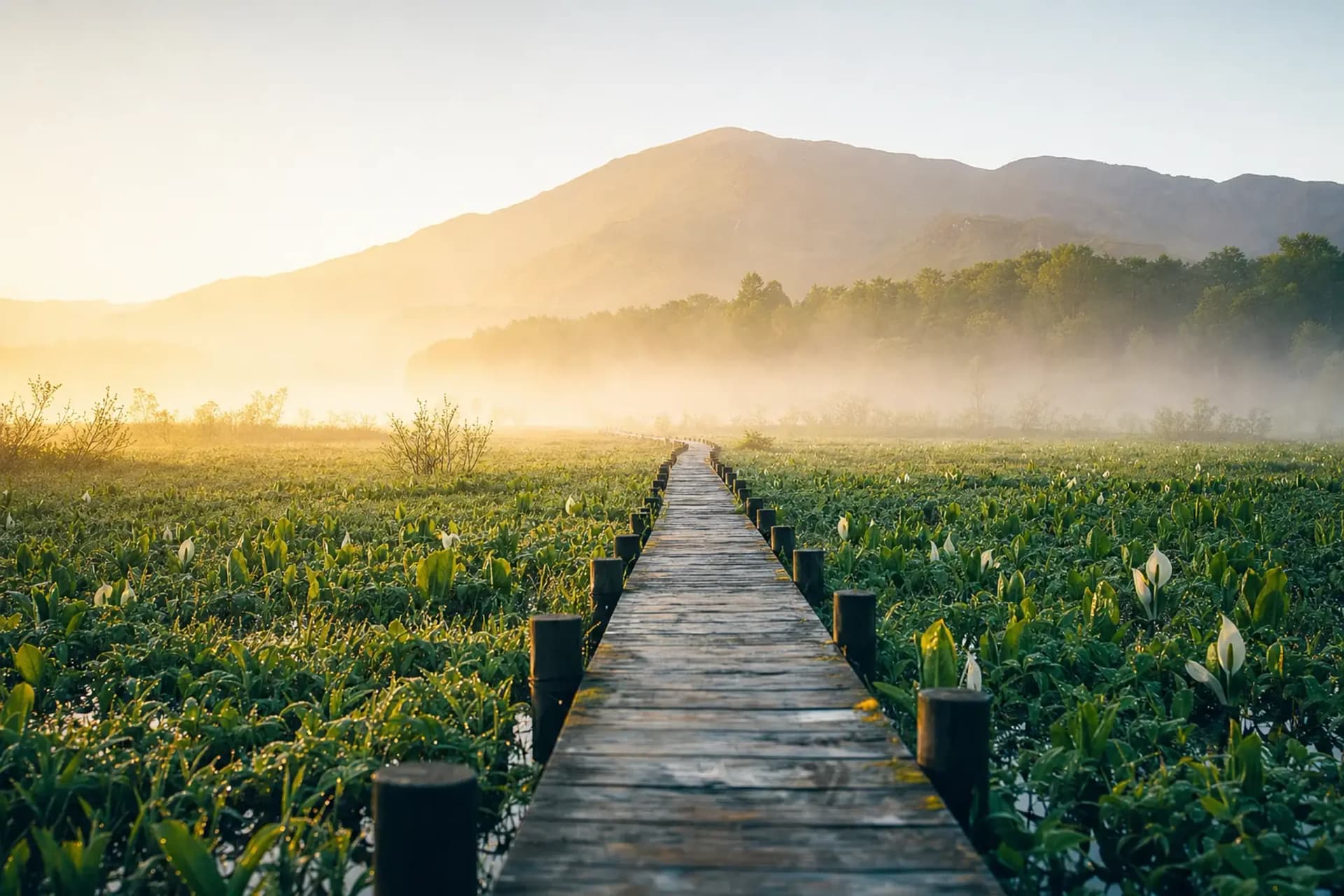
Ozegahara Marsh—the name most travelers mean when they say “Oze”—sits at about 1,400 meters and is described as Honshu’s largest mountain marsh. It is crossed by slender wooden boardwalks laid over fragile ground. Step off them, and the place unravels. Fast.
Oze is also a Ramsar wetland site (registered in November 2005) covering 8,711 hectares across Fukushima, Niigata, and Gunma. Those designations are not decoration; they shape the rules, the infrastructure, and the very reason you will not find roads running into the marsh.
You will also hear about Mt. Hiuchigatake (2,356 m) rising in the distance. Many hikers climb it as a long day, but for a summer marsh visit it is best treated as scenery—unless you are genuinely prepared for a bigger mountain day. One line of context: autumn grass colors usually begin from September, and mizubasho (Asian skunk cabbage) typically shows late May to early June—beautiful, but not a summer target.
Where Do Private Cars Stop In Oze (Gunma And Fukushima Trailheads)?
Private cars stop at different points depending on your approach, because several access roads carry year-round vehicle restrictions and seasonal shuttle operations.
The governing idea is simple: Oze is reached from trailheads, not driven into. Your entire day is built around which trailhead you choose, which shuttle window applies, and how many hours you want on the boardwalk. This is precisely where thoughtful ground logistics earn their keep—coordinating private transportation to the correct trailhead, on the right timetable, so the walk begins exactly when you intend it to.
Gunma Side: Hatomachi Pass (Hatomachitoge)
Hatomachi Pass is the most common approach for Ozegahara, and it is the one with the strictest “cars stop here” reality.
According to Gunma-side traffic measures, private cars and motorcycles are barred all year on the section from Tsunagi to the Hatomachi Pass entrance. In the 2026 season example, a scheduled bus and shared taxi ran from Tokura from 18 April to 3 November. Dates shift each year and are confirmed closer to the season.
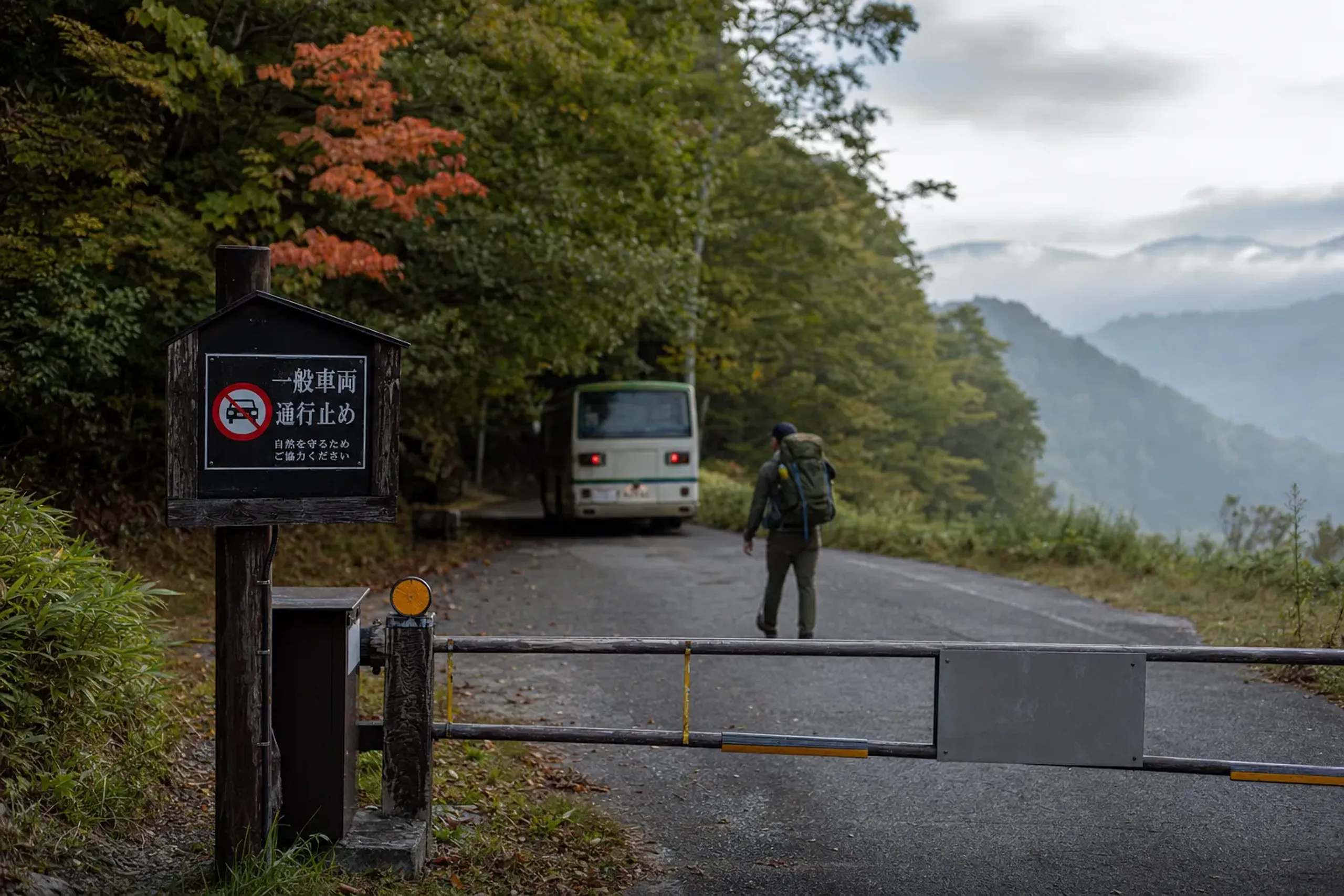
One practical detail many people miss: roadside parking is banned between Tokura and Hatomachi. Plan as if you will not “just pull over.” Don’t gamble your day on it.
Walking time on the ground is straightforward. From Hatomachi Pass to Yamanohana on the marsh is about 1 hour (2.2 km by the route sign).
Gunma Side: Oshimizu
Oshimizu is another Gunma-side trailhead, often used to reach the Ozenuma side.
Vehicle restrictions apply beyond Oshimizu on the approach toward Ichinose. In the 2026 example, the Oshimizu to Ichinose shuttle ran from late June to 18 October, and general vehicles (including bicycles) were barred on that section during the restriction period. Those dates vary by year.
From here, you’re choosing a longer, quieter walk. Secondary sources often quote about 2 hours from Oshimizu to Ozenuma. Treat that as planning texture, not a stopwatch.
Fukushima Side: Numayama Pass (Numayamatooge)
On the Fukushima side, the Numayama Pass approach is another classic entry, especially for Ozenuma access.
Official traffic measures state that from Oike to the Numayama Pass entrance, all vehicles including bicycles are barred year-round, including sightseeing buses and taxis. Seasonal shuttle operations run from the Oike and Nanairi car parks, with start dates confirmed by official notices.
Many travelers coming from Tokyo prefer the Gunma approaches for convenience. Still, Numayama can make sense if you are building a north-side route for a wider Tohoku journey—the kind of quietly connected itinerary that rewards patience and local introduction.
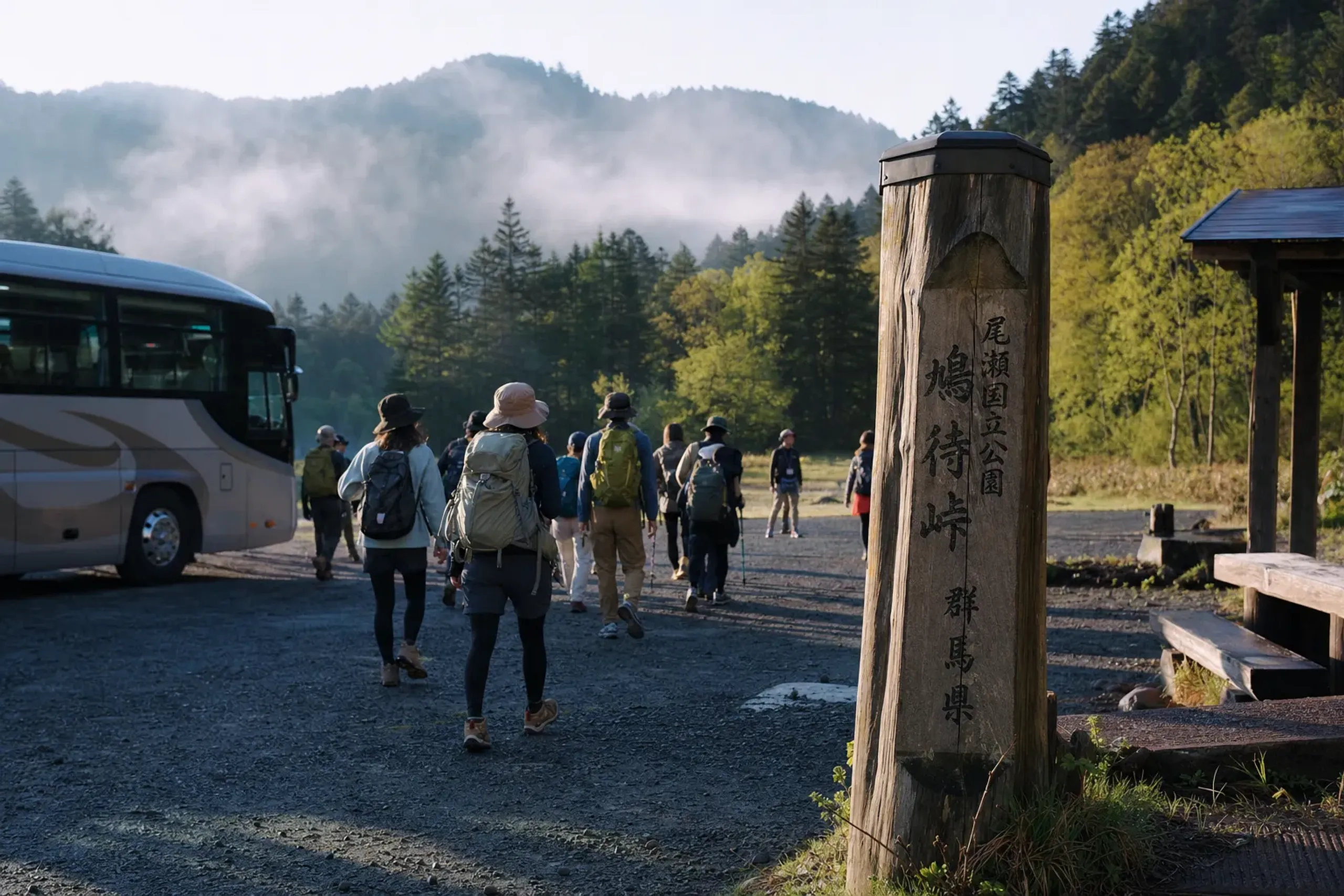
Key fact: Do not say “private cars are banned in Oze.” The bans apply to specific approach-road sections; where the car stops depends on your trailhead and the current season notice.
How Long Is The Walk From Hatomachi Pass To Ozegahara Marsh?
From Hatomachi Pass to Yamanohana at the edge of Ozegahara Marsh is about 1 hour on foot.
That single hour is the hinge of many Oze days. It is the difference between a calm, early start and an arrival when the boardwalk already feels crowded. It also shapes your return timing if afternoon thunderheads begin to build.
Once you reach Yamanohana, the walking becomes a choose-your-own-distance story. The Oze Preservation Foundation lists segment times rather than fixed “official loops,” and that is exactly the right way to think about it—move between points, then decide when to turn back.
For orientation, one published segment runs about 2 hours from the Yamanohana Visitor Center area to the Ushikubi junction and on toward the Yoppi Suspension Bridge area. Note that local notices can affect the practicality of any segment: for example, the Katashina Village Tourism Association posted a safety warning about partial boardwalk damage between Ushikubi and the Yoppi Suspension Bridge after continued rainfall. Conditions change. Your plan should, too.
A Summer Day On The Marsh: Flowers, Light, And Weather
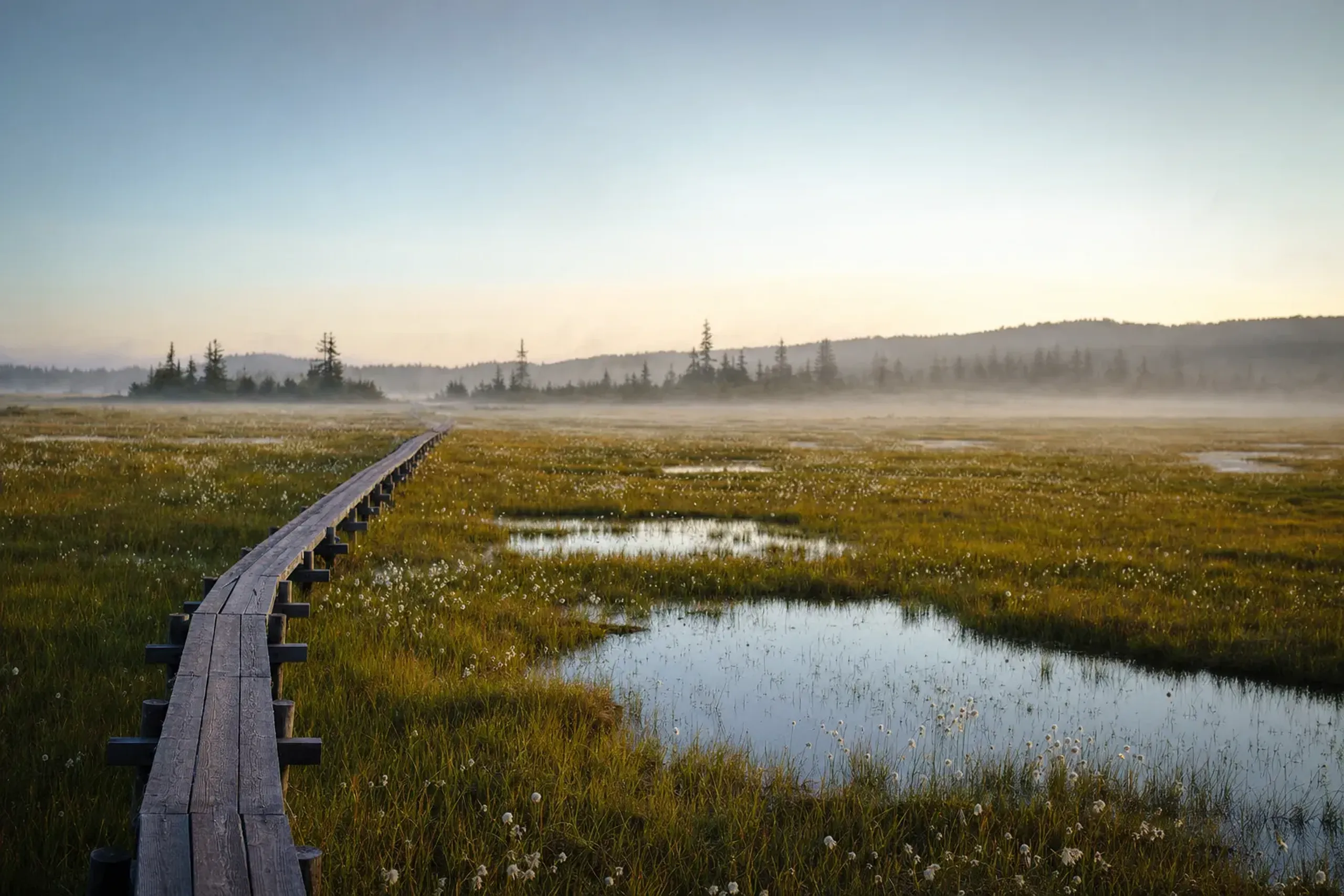
In summer, Ozegahara feels like a wide sky pressed close to the earth. The boardwalk runs straight for a while, then bends, then slips from view behind low grasses and pools that mirror the drifting clouds.
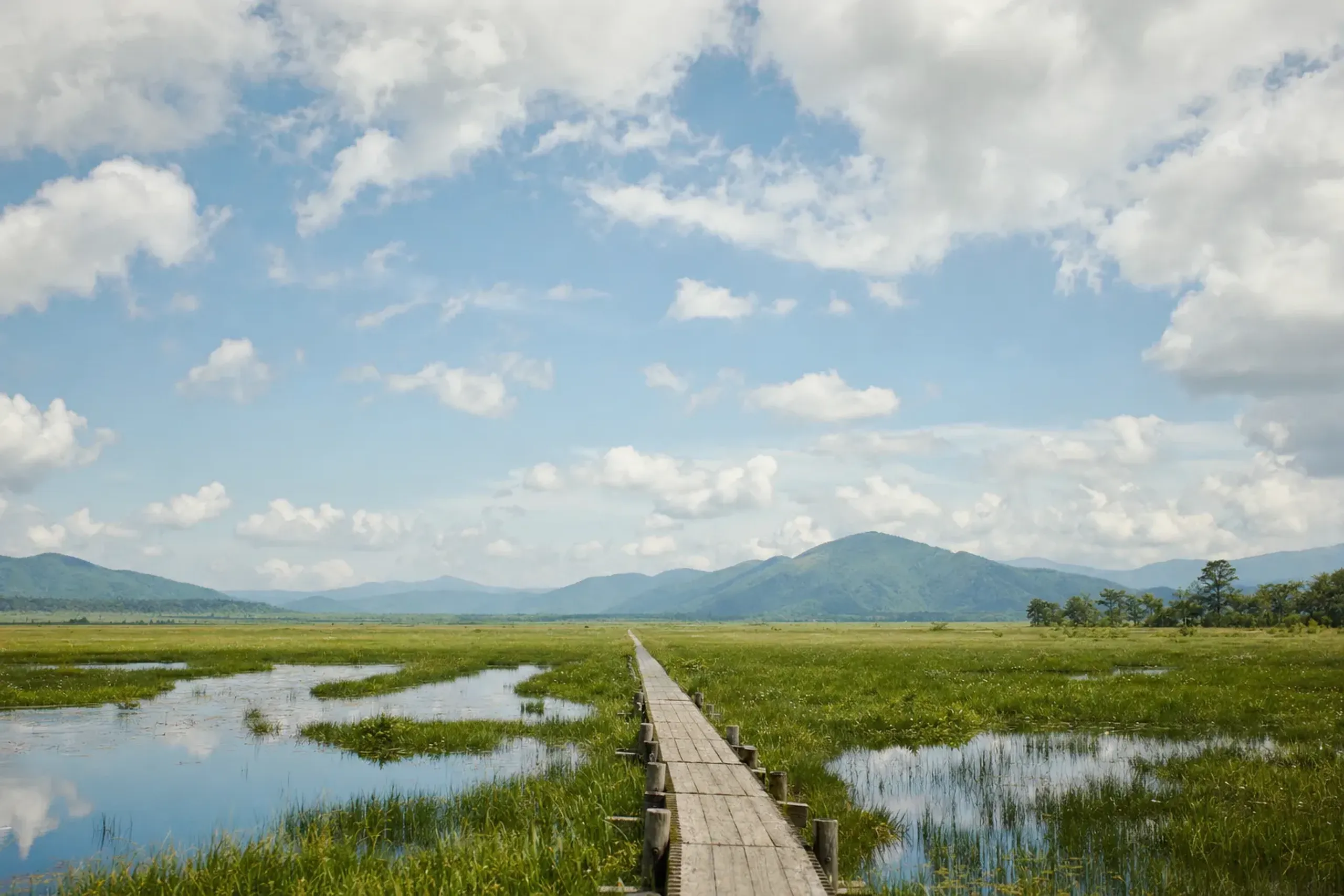
There is a hush here that feels almost deliberate—moss-dark water, still reeds, the occasional call of a bird across open ground.
Flowers are the reason many people come in July. The catch is timing. Bloom periods shift with snowmelt, rain, and heat, so you plan by “typically,” never by promises. This is the Japanese sensibility of shun—the quiet discipline of knowing precisely what to experience, where, and in which week—applied to a wetland that keeps its own calendar.
Typical Summer Flowers To Look For
In our experience, it helps to plan around a single “wish” flower and then be glad for whatever the marsh chooses to give you. Oze is not a botanical museum. It is a living wetland.
- Wataasuge (cottongrass): typically early to mid-July (timing can vary by year and source).
- Nikko-kisuge (daylily): typically mid to late July (sources differ; treat this as a window, not a fixed week).
- Kinkoka (at Ayamedaira): reported in July and August.
One line of context only: mizubasho is typically late May to early June, so it is not the summer signature.
Weather In Summer: Rain, Thunder, And The “Turnaround” Mindset
Oze gets a great deal of rain, and official guidance emphasizes proper rain gear. Bring it even on a “good forecast” day. Skipping it is a serious mistake.
Afternoon thunder is the summer pattern you plan around. If you hear thunder, official guidance is unambiguous: descend early, or shelter in a hut, rest stop, or the forest when you are out on the marsh.
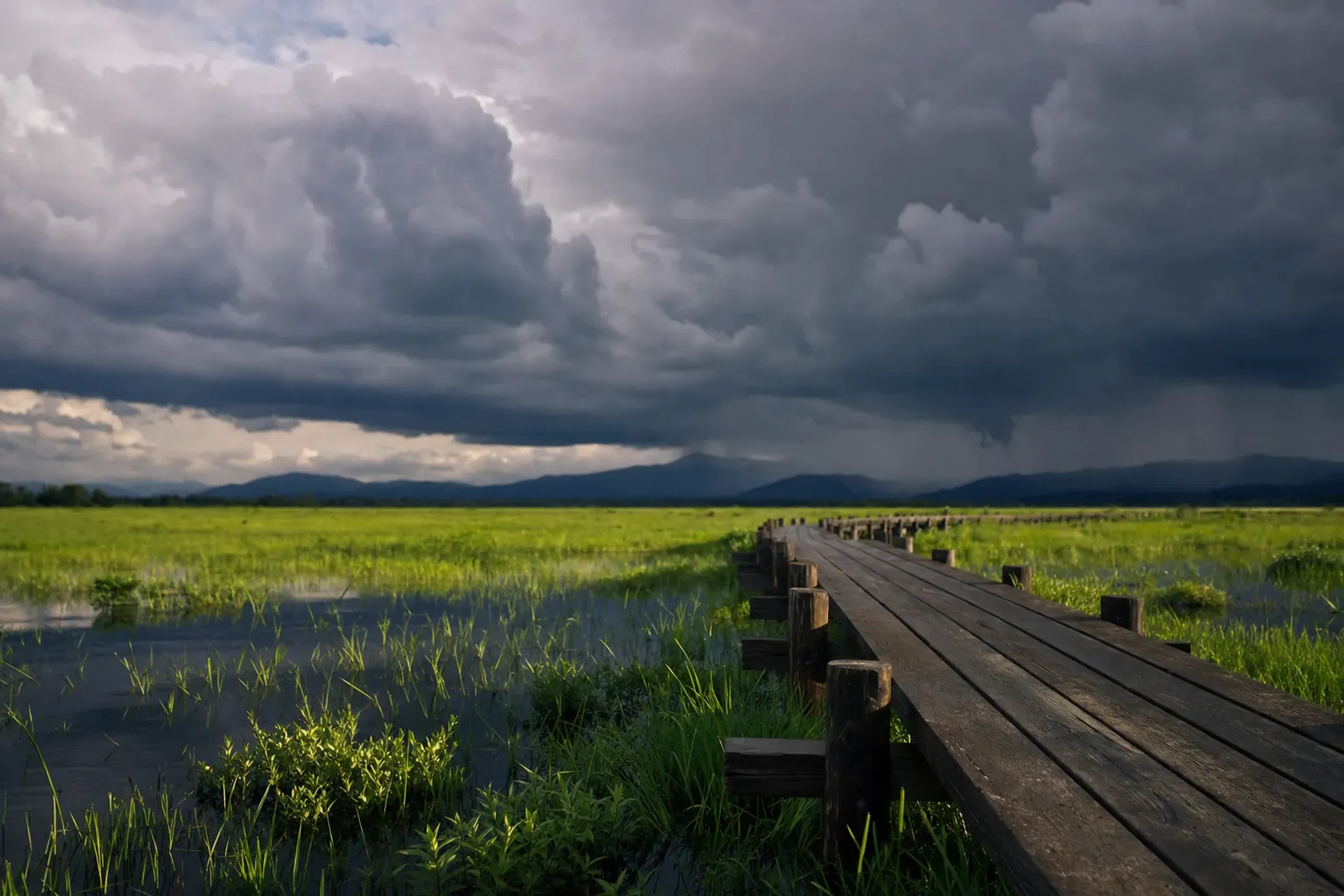
The open boardwalk is no place to negotiate with a storm.
We also keep clients realistic about temperature. Some travelers glance at lowland forecasts and assume the marsh will match. It won’t. As a secondary reference point only, the Hinoemata AMeDAS station (973 m) normals are often cited around a July mean of 19.6°C and an August mean of 20.3°C—but the marsh sits higher and can feel markedly cooler, especially with wind and rain.
What Are The Rules For Walking The Oze Boardwalks?
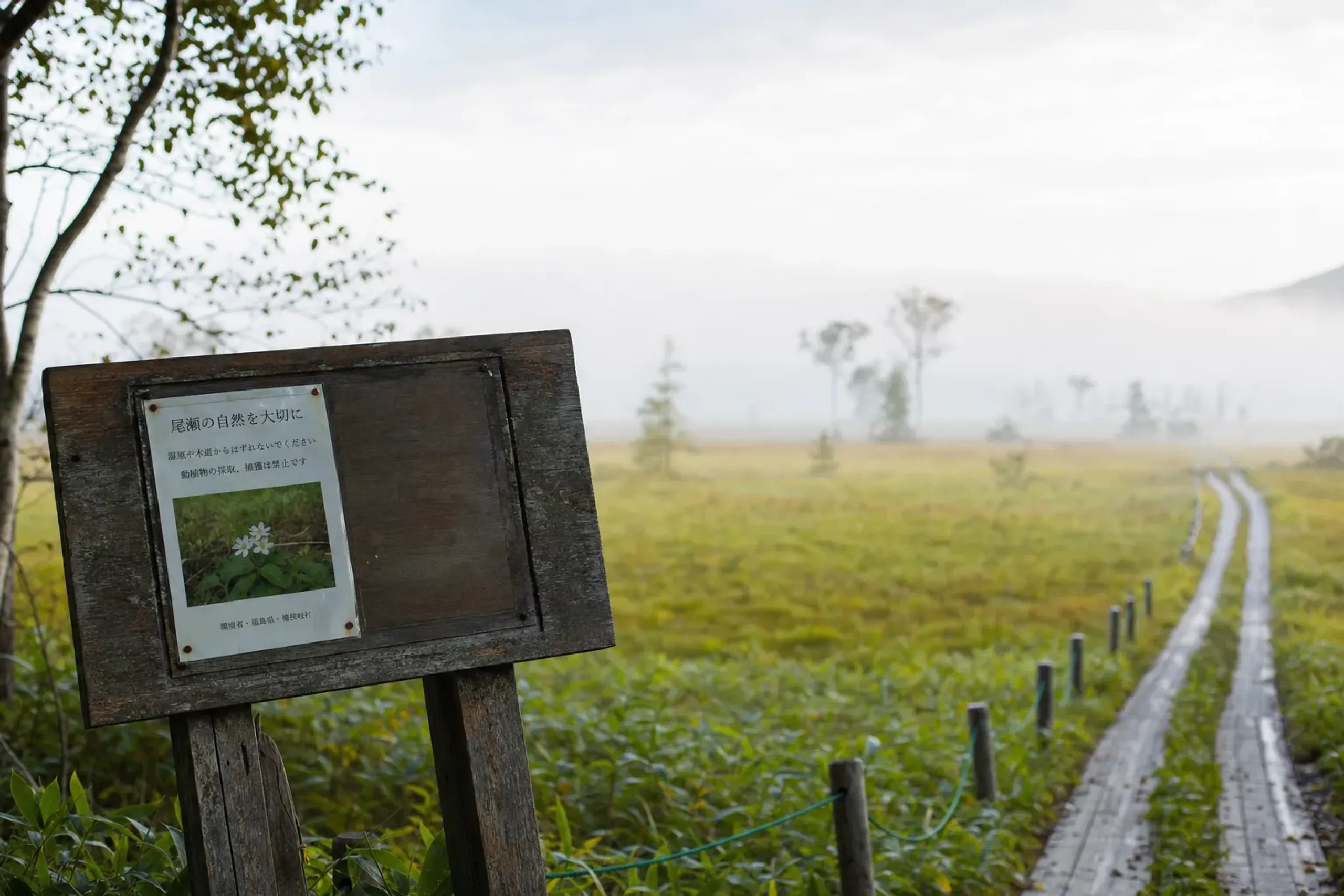
You must stay on the boardwalk, keep to the right, give uphill walkers priority, and refrain from smoking while walking.
These are not “nice-to-haves.” They are the operating system of the marsh. The boardwalk is traffic control, erosion control, and conservation line—all at once.
Other rules are just as practical. Do not pick plants. Do not take fallen leaves or branches. Carry all rubbish home; Oze’s carry-out campaign began in 1972, long before it became a global convention. There is a restraint to this place that rewards those who honor it.
Pets are not framed as a hard legal ban in the guidance we reviewed, but visitors are asked not to bring them. If you are traveling with a dog, assume Oze is not the right day out.
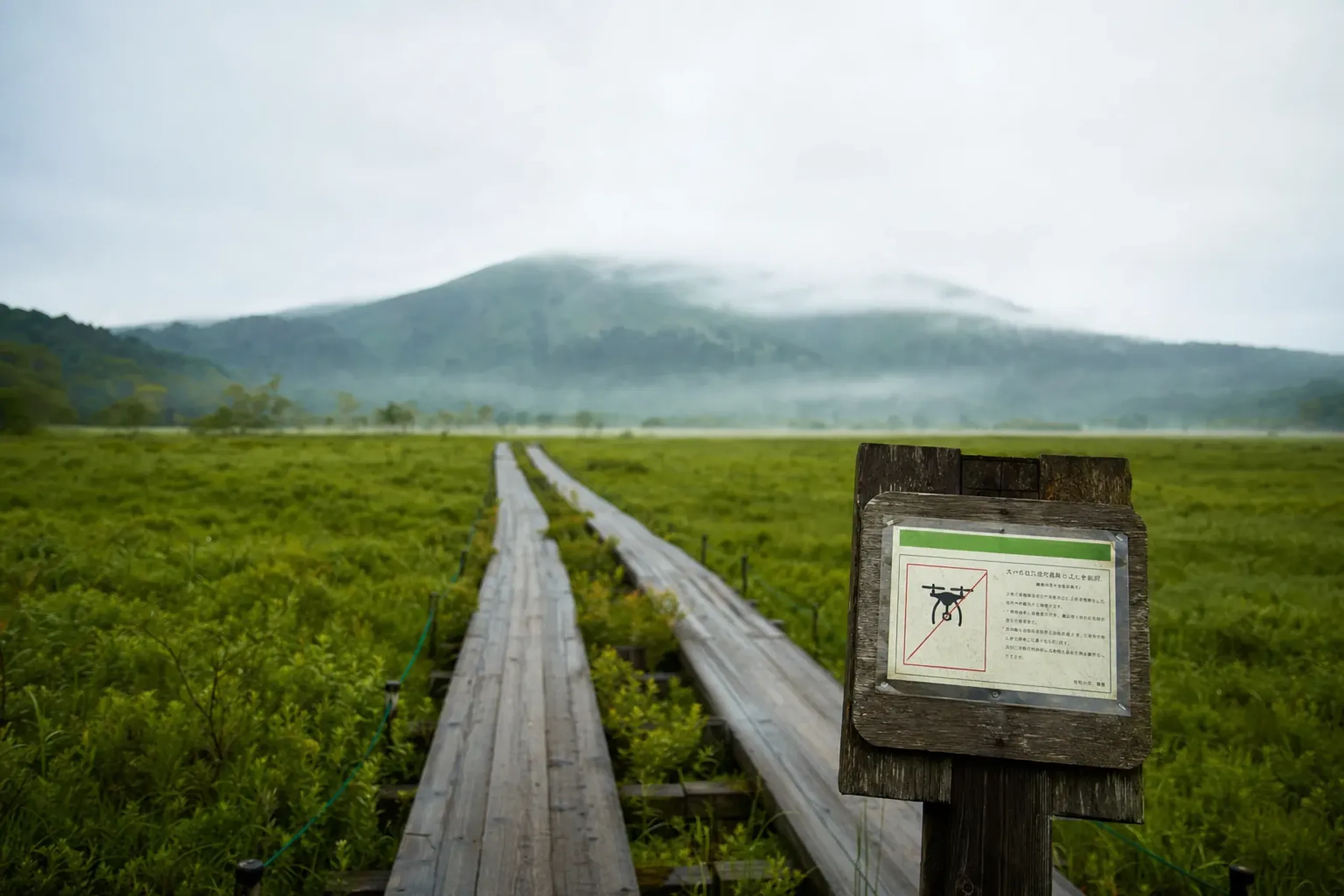
Drones are not a simple one-word answer either. Ministry guidance asks users to refrain near accommodation and trails and warns about conflicts with the Natural Parks Act. The safe approach: drone use is restricted; follow Ministry guidance and local notices, and assume you may need to leave it packed away.
Huts, Bears, And Thunder: The Three Things That Shape Your Summer Plan
Oze rewards humility. Summer planning here is not about conquering distance; it is about moving within limits—daylight, weather, and safety.
Mountain Huts: Ordinary, Essential, Reservation-Only
Oze’s mountain huts are practical bases. They are not resorts, and they are not drop-in cafés. Most operate on reservations, and availability is finite.
For many discerning travelers, the true luxury here is not thread count. It is having a dry place to wait out the rain, a hot meal served at the right moment, and a next-morning start before the day hikers arrive—the kind of silent, anticipatory care that makes the whole day feel effortless.
There are also public toilets along the routes, including chip-system toilets near huts and rest stops, with donation boxes commonly present. Do not assume any single facility will be available late in the season; seasonal removal and closures happen.
Bears: Calm, Serious, And Not Rare
Asian black bears live throughout the Oze area.
Official guidance includes practical steps such as carrying and ringing a bear bell, and staying alert in low-light hours. The Oze Preservation Foundation notes higher risk from June to August and in September, with particular caution in the dim hours around 5–9 am and 4–7 pm. Treat those windows as “eyes up” time.
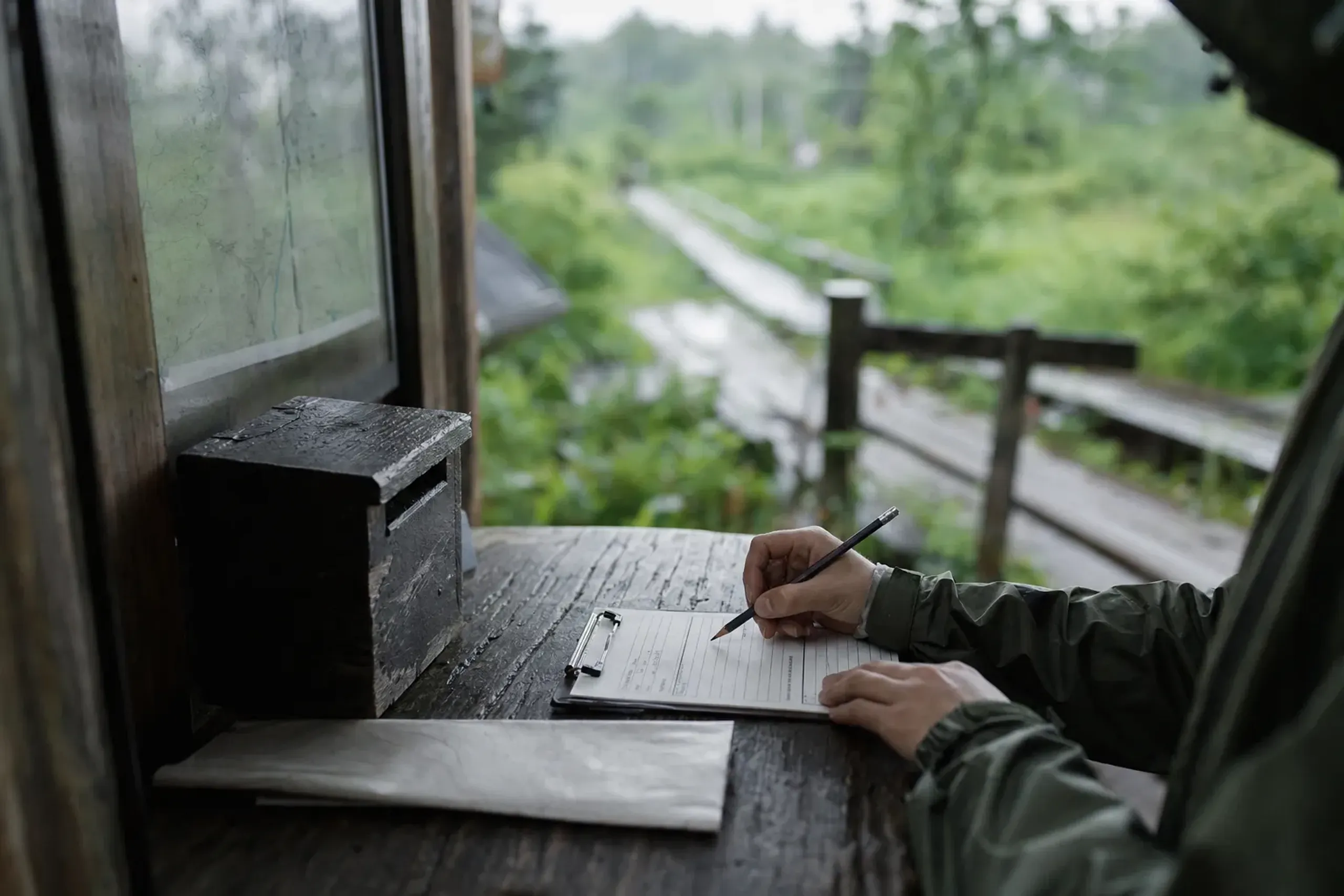
We also recommend filing a hiking plan, as promoted by official local guidance. Mobile coverage can be patchy.
Plan as if you may not have signal precisely when you want it most.
Summer Thunder: Decide Early, Not Late
If thunder is even a rumor on your weather app, your day should include a firm turnaround time.
We plan Oze walks with spare margin on purpose. That margin becomes your safety buffer when rain slows footwork on wet planks, or when a local notice advises avoiding a boardwalk section after heavy weather.
Getting There And Getting Back: Timing, Shuttles, And The Reality Of “Last Return”
Oze looks close on a map. It isn’t. The final leg is always slower than you want it to be.
From Tokyo, many references describe travel as roughly four to five hours to the trailhead (JNTO secondary). Some official sources break it into Shinkansen plus bus segments, but published estimates differ, and we avoid pretending there is one exact number that fits every departure and season.
What matters in summer is not only your morning arrival. It is your return timing relative to the shuttle window and the afternoon thunder pattern.
Season Windows (Worked Example Only: The 2026 Season)
In the 2026 season example, the Tokura to Hatomachi shuttle ran from 18 April to 3 November, and the Oshimizu to Ichinose shuttle ran from late June to 18 October. Many huts closed on the weekend of 24 and 25 October.
Those dates change each year and are confirmed closer to the visit through official notices. Do not design flights and hotels around an old PDF you found online.
Late-Season Infrastructure Cutoffs (Why They Matter Even In Summer Planning)
Even if you are visiting in summer, it helps to understand how Oze “winds down,” because it reveals the park’s operating style. There are real cutoffs.
For example, a 2026 route note published specific end-of-season operational details such as Ryugu toilet usability until the morning of 27 Oct 2026, board removal at the Yoppi bridge on 30 Oct 2026, and Tokura–Hatomachi shared bus operation planned until 3 Nov 2026. You do not need those dates for a July visit—but you do need the mindset behind them: services here are seasonal, and they stop.
How Our Concierge Team Plans An Oze Summer Walk
Oze is a public national park, and the right kind of planning here is protective, never possessive. No special access. No shortcuts. Just good judgment, quietly applied.
Our team at Japan Royal Service builds an Oze day around four decisions: your trailhead, your walking hours, your weather buffer, and your return logistics once the marsh is done with you for the day. Around that spine we arrange the comforts that matter—a reserved hut at the right elevation, a discreet driver waiting at the correct trailhead, and a wider route that can thread Oze into the kind of bespoke itinerary most visitors never see.
If a summer walk into Honshu’s largest mountain marsh belongs in your season, let us shape it around the right week, the right flowers, and the right return window. To begin a private, confidential conversation, contact us here.