In this guide
- 01What Is The 46,000-Day Belief At Sensō-ji, And Where Does The Number Come From?
- 02How Merit Days Work At Sensō-ji
- 03The Market, And Its Surprising Origin At Atago Shrine
- 04The Red Corn That Became A Paper Charm
- 05The Ground-Cherry As Folk Remedy
- 06When Is Hōzuki-ichi Held, And How Do You Get There?
- 07Frequently Asked Questions
- 08Why Choose Japan Royal Service
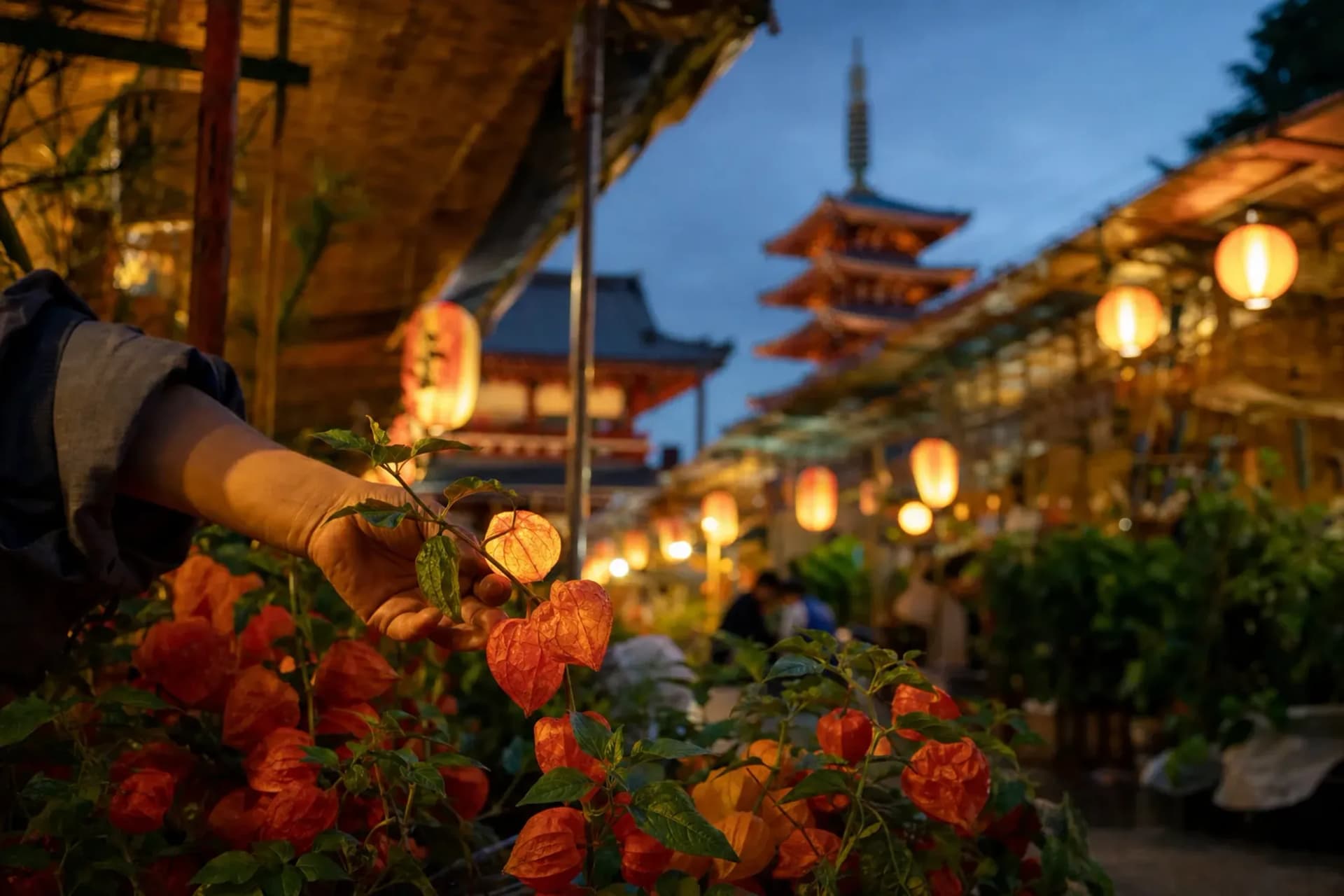
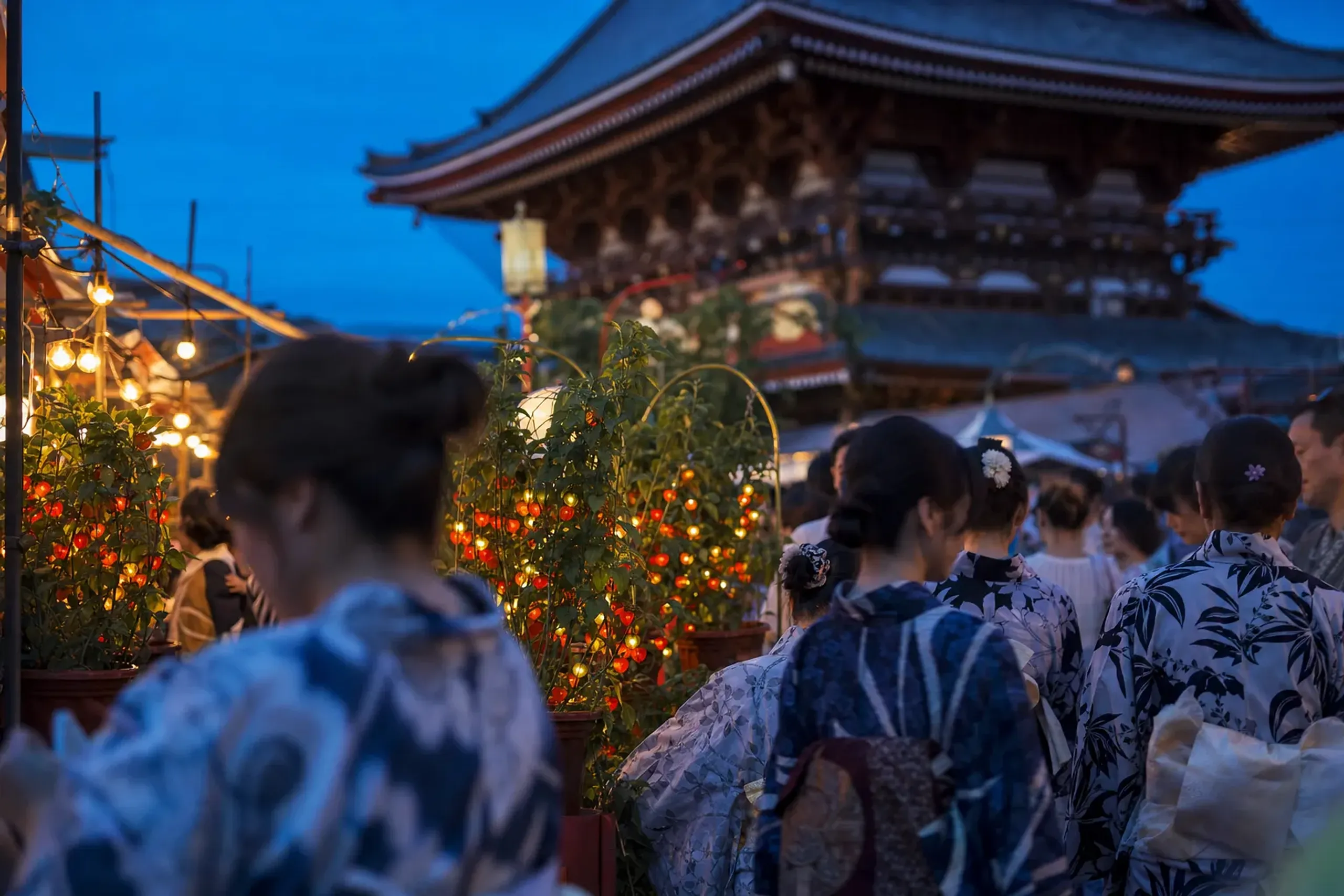
The heat of a Tokyo July does not lift after sundown. It settles. And into that settling, on the grounds of Sensō-ji, come the hozuki — hundreds of pots of ground-cherry, their lantern-shaped husks glowing orange-red beneath the temple eaves. Wind chimes hang from the stall frames. They ring without pattern. A visitor in a cotton yukata pauses, decides, carries a potted plant away into the crowd.
This is Hōzuki-ichi, the ground-cherry market. It fills Sensō-ji every 9 and 10 July. And it grew up around one of the strangest promises in Japanese religious life — that a single day's worship here carries the merit of 46,000 days. Nobody is entirely sure why.
Our team at Japan Royal Service has walked HNW guests through this market at dusk, when the light softens and the merchants call less loudly. What follows is what we tell them first: the claim, its mystery, and the details worth slowing down for.
What Is The 46,000-Day Belief At Sensō-ji, And Where Does The Number Come From?
Worship at Sensō-ji on 10 July is said to carry the merit of 46,000 days — about 126 years, roughly one human lifetime. The number's origin is genuinely unknown. Three theories circulate; none is confirmed.
This is the temple's largest kudoku-bi, or merit day. The claim is old, popular since the Edo period, and stated plainly by the temple's own account. What it does not come with is a settled explanation.
The three theories run like this. First, that one measure of rice, an isshō, holds roughly 46,000 grains — and isshō is a pun on the word for "a lifetime."
Second, that 365 days multiplied across 126 years lands near 46,000, again about one life. Third, that the figure traces back to the phrase shiroku-jichū, meaning "all the time."
Pick whichever pleases you. Scholars have not, and neither will we. The unknowing is part of the appeal. A number this specific, this weighty, floating without a fixed anchor for centuries — that is the kind of detail our guides let sit, rather than resolve.
How Merit Days Work At Sensō-ji
Kudoku-bi are days on which a single act of worship is said to earn the merit of many days at once. Sensō-ji currently observes twelve of them a year — one per month, each worth a different count. July's is the largest by far.
It helps to keep two things separate. The merit day is not the temple's monthly fair day, which falls on the 18th. Different date, different purpose. The 46,000-day observance stands alone in the calendar.
The temple's own account names 10 July as the peak merit day. The market and the observance run across both 9 and 10 July, and some sources extend the merit to both days rather than one. We state this precisely because it matters to guests who want the day exactly right.
As for when the custom began — sources place its start anywhere from the Heian to the Muromachi period.
We present it as an old tradition without pinning it to a single era, because the record does not allow one. What is clear is that by Edo times it was already drawing crowds. It still does.
Key distinction: The 46,000-day merit day (9–10 July) is separate from Sensō-ji's monthly fair day on the 18th, and separate again from the May Sanja Matsuri. Three different things, often confused.
The Market, And Its Surprising Origin At Atago Shrine
Roughly 120 hozuki stalls, plus about 100 other vendors, fill the temple grounds across the two days — the largest ground-cherry market in the Tokyo area. The stalls today sell large, red Tanba hozuki. In earlier times the plant sold was small and green.
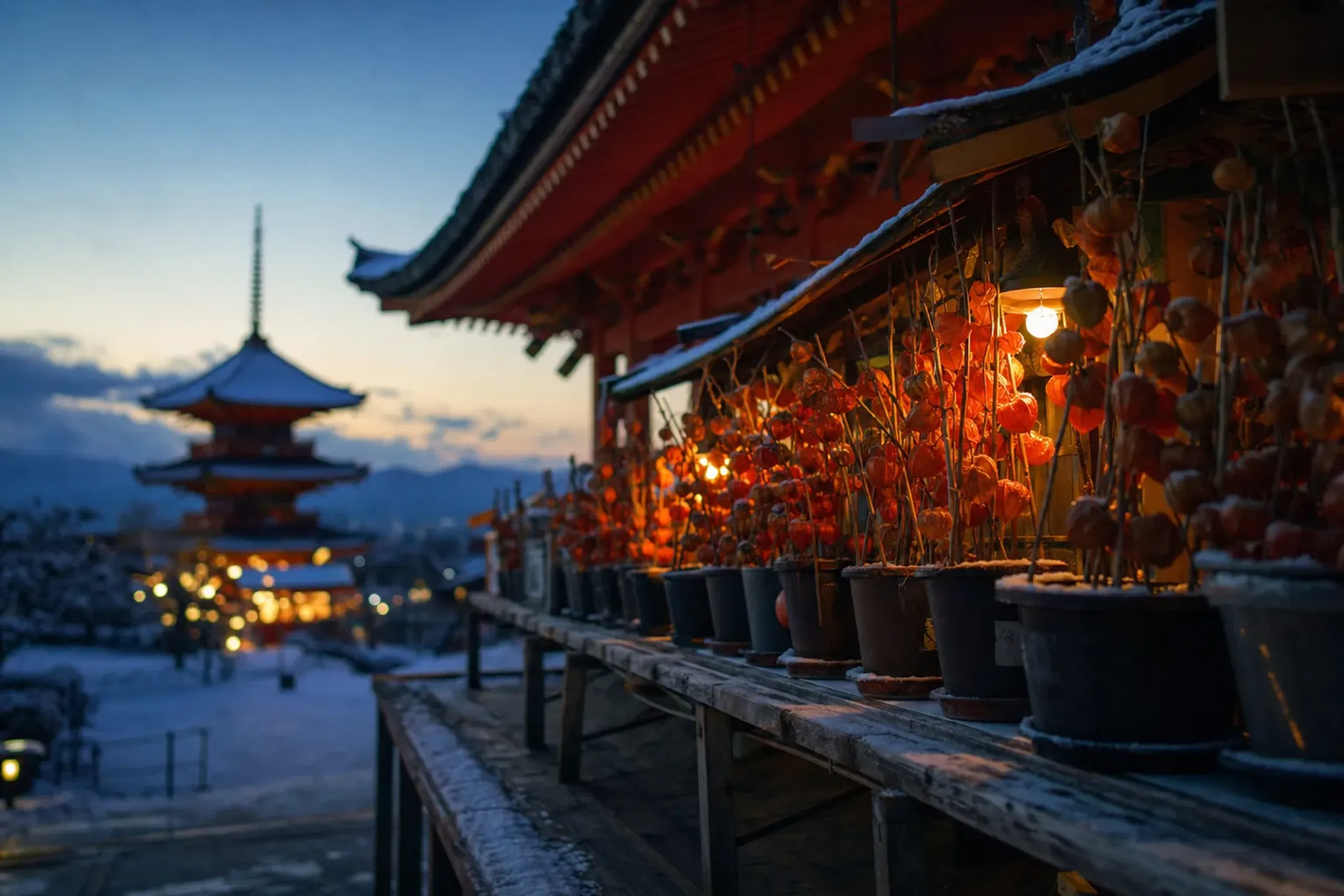
Walk the rows at dusk and the atmosphere does the work. Fūrin — glass wind chimes — hang among the pots, catching whatever breeze the evening offers. The red husks read almost like lanterns strung low. It is one of the summer scenes our guests remember longest, and it is entirely public and free to wander.
Here is the twist most visitors never learn. The market did not begin at Sensō-ji at all. It began at Atago Shrine in Minato Ward, where hozuki was sold as a medicinal herb on a Kannon fair day — a day itself already called "46,000 days." Sensō-ji, regarded as the true home of the 46,000-day merit, then started holding its own market. And it grew.
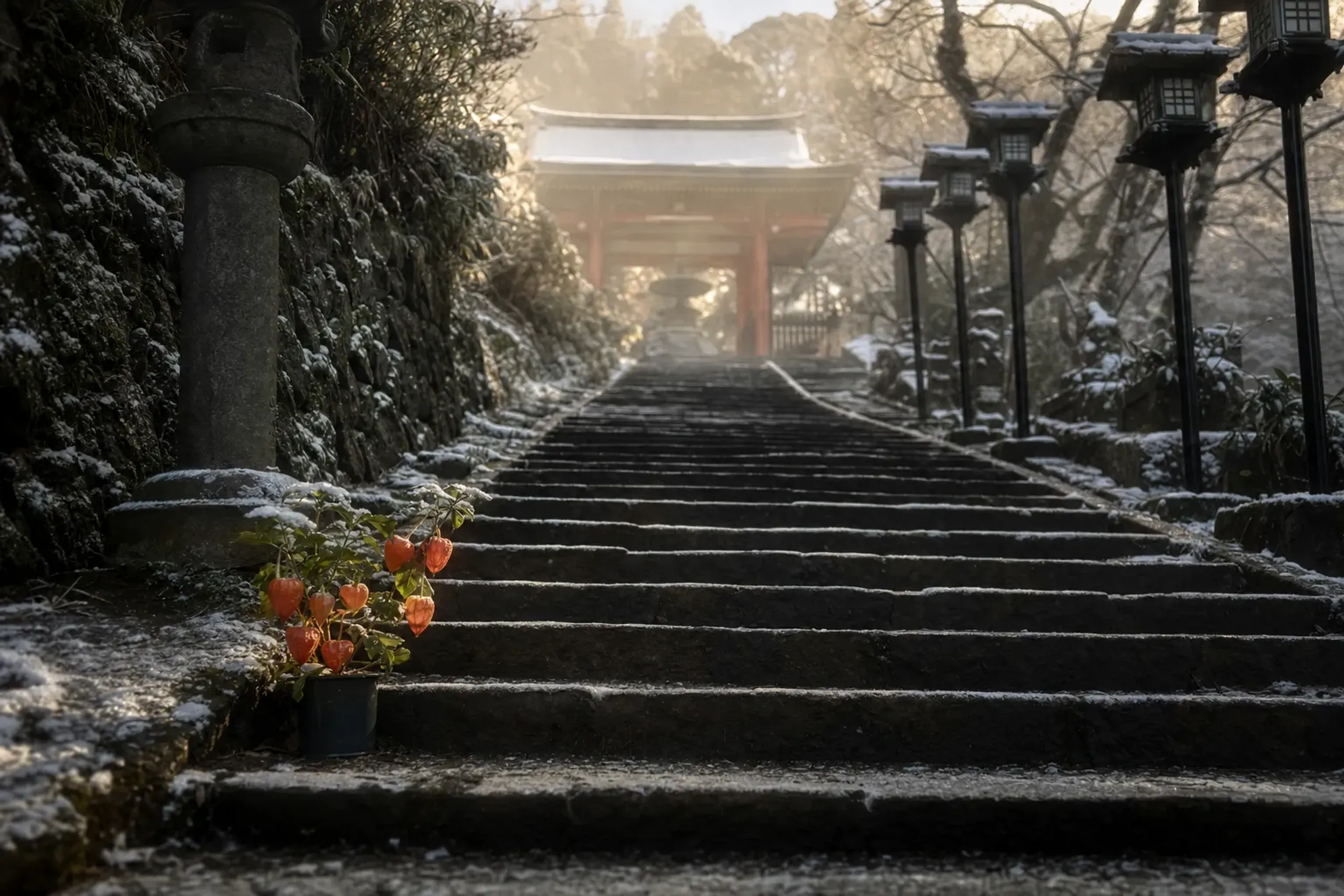
It grew so large that, to many Tokyo residents, "46,000 days" now simply means the hozuki market at Asakusa. Atago Shrine, meanwhile, still holds its own smaller market — but on 23–24 June, not July. Do not confuse the two.
The Red Corn That Became A Paper Charm
This is the market's most peculiar thread, and our favourite to tell.
During the Bunka era (1804–1818), vendors at Sensō-ji sold red corn on these two July days. People hung it at their gateways as a charm against lightning. For decades that was the custom — corn at the threshold, protection overhead.
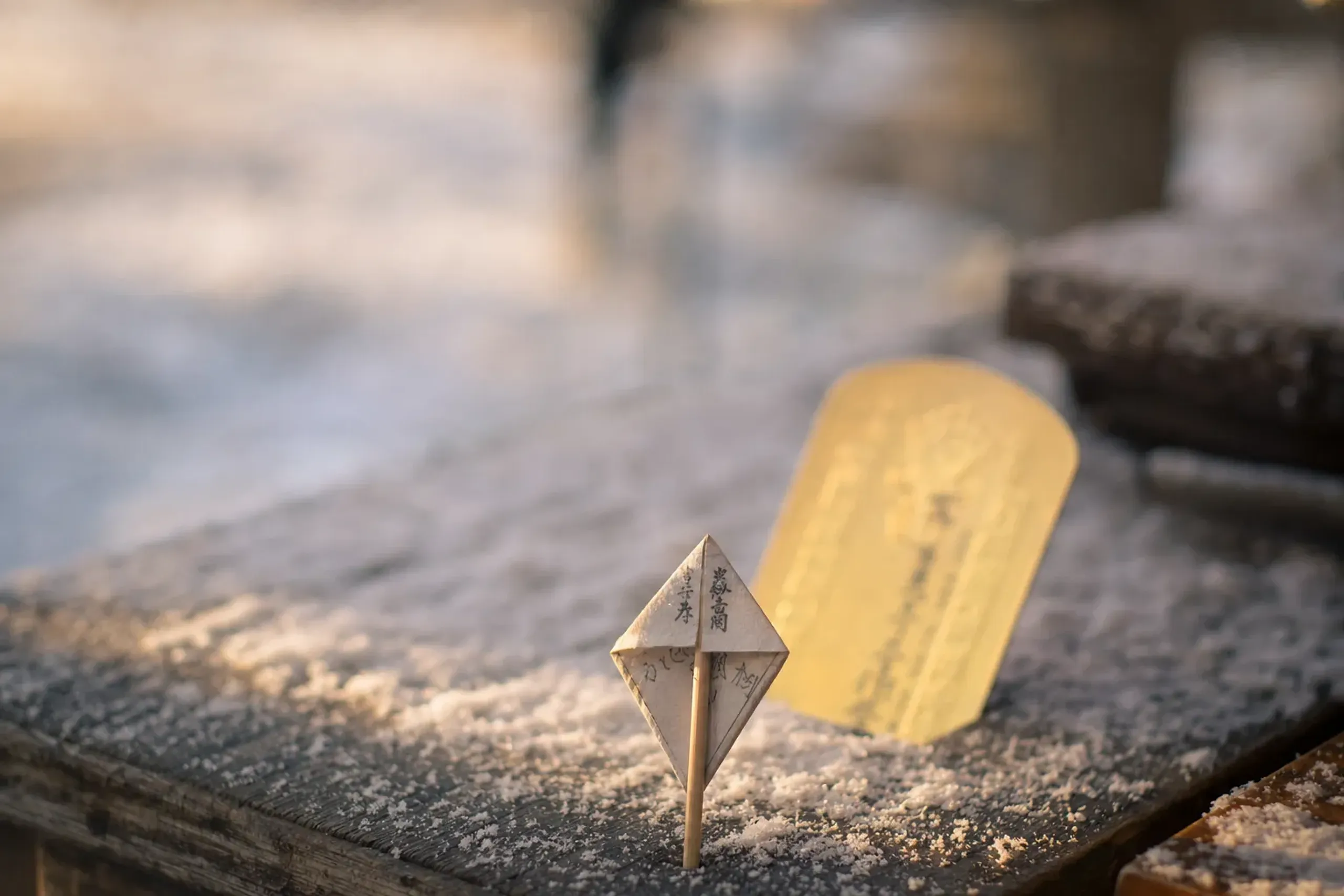
Then, at the start of the Meiji era, a poor harvest left no corn sellers at all. Visitors came asking for the charm and found none. So the temple improvised: it began issuing a small triangular paper talisman on a bamboo skewer, a lightning-protection charm to replace the missing corn.
The paper caught on. The corn faded. By around 1934 red corn had vanished from the market entirely — and the paper talisman, born of one bad harvest, remained. Sensō-ji still issues these lightning-protection talismans only on 9 and 10 July, alongside a gold prayer tablet. Two days a year, and no others.
The Ground-Cherry As Folk Remedy
Hozuki carried a medicinal reputation long before it became a summer ornament. Historically it was swallowed as a folk remedy — believed to ease abdominal cramps and to settle fretful children.
We note this strictly as historical belief. It is a piece of the plant's story, no more.
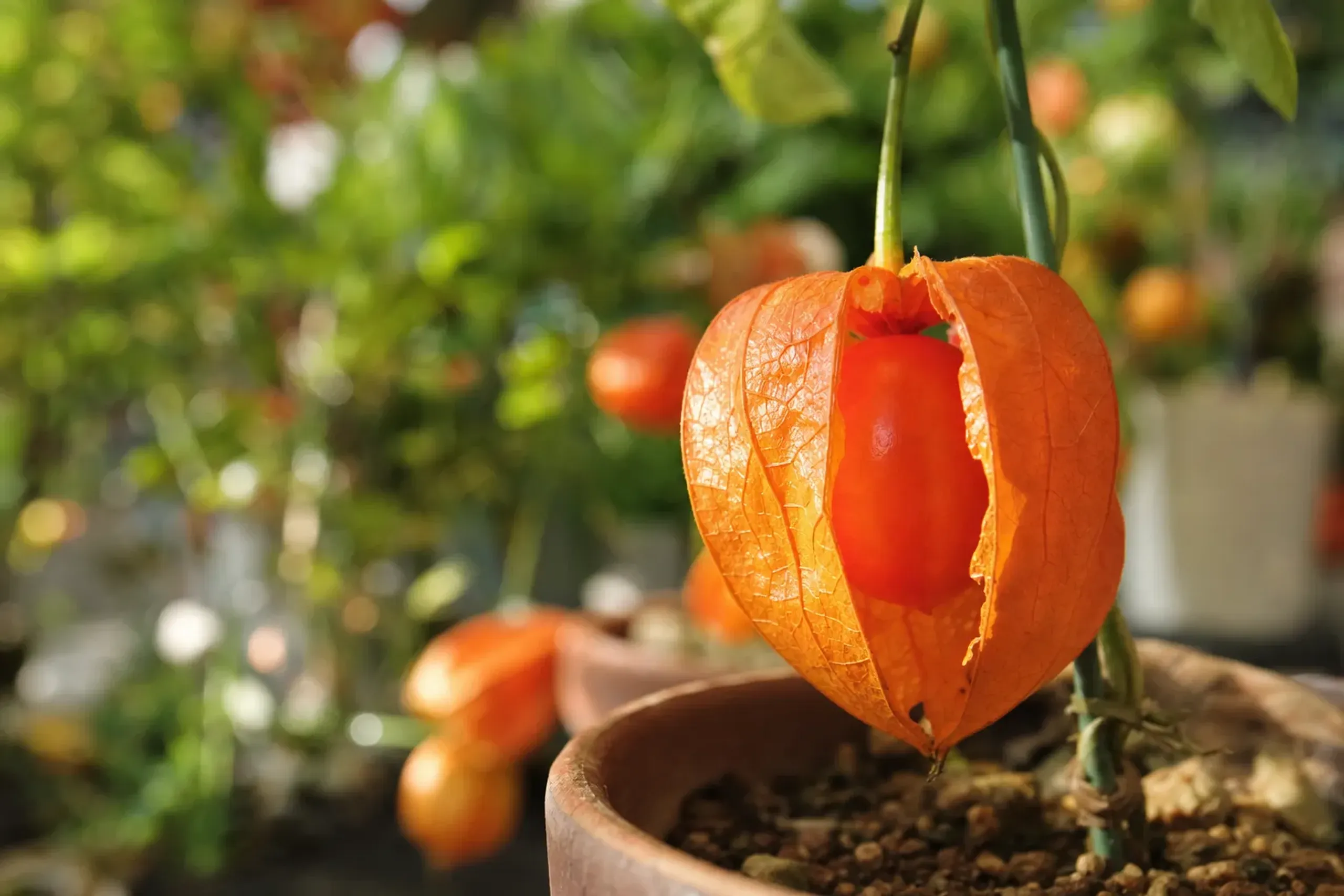
The hozuki sold at the market today is a potted ornament for the season, and nothing about that tradition should be read as a suggestion to consume it.
When Is Hōzuki-ichi Held, And How Do You Get There?
Hōzuki-ichi runs every year on fixed dates, 9 and 10 July, roughly 9am to 9pm, on the grounds of Sensō-ji at 2-3-1 Asakusa, Taito City. Because the dates are fixed, the day of the week shifts each year.
Getting there is straightforward. Sensō-ji sits about a five-minute walk from Asakusa Station on the Ginza Line, the Tobu Skytree Line, and the Tsukuba Express — and about seven minutes from Asakusa Station on the Toei Asakusa Line.
A caution worth stating flatly: the market draws very large crowds. The narrow Nakamise approach becomes a slow river of people in the evening. This is where timing and routing earn their keep. Our concierge team verifies current hours each year before advising guests, since the temple's schedule can carry seasonal variation.
The Hōzuki-ichi should not be confused with Asakusa's other great event, the Sanja Matsuri — that is a May festival, covered separately in our Japan matsuri writing. Two entirely different occasions in the same neighbourhood.
A Note On Etiquette
Sensō-ji remains an active temple, not a stage set. Photography is welcome, but not at the cost of blocking the approach to the main hall or crowding worshippers mid-prayer. Our guides brief guests on where to step aside, when to lower a camera, and how to move with the crowd rather than against it.
The market rewards a slower, quieter presence.
Frequently Asked Questions
Is the Sensō-ji Hōzuki-ichi held on the same dates every year?
Yes. The market runs annually on 9 and 10 July regardless of the day of the week, on the grounds of Sensō-ji in Asakusa. Because the dates are fixed, the weekday changes from year to year.
What is the difference between the 46,000-day merit day and Sensō-ji's fair day on the 18th?
The 46,000-day merit day (kudoku-bi) falls on 9–10 July and carries a lifetime's worth of worship merit. The temple's monthly fair day on the 18th is a separate observance with a different purpose entirely.
Can I still get the lightning-protection talisman at Sensō-ji?
Yes, but only on 9 and 10 July. Sensō-ji issues the triangular paper lightning-protection talisman, alongside a gold prayer tablet, exclusively on these two market days each year — never at other times.
Why does one day at Sensō-ji equal 46,000 days of worship?
No one knows for certain. Three theories circulate — a rice-grain pun, a 126-year calculation, and a phrase meaning "all the time" — but none is confirmed. The unresolved origin is part of the tradition's character.
Is the Hōzuki-ichi market crowded, and when is the best time to visit?
Very crowded, especially the Nakamise approach in the evening. Many find early morning calmer for worship and dusk most atmospheric for the stalls.
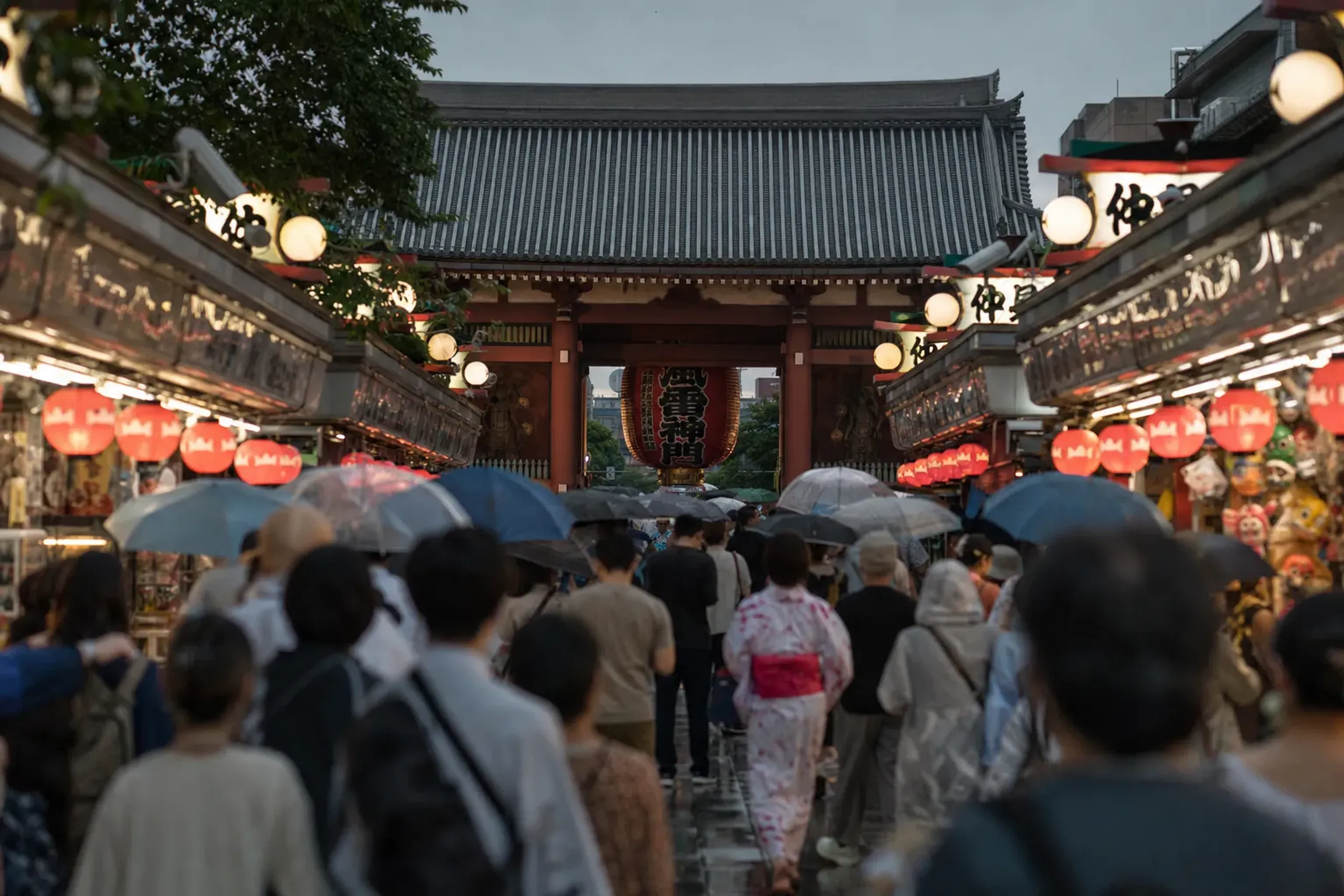
Careful routing from the right station exit makes a large difference.
Why Choose Japan Royal Service
Hōzuki-ichi is a public event, open to all — and our value is not access to something closed, but the shaping of a day that would otherwise overwhelm. What we arrange is guiding, private transfers, and timing advice: when to arrive for a quieter blessing, when the market glows best, and how to reach the perimeter without wading through the Nakamise crush.
Our guides carry the depth to explain what most visitors never hear — the three theories behind the number, the Atago Shrine origin, the harvest failure that gave rise to a paper charm still issued only twice a year. That is bespoke itinerary work: meaning first, mechanics arranged around it. With private chauffeured transport to the edge of Asakusa and discreet, unhurried guiding, the day belongs to you rather than the crowd. Where competitors like InsideJapan Tours or Black Tomato offer broad Japan programmes, our Tokyo-based team builds around fixed cultural dates like this one — and holds guest itineraries in complete confidence. If your stay calls for it, we also advise on refined accommodation within reach of Asakusa.
To plan a visit around 9–10 July, reach our team privately via WhatsApp or LINE, or contact us here. We will shape the day so that the market's quiet moments, not its crowds, are what you carry home.