In this guide
- 01How UNESCO Status Made Okinoshima Less Accessible, Not More
- 02The Prohibition On Women Setting Foot On The Island
- 03The Taboos That Have Kept The Island Undocumented For Centuries
- 04What Can You Actually Visit In The Munakata Region?
- 05Praying Toward Okinoshima From Ōshima Island
- 06How Japan Royal Service Approaches A Place You Cannot Enter
- 07Frequently Asked Questions
- 08Why Choose Japan Royal Service
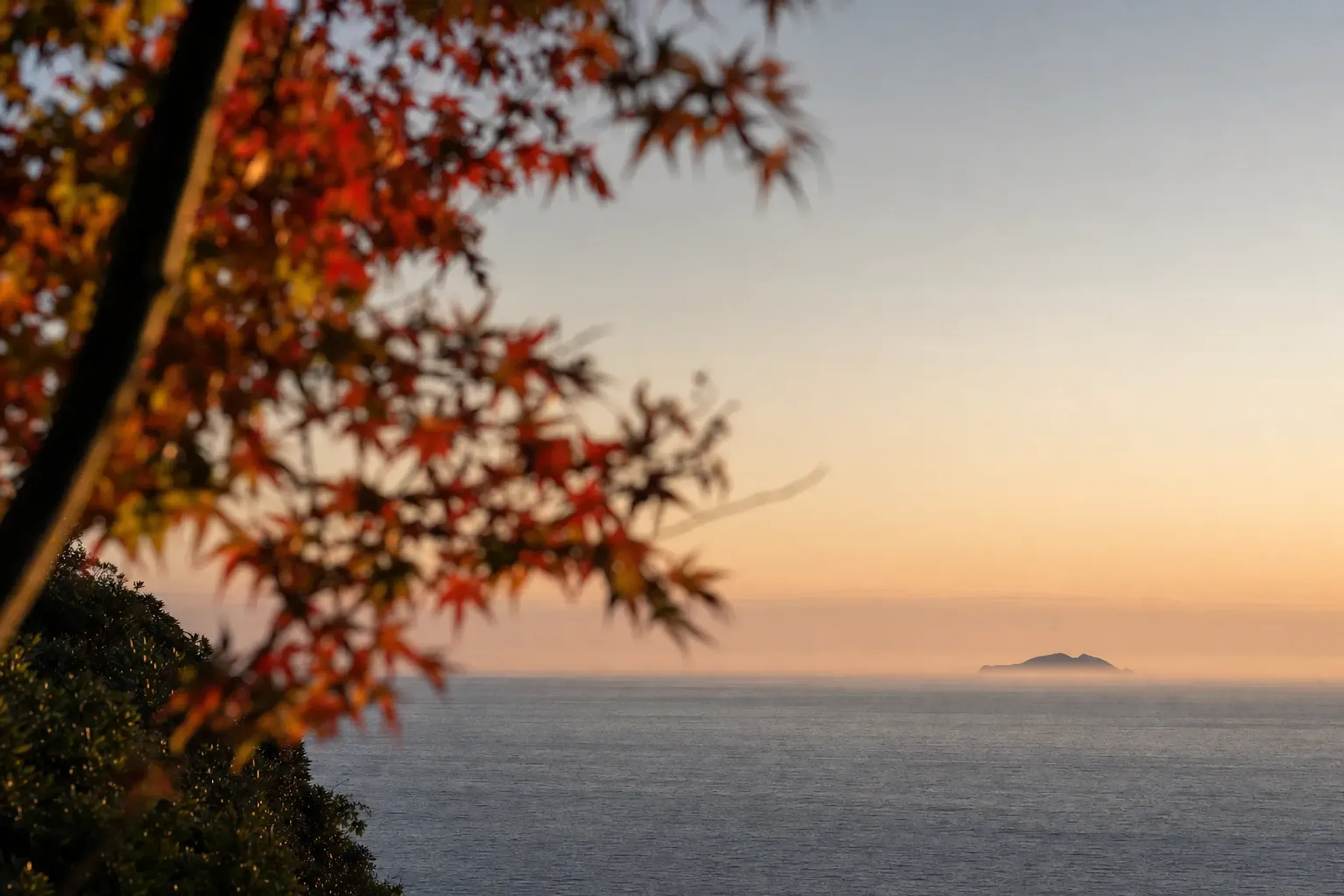
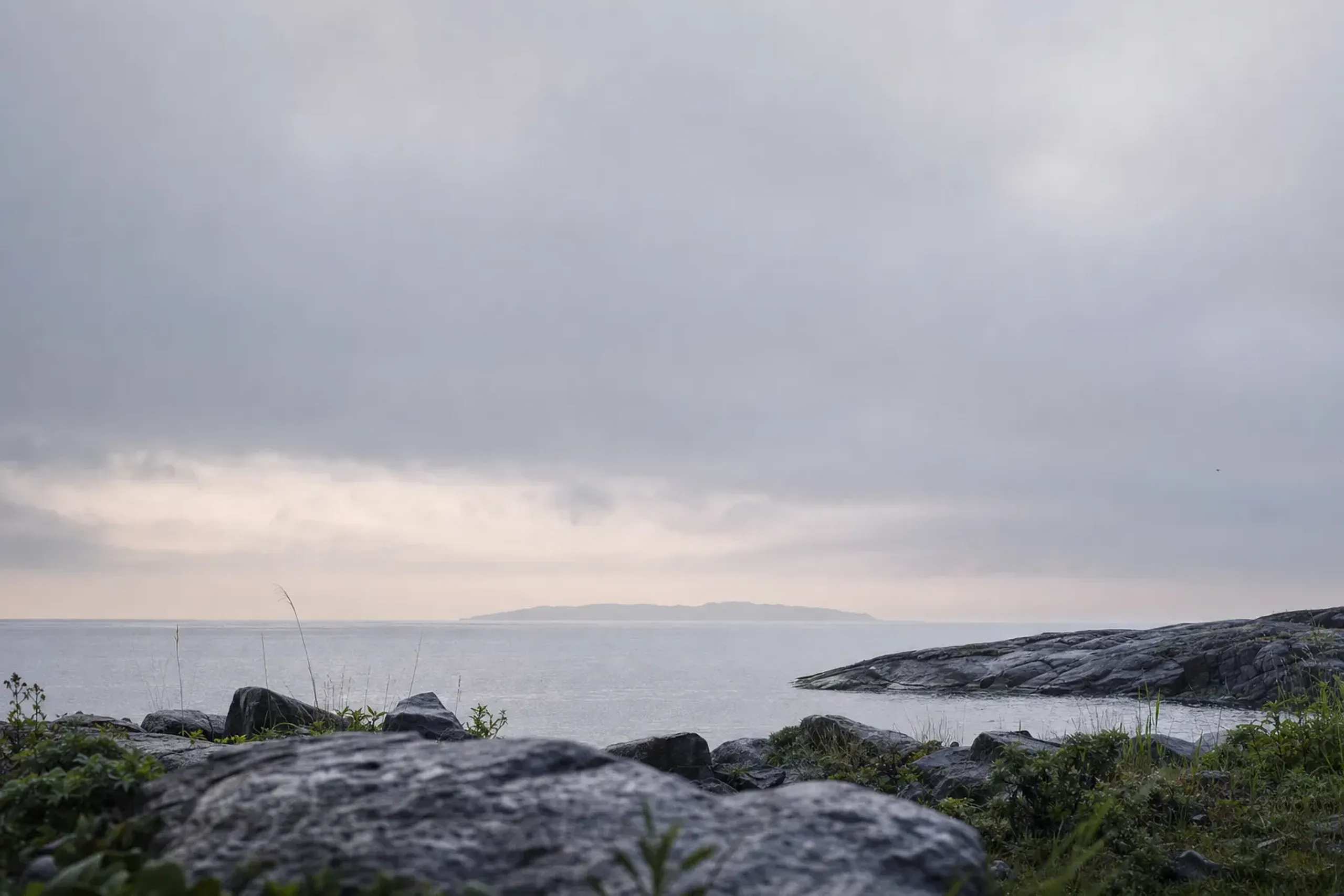
Stand at the northern edge of Ōshima on a clear morning, look out across the Genkai Sea, and you may catch it. A low silhouette on the horizon. Roughly 48 kilometres of open water away, half-swallowed by haze. That is Okinoshima. A sacred island, a UNESCO World Heritage site, and one of the very few places in Japan that almost no living person will ever be allowed to touch.
Most World Heritage listings open a place to the world. This one did the opposite. Our team at Japan Royal Service has spent years guiding discerning travellers to the edges of Japan's spiritual geography, and Okinoshima remains the strangest case we know. You cannot go. Nobody can. And the reasons are older, stranger, and more current than the popular story suggests.
How UNESCO Status Made Okinoshima Less Accessible, Not More
In July 2017, the same month Okinoshima won World Heritage inscription, Munakata Taisha announced that the island's single annual public landing would end entirely the following year. General access, for anyone, stopped in 2018.
Here is what that reversed. Until 2018, roughly 200 male worshippers, chosen by lottery, were permitted to land on Okinoshima once a year. A single day. The 27th of May, for the island's annual festival. That was the only window in which any member of the public could set foot there. It was narrow. But it existed.
Then it closed. The decision came specifically in response to a UNESCO request to strengthen protective measures as a condition of the listing.
So the paradox is real and precisely dated: global recognition made this island harder to reach than it had ever been. Today only Shinto priests may land, with limited exceptions granted for research.
Key fact: The once-a-year male landing on 27 May ended in 2018. Accounts claiming men can still land annually are outdated. Visiting Okinoshima without permission from Munakata Taisha is described as a criminal offence on the official heritage site.
It is worth pausing on how unusual that is. A World Heritage listing is normally a beacon. Visitor numbers climb. Access improves. Here, the listing sealed the door. The island's protection became the point, not its display.
The Prohibition On Women Setting Foot On The Island
Okinoshima has long observed nyonin kinsei, a prohibition on women setting foot on the island. This restriction is maintained separately from the 2018 general closure and predates it by centuries.
The facts, stated plainly. Before the UNESCO inscription, the shrine's head priest stated publicly that Okinoshima would not be opened even as a World Heritage site, and that the tradition would continue. That position has held.
This drew documented protest. Women's rights organisations objected to the exclusion, and the tourism industry at the time raised concern about a World Heritage property that bars half the population. Those objections are part of the record and should not be omitted from any honest account of the island.
There is also a legal and procedural context. UNESCO's own guidance on gender and heritage sites reportedly calls for respecting individual religious and cultural views rather than treating such practices as an automatic barrier to inscription. Domestically, because the island is Munakata Taisha's private property, one legal reading holds that the restriction does not constitute unlawful discrimination under Japan's constitution. The World Heritage Convention itself explicitly preserves existing property rights recognised under national law.
We present this as documented fact and documented disagreement. The restriction exists and continues. It has drawn real, recorded objection. Both are true, and both belong in the story of Okinoshima.
The Taboos That Have Kept The Island Undocumented For Centuries
Even for those permitted to land in the past, Okinoshima demanded a set of rules that make it nearly unique among sacred places.
The strictest is oiwazu-sama: nothing seen or heard on the island may ever be spoken of afterward. Not to family. Not to the shrine. Not to anyone. Think about what that has done. For centuries, the island's interior has stayed largely undocumented, because even the men who walked it could never describe what they saw. A place hidden not by distance but by silence.
There is more. Before any landing, worshippers had to perform shio-gori, a full ritual purification in the sea. Naked, in the cold water of the Genkai Sea. And nothing may be removed from Okinoshima. Not one tree. Not a blade of grass.
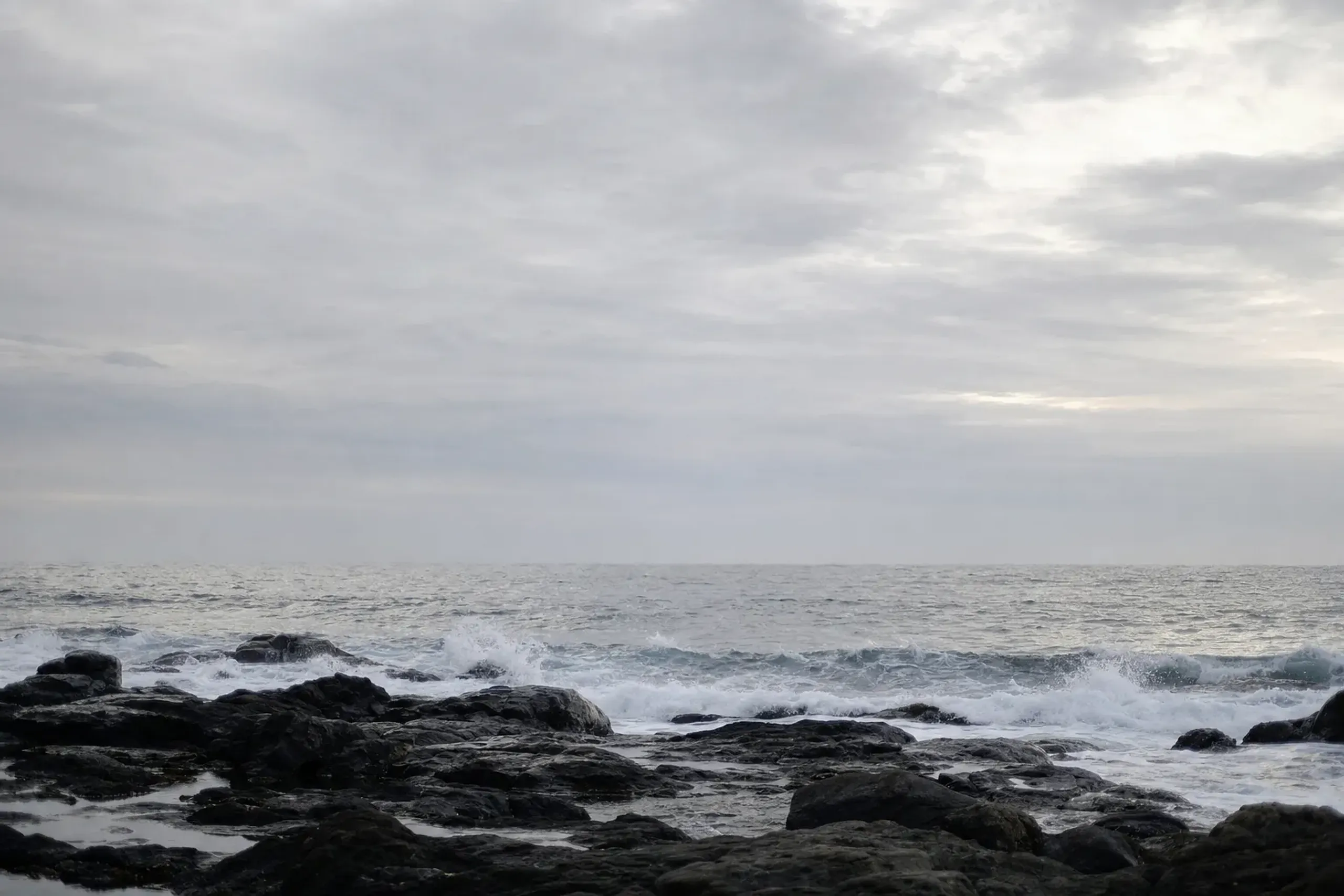
Not a single stone. The island is uninhabited and largely unmonitored, and unauthorised trespassing has reportedly occurred more than once over the years, which is part of why the protective measures were tightened.
Taken together, these rules explain the island better than any photograph could. Okinoshima is not a destination. It is a boundary.
What Can You Actually Visit In The Munakata Region?
You cannot reach Okinoshima, but you can experience the World Heritage property through its three shrines, its treasure hall, and a remote worship hall built expressly for looking across the sea.
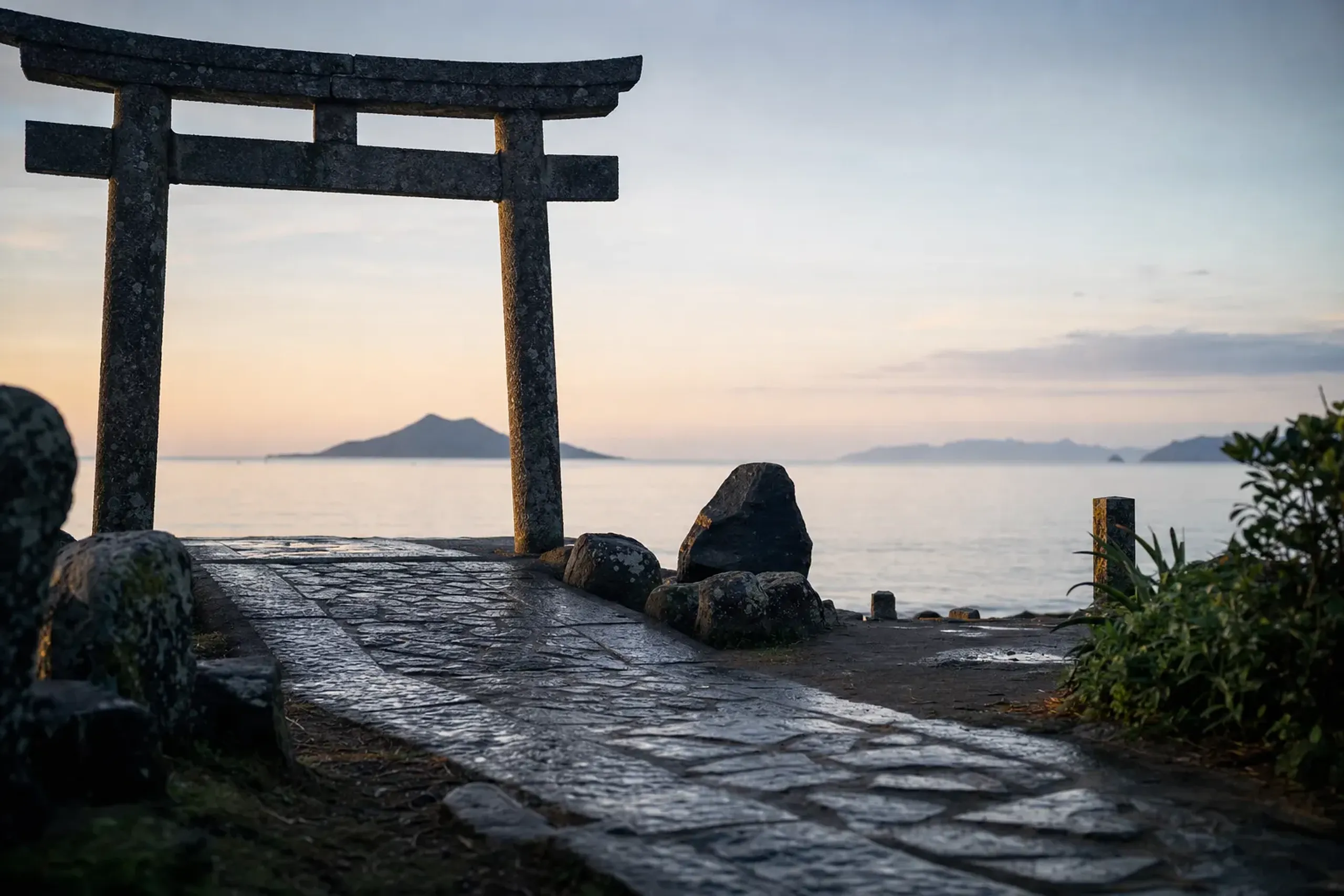
The inscribed property covers Munakata Taisha's three constituent shrines. Hetsu-miya sits on the Kyushu mainland. Nakatsu-miya stands on Ōshima Island. And Okitsu-miya occupies Okinoshima itself, the one you can never enter. Together they form a single sacred network stretched across the Genkai Sea, an ancient maritime corridor along which ritual and exchange once flowed between Japan and the continent.
Hetsu-miya is where most journeys begin. It is reachable, welcoming, and rich, and it holds something extraordinary: the treasure hall known as Shinpōkan.
Shinpōkan And Its 80,000 National Treasures
Excavations on Okinoshima, notably from 1954 onward, uncovered ritual sites used from roughly the late fourth to the ninth centuries. What surfaced after centuries underground was staggering. More than 80,000 votive offerings. Mirrors, gold rings, glassware, fragments of a world that once moved by sea between kingdoms.
All of it is designated National Treasure. Eighty thousand items, from one site, all carrying the highest heritage status Japan confers.
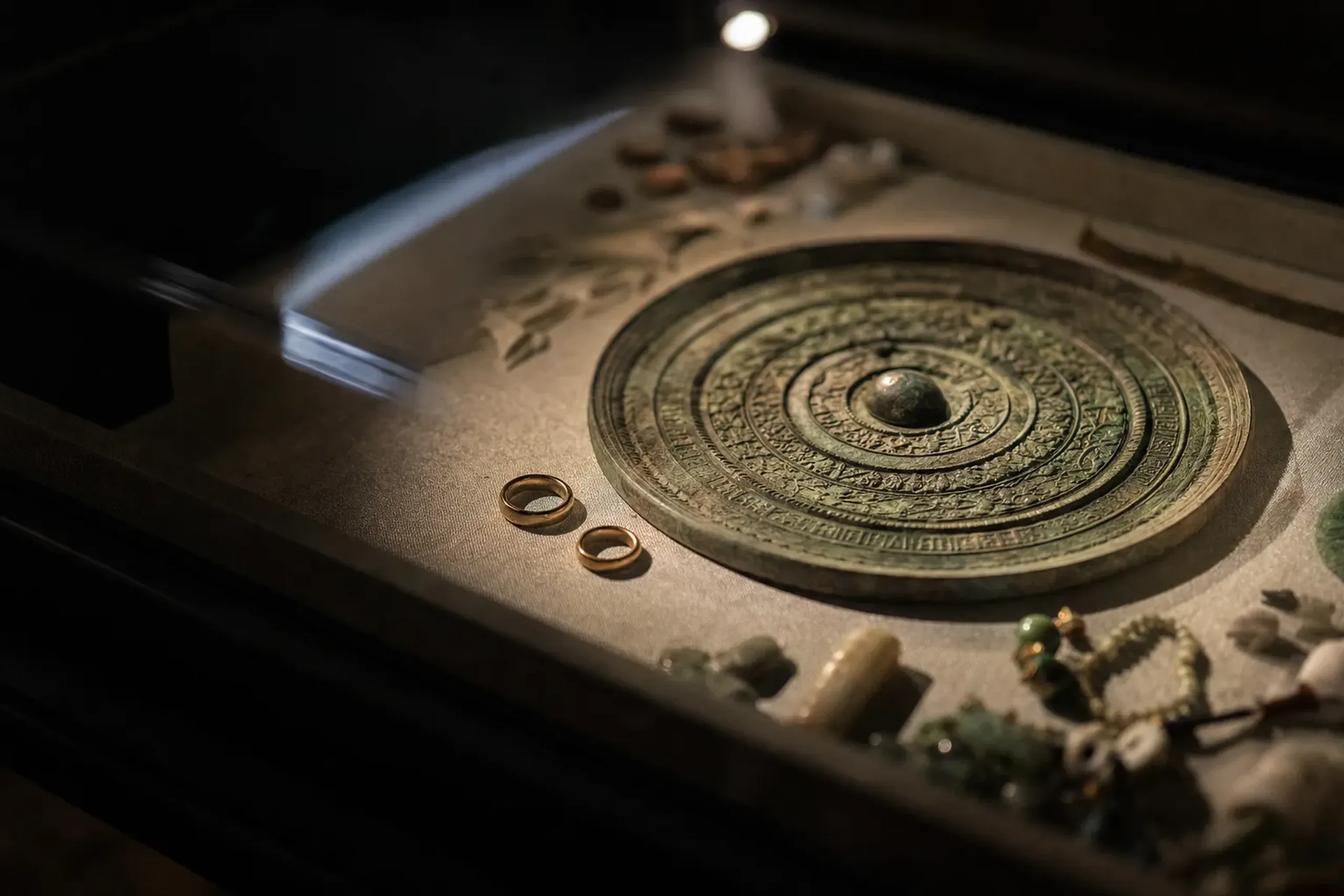
That number is extraordinary, and it earned Okinoshima its nickname among historians: the Shōsōin of the sea. The exhibits at Shinpōkan are updated roughly twice a year, so no two visits show quite the same face.
This matters for the traveller. The island withholds itself. But the objects it gave up are here, visitable, tangible, laid out under glass where you can stand close to what the sea guarded for a thousand years. A specialist interpreter, which our concierge can arrange, turns a case of ancient mirrors into the story of a whole civilisation of exchange.
Umi No Michi Munakata-kan
For those who want to sense the island's interior itself, the World Heritage interpretation centre, Umi no Michi Munakata-kan, offers 3D imagery and VR simulation. It lets you move through Okinoshima's sacred forest and rock formations without ever landing. It is the closest anyone outside the priesthood will come to seeing what oiwazu-sama has kept silent for centuries.
Praying Toward Okinoshima From Ōshima Island
On Ōshima Island stands Okitsu-miya Yōhaisho, a worship hall built specifically so that people can pray toward Okinoshima from a distance. On clear days the sacred island is visible from here, roughly 48 kilometres out to sea.
Ōshima is reached by ferry from Konominato fishing port, a crossing of roughly 15 to 25 minutes. The island carries Nakatsu-miya, the second of the three shrines, and this quiet worship hall facing north across the water.
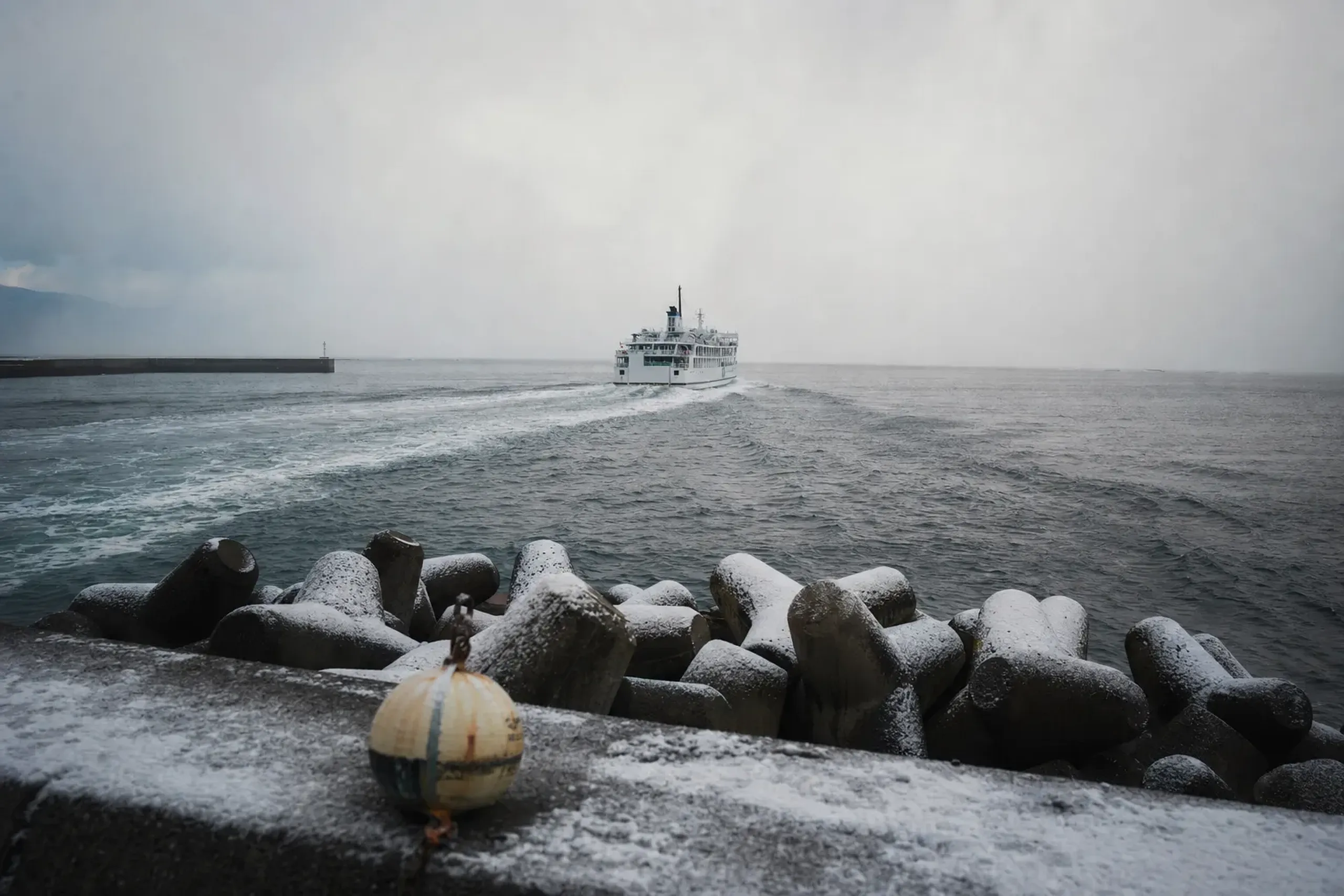
Whether Okinoshima appears depends entirely on the weather; some days the horizon holds only haze.
When it does appear, the moment is unlike ordinary sightseeing. You are not looking at a site. You are looking toward one, across water you will never cross, at a place designed to be venerated from exactly this distance. The remote worship hall exists so that reverence need not require arrival. That is a rare thing to stand inside of.
Ōshima has begun quietly attracting travellers who want a rare place near Fukuoka beyond the crowds of Dazaifu. Secluded lodging such as MINAWA, a small inn on the island described as overlooking Okinoshima, lets a visit slow into something longer: dusk over the sea, first light on the water, the silhouette waiting on the horizon at dawn. Our concierge can advise on current island lodging and pair it with a wider Kyushu journey.
How Japan Royal Service Approaches A Place You Cannot Enter
Japan Royal Service arranges private guiding and transfers to the accessible sites of the Munakata region: Munakata Taisha's Hetsu-miya on the mainland, and the ferry crossing to Ōshima for Nakatsu-miya and the Okitsu-miya Yōhaisho worship hall. We do not, and cannot, arrange landing on Okinoshima itself. No client may set foot there, regardless of gender. That door is closed to everyone but the priesthood.
What we can do is make the reachable parts effortless and deep. A Fukuoka city hotel, a private chauffeured transfer to the port, ferry timings verified in advance, and a specialist guide who can read the Shinpōkan treasures and the maritime history behind them.
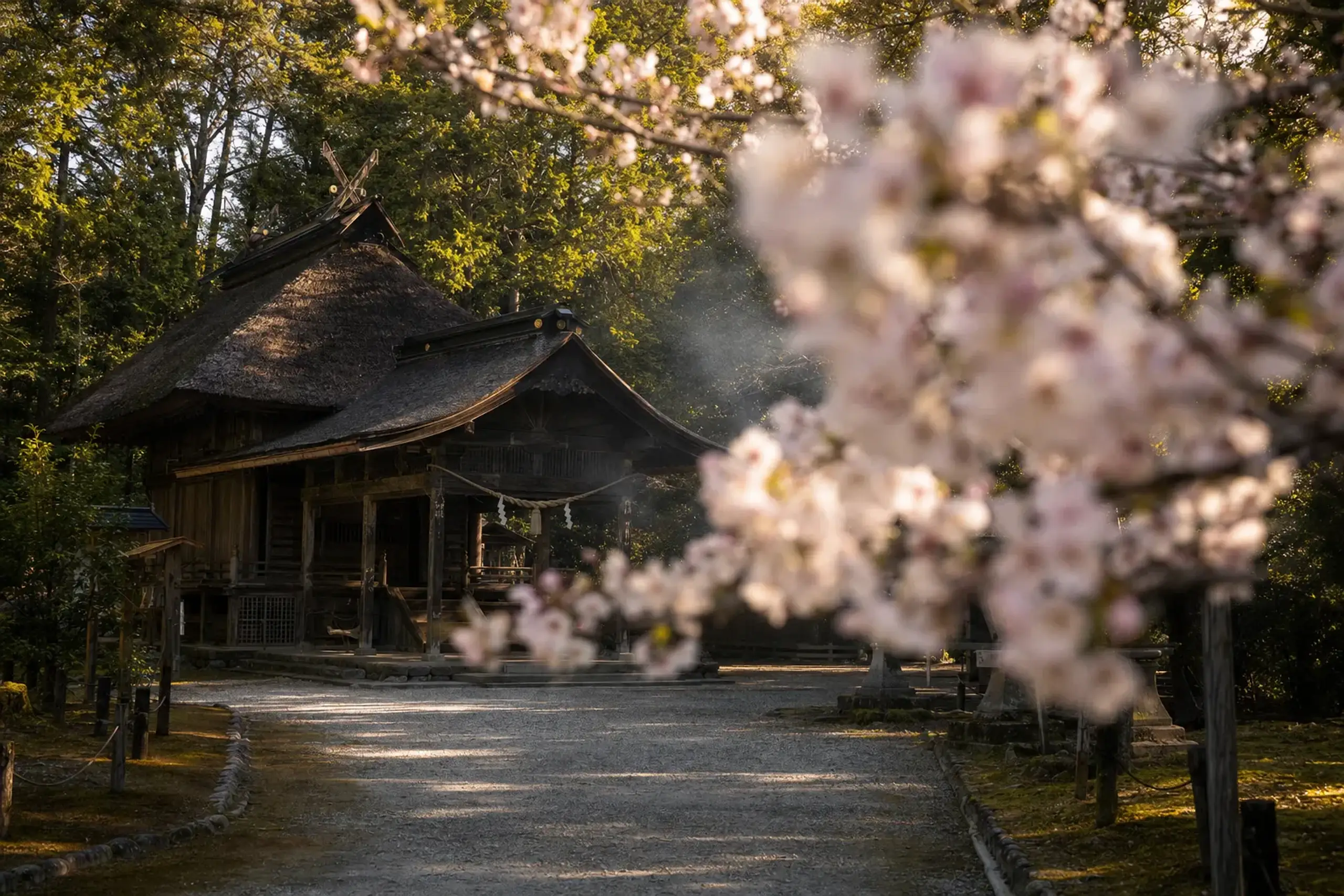
Our concierge team confirms current ferry schedules and interpretation centre hours on your behalf ahead of the visit, and builds weather contingencies around Okinoshima's visibility, which is never guaranteed.
For travellers extending into Kyushu, this pairs naturally with a slower coastal tailor-made itinerary and considered accommodation, whether an Ōshima night within sight of the island or a refined Fukuoka base. If Kyushu's spiritual landscape draws you, our journal on Sasaguri and Nanzō-in explores another side of Fukuoka's sacred geography, and our comparison of Eiheiji and Koyasan suits those drawn to temple silence.
Frequently Asked Questions
Can tourists visit Okinoshima Island in Fukuoka?
No. Okinoshima is closed to the general public, and the official heritage site describes visiting without permission from Munakata Taisha as a criminal offence. Only Shinto priests may land, with limited research exceptions. Visitors experience the island from Ōshima instead.
Why can't women set foot on Okinoshima?
Okinoshima observes nyonin kinsei, a centuries-old prohibition on women landing, maintained by Munakata Taisha as the island's private property. The restriction continues and has drawn documented protest from women's rights groups. Since 2018, however, the island has been closed to all general visitors regardless of gender.
Where can I see Okinoshima if I cannot land on it?
Travel to Ōshima Island by ferry from Konominato port and visit Okitsu-miya Yōhaisho, a remote worship hall built to venerate Okinoshima from afar.
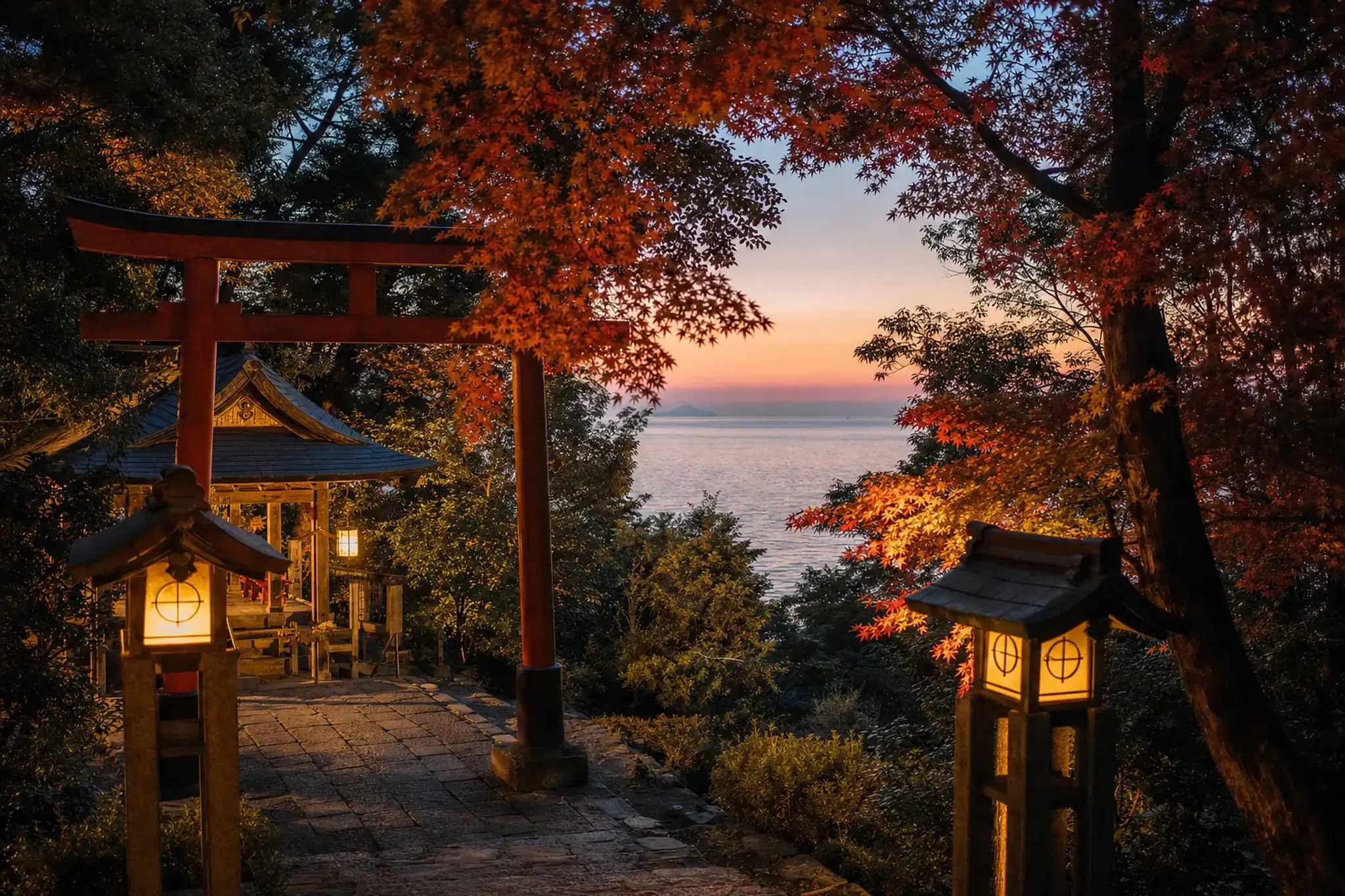
On clear days the sacred island is visible roughly 48 kilometres out to sea.
What is there to see related to Okinoshima on the mainland?
Munakata Taisha's Hetsu-miya on the Kyushu mainland houses the Shinpōkan treasure hall, displaying roughly 80,000 votive offerings excavated from Okinoshima, all designated National Treasures. The Umi no Michi Munakata-kan interpretation centre offers 3D and VR access to the island's interior.
How long is the ferry to Ōshima Island?
The ferry from Konominato fishing port to Ōshima takes roughly 15 to 25 minutes. Our concierge verifies current schedules ahead of any visit, since crossings and Okinoshima's visibility both depend on weather.
Why Choose Japan Royal Service
Some places reward the traveller who understands why they cannot be entered. Okinoshima is one. At Japan Royal Service, our work here is not access to the forbidden but fluency in the reachable: the right guide at Shinpōkan, the ferry timed to the light, a night on Ōshima with the silhouette on the horizon at dawn.
We coordinate quietly and completely, with the discretion our clients expect and the on-the-ground knowledge that turns a difficult day trip into an unhurried encounter with one of Japan's most guarded sacred landscapes. We hold your itinerary in confidence, always.
To plan a private journey through the Munakata region and the wider Kyushu coast, reach our team directly via WhatsApp or LINE, or contact us here.