In this guide
- 01What Is Eisa, And Why Is It Danced During Obon?
- 02Why Do Okinawa’s Obon Dates Move Each Year?
- 03Can Visitors Watch Village Eisa During Obon Nights?
- 04Where Can You Reliably See Eisa As A Visitor In Okinawa?
- 05What Is The Zento Eisa Festival In Okinawa City, And What Should You Expect?
- 06What Is Eisa Night In Okinawa City, And Is It Worth Seeing Before Obon?
- 07When Is The Ichiman-nin Eisa Parade In Naha, And Where Do You Watch?
- 08Heat, Typhoons, And The Late Drive Back: Planning For Okinawa In Obon Season
- 09How Our Concierge Team Plans An Obon-Season Eisa Visit
- 10Frequently Asked Questions
The first thing you notice is the sound.
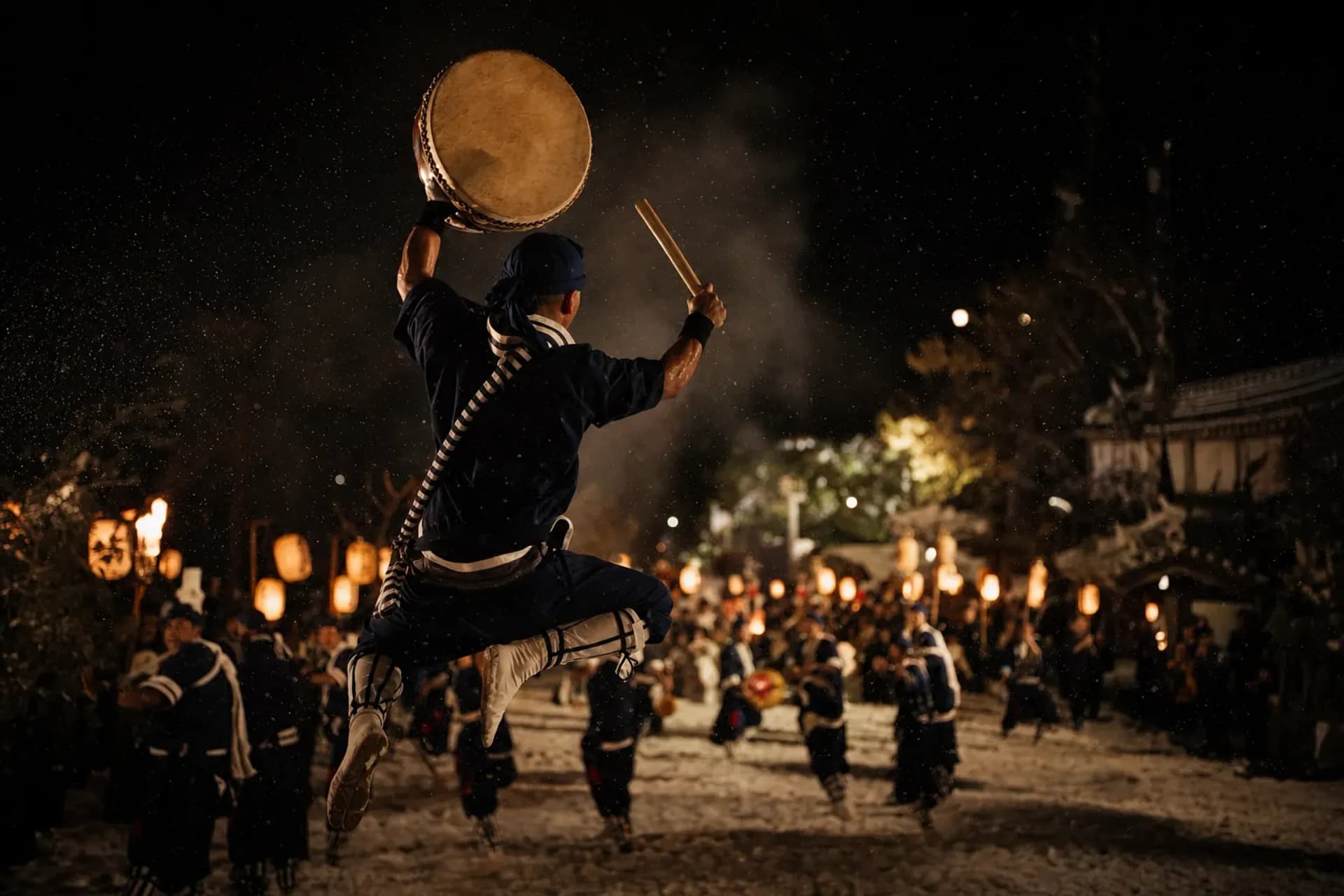
Not music. A drumbeat that lands in your ribs, then the call—sharp, carried across the humid dark—before the dancers even turn the corner.
In Okinawa, Eisa is not staged for visitors. It belongs to families and to ancestors. This is one of those corners of Japan that no search engine can truly deliver to you: if you arrive without understanding the calendar, you can miss it by weeks and never know what you were standing beside.
Our team at Japan Royal Service plans Okinawa’s Obon-season Eisa the honest way: with the lunar dates verified, the public events mapped, the limits respected, and your presence arranged so quietly that you become a welcome observer rather than an intrusion.
What Is Eisa, And Why Is It Danced During Obon?
Eisa is an Okinawan dance performed during the Obon season to comfort, welcome, and see off the spirits of ancestors. It is carried by youth associations wielding drums and Okinawan instruments, generation handing it to generation.
You will see large and small taiko, the handheld paranku, and the sanshin. The movement is athletic—leaping, pivoting, taut with energy—yet the mood underneath is devotional. This is an ancestral observance first, even when it happens on a wide public street under festival lights.
Listen for the group’s voice. It punctuates the rhythm and holds everyone together when the line tightens, turns, and opens again.
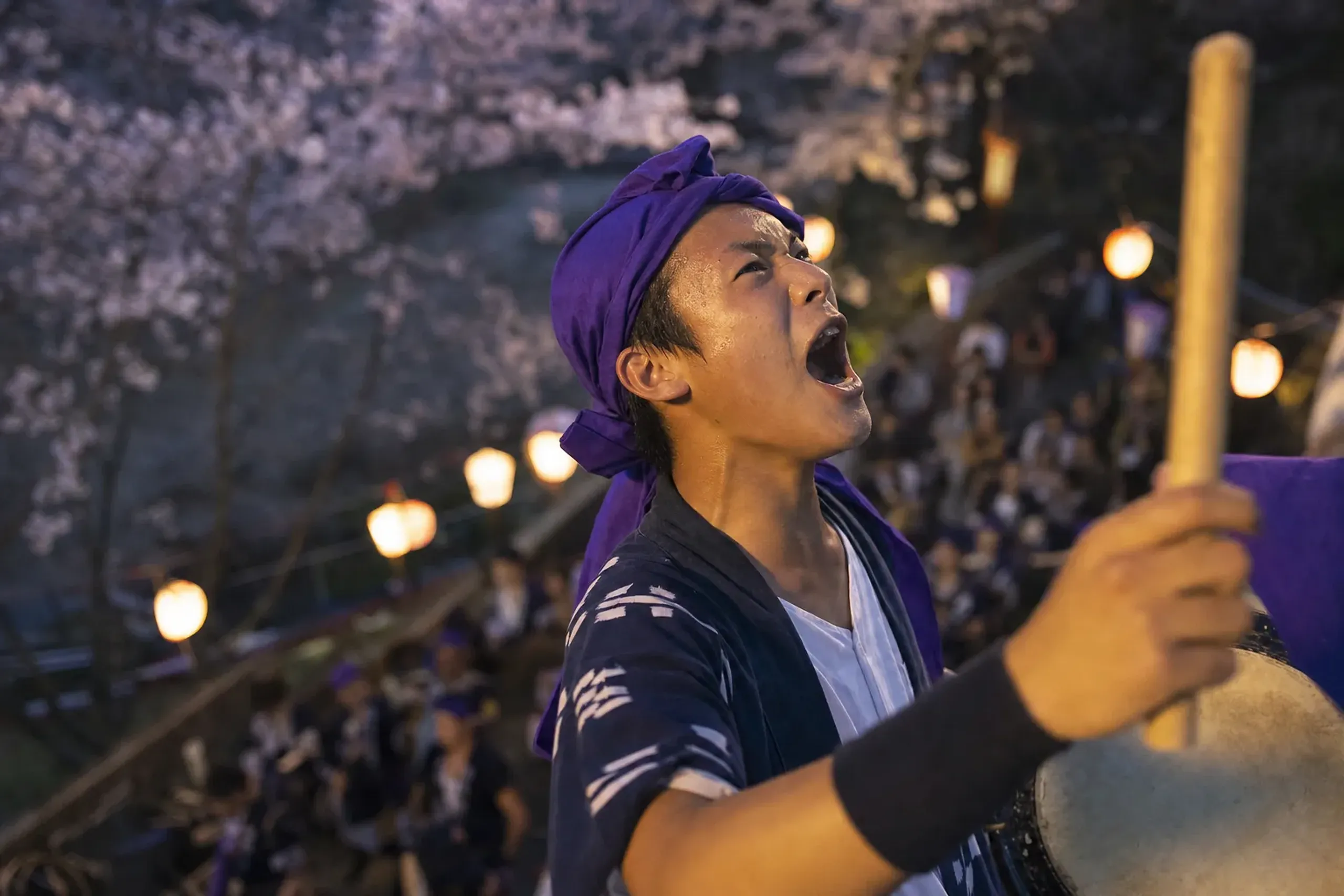
In some troupes, a performer called a chondara calls cues and plays the trickster, though not every group uses one.
Origins are often linked to nembutsu dance influences, but the word’s own origin is not settled. Best to hold the history lightly. The meaning on the night is clear enough without it.
Why Do Okinawa’s Obon Dates Move Each Year?
Okinawa observes Obon on the 13th to 15th days of the seventh month of the lunar calendar, so the dates shift each year against the Gregorian calendar.
This is the planning trap, and it catches even seasoned travelers. Many assume “Obon is always mid-August.” In Okinawa, it can land in mid-August in some years, then slide into early September in others.
The three days have names you will hear locals use. Unkee is the welcome. Nakanuhi is the middle day. Ukui is the send-off, and it is often the most intense night for Eisa, once families have completed their own private rites behind closed doors.
A worked example makes it real. In the 2026 season, lunar Obon ran from Tuesday 25 to Thursday 27 August, and the 71st Zento Eisa Festival followed on Friday 4 to Sunday 6 September.
Key fact: The biggest public Eisa festival in Okinawa City follows the lunar Obon, usually by one to two weeks. Do not plan it for “Obon weekend” without checking the year.
If you want a second reference point, 2024’s Obon ran 17–19 August, while 2025 ran 4–6 September owing to a leap month.
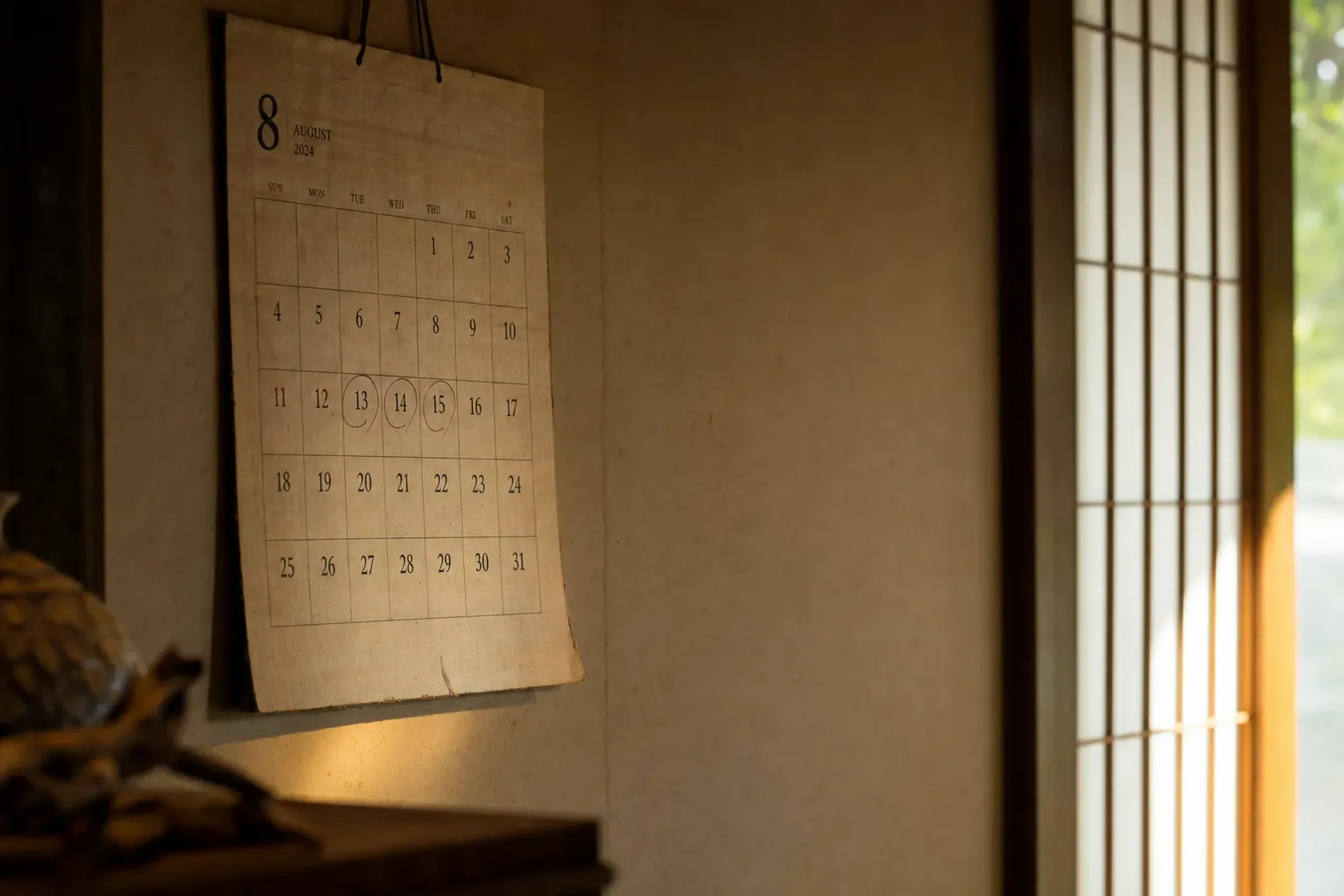
For 2027, Obon is expected to run 14–16 August, but those dates should be treated as unconfirmed until local listings publish.
Can Visitors Watch Village Eisa During Obon Nights?
Village and district Eisa is a community ancestral observance, so the dependable way for visitors to watch is through public festivals such as Zento Eisa or the major city parades.
This is where discretion matters most—and here discretion means something plainer than the hush of a luxury hotel lobby. It means the good sense not to turn someone else’s family nights into a line on your itinerary. The same confidentiality we extend to your identity and movements, we extend to the communities who open their streets.
Some neighborhoods do dance through their lanes during Unkee, Nakanuhi, and especially Ukui. Schedules vary by community, and weather can change everything. In 2026, for example, several districts moved or shortened their nights due to Typhoon No. 18 on the first day.
When we plan Obon-season travel, we treat neighborhood Eisa as something you might encounter, not something you should chase. If you want a sure plan, you build around the public events and keep one spare evening in hand in case conditions shift.
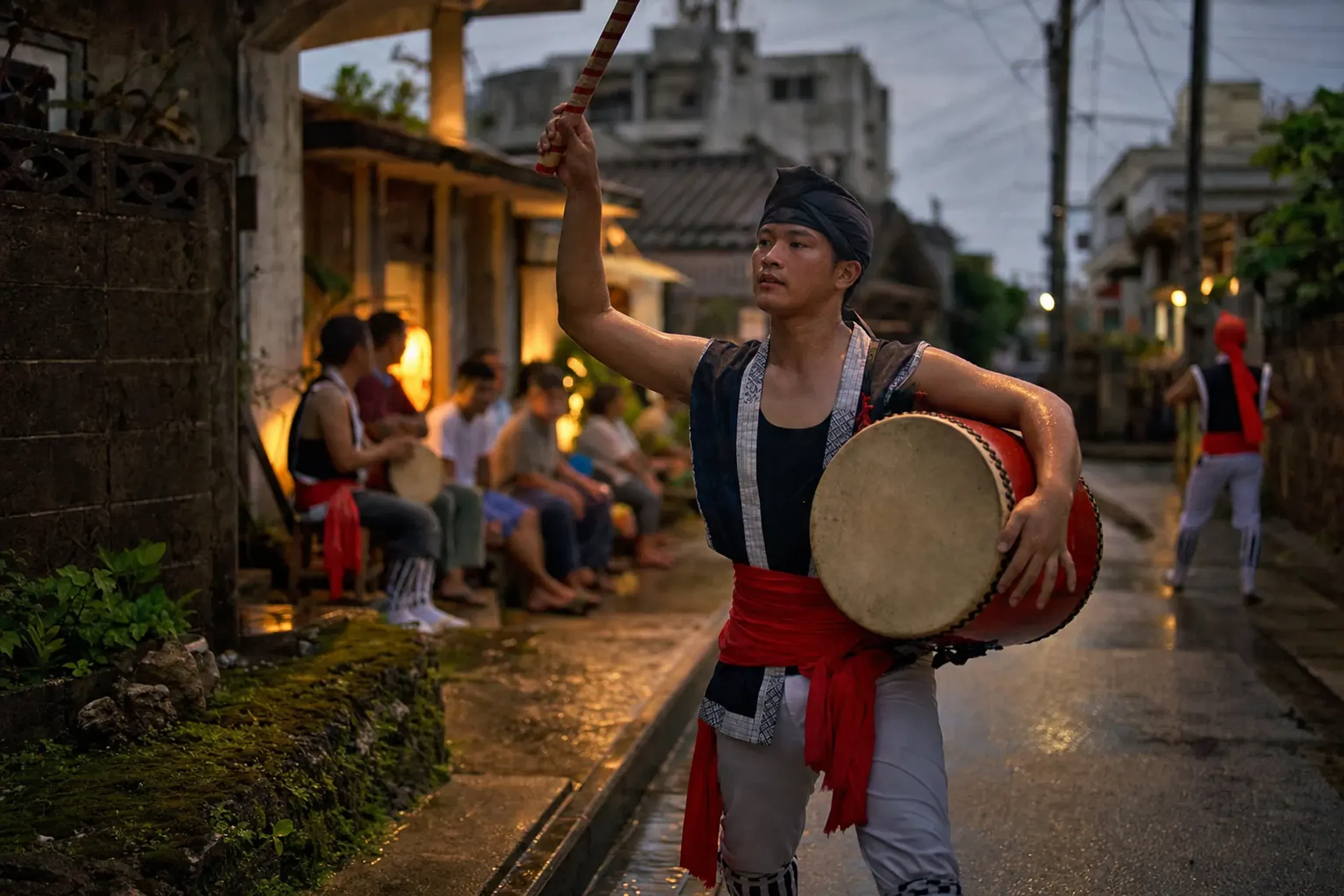
The quiet reward is often the unplanned moment you stumble upon with the right person beside you to explain it.
Where Can You Reliably See Eisa As A Visitor In Okinawa?
You can reliably see Eisa at Okinawa City’s Zento Eisa Festival, Naha’s Ichiman-nin Eisa parade on Kokusai-dori, and Okinawa City’s summer Eisa Night programme listed on official Okinawa travel guides.
These formats are public-facing. They are designed to be watched, and they are generous with context: you can compare styles across groups and hear the differences in the drums and the calls, which trains your ear for the subtler encounters later.
Think of the season as an arc. Eisa Night serves as an on-ramp in early summer. Lunar Obon brings the private, ancestral nights. Then the large festivals follow after Obon, when the whole island can gather in one place.
- Lead-up (summer): Eisa Night in Okinawa City (official listings show a seasonal schedule window; dates and venues vary).
- Post-Obon (Okinawa City): Zento Eisa Festival, a major all-island gathering.
- Later in the season (Naha): Ichiman-nin Eisa parade on Kokusai-dori (moved to October in recent years for heat reasons).
For broader etiquette and festival-watching basics, we recommend our guide on how to watch Japanese festivals respectfully. It is written for travelers who value not being “that person.”
What Is The Zento Eisa Festival In Okinawa City, And What Should You Expect?
The Zento Eisa Festival is Okinawa City’s major all-island Eisa event, held after the lunar Obon season with parades and stadium performances.
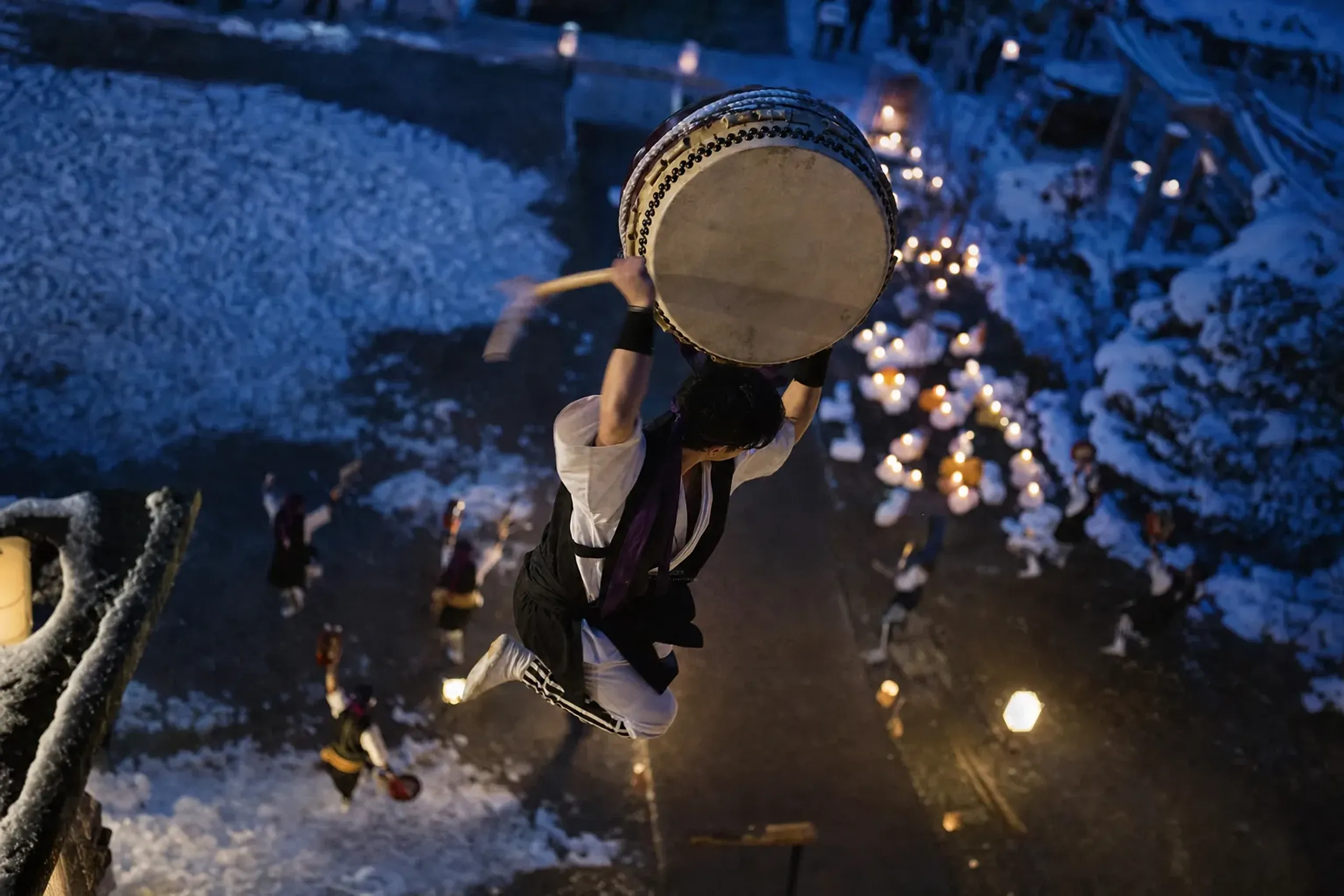
It is one of the most planable public places to watch.
This festival began in 1956 as an all-island contest connected to the founding of Koza City, and it has grown into a large public festival in the Koza area of Okinawa City. For a visitor, the important thing is the structure: one night on the streets, then longer stage performances across the following days.
Day 1: Michijunee Around Goeku Crossroads
In the 2026 season, Day 1 ran from 19:00 to 21:30 around the Goeku Crossroads. The committee uses the spelling “michijunee.”
Arrive earlier than you think you need. Not for status. For breathing room—a place to stand where the drums reach you cleanly and you are not pressed shoulder to shoulder.
There are traffic restrictions in the evening, and the committee notes there is no shuttle bus system on Day 1 (shuttles apply to the stadium days). If you prefer not to stand in dense heat, plan your viewing point with exits in mind from the outset.
Days 2–3: Koza Sports Park Athletics Stadium
In the 2026 season, Days 2 and 3 ran from 15:00 to 21:00 at the Koza Sports Park athletics stadium. It is a different experience from the street night: longer sets, more visibility, and a steadier pace that rewards patience.
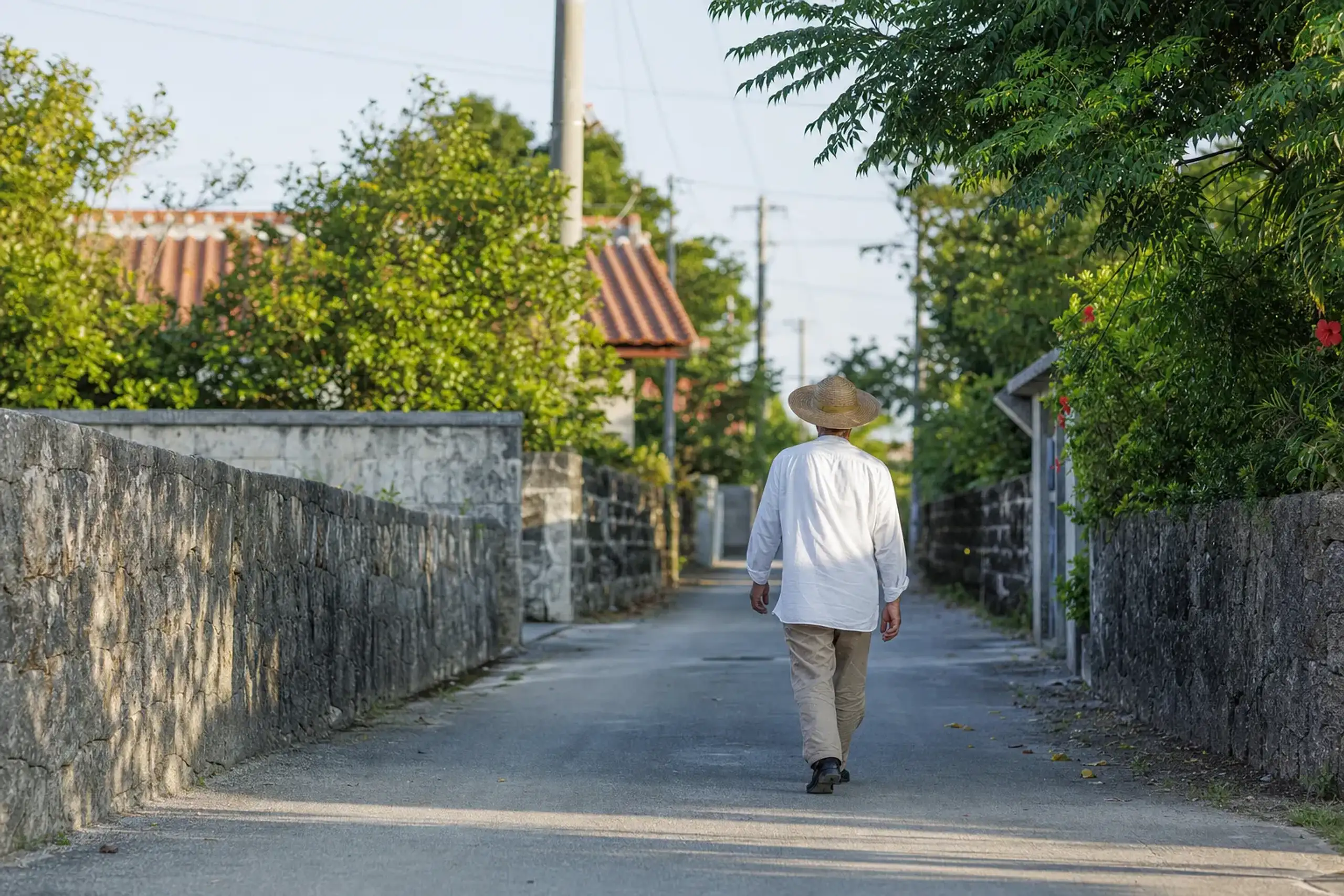
Seats in the upper stand on Days 2 and 3 are paid, while other areas can be free (the committee describes free viewing zones around the stadium and lawn). Ticket categories are published by the official festival site for that year, and the programme may change.
Heat management is the quiet skill here. A hat, a cold towel, and a plan for water. Simple, but decisive—the difference between an evening you savor and one you merely survive.
Parking, Shuttles, And The Reality Of Getting Out After 21:00
The official festival committee lists temporary parking and shuttle buses on Days 2 and 3, and notes traffic restrictions. It also confirms there are no shuttles on Day 1.
After the final performance, the exit pulse is real. Roads tighten. Everyone leaves at once. This is where a pre-agreed pickup point and a calm walking route earn their keep, especially for families traveling with children or older parents who should not be left standing in a crush.
If your trip has room for another cultural stop beyond Okinawa City, see our article on Japan’s summer festival calendar to understand how festivals cluster, and where weather typically causes disruptions.
What Is Eisa Night In Okinawa City, And Is It Worth Seeing Before Obon?
Eisa Night is a recurring summer programme in Okinawa City promoted on official Okinawa travel guides, typically held on weekends at different venues and useful as a planable introduction before lunar Obon.
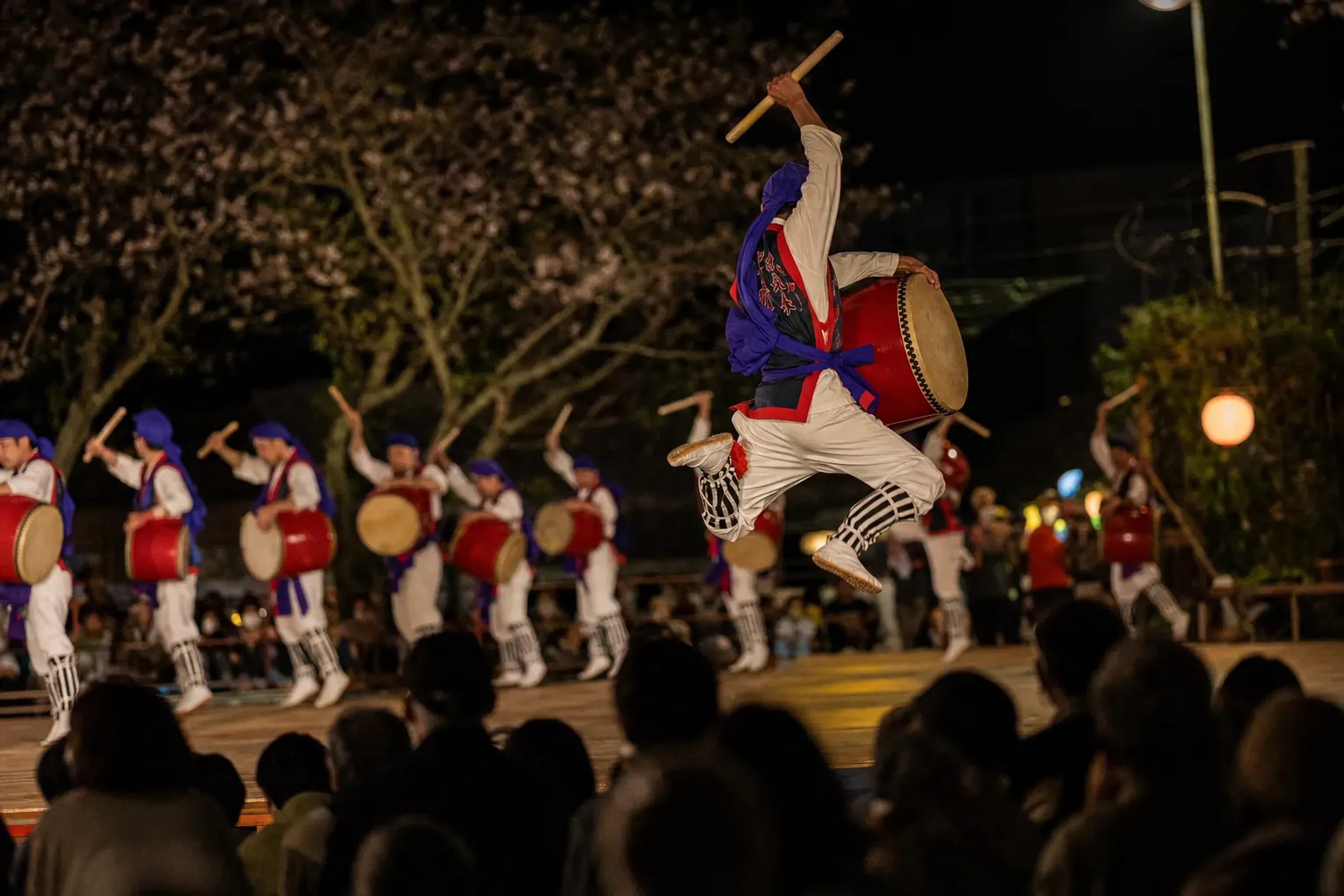
Not every traveler wants their first Eisa experience to be a crowded parade night in thick humidity. Eisa Night can be gentler. You watch, you learn the instruments, and you begin to recognize the vocabulary of movement—the language you will read more fluently when the ancestral nights come.
Official Okinawa listings have shown a schedule window in summer (for example, a 2026 listing showed late June to early August). Venues change, and details should be rechecked close to travel.
For discerning travelers, this is often the smart move: see Eisa Night first, then decide whether you want to commit to the larger post-Obon festival crowds in Okinawa City, or whether a quieter arrangement suits you better.
When Is The Ichiman-nin Eisa Parade In Naha, And Where Do You Watch?
Naha’s Ichiman-nin Eisa parade is held on Kokusai-dori and has been scheduled in October in recent years, with free public viewing and traffic control throughout the day.
The name “Ichiman-nin” is just that—a name, not a headcount. What matters is the format: multiple groups, an urban parade setting, and easier access if you are staying in Naha.
Naha City information states the event runs from 11:00 to 22:00 on Kokusai-dori with traffic control.
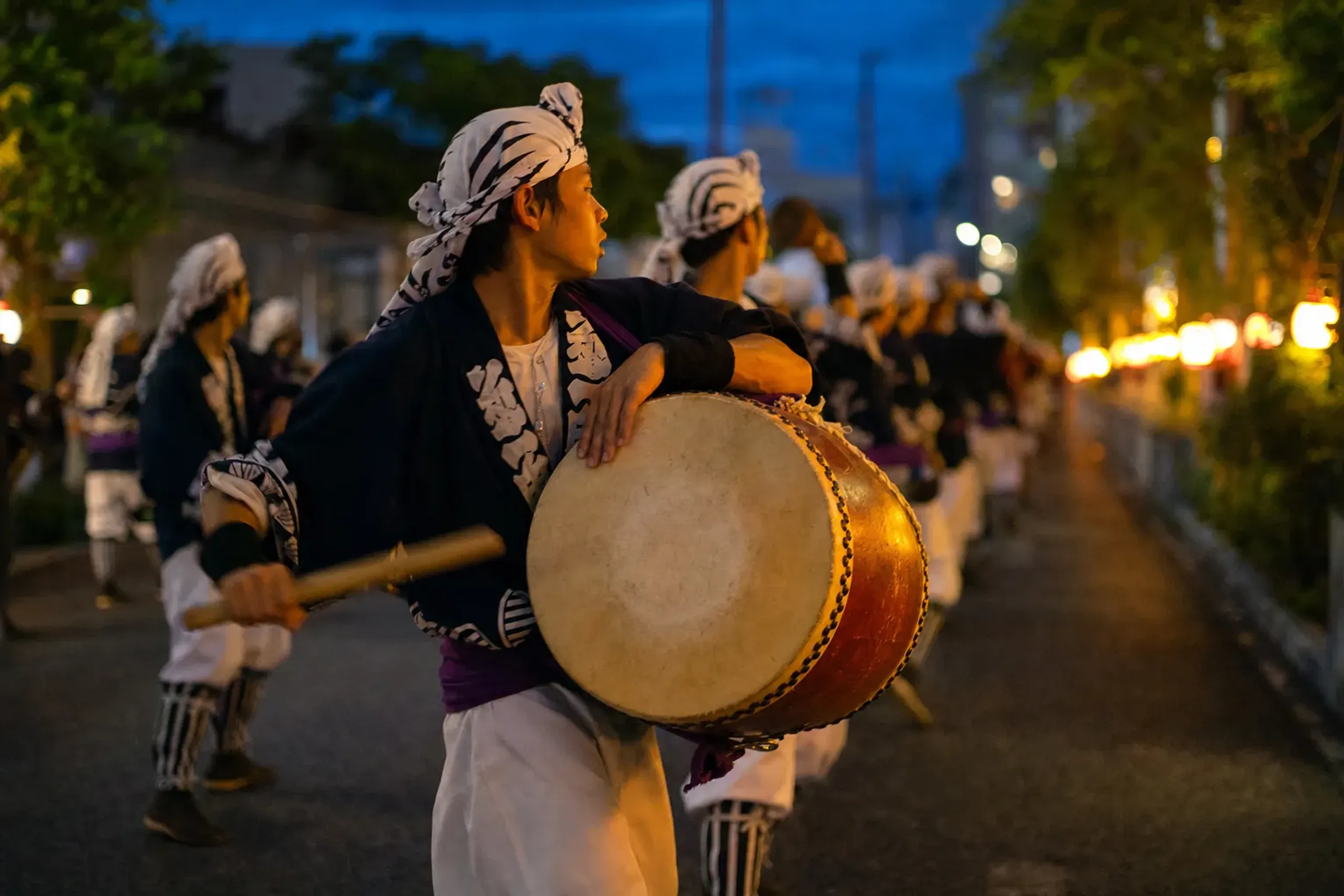
A newspaper report for the 31st edition on 19 October 2025 described about 500 dancers in 31 groups across four venues.
Do not assume the date until it is confirmed closer to your visit. In 2026, one listing showed 18 October, but official confirmation should always come first.
One line, only because people ask: the Naha Tug-of-War is a different event and not part of Eisa planning.
Heat, Typhoons, And The Late Drive Back: Planning For Okinawa In Obon Season
Expect oppressive heat, sudden rain, and a higher typhoon risk in August and September, so plan one spare evening, keep footwear practical, and avoid drink-driving by arranging a safe return in advance.
Okinawa’s weather is not background. It runs the schedule.
Japan Meteorological Agency climate normals for Naha (1991–2020) show August mean temperature 29.0°C with a mean high of 31.8°C, and September mean 27.9°C with mean high 30.6°C. Rain is heavy in both months, and JMA notes August and September bring the most typhoon approaches of the year.
If you are traveling with parents or children, make the exit plan early. Crowds thin slowly after 21:00. Your best night is the one where you are not stranded in damp clothes, searching for a taxi that never comes. Knowing precisely what to experience, where, and in which weeks of which month is exactly the kind of judgment that separates a seamless trip from a frustrating one.
Key fact: If a typhoon affects Eisa events, programme changes can happen fast. Build the trip with flexibility and one backup evening rather than forcing a single “must-see” night.
One more reality: Okinawa Prefectural Police have issued drink-driving warnings during Ukui in past seasons (reported by newspapers). If you plan to drink, plan your ride first. Quiet discipline.
How Our Concierge Team Plans An Obon-Season Eisa Visit
We plan Obon-season Eisa by verifying the lunar Obon dates and festival programmes, shaping a low-friction evening schedule, and pairing you with an English-speaking cultural interpreter so you understand what you are seeing.
This is where tailor-made planning matters, though not in a flashy way. A bespoke itinerary for Eisa is mostly a matter of timing: when you arrive, where you stand, when you move, and how you leave without stress. The care is in what you never have to think about—the hallmark of hospitality that anticipates before you ask.
Within this guide’s scope, our team at Japan Royal Service supports four planning pieces, each handled with discretion and a light footprint:
- Guiding: An English-speaking cultural interpreter who can explain the dance, the drums, and the etiquette in the moment, so meaning arrives with the rhythm rather than after it.
- Transportation: A coordinated transfer plan with a partner fleet vehicle (no driver-guide role) for a calm return after the event. Our mention of private transportation is deliberate: it is the backbone of late-night festival logistics in Okinawa.
- Accommodation coordination: A hotel base in Naha or on the central coast, selected for your priorities and the nights you plan to attend.
- Evening pacing: A timed dinner plan and contingencies should rain arrive or the programme shift.
Before you fly, our concierge team verifies the year’s lunar Obon dates and checks the festival committee’s published programme, traffic notes, and seating information.
No wishful thinking. Just due diligence.
For travelers building a wider summer trip beyond Okinawa, you may also enjoy our destination pieces on Hatenohama off Kume Island and rainy-day planning in Japan, both useful when the weather turns.
When you are ready to hear the drums land in your ribs—on the right night, in the right place, with everything else quietly handled—contact us here for a tailored proposal built around your dates and your pace.
Frequently Asked Questions
When Is Obon In Okinawa If The Dates Change Every Year?
Okinawa’s Obon is held on lunar calendar dates (lunar July 13–15), so it shifts each year on the Gregorian calendar and may fall in mid-August or early September.
In the 2026 season, Obon ran 25–27 August (reported by newspapers and hospitality listings). For other years, confirm close to travel using official local announcements.