In this guide
- 01Why Do The Ogasawara Islands Feel So Different From Tokyo In Summer?
- 02How Do You Get To Ogasawara (Chichijima) From Tokyo?
- 03What Isolation Produced: Endemism, “Bonin,” And A UNESCO Listing
- 04Summer In Ogasawara: Bonin Blue Days, Dark-Sky Nights
- 05When And Where Can You See Green Sea Turtle Nesting In Ogasawara?
- 06Minamijima: The Strictly Limited Landing That Keeps Its Power
- 07Chichijima In Summer: Small Places With Big Sky
- 08A Short History, Stated Plainly
- 09Summer Calendar: Local Festivals And Music Without The Noise
- 10Step-By-Step: A 7-Night Ogasawara Summer Plan That Respects The Ferry
- 11Begin Planning Your Ogasawara Summer
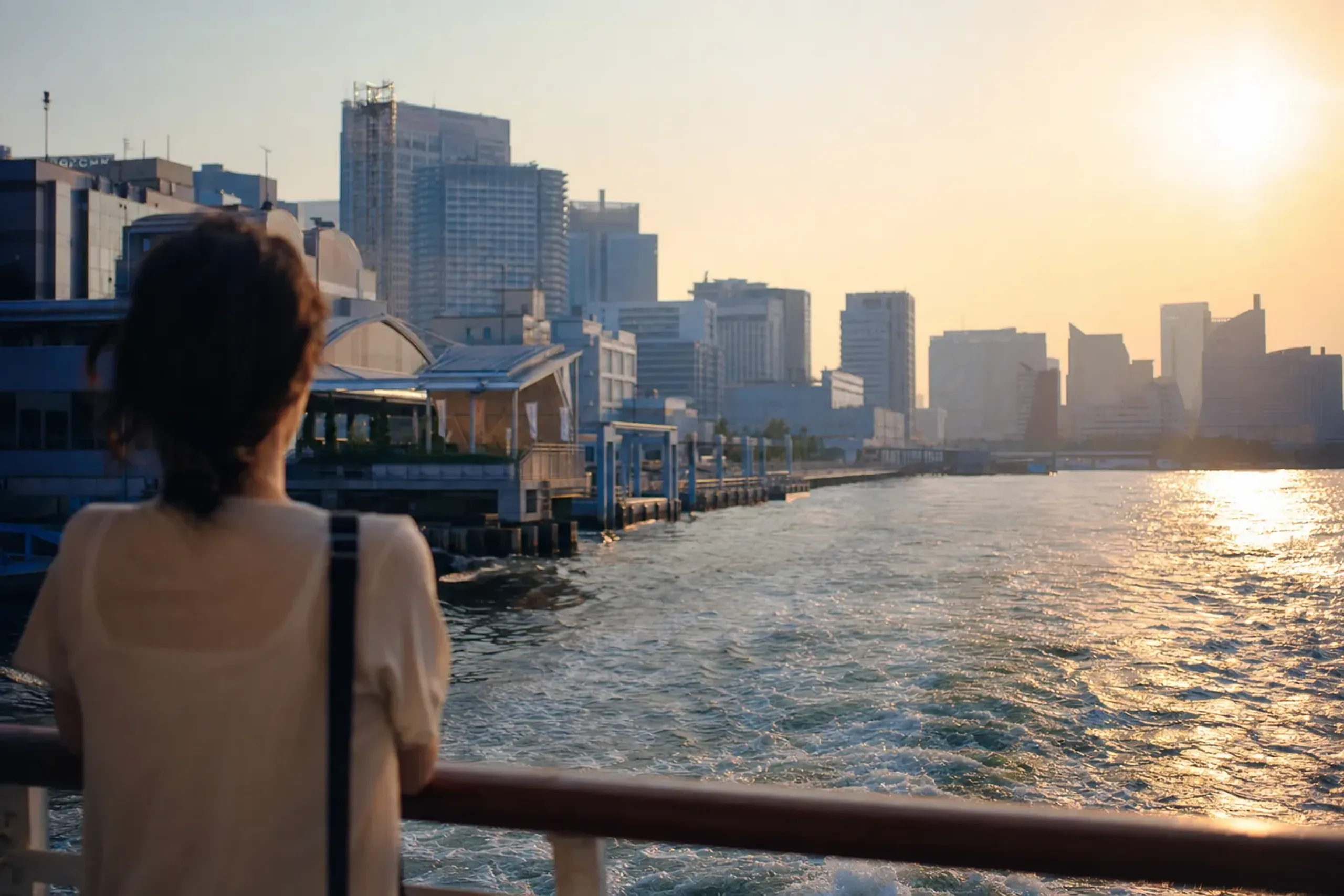
The city recedes in slow motion from Takeshiba Passenger Ship Terminal. Tokyo stays behind, first as a skyline, then as weather, then as water, and finally as nothing at all.
You sleep once. You wake, and the horizon still hasn’t changed. That is precisely the point.
The Ogasawara Islands (also called the Bonin Islands) belong, administratively, to Tokyo. Practically, they lie a roughly 24-hour voyage away aboard the liner Ogasawara-maru, which travels about 1,000 kilometers south to Chichijima.
Our team at Japan Royal Service plans Ogasawara around a single premise: distance is not a drawback. It is the filter that keeps the water clear, the nights dark, and the whole experience quiet enough to feel genuinely personal — a form of wabi-sabi delivered by geography rather than design.
Why Do The Ogasawara Islands Feel So Different From Tokyo In Summer?
They feel different because there is no airport, and the sea crossing itself limits numbers — keeping the islands remote, biodiverse, and unhurried even at the height of summer.
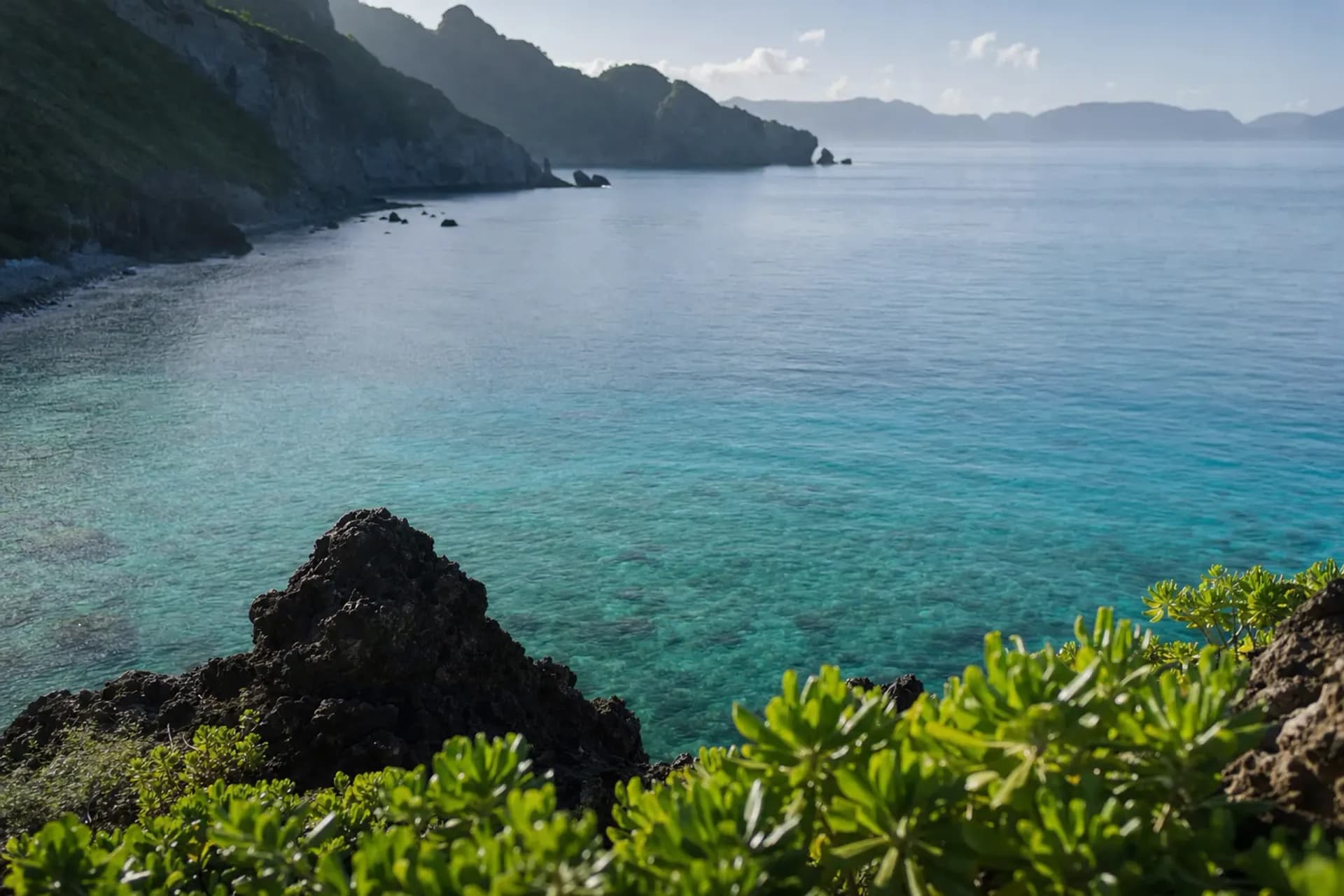
Once you accept the ship as the gateway, Ogasawara stops competing with the “easy” destinations altogether. It becomes its own category. Fewer arrivals means fewer compromises. You feel it in the unhurried pace of Futami Port, in conversations that refuse to rush, in the way the celebrated “Bonin Blue” looks almost unreal at midday.
Summer is when this contrast sharpens. Tokyo’s humidity can feel like a closed room. Out here, wind and salt reset your senses, and each day is built around water and nightfall — not appointments.
Quiet luxury, Ogasawara-style, is not a gold-plated lobby. It is a long horizon and an early bedtime, chosen because you want to be awake when the beach goes fully dark. This is the aesthetic of restraint made literal: moss-covered silence traded for a shoreline hush.
How Do You Get To Ogasawara (Chichijima) From Tokyo?
You reach Ogasawara by boarding the Ogasawara-maru liner at Takeshiba Passenger Ship Terminal in Tokyo and sailing to Futami Port on Chichijima — a crossing of roughly 24 hours.
This single constraint shapes everything. Sailings run about weekly, and capacity is limited, especially in summer. Plan the island stay around the ship, never the other way around. Trying to simply “fit it in” is the most common mistake.
If you also wish to visit Hahajima, you continue by ferry for roughly two hours from Chichijima. It is the only other inhabited island. The extra leg is simple in concept, yet it adds another schedule to respect.
In our experience, the smoothest planning begins with three decisions: your intended month, your preferred cabin comfort level, and your tolerance for motion at sea. Everything else follows from those.
What The 24-Hour Crossing Feels Like
Expect a slow, old-fashioned rhythm. Meals. Deck time. The kind of reading that finally holds your attention. Connectivity may be limited, so treat the voyage as a buffer between two lives.
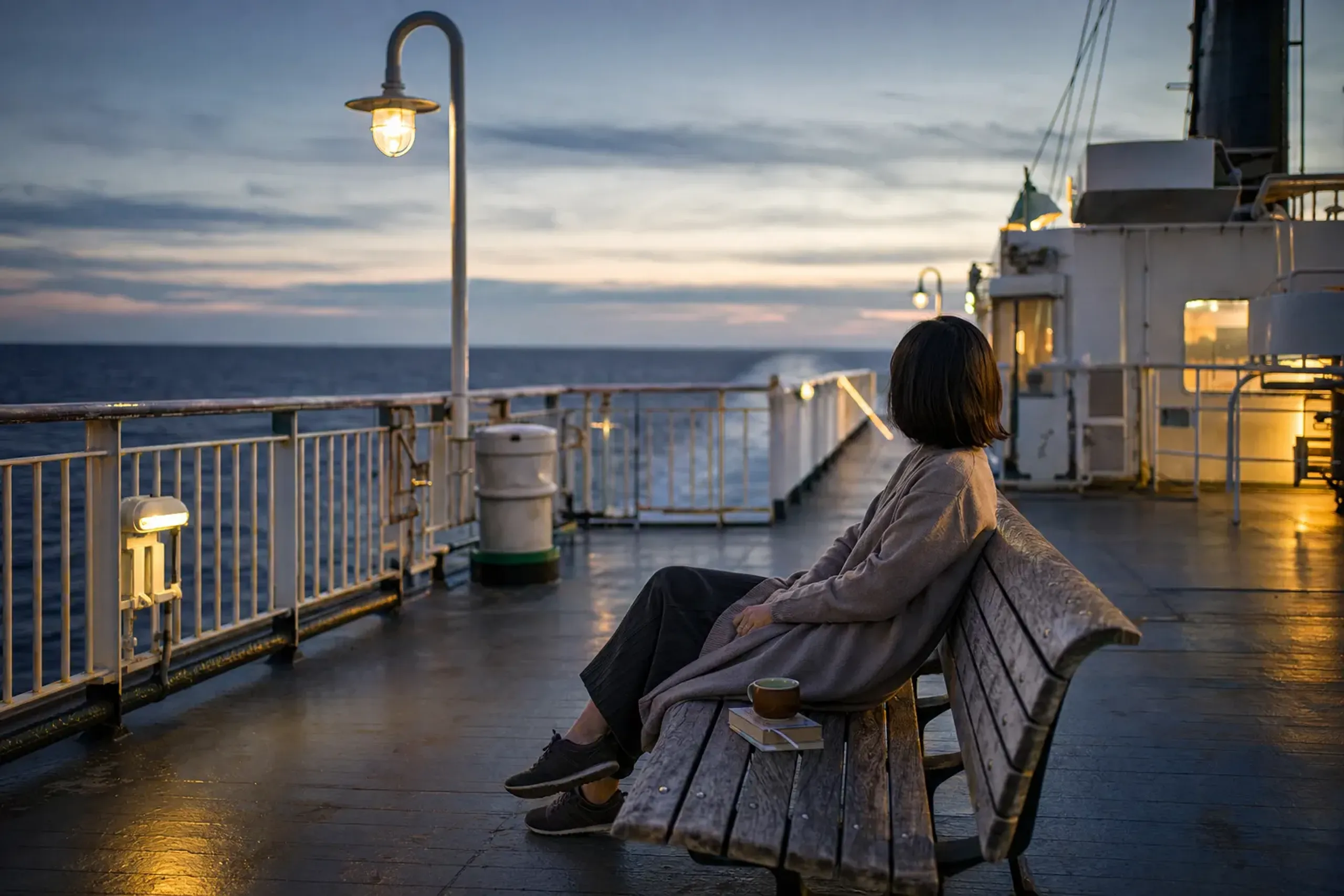
Pack for two climates: an air-conditioned interior and a sunlit deck. Bring layers. Bring patience. Bring a small “ship bag” so you are not living out of a suitcase for a full day at sea.
Cabin Strategy Without Overthinking It
Ogasawara Kaiun publishes cabin classes and seasonal fare tables. We do not list fares publicly, because they shift by month and class, and because most guests are choosing between comfort levels rather than chasing a specific number.
What truly matters is sleep quality. On a 24-hour run, that is not a detail — it is the tone of your entire first day on Chichijima. We arrange the crossing quietly, matching cabin to guest so that arrival feels like a beginning rather than a recovery.
Key fact: There is no airport in Ogasawara, and the Ogasawara-maru is the only regular liner ship between Tokyo (Takeshiba) and Chichijima (Futami Port).
What Isolation Produced: Endemism, “Bonin,” And A UNESCO Listing
The Ogasawara Islands were never connected to a continent or any other landmass, so their plants and animals evolved in profound isolation. UNESCO inscribed the islands as a Natural World Heritage site in June 2011 in recognition of that ongoing evolutionary process.
People call Ogasawara the “Galápagos of the Orient.” Treat that as a nickname, not proof. The reality is more specific — and stranger than any marketing line.
Sources describe roughly 94–95% of around 106 land snail species as endemic, with the snail genus Katamaimai especially diverse.

About 40% of vascular plants are endemic. The Ogasawara flying fox stands as a flagship endemic species, and it is endangered.
Even the English nickname “Bonin” has a spare origin. It derives from an Edo-era Japanese name, muninjima, meaning “uninhabited island.” No drama — simply a label that stuck.
Invasive Species: The 2026 Reminder That Paradise Is Fragile
Invasive species remain a documented threat in Ogasawara, including the green anole lizard. In 2026, the Ogasawara World Heritage Center posted an alert reporting the first confirmation on Chichijima of an invasive snail species (the Asian trampsnail) — a reminder that biosecurity here is not optional.
For the discerning traveler, this is where discretion becomes responsibility. No loud “eco” performance is required. Only disciplined, quiet habits that protect the very place you came to see.
Summer In Ogasawara: Bonin Blue Days, Dark-Sky Nights
Summer in Ogasawara averages roughly 26°C in June and about 28°C in August, making it the strongest season for marine activities — yet also one of the most typhoon-prone, with intense UV.
The light can feel almost surgical at noon. Wear real sun protection, not wishful thinking. Adopt reef-safe habits. And schedule shade the way you would schedule meals.
Then night arrives, and the islands change personality entirely. The Ogasawara World Heritage Center publishes a light-pollution prevention guideline (Ver.2026), and it is worth respecting even when you are not on a formal tour.

Less white light. More patience. Red light when appropriate. Softer footsteps.
This is precisely where the islands reward restraint. Not flashy — precise. Knowing exactly what to seek in each month, and how the season shapes the water and the sky, is a large part of what makes a summer visit here worth the journey.
- Summer Planning Item — What To Expect
- Daytime temperature: ~26°C (June) to ~28°C (August)
- Sea focus: Strong season for swimming, diving, kayaking
- Wild dolphins: Year-round (bottlenose, spinner)
- Weather risk: Typhoons possible; build schedule buffers
- Night behavior: Follow low-light etiquette; red light for turtle observation
When And Where Can You See Green Sea Turtle Nesting In Ogasawara?
Green sea turtle nesting in Ogasawara runs roughly May through August, peaking around June to July, with hatchlings emerging about two months later — often August into September — depending on conditions.
Ogasawara is Japan’s largest green sea turtle breeding site. This is the summer anchor. It is also the moment where we ask guests to hold two truths at once: the experience is real, and it can never be guaranteed.
Females typically weigh about 100–200 kilograms and come ashore only after dark. A single clutch holds about 100 eggs, and a female may nest four to five times in a season. Nesting unfolds across many sandy beaches, not on a single fixed “stage.”
Observation follows firm rules for every visitor. Red light only. No ordinary white light. Keep your distance.
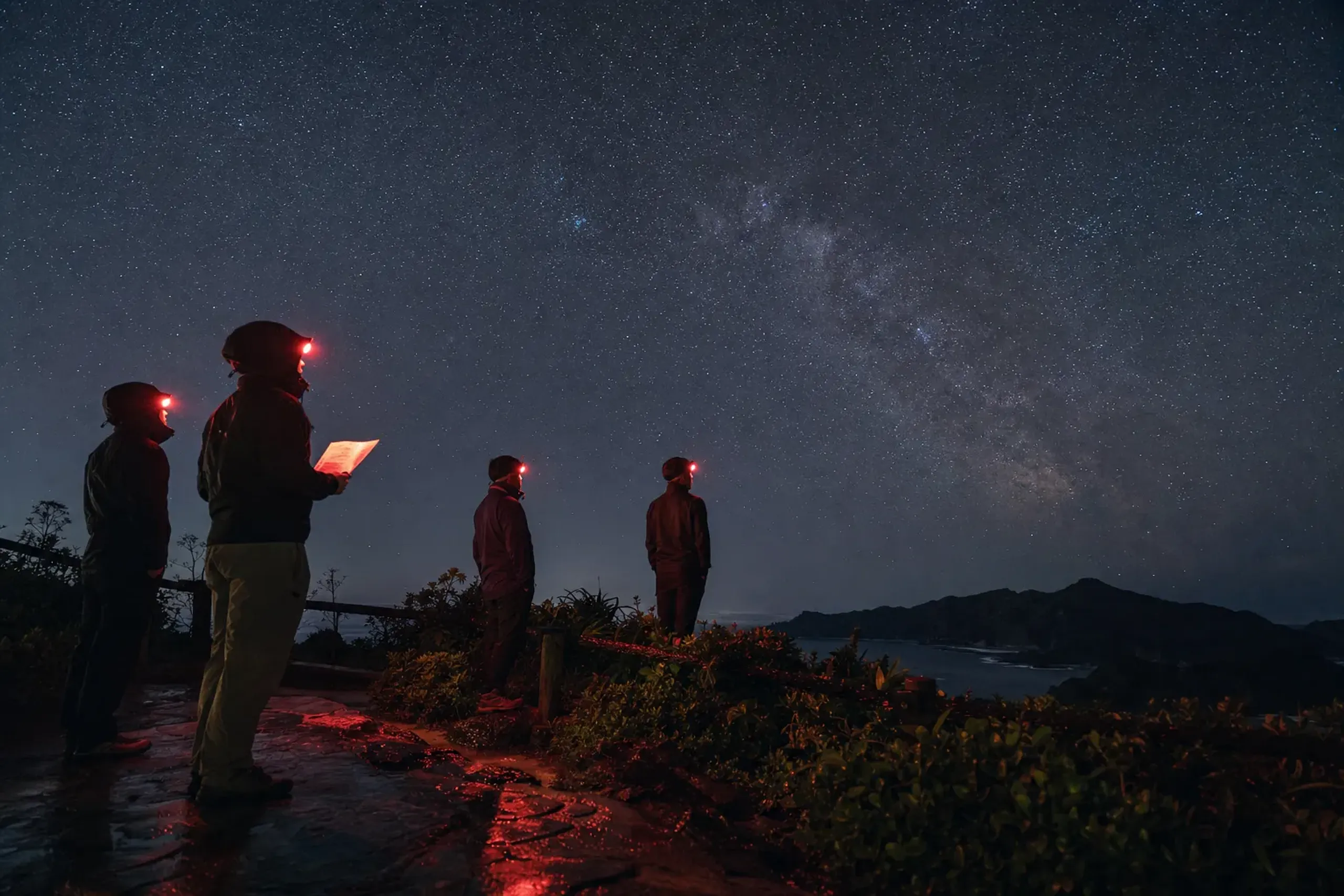
And accept that some nights will offer nothing but stars and surf — which is its own reward.
Key fact: A turtle sighting can never be promised. Nesting is nocturnal and unpredictable, and responsible tours follow strict light and distance rules.
A Practical Night Plan That Doesn’t Chase The Moment
We favor a simple rhythm. Dinner early. A rest. Then a short, quiet drive or walk with your guide, using red light and listening far more than talking.
If a turtle appears, it will feel earned. If it does not, you will still have spent a night that belonged to the island rather than to your camera roll. That, too, is the point.
Minamijima: The Strictly Limited Landing That Keeps Its Power
Minamijima landings require a Tokyo Metropolitan Government-certified guide, and visits are capped at 15 people for two hours per landing, with a maximum of 100 people per day.
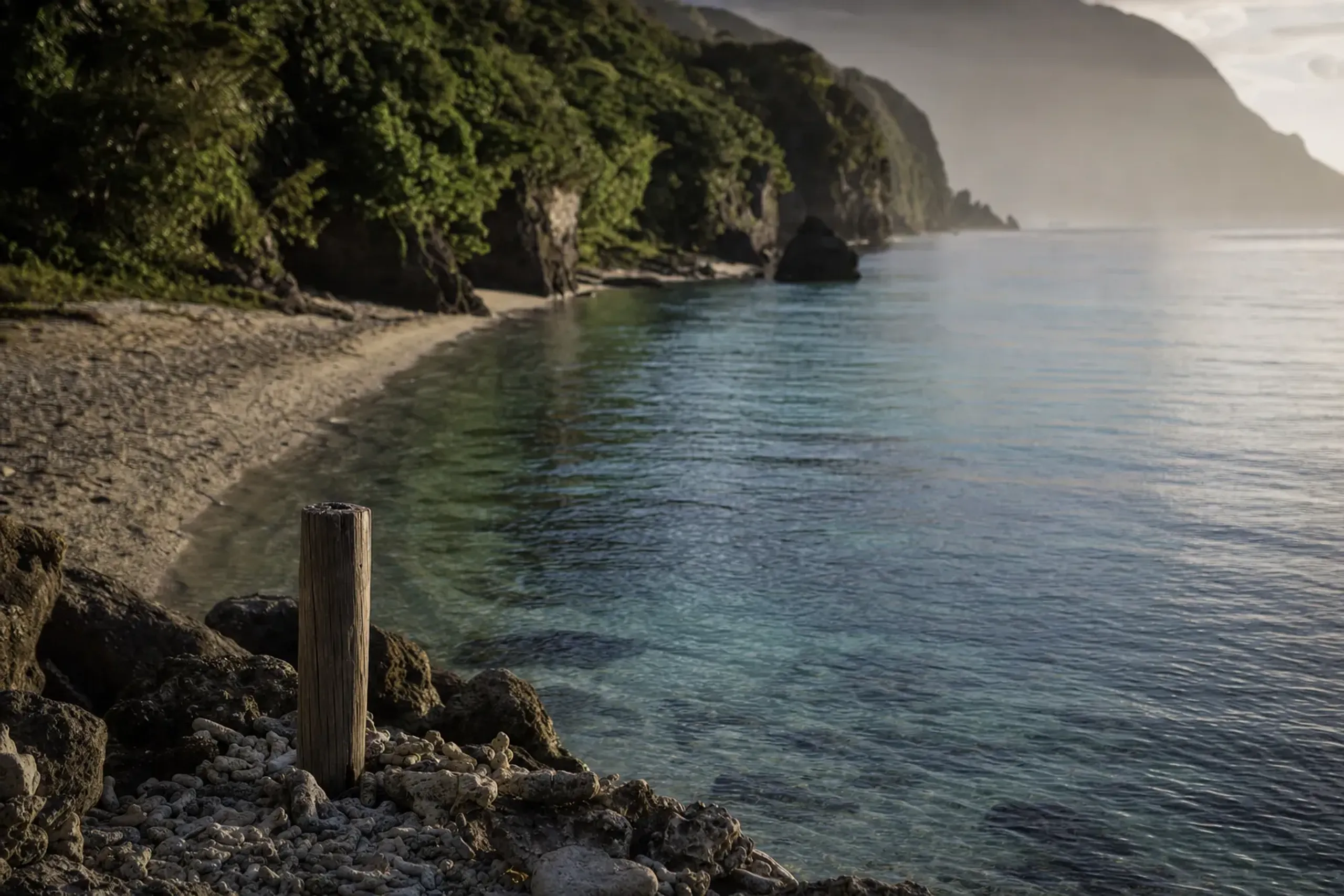
Minamijima lies southwest of Chichijima. It is uninhabited limestone, shaped over ages by the uplift and subsidence of coral reef formations. It is also a green turtle nesting site and a seabird breeding area, home to boobies among others.
There is no pier. You climb ashore over sharp, rain-eroded limestone. Shoes matter here. So does balance.
The landing cove includes Same-ike (“Shark Pond”), named for the gentle nurse sharks that gather there. This is not a place for bravado. You move carefully, and you leave it exactly as you found it — a discipline that is itself a kind of luxury, since access is so strictly held.
What To Bring For The Landing
Think like a careful guest, not an explorer. A small day pack. Water. Sun protection. A dry bag if you are carrying a camera. And footwear you genuinely trust on jagged limestone.
Chichijima In Summer: Small Places With Big Sky
Chichijima is where you arrive, and where most stays unfold. It is also where small, authentic facilities quietly deepen the trip.
The Ogasawara Visitor Center makes a sensible first stop when you want context for what you are seeing in the water and along the trails. For a different kind of curiosity, the National Astronomical Observatory of Japan VERA Ogasawara Station is marked on official Tokyo Metropolitan Government tourism materials.
This is not a checklist island. One excellent day can be enough to reset you entirely. Two or three lets you begin noticing the patterns: tide lines, bird calls, how quickly your appetite changes after swimming.
Water Activities That Fit Summer’s Strengths
The Japan National Tourism Organization describes options such as swimming with dolphins, scuba diving, and kayaking, with beginners welcomed for some activities. Ogasawara Kaiun also notes that bottlenose and spinner dolphins can be seen year-round near the islands.
We suggest choosing one “commitment” activity per day and leaving generous space around it. In summer, heat and UV make packed schedules feel punishing rather than luxurious.
A Short History, Stated Plainly
The Ogasawara Islands remained uninhabited until a mixed group that included Hawaiians settled here in 1830.
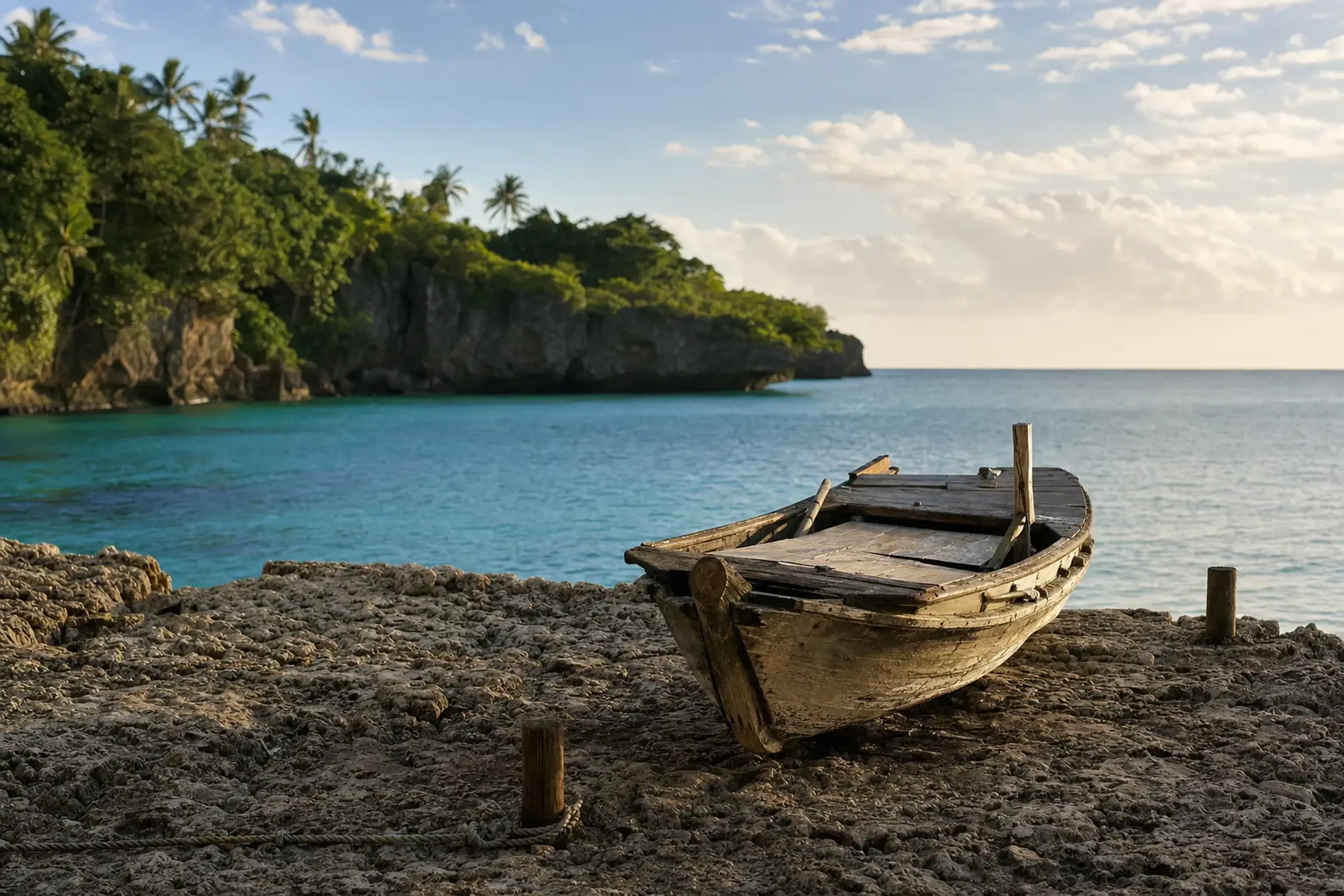
Chichijima and Iwo Jima became battlefields in the Second World War, and all civilians were forcibly evacuated to Honshu in 1944. The Volcano Islands, including Iwo Jima, were returned to Japanese rule in 1968.
Pre-war overhunting sharply reduced green turtle numbers. Later hunting rules and dedicated conservation work have reversed the trend, and breeding numbers are now rising; local marine work also seeks to balance conservation with the islands’ turtle-eating food culture.
We keep this part sober on purpose. Ogasawara is not only scenery. It is also memory — and understanding that memory is part of what makes a visit here feel earned rather than merely enjoyed.
Summer Calendar: Local Festivals And Music Without The Noise
Ogasawara’s summer carries real community markers, not merely tourist seasons. If your timing aligns, they can add depth without turning your trip into an event crawl.
In 2026, the Ogasawara Village announced the Chichijima Reversion Festival, held on 2026-06-27 (Saturday). The Ogasawara Village Tourism Association also lists recurring local events, including shrine festivals and summer gatherings such as Bon dance and fireworks on its event schedule.
For a different note, BONIN ISLAND JAZZ is advertised on its official website as “BONIN ISLAND JAZZ 2026” in Ogasawara, Tokyo, Japan. If you love music, this is reason enough to extend a stay beyond diving and beaches.
Etiquette here is simple.
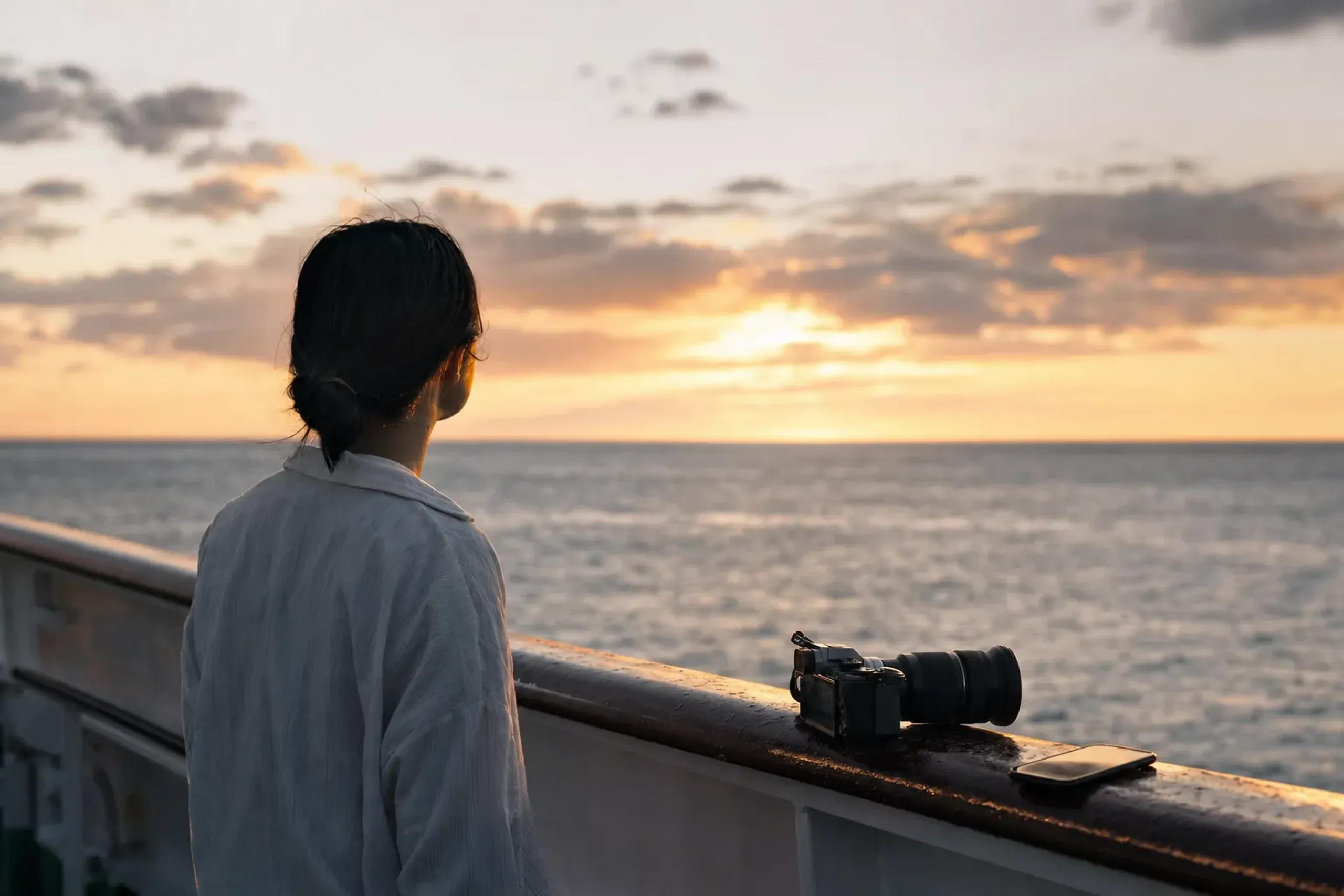
Listen first. Take fewer photos. Spend locally, and quietly.
Step-By-Step: A 7-Night Ogasawara Summer Plan That Respects The Ferry
Ogasawara trips work best when you accept the ship’s cadence and build a generous buffer for weather. Because the Ogasawara-maru sails roughly weekly, the length of your island stay is largely dictated by the ship's return schedule rather than personal preference — which is why a seven-night framework, anchored around one round-trip sailing, sits so naturally within the rhythm of the Bonin Islands. This sample plan is a practical template for discerning travelers who want comfort without rushing — and it is the kind of framework we quietly refine into a bespoke itinerary shaped entirely around your pace.
Read it not as a fixed schedule but as a set of intentions. The sea decides the pace; we simply prepare for whatever it offers, holding calm alternatives in reserve so that a change in weather never becomes a disappointment. This is the quiet discipline behind an unhurried Ogasawara summer — the kind of Japan that no search engine can hand you, entered only by those willing to travel by sea.
Day 1: Tokyo Arrival And A Calm Start
Arrive in Tokyo with a deliberately light schedule. Sleep early. The ship day is long, and your body will thank you.
Resist the urge to fold a busy Tokyo itinerary into this night. A quiet dinner near Takeshiba, an early bath, and an unhurried morning do more for the voyage ahead than any final round of sightseeing.

If you would like private transportation in Tokyo, our concierge can advise on timing and luggage flow; for our service overview, see private transportation.
Day 2: Takeshiba To Sea Day
Board at Takeshiba Passenger Ship Terminal and settle in without haste. Walk the decks in the late afternoon. Eat simply. As Tokyo Bay opens into the open Pacific, watch the water change color and the last of the city dissolve behind you — the moment the trip truly begins.
Motion at night can surprise even confident travelers. Pack basic remedies and keep water by your bed. Rest is the day's real work; the more you sleep, the more of Chichijima you will have on arrival.
Day 3: Arrival At Futami Port (Chichijima)
Arrive at Futami Port and keep the first hours gentle. Heat, salt, and travel fatigue can blur judgment.
Use the day to orient yourself: supplies, a short walk, perhaps a visit to the Ogasawara Visitor Center if you want context right away. Let your accommodation settle around you, and save any real exertion for tomorrow. A slow first afternoon on the island is not lost time — it is the anticipation that follows silent care, the quiet groundwork that lets everything after it feel effortless.
Day 4: Marine Day + An Early Night
Choose one main water activity. Snorkel. Dive. Or a dolphin-focused outing, remembering that dolphins are described as year-round.
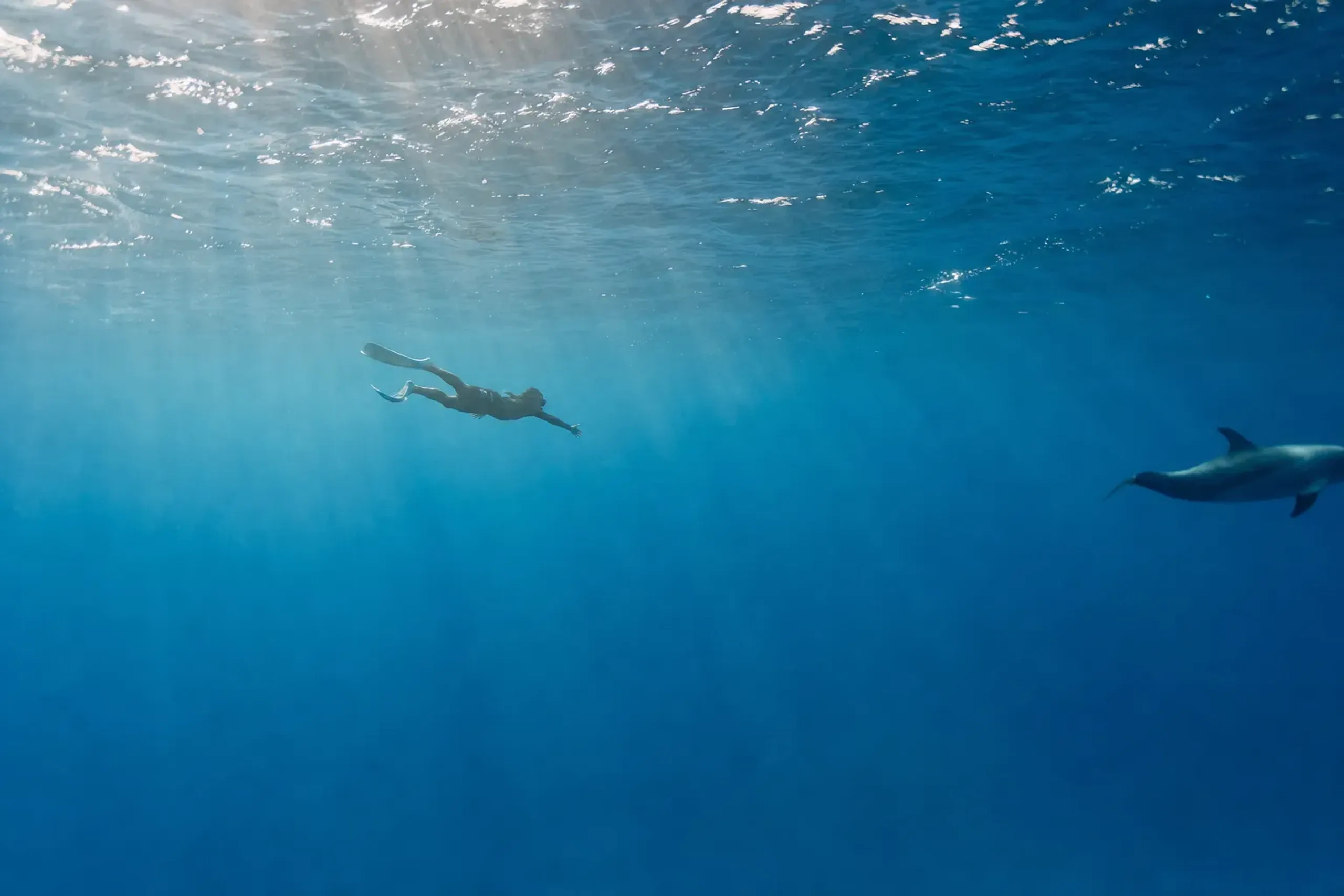
In the Bonin Blue, even a single unhurried snorkel over coral can outweigh a crowded day elsewhere.
Protect your skin. Strong UV is never a footnote here. Then take an early night, because the finest hours in Ogasawara often belong to the dark — and you will want to be rested for them.
Day 5: Minamijima (If Conditions And Guide Rules Allow)
Minamijima is weather-dependent and rule-bound, which is precisely part of its value. Plan it as a “maybe,” and keep a satisfying backup day on Chichijima in reserve. The certified-guide requirement and the strict daily cap mean that even reaching this uninhabited limestone island is a form of access few travelers ever secure.
On the landing, move slowly over the limestone. It is sharp, and a single careless step can end the day. Pause at Same-ike to watch the nurse sharks, then leave the island exactly as you found it.
Day 6: Quiet Exploration + Turtle-Observation Night (No Guarantees)
Take a slower day. Shade, hydration, and a long lunch matter enormously in summer. Wander a quiet trail, watch for endemic birds, or simply sit with a view of the water and let the island's stillness do its work.
After dark, join a guided turtle-observation walk during nesting season, carrying only red light and moving in near-silence. Hold no expectation of a sighting. Whether or not a female comes ashore, a night spent listening to the surf under an unpolluted sky is reward enough — the wabi-sabi of a shoreline that asks nothing of you but patience.

Day 7: A Final Island Morning And The Return Sailing
Keep the last morning light. A short swim, a quiet coffee, a final look at the harbor before the Ogasawara-maru readies for its return run. The island's departure gatherings at Futami Port — locals and boats seeing the ship off — are among the most moving farewells in Japanese travel, and worth arriving early to witness.
Then board, and let the 24-hour crossing carry you back toward Tokyo. Use the sea day to decompress rather than to plan; the islands settle into memory best when you give them the same slowness on the way home that you gave them on the way out. You disembark on Day 8 at Takeshiba, unhurried and quietly changed.
Begin Planning Your Ogasawara Summer
Ogasawara is not a place you improvise. The ship cadence, the strict landing quotas, the nesting season that answers to no schedule — all of it rewards those who plan with care and travel with restraint. This is the Japan that lies beyond the reach of an easy search: entered by sea, held quietly, and remembered for a long time.
When you are ready to shape a discreet, unhurried summer among the Bonin Blue, contact us here for a tailored proposal built entirely around your dates, your comfort, and the rhythm of the sea.