In this guide
- 01Opening Scene: The Garden Gate In The First Hour
- 02The Garden At A Glance
- 03The Hill And The Bloom: What Flowers When
- 04When Should You Visit Nezu Shrine Azaleas To Avoid Crowds?
- 05The Shrine Setting: 1706 Buildings And The Red Torii Path
- 06What Are The Rules For Nezu Shrine’s Tsutsuji Garden And Photography?
- 07A Brief Note On Yanaka, Nezu, And Sendagi (Yanesen)
- 08How Our Concierge Team Plans A Nezu Shrine Azalea Morning
- 09Frequently Asked Questions
- 10Why Choose Japan Royal Service
You arrive in the first hour, when the air still holds last night’s coolness and the neighborhood is only half-awake. The approach to Nezu Shrine is calm, almost unhurried. Then, just beyond the shrine buildings, you see the small gate to the Tsutsuji Garden.
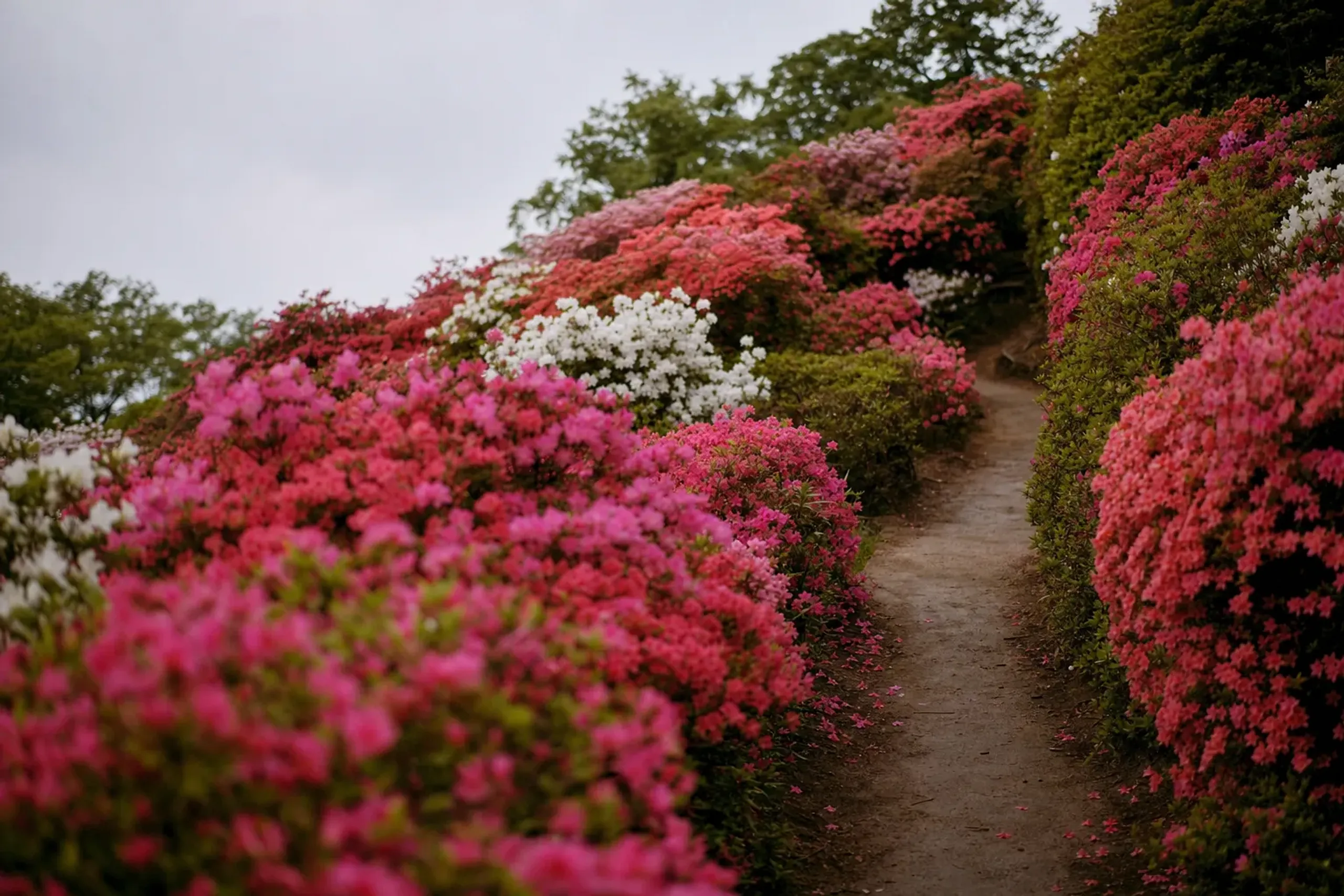
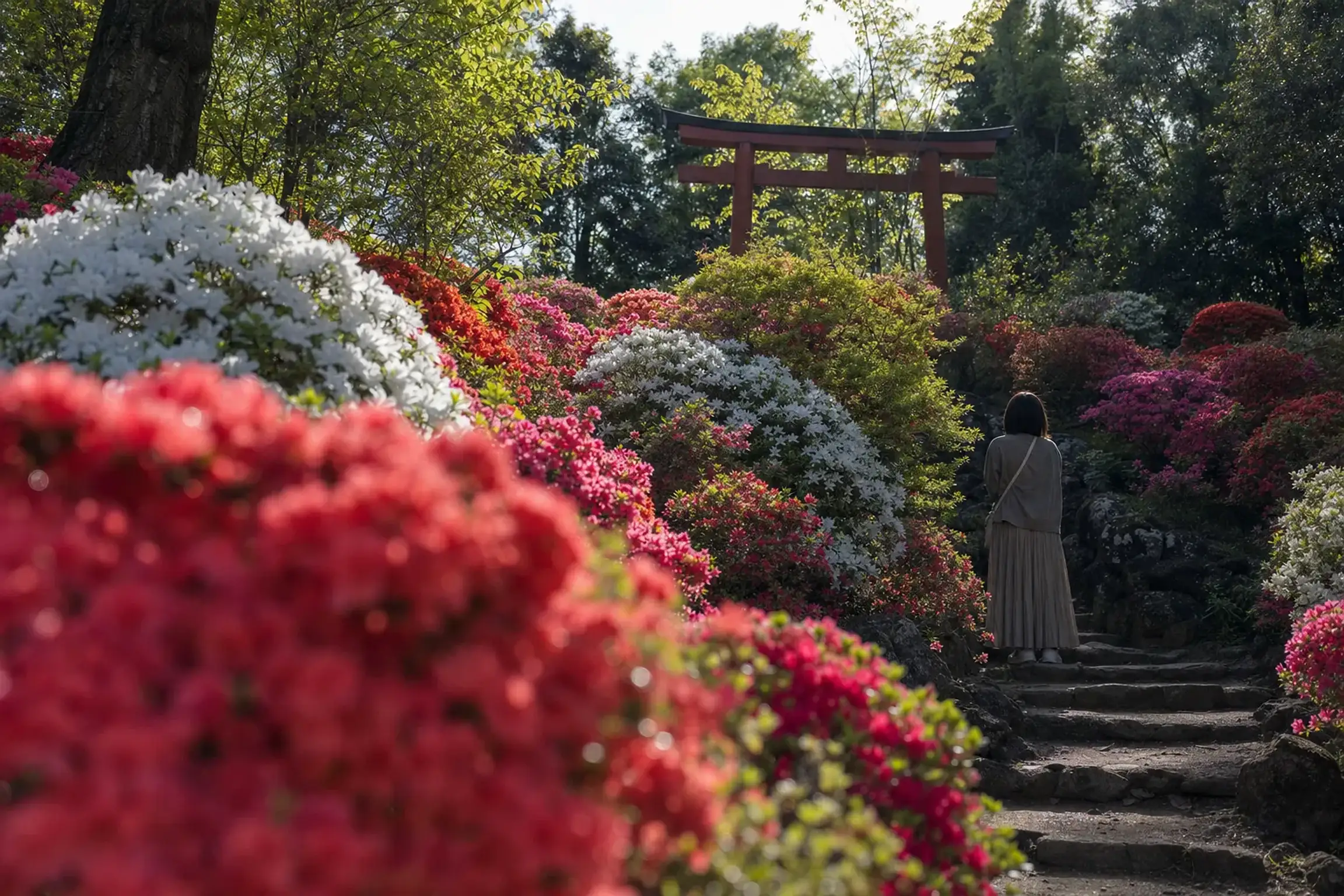
Inside is a compact hill—Tsutsuji-ga-oka—wrapped in azaleas. Close to the ground, the color feels louder, more insistent. A few steps up, the view widens, and the old shrine structures of 1706 begin to frame the scene in dark wood and vermilion.
This is not a park that “happens to have flowers.” It is a working shrine with an April-only opening of its garden for the Bunkyo Tsutsuji Matsuri. Plan well, and you get the hillside at its most graceful—leaving before the day turns crowded, before the quiet dissolves into the ordinary rhythm of the city.
Opening Scene: The Garden Gate In The First Hour
The moment you step through the garden entrance, the city’s tempo drops. Fast. The path narrows. You move with the people ahead of you, then find a pocket of space near the first bend—a small, private pause in the flow.
The hillside is small, about 6,600 square meters, so the experience is close-range by design. You notice petals at eye level. Leaves with a waxy shine. Color stacked on color, as if the hill is changing outfits every few meters. There is a quiet, restrained beauty here—the kind of understated grace the Japanese call wabi, where the appeal lies in intimacy rather than spectacle.
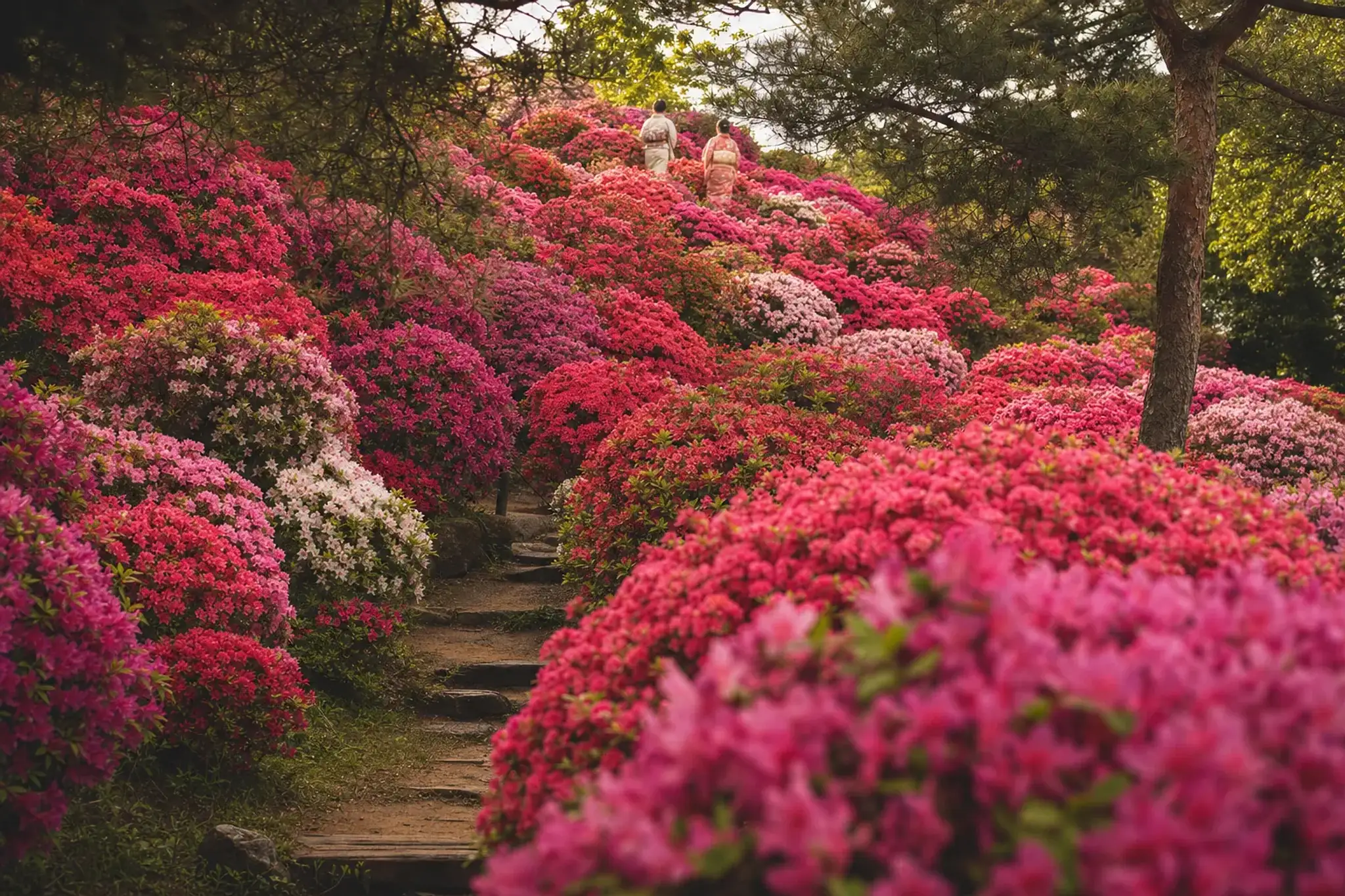
Look back once. The shrine’s older forms—its rooflines and gates—hold the scene steady, and the azaleas feel less like “a flower event” and more like a seasonal room that opens briefly, then closes again for another year. This is the essence of shun: a window of perfect timing that rewards those who know precisely when to arrive.
The Garden At A Glance
Nezu Shrine’s Tsutsuji Garden opens only during the April Bunkyo Tsutsuji Matsuri, offering a compact hillside walk among about 3,000 azaleas across roughly 100 varieties.
The garden belongs to the shrine. Entry to the shrine grounds is free, while the garden requires a donation-style admission that can vary by bloom conditions; children aged 12 and under are free. No re-entry. That detail matters more than people expect, and we plan around it deliberately.
What you are seeing is a century-spanning tradition expressed in a very Tokyo way: dense, curated, and contained. Tradition links the azalea slope to an earlier estate on this land, and the current plantings were set out after the Second World War, creating today’s concentrated hillside of color.
There are named varieties often cited by local tourism sources, including fuji-tsutsuji, hanaguruma, and karafune. You don’t need to memorize names, but it helps to notice that the hill is not one bloom—it is a sequence, a slow procession of color unfolding across the month.
The Hill And The Bloom: What Flowers When
Most azaleas at Nezu Shrine are typically in full bloom around mid-April, with early April showing fresher leaf growth and late April favoring the later varieties.
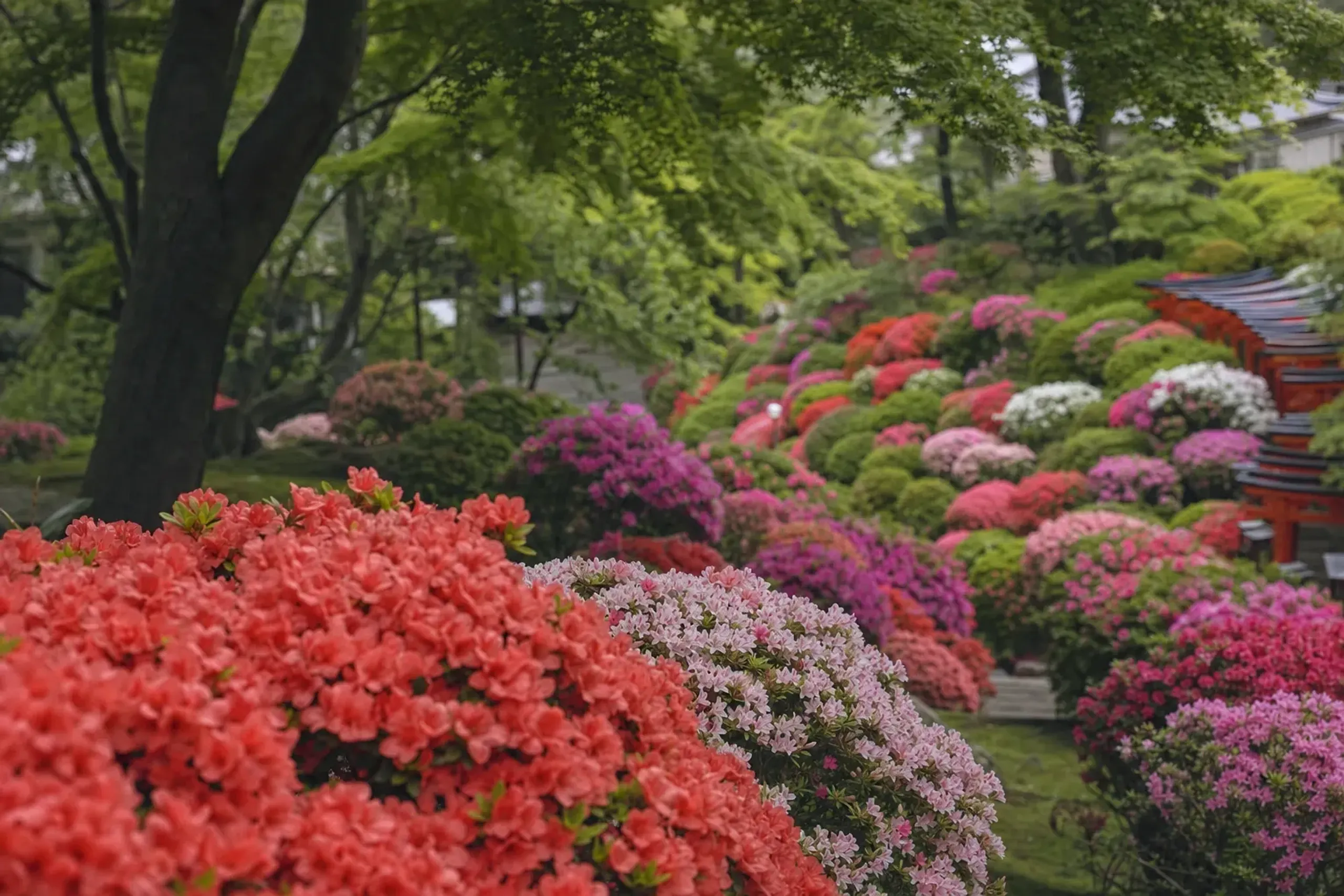
Bloom timing shifts each year, and the varieties do not peak together. That is why Bunkyo City suggests visiting two or three times if you can. It sounds obsessive. It is also accurate.
In our experience, the easiest way to think about the month is as three acts. Early April is anticipation—buds, new green, and a few varieties stepping forward. Mid-April is the dense color that people come for. Late April can be surprisingly rewarding if you prefer a calmer mood and don’t mind that some shrubs have already dropped their petals—there is a faded, melancholy beauty in that too.
If you want a reality check before you commit to a morning, the shrine posts bloom updates on its official Instagram account. Our concierge team also verifies the year’s conditions—dates, hours, current bloom status, and any entry restrictions—so your day plan stays anchored to what is actually happening on the hill, not to last year’s guesswork.
When Should You Visit Nezu Shrine Azaleas To Avoid Crowds?
Visit on a weekday morning soon after opening, and avoid weekend midday hours, when the small hillside can fill quickly and entry may be restricted for safety.
This garden is compact by nature, and the paths funnel people into the same viewpoints. On weekends in April, the crowd pressure is predictable.
You may still enjoy it, but you will not control your pace—and control of pace is precisely what separates a memorable morning from a hurried one.
For a calmer experience, plan a weekday and arrive early enough to be at the garden entrance right after it opens. Bring a light layer; Tokyo’s April average temperatures (1991–2020) are mild but changeable, with a mean around 14.3°C, an average high of 19.4°C, and an average low of 9.8°C, plus meaningful rainfall across the month.
If you are visiting with family, or with anyone who prefers fewer stairs and less jostling, the timing matters even more than the bloom. A quieter hour makes the hill feel like a garden again, not a queue.
The Shrine Setting: 1706 Buildings And The Red Torii Path
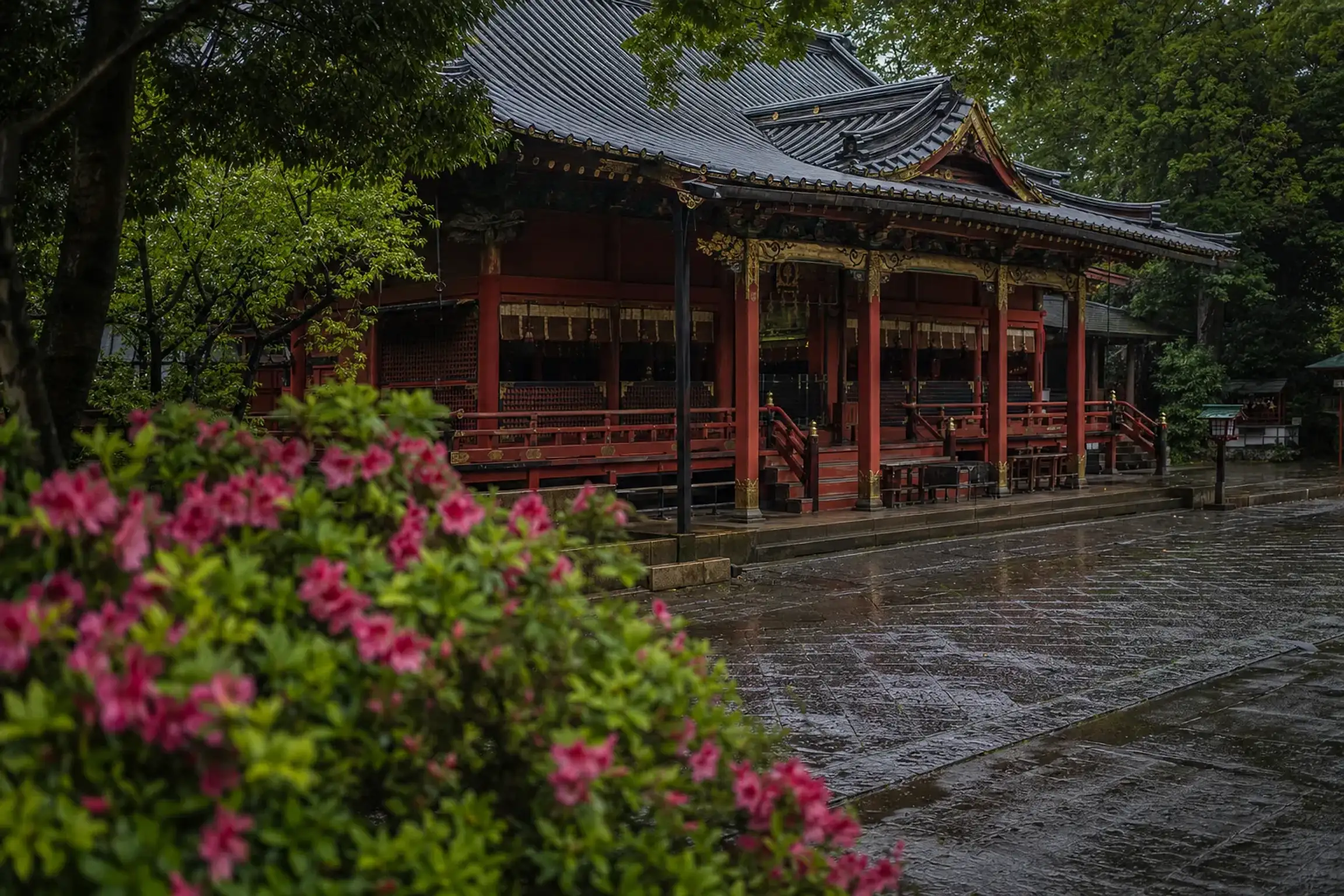
Nezu Shrine’s current complex was completed in 1706, and seven structures from that period are designated Important Cultural Properties.
The shrine’s identity is architectural as much as seasonal. You are not walking through a generic entrance to reach flowers. You are moving through a historic shrine complex in the gongen-zukuri style, where the main hall, offering hall, and worship hall form a connected presence that feels composed, not scattered.
Among the Important Cultural Properties, the shrine counts the main hall, offering hall, worship hall, the Karamon gate, west gate, outer fence, and the Romon gate. The outer fence runs about 200 meters, long enough to feel like a boundary in the old sense of the word.
The Karamon and Romon gates were repaired by 1962.
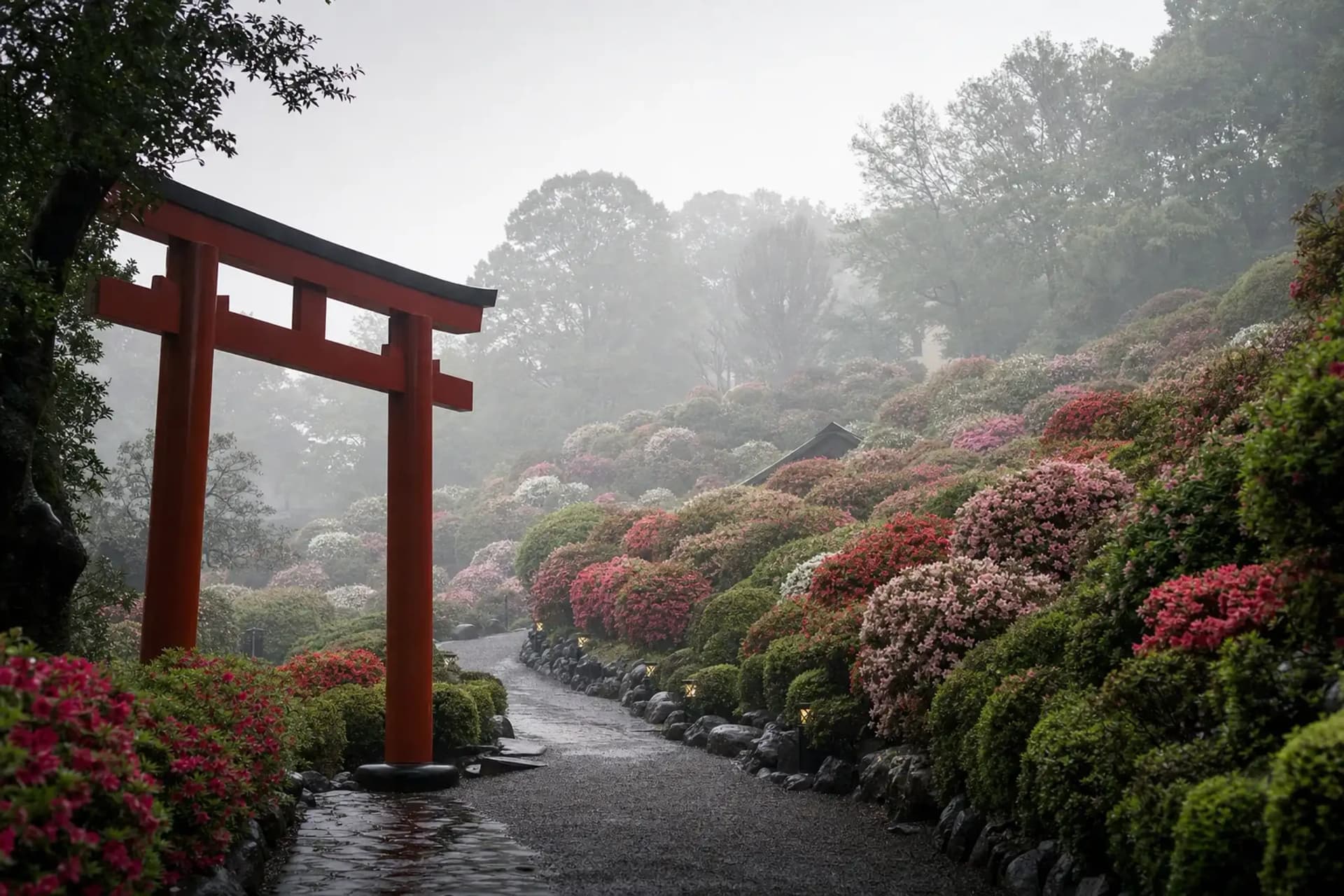
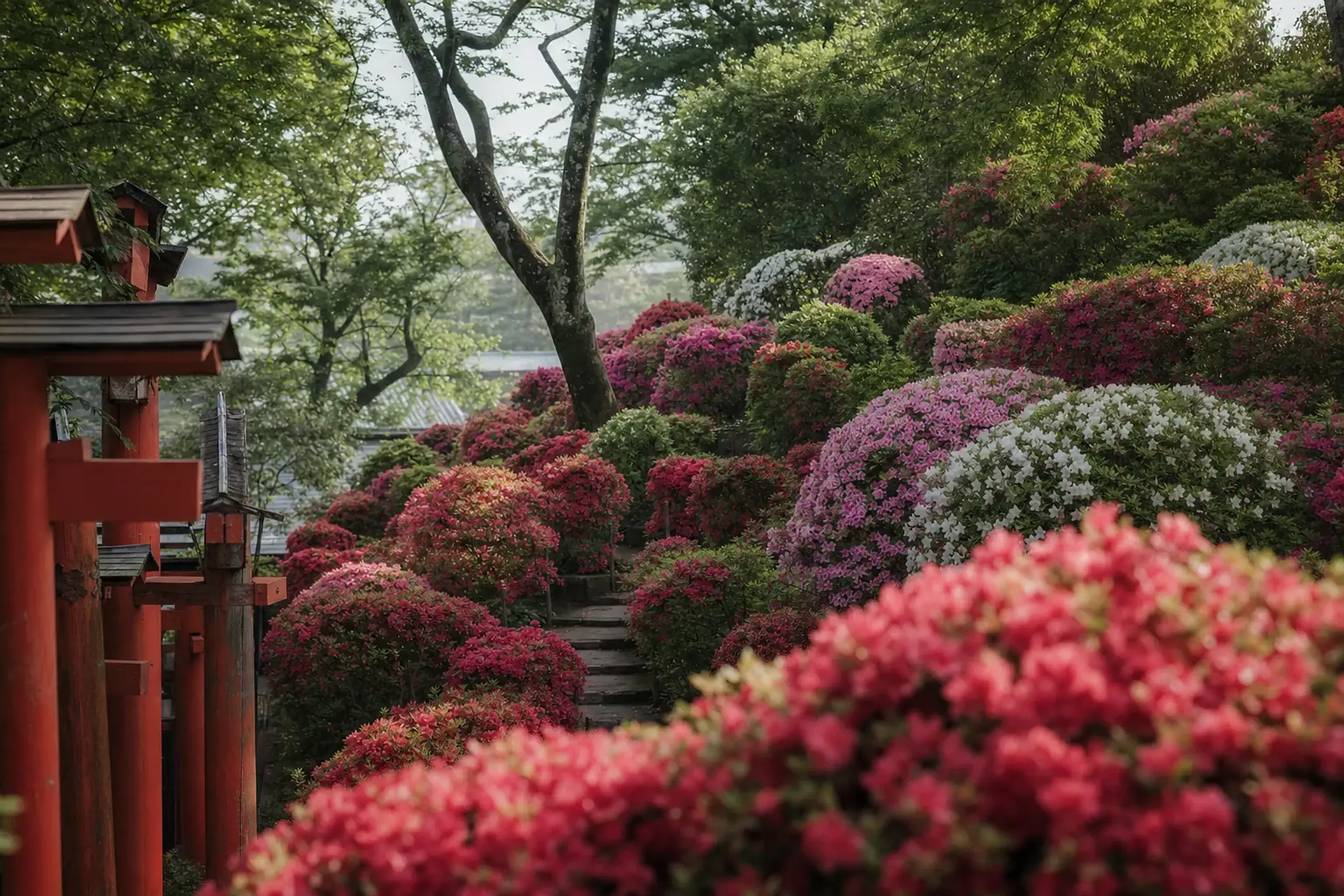
Then there is the Otome Inari area. You follow a line of red torii through a tighter, more intimate passage, with donors’ names written on the pillars. No grand claims. Just repetition, color, and the slightly hushed feeling you get when the path dips into a hollow. It is here that the wabi-sabi sensibility feels most tangible—quiet corridors, weathered wood, and a stillness the camera can never quite capture.
This is where many travelers slow down without being told. It’s also where good guiding matters. A skilled cultural interpreter can help you read what you are seeing—without turning a living place into a lecture.
What Are The Rules For Nezu Shrine’s Tsutsuji Garden And Photography?
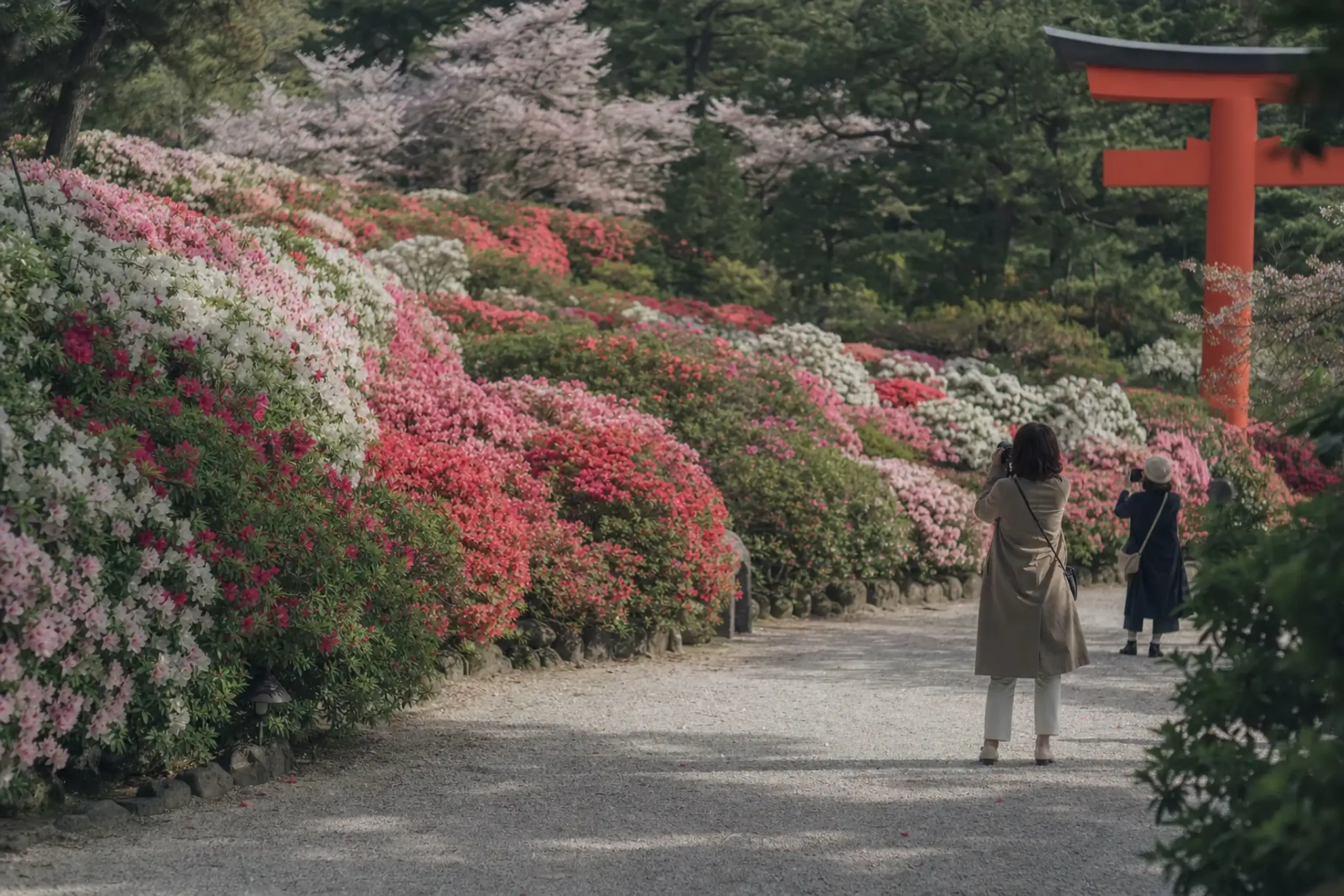
No pets, no eating or drinking, and no tripods or monopods are allowed in the azalea garden, and photography is restricted in front of the main hall and inside shrine buildings.
These rules are not decorative. They protect tight paths, fragile plantings, and the dignity of a working shrine. You can still take personal photos without an application, but commercial filming requires permission, and large equipment, reflectors, and mats are not permitted.
Key fact: The shrine notes that entry to the azalea garden may be restricted when crowded, and there is no re-entry once you leave.
There are also etiquette moments that don’t show up on rule boards. Keep your voice down near the worship areas.
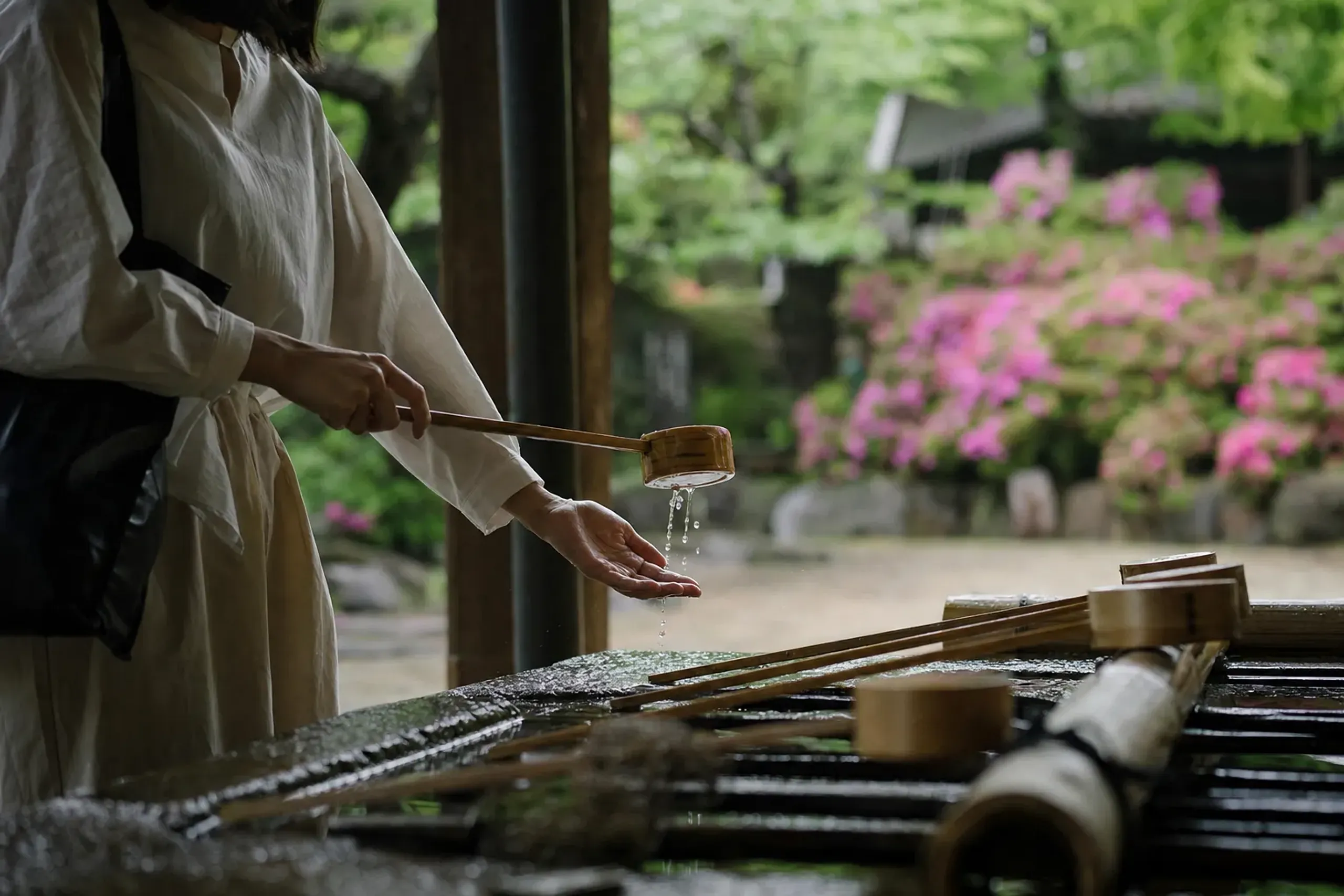
Don’t stop on narrow stairs to fix a camera strap. And if you are traveling with children, set expectations before you enter the garden—snacks and drinks wait until you exit.
One more practical point: limited festival goshuin have sold out in each of the last three years. If collecting is part of your visit, go earlier in the day and keep your schedule loose enough to accept a queue without stress.
A Brief Note On Yanaka, Nezu, And Sendagi (Yanesen)
Nezu Shrine sits within the Yanaka–Nezu–Sendagi area, often shortened to “Yanesen,” spanning Bunkyo and Taito wards. The streets around the shrine still read as old Tokyo in places—low buildings, small corners, and a pace that feels different from the big stations. This is the Tokyo that rarely makes the itineraries, the quiet pockets reached by introduction rather than search engine.
Literary history touches this neighborhood too. Writer Mori Ogai lived nearby, and his former residence was moved to the shrine in 2025 as Maihime-no-ie, which the shrine says opens on weekends and holidays with an entry fee. Confirm the current hours and arrangements before your visit.
Keep this part simple. A short walk, then back to your day plan. The azalea hill is the main event.
How Our Concierge Team Plans A Nezu Shrine Azalea Morning
We plan a Nezu Shrine azalea visit by timing a weekday morning arrival, verifying the year’s festival hours and entry details in advance, and building a comfortable walking route that respects crowd flow and shrine etiquette.
Start with one decision: what matters more to you—peak color or breathing room? Many well-traveled guests assume those are the same. They are not. Our concierge team leans toward a morning that is logistically calm, even if it means accepting that the hill is still building toward its mid-month crescendo.
We also plan around the shrine’s constraints. There is no dedicated festival parking and no coach parking during the festival, so a drop-off strategy matters. The point is worth making plain: for guests who prefer comfort and control, our private transportation / chauffeur service is arranged around a clean arrival and pickup rather than any expectation of parking on-site.
Guiding changes the texture of the visit. When you have an English-speaking cultural interpreter, the 1706 buildings stop being “pretty background” and become a coherent story: what is free to enter year-round, what is seasonal, what is off-limits for photos, and how to move without disrupting a place that locals still use for worship.
If you want the morning to feel like yours, not like a checklist, we shape it as part of a tailor-made / bespoke itinerary. Think of it as a narrow corridor of time with clear edges: hotel departure, garden entry, shrine walk, torii path, and then a gentle exit into the neighborhood streets.
For spring travelers building a wider seasonal calendar, we sometimes connect the day to other flower-led outings in Japan.
If you’re looking for more spring color beyond Tokyo, our guides on Hitsujiyama Shibazakura in Chichibu and Mifuneyama Rakuen in Saga can help you compare timing and atmosphere before you commit.
Discretion still applies, even for a public garden. We keep your identity, schedule, and hotel movements confidential, and we avoid broadcasting where you’ll be at specific times. Quiet discipline. Always.
Frequently Asked Questions
When Is Nezu Shrine’s Azalea Garden Open?
The Tsutsuji Garden opens only during the April Bunkyo Tsutsuji Matsuri, which is expected to run sometime in April each year, with dates and hours confirmed by official announcements.
As a worked example, the 2026 festival ran from April 1 to April 30, with garden hours listed as 9:00 to 17:30, and an 11:00 opening on April 1. Hours change by year, so confirm before you go.
How Much Does It Cost To Enter The Tsutsuji Garden?
Entry to the azalea garden is a donation-style fee that varies by bloom conditions, while entry to the shrine grounds is free.
Children aged 12 and under are free for the garden. The donation range and exact handling can change, so treat any number you see online as a snapshot, not a promise.
Will Nezu Shrine Azaleas Be Crowded On Weekends?
Yes, April weekends can be crowded, and the shrine notes entry to the garden may be restricted when it is busy.
If you want more space for photos and a steadier walking pace, choose a weekday morning and arrive near opening time.
Can I Use A Tripod Or Take Photos Everywhere?
No—tripods and monopods are not allowed in the azalea garden, and photography is restricted on the stone approach in front of the main hall and inside shrine buildings.
Personal photography is generally fine in permitted areas, but commercial filming requires permission, and large equipment, reflectors, and mats are not allowed.
What If It Rains During The Festival?
Tokyo often sees rain in April, so plan for wet paths and bring a compact umbrella or rain jacket, then confirm any day-of entry conditions via official updates.
We avoid making assumptions about weather policies that are not published. Instead, we build a flexible schedule and verify the latest notices before you set out.
Why Choose Japan Royal Service
You can visit Nezu Shrine without assistance. Many people do. The difference is whether your April morning feels improvised, or shaped with care—arriving at the garden gate in that first, quiet hour, moving through the torii path without a crowd pressing at your shoulder, and leaving with the sense that the hillside opened, briefly, just for you.
That is the quiet discipline Japan Royal Service brings to even a single morning: perfect timing, discreet logistics, and a route that respects a living shrine. When you are ready to plan your Nezu Shrine azalea morning—or a wider spring journey across Japan—contact us here for a tailored proposal built entirely around your pace.