In this guide
- 01Why Is Narita-san Shinshō-ji Famous For A Statue That Wouldn’t Move?
- 02Where Was Narita-san Originally Founded, And Why Isn’t That The Current Site?
- 03What Should You See At Narita-san Shinshō-ji If You Only Have Two Hours?
- 04How Did Narita-san Shinshō-ji Shape Kabuki Through Ichikawa Danjūrō And “Naritaya”?
- 05Narita-san’s Scale Today: What The Visitor Numbers Actually Tell You
- 06When Is The Best Time To Visit Narita-san Shinshō-ji For Hatsumōde Without The Harshest Crowds?
- 07How To Visit Narita-san From Narita Airport (NRT) With A Private Car
- 08How To Plan A Half-Day Visit: Step-By-Step, With Etiquette That Doesn’t Feel Stiff
- 09What Japan Royal Service Arranges For Narita-san Shinshō-ji Visits
- 10Frequently Asked Questions
- 11Why Choose Japan Royal Service
The flames never rushed. They licked, steadied, and rose again, day after day, as a priest watched the borderlands of the eastern provinces and kept the altar alive.
Twenty-one days is a long time to keep a fire ritual going. Longer when the country is listening for the next piece of bad news. In 939, Taira no Masakado declared himself a “New Emperor,” an act of open rebellion that shook the Heian court.
Emperor Suzaku ordered major temples to perform rites for the rebellion’s suppression. A senior priest named Kanchō received a secret imperial command and traveled from Kyoto carrying a specific Fudō Myōō statue, said to have been carved and consecrated by Kōbō Daishi (Kūkai) at Jingo-ji on Mt. Takao.
He landed on the Bōsō Peninsula and reached present-day Narita. Then he began. No shortcuts. On the day the 21-day goma (fire ritual) concluded, Masakado was struck by a stray arrow and killed in battle.
And then came the moment that makes Narita-san Shinshō-ji feel less like a “founded temple,” and more like the consequence of a decision made by the deity itself.
Why Is Narita-san Shinshō-ji Famous For A Statue That Wouldn’t Move?
Narita-san Shinshō-ji began because a Fudō Myōō statue, brought from Kyoto in 940, was said to refuse to return—so the priest Kanchō established a sacred site in Narita instead.
The story is not a decorative legend pasted onto an old building. It is the mechanism of origin, the hinge the temple turns on.
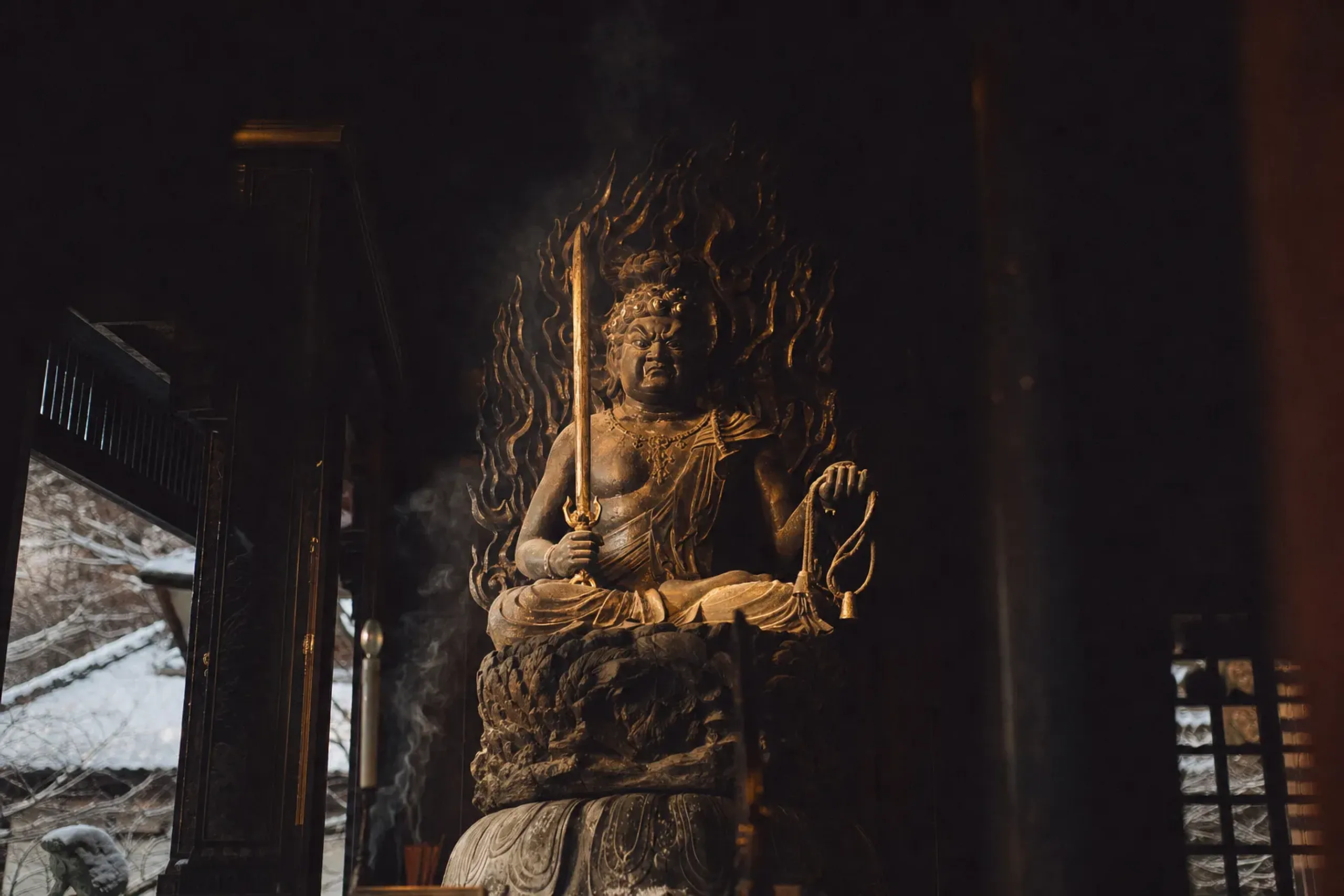
After the rebellion was crushed, Kanchō attempted to take the statue back to Kyoto.
It would not move. Not “hard to lift.” Not “delayed.” It refused to leave.
Kanchō interpreted this as the deity’s will to remain and protect the eastern provinces permanently. So a sacred site was founded here in 940. The temple exists because the statue stayed.
For luxury travelers, that difference matters. It changes how you stand in front of the hall. You are not visiting a place that chose its icon; you are visiting a place the icon chose.
Where Was Narita-san Originally Founded, And Why Isn’t That The Current Site?
The 940 founding site is identified today as Fudō-zuka (Fudō Mound) in Narima-chō, Narita City, while the statue was relocated to the present temple area around 1566.
This is the detail many quick guides blur. Narita-san’s beginning point and its present footprint are not the same patch of ground. The original site is remembered as Fudō-zuka, a quiet marker in modern Narita City.
The relocation came later. Around 1566 (the Eiroku era), a local elder moved the statue, and a new main hall was built at what is now considered the temple’s current site.
After that, history did what history does. Through the Sengoku period’s turmoil, the temple fell into decline, becoming neglected until conditions stabilized in the Edo period.
If you care about provenance—about where something began—this becomes a two-stop visit rather than one.

Our team at Japan Royal Service often suggests building the visit like a short narrative walk: first the origin point (Fudō-zuka), then the living complex where devotion accumulated over centuries.
What Should You See At Narita-san Shinshō-ji If You Only Have Two Hours?
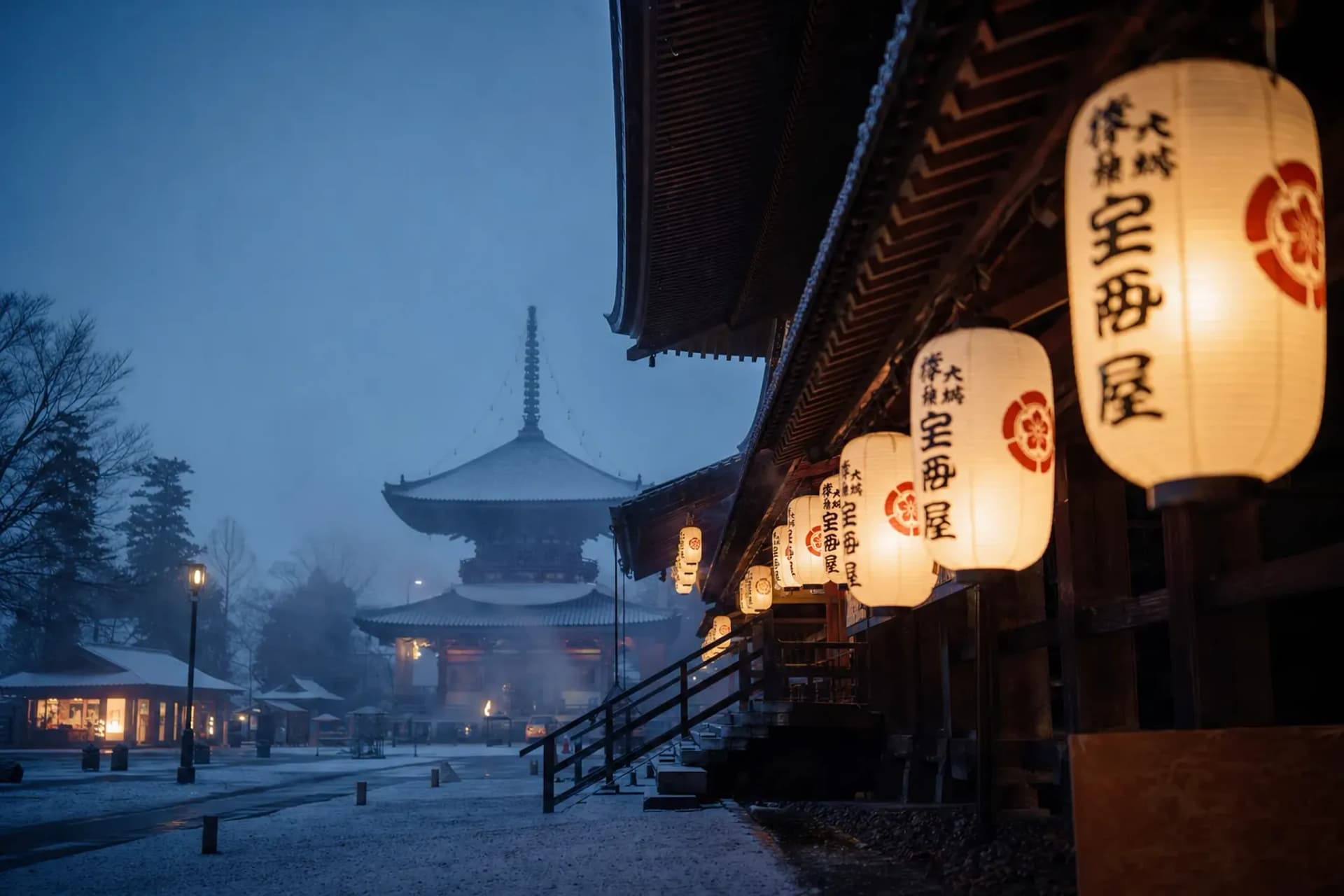
In two hours, focus on the main worship area for Fudō Myōō, a slow walk through Narita-san Park, and time to observe goma worship respectfully if it’s underway.
Two hours sounds tight. It is. Still, Narita-san rewards a restrained pace, not a checklist.
Start with the main worship area. Stand back. Watch how people approach, bow, and offer prayers without performance. Quiet precision.
Then step into Narita-san Park. The air changes. You feel it in the shoulders. Paths, ponds, and seasonal shifts do the work—no loud signage needed.
If goma is being conducted, treat it as living practice, not a “show.” Keep your phone away unless photography is clearly permitted in that specific area. Ask first. Always.
How Did Narita-san Shinshō-ji Shape Kabuki Through Ichikawa Danjūrō And “Naritaya”?
Ichikawa Danjūrō I prayed at Narita-san for an heir, and after his eldest son was born he staged Fudō Myōō-themed plays and adopted the stage house name “Naritaya,” still used by his descendants.
This connection is checkable, specific, and oddly moving. A temple is not only a religious site; it can be a generator of cultural lineage.
Danjūrō I—founder of one of kabuki’s most important acting dynasties—came to Narita-san when he lacked an heir.
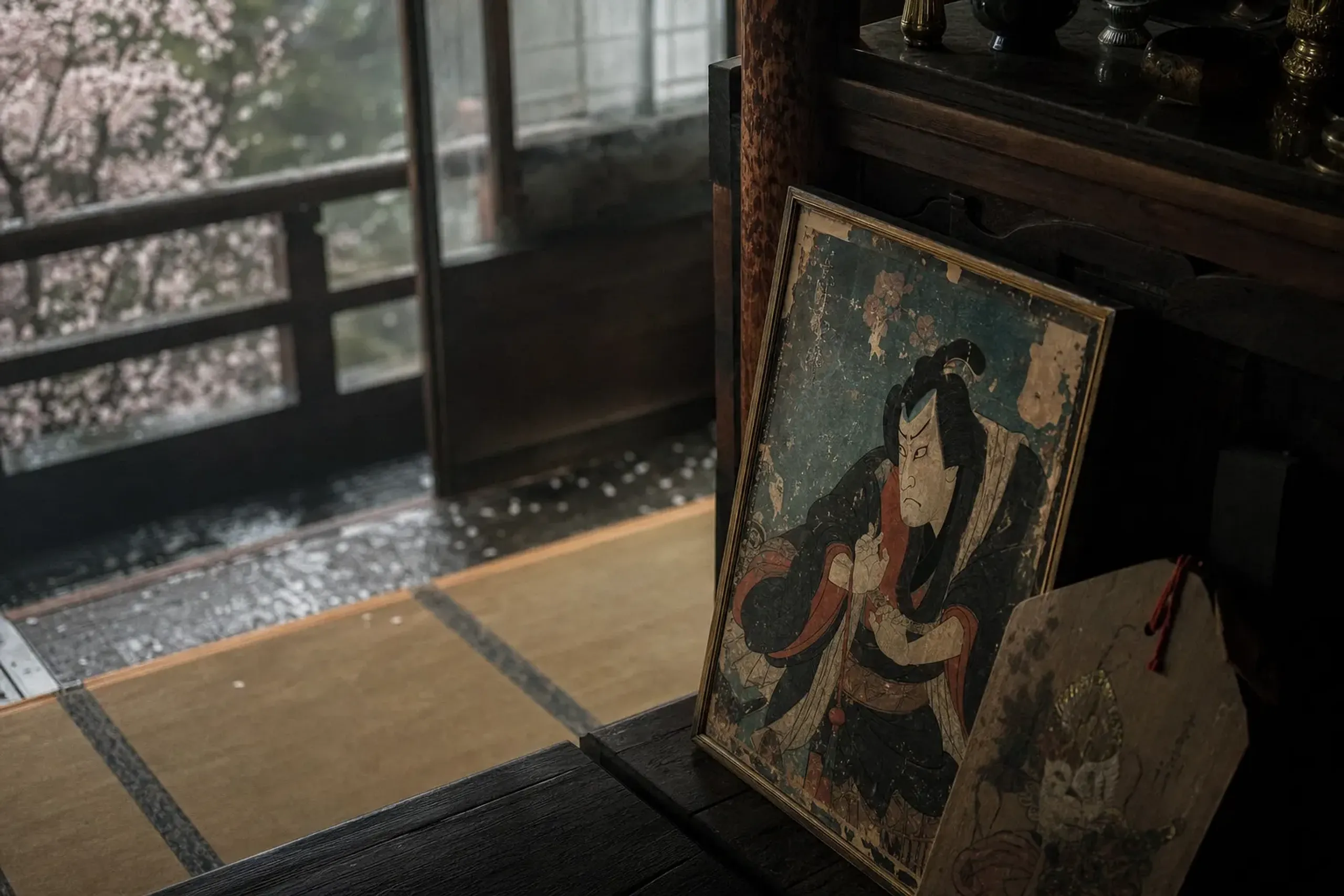
He prayed here. A son arrived.
In gratitude, he repeatedly staged kabuki works themed around Fudō Myōō and took “Naritaya” as his yagō (stage house name). That name is still used today by descendants of the same family line. A private prayer became a public identity.
If you already love kabuki, Narita-san becomes a kind of footnote you can physically enter. If you don’t, it’s still a rare bridge: religion, theatre, and family continuity, all pinned to one place in Chiba.
Narita-san’s Scale Today: What The Visitor Numbers Actually Tell You
Narita-san Shinshō-ji draws roughly 3.05 million New Year’s visitors (2020 figure) and more than 10 million visitors annually, making it one of Japan’s most significant living temple sites.
Numbers can be sterile. Here, they tell you something vivid: this temple is not “a historic stop near the airport.” It is a national magnet.
For hatsumōde (New Year’s visits), Narita-san recorded roughly 3.05 million visitors in 2020. That figure is second-highest nationally among all shrines and temples combined, and highest nationally among temples specifically.
Annual visitors exceed 10 million. It is devotion on an industrial scale—yet individual in its gestures, because each person approaches Fudō Myōō with their own private ask.
Several historical anchors reinforce that continuity. The temple received devotion from major Kantō-region warlords across eras, including Minamoto no Yoriyoshi, Minamoto no Yoritomo, and Chiba Tsunetane. During the Second World War, its migawari fuda protective amulets became popular as charms believed to protect against bullets.
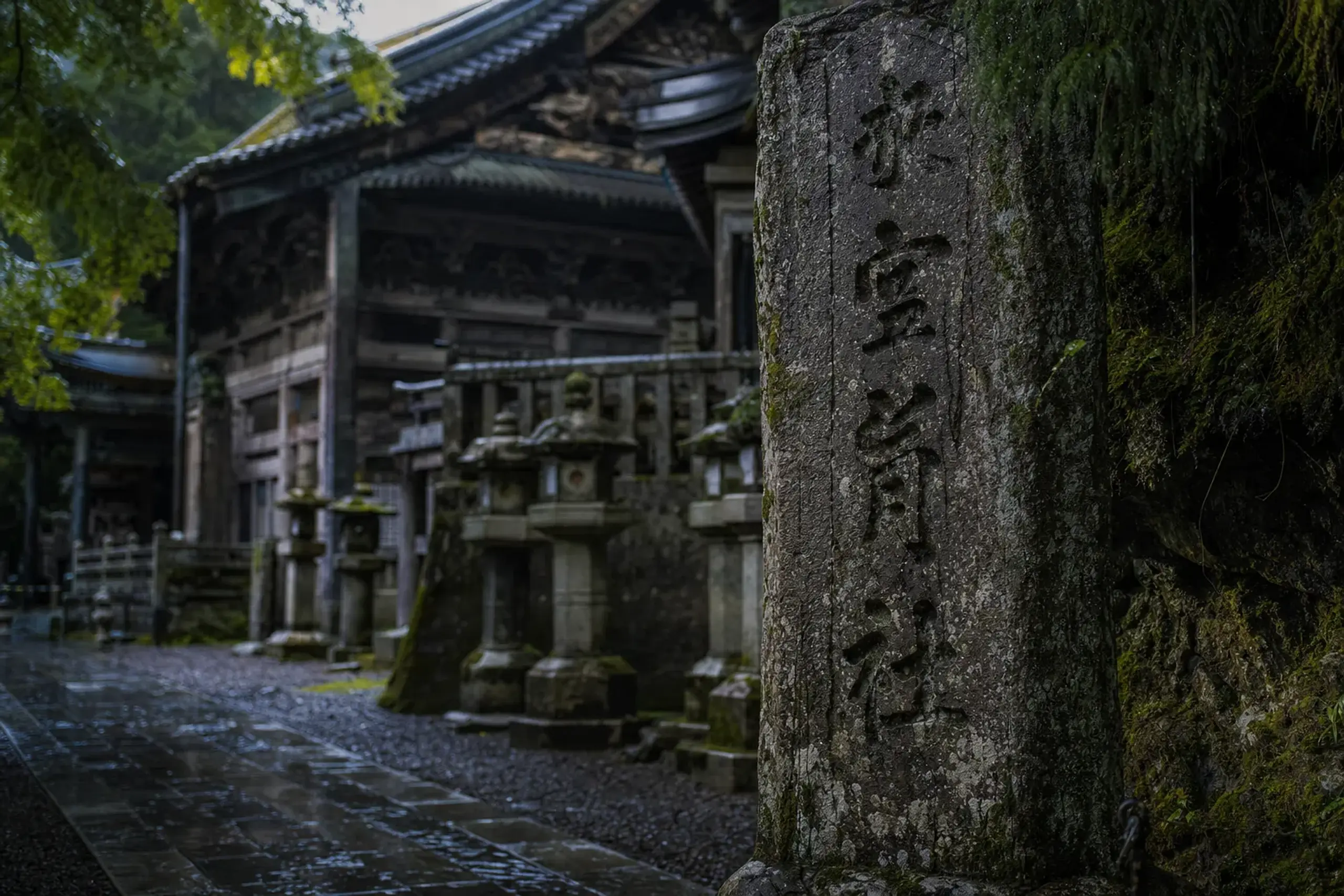
And the principal image matters beyond belief. The principal Fudō Myōō image, with its two attendant child-deity statues, was designated an Important Cultural Property in 1964.
When Is The Best Time To Visit Narita-san Shinshō-ji For Hatsumōde Without The Harshest Crowds?
Visit for hatsumōde in early January on a weekday morning, ideally after January 3, to reduce peak congestion while still experiencing the New Year atmosphere.
Hatsumōde at Narita-san is thrilling. It can also be punishing if you misjudge timing.
The heaviest concentration is typically the first three days of January, with arrivals from early morning into evening. If your schedule allows, aim for a weekday morning after January 3. The energy remains, but the density eases.
Dress for standing time. Bring patience. Small courtesies—giving space, letting families with children pass, not blocking prayer areas—keep the mood intact.
Our concierge team at Japan Royal Service can also advise on pacing if Narita-san is your first stop after landing, when jet lag makes crowds feel louder than they are.
How To Visit Narita-san From Narita Airport (NRT) With A Private Car
From Narita Airport (NRT), Narita-san Shinshō-ji is commonly visited by car with extra time built in for traffic and drop-off restrictions near busy periods, especially around New Year.
This is where Chiba quietly shines for HNW travelers. Narita is not only an arrival point. It’s an immediate cultural encounter if you plan it properly.
If you prefer a private car, the first mention matters: our private transportation service is designed for calm arrivals, with a chauffeur who understands timing, luggage flow, and the rhythm of temple towns.
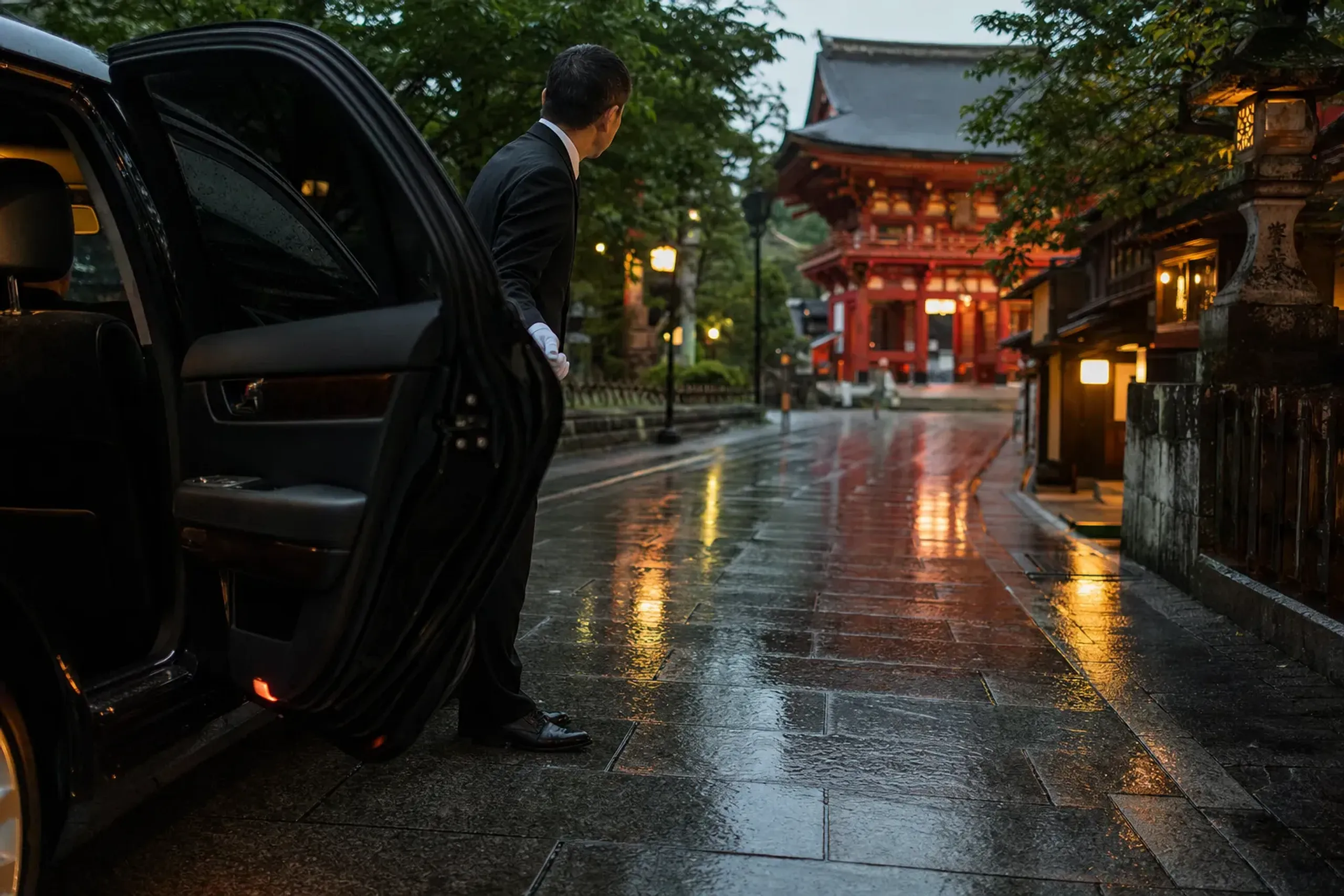
Build in buffer time. Big mistake to treat Narita like a quick errand between flights. Around hatsumōde, congestion and pedestrian flow can reshape the entire approach.
Want a cleaner arc? Consider a first-day plan that is intentionally light: temple visit, a quiet meal nearby, then check-in and rest. Precision beats ambition.
How To Plan A Half-Day Visit: Step-By-Step, With Etiquette That Doesn’t Feel Stiff
A good Narita-san half-day starts with an early arrival, a slow approach through the grounds, a short park walk, and a single focused prayer—followed by time to decompress rather than rushing back to the airport.
- Step 1: Arrive earlier than your instincts suggest. Crowds stack quickly around major dates. Give yourself a margin so you don’t enter already irritated.
- Step 2: Approach with minimal noise. Lower your voice. Silence travels in temple spaces.
- Step 3: Choose one intention. People often come to Fudō Myōō with a request for protection, resolve, or clarity. Pick one. Keep it private.
- Step 4: Walk Narita-san Park. Your nervous system needs it. The park is not an “extra.” It is part of the temple’s texture.
- Step 5: Leave time at the end. Don’t sprint to the next appointment. The point is what lingers.
Key fact: Narita-san’s origin story is tied to a Fudō Myōō statue said to have been carved and consecrated by Kōbō Daishi (Kūkai), brought from Kyoto for a 21-day ritual during the Masakado rebellion.
What Japan Royal Service Arranges For Narita-san Shinshō-ji Visits
Japan Royal Service provides private transfers and guiding for Narita-san Shinshō-ji, with planning support tailored to your arrival time, crowd tolerance, and cultural interests.

We keep this simple on purpose. For a place like Narita-san, execution is mostly timing, manners, and not wasting your attention.
Some guests want a gentle introduction to Buddhist etiquette. Others want the kabuki link explained crisply, without turning it into trivia. Many want the original-site distinction handled correctly, because it is easy to miss.
And for HNW travelers, discretion is not a “feature.” It’s the baseline. We plan visits so you can move without feeling observed, and so your day doesn’t leak into anyone else’s story.
Frequently Asked Questions
Is Narita-san Shinshō-ji The Same Location As The 940 Founding Site?
No—Narita-san’s 940 founding site is identified as Fudō-zuka (Fudō Mound) in Narima-chō, and the statue was relocated to the present temple area around 1566.
If you value historical accuracy, treat this as a two-part story: the origin point (Fudō-zuka) and the later complex where the temple developed and revived across the Edo period and beyond.
Who Was Taira No Masakado, And Why Is He Linked To Narita-san?
Taira no Masakado was a 10th-century warlord who declared himself “New Emperor” in 939, prompting court-ordered rituals; a 21-day fire ritual in Narita ended the day he was killed in battle.

The temple’s founding narrative is tied to that crisis and to the Fudō Myōō statue carried from Kyoto by the priest Kanchō under an imperial command.
What Does “Naritaya” Mean In Kabuki, And How Does It Connect To Narita-san?
“Naritaya” is the stage house name adopted by Ichikawa Danjūrō I after praying at Narita-san for an heir and later staging Fudō Myōō-themed plays in gratitude.
It remains in use today by descendants of the same kabuki family line, making Narita-san a rare place where a religious site directly shaped a living theatrical identity.
How Busy Is Narita-san During New Year’s (Hatsumōde)?
Narita-san draws roughly 3.05 million New Year’s visitors (2020 figure), making it one of Japan’s largest hatsumōde destinations.
If crowds drain you, a weekday morning after January 3 often feels more breathable while preserving the New Year atmosphere.
Why Choose Japan Royal Service
Many luxury Japan companies can list Narita-san Shinshō-ji. Fewer can tell its origin story accurately, keep the original-site distinction clear, and shape the visit around your pace and privacy needs.
Our team at Japan Royal Service works in the register this place asks for: quiet, respectful, and exact. We build a day that feels like a single sentence, not scattered bullet points.
That is the difference HNW travelers notice. Not spectacle. Control.
If you’d like a discreet Narita arrival plan that includes Narita-san Shinshō-ji at the right hour, reach our team privately via WhatsApp or LINE, or contact us here.