In this guide
- 01What Is Nara Park And What Is Inside It?
- 02Who Are The Nara Deer?
- 03Can I Feed The Deer In Nara Park?
- 04When Do The Cherry Blossoms Bloom In Nara Park?
- 05When Is The Wisteria Out At Kasuga Taisha?
- 06Are Fawns Born In Nara Park In Spring?
- 07How Do I Plan An Early, Crowd-Smart Spring Morning In Nara?
- 08What Japan Royal Service Arranges In Nara
- 09Frequently Asked Questions
- 10Why Choose Japan Royal Service
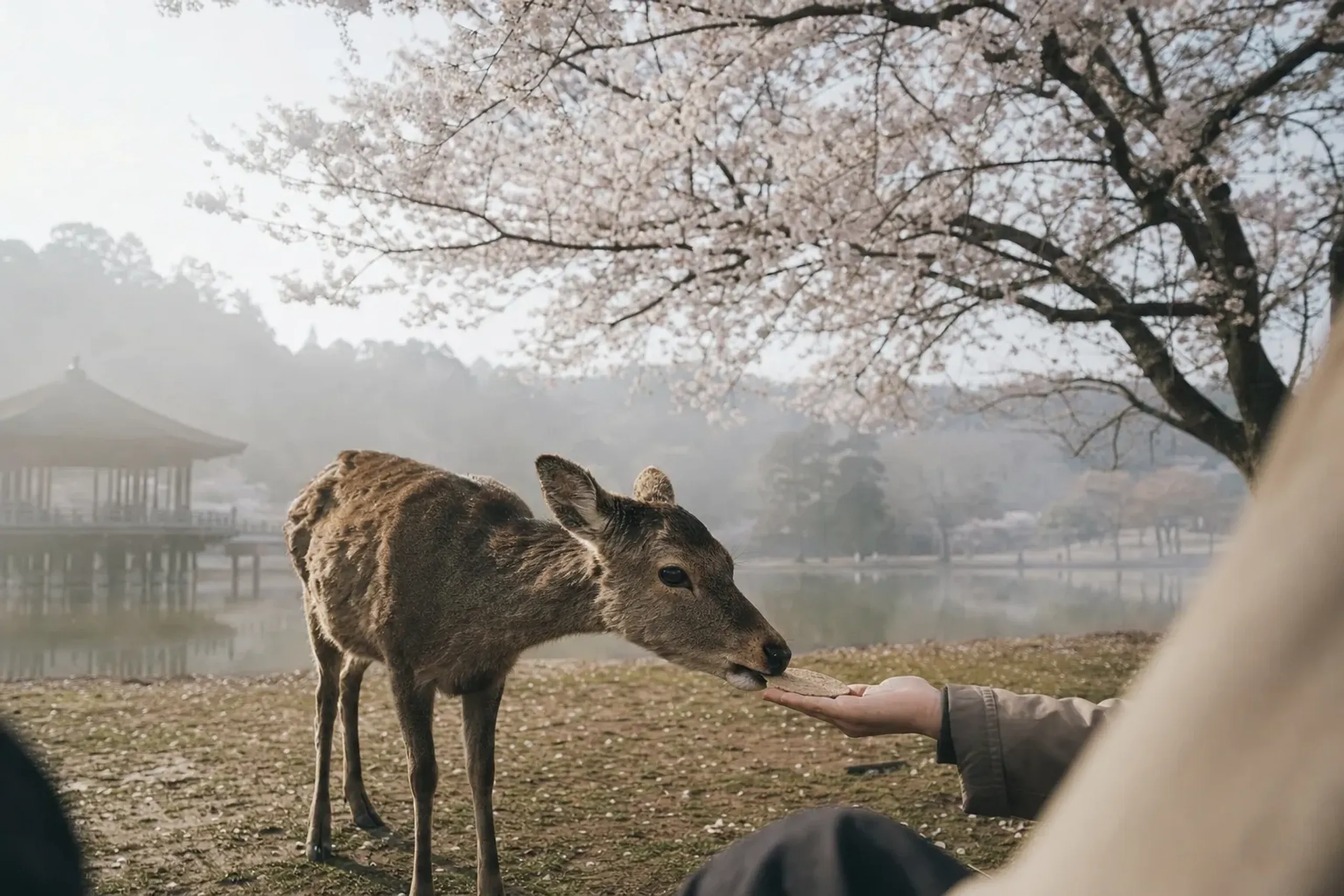
A deer stands in the grass, still, while cherry petals drift past its ears. Behind it, a line of trees goes pale pink against the dark of the hills. No one is feeding it. It simply belongs here, under the blossom, as it has for centuries.
This is Nara Park in spring. Not the deer-feeding scrum of the midday postcards, but something slower. Free-roaming animals beneath flowering trees, a Fujiwara shrine with wisteria coming into bloom, and fawns arriving as the season turns. The best way to see it is early, unhurried, and on the park's own terms.
What Is Nara Park And What Is Inside It?
Nara Park is a roughly 660-hectare public park at the eastern edge of Nara city, free to enter and open at all hours, with several of Japan's most storied temples and a great shrine inside its grounds.
The famous sites sit within the greenery rather than apart from it. Tōdai-ji, the vast temple holding the bronze Great Buddha, anchors the north. Kōfuku-ji, with its five-storey pagoda, rises near the western entrance. Kasuga Taisha, the Fujiwara clan shrine, lantern-lined and vermilion, stands to the east against the Kasugayama forest.
Those three sites, along with the Kasugayama Primeval Forest, are component parts of the "Historic Monuments of Ancient Nara," inscribed by UNESCO in 1998 alongside four other places in the city. It is the monuments that carry the listing, not the park as a whole. A fine distinction, and a true one.
Who Are The Nara Deer?
The Nara deer are wild sika deer, roughly 1,500 of them in recent surveys, that roam the park freely and are protected as a national natural monument.
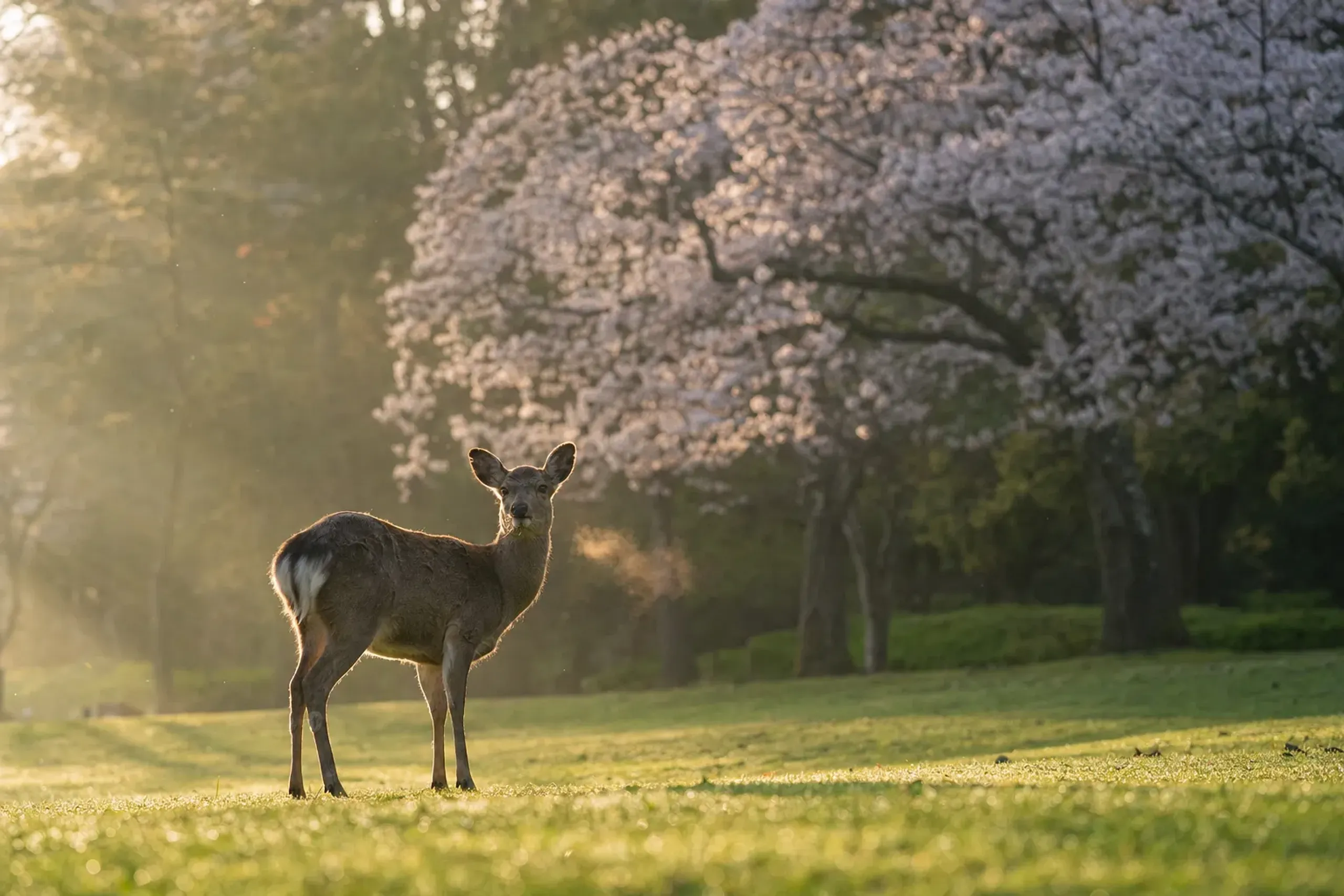
Free-roaming deer share the park with the spring bloom.
They are not pets. They sleep where they like, cross the roads when they please, and wander into the temple precincts and out again. The Nara Deer Protection Society counts them each July; a recent survey put the figure at its highest since counts began in 1953. We write "roughly 1,500" because the numbers shift, and because the true figure is whatever the deer decide it is this year.
Tradition holds that the deer are messengers of the deity of Kasuga Taisha, said to have arrived long ago on a white deer. That story is why they have been spared for so long. Believe it or not, the effect is the same: animals that have shared this ground with people for more than a thousand years, wary and bold by turns.
Can I Feed The Deer In Nara Park?
You may feed the deer only the special deer crackers, shika-senbei, sold within the park; feeding them anything else is prohibited.
The crackers are made of rice bran and wheat flour, nothing more. Beyond those, the deer eat grass and leaves and whatever the park provides. The rest of the etiquette is simple and worth keeping in mind. These are large wild animals.
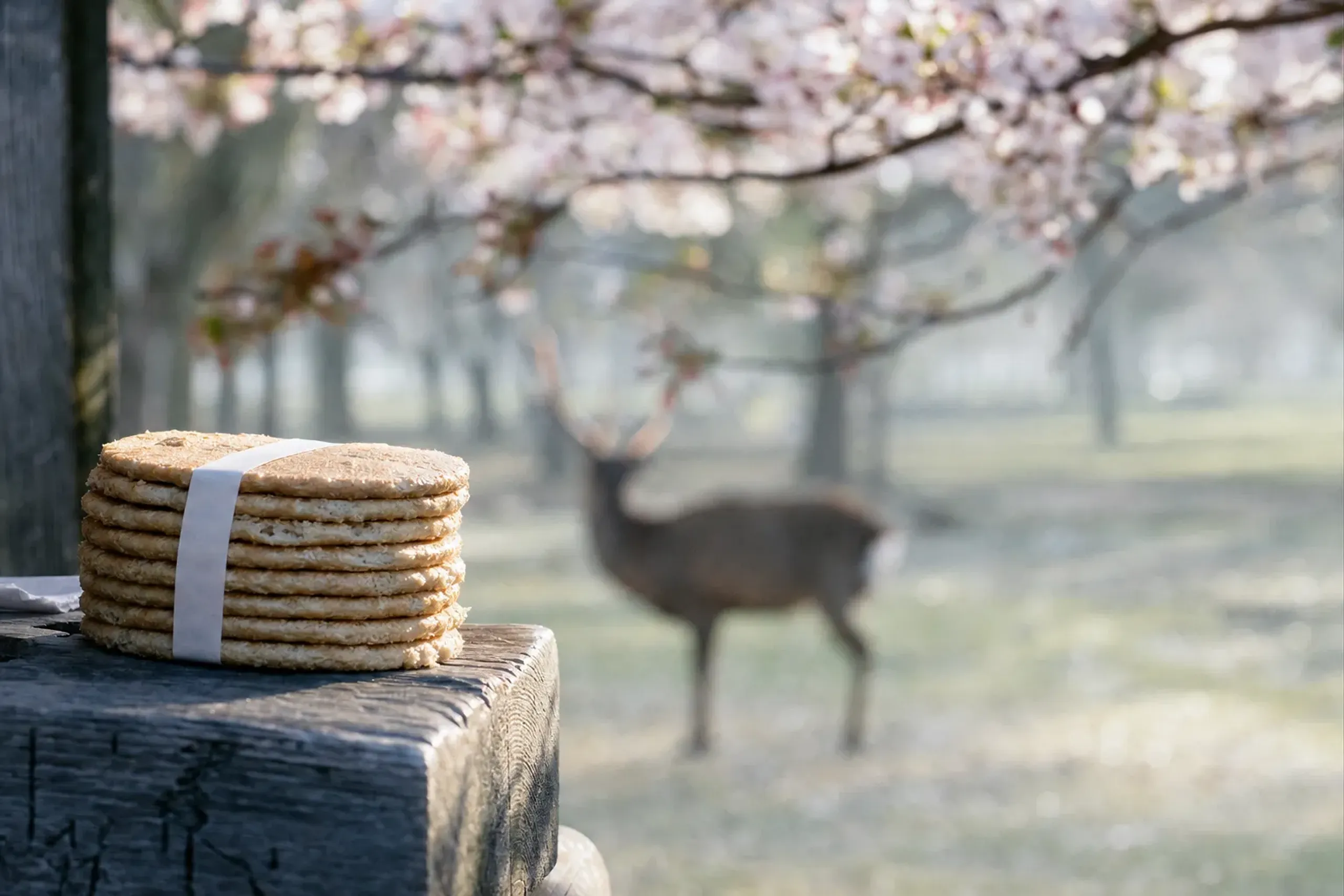
They can and do injure people who crowd them, and the prefecture updates its guidance on how to treat them with care each year.
Keep a little distance. Don't tease the deer by holding crackers high or drawing out the moment; feed quickly or not at all. Watch children closely. In spring especially, mothers with young are protective, and the park's signage warns about the child-rearing season. Treat the animals as wild, give them room, and the encounter tends to look after itself. Our guides read the deer's mood and manage spacing so that the moment stays calm, particularly for families.
When Do The Cherry Blossoms Bloom In Nara Park?
Cherry blossom in Nara typically begins around late March and continues in sequence into early May, so that no single week holds it all.
The first signal comes early. Nara City's official guidance notes that the season opens with the weeping cherry at Himuro Shrine, near the park's western side, before the wider bloom follows. Across the park stand roughly 1,600 to 1,700 cherry trees, counts differ, in several kinds: Somei-Yoshino, wild yamazakura, early higan cherries, and the celebrated Nara double-flowered types.
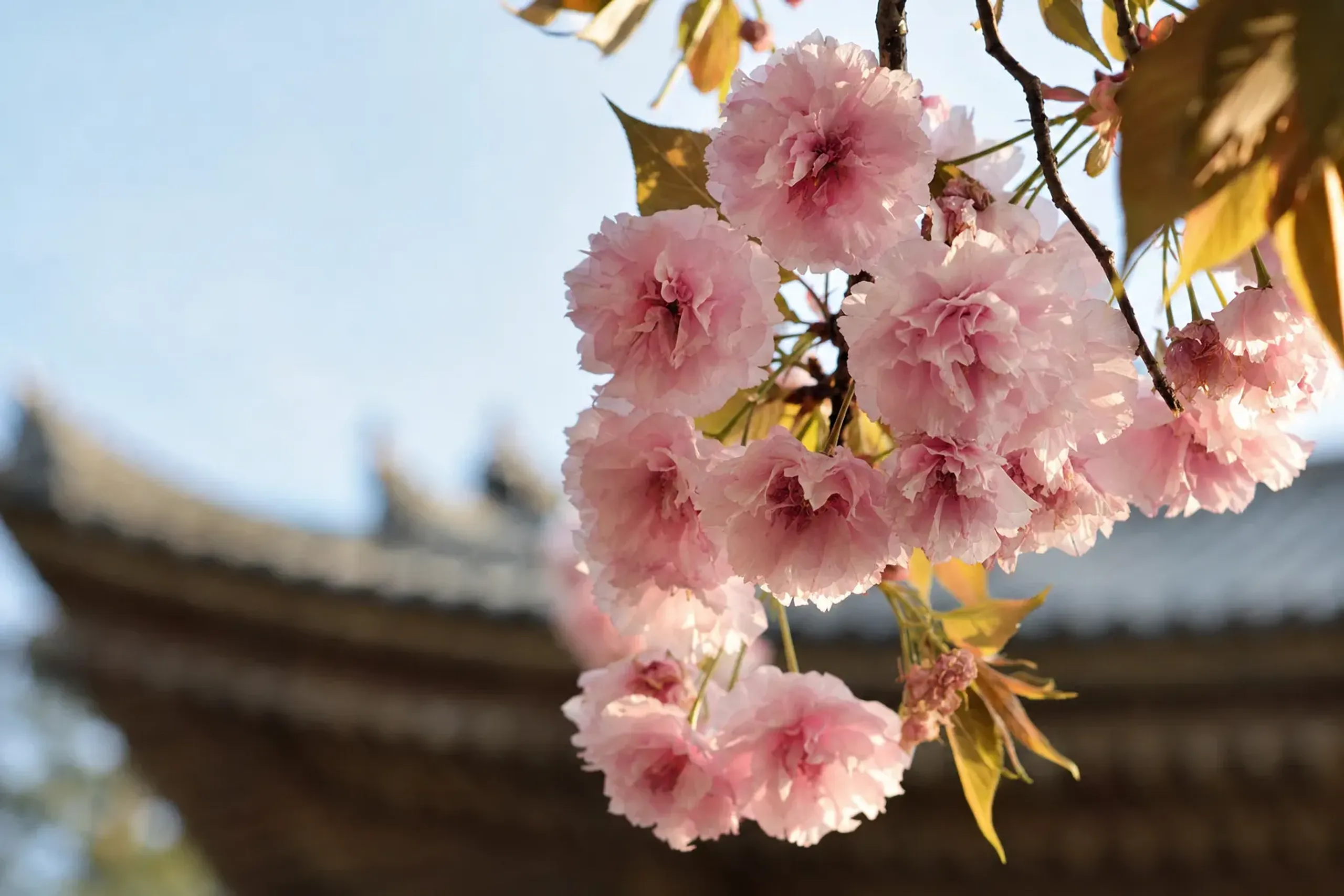
Those double-flowered cherries are Nara's own. The Nara-no-yaezakura and Nara-no-kokonoe-zakura bloom late and full, their petals layered like crepe. The Chisoku-in specimen, found in 1922 at a Tōdai-ji sub-temple, was designated a national natural monument in 1923, and the yaezakura is the prefectural flower. Because the varieties open in turn, a visit in early April and a visit in late April show two different parks.
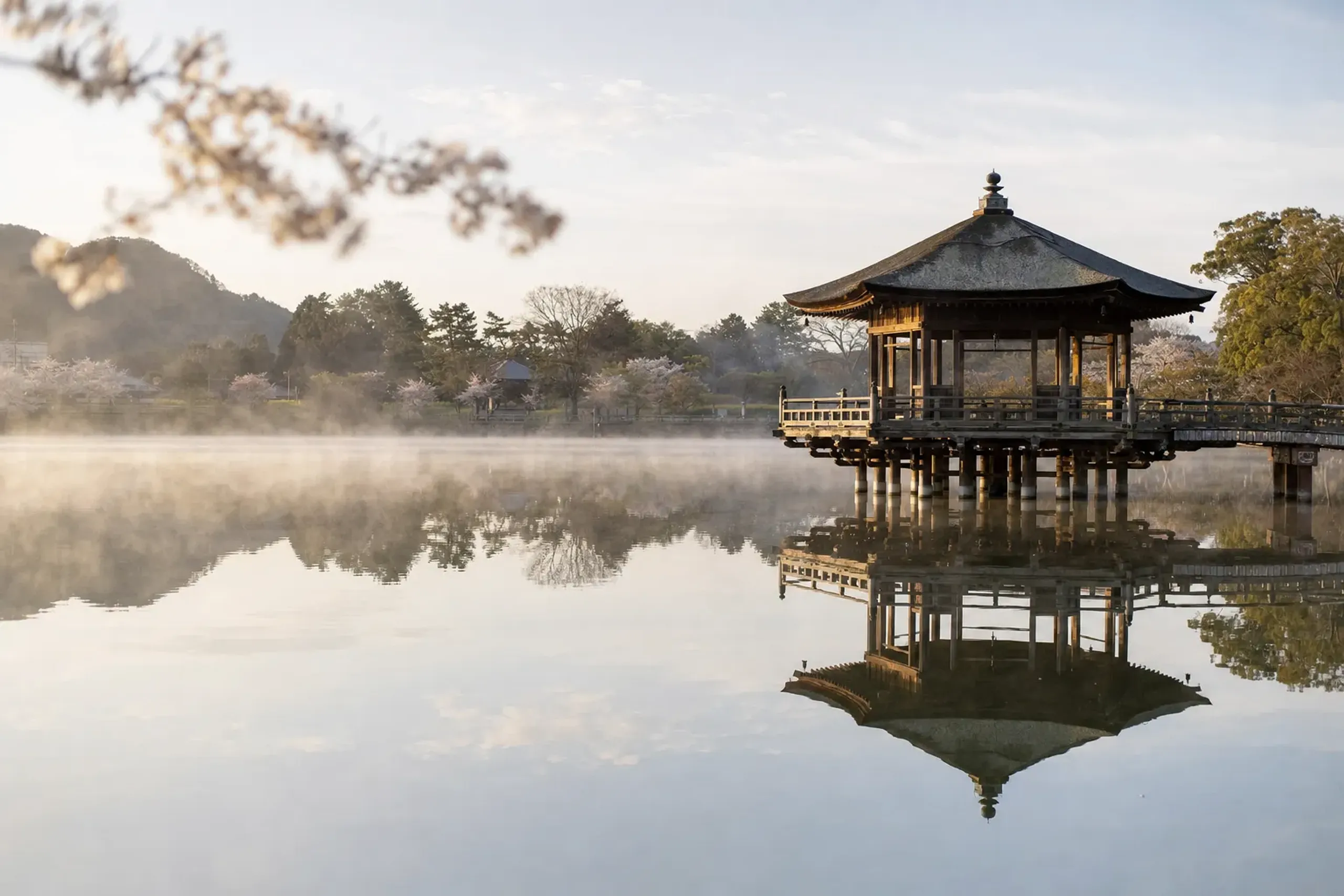
Kasugano Enchi Garden and the Ukimidō pavilion, which seems to float on Sagiike Pond, are among the loveliest places to stand among them. Our cherished Nara companion piece on Mount Yoshino's four groves covers the mountainside bloom nearby, should you want both in one trip.
When Is The Wisteria Out At Kasuga Taisha?
Wisteria at the Manyō Botanical Garden of Kasuga Taisha usually flowers from late April into mid-May, following the late cherries.
The garden, opened in 1932, keeps a wisteria planting of around 20 varieties and roughly 200 trees. It is a quiet place to end a spring morning, the long racemes hanging over the water like rain caught mid-fall. The link to the shrine is old. Kasuga Taisha enshrines the deity of the Fujiwara clan, and the hanging-wisteria crest has traditionally been associated with the Fujiwara. The flower and the family have grown together in the imagination for a very long time.
Entry to the garden is paid and its hours shift with the season, so our concierge team confirms the current wisteria stage and opening times on the client's behalf before the day is set. Chasing peak wisteria without that check is a gamble; the bloom does not keep to a calendar.
Are Fawns Born In Nara Park In Spring?
Yes. Births begin in late spring, with the first fawns appearing around the end of April and the busiest arrivals in June.
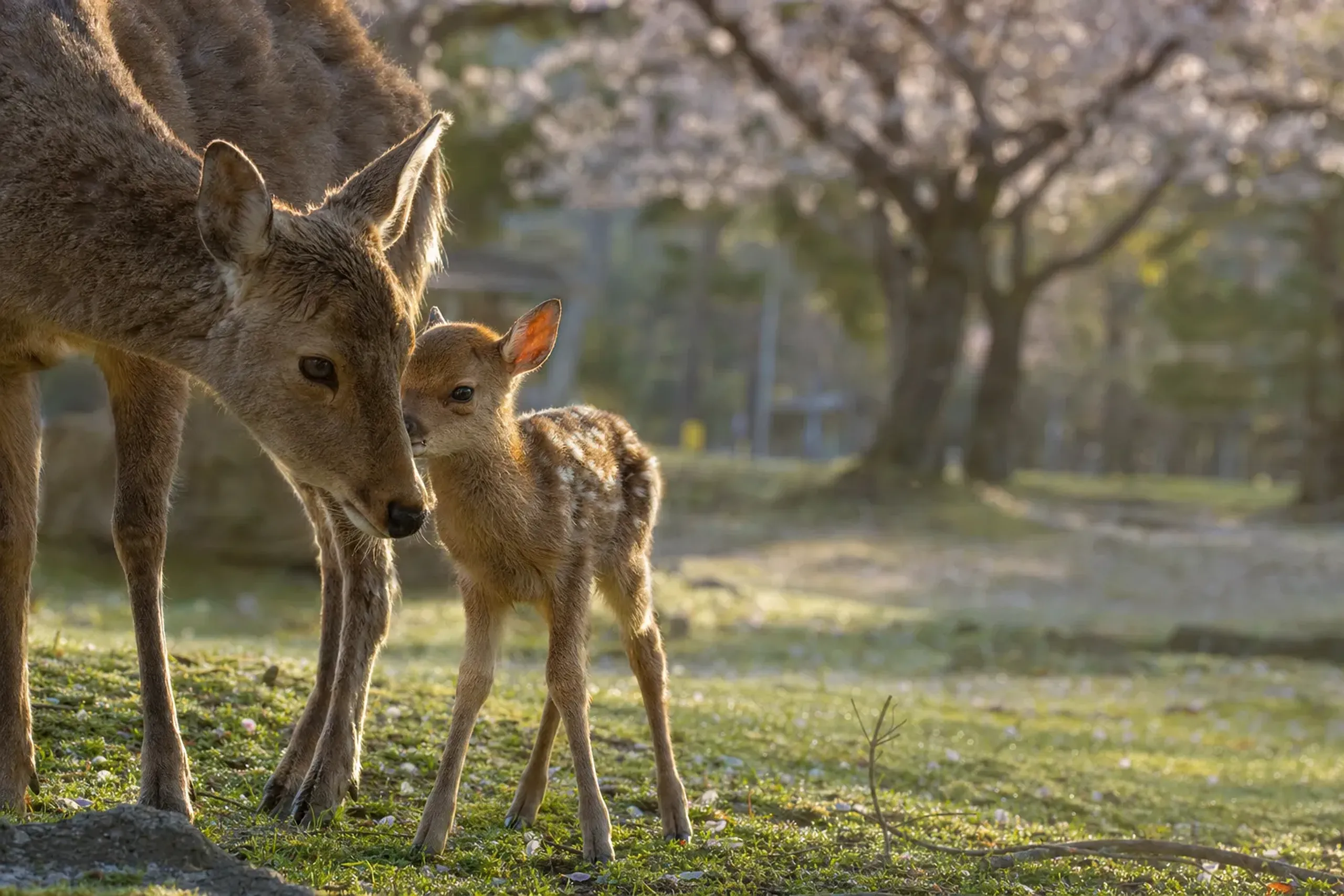
An older Japanese report records the season's first fawn born on 30 April, with June the peak month, and the Deer Park, Rokuen, has in recent years held a fawn-viewing event in June. If you visit in late spring, you may see the youngest deer close to their mothers at the park's edges, spindle-legged and uncertain.
This is the one time to be most careful. Mother deer guard their fawns fiercely and will warn off anything they read as a threat. Watch quietly from a distance. Do not approach a fawn, however still it lies; the mother is almost always nearby. Give them space, and you are given, in return, the season's gentlest sight.
How Do I Plan An Early, Crowd-Smart Spring Morning In Nara?
Start at first light and work east through the park, from Sagiike Pond and the Ukimidō toward Tōdai-ji and then Kasuga Taisha, before the day-trip crowds arrive mid-morning.
Spring is Nara's busiest season, and Japan's tourism bodies are openly focused on easing the crush at places like this. The quiet hours are the real luxury. An early walk gives you the deer at their calmest, the light low across the ponds, and the temple approaches near-empty. By late morning, the same paths fill.
A sensible order, weather and bloom permitting:
- First light at Sagiike Pond for the Ukimidō reflection and the early deer.
- The lawns of Kasugano Enchi Garden while the cherries catch the morning.
- Tōdai-ji early, for the Great Buddha Hall before the queues.
- Kasuga Taisha and, in late spring, the Manyō Botanical Garden's wisteria to close.
Getting there is straightforward.
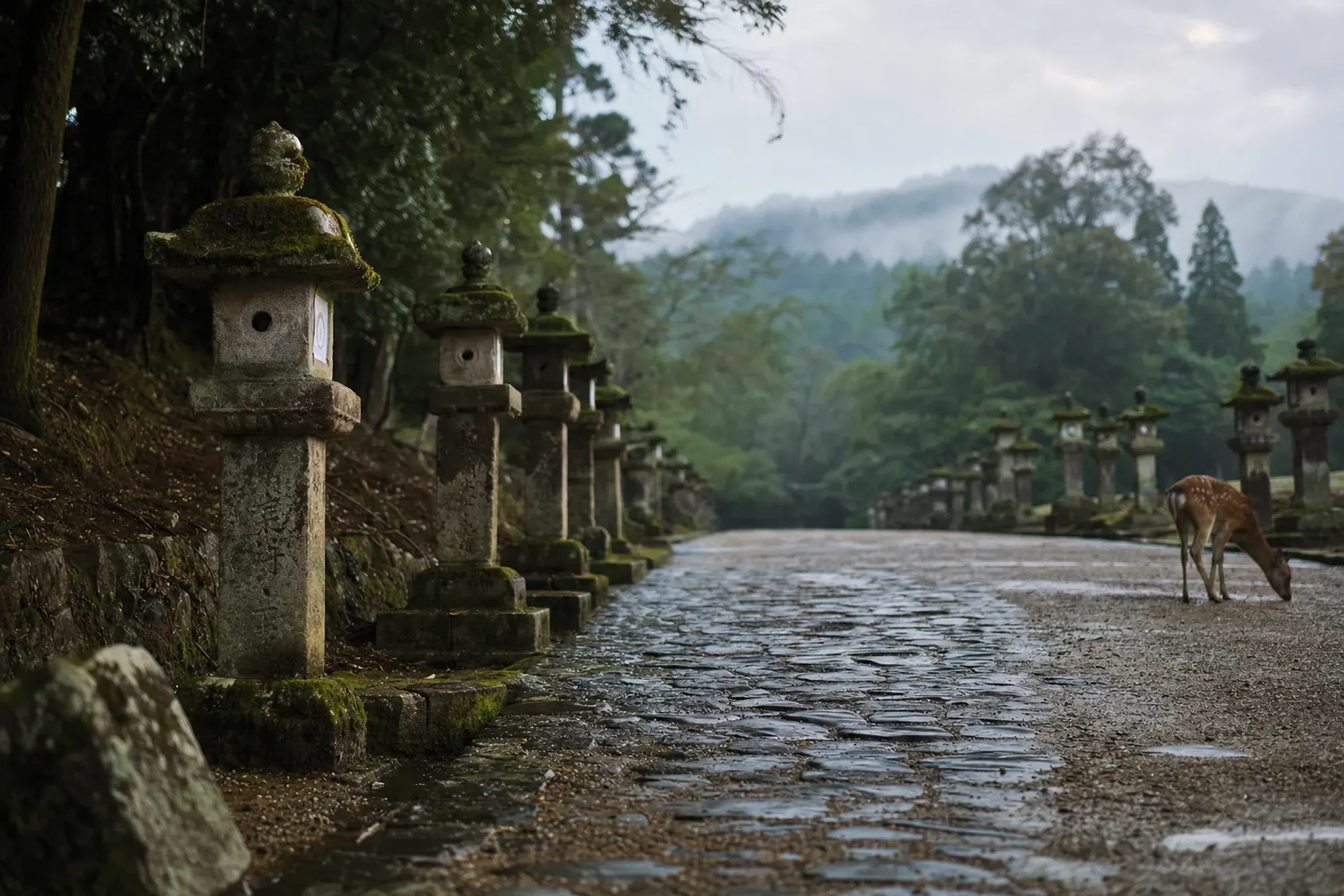
The park lies about 5 minutes on foot from Kintetsu Nara Station and about 20 minutes from JR Nara Station, per JNTO. A city bus runs from both stations toward Kasuga Taisha in about 15 minutes; timetables change, so check the current ones. For guests who would rather not watch the clock, a private chauffeured transfer from Kyoto or Osaka can put you at the park gate at opening, which is the whole point of an early start.
If spring ritual draws you as much as the blossom, the Shuni-e ceremony at Tōdai-ji's Nigatsu-dō, held each March since 752, runs earlier in the season; our guide to the Omizutori rite covers it in full. Nara National Museum often extends its hours around that period, pairing the fire ritual with its spring exhibitions.
What Japan Royal Service Arranges In Nara
Our role in Nara is quiet coordination, not spectacle. Nara Park is public and its deer are wild; we promise neither private access nor close contact. What we shape is the pace and the timing.
Within that honest scope, our team at Japan Royal Service arranges:
- A cultural interpreter guide through the park, Tōdai-ji and Kasuga Taisha, who reads the deer and the crowds and keeps the morning calm.
- A partner-fleet private transfer from Kyoto or Osaka, timed for an early arrival at the gate.
- Accommodation coordination for a base in Nara city, Kyoto or Osaka to suit your wider route.
- Restaurant bookings, rail connections where they make sense, and a tailor-made itinerary built around the bloom rather than the brochure.
Before you travel, our concierge verifies the moving parts on your behalf: the current bloom stage, the wisteria garden's hours and admission, any temple or shrine hall closures, fawn-viewing dates, and the bus routes.
Nothing in spring Nara stays fixed for long, and that is precisely what we watch for you.
Frequently Asked Questions
When do the cherry blossoms bloom in Nara Park?
Cherry blossom in Nara usually starts around late March and continues into early May. Different varieties open in sequence, so early April and late April show two different parks. The Nara double-flowered cherries bloom latest.
When is the wisteria out at Kasuga Taisha?
Wisteria at the Manyō Botanical Garden of Kasuga Taisha typically flowers from late April into mid-May, after the late cherries. The garden holds around 20 varieties and roughly 200 trees. Hours and admission shift with the season.
Can I feed the deer in Nara Park?
You may feed the deer only the special shika-senbei crackers sold in the park; all other feeding is prohibited. Keep your distance, feed quickly, and watch children closely. In spring, give protective mothers and their fawns plenty of room.
Are fawns born in Nara Park in spring?
Yes. The first fawns usually appear around late April, with June the busiest month for births. Mother deer are highly protective, so watch quietly from a distance and never approach a fawn, as its mother is almost always close by.
How far is Nara Park from Nara Station?
Nara Park is about 5 minutes on foot from Kintetsu Nara Station and about 20 minutes from JR Nara Station, according to JNTO. A city bus from both stations toward Kasuga Taisha takes about 15 minutes; check current timetables before you go.
Why Choose Japan Royal Service
Spring Nara rewards the traveller who arrives early and moves with care. That is harder than it sounds when the trains are full and the bloom refuses to keep a schedule. Our work is to absorb that friction.
We are a Japan-based concierge with an in-house approach to planning and our own partner fleet, which means the morning runs to your rhythm, not a group's. We guide with discretion and verify the shifting details, from bloom stage to garden hours, so your day holds together. The deer stay wild, the park stays public, and the experience of it becomes unhurried and yours.
To plan a spring morning in Nara, reach our team privately via WhatsApp or LINE, or contact us here.