In this guide
- 01The Three Attempts: Why Matsuyama Castle’s Keep Is So Young
- 02Is Matsuyama Castle (Ehime) The Same As Bitchu-Matsuyama Castle?
- 03The One Of The Twelve Built By A Tokugawa Relative
- 04What Makes Matsuyama Castle Architecturally Special?
- 05When Should You Visit Matsuyama Castle For The Quietest Views?
- 06How Do You Get Up To Matsuyama Castle: Ropeway, Chairlift, Or Walking?
- 07Light Hospitality In Matsuyama Castle 2026: After-Dark Planning (Jul 24–Aug 16)
- 08Ninomaru Historic Garden: The Castle’s Quiet Counterweight
- 09A Practical Visit Plan For Discerning Travelers (Without Rushing)
- 10Private Transportation And Transfers: The Difference Is The Silence Between Stops
- 11Plan Your Quiet Ascent
- 12Frequently Asked Questions
Late afternoon in Matsuyama, the light turns practical things—stone, tile, pine—into something almost weightless. From Mount Katsuyama, the city feels close enough to touch, yet quiet enough to forget. You can hear the ropeway cables hum. Then you see it: Matsuyama Castle’s keep, the one that finally stayed standing.
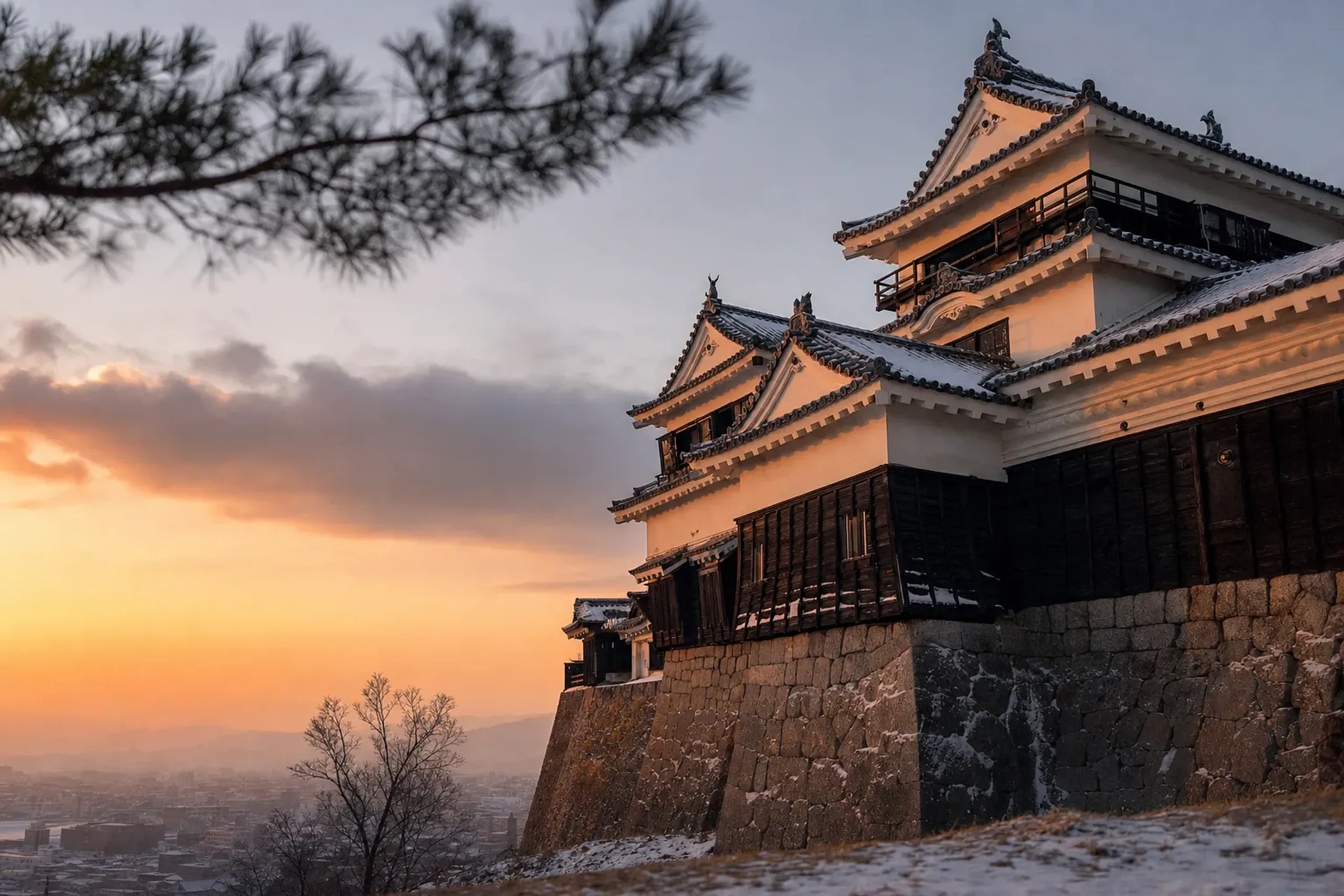
That “finally” matters. This is the youngest of Japan’s twelve surviving original castle keeps, completed in 1854, but it earned that status the hard way—after two earlier keeps burned down. Our team at Japan Royal Service favors this site for discerning travelers because it rewards timing, restraint, and a steady pace—not rushing or showy checklists. There is a quiet wabi to a tower that has been rebuilt twice and still holds its ground; it asks you to slow down and read it, not merely photograph it.
The Three Attempts: Why Matsuyama Castle’s Keep Is So Young
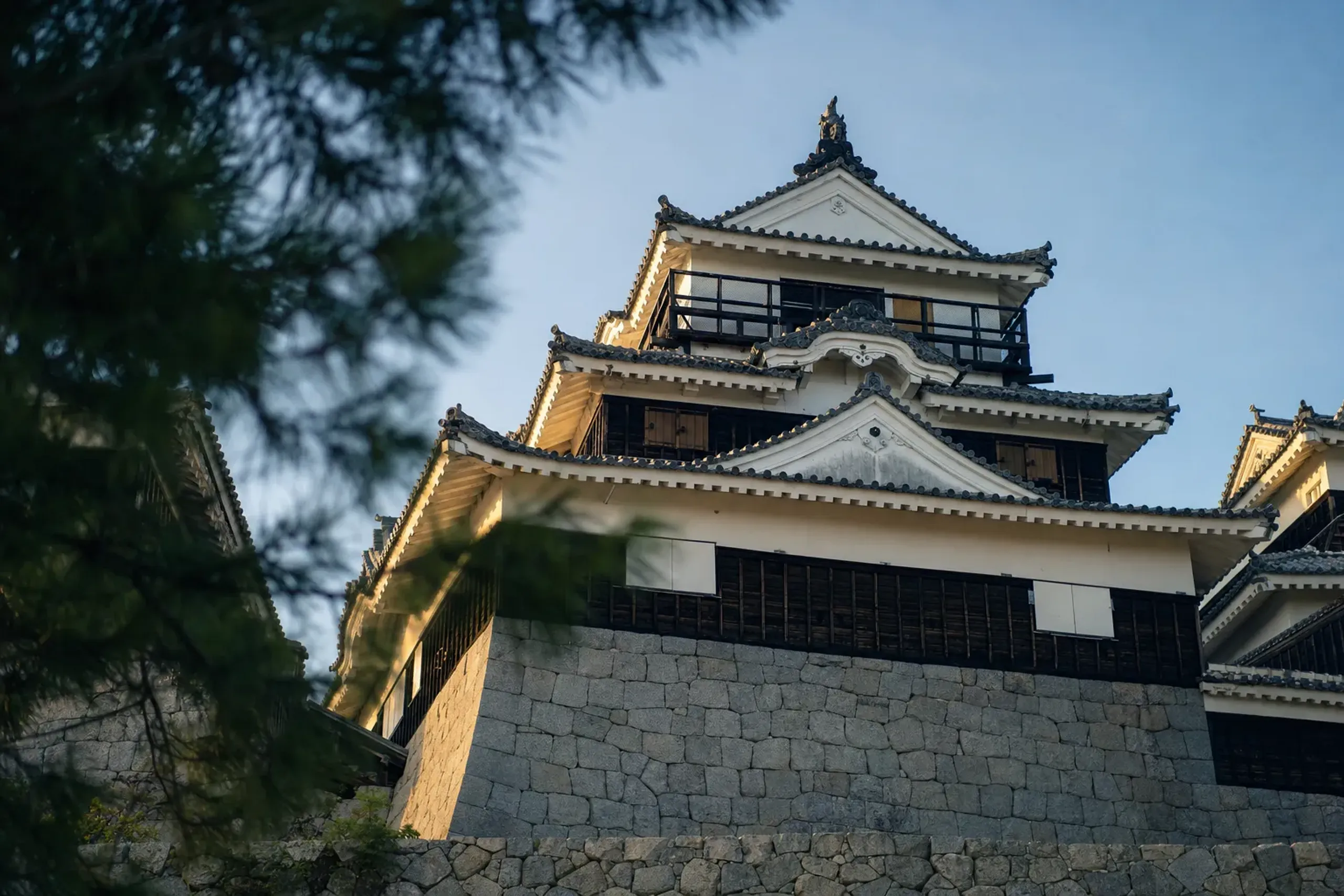
Matsuyama Castle’s current keep was completed in 1854 because two earlier keeps on the same site burned down after the castle’s first construction in the early Edo period.
Construction began in 1602 under Katō Yoshiaki. The first main tower (tenshu) took years and was completed as a five-tiered keep in 1627. A sharp detail often missed: Katō was transferred to another domain just before completion, so he never saw “his” castle finished as its lord. Strange, and a little sad—a man who spent a quarter-century on a fortress he would never command.
That first five-tiered keep later burned down. It was rebuilt as a three-tiered keep. That one, too, was lost to fire. Only on the third attempt did the keep we visit today rise—completed in 1854, making it the youngest of the twelve “original castles” whose main towers survived the post-1868 era.
When you stand on the upper floors and look out over the Seto Inland Sea side of Shikoku, the view takes on a different flavor once you know the backstory.
It is not simply “old.” It is persistent.
Is Matsuyama Castle (Ehime) The Same As Bitchu-Matsuyama Castle?
No—Matsuyama Castle is in Matsuyama City, Ehime Prefecture, while Bitchu-Matsuyama Castle is in Takahashi, Okayama Prefecture.
Mix-ups happen constantly in English search results. They are different castles, in different regions, with different access and different trip rhythms. If your driver says “Matsuyama Castle,” confirm the prefecture before you depart. A two-word check settles it: “Ehime” or “Okayama.”
For this guide, we stay tightly on one place only: Matsuyama Castle on Mount Katsuyama in central Matsuyama (address: Marunouchi 1, Matsuyama City, Ehime). No detours. No confusion.
The One Of The Twelve Built By A Tokugawa Relative
Matsuyama Castle is the only one of Japan’s twelve surviving original castle keeps built by a shinpan daimyō—specifically the Matsudaira family, a branch directly related to the Tokugawa house.
This is a quiet distinction, not a loud one. Still, it changes how you read the site. Among the twelve, Matsuyama alone carries that “shogunal-relative” lineage in its builder’s story, while the others were raised by domain lords without that direct Tokugawa-family relationship.
For seasoned travelers who have “seen castles” already, this is exactly the kind of detail that makes a return worthwhile. Not bigger. Not flashier. Just more precise—the sort of nuance that a knowledgeable guide can unfold at the right moment, standing in the right place.
What Makes Matsuyama Castle Architecturally Special?
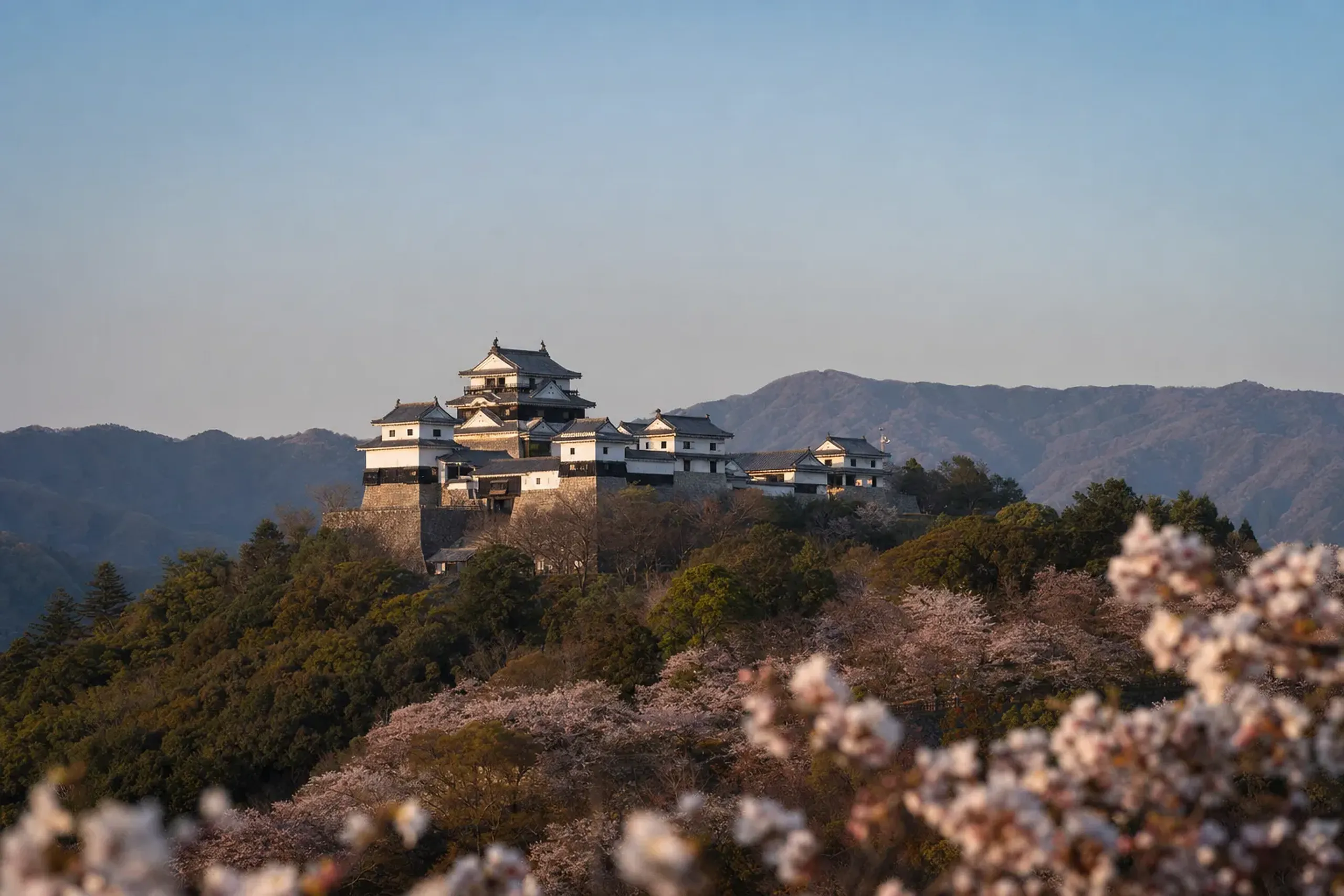
Matsuyama Castle is Japan’s tallest hirayama-jō at 132 meters elevation and is built in rengaku-shiki linked-tower style, with 21 Important Cultural Property structures remaining on site.
It is a hilltop castle rising from an otherwise flat city—an arrangement that creates drama without needing mountains. You feel that 132-meter lift in your legs if you walk. You feel it, too, in the wind on the ramparts.
The keep complex is rengaku-shiki, meaning a linked-tower layout rather than a single isolated tower. That structural category is shared with Himeji Castle, and it is why Matsuyama and Himeji are counted among Japan’s Three Great Rengaku-shiki Hirayama Castles.
On site, 21 structures are designated Important Cultural Properties, including the keep itself. Historically, about 40 buildings survived into the early Shōwa era; 19 were lost to fires by 1949, leaving the 21 that remain today. Second only to Nijō Castle in Kyoto for preserved original Edo-period castle structures at a single site, it offers far more “real fabric” than many castles that are largely reconstructions. This is the appeal for the traveler who values authenticity over spectacle: much of what you touch here is the genuine article, not a modern facsimile.
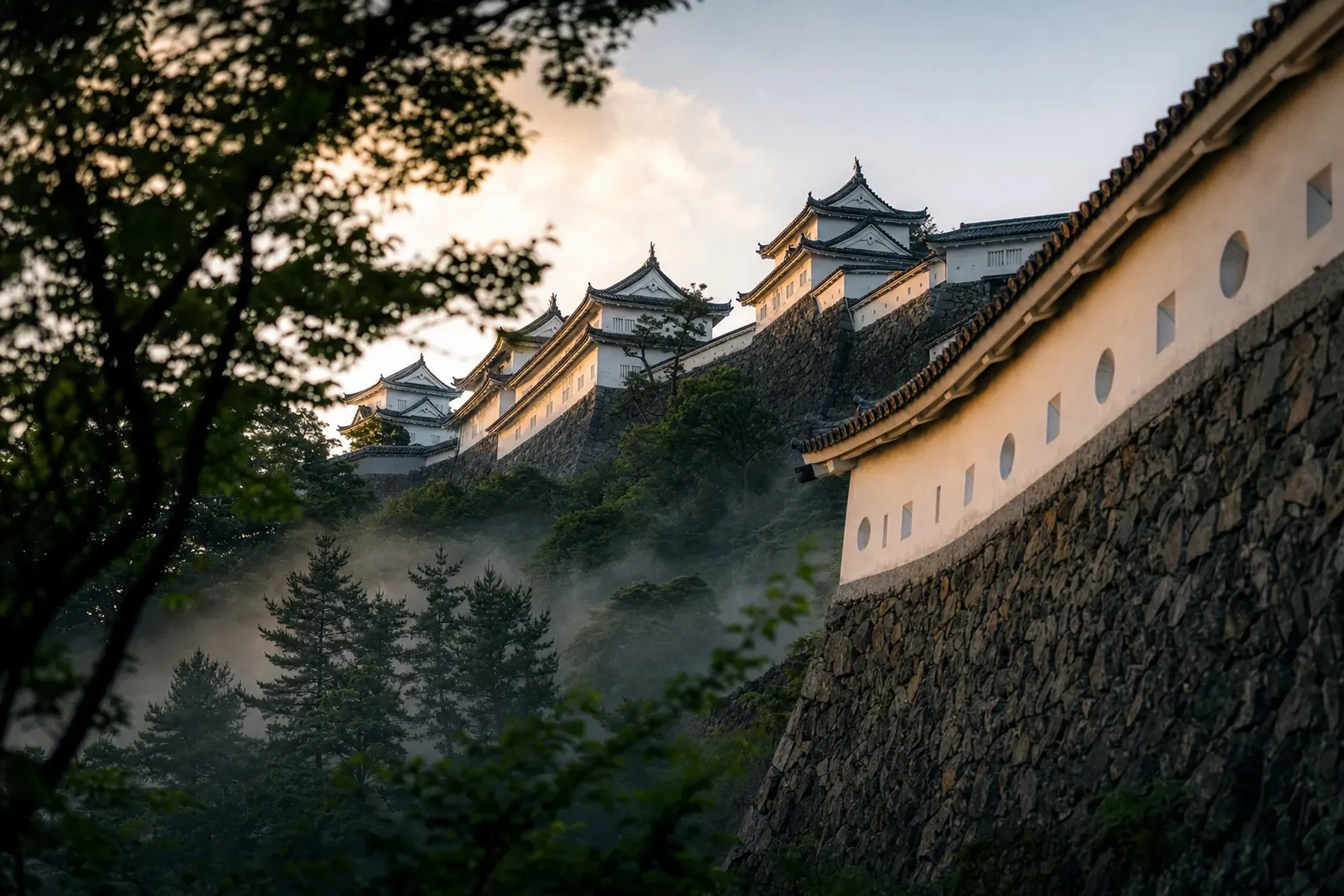
One more practical note for planners: the view from the keep received one star in the Michelin Green Guide Japon. You don’t need a guidebook to validate it, but it hints at what to prioritize—go on a clear day, and give yourself time at the top.
When Should You Visit Matsuyama Castle For The Quietest Views?
Arrive close to opening for the calmest keep interior, or aim for late-afternoon light while leaving enough margin for the last ropeway and the keep’s last admission cutoff.
Mornings are crisp. The castle grounds feel like they belong to the city’s early walkers, not to tour groups. Inside the keep, you can linger over the construction details and exhibits—weaponry, haiku poetry, and traditional building methods are among the themes highlighted by Japan’s official tourism authority.
Late afternoon is the photographer’s hour. Shadows lengthen across the stone walls. The city’s grid resolves into a map. But late afternoon is also where people get caught by timing. It happens more than you’d think.
Key fact: The last ropeway or chairlift ride departs 50 minutes before closing, while last entry to the keep is 30 minutes before closing. “Still open” can still mean “too late.”
In our experience, discerning travelers enjoy Matsuyama Castle most when the day has room to breathe—which is precisely the kind of margin a well-built itinerary is designed to protect.
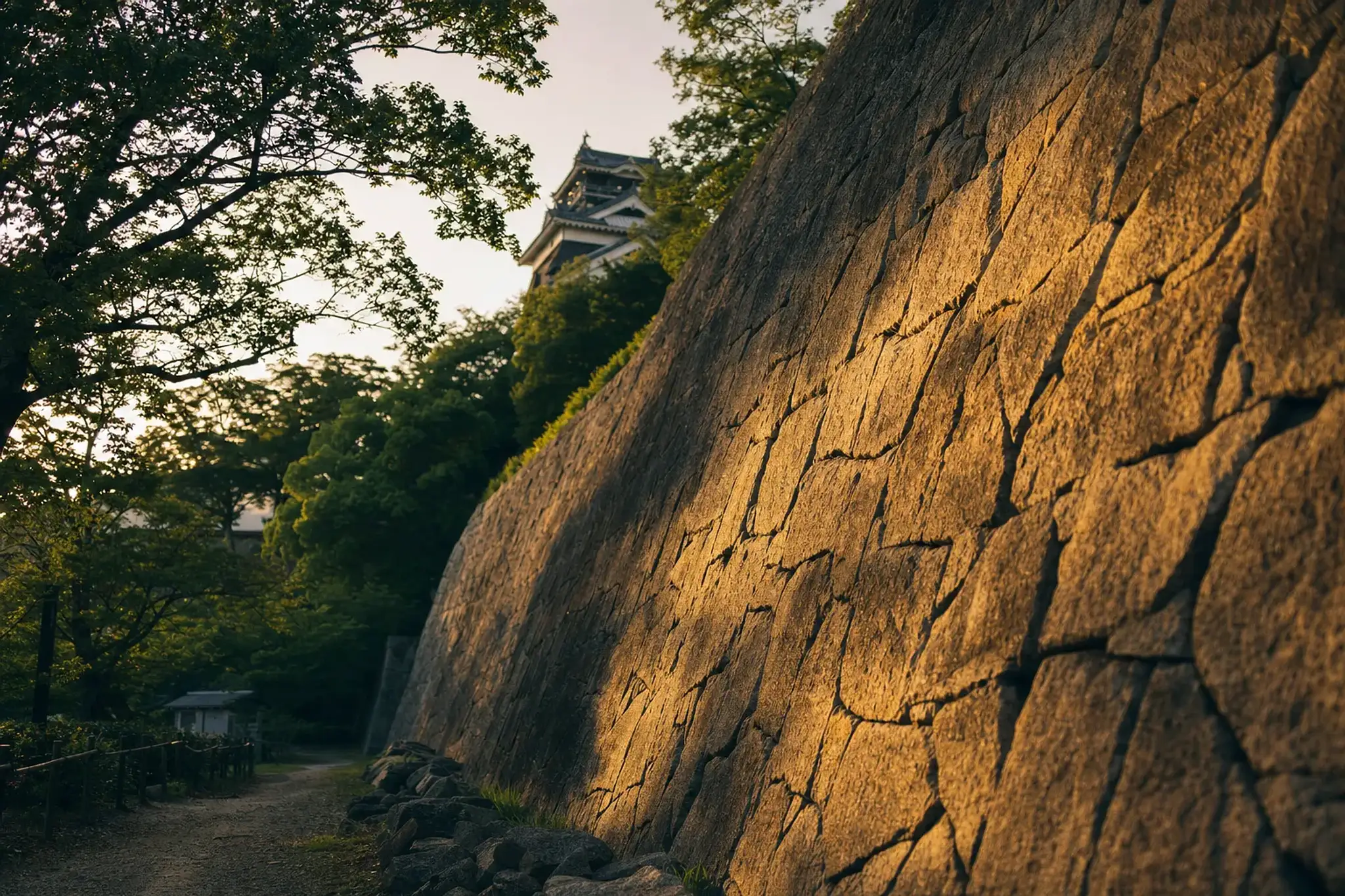
No sprinting up steps. No bargaining with a closing gate. Just time.
How Do You Get Up To Matsuyama Castle: Ropeway, Chairlift, Or Walking?
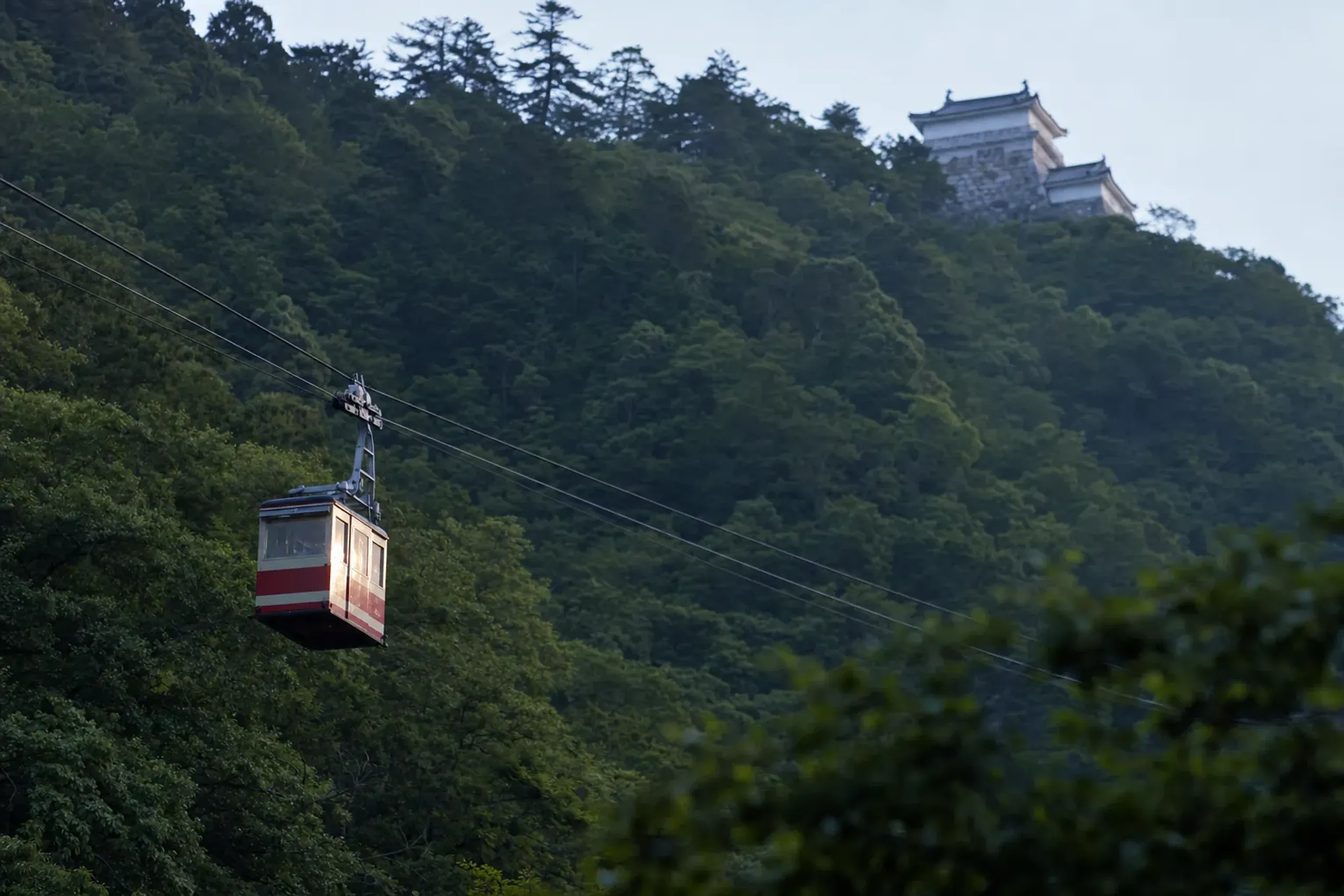
You can reach Matsuyama Castle via ropeway or chairlift that covers roughly 80% of the ascent, or by one of four fully on-foot mountain paths from the base of Mount Katsuyama.
There are five approach routes around the base area. Only one is served by the ropeway and chairlift; the other four are walking routes. The walk from the base area runs about 15 minutes, which is manageable for many travelers, especially in cooler months.
Summer changes the calculation. Heat, humidity, and clothing choices matter. A long dress and polished shoes are not friends with steep stone steps. A small misjudgment here can turn a graceful afternoon into an ordeal.
Hours are seasonal. Ropeway and lift operations extend later in August (to 18:00) and shorten in December and January (to 17:00) compared with standard hours (8:30–17:30). And Matsuyama Castle is closed for cleaning on the third Wednesday in December. Our concierge team verifies current hours and the exact last-ride and last-entry timing ahead of a client’s visit, because a small timetable change can quietly reshape the whole afternoon.
Light Hospitality In Matsuyama Castle 2026: After-Dark Planning (Jul 24–Aug 16)
Light Hospitality in Matsuyama Castle 2026 runs July 24 to August 16, 2026 (18:30–21:00), adding illuminated stroll paths and stone-wall light-ups on select nights with special ropeway and keep opening.
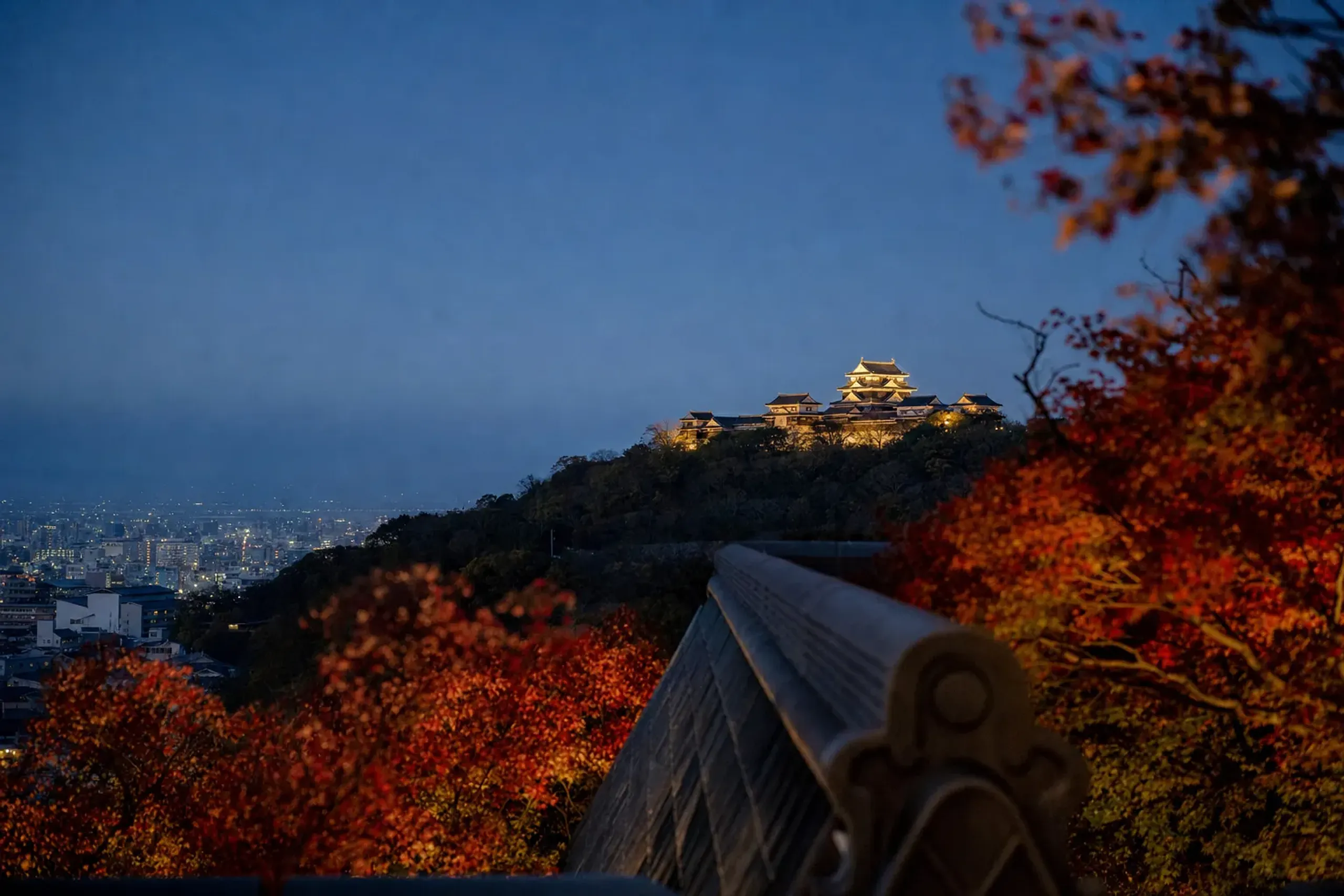
This is one of the rare “excuses to return” that feels meaningful rather than promotional. The castle after dark reads differently: stone walls become a stage for shadow, and the linked-tower silhouette sharpens against the night sky. You don’t need loud entertainment. You need patience—and the willingness to let restraint do the work, which is the essence of sabi.
Matsuyama City’s program includes 37 light objects and a lit stroll path, plus stone-wall lighting. There are also scheduled events—Matsuyama Castle Night Tour dates are listed as August 2, 9, and 11, 2026 in the city announcement. If you are planning a summer Shikoku route, these fixed nights are the kind of anchor we build around; knowing exactly what to experience where, and in which week, is the quiet art of seasonal timing.
Keep your expectations clean. This remains a public heritage site, not a private venue. Yet the mood can feel almost private when you approach it with the right timing, an unhurried pace, and a quiet dinner reservation afterward rather than before.
Ninomaru Historic Garden: The Castle’s Quiet Counterweight
The Ninomaru Historic Garden preserves the former Ninomaru (second circle of defense) where the palace once stood, now outlined through ponds, flowing water gardens, and plantings that trace the old room layout.
Walk down from the castle and the feeling changes. The keep is vigilant; the garden is forgiving. The Ninomaru area once held palace buildings that no longer survive, and today the footprint is rendered as a garden and park, with the old plan suggested rather than rebuilt.
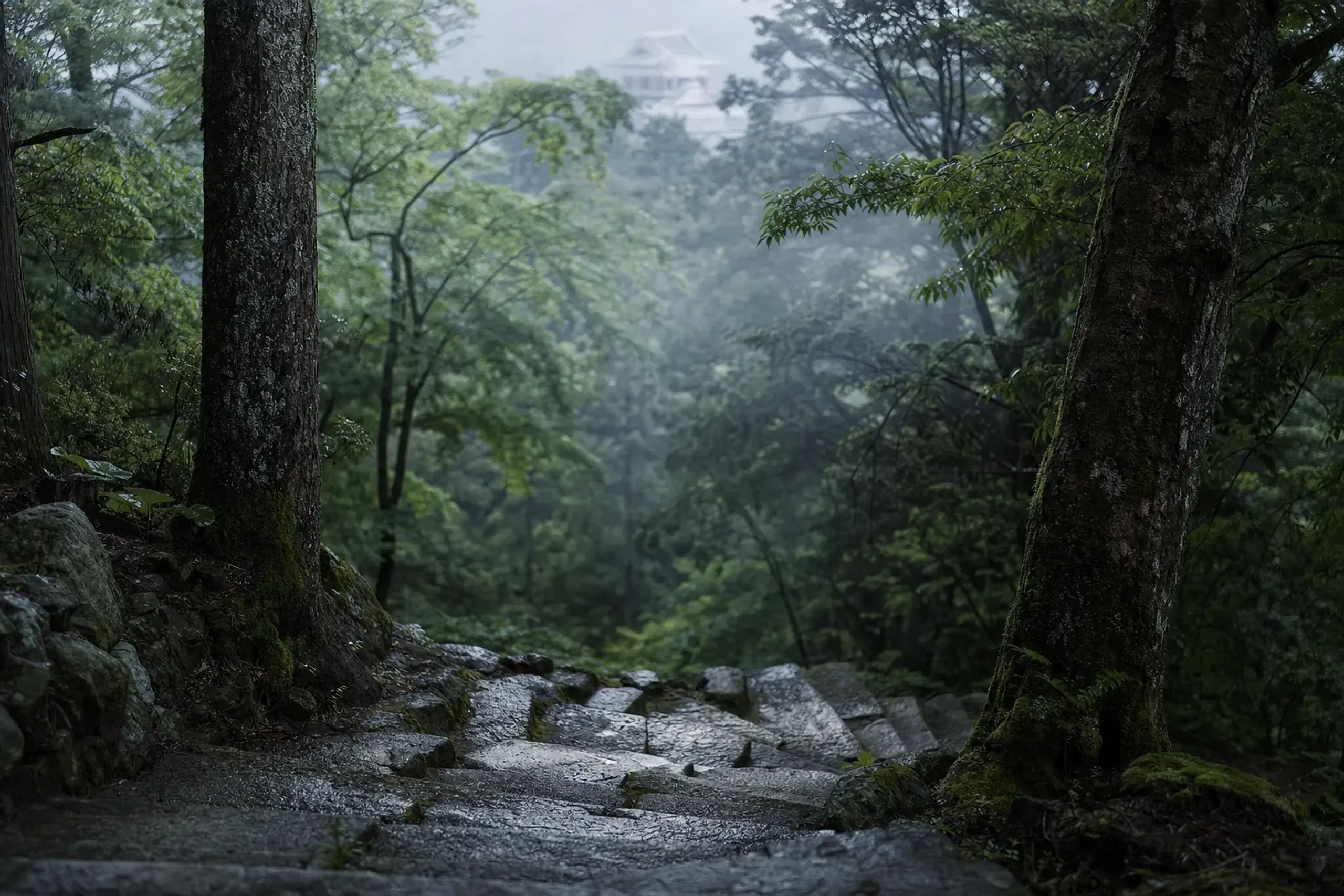
One feature is mentioned locally with a certain pride: the garden well is cited as Japan’s largest garden well. The layout, with citrus trees and water features, can feel less like a conventional stroll garden and more like a land-sized diagram—an “art installation” mood, but made from plants and stone.
If you want one whimsical footnote, this exists: a combined discount ticket pairs castle and garden admission with a ride on the Bocchan Train, a nod to Natsume Sōseki’s novel set in Matsuyama. Keep it to one line. It is not the point.
A Practical Visit Plan For Discerning Travelers (Without Rushing)
Plan for two unrushed blocks—castle complex first, then Ninomaru Garden—so you can slow down as the day goes on instead of speeding up to beat the clocks.
Step 1: Choose Your Ascent Based On Clothes And Weather
If you are dressed for the city, take the ropeway or chairlift and save your energy for the keep’s steep interior stairs. If you are dressed for walking, one of the footpaths adds context—stone walls and gates make more sense when you approach at ground speed.
Step 2: Enter The Keep Early Enough To Linger
Give yourself margin for exhibits and viewpoints. The keep is not a “five-minute photo.”
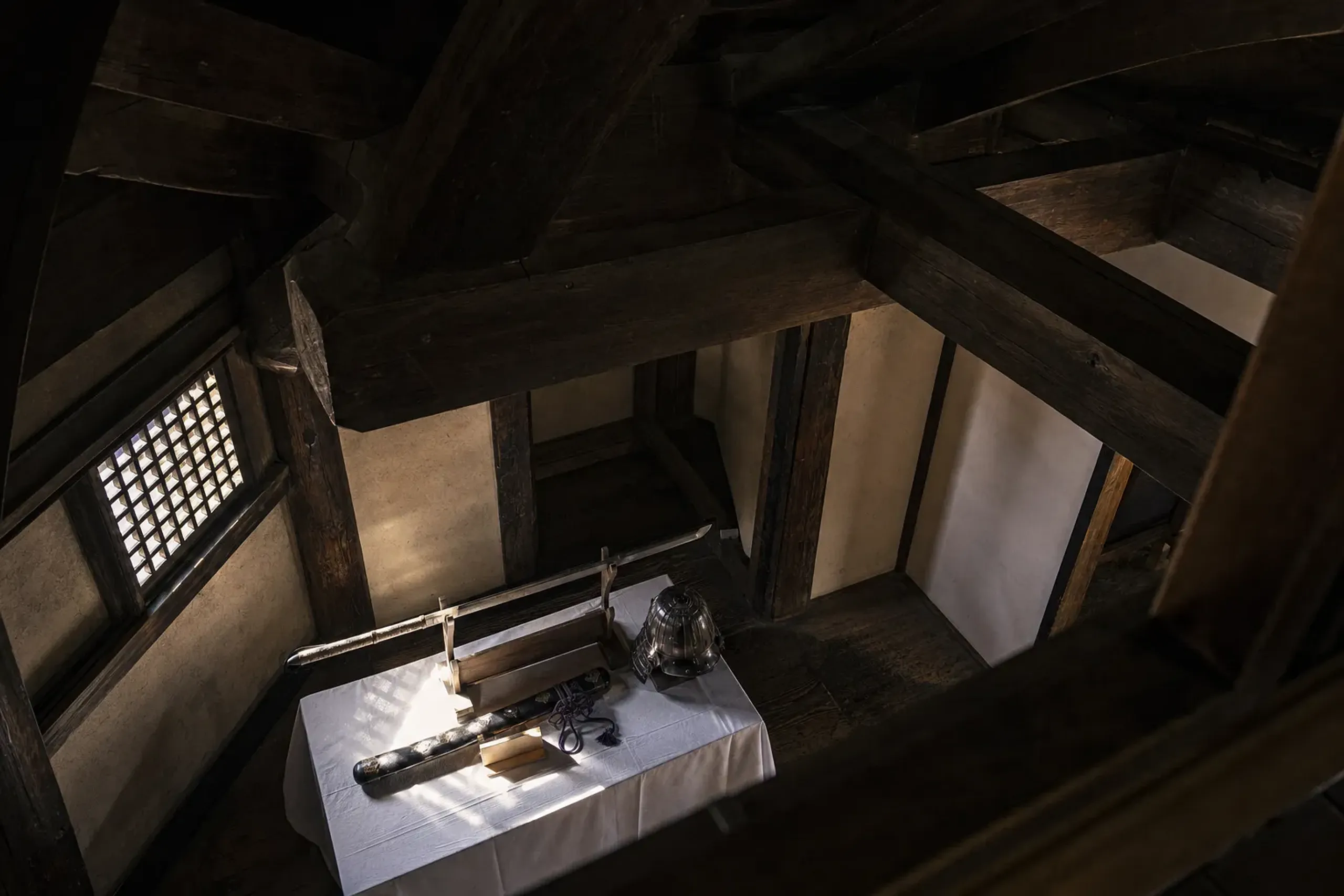
It is floors of changing angles, narrow staircases, and small discoveries.
Step 3: Reserve Your Best Attention For The View
When the air is clear, you’ll want time at the windows and lookout points. The Michelin Green Guide star is about the view, not the gift shop. Stay with it.
Step 4: Descend To Ninomaru Garden As Your Exhale
Do the garden after the keep. It is a softer finish, and it leaves you better placed for the rest of your evening in Matsuyama.
Private Transportation And Transfers: The Difference Is The Silence Between Stops
For Matsuyama Castle, the most valuable upgrade is not a “VIP line.” It is control over time, arrivals, and the small transitions that decide whether a day feels calm. That anticipatory care—the driver already in position, the timing already solved before you think to ask—is the kind of hospitality that never announces itself.
Many well-traveled guests come to Shikoku as part of a wider Japan itinerary, with tight connections and little appetite for guesswork. A dedicated vehicle removes friction. So does a driver who waits without ever drawing attention to you—discretion being the quiet backbone of everything we arrange.
When we discuss private transportation with clients, we focus on fit. A Lexus LM 500 suits couples who want a hushed cabin and a sense of ceremony. A Toyota Executive Alphard is often the favorite for families and executives. Groups may prefer a Mercedes V-Class, or a larger vehicle when luggage and privacy matter. Each choice becomes part of a wider bespoke itinerary shaped around your pace, not a fixed schedule.
And yes, we guide and provide the transfers. Once. Plainly.
Plan Your Quiet Ascent
Matsuyama Castle rewards those who arrive with intention—the right hour, the right pace, the right sequence from keep to garden. If you would like that afternoon composed for you, down to the last ropeway and the dinner that follows, our concierge team will build it around your rhythm and keep your itinerary entirely private. To begin, contact us here for a tailored proposal.
Frequently Asked Questions
What Are Matsuyama Castle’s Usual Opening Hours, And When Is It Closed?
Matsuyama Castle is generally open 9:00 a.m.–5:00 p.m., with seasonal extensions, and it closes on the third Wednesday in December for cleaning.
Ropeway and chairlift hours can differ from keep hours, and seasonal changes matter. Our concierge team at Japan Royal Service confirms the current schedule before your visit.
What Is The Most Common Timing Mistake At Matsuyama Castle?
The most common mistake is taking a late ropeway ride and arriving after the keep’s last entry, because the last ropeway/chairlift departure is 50 minutes before closing but keep entry ends 30 minutes before closing.
Build in buffer time, especially in summer when you may walk more slowly in the heat.
Is Matsuyama Castle One Of Japan’s “Original Castles”?
Yes—Matsuyama Castle is one of Japan’s twelve surviving original castle keeps, meaning its main tower survived intact through the period after 1868.
Its current keep was completed in 1854 after two earlier keeps burned down, which is why it is also the youngest of the twelve.
Can You Visit Matsuyama Castle On Foot Without The Ropeway?
Yes—four of the five approach routes to Mount Katsuyama are fully on foot, and only one route is served by ropeway and chairlift.