In this guide
- 01What Makes The Shiki-shima Suite So Rare
- 02A Cinematic Departure: Ueno Station And The First Hour
- 03Inside The Suite: Space, Silence, And Shokunin Detail
- 04The Bath Experience: Hinoki, Steam, And A Moving Horizon
- 05Dining On Board: Where You Eat, And Why It Feels Personal
- 06Lounge Komorebi: The Social Heart, Kept Quiet
- 07Regional Encounters: Hidden Japan, Without The Crowds
- 08Service And Privacy: Why This Journey Suits Discreet Travelers
- 09Is The Shiki-shima Suite “Worth It”? A Clear Decision Framework
- 10Practical Guide: Reservations, Pricing Reality, Dress Code, And Timing (2026–2027)
- 11How To Build A Full Japan Itinerary Around Shiki-shima (Without Stress)
- 12Shiki-shima Vs Other Luxury Trains: A Simple Fit Check
- 13FAQ: Shiki-shima Suite Experience
- 14Why Choose Japan Royal Service
The suite door closes with a soft, final click. Quiet. Outside, Ueno Station begins to slip away, and Tokyo’s angles dissolve into a moving ribbon of rooftops, river light, and distant hills.
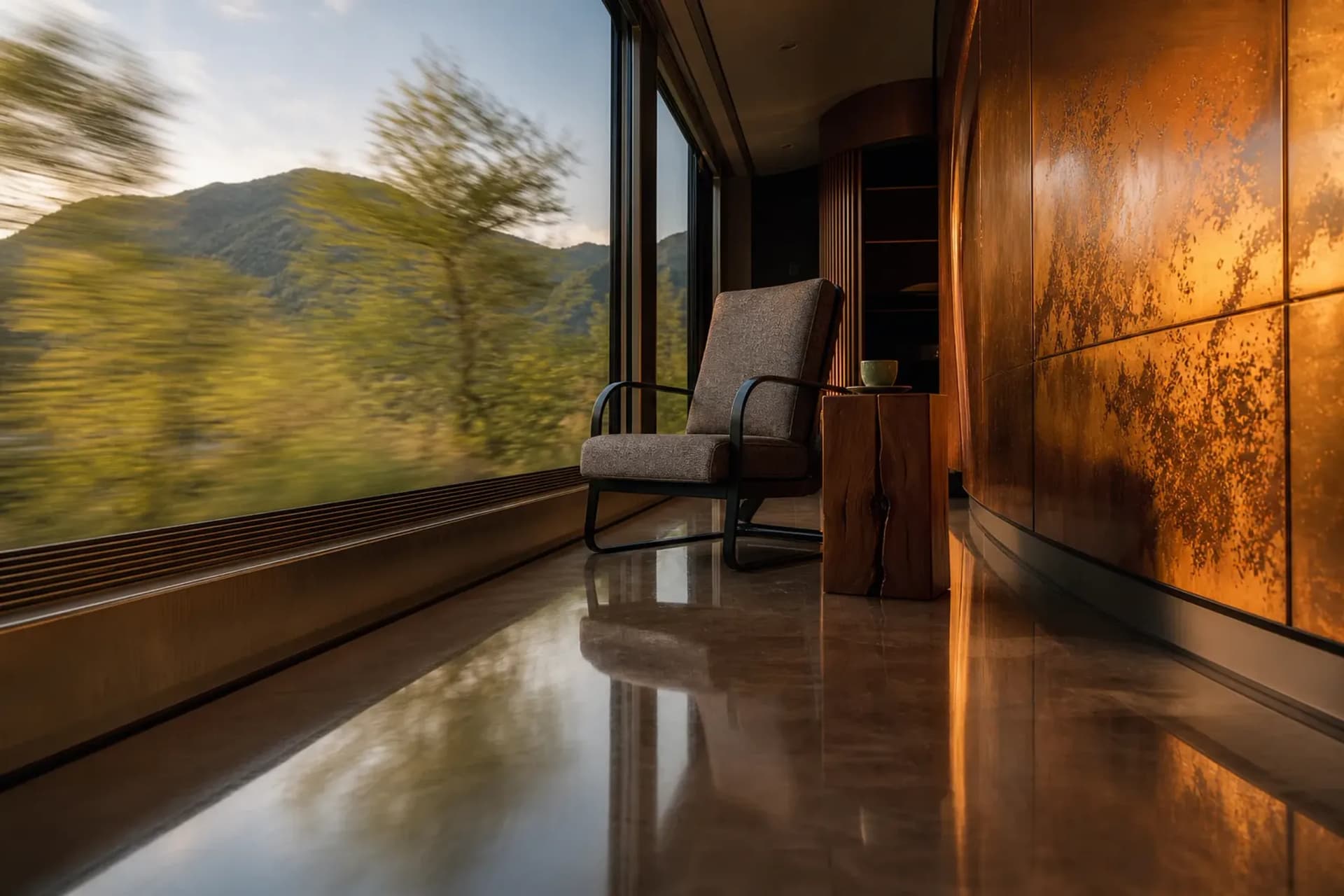
In the Shiki-shima suite, the window is not decoration. It is the main event. You watch Japan change in real time, without crowds, without lobbies, without a schedule shouted across a tour bus.
For high-net-worth travelers who already know what a good hotel feels like, this is different. It is a private retreat that happens to move.
What Makes The Shiki-shima Suite So Rare
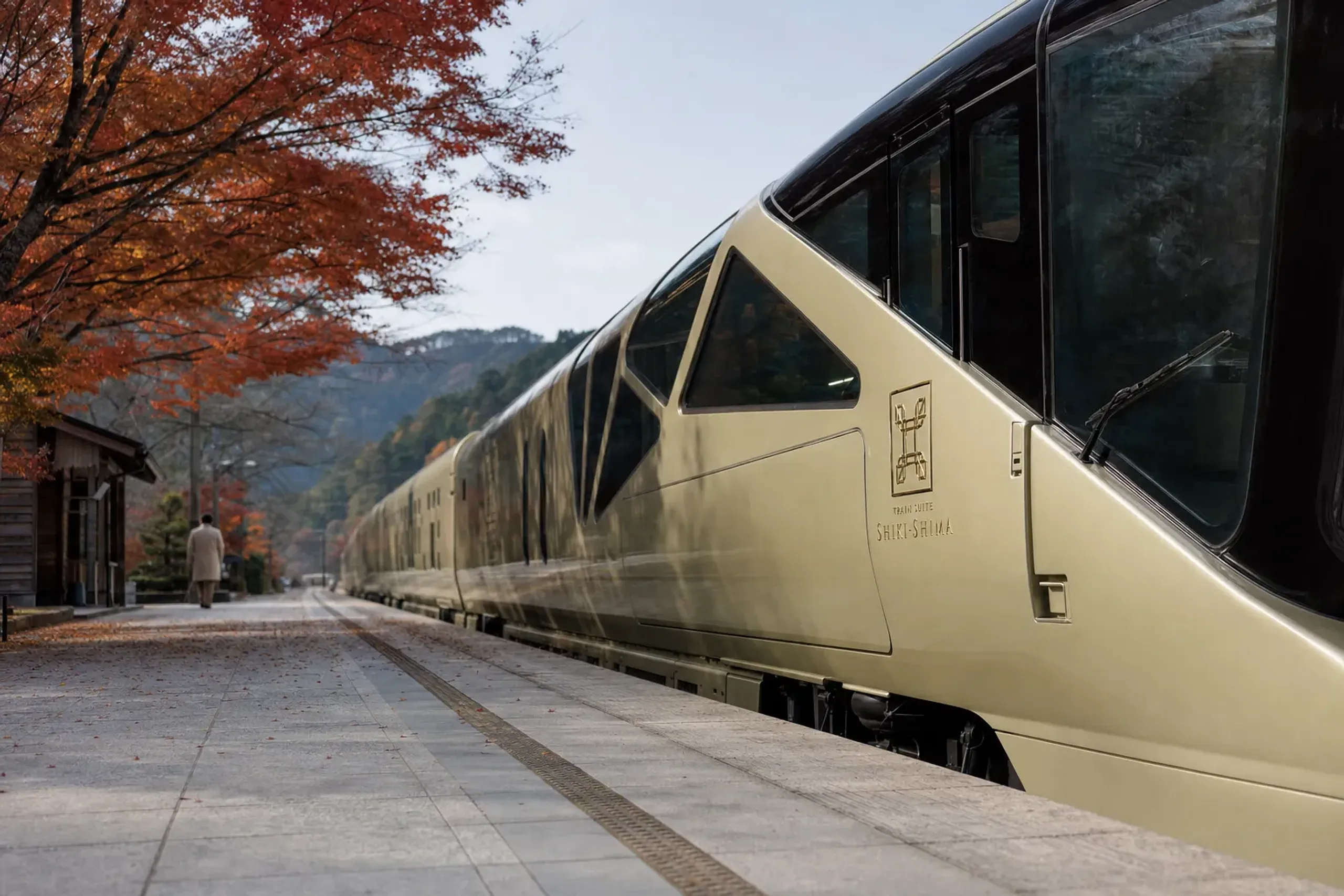
TRAIN SUITE SHIKI-SHIMA is operated by East Japan Railway Company (JR East). That matters, because the details—suite count, onboard spaces, the application calendar—live in the operator’s official rules.
The train has a total of 15 suite rooms, according to JR East. Small by design. Scarcity is the point.
And the route is not a backdrop. JR East and the Japan National Tourism Organization frame Shiki-shima as a year-round way to encounter eastern Japan through landscapes, food, and regional character.
A Suite That Behaves Like A Hotel Room—But With Better Views
Hotels give you a fixed address. Shiki-shima gives you shifting scenery, then re-grounds you with familiar comforts: privacy, quiet control of your space, and a rhythm that never feels rushed.
It is not “transport” in the usual sense. It is a moving base that keeps your days coherent.
A Cinematic Departure: Ueno Station And The First Hour
Shiki-shima journeys depart from Ueno Station, as described by JNTO. That’s a strategic starting point for many international travelers, because Tokyo is where timing and discretion are easiest to manage.
The first hour is often the most emotional. You are still close enough to the city to feel its pulse, yet already insulated from it, and the suite becomes your private frame on Japan’s gradual exhale northward.
In our experience, this is where the trip quietly “clicks.” You stop thinking like a visitor. You start watching like a guest.
Before You Board: Build A Calm Buffer In Tokyo
Rushing into a once-scarce train journey is a self-inflicted mistake. A single delayed flight should not touch your mood.
We usually suggest arriving in Tokyo the day before, then moving with a private transportation plan that keeps arrivals and departures clean, especially for clients who value low-contact logistics.
Inside The Suite: Space, Silence, And Shokunin Detail
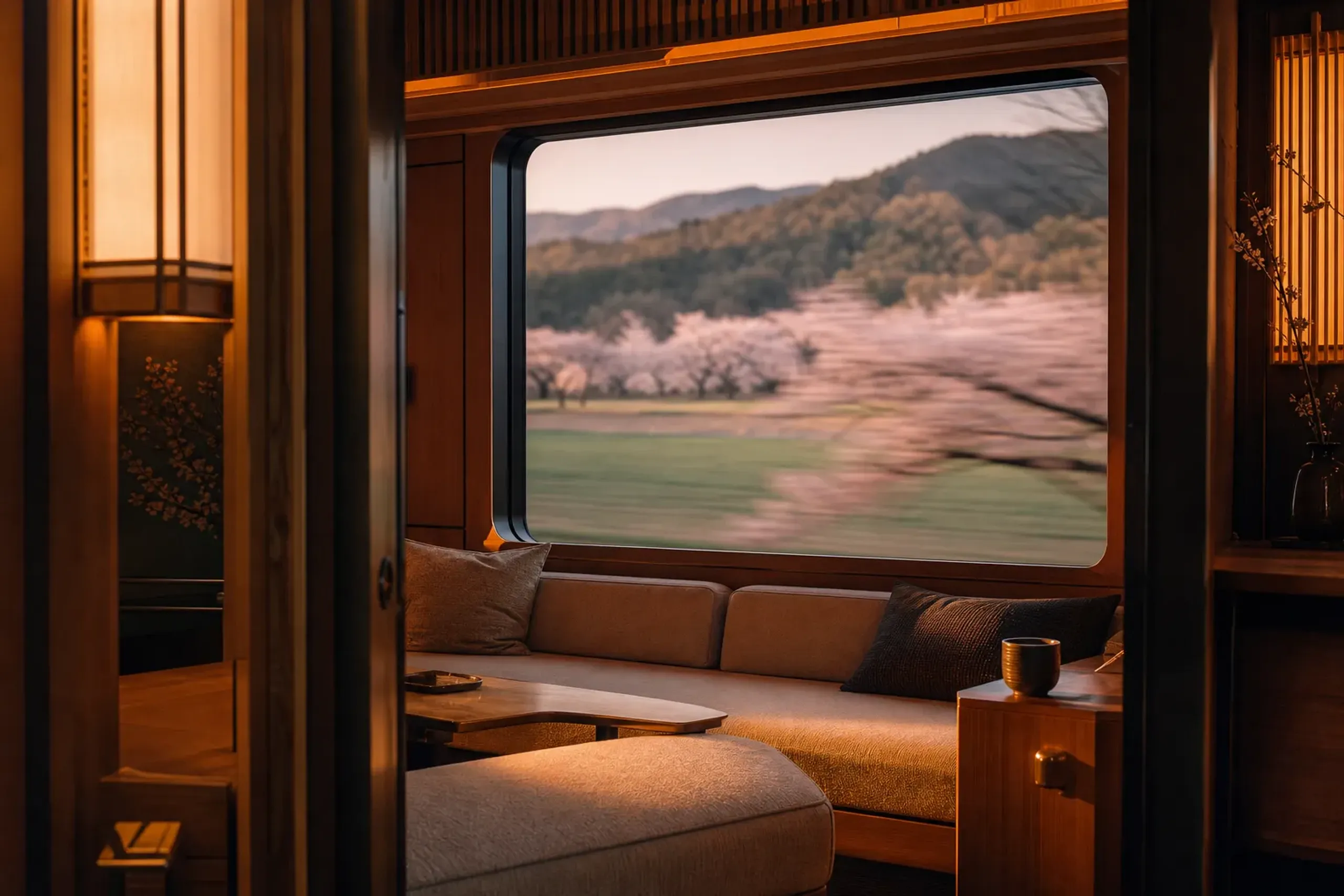
The suite is designed for presence. Not for performance. When you sit down, the room does not ask to be photographed; it asks to be used.
JR East highlights that the interiors include traditional craftwork from eastern Japan, explicitly including Aizu lacquerware (Fukushima) and BUNACO woodware (Aomori). This is the shokunin pillar in a form you can touch every day, not a speech you hear once.
For many HNW travelers, this is the real luxury: materials with a lineage, placed with restraint, then left alone.
Wabi-sabi, But Make It Livable
Wabi-sabi is often mishandled in travel writing. Here, it reads as restraint: fewer surfaces, quieter tones, and a suite that does not chase attention.
You will notice what is missing. That absence is intentional, and it gives your mind room to slow down.
The Bath Experience: Hinoki, Steam, And A Moving Horizon
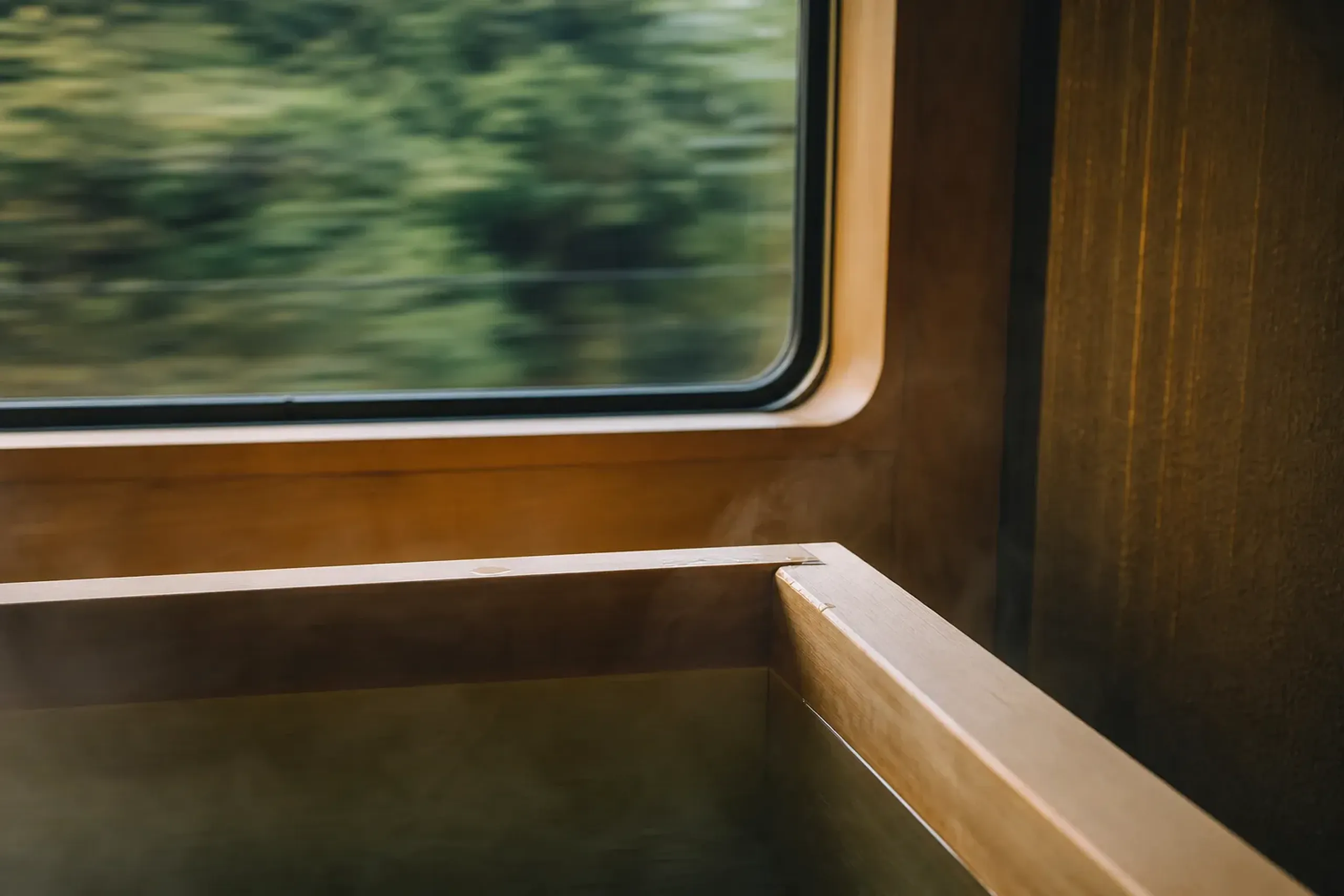
JR East describes an onboard bath experience featuring the aroma of cypress and views. JNTO’s inspiration piece also notes that the highest-grade suite includes a bath made of Japanese cypress (hinoki).
This is not a token amenity. It is a ritual that changes how you inhabit time on a journey, because bathing is no longer something you do “after the day.” It can be the day.
There is also an etiquette element. Keep it quiet. Keep it clean. Keep it personal.
Key fact: The onboard bath experience, including the cypress aroma and views, is described by JR East as part of the onboard luxury offering.
Dining On Board: Where You Eat, And Why It Feels Personal
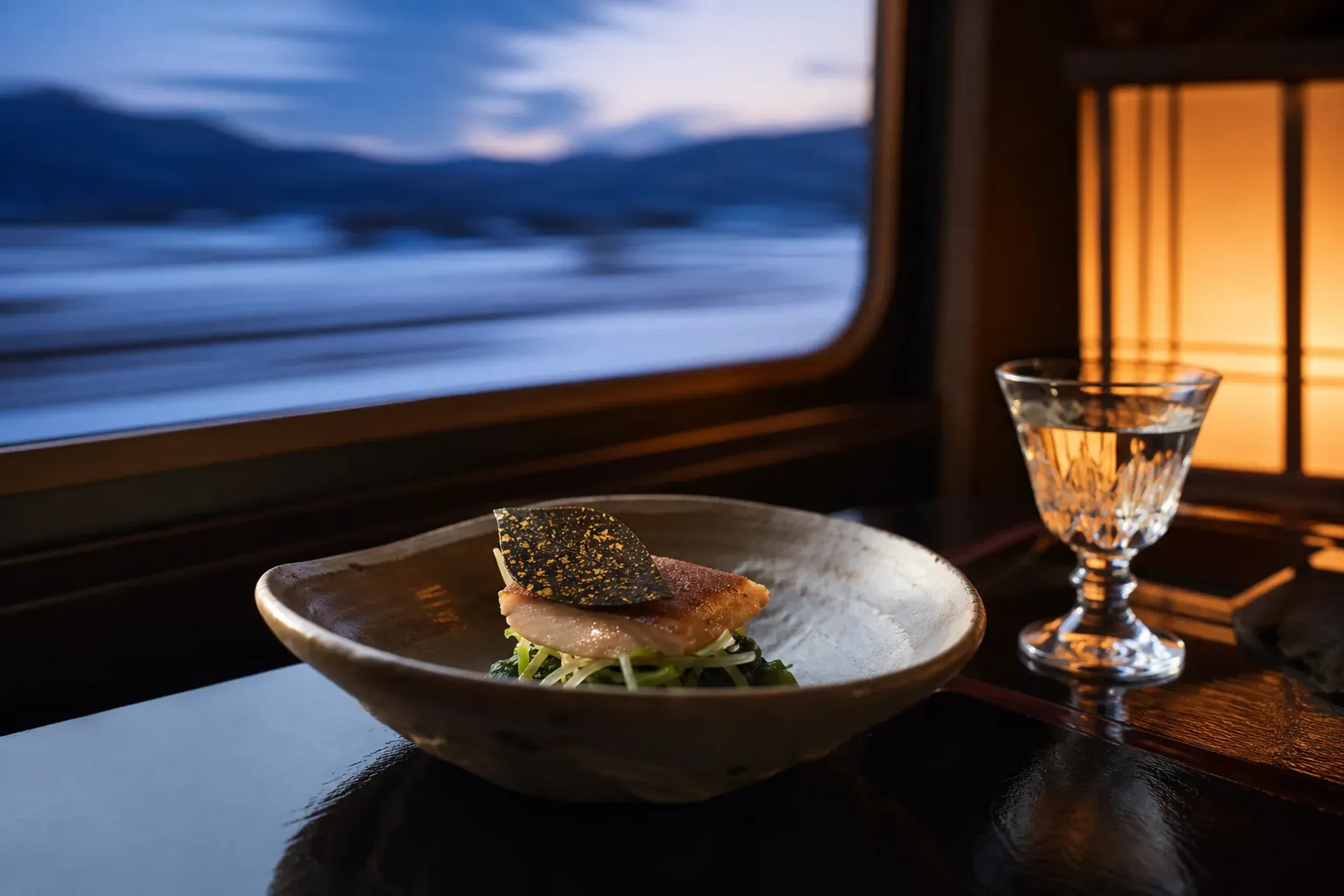
Onboard dining is not a vague promise. JR East’s Application Guide states it takes place in either Car 6 “DINING SHIKI-SHIMA” or Car 5 “LOUNGE KOMOREBI”.
The beverage selection includes wine and Japanese sake chosen by train crew members from eastern Japan and Hokkaido, per JR East. That detail lands differently than a generic “premium pairing.” It signals place.
JNTO’s luxury listing frames the dining car as drawing on ingredients from surrounding farms, woodland, sake breweries, and the ocean of eastern Japan. The point is provenance, not theatrics.
DINING SHIKI-SHIMA vs LOUNGE KOMOREBI: What To Expect
Think of it like a discreet hotel. One space is for the formal meal cadence. The other is where the trip breathes.
- DINING SHIKI-SHIMA (Car 6): The name signals purpose. Dinner feels like an event, but without noise.
- LOUNGE KOMOREBI (Car 5): JR East describes it as the main entrance area and notes it has a bar where passengers relax with drinks and light meals.
Lounge Komorebi: The Social Heart, Kept Quiet
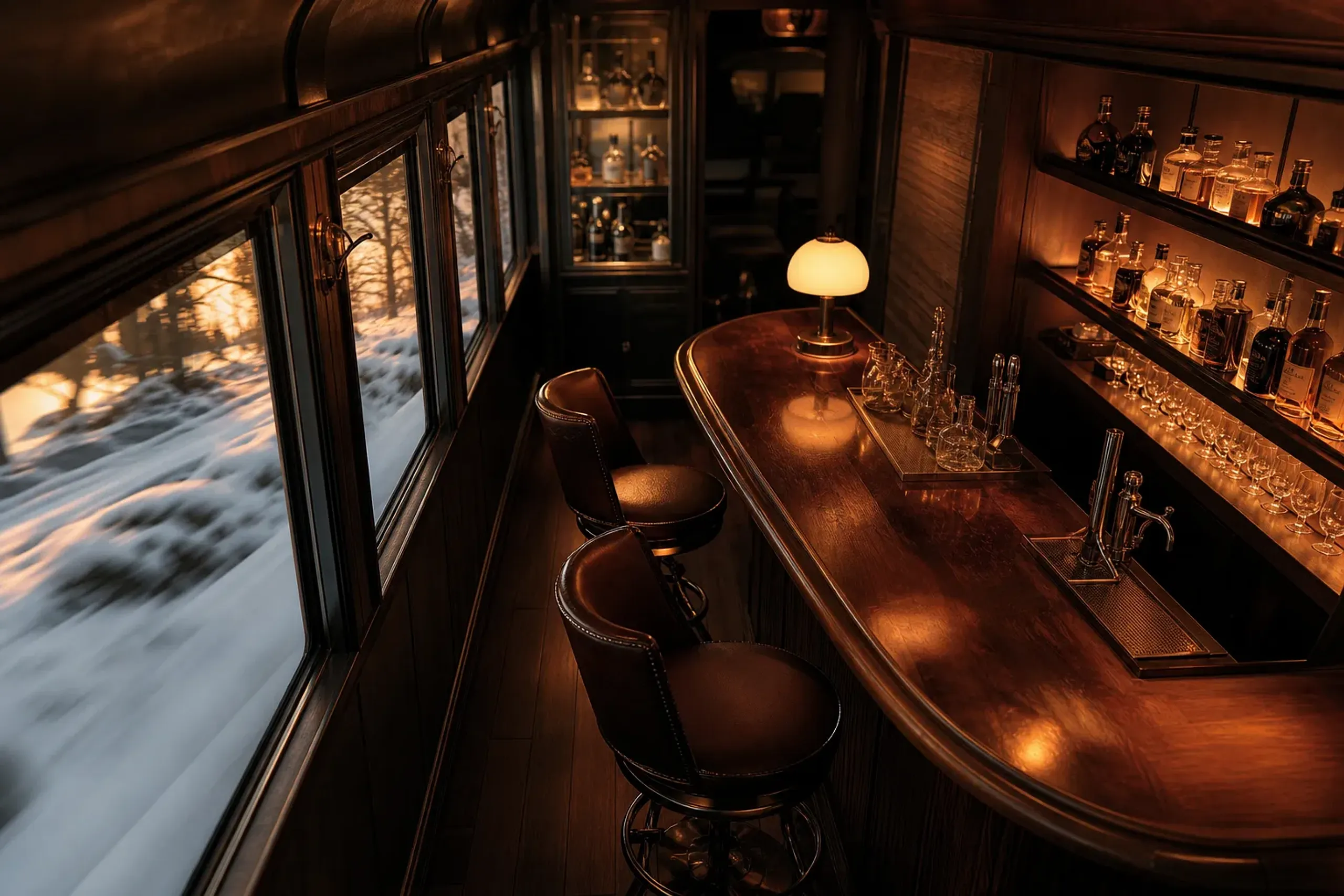
Some luxury travelers avoid lounges because they feel like forced sociability. On Shiki-shima, the lounge works because it is optional, and because the mood stays low-volume.
JR East calls Car 5 “Lounge Komorebi” the main entrance area, with a bar for relaxing with drinks and light meals. The word “relax” is doing work here. It is not a nightclub. It is a pause.
If you want to read, you can. If you want to speak softly, you will not feel out of place.
Regional Encounters: Hidden Japan, Without The Crowds
The Shiki-shima idea is bigger than the train. JR East and JNTO position it as a way to meet eastern Japan through local character, which is exactly where “hidden-Japan” stops being a slogan and becomes a practical itinerary advantage.
For HNW travelers, the win is not bragging rights. It is access to a Japan that does not feel like it was designed for mass tourism.
We keep our public writing cautious here, because excursion details vary by departure and year, and we will not invent a stop that isn’t confirmed for your exact journey. Precision matters.
Craft After The Train: Aizu And Aomori As Real Extensions
JR East names Aizu lacquerware and BUNACO woodware inside the train. Those are not abstract references; they point to real regions with real craft ecosystems.
If you want to extend the story off-rail, our team at Japan Royal Service can guide you toward a craft-forward route in Tohoku that matches your pace, your appetite for workshops, and your need for privacy.
Service And Privacy: Why This Journey Suits Discreet Travelers
Luxury rail travel can feel exposed if staff, fellow guests, or station moments become intrusive. Shiki-shima’s small scale helps, but privacy still depends on how you plan the edges: arrival timing, hotel choice, and what you do before and after the train.
This is where discretion becomes a design principle, not a marketing line. You want a trip that does not leak into your calendar, your social feed, or your team’s inbox.
In our experience, the calmest Shiki-shima journeys are built like a capsule: a quiet Tokyo lead-in, the train as the centerpiece, then a soft landing in a region that does not demand constant decisions.
Private Rail vs Private Hotel: A Relatable Comparison
A top hotel suite is a fortress. It gives you control of light, sound, staff contact, and your own tempo.
Shiki-shima borrows that feeling, then adds motion and a curated horizon, so the “view” is not a single skyline—it’s a sequence of weather, coastlines, forests, and towns you would never choose as a stand-alone base.
Is The Shiki-shima Suite “Worth It”? A Clear Decision Framework
“Worth it” is the wrong question if you ask it like a spreadsheet. The right question is sharper: Is this the best use of your limited travel days in Japan?
If your time is your tightest resource, Shiki-shima can be unusually efficient, because your hotel moves while you sleep and your meals, scenery, and pacing are already coherent.
But it is not for everyone. Not even close.
Ideal Guests For The Suite
- HNW travelers who want a once-a-year journey with high certainty of comfort and low daily friction.
- VHNW travelers who care about privacy architecture: calmer arrivals, fewer touchpoints, less social exposure.
- UHNW travelers who treat the train as one component in a longer, highly controlled Japan arc.
Who Should Choose A Different Style Of Trip
- Travelers who need full spontaneity every day.
- Guests who prefer one city base and deep repeat visits to a single neighborhood.
- Anyone who dislikes shared public spaces, even quiet ones.
Practical Guide: Reservations, Pricing Reality, Dress Code, And Timing (2026–2027)
This section stays strict to published, verifiable information. No wishful thinking.
How The Application Timing Works (Official Signals)
JR East announced on April 2, 2026 that it started accepting applications for departures from December 2026 to March 2027. This is the cleanest public timing anchor for planning a winter season rail journey.
JR East’s inquiry page also showed that applications for trips from July 2026 to September 2026 had closed (as displayed in the status message). That closure is a useful reality check: availability cycles are real, and you must plan early.
Where You Apply
Applications are handled via JR East’s official Shiki-shima channels. Use the operator’s published application guide and inquiry pages as the definitive reference points, because policies can change by season.
For questions, contact our concierge.
Pricing: What We Can Say Publicly
JR East sets the fare and publishes official pricing and conditions through its own materials. We do not publish pricing in this article, and we do not speculate on ranges, because the only number that matters is the current operator fare for your chosen departure.
If you want a tailored planning proposal around the application reality, we will discuss it privately.
Dress Code: Read The Room
Shiki-shima is not a runway. Still, dining in a dedicated car invites a more polished look than sightseeing rail.
Our guidance is simple: choose clothing that photographs well in warm interior light, sits comfortably for long meals, and does not feel loud in shared spaces.
A Note On The “Best Season”
JR East accepts applications by specific departure windows. Your “best” season is the one that aligns with your schedule, your tolerance for weather, and your desire for certain landscapes.
If winter departures appeal, the December–March 2026–2027 window is already an official planning anchor.
How To Build A Full Japan Itinerary Around Shiki-shima (Without Stress)
The most common planning mistake is treating Shiki-shima as the entire trip. It should be the centerpiece, yes, but the before-and-after days determine whether it feels calm or fragile.
We recommend designing a tailor-made itinerary with two buffers: one in Tokyo before departure, and one after the journey that matches the train’s slower rhythm.
Tokyo gives you precision. Tohoku gives you space.
Option A: Tokyo Buffer + Ueno Departure
Best for first-time luxury travelers to Japan who want predictability and clean logistics.
- Arrive Tokyo one day early
- Keep scheduling light: one museum-level outing, one serious dinner
- Depart from Ueno without rushing
Option B: Tokyo + Tohoku Extension After The Train
Best for travelers who want the hidden-Japan feeling to continue after the last stop.
- Use the train as the transition into regional Japan
- Choose one area and go deeper rather than hopping prefectures
- Focus on craft, landscape, and quiet meals
Shiki-shima Vs Other Luxury Trains: A Simple Fit Check
Many travelers cross-shop Japanese luxury trains. That is rational. The right choice depends on which region you want to understand, and what kind of privacy you expect.
Shiki-shima’s defining public signals are clear: eastern Japan focus, suites capped at 15 rooms, dining centered in Cars 5 and 6, and an onboard bath experience that is part of the identity.
If you are deciding between trains, our team at Japan Royal Service can help you compare fit, then build a coherent land itinerary around the one you choose. Quietly.
FAQ: Shiki-shima Suite Experience
Who Operates Train Suite Shiki-shima?
TRAIN SUITE SHIKI-SHIMA is operated by East Japan Railway Company (JR East).
How Many Suites Are On Shiki-shima?
JR East states the train has a total of 15 suite rooms.
Where Do Shiki-shima Journeys Depart From?
JNTO’s inspiration article states journeys depart from Tokyo’s Ueno Station.
Where Do You Dine Onboard?
JR East’s Application Guide states dining is in Car 6 “DINING SHIKI-SHIMA” or Car 5 “LOUNGE KOMOREBI.”
Is There A Bar Or Lounge?
Yes. JR East describes Car 5 “Lounge Komorebi” as the main entrance area and notes it has a bar for passengers to relax with drinks and light meals.
Does The Suite Include A Bath?
JR East describes an onboard bath experience featuring the aroma of cypress and views. JNTO also notes that the highest-grade suite includes a bath made of Japanese cypress (hinoki).
When Did JR East Accept Applications For Winter 2026–2027 Departures?
JR East announced on April 2, 2026 that it started accepting applications for departures from December 2026 to March 2027.
Why Choose Japan Royal Service
Many companies can describe Shiki-shima. Fewer can help you build the right trip around it—without making public promises they cannot keep, and without turning your travel into a loud checklist.
Our approach is discreet by default. We protect guest identity, we keep itineraries quiet, and we design routes that reduce exposure at the edges—arrivals, transfers, and the days when plans tend to fray.
We also curate for meaning. Shokunin detail, wabi-sabi restraint, and hidden-Japan pacing are not decorative words for us; they are the filters we use when we advise where to stay, what to see, and what to skip.
For private coordination, reach our team at Japan Royal Service privately via WhatsApp or LINE, or contact us here.