In this guide
- 01Why Do People Call It "Daimonji" When It's Really Gozan No Okuribi?
- 02What Is Kyoto Gozan Okuribi, And Why Is It Held On August 16?
- 03What Time Are The Five Kyoto Okuribi Fires Lit In 2026?
- 04Can You Hike Up To The Okuribi Fires On August 16?
- 05Where Should You Watch Gozan No Okuribi If You Want Space And Quiet?
- 06How Do You Participate With A Gomagi Offering (Without Treating Okuribi Like A Show)?
- 07What Happens If It Rains During Okuribi?
- 08A Step-By-Step Plan For A Calm Okuribi Night (Built Around The 20:00–20:50 Reality)
- 09What Japan Royal Service Can Do For Okuribi Logistics (And What We Don't Claim Publicly)
- 10Frequently Asked Questions
- 11Why Choose Japan Royal Service
At 20:00, a single stroke of fire appears on a dark Kyoto mountainside. Then another. Then another.
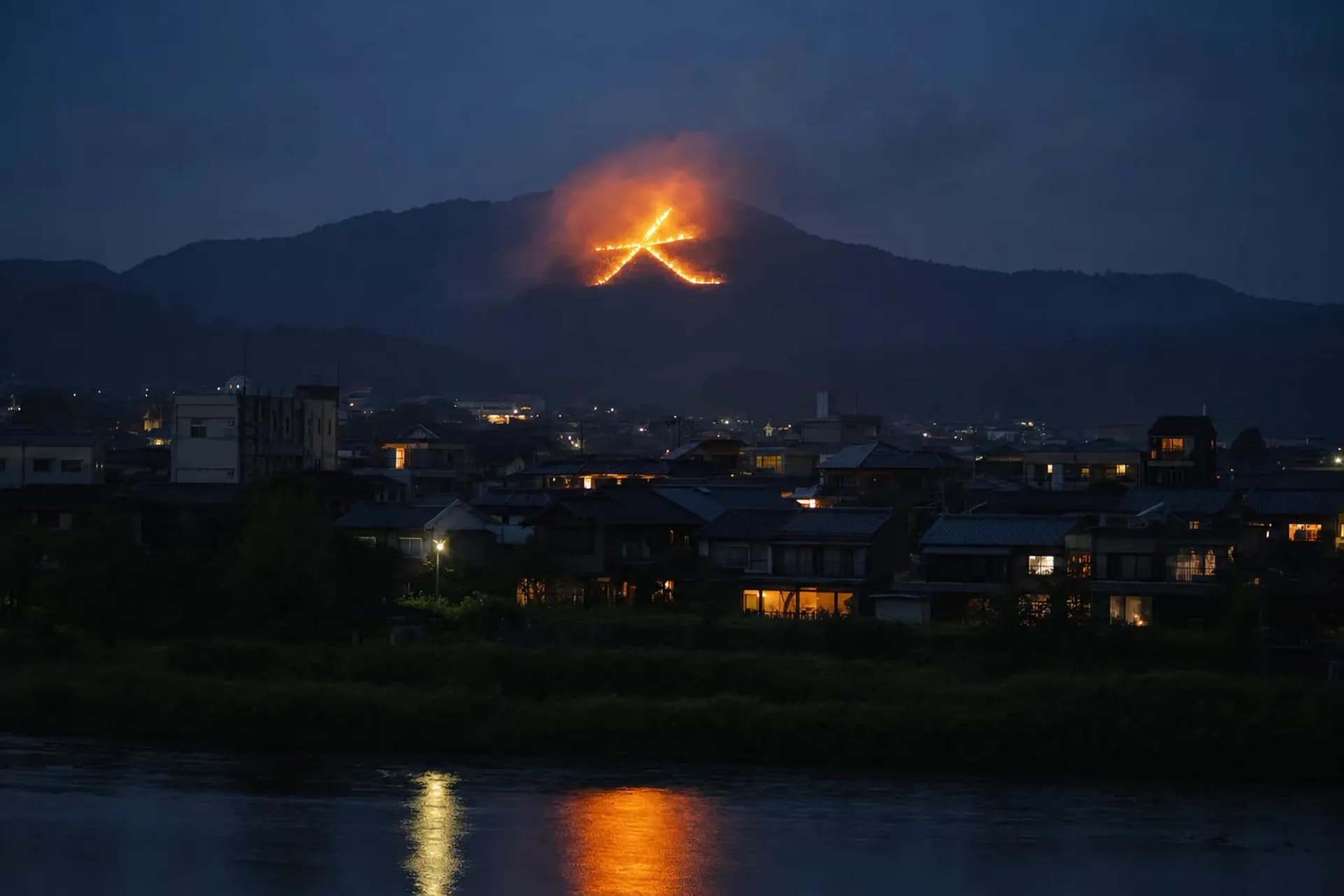
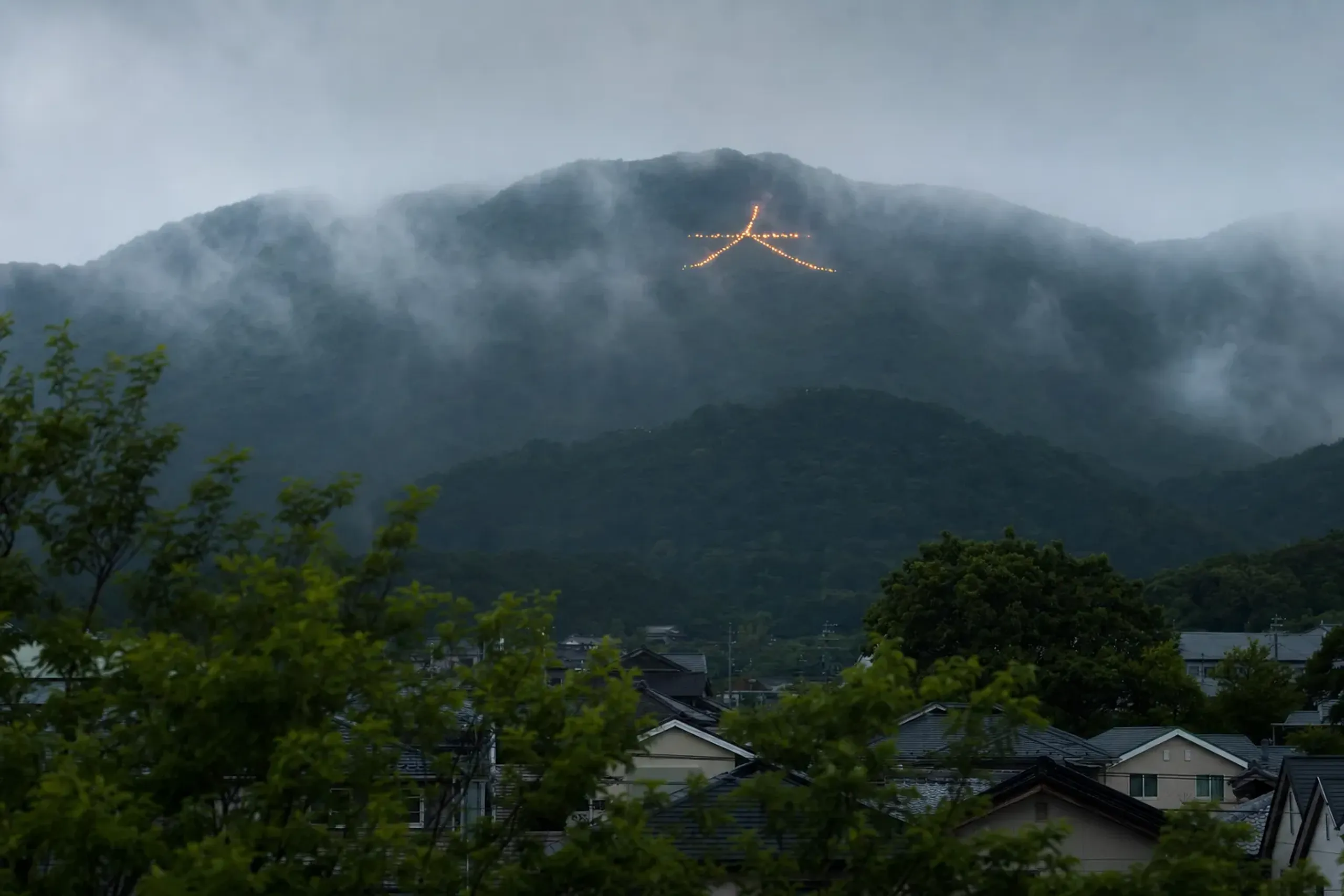
Most visitors call the night "Daimonji." That is the first mistake. Daimonji is only one of five mountain bonfires, lit five minutes apart, and the entire sequence is over in about fifty minutes.
Arrive late, and you miss it. Stand in the wrong place, and you see only one shape and assume that is the whole story. Our team at Japan Royal Service plans Okuribi evenings the way one would stage a timed performance: quiet, respectful, and precise to the minute.
Why Do People Call It "Daimonji" When It's Really Gozan No Okuribi?
Because the "大" (Daimonji) fire is the most famous, many people borrow its name as shorthand for the full rite—yet Gozan No Okuribi is five separate bonfires, each with distinct meanings, caretakers, and locations.
That popular shorthand flattens the night into a single postcard image. Kyoto's own guidance and preservation messaging consistently uses the full name, Gozan no Okuribi, because the other four fires are not "supporting acts." They are the point.
Watch the city properly and you notice the sequence moving across Kyoto from east to west, one flame handing off to the next. It feels less like a show and more like a closing ceremony. Brief. Measured. Gone.
What Is Kyoto Gozan Okuribi, And Why Is It Held On August 16?
Kyoto Gozan Okuribi is a religious ceremony held every year on August 16, the final night of Obon, to send off the ancestral spirits welcomed back on August 13.
The fires are said to light the way back to the spirit world.
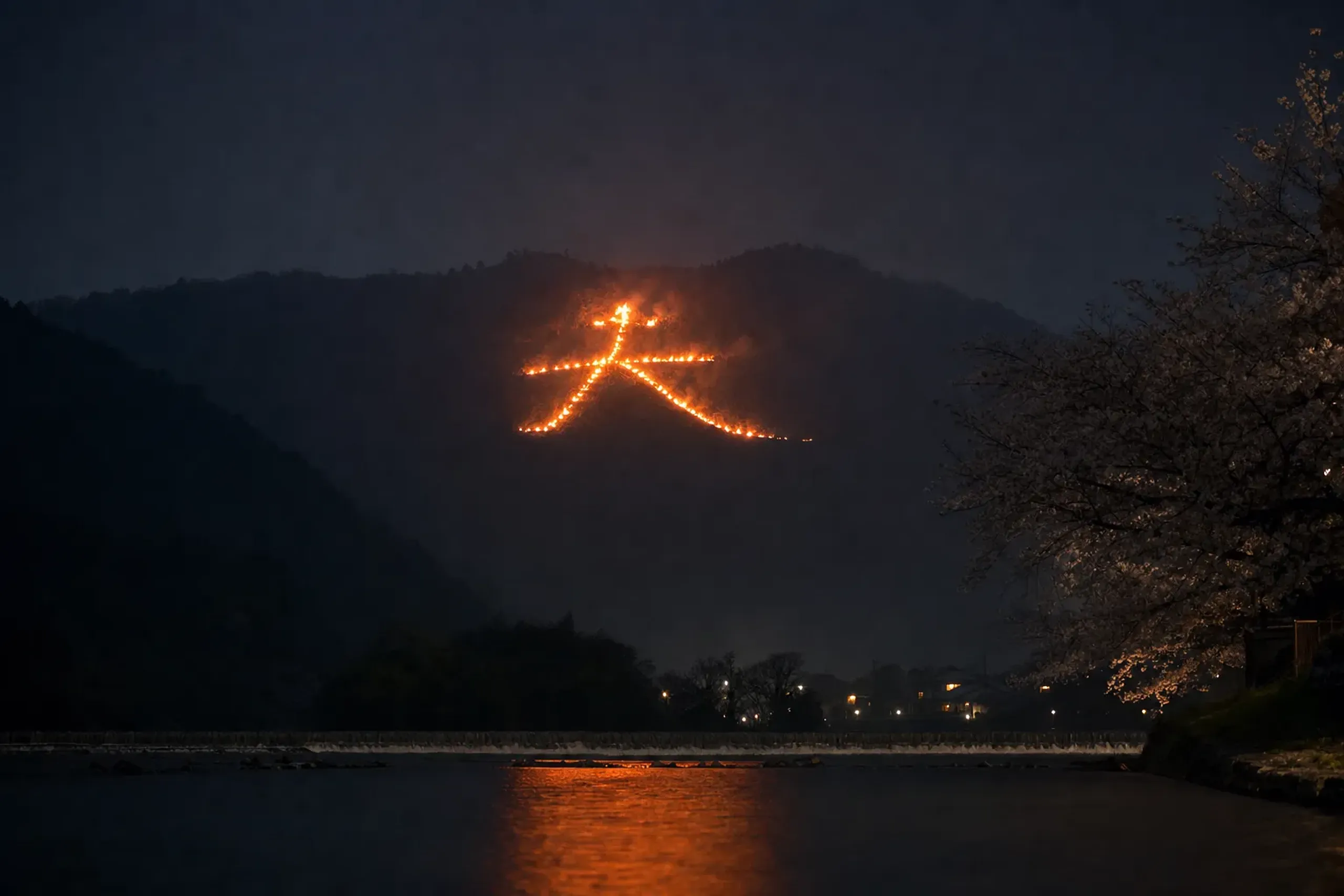
That is why the mood matters as much as the fire. Voices lower. Footsteps slow. Even in crowded places, Kyoto tends to watch with restraint—a quiet that carries its own wabi weight, the beauty of a moment felt rather than staged.
The earliest surviving written reference dates to 1603, early in the Edo period. In its current five-fire form, the tradition runs roughly 400 years.
Each bonfire is maintained by a local preservation association rooted in the neighborhoods at the base of its mountain. All five are registered Kyoto City Intangible Folk Cultural Properties, and the craft of keeping them alive is community work—the labor of local shokunin and their families, repeated faithfully year after year.
What Time Are The Five Kyoto Okuribi Fires Lit In 2026?
In 2026, the five fires ignite from 20:00 to 20:20 in five-minute steps, and the last flames fade around 20:50—so the full event lasts about fifty minutes.
Here is the verified 2026 lighting sequence, moving roughly east to west across the city:
| Bonfire (Shape) | Mountain / Area | Ignition Time (2026) | Typical Burn Time |
|---|---|---|---|
| Daimonji (大) | Higashiyama / Nyoigatake | 20:00 | ~30 minutes |
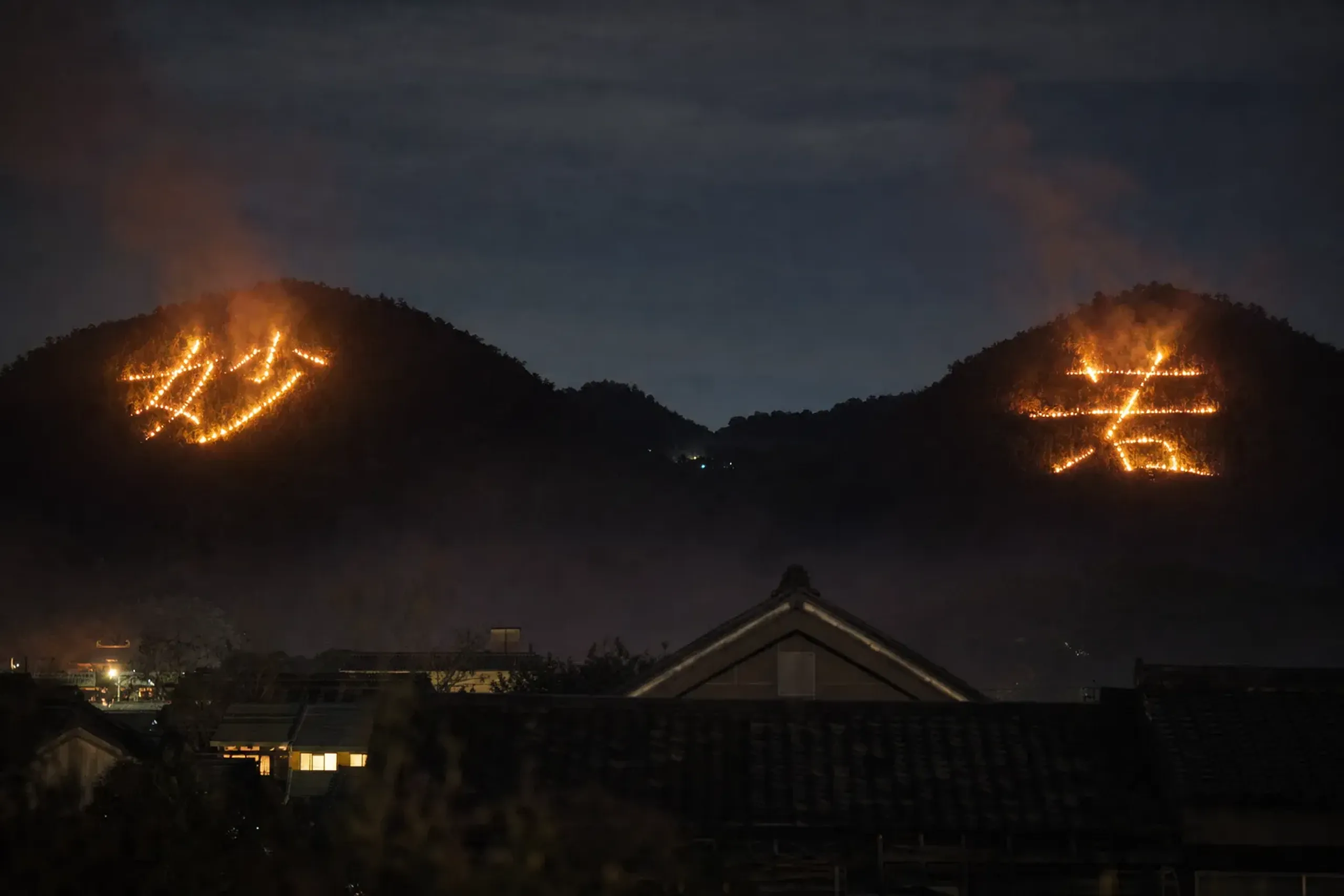
| Myō-Hō (妙・法) | Matsugasaki | 20:05 | ~30 minutes |
| Funagata (船形) | Nishigamo | 20:10 | ~30 minutes |
| Hidari Daimonji (左大文字) | Daihokusan | 20:15 | ~30 minutes |
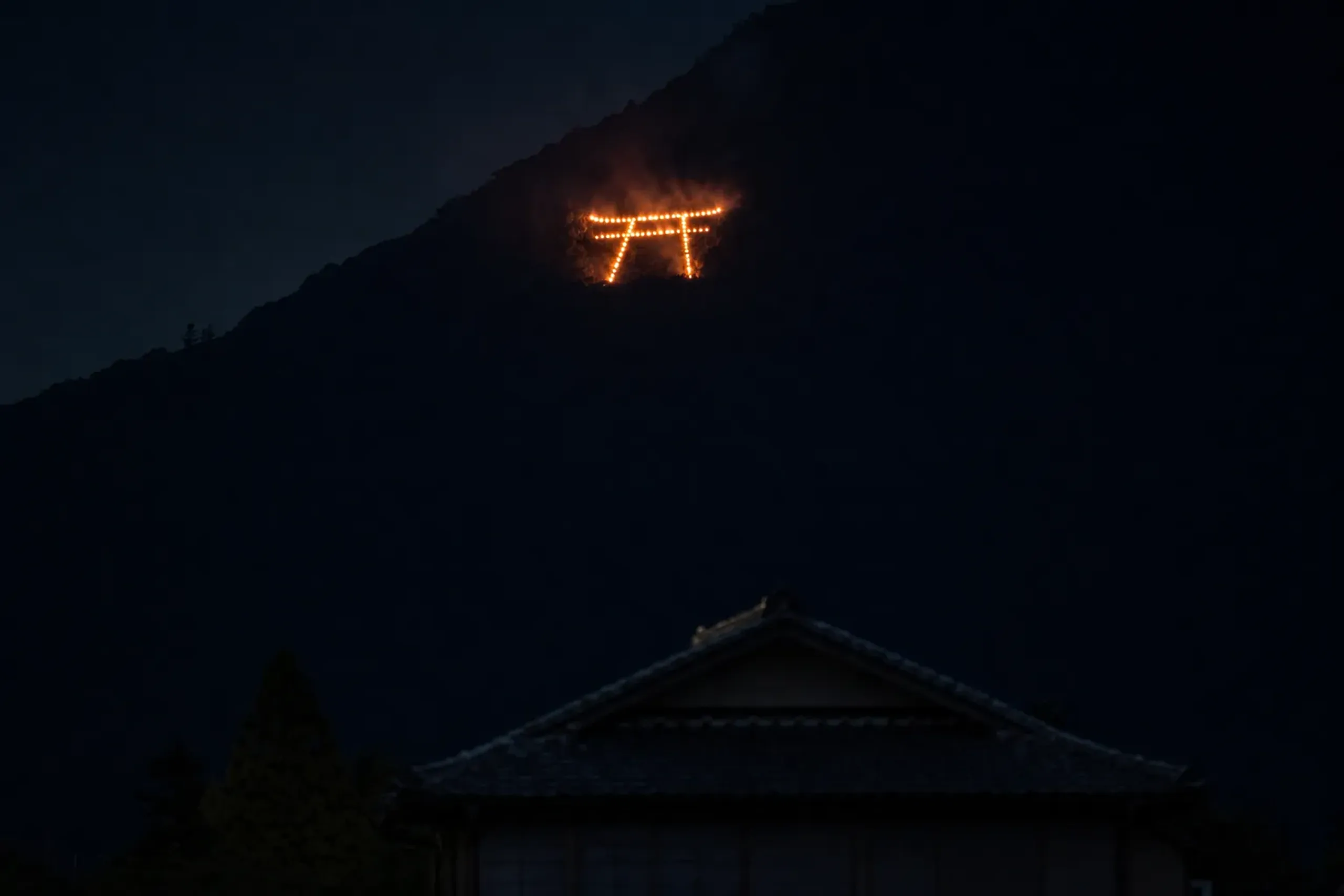
| Toriigata (鳥居形) | Near Toriimoto | 20:20 | ~30 minutes |
Times can shift slightly each year. In our experience, the larger risk is not a five-minute adjustment—it is guests underestimating how quickly the night ends.
Key fact: If you want a calm position and a clear sightline, plan to be in place well before 20:00. In 2026, August 16 falls on a Sunday, so crowding is expected to be heavier than usual.
Can You Hike Up To The Okuribi Fires On August 16?
No—entry into the mountains where the bonfires are prepared is prohibited on August 16, and viewing is only permitted from designated areas at the base of the mountains.
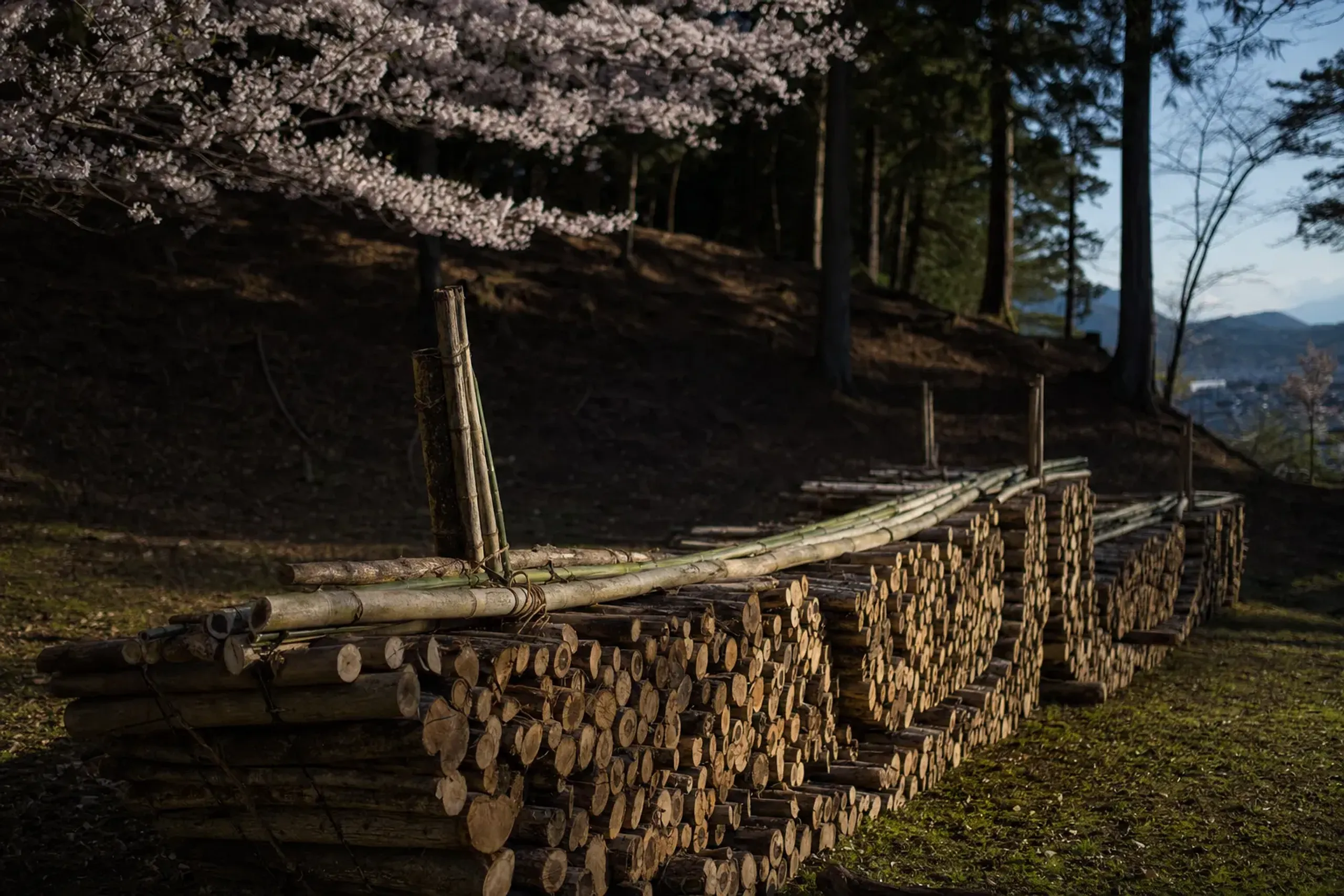
This is not negotiable, and it is not a "local tip" that only some people know. Kyoto's official travel guidance states the restriction clearly, both for safety and to avoid interrupting preparation procedures on the mountainside.
There is a second safety point that matters for travelers with family members: riverbanks at night can be risky when people crowd in. Good positions keep you steady on your feet and out of any crush.
Our approach at Japan Royal Service is simple. We build your evening around lawful viewing corridors and realistic walking distances, then buffer time for traffic restrictions and crowd flow—so the logistics stay invisible and the evening stays yours.
Where Should You Watch Gozan No Okuribi If You Want Space And Quiet?
The most comfortable Okuribi viewing comes from controlled-access vantage points—rooftop terraces or rooms that explicitly note bonfire views—because they reduce crowd pressure and keep the atmosphere respectful.
Kyoto's luxury hospitality market has responded to the same reality you will feel on the street: August 16 creates demand for certainty. Several properties publish guest-facing notes about rooftop or room viewing, and those notes often mention that some rooms see certain fires but not others.
Real properties that publicly state Okuribi viewing is possible from their facilities include SOWAKA (rooftop balcony), Riverte Kyoto Kamogawa (select rooms with front views of Gozan no Okuribi), Shikikaboku (a rooftop terrace plan dated for August 16, 2026), and Kyoto Brighton Hotel (a rooftop viewing plan on its official site).
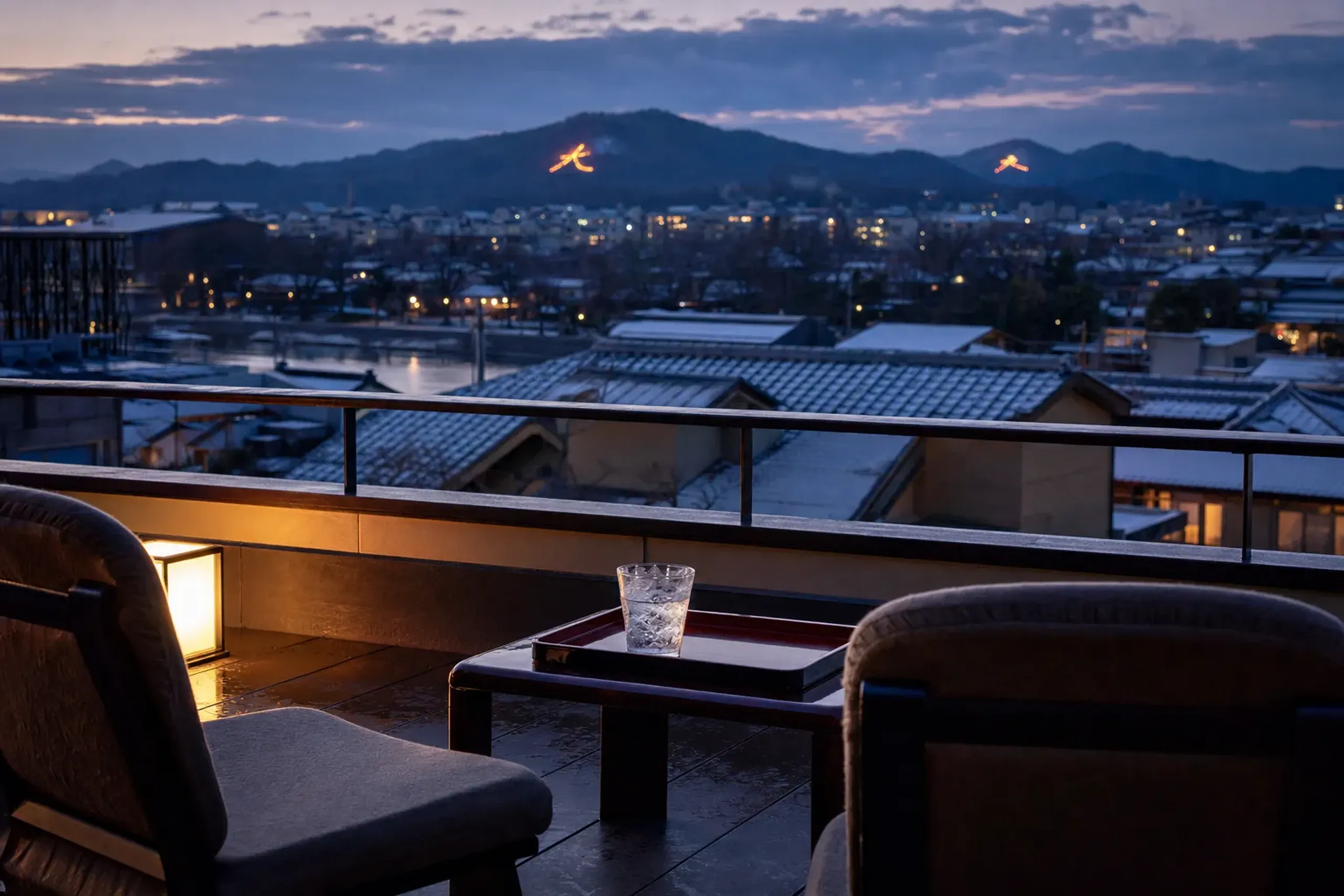
One detail we appreciate: Riverte Kyoto Kamogawa's room descriptions distinguish between "Daimonji" visibility and visibility of other bonfires such as Funagata and "Myo." That is the five-fires reality, stated plainly by a supplier who has to be accurate.
For guests who prefer a discreet plan, we begin with what you most want to see—Daimonji alone, or a lineup of two fires, or simply the feeling of an entire city going still—then we provide tailored guidance and timing calibrated to your party size. Beyond the published options, part of what we quietly hold are the introductions that do not appear on any hotel's website: the private vantage the algorithm cannot surface.
How Do You Participate With A Gomagi Offering (Without Treating Okuribi Like A Show)?
Gomagi are wooden prayer sticks on which you write a name and a wish; you submit them with a small offering, and they are burned as part of the bonfire itself.
This is an accessible way to join the rite rather than only watch it. The tradition is long associated with prayers for recovery from illness and protection from disease, which gives the act a quiet weight that photographs never capture.
Reception locations differ by mountain, and the details matter. Here are the verified reception points publicly described for each bonfire:
- Daimonji: in front of Ginkaku-ji
- Myō-Hō: at a building near the east exit of Matsugasaki Station (Kyoto Municipal Subway)
- Funagata: at Saihō-ji's western parking area
- Hidari Daimonji: in front of Kinkaku-ji
- Toriigata: near Hattai Jizō on Prefectural Route 50
As of late July 2026, only Kinkaku-ji's reception hours were officially confirmed for the year.
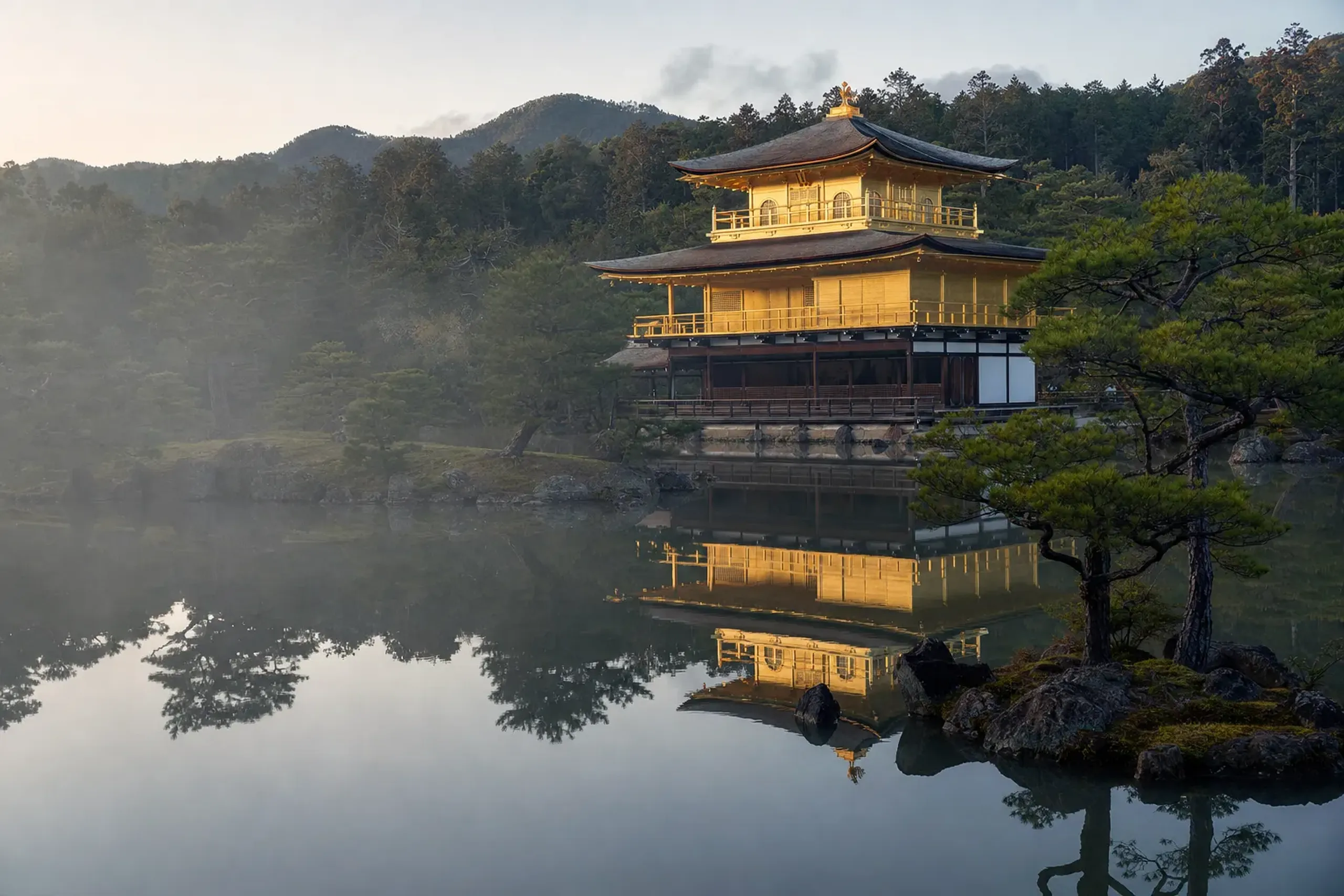
Those confirmed hours were roughly 9:00–14:00 on August 15 and 7:00–14:00 on August 16, until stock runs out.
Other locations often follow a typical annual pattern, but we will not present their hours as confirmed when they are not. Precision is part of respect.
Guests who wish to include gomagi in their evening can reach our concierge team for current-year verification and a realistic routing plan. Crowds are real. Heat is real. The window closes quickly.
What Happens If It Rains During Okuribi?
Okuribi typically proceeds in light-to-moderate rain, and only severe weather leads to postponement.
Preservation association members actively shield the gomagi from rain and take special measures to keep the fires lit. Before ignition you may notice coverings and careful movement on the mountainside; it can look understated from afar, yet it is skilled, generations-deep work.
For travelers, the practical point is clothing and footing, not drama. Bring a compact umbrella, choose stable shoes, and avoid last-minute dashes that leave you at the wrong curb when crowds compress.
If you care about photography, plan like a photographer. A phone shot from a jostling riverbank is rarely the memory you want. A steady line of sight from a calm vantage point changes everything.
A Step-By-Step Plan For A Calm Okuribi Night (Built Around The 20:00–20:50 Reality)
Plan your Okuribi evening backward from the first ignition at 20:00, because once it begins, the city clock feels loud and unforgiving.
Step 1: Decide Which Fires You Prioritize
Be honest with yourself. You cannot "collect" all five fires from one casual standing spot, and you should not spend the night sprinting through traffic restrictions to chase them.
Choose one primary view you care about most, then a secondary possibility if your vantage point naturally allows it. The five-fires truth makes the decision easier, not harder.
Step 2: Choose A Viewing Style That Matches Your Party
A quiet party of two? A rooftop or a room with a stated view can feel like a private observatory. Traveling with a tired teenager? Predictability matters more than romance.
Our concierge often frames it as three styles:
- Controlled-access viewing: rooftops or rooms that publish Okuribi visibility notes
- Street-level viewing: designated public areas with earlier arrival and stricter movement discipline
- Participatory add-on: gomagi reception earlier in the day, then calm viewing at night
Step 3: Build Two Time Buffers
Buffer one is traffic. Large-scale restrictions are implemented across Kyoto on August 16, and cars do not move the way they do on a quiet Tuesday.
Buffer two is human flow. In 2026, the date falls on a Sunday. Arriving roughly an hour earlier than you think you need is a standard local recommendation, and it removes stress from the final 30 minutes before 20:00.
Step 4: Keep The Atmosphere Intact
This is a send-off rite for the dead, not a fireworks display.
Speak softly. Resist the urge to push forward at ignition. Let the city settle around you.
When clients ask what to wear, our answer is practical: breathable fabrics, a light layer for later in the evening, and shoes that handle uneven pavement without hurry.
What Japan Royal Service Can Do For Okuribi Logistics (And What We Don't Claim Publicly)
For Gozan no Okuribi, our team at Japan Royal Service provides expert guiding and private transportation so you can move with calm timing under traffic restrictions and crowds.
We also help you weigh tradeoffs that most pages skip. Do you want the cleanest sightline, or the deepest sense of the city's hush? Do you want to include gomagi earlier in the day, or keep the day open and simply arrive early at your viewing area?
When guests ask, "Can you secure us a private terrace?" we choose our language carefully and on purpose. Hotels and venues publish their own plans, rules, and availability, and official sources set the safety restrictions; discretion means we protect both your itinerary and your identity, so for tailored guidance and private coordination, you begin a direct, confidential conversation with our concierge.
If you are building a multi-day journey, this Okuribi night often pairs beautifully with a tailor-made itinerary that keeps the days quieter, then crescendos into a single, short, unforgettable fifty minutes.
Frequently Asked Questions
Is Kyoto Gozan Okuribi The Same As Daimonji?
No—Daimonji is one bonfire (the "大" character), while Kyoto Gozan Okuribi is the full five-bonfire rite lit in sequence across the city on August 16.
Using the full name helps you plan correctly, because the other four fires have different locations and viewing corridors.
How Long Does Gozan No Okuribi Last From First Fire To Last Flame?
From the first ignition at 20:00 to the last flames fading around 20:50, the full Okuribi sequence lasts about fifty minutes.
That short runtime is why early positioning matters more than almost anything else on the night.
Can Visitors Go Up The Mountains To See The Fires Close-Up?
No—Kyoto's official guidance prohibits entering the hills and mountains on August 16 for safety and to avoid interrupting preparation procedures.
Plan to watch from designated areas at the base of the mountains or from controlled-access viewpoints such as rooftops or view-noted rooms.
Where Can I Submit A Gomagi Offering For Okuribi?
Gomagi are accepted at different reception points depending on the bonfire, including in front of Ginkaku-ji (Daimonji) and in front of Kinkaku-ji (Hidari Daimonji).
Reception hours vary by year, and as of late July 2026 only Kinkaku-ji's hours were officially confirmed, so verify current-year details before going.
Does Okuribi Get Cancelled If It Rains?
Okuribi usually proceeds in light-to-moderate rain, and only severe weather typically causes postponement.
Bring rain protection and avoid risky riverbank positions at night when surfaces are slick and crowds compress.
Why Choose Japan Royal Service
Okuribi rewards travelers who value restraint. That is why our work is deliberately quiet: we think in minutes, sightlines, and crowd physics, then remove every point of friction so you can watch without glancing at your phone every thirty seconds.
If you are considering Kyoto for the night of August 16, let us shape an evening that honors both the rite and your privacy—the calm vantage, the seamless transfer, the timing that turns fifty fleeting minutes into a memory. When you are ready to begin, contact us here to start a private, tailored conversation with our concierge.