In this guide
- 01What Is Yukitsuri At Kenrokuen?
- 02When Is The Best Time To See Snow In Kenrokuen?
- 03The Early Morning Window: 6:00 AM To 7:45 AM
- 04What Are The February Light-Up Dates At Kenrokuen?
- 05Navigating The Garden: Safety, Paths, And Construction
- 06How Our Team Plans A Cold-Weather Visit
- 07Frequently Asked Questions
- 08Why Choose Japan Royal Service
You stand by the water in the winter dawn. The cold bites at your collar. Above you, hundreds of straw ropes descend from a central mast, holding the sprawling branches of a massive black pine. This is Kenrokuen in winter. Our team at Japan Royal Service often fields questions about Kanazawa's most famous garden during the cold months. Guests want to know when the snow will fall, how to avoid the crowds, and what they can actually expect to see.
The reality of a winter visit requires careful expectation management. Deep snow is not a daily occurrence. The true sight is the preparation for it. A tailor-made itinerary approaches this garden not as a guaranteed winter wonderland, but as a masterpiece of landscape engineering and quiet restraint.
What Is Yukitsuri At Kenrokuen?
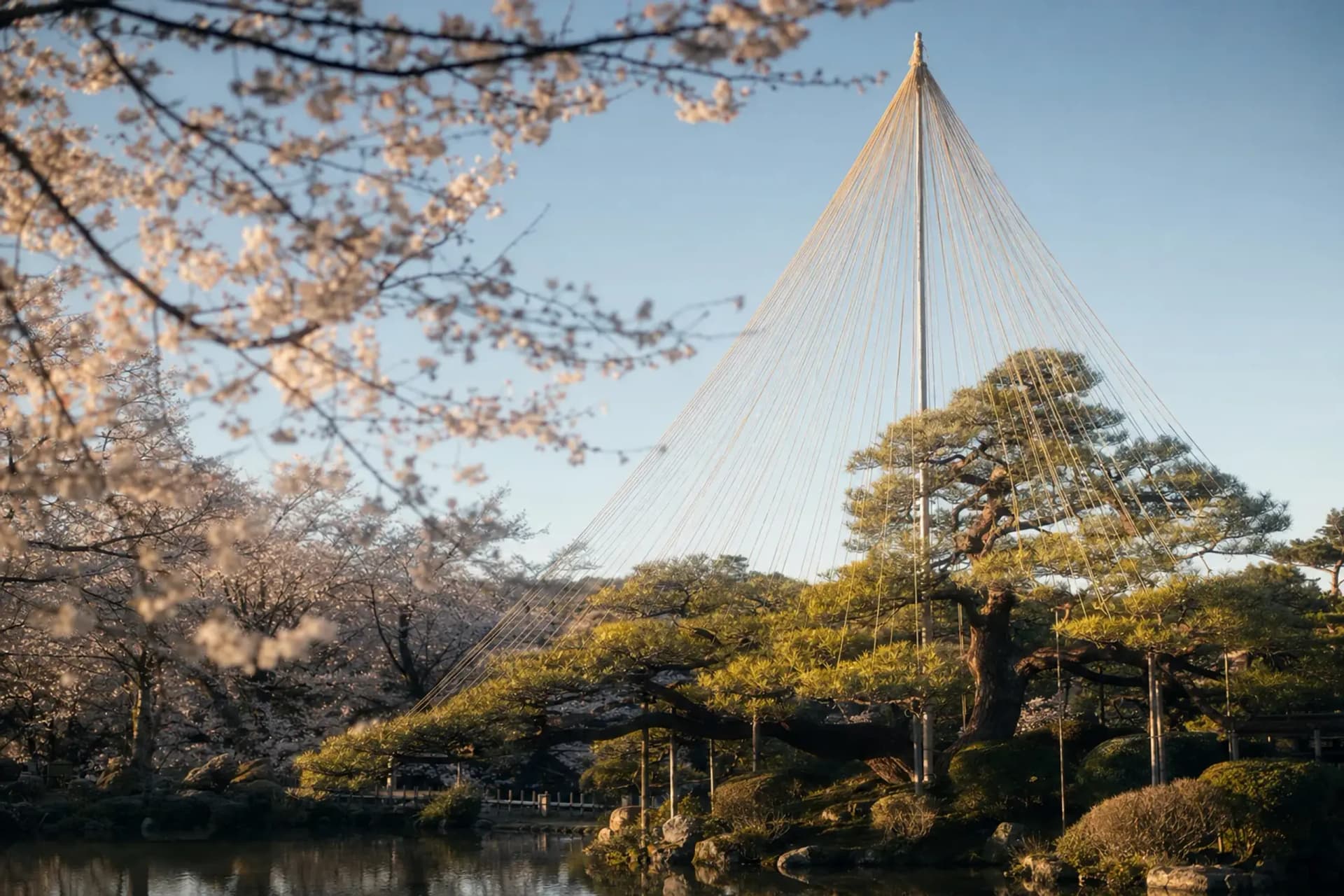
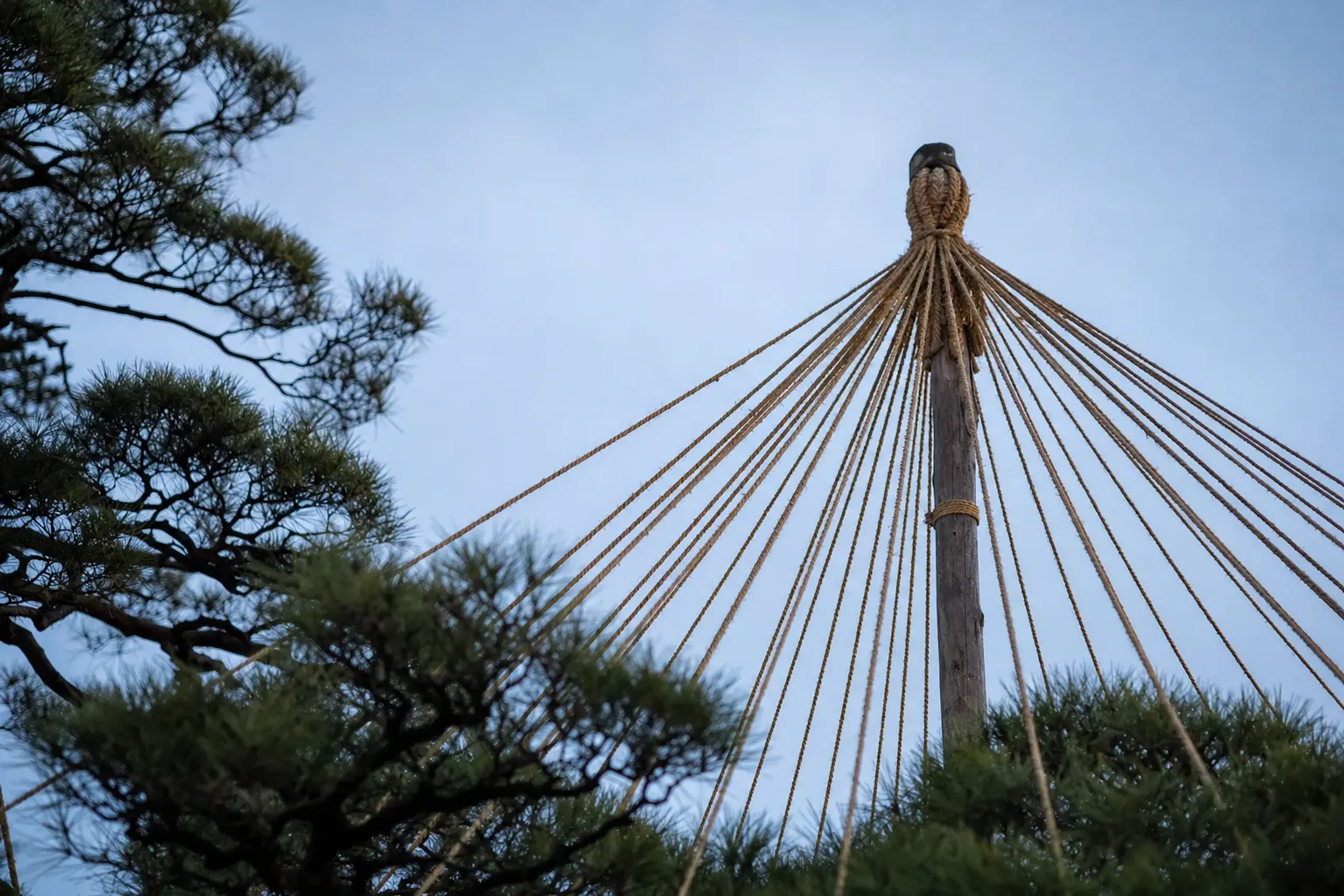
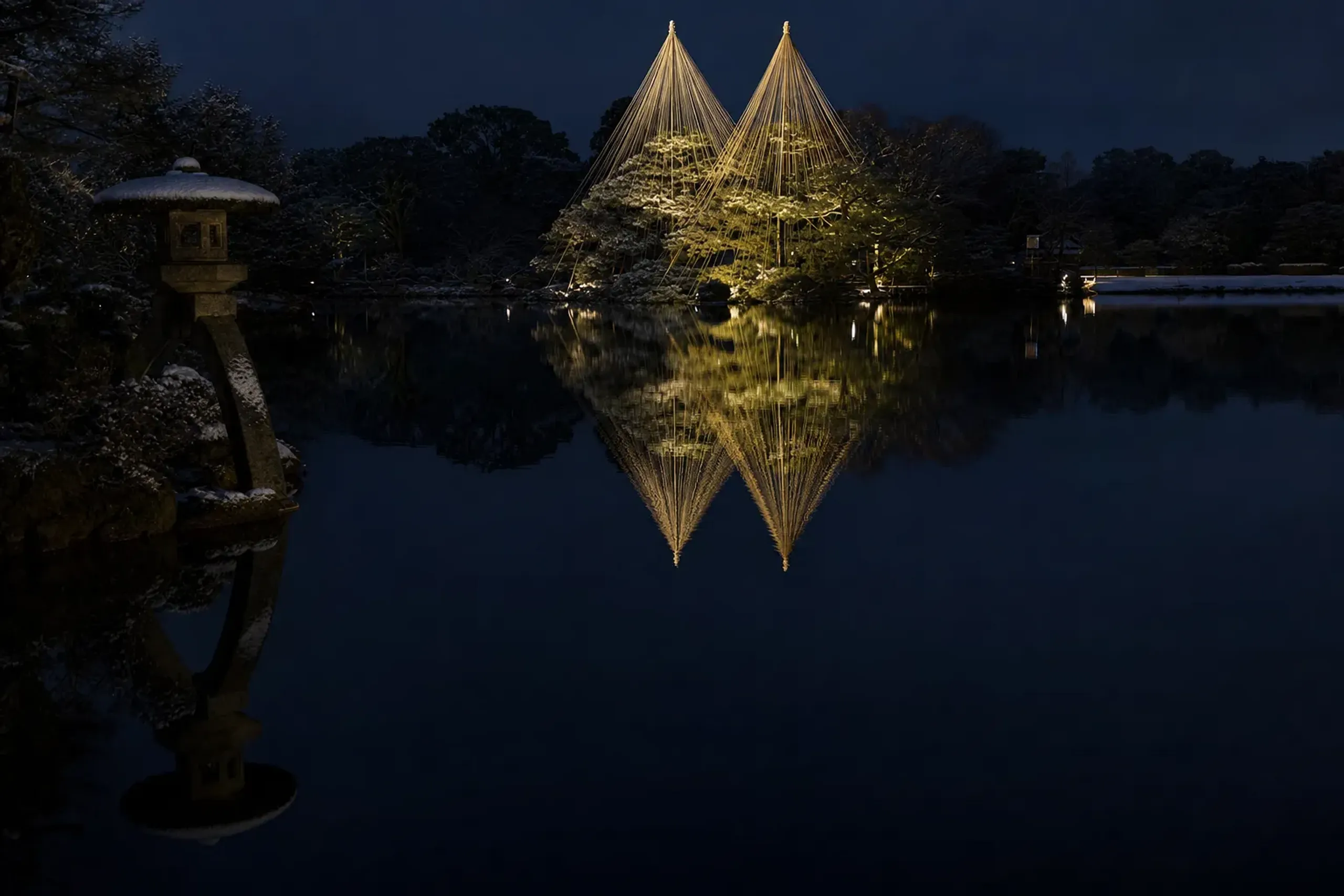
Yukitsuri is a traditional winter preparation where gardeners tie black pines into cones of straw rope to protect branches from breaking under the heavy, wet snow of the Hokuriku region.
The work begins around November 1, with the grand Karasaki pine taking priority. If it rains, the schedule shifts. Watching the gardeners ascend the central poles to execute this apple-style rope work is a display of living craft. They use about 800 ropes on the Karasaki pine alone. The garden features over 50 trees treated with these central masts, alongside trunk-hanging techniques and smaller protections for azaleas.
This installation process runs through mid-December. The ropes remain up until mid-March, when removal takes roughly a week. The aesthetic here is wabi-sabi in practice. The ropes are functional, yet their stark geometry against a grey sky offers a severe, quiet beauty that defines Ishikawa's colder months.
When Is The Best Time To See Snow In Kenrokuen?
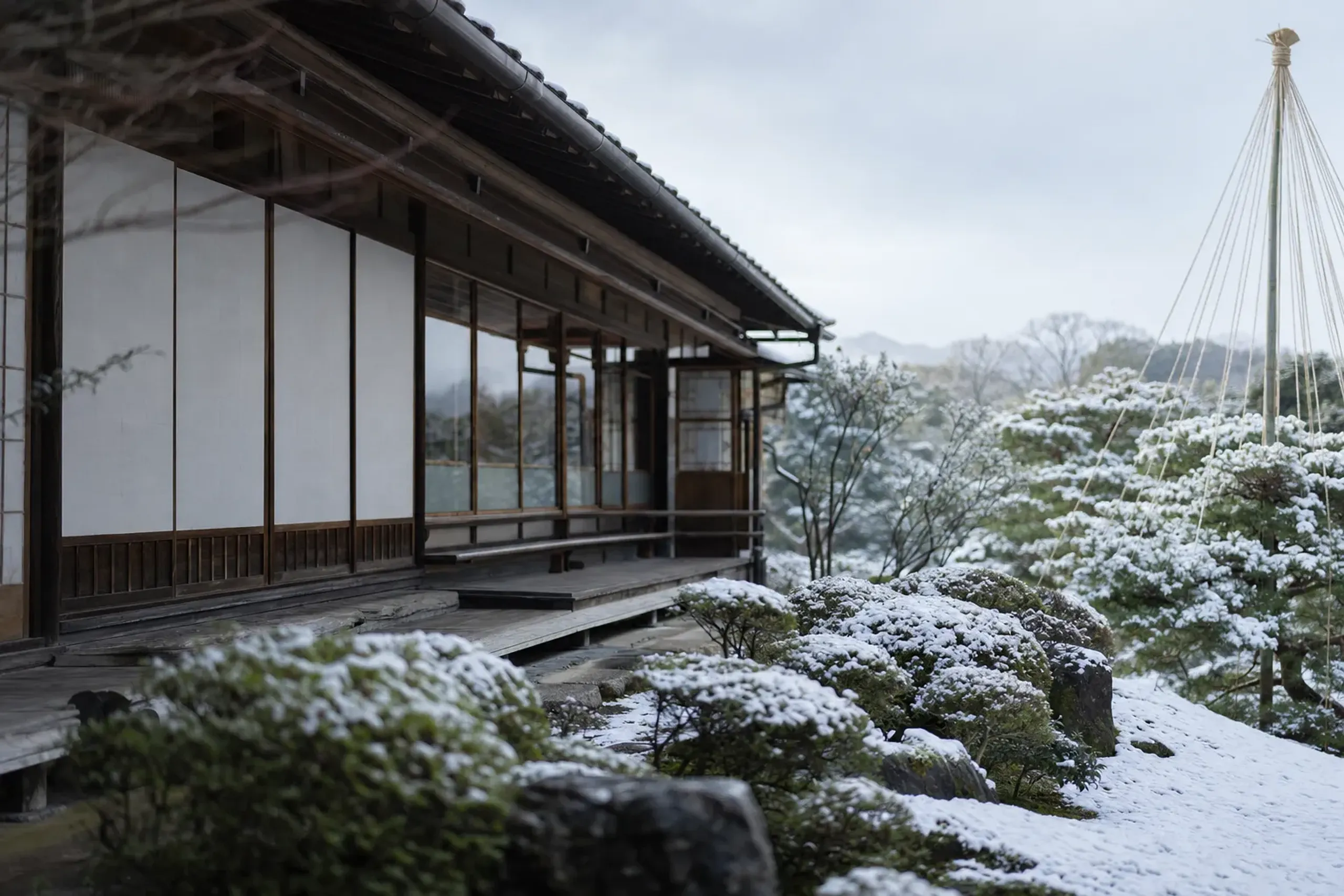
Snow typically falls between December and February, with January seeing the most snow days, though winter weather in Kanazawa varies yearly and deep accumulation is never guaranteed.
Many travelers envision a garden permanently blanketed in white. Reality is often different. Winters have grown warmer. To understand the actual conditions, look at the Japan Meteorological Agency (JMA) normals for Kanazawa.
| Winter Month | Mean Temperature | Average Snow Days |
|---|---|---|
| December | 6.8°C | 14.5 days |
| January | 4.0°C | 22.7 days |
| February | 4.2°C | 19.9 days |
If snow falls overnight, going early is your best strategy. Winter travel in Japan requires flexibility. The ropes are the permanent sight; the snow is a momentary gift.
The Early Morning Window: 6:00 AM To 7:45 AM
Between November 1 and the end of February, Kenrokuen offers early free entry from 6:00 AM to 7:45 AM. Last entry is at 7:30 AM. Visitors must exit by 7:45 AM, fifteen minutes before standard paid hours begin at 8:00 AM.
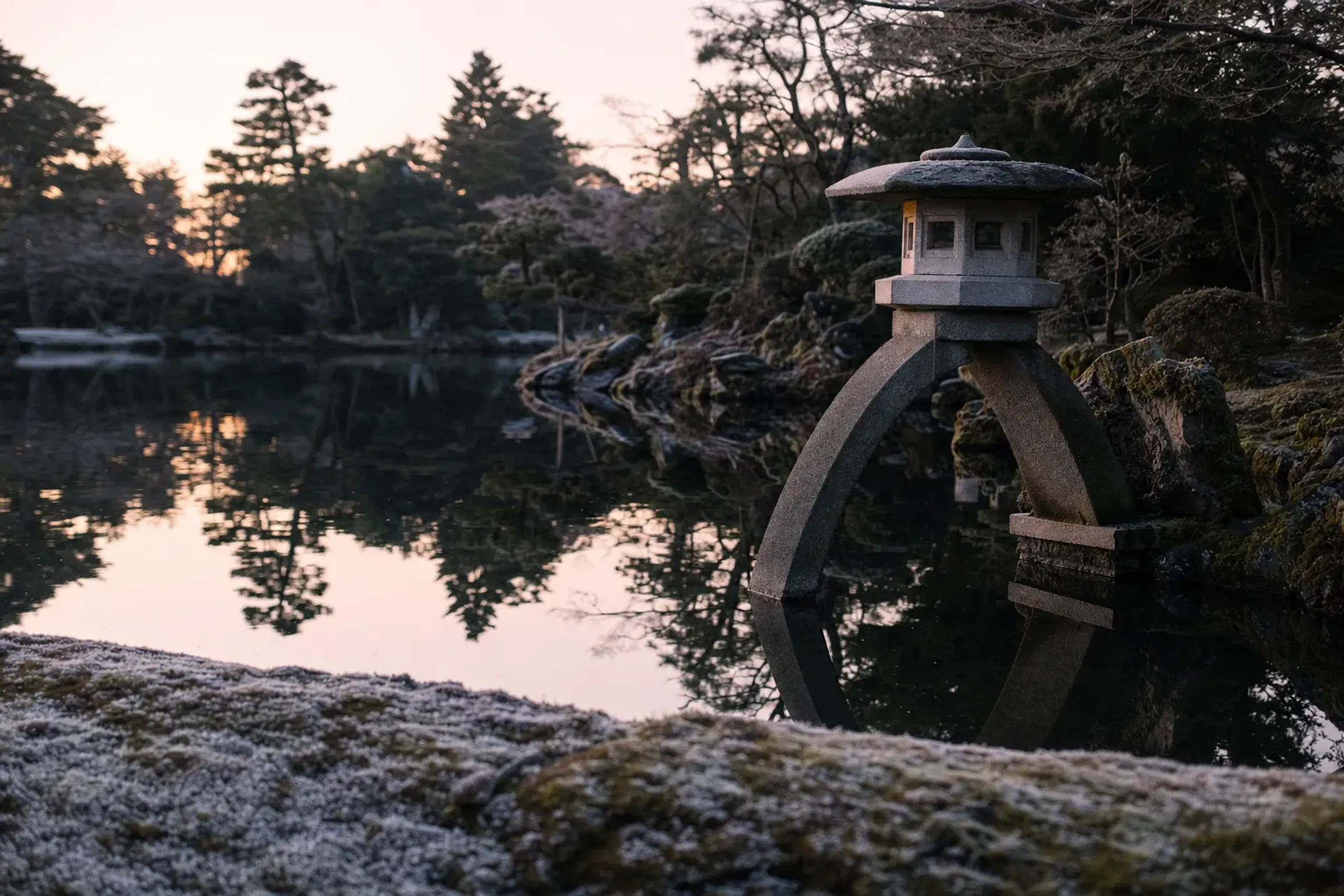
This is not a private or exclusive access period. It is entirely public. Yet, few visitors use it. The morning air is sharp. The moss is often crusted with frost. You enter exclusively through the Hasunoike-mon or Zuijinzaka gates.
In our experience, this early window appeals strongly to travelers who prize discretion and silence. You walk the gravel paths with only a few local residents. The great Kotoji lantern, standing on two legs by the pond, emerges slowly from the dawn shadows. It is the garden at its most austere and solitary.
What Are The February Light-Up Dates At Kenrokuen?
The garden hosts tentative free evening light-ups on select February dates, typically Saturdays, from 18:00 to 20:45, though the exact schedule requires official confirmation from Ishikawa Prefecture each winter.
For example, the confirmed dates for February 2026 were four Saturdays: the 7th, 14th, 21st, and 28th. The garden closes at 21:00 on these nights. These events illuminate the yukitsuri cones, casting golden reflections across Kasumigaike pond. The neighboring Kanazawa Castle Park and Gyokusen'inmaru garden also participate.
Option A: The Morning Strategy
Visit during the early free entry. The light is pale and the air is quiet. This suits photographers and those who prefer isolation over spectacle. You finish by 7:45 AM, leaving the rest of the day for nearby historical sites.
Option B: The Evening Light-Up
Attend a confirmed Saturday evening in February. The gold-lit ropes against the dark sky create a striking visual contrast. It will be busier, and tripods are heavily restricted on the bridges for safety.
The dates for 2027 remain tentative until the management office officially confirms them. A coordinator on our team always verifies these schedules weeks in advance, ensuring evening dining reservations align with the reality of the garden's operating hours.
Navigating The Garden: Safety, Paths, And Construction
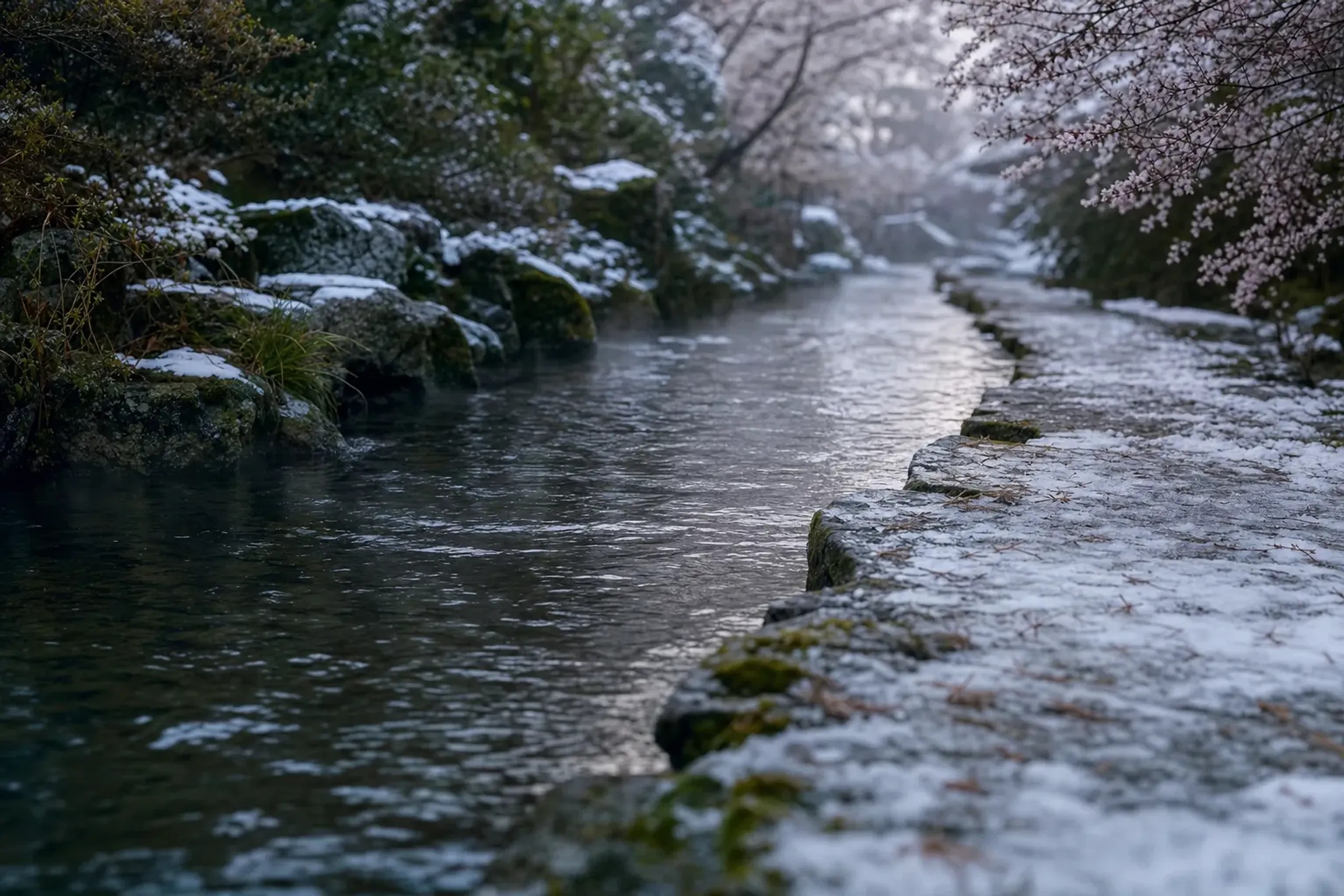
Kenrokuen spans roughly 11.4 hectares. It is built on a slope, and water from the Tatsumi canal weaves through the grounds. In winter, this terrain requires attention. The gravel paths become slick with ice or wet snow. Wheelchair users face distinct challenges on the gradients.
Key fact: The Sazae-yama stone wall is currently being dismantled due to damage from the 2024 earthquake. This introduces narrower paths and construction vehicles to certain areas, with no announced completion date. Confirm current path conditions before visiting.
A few steps away sits Seisonkaku, a villa built by the 13th Maeda lord for his mother. It represents a different kind of architectural intimacy. In winter, they exhibit the historic costumes worn by wives of the Maeda family. It is an excellent, warm counterpart to the exposed paths of the garden.
How Our Team Plans A Cold-Weather Visit
Pacing is critical in February. You cannot linger outdoors for hours without a strategy. We structure Kanazawa mornings around sharp bursts of outdoor walking followed by intentional indoor warmth.
When you use premium private transportation, your vehicle waits near the gates. You avoid the cold wait at a bus stop. Your English-speaking cultural interpreter meets you at the hotel, handling the logistics of the slippery slopes and guiding you directly to the Karasaki pine.
Mid-morning, we recommend stopping at Shiguretei, a teahouse within the garden bounds. Open from 9:00 AM to 4:30 PM, it serves matcha and a wagashi sweet for a nominal fee. You sit on tatami, look out over the pond, and let the feeling return to your hands. Moving smoothly through Japan is about removing friction, and anticipating the cold is part of that careful curation.
Frequently Asked Questions
How much does it cost to enter Kenrokuen in winter?
Entry is paid during standard daytime hours from 8:00 AM to 5:00 PM, while the early morning period from 6:00 AM to 7:45 AM and specific February light-up evenings are free to the public.
Can I guarantee a snow-covered garden for my visit?
No. Kanazawa experiences variable winter weather, and while January and February offer the highest probability of snow, the garden is prepared for it rather than constantly blanketed.
How do I get to Kenrokuen from Tokyo?
You ride the Hokuriku Shinkansen directly from Tokyo to Kanazawa Station, a journey of roughly two and a half hours, followed by a short drive or loop bus ride to the garden gates.
Are there private tours of Kenrokuen after hours?
No. Kenrokuen is a public prefectural garden. All early morning and evening light-up hours are publicly accessible, and official regulations do not permit private or exclusive after-hours access.
Why Choose Japan Royal Service
Navigating Japan's seasonal highlights requires strict attention to facts. Hours shift. Light-up dates remain tentative until the last minute. Construction alters walking routes. Our concierge team at Japan Royal Service does not rely on outdated travel blogs; we verify directly with prefectural offices and garden management.
For our guests, this means certainty. It means knowing exactly when the early gates open, and having a warm vehicle waiting exactly when the cold sets in. We safeguard your time and privacy, ensuring your Kanazawa experience is measured, refined, and beautifully paced.
Guests interested in learning more about integrating Kanazawa into a broader itinerary may contact our concierge for tailored guidance. For private coordination, reach our team directly via WhatsApp or LINE, or contact us here.