In this guide
- 01What Is Kangensai At Miyajima, And Why Does The Date Change Every Year?
- 02Why Kangensai Exists: Taira No Kiyomori And Court Music On The Sea
- 03The Boats And The Music: Goza-Bune, Escorts, And Gagaku
- 04Kangensai 2026 Schedule: What Happens Hour By Hour (15:00–23:00)
- 05Should You Watch Kangensai From The Shore Or From A Boat?
- 06Do You Need To Stay Overnight To See The Kangensai Finale?
- 07How Do You Get To Itsukushima Shrine For Kangensai From Hiroshima?
- 08How Japan Royal Service Plans Kangensai Night With Discretion And Clear Boundaries
- 09Frequently Asked Questions
- 10Why Choose Japan Royal Service
One summer evening each year, Miyajima goes quiet in a particular way. Not empty. Tuned. The timing is set by the lunar calendar and the tide, so the Western date moves every year, and planning “sometime in July” is an easy way to miss it.
Kangensai (Kangen-sai) is the largest annual ritual at Itsukushima Shrine. You are not there for a parade. You are there to watch a Shinto rite unfold across Hiroshima Bay, with boats, lanterns, and gagaku performed in the Heian-period style.
Our team at Japan Royal Service helps you watch Kangensai with calm logistics and clear expectations. Two choices matter most. Shore or water. And whether you stay for the late finale.
What Is Kangensai At Miyajima, And Why Does The Date Change Every Year?
Kangensai is held on the 17th day of the 6th month of the lunar calendar, so its Western (Gregorian) date changes each year, chosen for a spring tide high enough for the boats and before typhoon season.
The lunar date is not a detail you can ignore. It is the point. The festival is timed to water level, not convenience, and that affects everything you will feel on the night—especially the long, unhurried pacing as the boats move from shrine to shrine.
In 2026, Kangensai fell on Thursday, July 30. Other years land earlier or later in summer, and the schedule also shifts slightly year to year.
In our experience, travelers do best when they plan the Hiroshima–Miyajima portion around the confirmed Kangensai date, not the other way around.
If you are looking ahead to a future year, our concierge team confirms the date directly with you at the time of arrangement, using official local listings.
Why Kangensai Exists: Taira No Kiyomori And Court Music On The Sea
Kangensai is not staged as entertainment. It is a religious observance at a working shrine, shaped by history and carried by local communities who know the route by heart.
The origin story is tied to Taira no Kiyomori. In 1146, he was appointed governor of Aki Province, and he remodeled Itsukushima Shrine. He also brought a court practice from the capital: music performed on boats. At Itsukushima, those boats were floated on the sea, not on a pond or river.
That shift matters. Sea changes the acoustics, the distance, the feeling of watching from shore. You are not “at” the performance in the modern concert sense; you are in the same air as the sound, and the bay carries it outward.
This is also why a guide can change your evening. A few sentences—what you are watching, why the boat pauses, what a stop signifies—turns a beautiful scene into a readable one.
The Boats And The Music: Goza-Bune, Escorts, And Gagaku
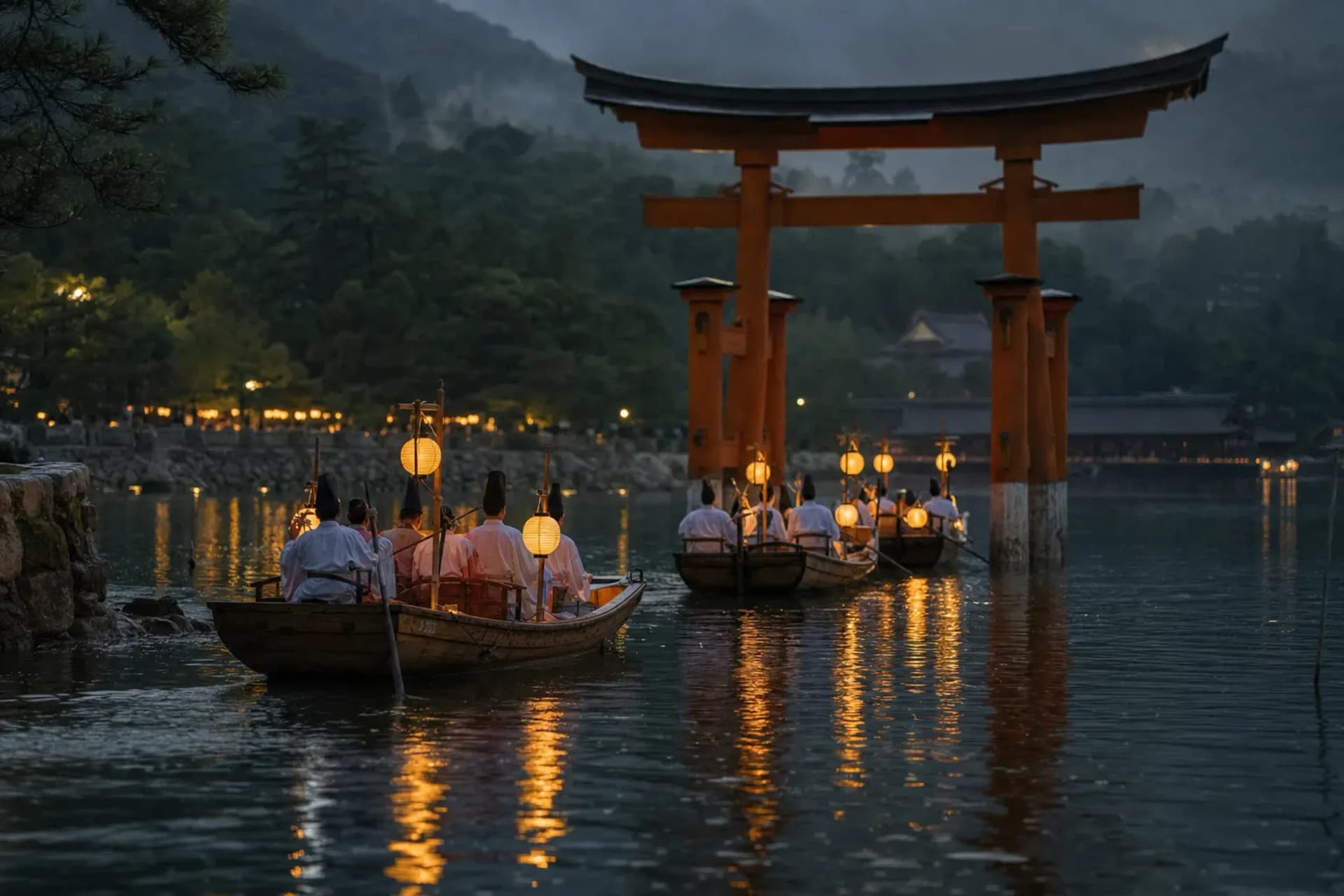
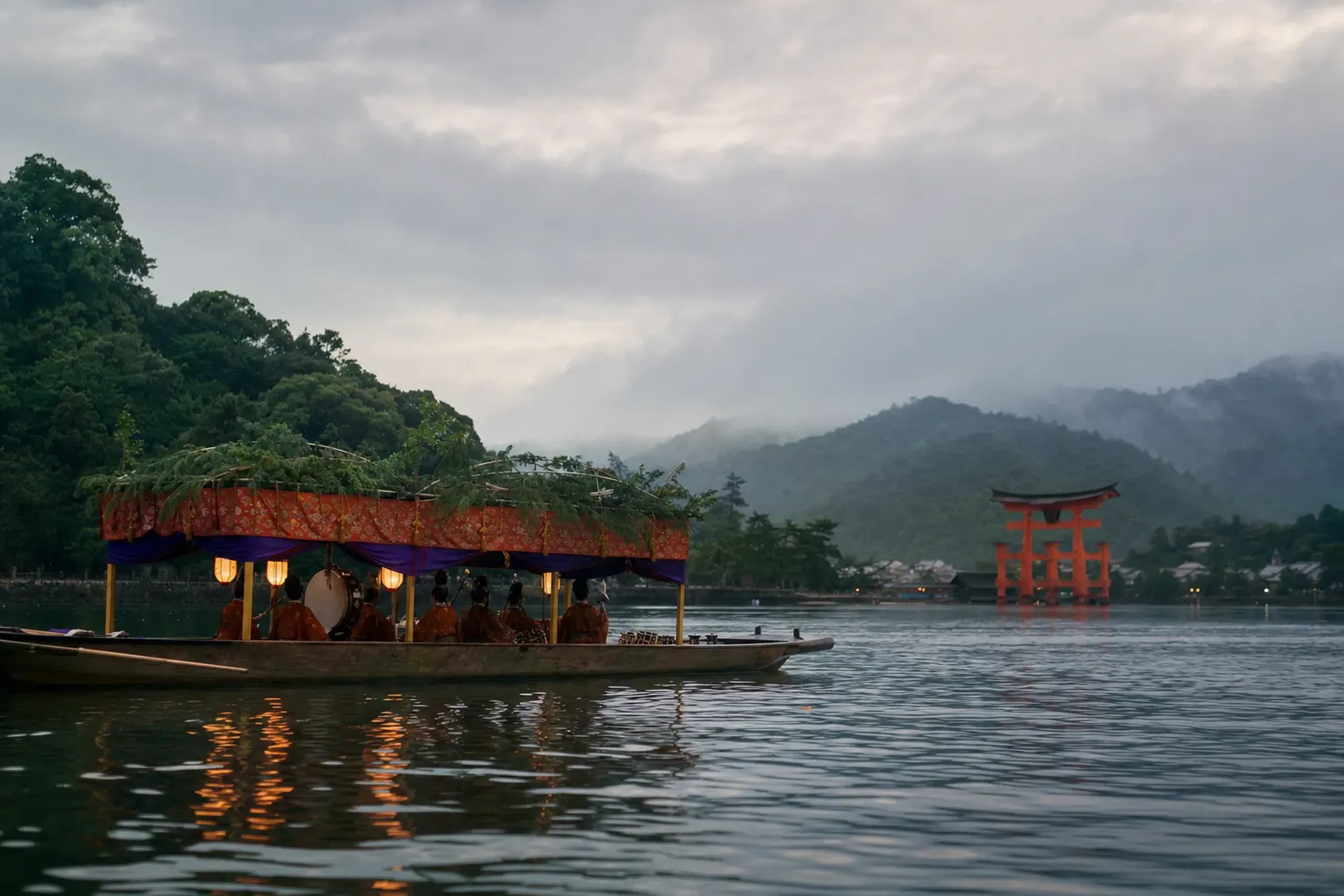
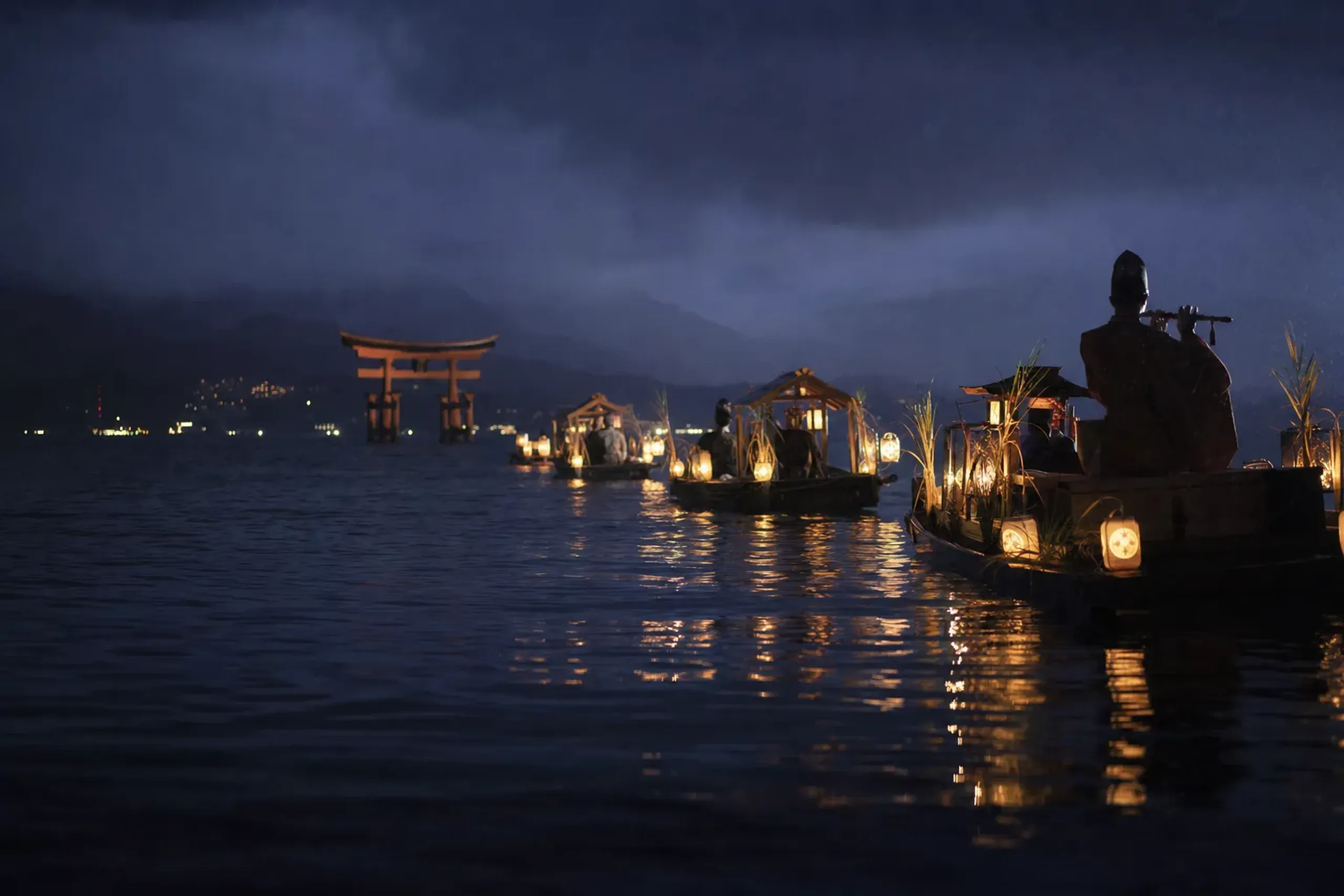
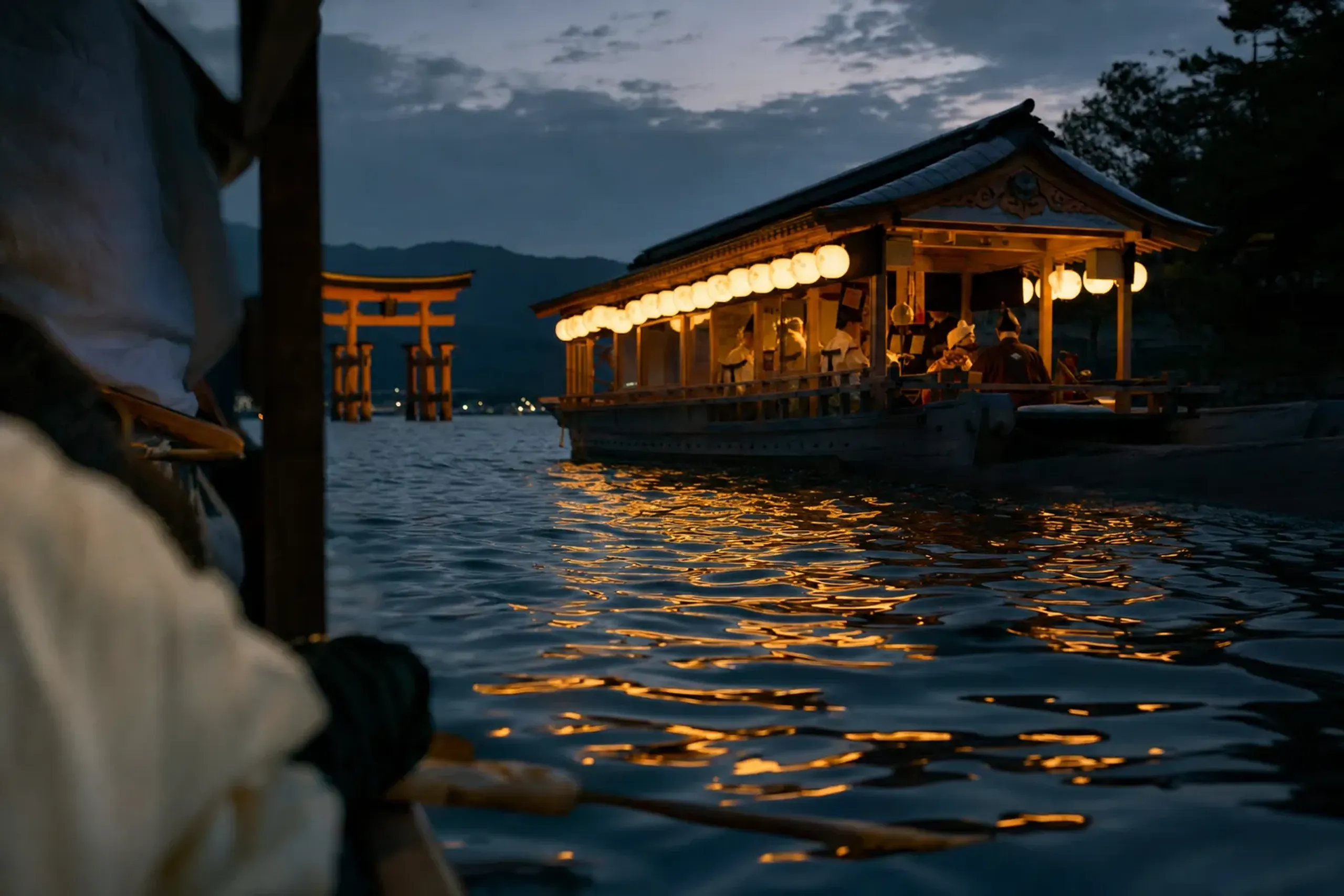
The central vessel is the Goza-bune, the ceremonial boat that carries the portable shrine (mikoshi).
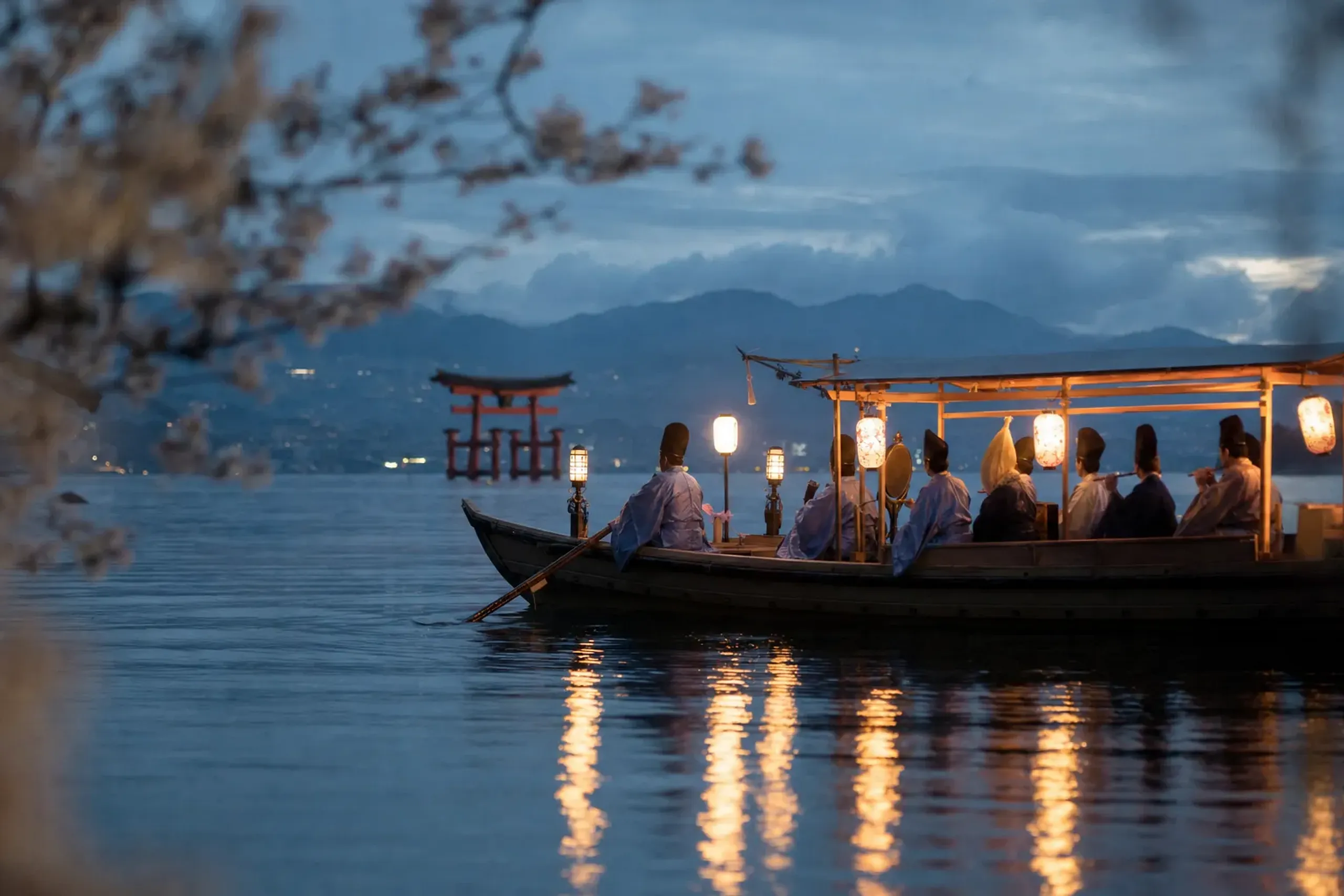
It is built from three Japanese boats joined together under temporary roofs, and it is marked with ritual objects: swords and a pike mounted at the bow, and a sacred mirror at the stern.
The Goza-bune is escorted by boats rowed by crews from Eba (Hiroshima City) and Aga (Kure City). This is one of the quiet “hidden-Japan” elements of the night: the visible ritual is supported by relationships that run beyond the island, into the working waterfront communities of the bay.
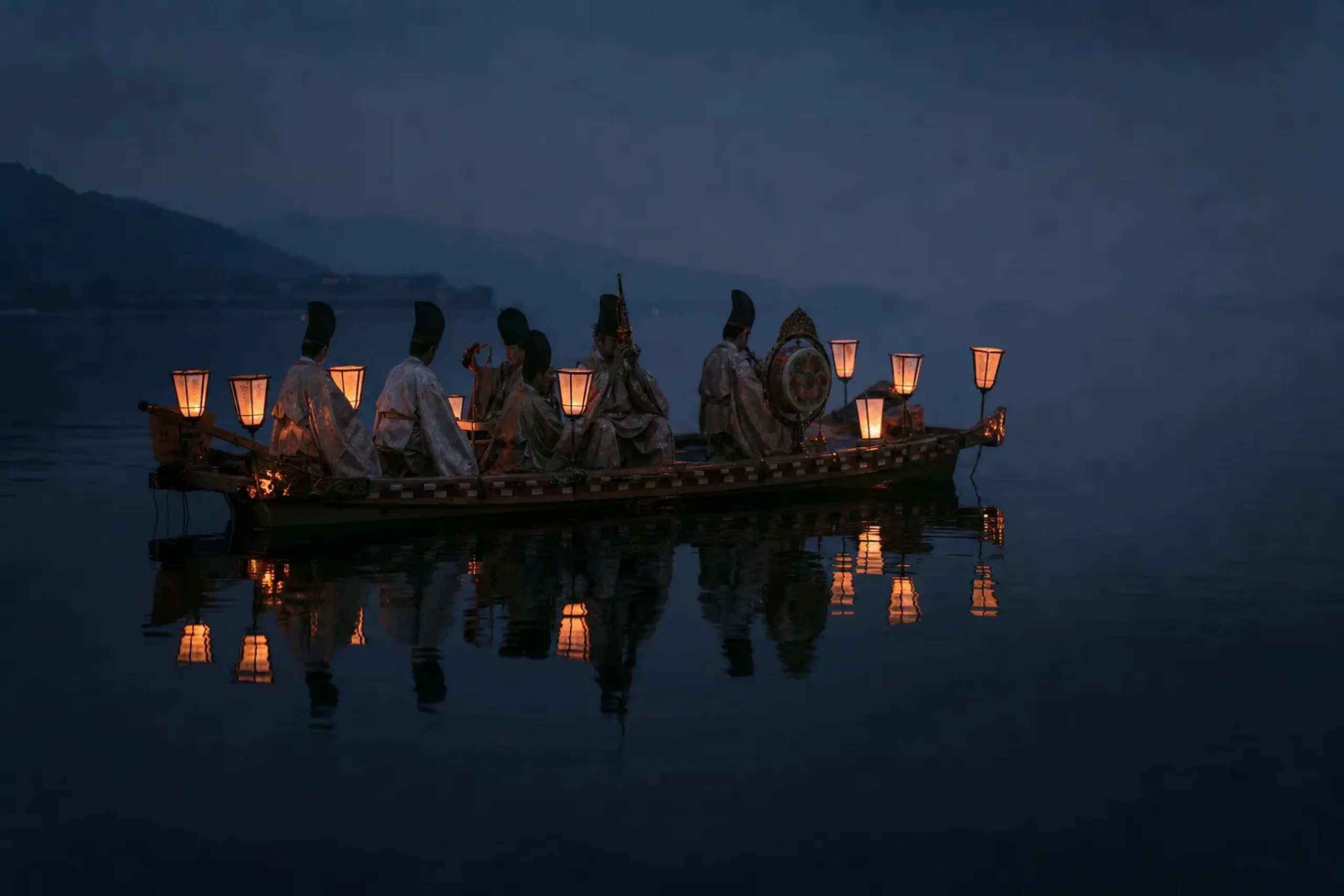
On board, musicians perform gagaku in a Heian-period style, using wind, string, and drum instruments. The sound is formal, measured, and oddly human. You feel the breath in it. That restraint—wabi-sabi rather than spectacle—is part of why Kangensai stays with people who normally think they have “seen it all.”
As observers, your job is simple. Be still. Keep your voice low. Let the bay do the rest.
Kangensai 2026 Schedule: What Happens Hour By Hour (15:00–23:00)
In 2026, Kangensai ran from 15:00 to about 23:00, starting with a ceremony at Itsukushima Shrine and ending with the portable shrine returning there.
The rhythm is slow on purpose. Long pauses. Soft shifts in position. If you come expecting a constant “show,” you will get restless, and you will miss the point.
15:00: Ceremony At Itsukushima Shrine
The evening begins with a Shinto ceremony at Itsukushima Shrine. This is the anchor. Arrive with time in hand, not with a last-minute rush.
If you are traveling with family, this is also the moment to decide who can comfortably stay late. A seven-year-old who can do 15:00 to 23:00 is rare. Plan honestly.
16:00: Mikoshi Moves To The Goza-Bune; Departure For The Ōtorii
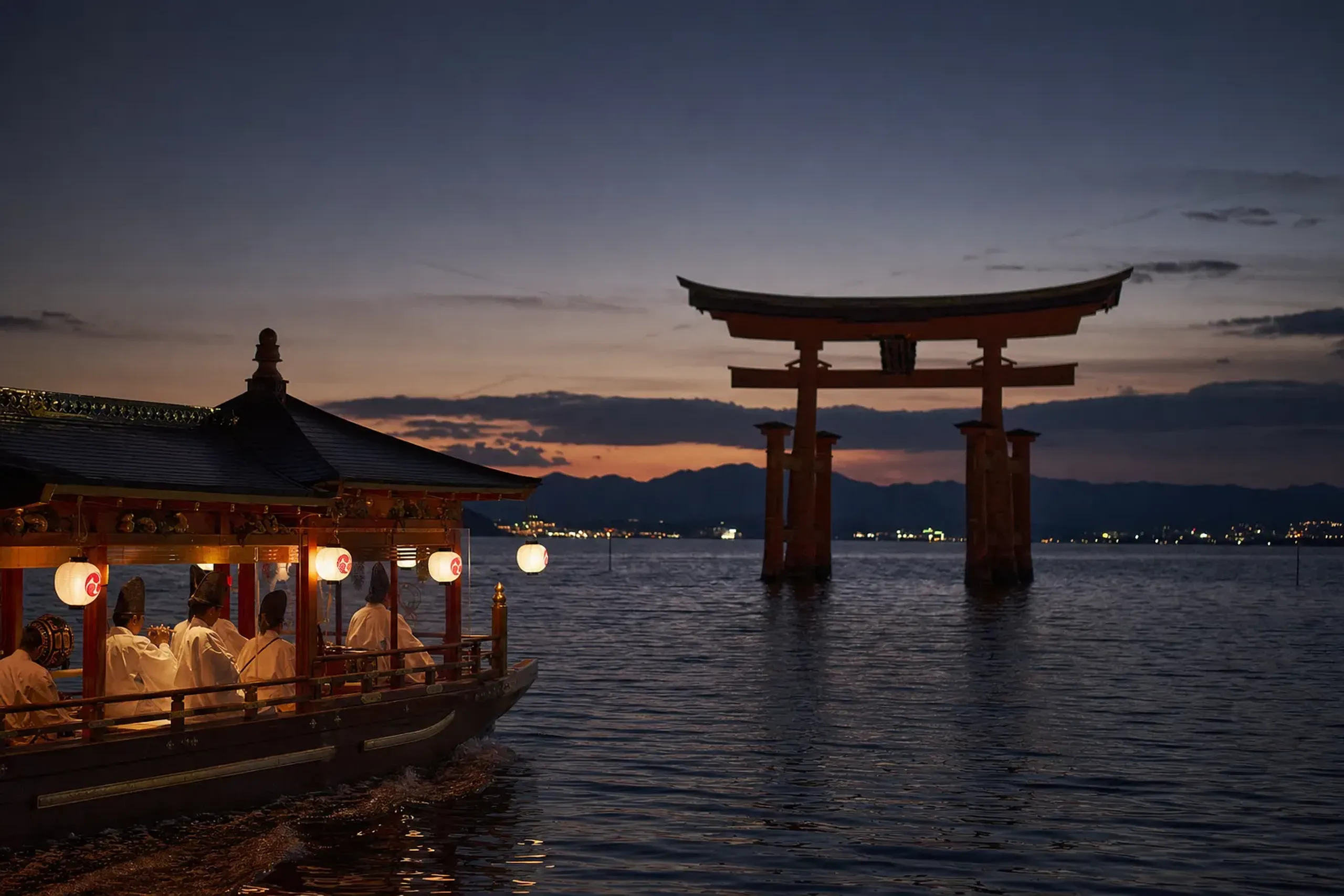
Around 16:00, the portable shrine is moved to the Goza-bune, and the boat departs toward the Ōtorii gate. Gagaku is performed at the gate.
This early stop is often the most visually legible for first-time visitors. Water, shrine silhouette, boat presence. It reads at a glance.
After Sunset: Lanterns Are Lit On The Boats
After sunset, lanterns are lit on the boats. The mood changes immediately.
Photographs can work, but only if you keep your setup modest. Big rigs, bright screens, and loud commentary feel out of place here. Our team tends to recommend a small camera and a patient hand.
About 19:20: Jigozen Shrine Performance, With A Dance
At about 19:20, the boats reach Jigozen Shrine across the water, where gagaku is performed along with a dance. This is one of the moments when a knowledgeable escort matters most.
Without context, it can look like “music, then movement.”
With context, you notice the spacing, the timing, the way the crowd’s attention tightens, then loosens again.
About 20:40: Nagahama Shrine And Lantern Greetings
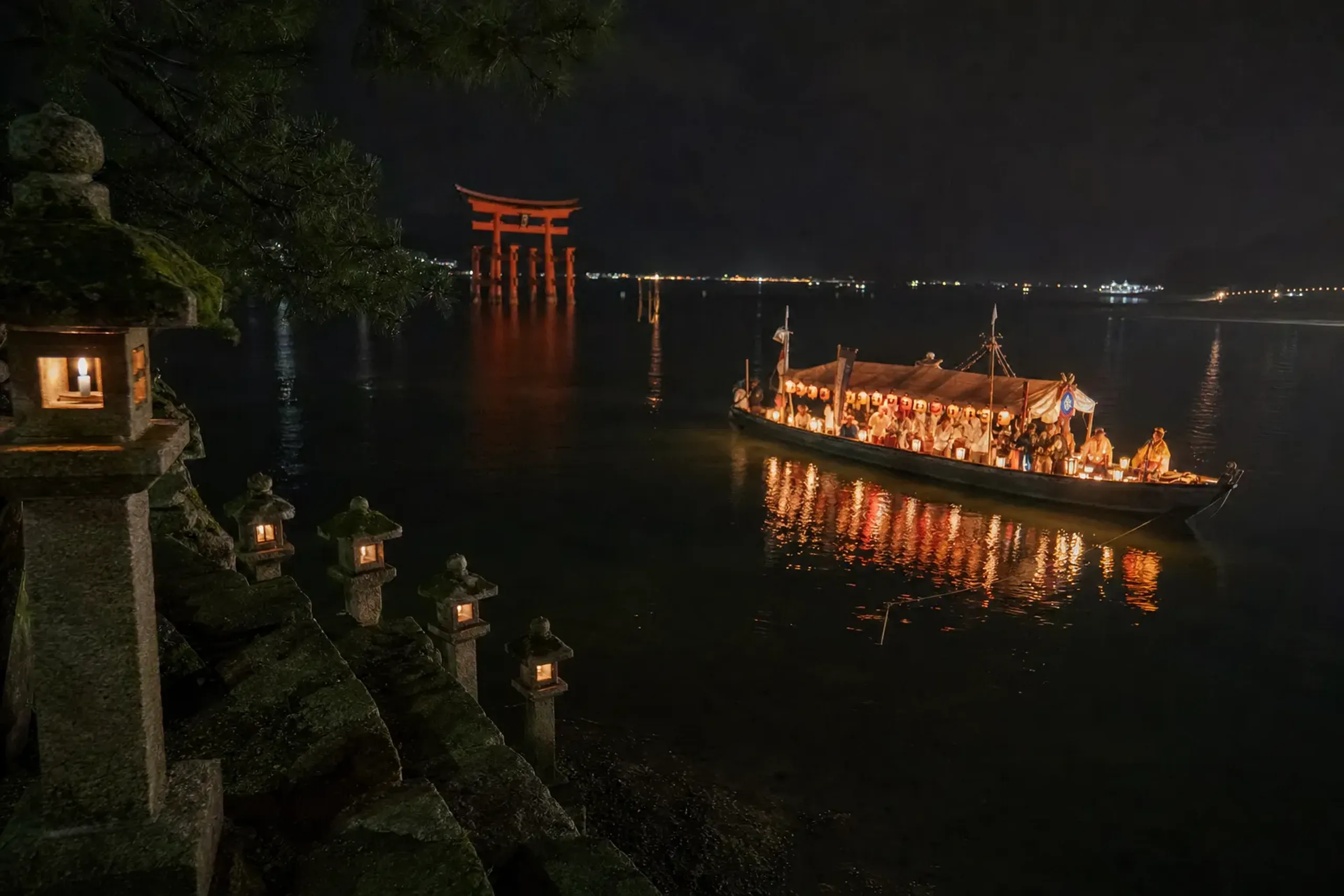
At about 20:40, the route reaches Nagahama Shrine. Islanders greet the boats with paper lanterns.
This is where Kangensai feels the most communal. Not touristy. Local. If you are watching from shore, this segment often becomes your emotional high point because you are standing among people who treat the night as their own calendar marker.
About 21:30: Ōmoto Shrine Performance
At about 21:30, gagaku is performed at Ōmoto Shrine. The night is deep by now.
This is also where pacing mistakes show up. If you have tried to fit dinner, shopping, and a busy daytrip into the same day, you will pay for it here. Eat earlier. Keep the day light.
About 22:30: Marodo Shrine Finale At Masugata
At about 22:30, the finale takes place at Marodo Shrine, with the boats turning at Masugata. It is late. That is intentional.
If you want the complete arc of Kangensai, this is non-negotiable. Many visitors never see it because they need to leave earlier, or because they treated the festival as a “drop-in” event rather than a full evening rite.
About 23:00: Return To Itsukushima Shrine
At about 23:00, the portable shrine returns to Itsukushima Shrine. The night closes where it started.
What you feel at this point is not excitement. It is release. A long, formal thread has been tied off, and the island’s soundscape slowly returns to normal.
Key fact: The 2026 schedule above is official for that year, but times change annually. Our concierge team confirms the current year’s schedule directly with you during planning.
Should You Watch Kangensai From The Shore Or From A Boat?
If you want proximity to local atmosphere and flexibility to move, shore viewing is usually best; if you want a quieter vantage and the feeling of being inside the bay’s geometry, water viewing is often best.
There is no universal “right” choice. The better question is how you like to perceive a ritual: among people, or at a remove with more space around you.
Option A: Following From The Shore
Watching from the shore gives you options. You can follow the route’s energy. You can pause when you need to, especially if you are traveling with parents or teenagers.
- Best for: First-time visitors to Miyajima who want to feel the island community around Nagahama Shrine’s lantern greetings.
- Trade-off: You will share space with other onlookers, and you cannot control sightlines.
- How we help: Our team plans timing, walking pace, and sensible breaks, and we provide guidance on respectful behavior at shrines. Quiet guidance matters.
Option B: Watching From The Water
Watching from the water changes the scale.
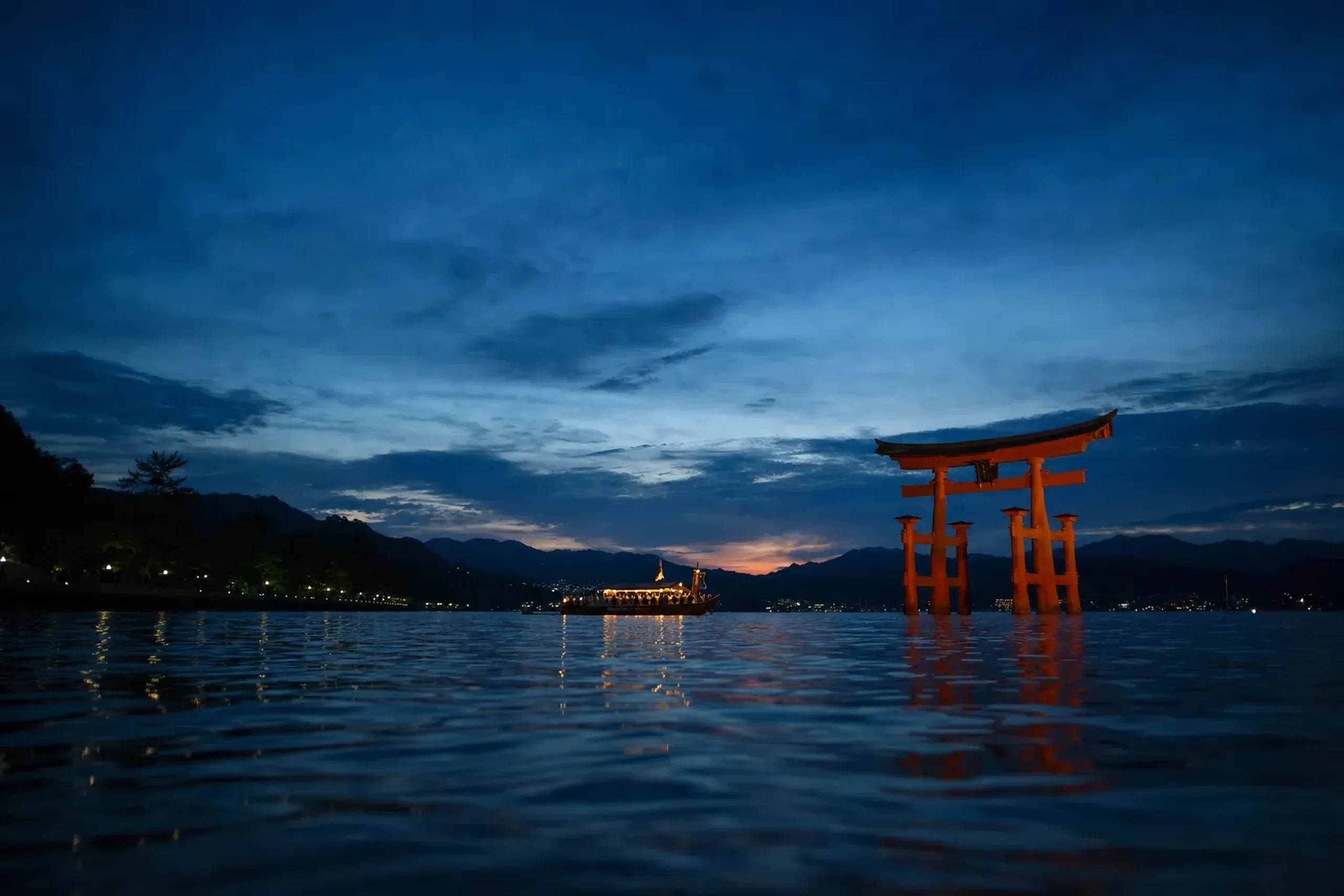
Distances make more sense. The gagaku can feel as if it is floating rather than “coming from somewhere.”
- Best for: Couples, small groups, and photographers who prefer steadier sightlines and fewer interruptions.
- Trade-off: Plans on the water are more sensitive to timing, tides, and operational constraints on festival night.
- How we help: Guests interested in learning more may contact our concierge for tailored guidance on what is officially offered on the date, and what is feasible privately, without overpromising outcomes.
This is where discretion matters. You do not want your plans discussed loudly at a hotel counter. Our approach is private by default, and we keep itineraries tightly held.
Do You Need To Stay Overnight To See The Kangensai Finale?
Yes—if you want to watch Kangensai through the 22:30 finale and the ~23:00 return, staying overnight on Miyajima (or planning very carefully) makes the evening feel complete.
The finale is late, and the emotional logic of the night is cumulative. Leaving early cuts the thread.
We avoid publishing ferry specifics because they can change, and because your best plan depends on your party size and stamina. Instead, we confirm late-evening logistics directly with you during planning.
For the stay itself, read our related guide: After The Last Ferry: Miyajima Overnight. It pairs naturally with this festival night.
How Do You Get To Itsukushima Shrine For Kangensai From Hiroshima?
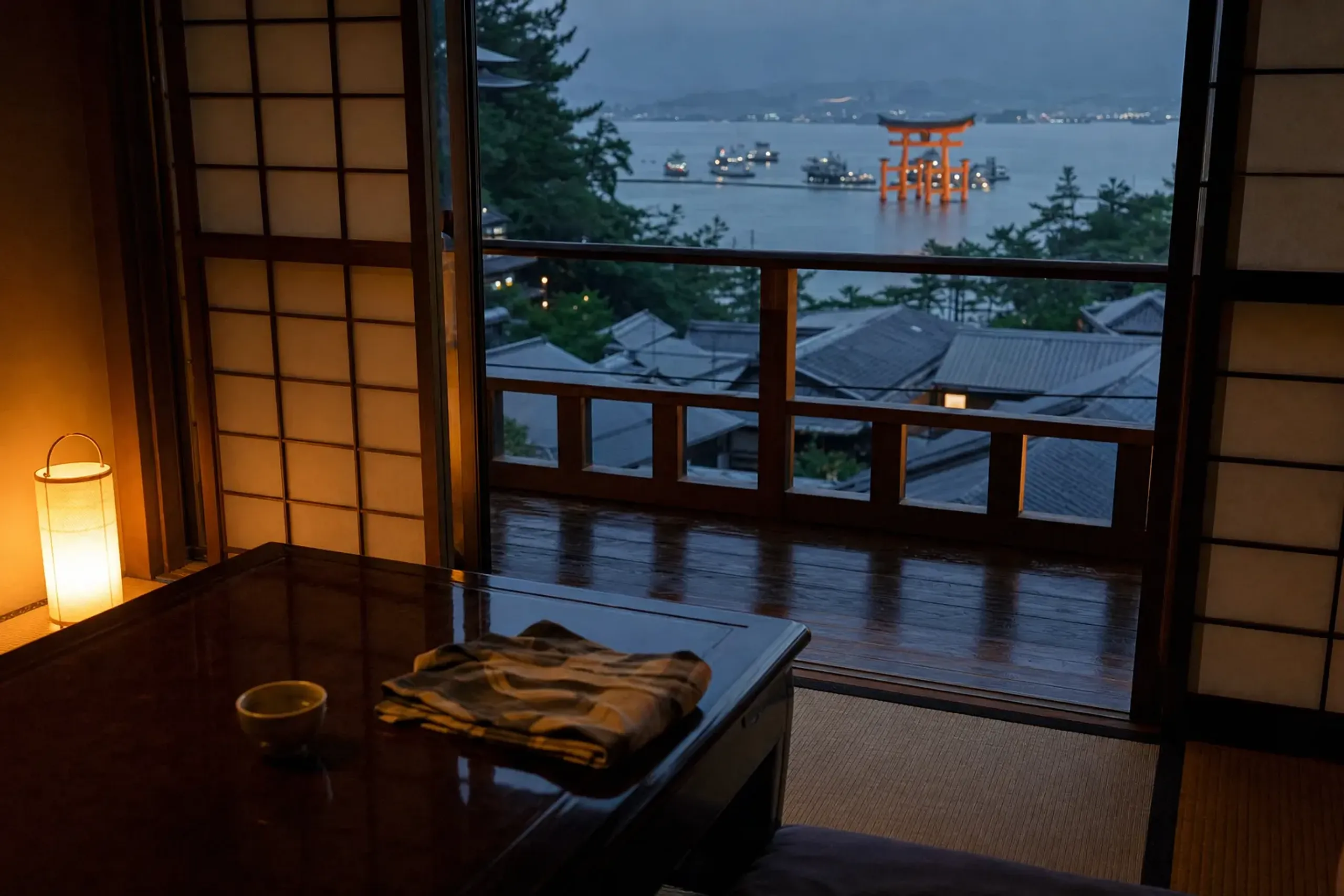
The standard route is JR Hiroshima Station to JR Miyajimaguchi Station, then a ferry to Miyajima, followed by about a 10-minute walk to Itsukushima Shrine.
Itsukushima Shrine publishes official access information, and JNTO notes the ferry ride from Miyajimaguchi Passenger Terminal is about 10 minutes, then about a 10-minute walk onward. Good to know. Not enough on its own.
On festival day, timing discipline matters more than speed. We often recommend treating Hiroshima-to-Miyajima as a dedicated afternoon-and-night block, not something you squeeze between museums and dinner reservations.
If you want to arrive with less friction, our first mention is simple: consider private transportation / chauffeur service to control the day’s rhythm before you transfer to the ferry.
How Japan Royal Service Plans Kangensai Night With Discretion And Clear Boundaries
Kangensai planning works best when the “seen” parts and the “supported” parts are separated. The ritual is not yours. The logistics are.
Our team at Japan Royal Service can design a tailor-made / bespoke itinerary that places Kangensai at the center of a Hiroshima–Miyajima segment, with pacing that respects the long evening and the late finish. Small groups work well. Two to six is a sweet spot.
We also align the night with the kind of Japan you came for. Wabi-sabi restraint over loud checklists.
Hidden-Japan choices around the edges of the Golden Route, when your schedule allows. And discretion throughout, because being watched while you watch a ritual is an avoidable irritation.
If you are building a broader summer trip, you may also like these guides from our journal: Japan Etiquette: What Matters, And What Doesn’t and Morioka Sansa Odori: Four Nights Of Drums On Chūō-dōri. Different regions. Same need for smart timing.
Frequently Asked Questions
What Date Is Kangensai In 2027, And Can I Plan A Trip Around It Now?
Kangensai is fixed to the lunar calendar, so the Western date changes each year, and our concierge team confirms the current official date with you during planning.
For long-range planning, it helps to hold a flexible window rather than locking flights before you confirm the festival date and evening schedule you want to follow.
Is Kangensai A Performance Or A Religious Ritual—And How Should I Behave?
Kangensai is a Shinto ritual, and you attend as a respectful observer, keeping voices low and following local cues around shrines and processions.
If you want a quick refresher before the night, our team often points guests to practical etiquette basics, especially around temples and shrines, so nothing feels awkward in the moment.
Can I Watch Kangensai From A Boat Instead Of The Shore?
Yes, it can be possible to watch from the water, but options and constraints vary by year and operator, so our concierge team discusses realistic choices with you privately.
We keep public guidance informational only, and we avoid promising access, routes, or outcomes that depend on third parties and festival-night operations.
What Time Does Kangensai End, And Is It Worth Staying Until The End?
In 2026, Kangensai ended around 23:00 when the portable shrine returned to Itsukushima Shrine, and staying through the finale is the most complete way to experience the night.
If your party cannot stay late, we shape the evening around the earlier arc so you still feel a beginning, a middle, and a graceful exit.
Why Choose Japan Royal Service
Luxury, on a festival night, is not a louder seat. It is fewer mistakes. Our team at Japan Royal Service plans Kangensai around verified schedules, realistic pacing, and discreet logistics, so you can focus on what is actually happening on the water.
We bring a Japan-specific sensibility to the planning: wabi-sabi restraint instead of forced “VIP” theater, hidden-Japan judgment about what is worth your time, and discretion as a default setting. When the night runs to 23:00, that calm matters.
If you want to experience Kangensai as a long, coherent evening—not a rushed photo stop—reach our team privately via WhatsApp or LINE, or contact us here.