In this guide
- 01What Kagawa did that nowhere else did
- 02How Tange got it
- 03The East Building
- 04Ōe, konzai heizon, and the Culture Hall — the counterargument
- 05Two buildings, one street, arguing
- 06The wider circle
- 07Why we would put these together
- 08What a visit involves
- 09Frequently Asked Questions
- 10More on this rotation
- 11Arranging the visit
- 12Access notes
Stand under the piloti of the East Building on a weekday morning and the argument announces itself before a single date is spoken. There are no offices at ground level — only air, a public lobby, and a garden beyond the glass. A government building that opens with a room for its citizens was not a normal proposition in 1958, and it is not an entirely normal one now. It is here because one man decided it should be, and because he then set two classmates against each other across a single Takamatsu street.
What Kagawa did that nowhere else did
Kagawa's architecture exists because Masanori Kaneko willed it into being. He governed the prefecture for six terms and twenty-four years, from 1950 to 1974 — born in Marugame in 1907, a Tokyo Imperial University law graduate who sat as a judge before he entered politics. As a student he had read Bruno Taut on Japanese beauty, and he never let it go. In office he used the word design as a political term and established a Design Room inside the prefectural government itself. He was known, simply, as the Design Governor.
A prefectural government with a design office built into it is genuinely unusual, and it is the through-line to everything that followed here, right up to the Setouchi art islands. Kaneko's conviction was that a poor rural prefecture could not out-spend anyone, but it could out-think them — that public buildings, public furniture and public craft were where a population meets the idea that it is worth something.
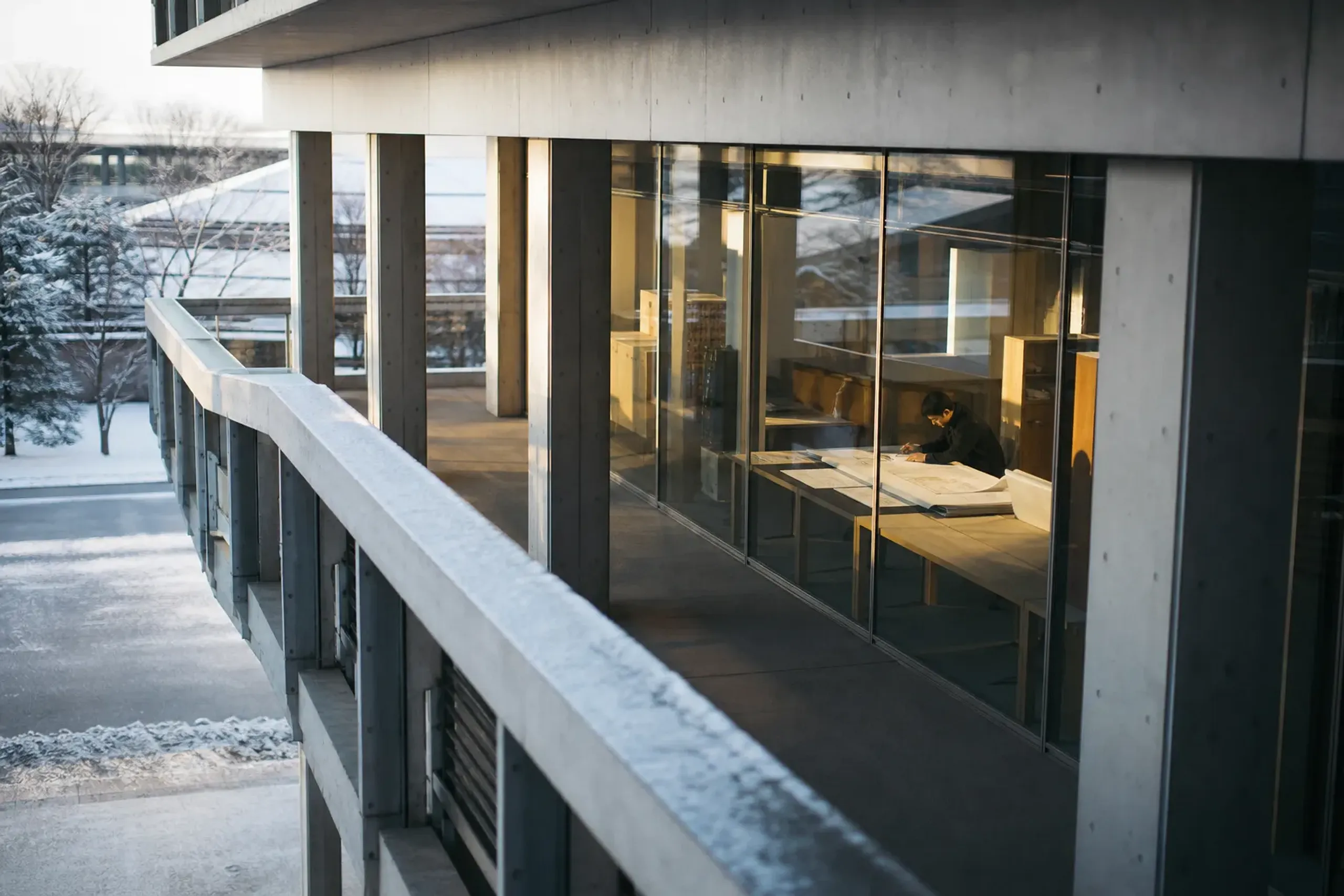
Takamatsu had burned in the war. Kaneko wanted a government building fit for a democracy rather than the authoritarian architecture of the prewar state. Everything else follows from that single decision. He commissioned Kenzō Tange for the government building. He drew in the sculptor Isamu Noguchi. He commissioned the painter Genichirō Inokuma. He put the designer Isamu Kenmochi on the furniture. For roughly two decades this small province was the place where postwar Japanese design was being worked out in public, at full scale, with real budgets.
Almost none of it sits on a tourist route. All of it lies within a few minutes of one another.
How Tange got it
The commission nearly went elsewhere. Kaneko first sought advice from Inokuma, two years his senior at Marugame Middle School, who told him the building must be a symbol of the prefecture and that the work must go to a good architect. Kaneko duly cancelled the firm he had been about to appoint and reconsidered between Kunio Maekawa and Kenzō Tange. Maekawa was already building Okayama's prefectural hall across the water; Tange got Kagawa.
Tange was in his early forties then — a rising figure rather than an established one, nobody outside Japan had heard of. The two men first talked properly by chance, sharing a cabin on the overnight ferry from Osaka to Takamatsu, a crossing prefectural officials had quietly arranged so the conversation would happen.
The East Building
Tange's problem was that reinforced concrete had no Japanese vocabulary.
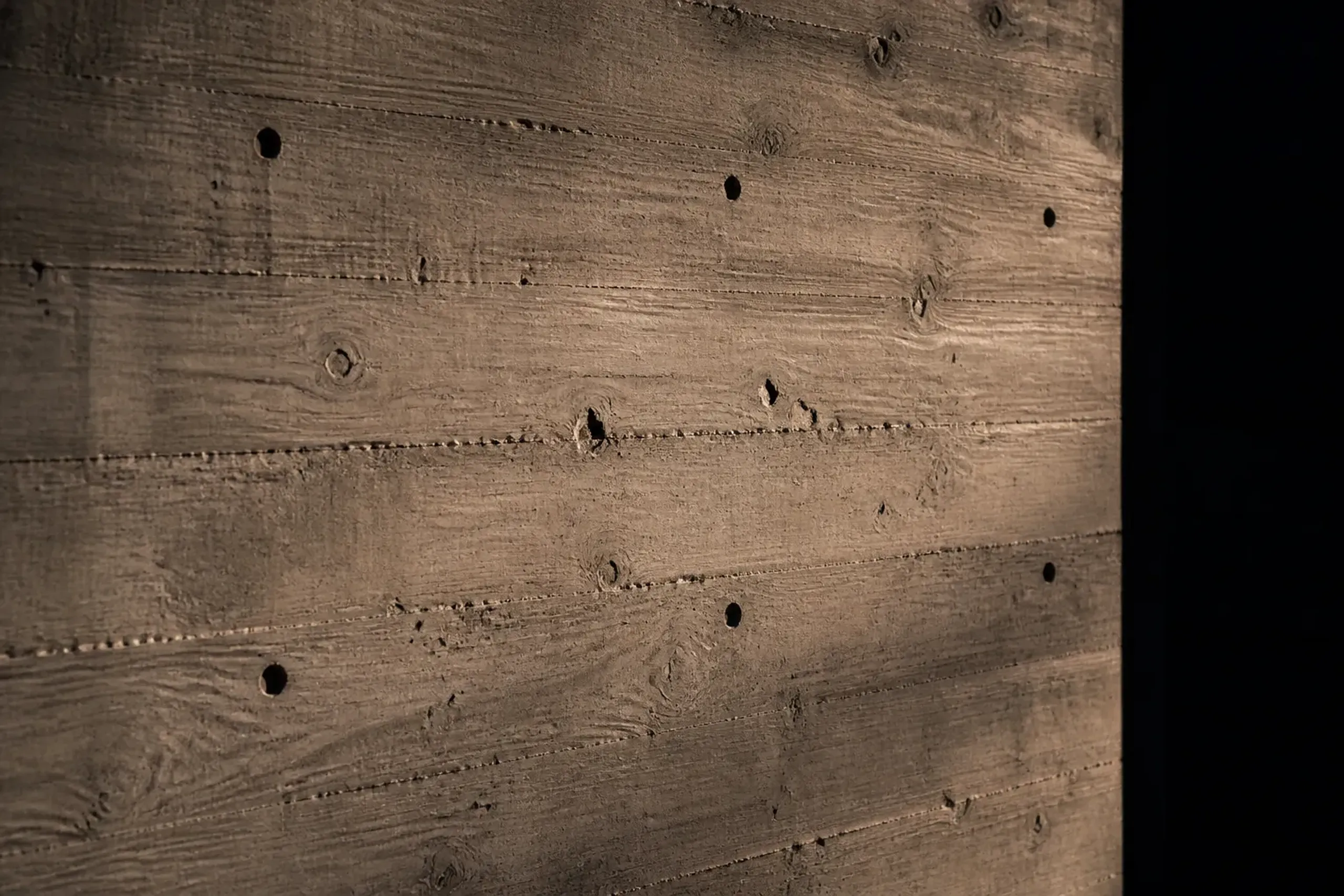
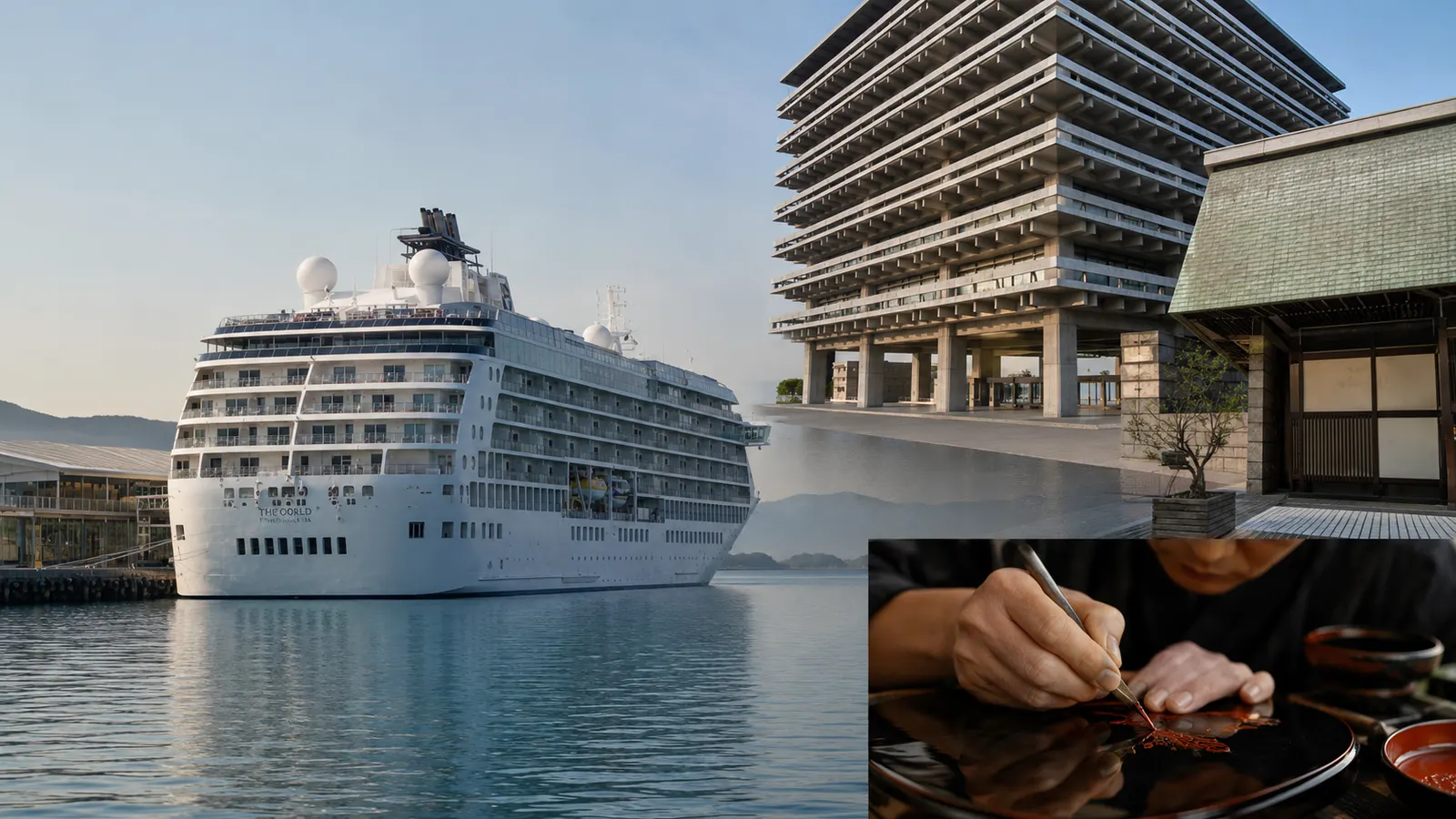
His solution was to make concrete do what timber had always done: the beams project and layer at the eaves in the rhythm of a temple bracket, balustraded balconies step back floor by floor, and the whole frame is expressed in board-marked concrete rather than clad. The Kagawa Prefectural Government Hall East Building was completed on 26 May 1958. It was the main building until 2000, when the new tower opened and it took its present name.
No offices on the ground floor. Piloti and lobby, open to the public, and on weekdays anyone may walk in. That decision — democracy rendered as a floor plan — became the model for postwar civic buildings across Japan.
The lobby mural is Wakei Seijaku by Inokuma, drawn from the spirit of tea. Kaneko had written the character for harmony on a shikishi in New York, and the work grew from that. Inokuma described the act as giving the silent grey concrete its blood, and against the board-marked walls the colour does exactly that.
Look, too, at what you can sit on. The furniture — the governor's desk among it — is Kenmochi's, and fittings designed in Tange's studio remain largely in use. They were made by Sakura Seisakusho, the local workshop that would later produce George Nakashima's furniture: a direct line from this lobby to the craft economy of Kagawa. On 9 February 2022 the building was designated an Important Cultural Property — the first postwar government building in Japan to be so recognised.
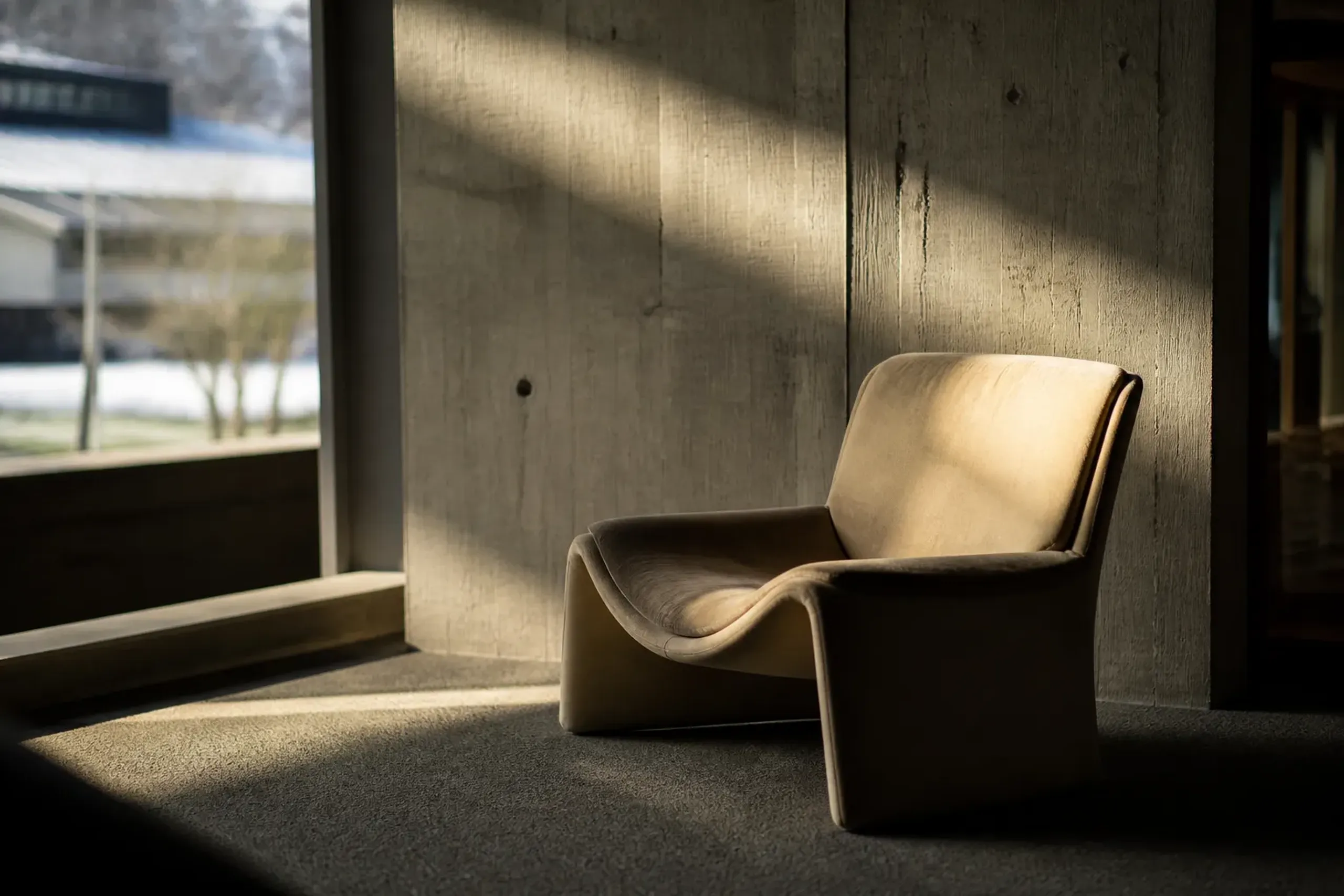
The designation covers fifty-seven items of furniture and fittings, including the stone lanterns in the south garden, the reception counter and the chairs. Chairs holding the same legal status as the walls: that tells you how this prefecture thinks.
The outside world took a while to notice and then noticed properly. DOCOMOMO Japan selected it in 1999. In August 2021 the New York Times T Magazine named it among the twenty-five most significant works of postwar architecture worldwide — the only Japanese building on the list. A base-isolation seismic retrofit was completed in December 2019; the first-floor lobby now displays material on that work, alongside the original furniture and models.
Ōe, konzai heizon, and the Culture Hall — the counterargument
This is the part almost no English writing covers, and it is the finest material here. Kaneko wanted a stage for Noh and the traditional performing arts. He asked Tange, who recommended Hiroshi Ōe — his own classmate from the architecture department at Tokyo Imperial University. Both were born in 1913; both won the Tatsuno Prize on graduation. Rivals.
The Kagawa Prefectural Culture Hall was completed in 1965, a few minutes' walk from the East Building. In the essay accompanying its publication Ōe coined the phrase konzai heizon — mixed coexistence. Not a fusion of Western modernism and Japanese tradition, but the two deliberately set side by side without merging, neither treated as superior.
It was a direct answer to what Tange had started.
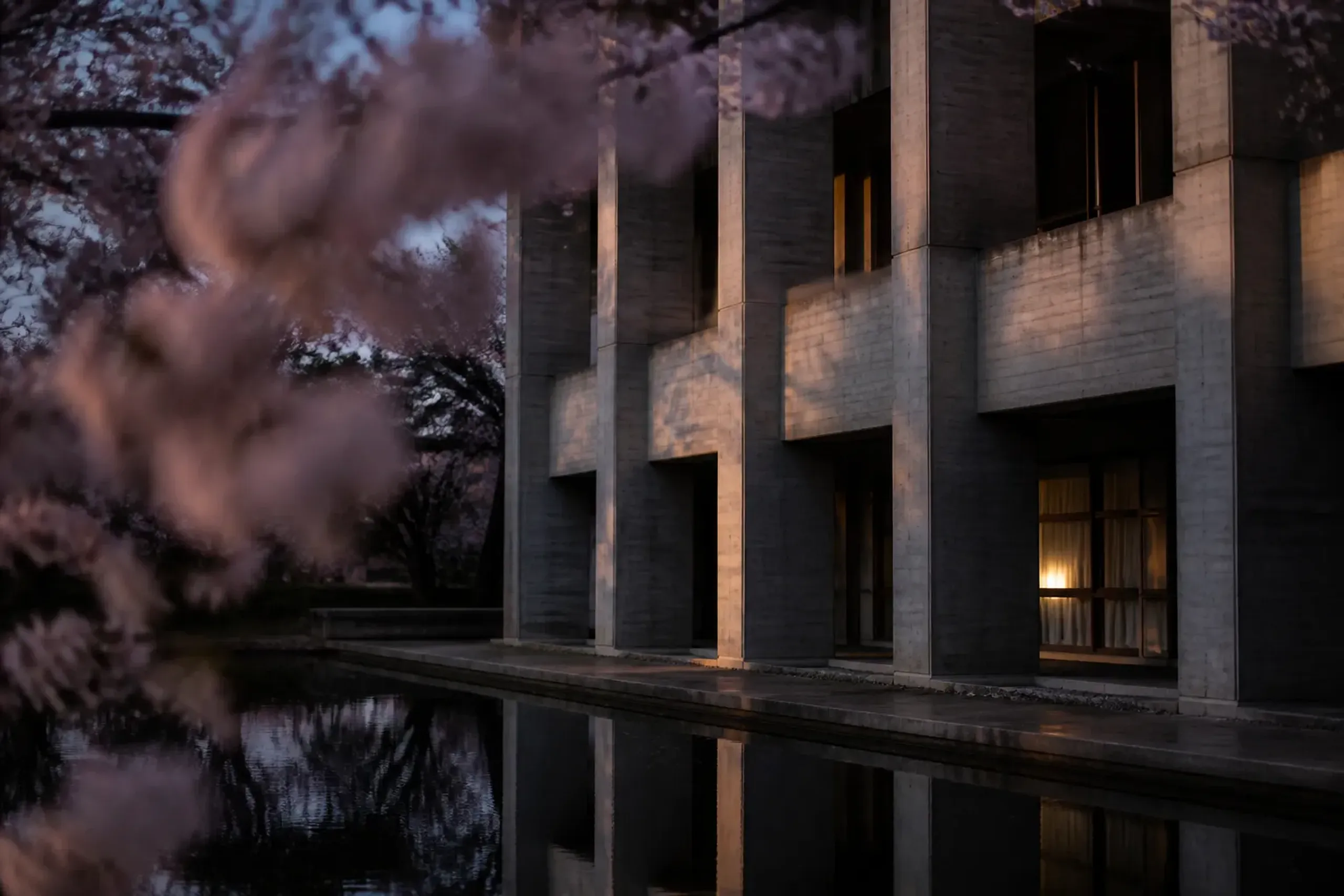
After the East Building, concrete imitating timber spread across Japan. Ōe refused the imitation. From the first floor to the fourth, the interior is composed as genuine timber construction — hinoki, sugi and matsu, handled strictly by timber method — set inside a concrete frame. Real wood, real joinery, each material keeping its own nature instead of being translated into another.
Externally there are three street-facing storeys under a steep copper-plate roof, with granite cut-stone facing, plaster walls and a vertical timber lattice at the entrance; four- and seven-storey volumes rise behind. At the entrance stands Masayuki Nagare's sculpture Oidemaase — the stone carver whose work also stands at Shikoku Mura, and once stood on the plaza of the World Trade Center in New York. A Nagare at the door of a provincial culture hall tells you what this prefecture was doing in the nineteen-sixties. A 2008 retrofit added a permanent lacquerware exhibition hall on the first floor and lacquer workshops on the upper floors. Ōe went on to build the Marugame Budōkan for Kaneko, which won the Mainichi Art Award in 1974, and later the National Noh Theatre in Tokyo.
Two buildings, one street, arguing
The contrast is the whole point. Tange addresses citizens as a public and invites them in beneath a vast piloti; Ōe addresses the individual and invites them through a doorway at human timber scale. One takes the timber tradition and rewrites it in concrete; the other brings the actual thing indoors and lets concrete merely hold it.
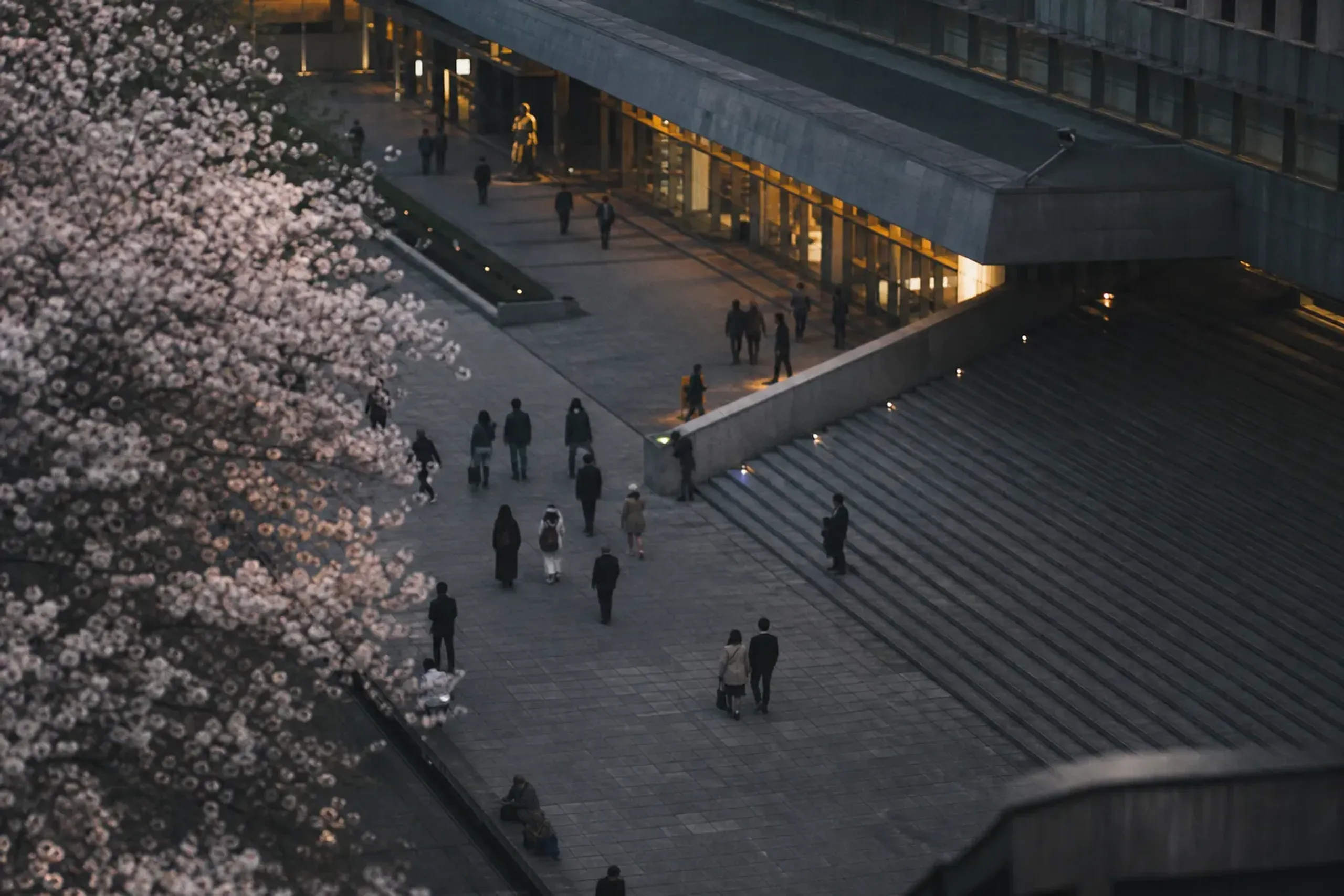
Two classmates, one street apart, taking two positions on what Japanese modern architecture should be. Nobody writes this in English, and yet you can walk between the two arguments in the time it takes to finish a thought.
The wider circle
In 1967 Kaneko and the architects around him received a special Mainichi Art Award — for Kagawa's architecture and urban-development design policy. A prefecture given an art prize for its planning. The circle ran wide: Yoshinobu Ashihara, who built the former prefectural library in 1963; Tadashi Yamamoto, the prefecture's own staff architect, whose Setouchi Folk History Museum on Goshikidai was designated an Important Cultural Property in December 2024; and Takashi Asada, from Mure, who ran Tange's studio and later developed Goshikidai. They gathered at the café Shiro no Me, opened in 1962 and designed by Yamamoto — Kaneko, the architects and the artists together in one room. It is still trading.
The connections reach out from here in every direction. The same governor's circle drew Isamu Noguchi to Mure to work in Aji stone, and the workshop that furnished the East Building went on to make Nakashima's work. This one prefecture, for two decades, was where postwar Japan decided what it wanted to look like.
Why we would put these together
Because they are one argument made physical, and because it is one building after another within a few minutes' walk — which for an older guest matters more than distance ever does.
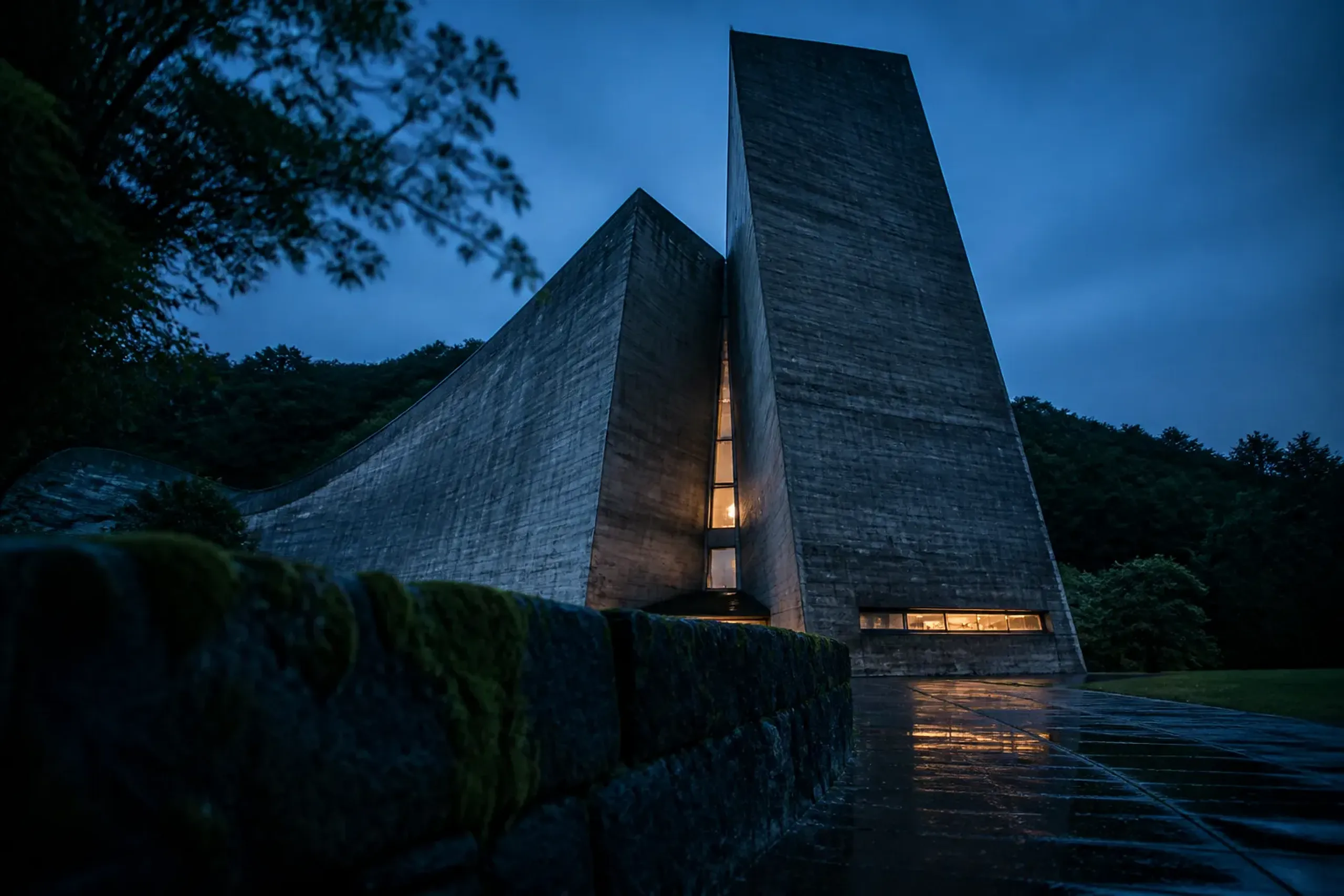
Getting in and out of a car is the tiring part of a day in Japan, not the driving.
A morning here is the concrete that had to invent its own grammar, the hall that refused the same problem, and the rivalry standing between them. If you wish, the performing arts hall on the Culture Hall's third floor can close the visit — it holds two hundred and thirty, with three wheelchair spaces and a stage ten metres across, so a private performance can end the day in the same building without anyone returning to the car. Closing it in Ōe's own room rather than a hired one is precisely the point.
What a visit involves
The East Building's ground floor is open on weekdays; the upper floors are working government offices and are not part of the visit. The Culture Hall admits interior viewing by advance reservation — and the arrangement, to be plain, is the reservation and the guide, not privileged entry through a side door. Both are worth settling ahead of the day rather than during it, since the government building's public floor depends on what the prefecture has scheduled, and the reservation for the Culture Hall cannot be added at the last moment.
What we provide is a guide who can actually read these buildings — an architect, or a former curator of the collection — rather than a general guide reciting dates, together with the reservation, and chauffeured transport between the two.
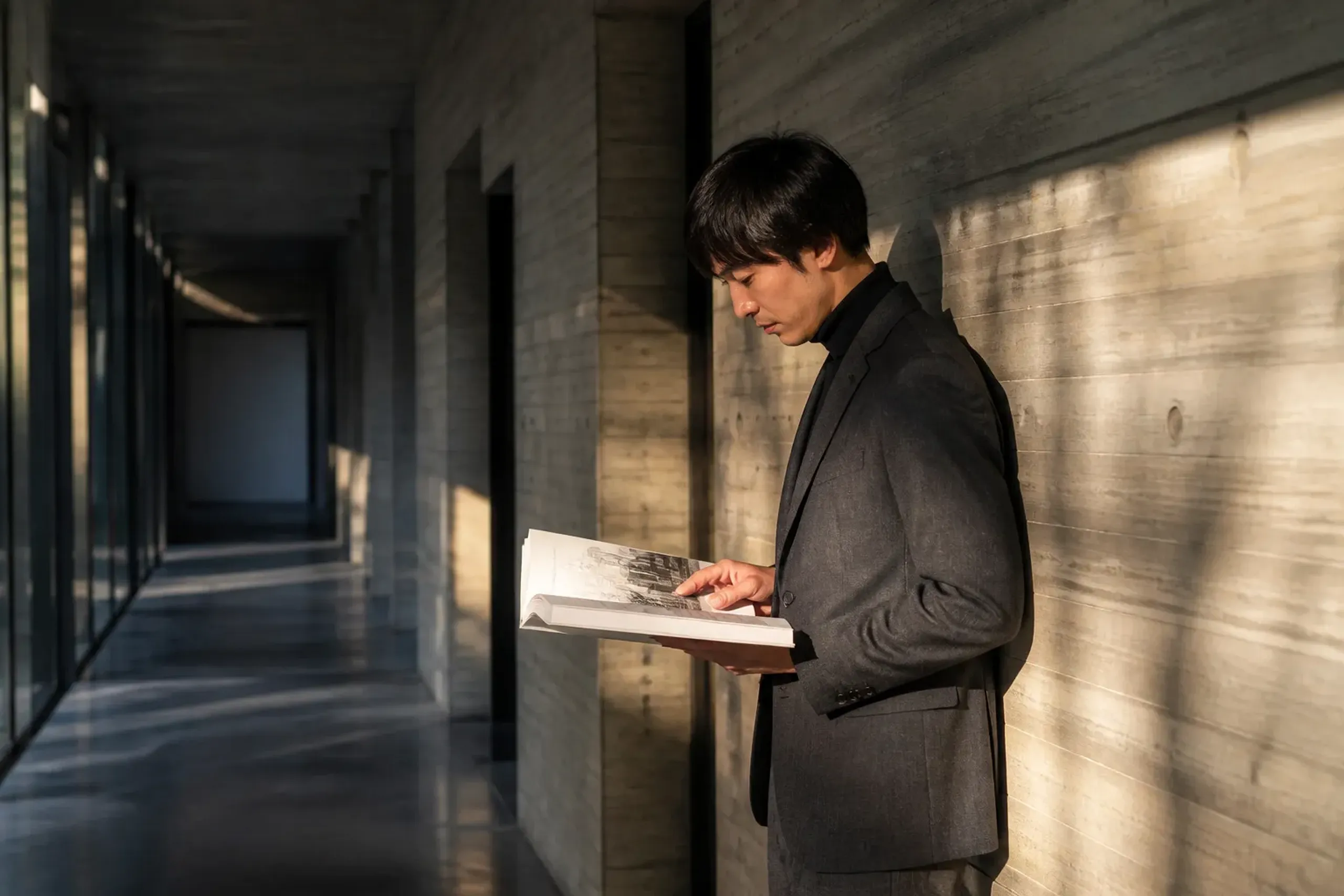
Photography inside is by permission only. If you would like a fuller Setouchi itinerary built around it, we design each visit as a tailor-made programme.
Frequently Asked Questions
Can the Tange government building be visited inside?
The ground floor was designed as a citizens' hall open to the public, with the Inokuma mural at the back. Access depends on the day and on what the prefecture has scheduled, so we confirm it rather than assume it. The upper floors are working offices and are not visited.
Is interior access to the Culture Hall guaranteed?
Interior viewing is admitted by advance reservation. What we arrange is the reservation and a guide who can read the building — not a privileged back entrance. It is a public civic building, and we treat it as one.
Why does it matter that the buildings are close together?
Because getting in and out of a car is the tiring part of a day in Japan, not the driving. Two buildings within a few minutes of one another ask far less of an older guest than the same content spread across a city.
What is the performance hall like?
It is on the third floor of Ōe's Culture Hall, holds two hundred and thirty with three wheelchair spaces, and has a stage ten metres wide. It is a real hall rather than a function room, which is why a private performance there closes the visit properly instead of feeling like an add-on.
More on this rotation
- A private Noh performance — Takamatsu
- Sanukite, the stone that rings — Takamatsu
- The stonecutters of Aji — Takamatsu
Arranging the visit
We are a Japanese company, working in Japanese, with the people who hold the keys to these places.
The arrangements are made by someone the other side already knows, and enquiries are handled privately and directly. Japan Royal Service does not publish its clients, its itineraries, or its rates — to plan a morning in Bancho, contact us here.
Access notes
We asked these questions of each place directly, and the answers are specific to it. Most guests will have no use for them; they are here because somebody will.
The performing arts hall has three designated wheelchair spaces, which is the prefecture's own published figure rather than an assurance from us. The Japanese room has steps and is difficult. The two buildings sit within a few minutes of one another, so a morning here involves getting in and out of a car once rather than repeatedly.