In this guide
- 01Why Was Inuyama Castle Privately Owned Until 2004?
- 02A Short Timeline: 1537 To 2004, Without The Usual Shortcut
- 03Is Inuyama Castle The Oldest Surviving Castle Keep In Japan?
- 04Hakutei-jō: Why A Japanese Castle Carries A Tang-Dynasty Echo
- 05How Do You Visit Inuyama Castle From Nagoya Without Rushing?
- 06What Should You Know About The Stairs And Balcony At Inuyama Castle?
- 07Seasonal Reasons To Go: Light-Ups, Night Walks, And Quiet Winter Air
- 08Admission Fees, Conservation, And What Changes In 2026
- 09How A Private Day In Inuyama Feels Different With A Chauffeur And Guide
- 10Discretion And Hidden-Japan Discipline In A Popular Heritage Site
- 11Planning Notes For 2026: Light-Up Experiment, Stamp Rally, And Lantern Nights
The first thing you notice is the wind.
On Inuyama Castle’s top-floor mawari-en, the Kiso River lies far below like a slow ribbon of steel, and the town below seems smaller than your own thoughts.
Low railings. Old boards worn smooth by centuries of footsteps. No glass barrier between you and 16th-century height.
This is where the story lands hardest: this National Treasure keep was not shepherded through the modern era by a government body. It was carried—quietly, and at great personal expense—by one family.
Why Was Inuyama Castle Privately Owned Until 2004?
Inuyama Castle returned to the Naruse family after the 1891 Nōbi earthquake, because Aichi Prefecture required them to repair the damaged keep at their own expense in exchange for ownership.
That mechanism matters. Many accounts state “privately owned until 2004” as though it were a curiosity. The reason behind it is practical, and almost harsh.
In the Meiji era, the abolition of the feudal domains (haihan-chiken) shifted ownership to Aichi Prefecture. Then the Nōbi earthquake struck in 1891, damaging the structure and collapsing the southeast and northwest turrets.
Rather than keep a half-collapsed castle as a public burden, the prefecture handed ownership back to the Naruse family on a single condition: repair it. Not later. Not with public money. Repair became obligation, and obligation, in time, became stewardship.
A Short Timeline: 1537 To 2004, Without The Usual Shortcut
Inuyama Castle was built around 1537 by Oda Nobuyasu, and its modern-era ownership story closes in 2004 with a transfer to a public interest foundation.

The early centuries read like a compressed version of Japan’s great power shift. Oda Nobuyasu—uncle of Oda Nobunaga—raised the castle around 1537.
All three of Japan’s “Great Unifiers”—Nobunaga, Toyotomi Hideyoshi, and Tokugawa Ieyasu—held the castle at different points. It is a rare place where that lineage is literally true, without any need for metaphor.
After the Komaki-Nagakute campaign, Naruse Masanari entered as a senior retainer of the Owari Tokugawa family. The Naruse clan then held Inuyama Castle continuously as its lords throughout the Edo period.
The modern era is where Inuyama becomes singular. After haihan-chiken, Aichi Prefecture took ownership. After the 1891 Nōbi earthquake, the prefecture returned that ownership to the Naruse family—because the repairs had to be funded and executed, not merely debated.
Three named generations then carried that duty through the modern periods: Naruse Masao, Naruse Masakatsu, and Naruse Masatoshi. A castle keep is not a passive heirloom. Wood shifts and settles. Rooflines sag. Rain finds the one weak seam, and finds it patiently.
In 2004, the 13th-generation head, Naruse Masahiro, transferred ownership through his sister Naruse Junko (as chairperson) to a newly established public interest foundation: Inuyama-jō Hakutei Bunko. The stated aims were both practical—easing the inheritance tax burden—and protective—securing long-term cultural property stewardship for generations to come.
Is Inuyama Castle The Oldest Surviving Castle Keep In Japan?
In 2021, tree-ring dating confirmed Inuyama Castle’s keep as the oldest surviving example of its specific architectural style among Japan’s original castle keeps.
That wording is precise on purpose. “Oldest keep” gets thrown around far too easily, and Inuyama’s value needs no exaggeration to stand on its own.
Inuyama’s keep is a three-story, four-floor bōrō-gata (watchtower-style) structure with two basement levels. It reads vertically—like a lookout that grew into a residence, then hardened into a last-stand machine of war.
It is also one of only five castles whose keep is designated a National Treasure: Inuyama, Hikone, Himeji, Matsue, and Matsumoto. That list is considerably smaller than the broader “12 original castles” category, and it should shape how you plan a visit. Expectations rise. So, inevitably, do the crowds.
Hakutei-jō: Why A Japanese Castle Carries A Tang-Dynasty Echo
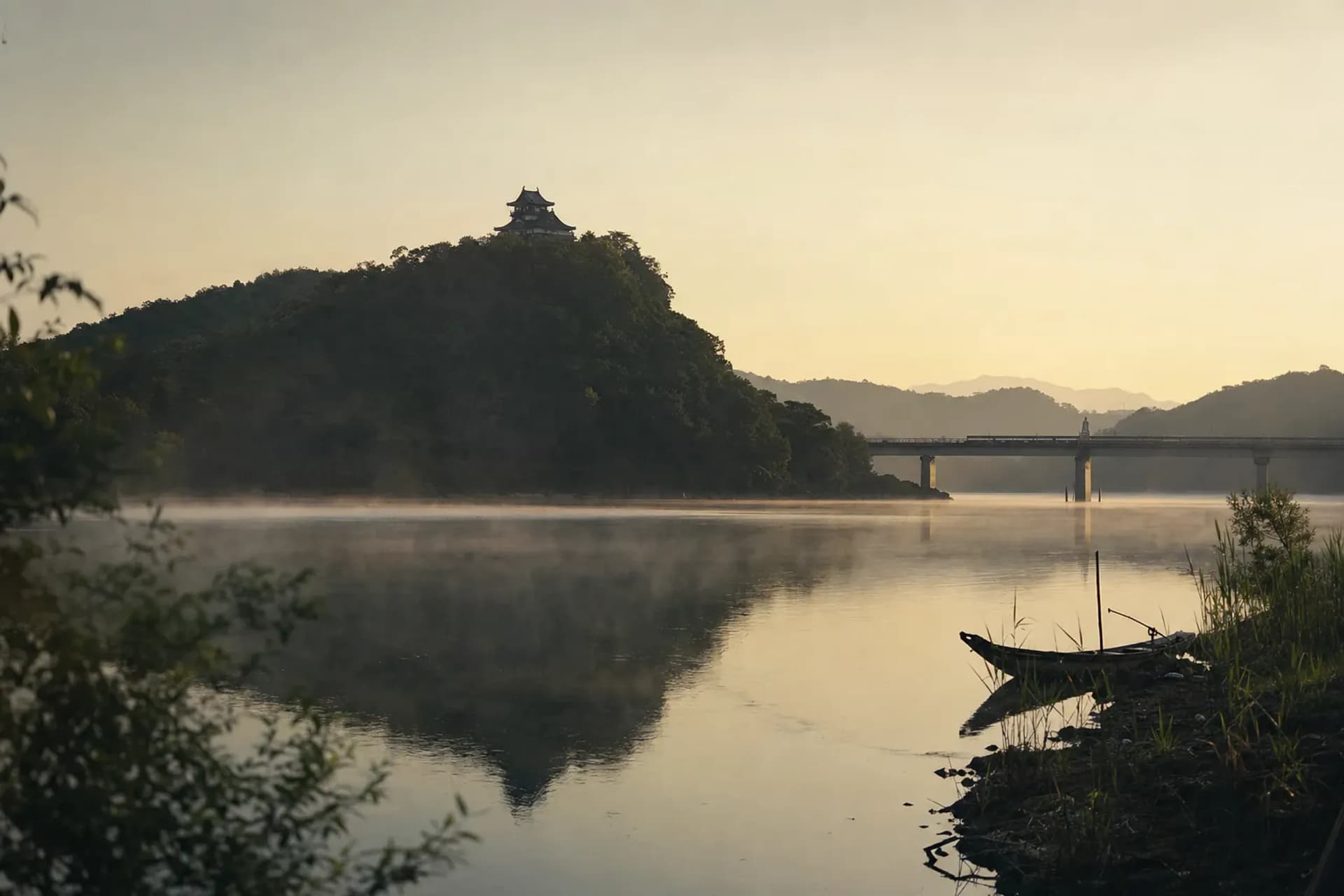
Inuyama Castle is also known as Hakutei-jō (“White Emperor Castle”), a nickname drawn from the Kiso River scenery and a literary reference to the Tang-dynasty poet Li Bai.
Stand on the cliffside and you understand at once why the name endured. The keep sits above the river gorge with a pale, luminous presence—especially under flat winter light, or after rain has washed the air clean.
The reference is no vague gesture toward “Chinese poetry.”
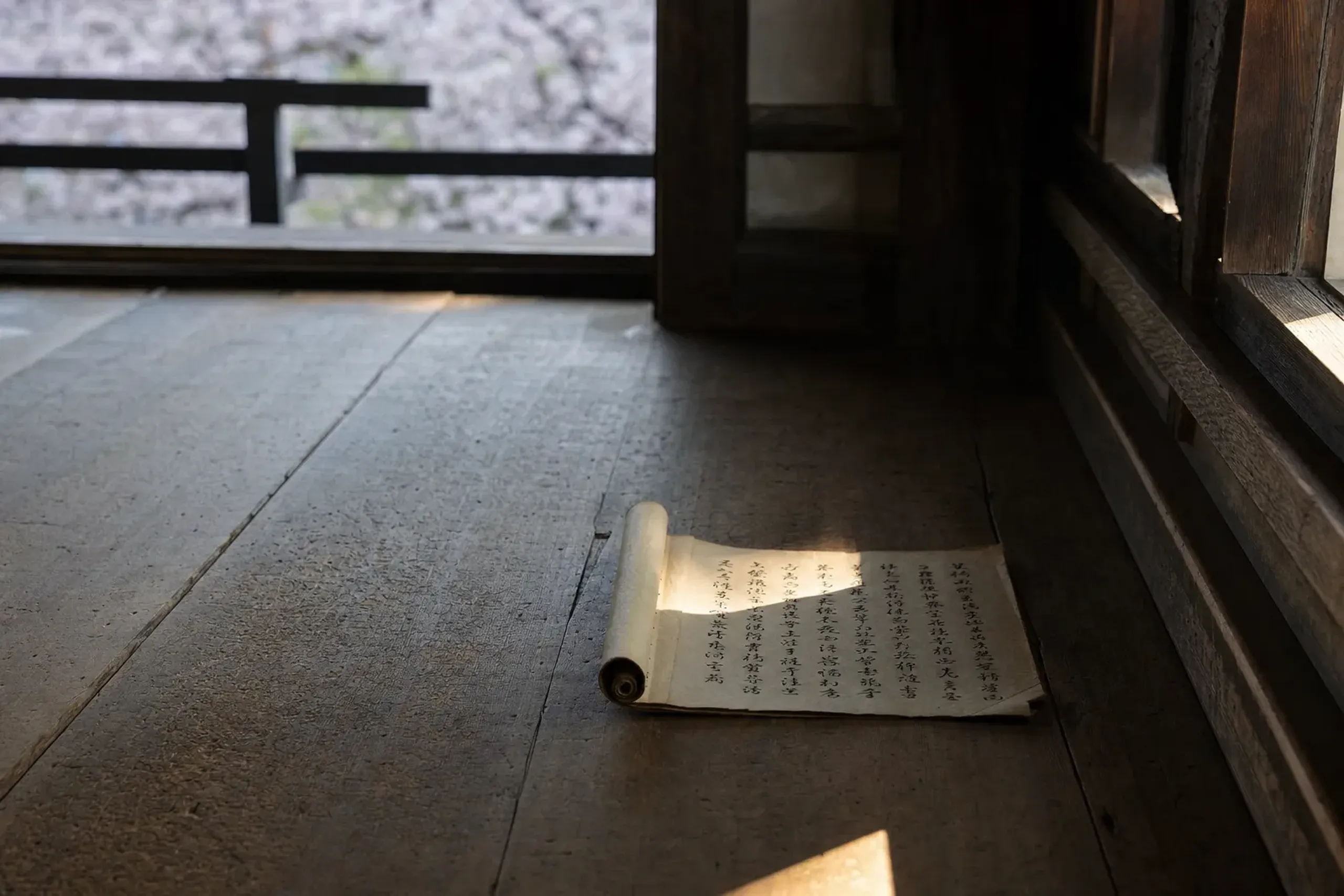
It points directly to Li Bai (Li Po) and his verse describing a white-walled castle above a river gorge. That single image became a lens through which to see Inuyama’s own river view.
It also explains the 2004 foundation’s name: Inuyama-jō Hakutei Bunko. A bureaucratic structure, yes—but one whose title quietly preserves a poetic origin that might otherwise have been buried under paperwork.
How Do You Visit Inuyama Castle From Nagoya Without Rushing?
Plan on a 20-minute walk from Inuyama Station to the castle, then allow yourself at least two unhurried hours on site before adding the castle town or nearby cultural stops.
The official access guidance is refreshingly simple: Inuyama Castle sits about a 20-minute walk from Inuyama Station. It is a pleasant walk in mild weather, and it teaches you the town’s gentle slope before you ever meet the keep’s formidable stairs.
If you prefer a cleaner pace, our guests often treat Nagoya as their base and structure a day that feels calm rather than crammed. JR Central publishes an English itinerary concept pairing Inuyama Castle with the Museum Meiji-mura, which offers a useful mental model: one foot in the sengoku world, one foot in modernity.
For travelers who prefer a heritage-and-tea focus, Aichi Prefecture’s official travel guidance (Aichi Now) also maps a two-day, one-night model course taking in Inuyama Castle, Sanko Inari Shrine, Urakuen Garden, the National Treasure teahouse Jo-an, and Inuyama Onsen.
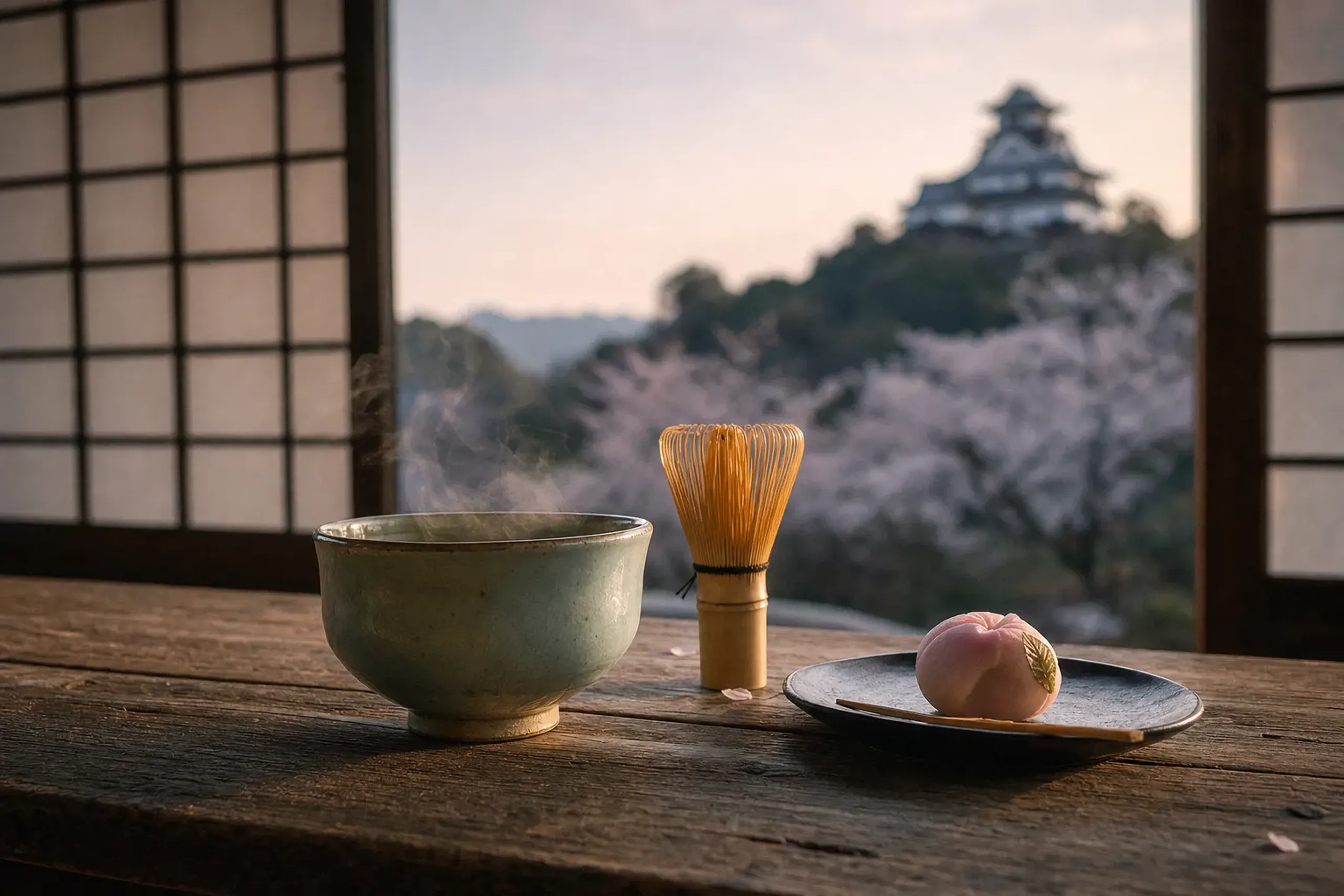
Key fact: The keep is intentionally revealed. The southern approach conceals the donjon until you pass through the gate—a piece of deliberate 16th-century theatre.
A Step-By-Step Day Plan For HNW Travelers
Step 1: Arrive early, before your patience is ever tested.
Castles funnel crowds into their stairwells. At Inuyama, the stairs are the true bottleneck—not the courtyard. An early start buys you something money rarely can here: silence.
Step 2: Walk in from the south side.
The approach was designed as a reveal. Let it do its work. Don’t undermine it by hunting for the first “Instagram angle.”
Step 3: Climb slowly, and treat the interior like a living artifact.
Original wood remains underfoot in places. It creaks. That sound is part of the visit—and also a quiet reminder to wear shoes you trust on polished, aged surfaces.
Step 4: Take the balcony seriously.
The circular mawari-en lets you walk the full exterior of the top floor. The railings are notably low. If you dislike heights, decide before you step out, not once you are already exposed to the wind.
Step 5: Exit into town with one deliberate theme.
Tea and gardens. Or shrine and folklore. Or photography and river light. Choose one. A single themed walk feels private and considered, even when the streets themselves are shared.
What Should You Know About The Stairs And Balcony At Inuyama Castle?
Expect very steep interior stairs (around a 60-degree angle) and low balcony railings on the top-floor mawari-en, which can feel genuinely exposed if you dislike heights.
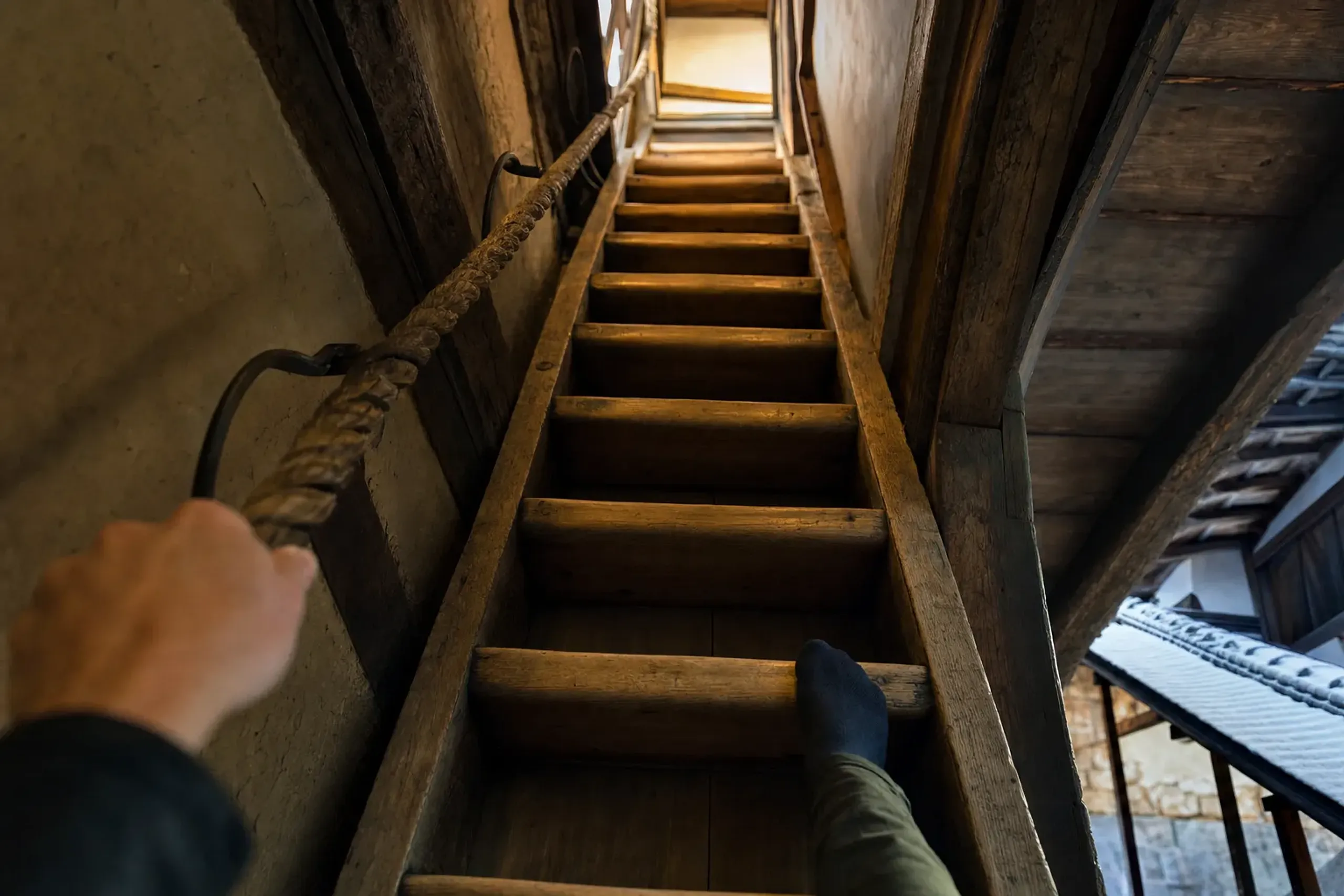
This is the honesty section, because no one thanks you for romantic prose when their knees are shaking.
The stair angle is far steeper than any modern building standard. You will use your hands. Short skirts and slippery soles are a poor match for the ascent.
The payoff, though, is physical. When you reach the top and step onto the balcony, the Kiso River view feels earned rather than simply granted—and that is precisely the point.
If you are traveling with parents, or with anyone who has mobility concerns, build in extra time and consider carefully whether everyone should climb the full interior. There is no shame in stopping where the body says “enough.” The quiet care of knowing that in advance is a kind of luxury in itself.
Seasonal Reasons To Go: Light-Ups, Night Walks, And Quiet Winter Air
Inuyama’s official 2026 programming creates rare reasons to visit outside the familiar “castle in daylight” template.
On 2026-09-11, the Inuyama Castle official site published a notice about a light-up demonstration experiment. It signals a subtle shift: heritage sites are testing how to extend the visitor experience while carefully managing their impact.
For photographers, it changes the planning math entirely.
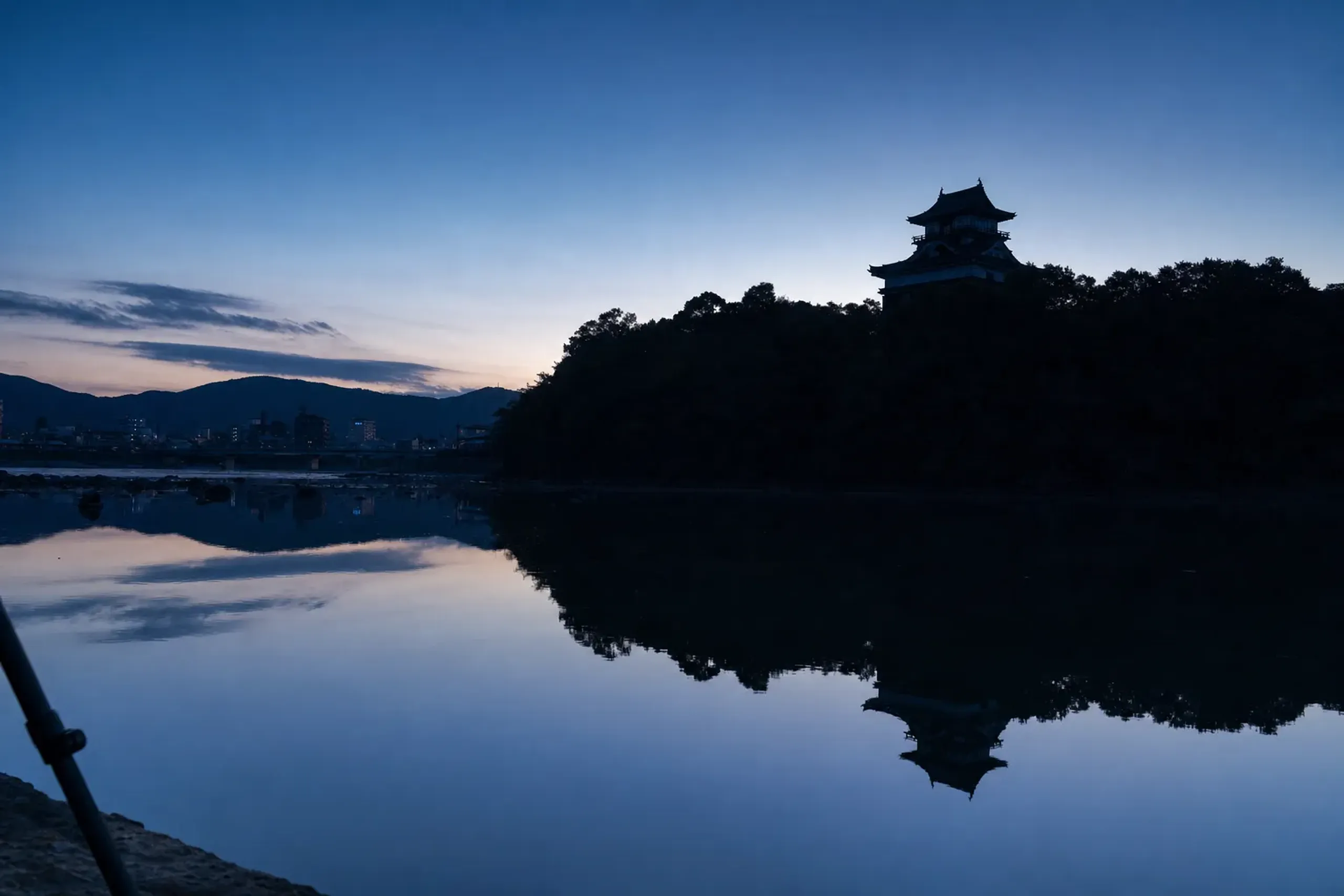
You begin thinking about dusk. About tripod etiquette. About where to stand so that a sacred old structure remains itself, rather than a mere backdrop.
Autumn 2026 also brings a castle-town stamp rally, listed on the official Inuyama tourism site from 2026-09-01 to 2026-11-30. A “stamp rally” can sound almost childish in translation. Done well, however, it becomes a curated walk with real purpose—small shops and local crafts revealed in sequence, rather than a frantic checklist.
Winter has a mood entirely its own. The same tourism site lists the “INUYAMA YOI NO MICHI” bamboo lantern night walks (December 5 through January 31), held on Fridays, Saturdays, and Sundays, with holiday notes on the listing. In cold air, lantern light reads cleaner. Shadows sharpen. The town slows to a hush—a living study in wabi, the beauty of quiet, unadorned restraint.
Admission Fees, Conservation, And What Changes In 2026
Local media (Tokai TV) reported that Inuyama Castle planned to raise admission fees from 550 yen to 1,000 yen starting March 2026.
We do not list fees here as a selling point. We mention them because planning breaks down when expectations are wrong.
Across Japan, heritage sites are constantly balancing maintenance costs, staffing, and the mounting pressure of overtourism. A fee change is often part of that balancing act—and it can also shift crowd patterns noticeably in the first months after an increase.

Our concierge team at Japan Royal Service verifies current visiting hours, access conditions, and any restoration notices well ahead of your visit, so that your day never hinges on a rumor or an outdated screenshot.
How A Private Day In Inuyama Feels Different With A Chauffeur And Guide
A private chauffeur and guide transforms Inuyama from a quick stop into a paced narrative—with quiet timing, fewer logistical frictions, and far more room for the context you can never read on a signboard.
This is where our style truly matters. We prefer restraint over noise. A castle is already dramatic; you do not need to “maximize” it. You need only to let it speak.
With a discreet vehicle waiting nearby, you can arrive before the peak foot traffic, leave the moment the stairwells begin to tighten, and take a late lunch without ever glancing at train times. Calm is a luxury—and real calm, the unhurried kind, is rarer still.
On the road, the first mention matters: for private transportation, our fleet is built for quiet conversation and clean, seamless transitions—whether you choose a Lexus LM 500, a Mercedes V-Class, or a Toyota Executive Alphard for family travel.
And if you want the day to connect naturally to a wider journey, we build a tailor-made itinerary that keeps Inuyama’s story intact, rather than reducing it to a “day-trip checkbox.”
Two Grounded Enhancements That Stay On-Topic
Option A: Tea Culture After The Keep
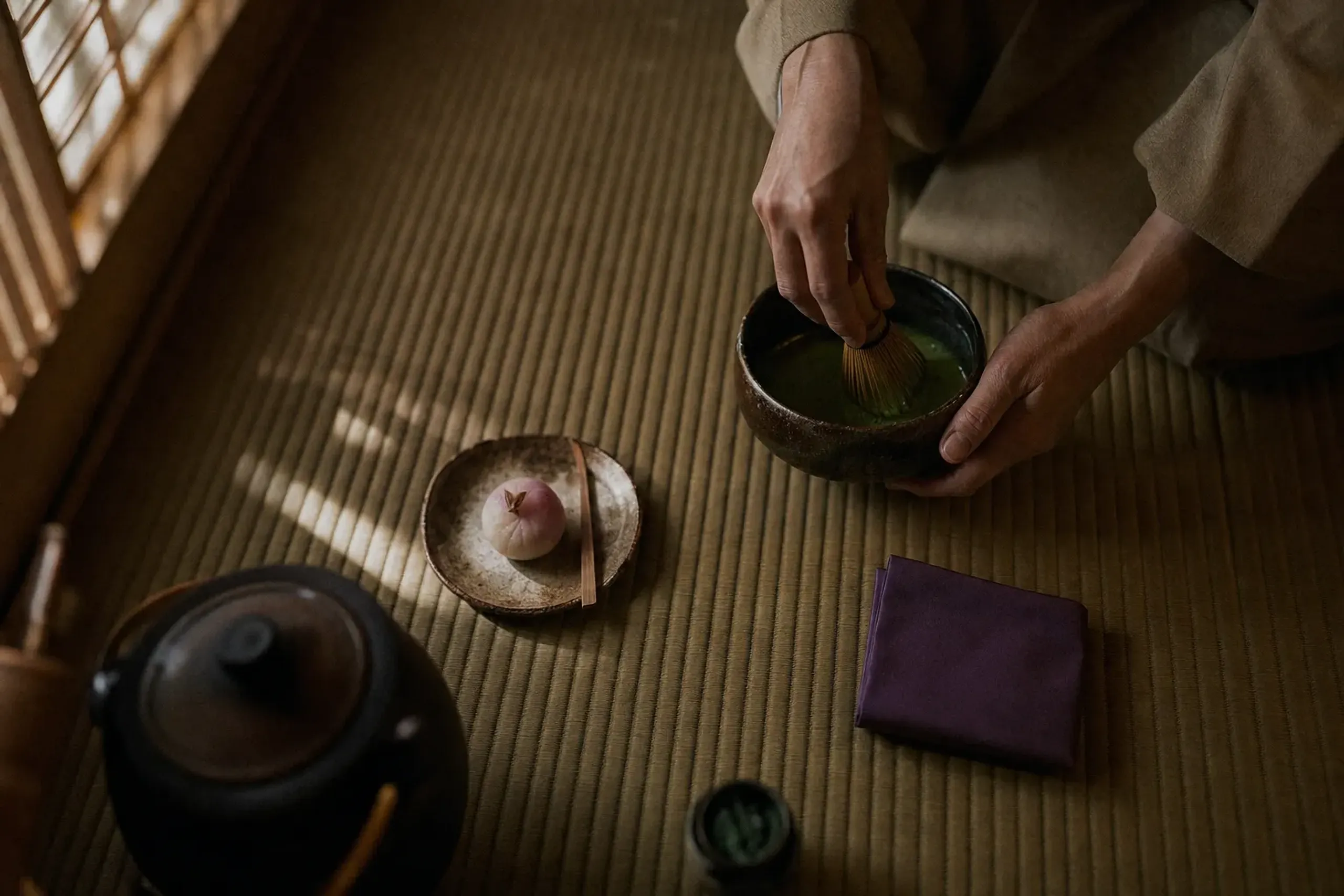
Urakuen Garden and the National Treasure teahouse Jo-an are real, nearby anchors that deepen the very same theme: preservation, craft, and controlled beauty. Jo-an is the work of shokunin sensibility distilled into a single small room—the discipline of the tea master made architecture.
- Go after the keep, when your eyes have adjusted to old wood and tight, intimate space.
- Keep your voice low; the point here is presence, not performance.
- Let the garden reset your pace before you return to the castle town.
Option B: A Night Mood In Winter
If you time your visit for December through January, the bamboo lantern walk adds an after-dark layer—without forcing you to abandon Inuyama for “bigger” cities.
- Dress warmer than you think you need. Rivers steal heat quietly.
- Plan dinner as a destination in its own right, never an afterthought.
- Keep your photos respectful; lantern nights are shared, not staged.
Discretion And Hidden-Japan Discipline In A Popular Heritage Site
Discretion is not a slogan at Japan Royal Service; it is a planning discipline that shapes timing, routing, and how visible you are in every public space.
Inuyama is not “unknown.” It is accessible from Nagoya, and it draws domestic tourism for very good reason. Even so, a day here can feel entirely private when you plan around the pinch points rather than against them.

We also seek out the hidden-Japan texture inside a well-known place—the Japan that Google cannot quite find. That might be a quieter river viewpoint, an unhurried walk through the castle town once the stamp-rally crowd has thinned, or a tea-focused stop that rewards silence over speed.
And when you travel with family, privacy becomes deeply practical. It means fewer public decisions, fewer moments where you are visibly lost, and fewer opportunities for strangers to insert themselves into your day. That is the quiet anticipation of unspoken needs at the heart of our work.
Planning Notes For 2026: Light-Up Experiment, Stamp Rally, And Lantern Nights
For 2026, the clearest planning hooks are the 2026-09-11 light-up demonstration notice, the 2026-09-01 to 2026-11-30 castle-town stamp rally, and the December 5 to January 31 bamboo lantern night walk schedule.
If you are traveling in September, build a plan that holds even if conditions shift on the day. Experiments can be weather-dependent. They can also be adjusted as organizers learn from them.
Inuyama rewards the traveler who arrives with intention—the one who understands that a National Treasure carried by a single family for over a century deserves to be met slowly, and in the right season. If you would like us to shape a private, discreet day around this remarkable keep, with the timing, tea, and quiet moments handled entirely on your behalf, contact us here to begin a tailored proposal.