In this guide
- 01Why Do Firefly Squid Surface In Toyama Bay In Such Dense Numbers?
- 02What Exactly Is Hotaruika (Watasenia Scintillans)?
- 03When Is The Best Time To See Firefly Squid In Toyama Bay?
- 04How Does Namerikawa’s Fixed-Net Fishery Create Such A Close-Up View?
- 05Migi-Nage: When The Shoreline Turns Blue
- 06What Is “Hotaruika Gunyū Kaimen” And Why Is It Protected?
- 07How To Plan A Pre-Dawn Firefly Squid Boat Morning In Namerikawa
- 08Hotaruika Museum: The World’s Only Museum Dedicated To Firefly Squid
- 09How Do I Book A Firefly Squid Viewing Boat In Toyama As A Foreigner?
- 10Designing The Morning Like A Luxury Traveler (Without Over-Polishing It)
- 11Practical Logistics From Toyama City To Namerikawa (And Why Private Transport Helps)
- 12Where This Fits In A Bespoke Japan Itinerary
- 13Plan Your Own Blue Morning In Toyama Bay
At 3:40 a.m., Toyama Bay looks like blank ink.
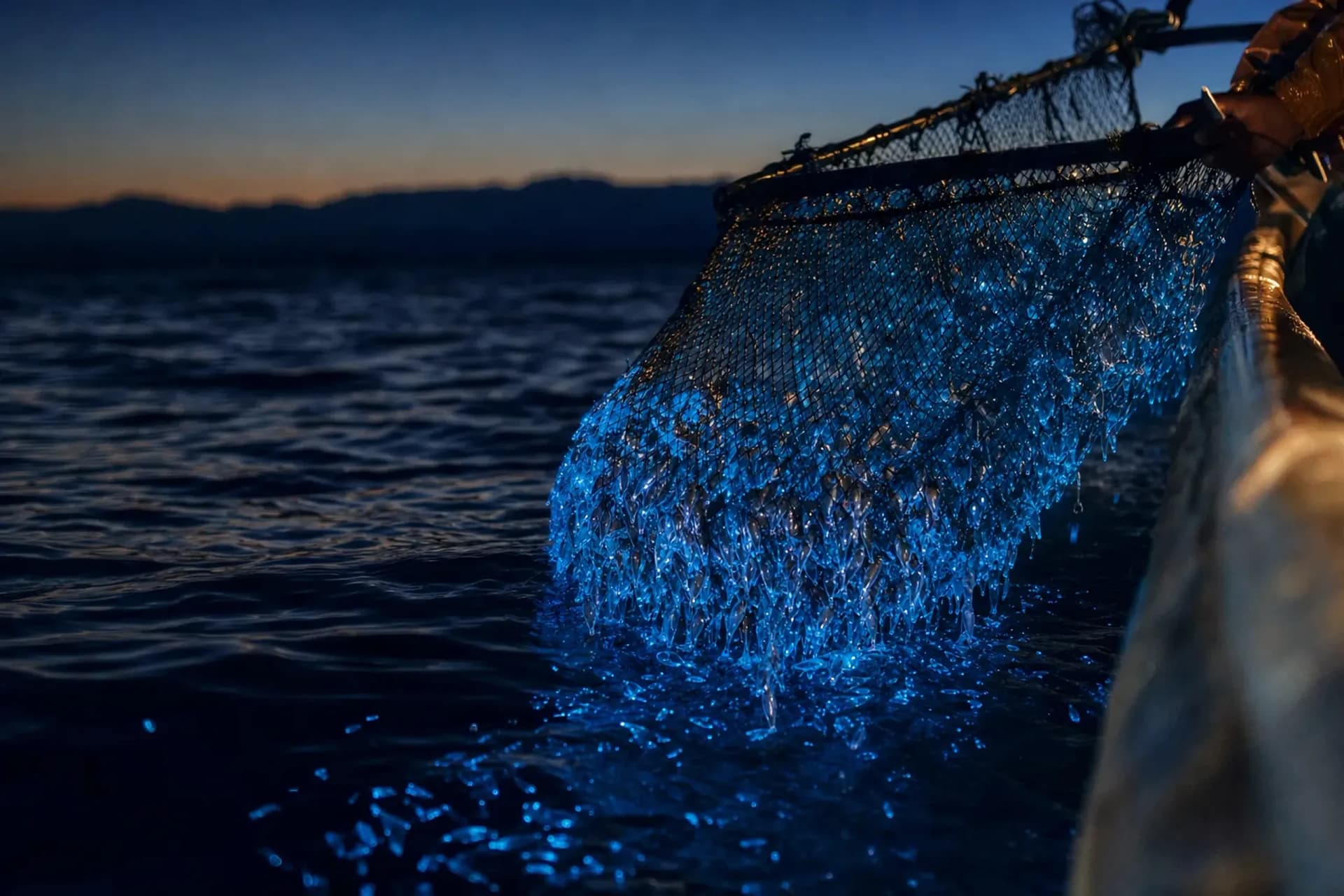
A small boat noses out from Namerikawa fishing port. The air bites your cheeks, the deck is slick with night mist, and the only sound is water against the hull. Then the first net breaks the surface—and the water answers with a cold, electric blue.
Not a metaphor. Real light.
For a few minutes, the sea behaves like a dark room. Every movement draws a faint glow, and when the catch rises, thousands of points flash at once—hotaruika, the firefly squid, Watasenia scintillans. People fall silent without being told. It feels like an event you should not disturb.
Our team at Japan Royal Service returns to Toyama for this because it is not merely “a nice seasonal sight.” It is an engineered coincidence of geology and biology: a specific undersea drop-off, locally called aigame, that brings deep water to the shoreline and concentrates an entire spawning migration into something you can witness with your own eyes. The beauty is unforced—closer to moss-covered stone silence than to spectacle—and that restraint is precisely why it stays with you.
Why Do Firefly Squid Surface In Toyama Bay In Such Dense Numbers?
Because Toyama Bay’s seabed plunges to over 1,000 meters just offshore at the aigame drop-off, deep-water squid can spawn close to land in unusually visible concentrations.
This one mechanism changes everything. For most of the year, Watasenia scintillans live far below the surface—roughly 200 to 600 meters down.
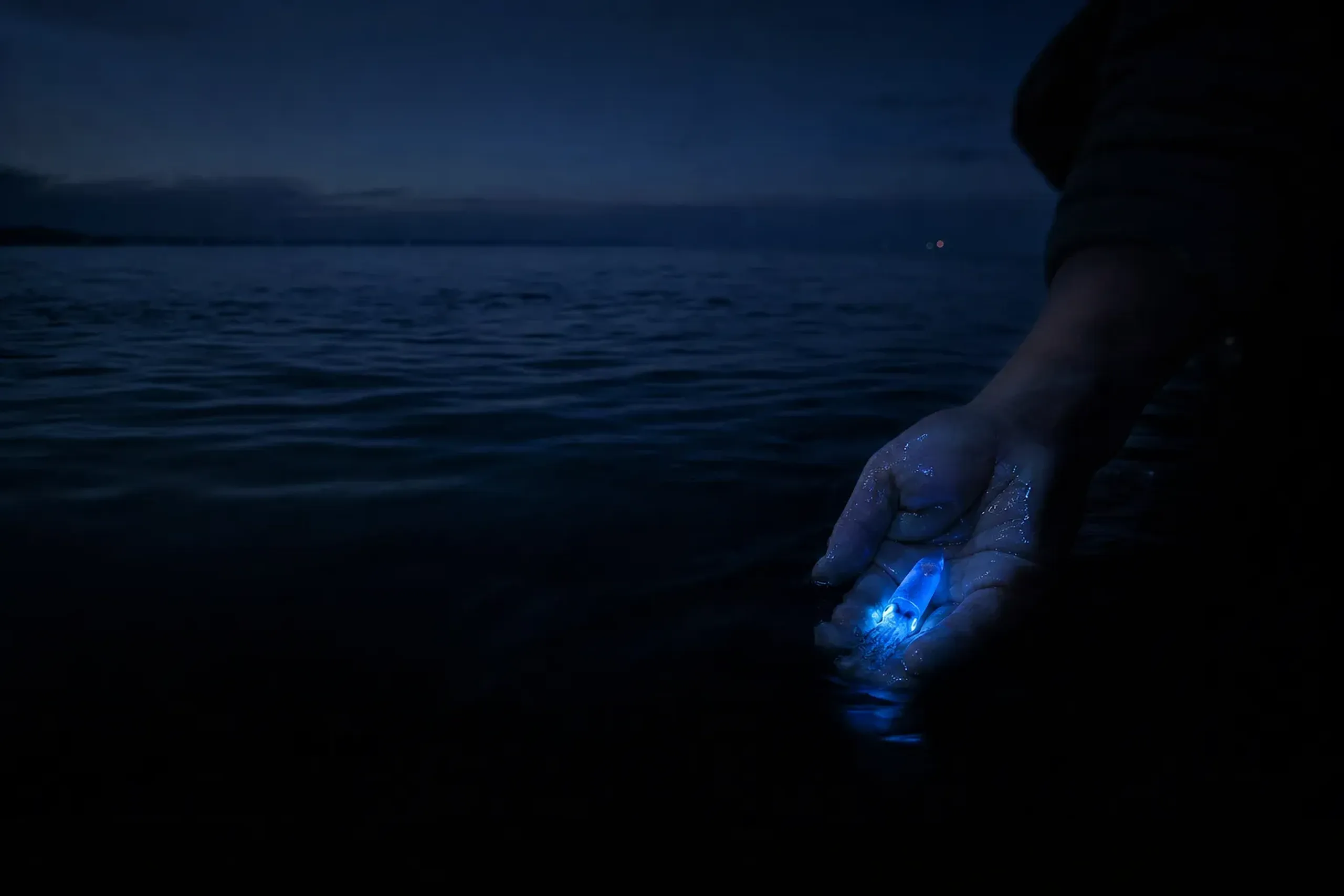
In spring, females rise toward shore at night to spawn, and in Toyama Bay the deep sea is practically at the doorstep.
That proximity is the difference between “you might see a few” and “the bay turns into a field of blue points.” It also explains why Toyama’s phenomenon is often described as having no equivalent elsewhere—not because other seas lack bioluminescent creatures, but because few coastlines stack the same geography and timing so tightly.
When we design a Toyama Bay morning for HNW guests, we treat the trench as the main character. It is the reason the spectacle is reliable enough to plan around, yet still wild enough to feel like a secret shared with very few.
What Exactly Is Hotaruika (Watasenia Scintillans)?
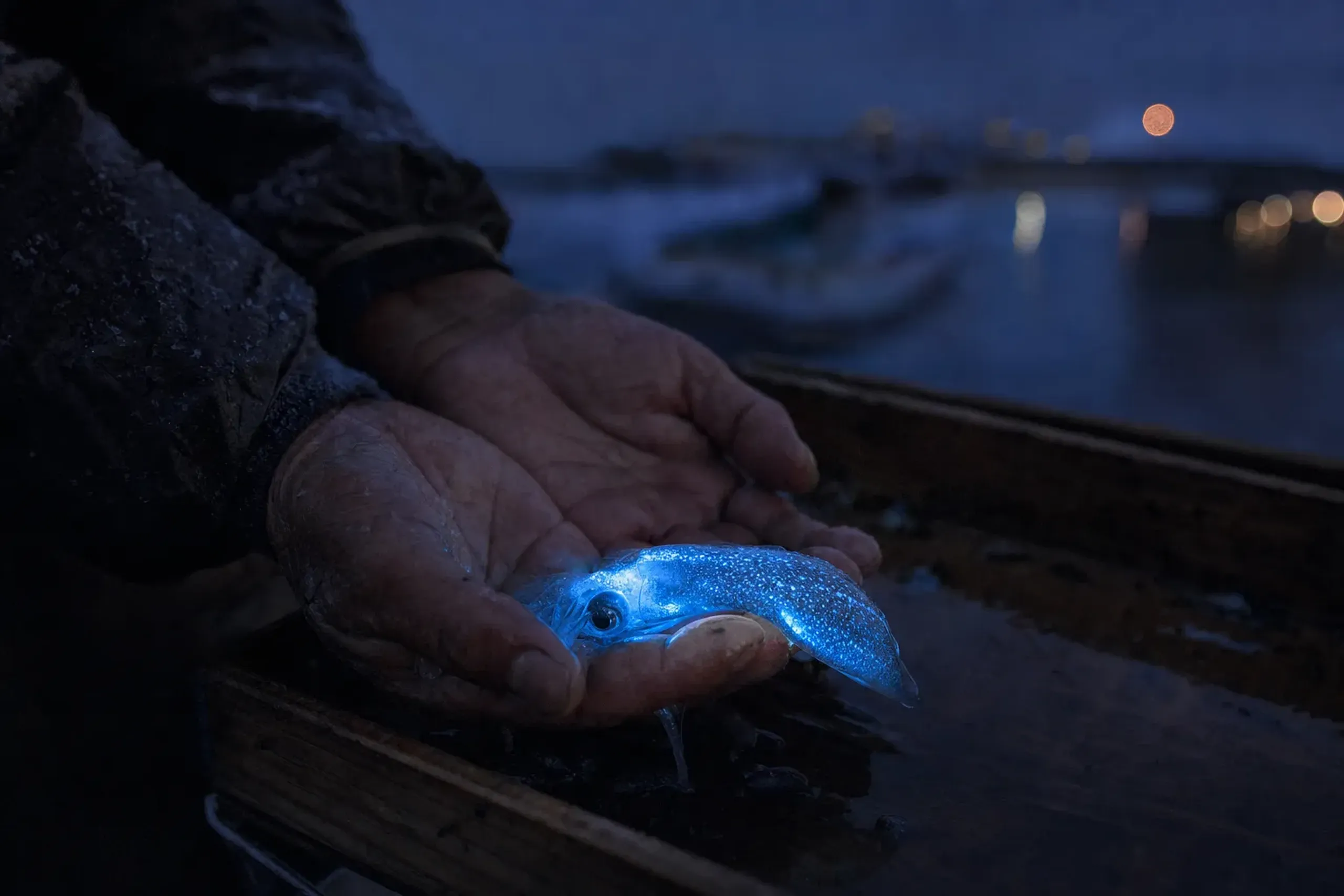
Hotaruika are small squid—about 4 to 7 cm long—with bioluminescent organs called photophores that let them glow in the dark sea.
The scientific name, Watasenia scintillans, was formally recorded in 1905 in honor of Dr. Shōzaburō Watase of Tokyo Imperial University, who studied firefly ecology and described the species. That “Watase” in the name is not decorative. It is a record of careful observation, pinned to taxonomy.
The glow comes from roughly 1,000 photophores across the body, concentrated on the ventral (seafloor-facing) side, with brighter ones on the arms and near the eyes. Up close, it is less like a lightbulb and more like frost catching moonlight.
Locally, fishing villages once called them “matsu-ika.”
One theory ties that name to an older use as fertilizer for pine trees (matsu). It is a practical origin story, and Toyama is full of them—things made to be used, not only admired.
When Is The Best Time To See Firefly Squid In Toyama Bay?
The firefly squid season runs March through June, with the densest, most reliable concentration typically in late March and April.
If you want the classic pre-dawn boat scene—nets rising, the first gray light on the horizon—late March into April is the window we watch most closely. The nights are still sharp-cold, and that contrast makes the glow feel even brighter.
That said, nature does not run on marketing calendars. Sea conditions, water temperature, and yearly patterns all shift. In our experience, the wisest approach is to build a flexible Toyama schedule with two or three candidate mornings rather than pinning everything on a single date. Knowing precisely which week rewards the journey—and holding open alternatives when it doesn’t—is exactly the kind of seasonal judgment our guests rely on us for.
Key fact: Boats depart before dawn—often around 4:00 a.m.—so the night before should be planned like an early flight: an early dinner, a quiet hotel, and a short transfer to the port.
How Does Namerikawa’s Fixed-Net Fishery Create Such A Close-Up View?
Namerikawa uses fixed-net fishing (teichi-ami) close to shore, so visitors can watch nets being hauled up and see glowing squid at the very moment they are lifted from the water.
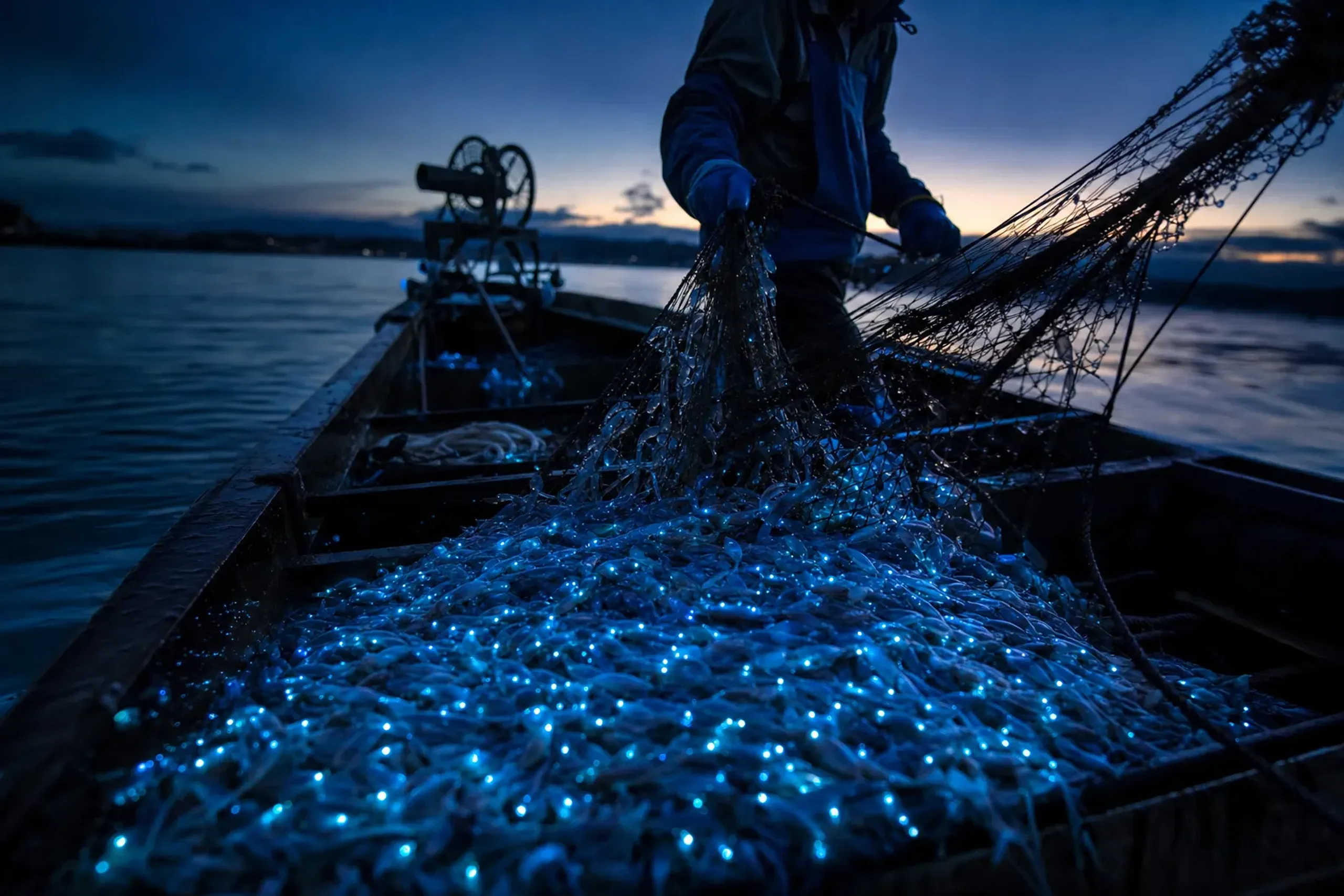
This is not bottom-trawling, and the distinction matters. Fixed nets are set in place, and the fishery coexists with the squid’s near-shore spawning movement rather than sweeping across the seabed indiscriminately.
Namerikawa operates 11 fixed-net systems within roughly 3 km of the fishing port. Traditional straw-rope netting is part of the method, and after the season ends, that rope is deliberately cut loose and left in the water; it forms seaweed beds that later become productive fishing grounds. Circular, not extractive. You can feel the local pride when it is explained plainly.
Because the fishing grounds are close and the catch aligns with spawning season, Toyama’s firefly squid are known to be fresher than those caught farther away, and physically larger during the March-to-May peak. It is not only a sight to witness. It is a whole coastal system quietly doing its work.
Migi-Nage: When The Shoreline Turns Blue
There is a second scene, quieter and far less scheduled. Locals call it migi-nage—the squid’s “self-cast,” sometimes framed as a “suicide leap.” After spawning, the squid can wash ashore and glow all at once along the beach.
People talk about the sound, too. A mournful “kyūn, kyūn,” a poetic detail that has traveled through fishing communities for generations. Whether you hear it clearly depends on the surf and wind, but the fact that a sound is part of the story tells you how long Toyama has been watching this bay.
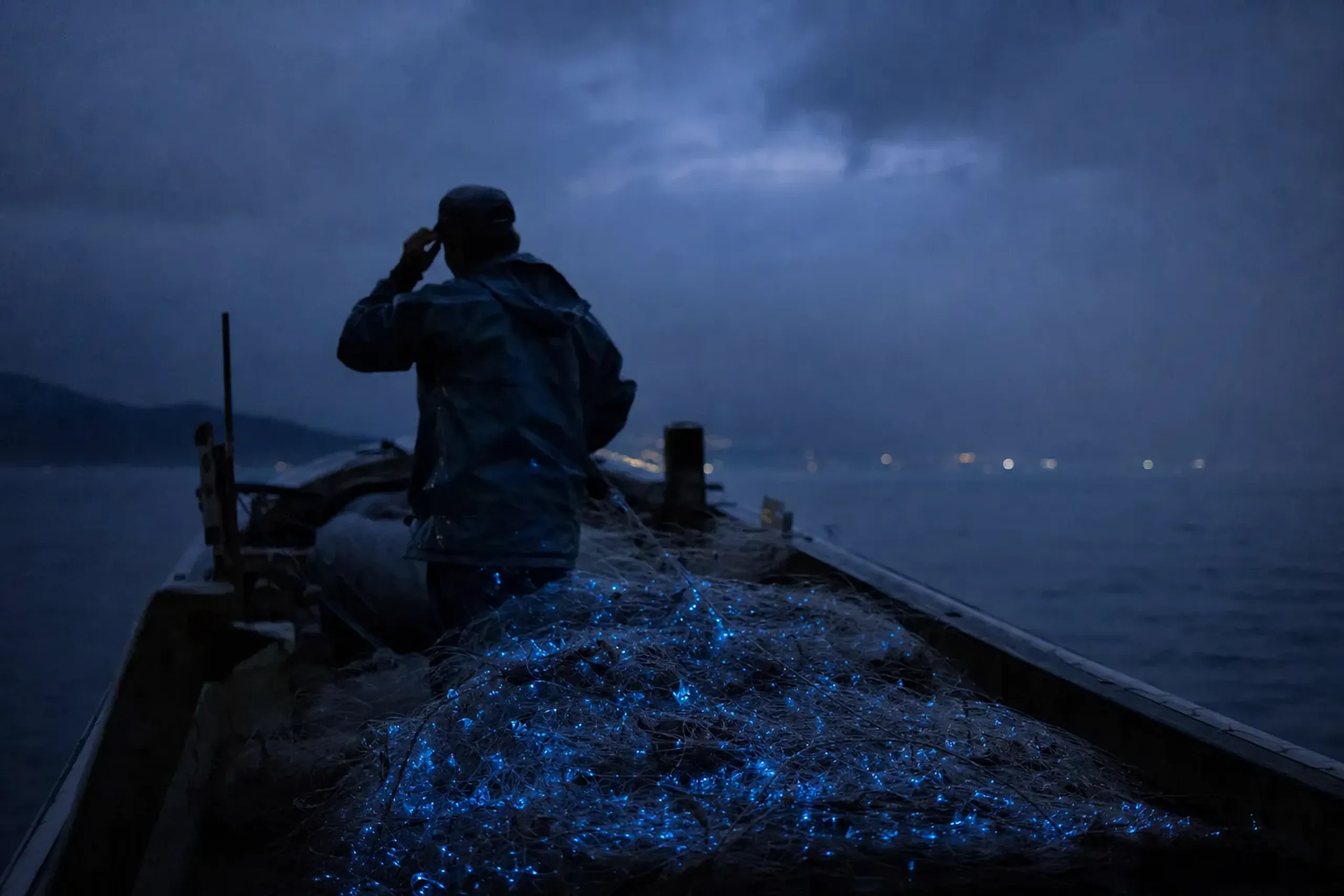
This is where discretion becomes part of the experience, even in a public place. We advise guests to treat beaches and ports as working spaces at night—no intrusive lighting, no loud voices, no chasing a photograph that ruins someone else’s moment.
Quiet is not a luxury add-on here. It is the correct posture—and, quietly, part of what keeps the moment yours.
What Is “Hotaruika Gunyū Kaimen” And Why Is It Protected?
“Hotaruika Gunyū Kaimen” is a nationally designated Special Natural Monument zone covering about 15 km of Toyama Bay coastline and roughly 1.3 km offshore, recognized for firefly squid swarming at the sea surface.
The protected coastline runs from the right bank of the Jōganji River in Toyama City to Uozu City. It is a long stretch, not a single viewpoint, and that scale hints at how abundant the phenomenon can be in a good year.
Firefly squid are also the official fish of both Namerikawa City and Toyama Prefecture. That may sound like a trivial badge until you watch how seriously locals treat the season—how early the port wakes, how carefully the catch is handled, how the story is told without exaggeration.
For travelers who have “seen everything,” this kind of official protection is a signal: the place is not only photogenic. It is culturally and ecologically named, and treated accordingly.
How To Plan A Pre-Dawn Firefly Squid Boat Morning In Namerikawa
Plan for a 3:00–3:30 a.m. pickup, a short drive to Namerikawa fishing port, and a cold, wet deck; bring a windproof layer, shoes with grip, and keep your camera setup simple.

Here is what we recommend, step by step, for a small private party—two to six guests is the sweet spot for comfort and calm.
- The night before: Eat early. Lay out clothes, socks, and an outer layer. Charge batteries. Then sleep.
- Pickup: Use a private transfer so you are not negotiating taxis at 2:45 a.m. The road is dark and the timing is tight.
- At the port: Expect a working atmosphere. Fishermen move fast and do not perform for visitors. Watch from where you are directed.
- On the water: Boats typically head only 2–3 km offshore. The drama is not in the distance. It is in the moment the net rises.
- After: Have a warm drink ready. Then plan a slower morning—breakfast, a bath, a late start.
If you are traveling with family, we suggest discussing stamina honestly. A 4:00 a.m. departure can be magical for teenagers. For younger children, it can also be a long, cold test of patience.
For corporate travel, it is surprisingly effective. One coordinator on our team calls it “a reset button”: a shared moment of stillness before the day fills with meetings.
Hotaruika Museum: The World’s Only Museum Dedicated To Firefly Squid
The Hotaruika Museum in Namerikawa is widely known as the only museum in the world dedicated to this species, and it includes live firefly squid displays in season.
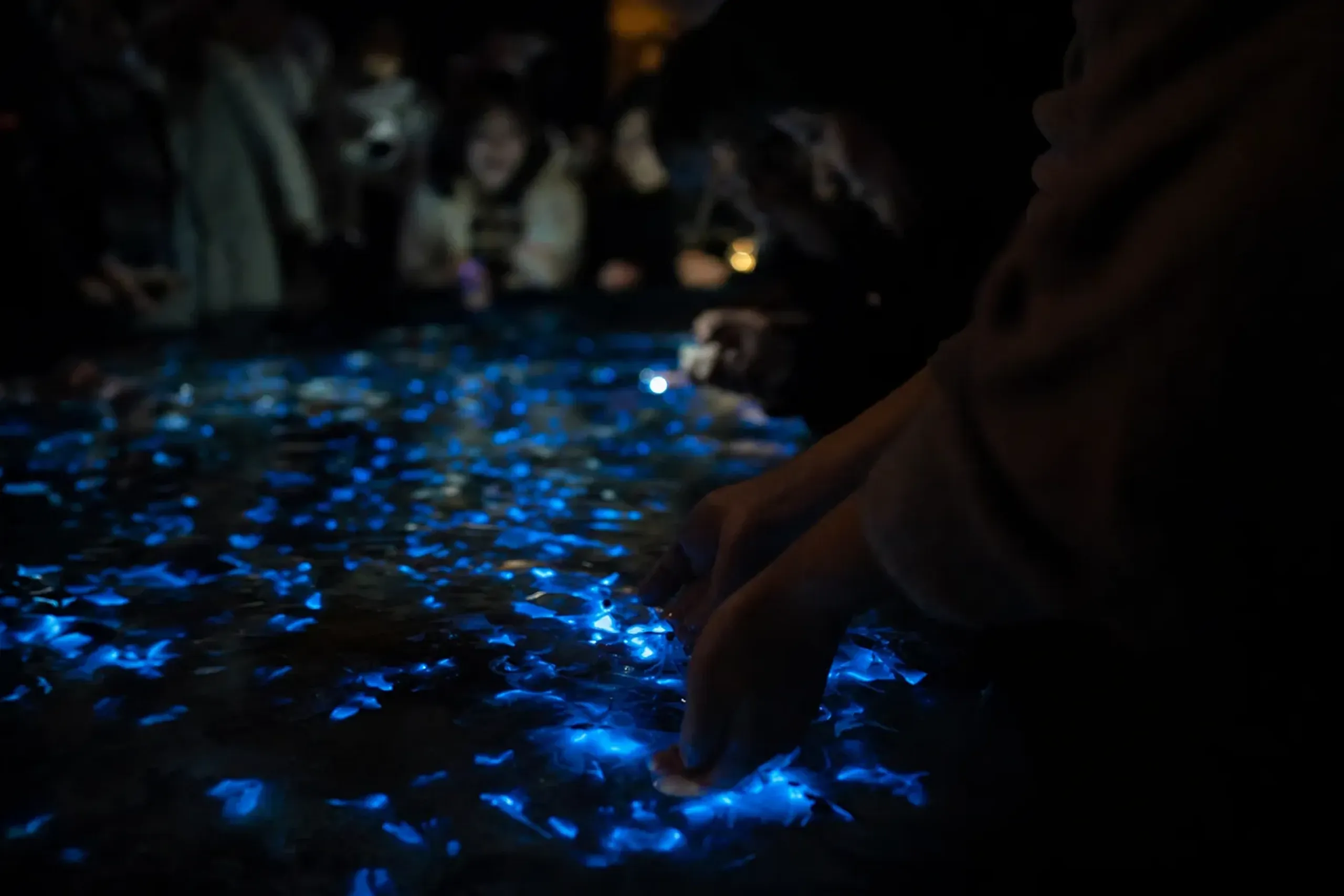
We like pairing the museum with the boat morning because it gives the experience context. On the sea, you feel wonder. In the museum, you understand anatomy—photophores, depth, life cycle—and the glow stops being a trick and becomes a biological fact.
Time it gently. After a pre-dawn outing, your attention is fragile, and fatigue makes crowds feel louder. We often suggest a short stop rather than a long, exhaustive visit—unless you are a true natural-history devotee.
Our concierge team verifies current-season boat schedules and museum hours ahead of every visit. Schedules shift. Ports follow the weather, not wishful thinking.
How Do I Book A Firefly Squid Viewing Boat In Toyama As A Foreigner?
Firefly squid viewing boats are operated locally in Namerikawa, and foreign visitors should confirm season dates, meeting times, and weather rules directly with the official operator channels or with a concierge’s guidance.
This matters for HNW travelers because the failure points are mundane: language, early-morning logistics, and sudden cancellations due to sea conditions. The experience can still be exceptional—but only if the plan is built with realistic buffers and someone on the ground who anticipates the small frictions before they become problems.
Our role on the public site is informational. If you would like tailored guidance for your specific dates, hotel base, and party size, our concierge can quietly handle the private coordination for you.
Designing The Morning Like A Luxury Traveler (Without Over-Polishing It)
Firefly squid are not a staged show.
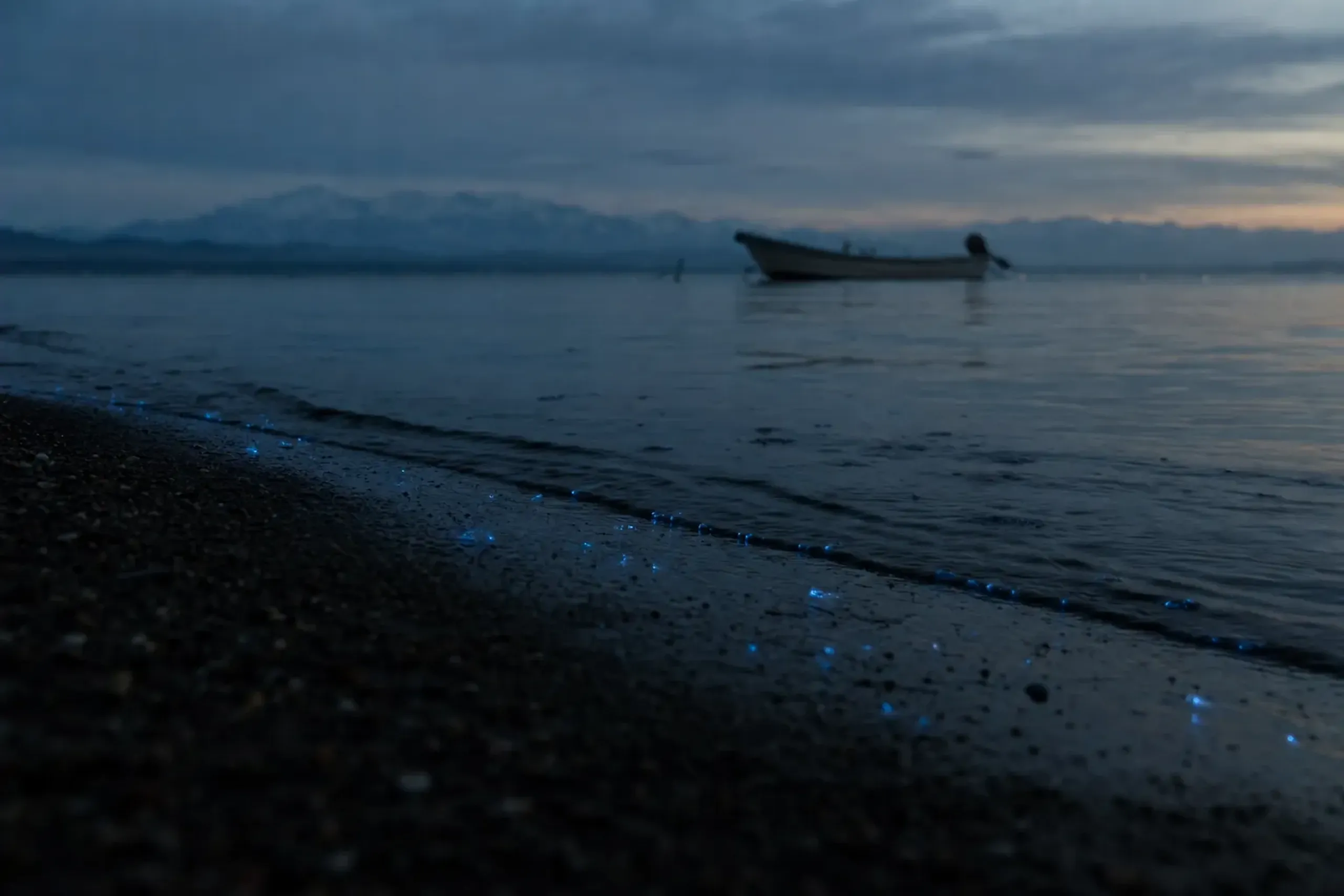
Treating them like one is the fastest way to leave disappointed.
Instead, we design the experience around comfort and pacing. A warm vehicle waiting at exactly the right minute. A hotel choice that makes a 2:45 a.m. wake-up feel possible. A breakfast plan that does not assume you want to talk.
This is where our HNW clients feel the difference between generic touring and a measured approach. Not flash. Precision—the kind of silent, anticipatory care that removes every obstacle before you notice it was there.
If your Japan trip already includes other nature moments, keep this one spare. No extra stops. Let the bay be the point.
Practical Logistics From Toyama City To Namerikawa (And Why Private Transport Helps)
For pre-dawn departures, the simplest method is a private chauffeur transfer, because public transport options are limited at that hour and timing at the port is unforgiving.
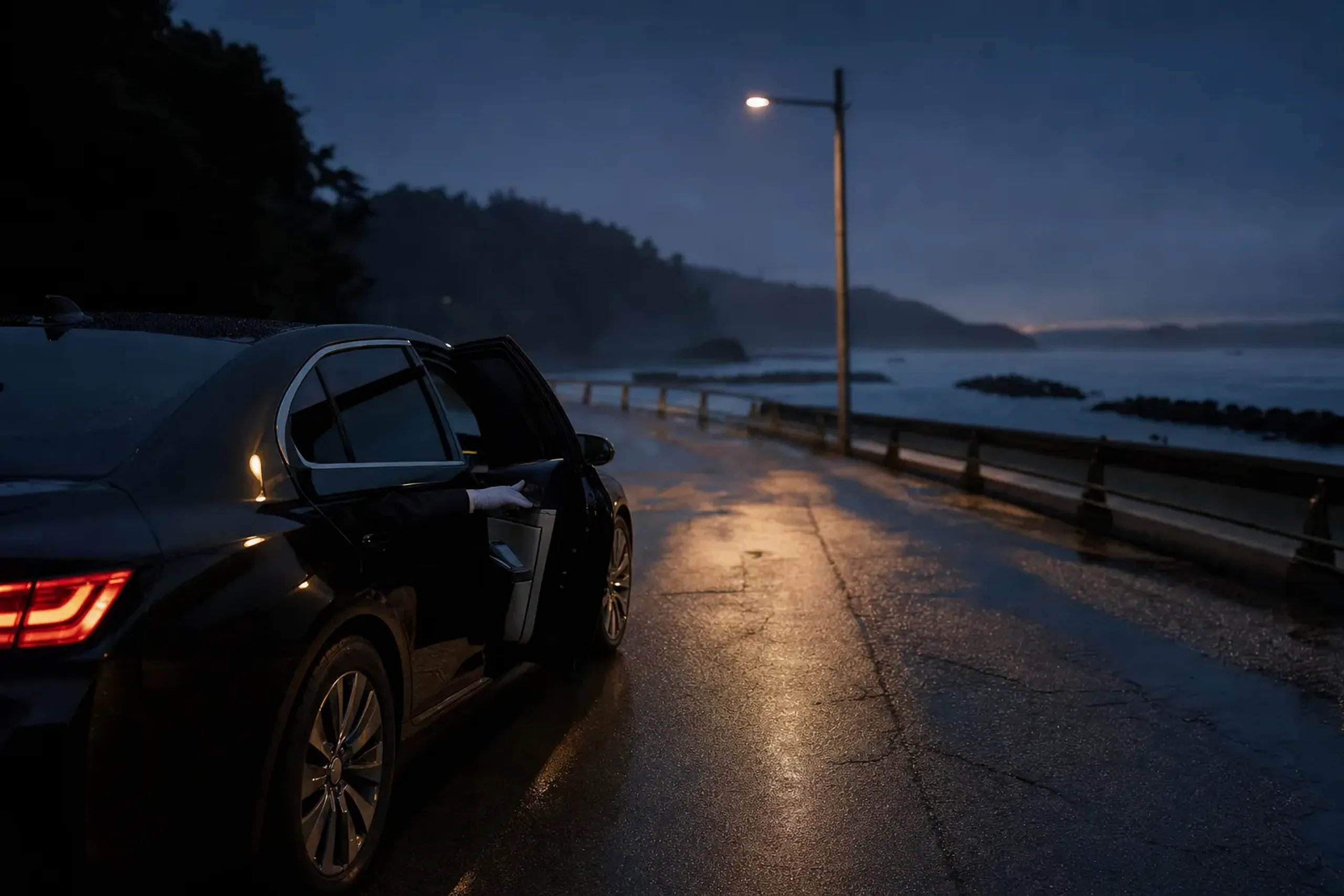
The friction is easy to underestimate: you are moving in the middle of the night, often in cold rain, toward a working harbor with little margin for delays. Our guests typically prefer a quiet cabin, an on-time pickup, and the ability to adjust quickly if conditions change.
When you plan private mobility in Japan, start with the vehicle that matches your party and luggage, not the one that looks impressive in a photograph. For couples, a discreet premium car can be perfect. For families, a flagship minivan keeps everyone calm and warm.
If private transport is part of your trip, learn more about our private transportation options and how we think about pacing and comfort across regions.
Where This Fits In A Bespoke Japan Itinerary
Hotaruika works best as a one-night, two-morning micro-journey: arrive the afternoon before, sleep early, take the pre-dawn boat, then recover slowly.
Trying to bolt this onto an overstuffed route is a classic mistake. A 4:00 a.m. departure punishes anyone who arrived late the night before. It also leaves no space for weather contingencies.
We often build Toyama Bay into a tailor-made itinerary as a counterweight to busier cities. A quiet coastal night. One early shock of beauty. Then a long bath and an unhurried lunch.
If your broader route includes the Tateyama Kurobe Alpine Route, note that our separate article mentions firefly squid only as a seasonal ingredient—not the natural phenomenon itself: Karuizawa: Tokyo’s Original Mountain Retreat, Year-Round. This Toyama Bay journal post is the deep dive.
Plan Your Own Blue Morning In Toyama Bay
A firefly squid dawn cannot be forced, but it can be arranged with quiet precision—the right week, the right hotel, a warm car waiting in the dark, and a schedule with room to breathe if the sea has other plans. That is exactly the work we do behind the scenes, always with complete discretion over your identity and itinerary.
When you are ready to build a Toyama Bay morning around your dates and party, contact us here for a private, tailored proposal.