In this guide
- 01Niseko, Furano, and Kiroro Are Not Interchangeable
- 02What Actually Differentiates A Hokkaido Ski Base?
- 03How Does Hokkaido Snow Character Differ By Region?
- 04Instruction And Families
- 05Evenings And Food
- 06How Much Time Does A Transfer From New Chitose Airport Take?
- 07Combining Your Ski Base With Sapporo Or An Onsen Stay
- 08Who Should Choose Which Base?
- 09Frequently Asked Questions
- 10Why Choose Japan Royal Service
Niseko, Furano, and Kiroro Are Not Interchangeable
Niseko, Furano, and Kiroro represent three entirely different winter journeys. Treat them as interchangeable options on a spreadsheet, and you will book the wrong holiday. A strong skier, a family learning the basics, and a traveler seeking quiet hot springs require completely different answers. Choosing a Hokkaido ski base with Japan Royal Service dictates the rhythm of your days, the language spoken at dinner, and the texture of the snow beneath your skis.
What Actually Differentiates A Hokkaido Ski Base?
You are choosing an ecosystem. Many travelers look only at lift counts. Big mistake. The real differentiators lie in the village footprint, the availability of native-English instruction, and what happens after four o'clock.
Scale dictates convenience, but it also dictates crowding. A resort with high development offers extensive dining networks and robust off-slope services, yet sacrifices local intimacy. Conversely, choosing a quieter base requires accepting fewer late-night dining options and a stronger reliance on your property's immediate amenities. Understanding these trade-offs prevents mismatched expectations.
Our concierge evaluates your group's technical ability, social preferences, and tolerance for transit before suggesting a location. The goal is to match the terrain and the town to your exact rhythm.
Niseko: Scale And International Infrastructure
Niseko is the most developed, the most international, and the busiest base in Hokkaido. This scale brings undeniable advantages. You will find sophisticated dining networks, vast English-speaking ski schools, and highly refined off-slope support.
It is also the most crowded. That development is a genuine asset for families requiring extensive support, but it is exactly why others should look elsewhere.
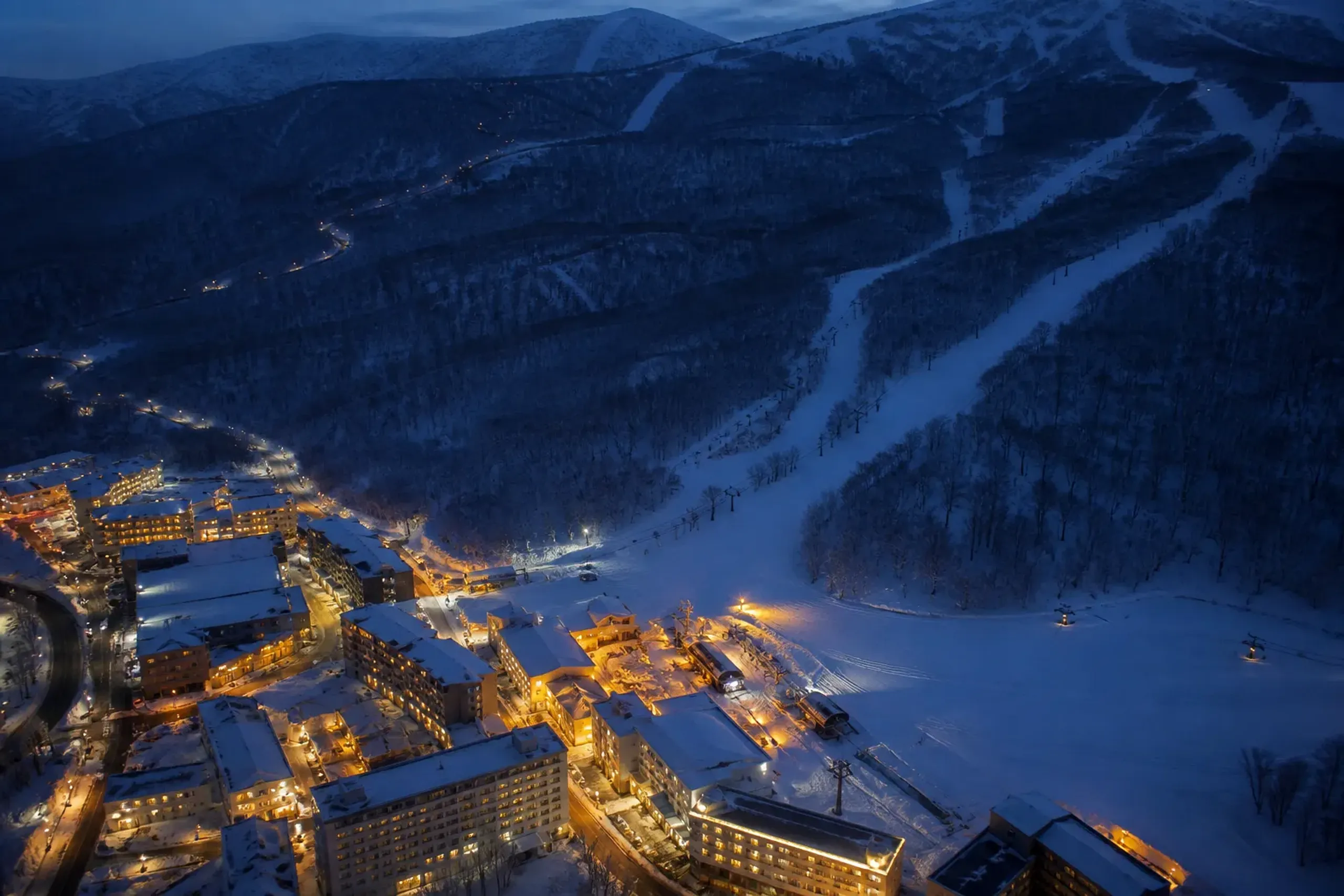
The footprint of your chosen village dictates the rhythm of your evenings.
Expect high density during peak weeks. The neighborhoods within Niseko—Hirafu, Hanazono, Annupuri—also differ wildly in character, meaning neighborhood selection is just as critical as choosing the mountain itself.
Furano: Inland Dryness And Japanese Character
Furano is distinctly quieter. It retains a more Japanese character, sitting inland where the air is colder and the atmosphere remains grounded in local agriculture. The international footprint is much smaller.
You trade the sprawling restaurant scenes of western Hokkaido for discreet, local establishments. This embodies a certain wabi-sabi restraint. It feels less like a built resort and more like a working town. Those seeking a profound sense of place often prefer this subdued environment over westernized convenience.
Kiroro: Contained Convenience And Early Snow
Kiroro occupies the smallest footprint of the three. You are essentially committing to a resort-contained stay. There is no sprawling base village to wander through at night.
The appeal lies in immediate slope access and early, reliable weather patterns pulling off the coast. Ideal if your sole focus is skiing. You ski, you eat, you rest. Nothing else distracts.
How Does Hokkaido Snow Character Differ By Region?
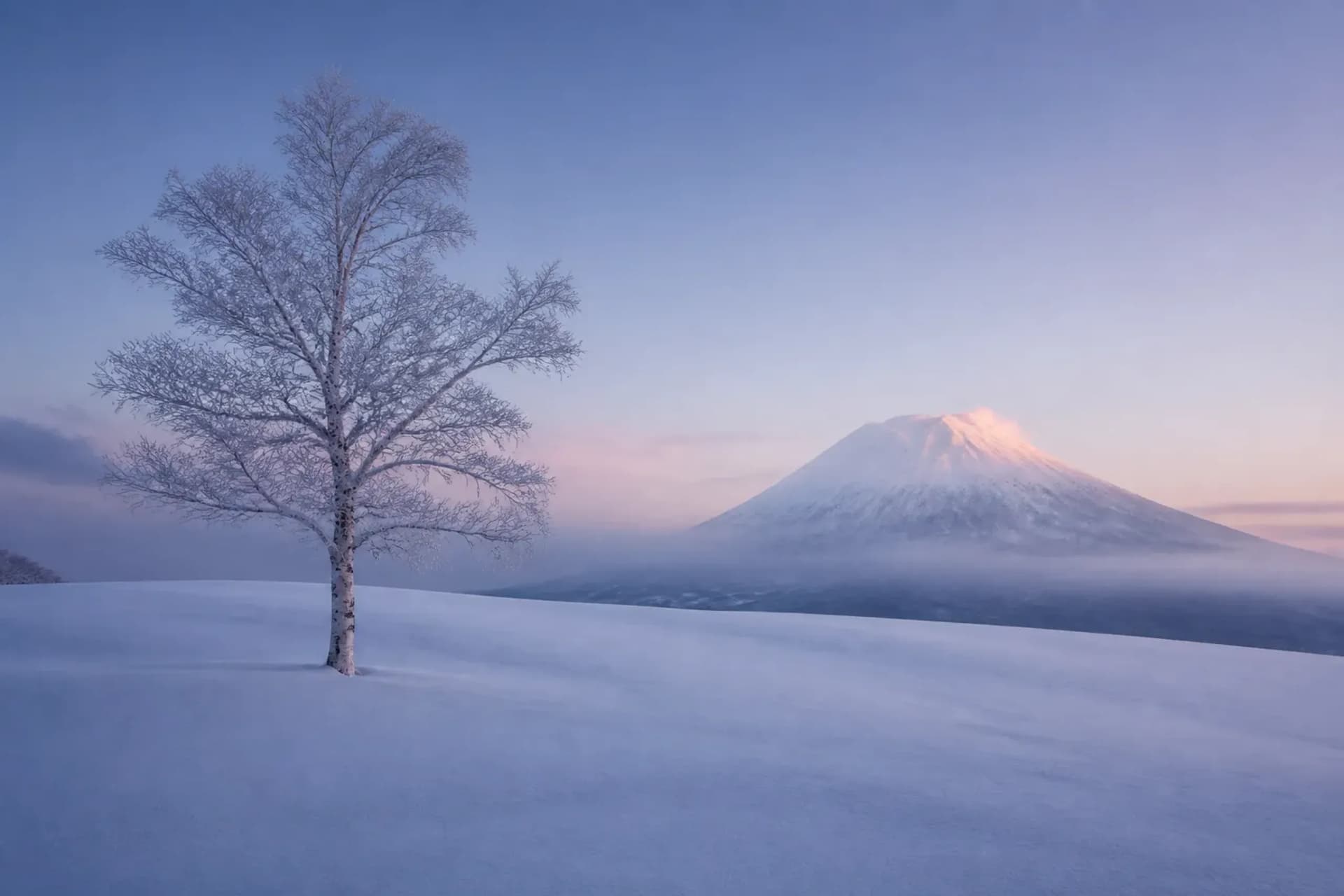
Coastal resorts receive heavier, moisture-laden snowfall from ocean winds, while inland bases catch drier, lighter snow because the moisture drops before crossing the mountains.
Inland versus coastal geography dictates what you ski on. Do not rely on generic marketing phrases. The physical reality of the snow changes noticeably as you move east across the island.
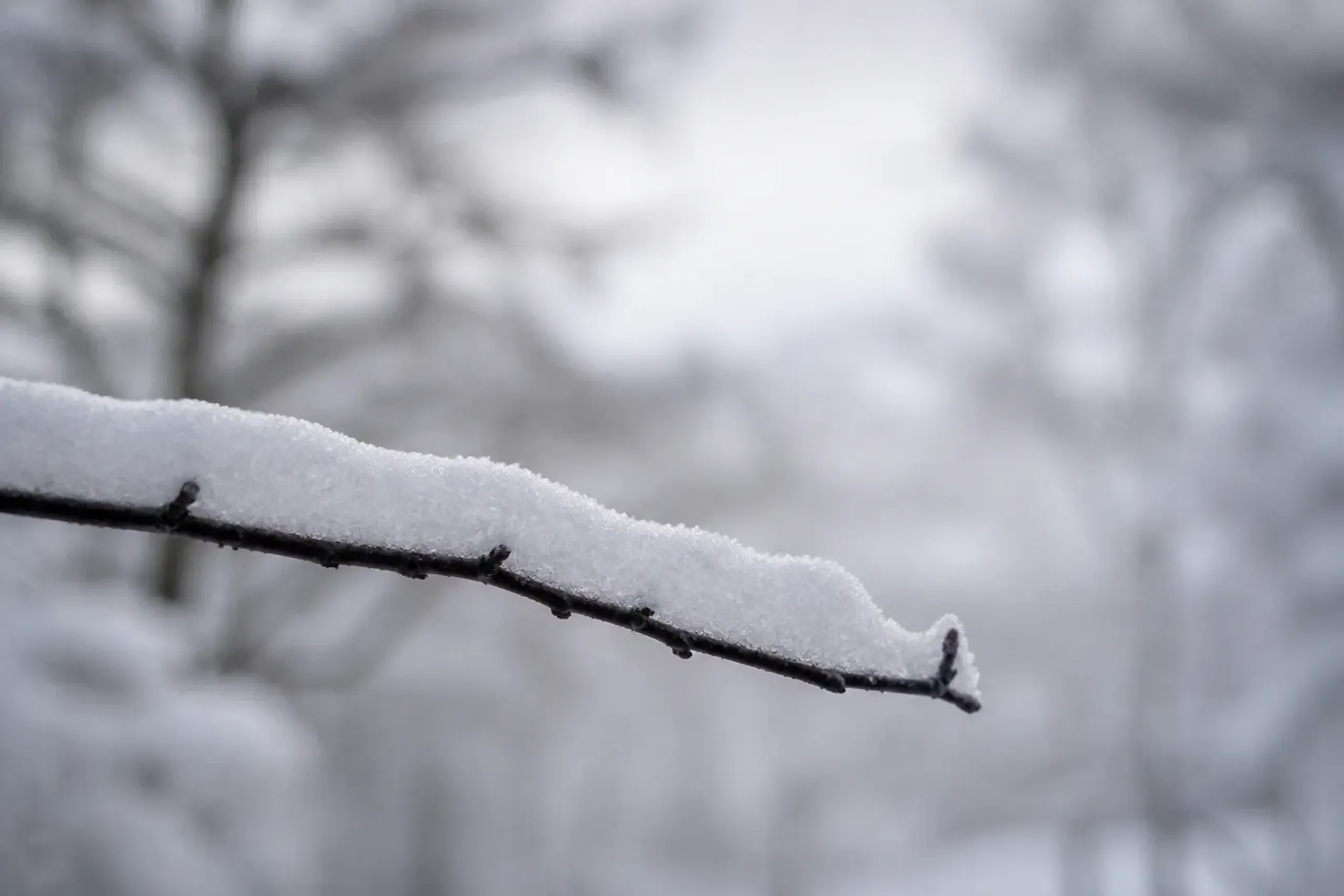
Inland geography shifts the physical texture of the snow you ski on.
Heavy coastal dumps create specific skiing conditions that differ entirely from inland powder.
Niseko and Kiroro catch the brunt of weather systems moving off the Sea of Japan. Furano sits further inland, resulting in a drier texture that holds up differently under traffic. Knowing which profile suits your skiing style helps narrow down the map.
Instruction And Families
Where English-language instruction is genuinely available changes the calculus for families. Niseko possesses the infrastructure to support large groups with native-speaker instructors across all ability levels. You can arrive with complex instructional needs and find them met.
In Furano and Kiroro, finding top-tier, English-speaking private instruction often requires prior arrangement rather than walking up to a desk. Proper guidance matters. Our team coordinates these specialists well in advance, ensuring families are paired with instructors who match their learning style.
Childcare facilities and off-slope entertainment also skew heavily toward Niseko. If your party includes non-skiers or very young children, the sheer volume of alternative activities in a highly developed base often outweighs the desire for a quiet mountain.
Evenings And Food
This is where the three bases separate completely. A resort with no dining beyond the hotel lobby is a fundamentally different holiday than a town with a hundred restaurants.
Niseko offers a vast, cosmopolitan dining scene requiring reservations months out. You can eat exceptionally well, provided you plan early. Furano provides quiet local izakayas and fewer late-night venues, favoring quietude over flash. You will dine alongside locals in a more intimate setting.
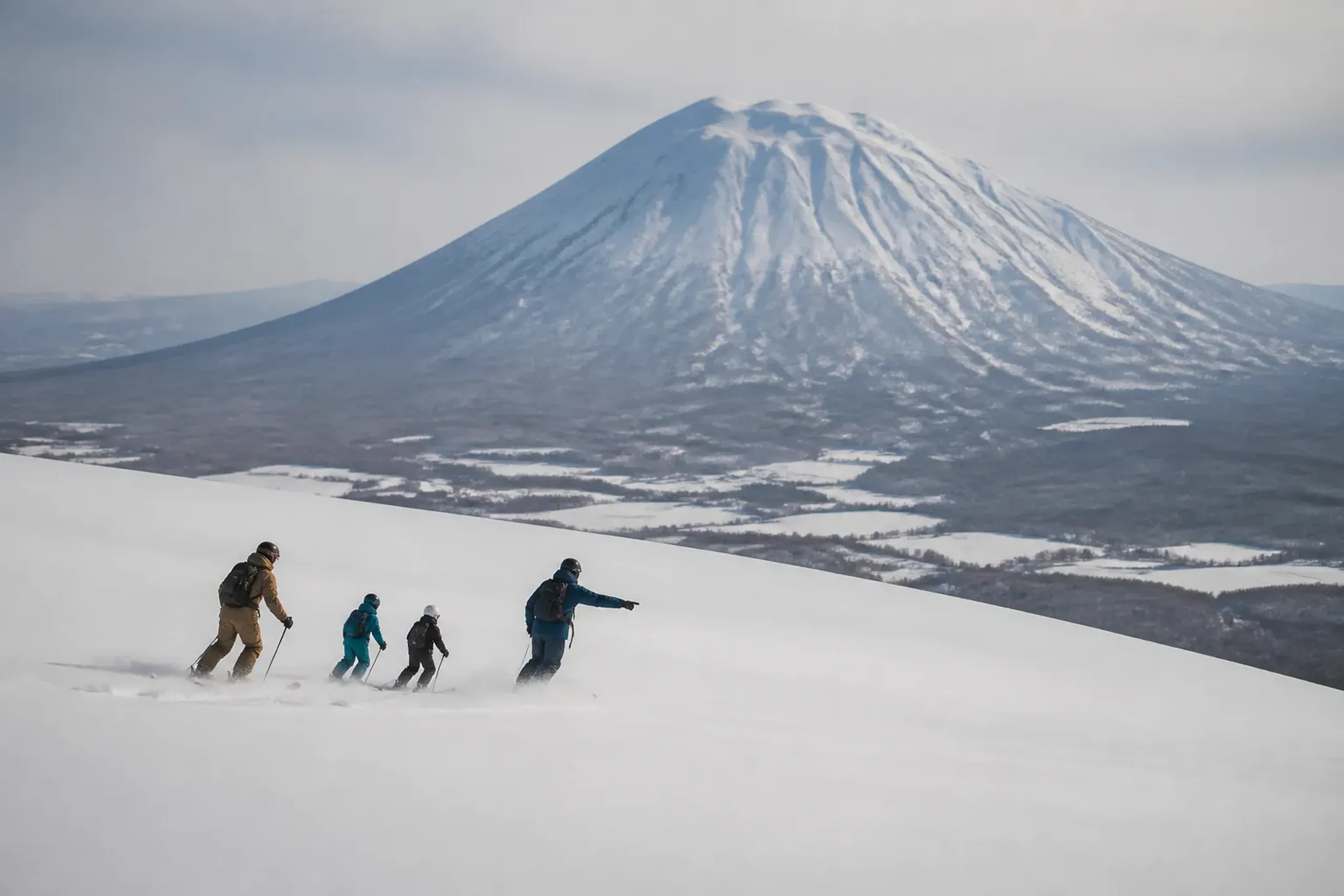
Finding top-tier, native-English instruction often requires prior arrangement.
Kiroro relies heavily on internal property dining. You will likely eat where you sleep. Discretion here means choosing a base that matches your social tolerance for the evening hours.
How Much Time Does A Transfer From New Chitose Airport Take?
Transferring from New Chitose Airport to Hokkaido’s major ski bases generally takes two to three hours by private vehicle, fundamentally altering your arrival and departure day logistics.
The journey is a real cost in hours. Navigating winter roads in Hokkaido requires professional coordination. Using premium private transportation ensures safety and comfort while moving through heavy weather. A long transfer means you will not be skiing on your arrival day.
Keep this in mind when mapping out your bespoke itinerary. Weather systems can occasionally lengthen these drives. Plan accordingly. Our team at Japan Royal Service monitors these routes continuously to adjust departure times based on live snow conditions. When you finally arrive, the relief of arriving to a stocked room makes the transit worthwhile.
Combining Your Ski Base With Sapporo Or An Onsen Stay
Adding a city base or a dedicated hot spring retreat changes the trip pacing. The Sapporo Snow Festival in early February serves as a strong cultural anchor. Spending two nights in Sapporo before heading to the mountains breaks up the travel fatigue.
Alternatively, retreating to a quiet, private ryokan after your ski days offers true physical recovery. Rather than rushing back to the airport, a two-night decompression period in a traditional setting provides a graceful end to the journey.
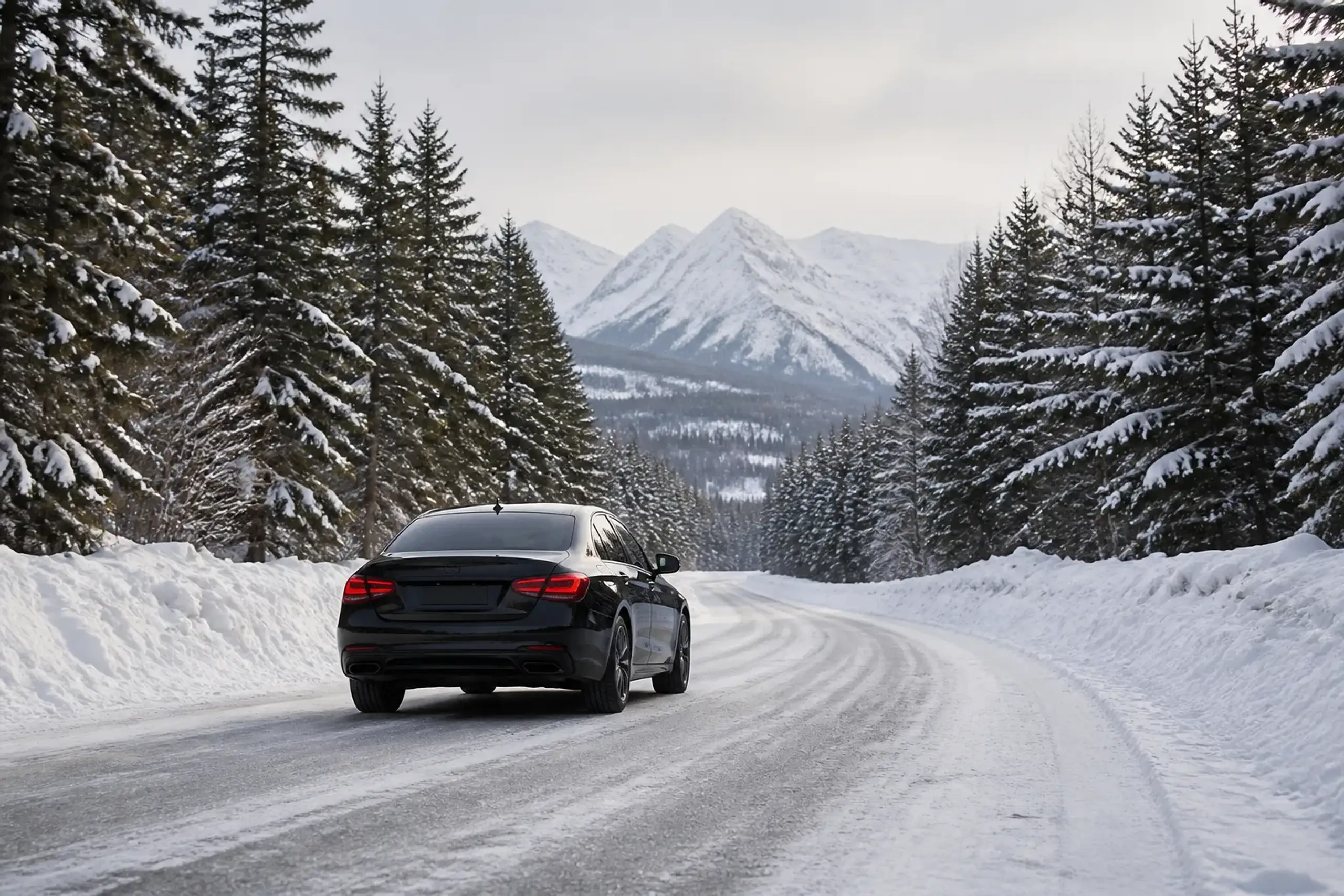
Navigating winter roads requires professional coordination and premium private transport.
Just as we advocate for five days in Tokyo without moving, we suggest picking one primary mountain and exploring it deeply rather than jumping between hills. A fragmented ski trip introduces unnecessary friction.
Who Should Choose Which Base?
Selecting the right location requires honesty about your priorities. Review the pairings below to align your group's needs with the reality of the terrain.
| Traveler Profile | Recommended Strategy |
|---|---|
| Families requiring extensive English instruction and varied dining | Niseko |
| Culturally focused skiers wanting quieter, local evenings | Furano |
| Ski-in/ski-out purists indifferent to village nightlife | Kiroro |
| Non-skiers prioritizing culture, ice festivals, and city dining | Sapporo (skip the ski base) |
Frequently Asked Questions
When is the best time to book a Hokkaido ski holiday for luxury properties?
For high-demand weeks in January and February, luxury inventory often clears six to nine months in advance. Early planning secures the best slope-side access and private instruction.
Can non-skiers enjoy a Hokkaido ski base?
It depends entirely on the resort footprint. Niseko offers enough dining, spa facilities, and off-slope activity to engage non-skiers, whereas Kiroro is heavily focused on the mountain.
Do weather conditions affect airport transfers in Hokkaido?
Yes, severe winter storms can impact road travel between New Chitose Airport and the mountains. We recommend building buffer time into your schedule for arrival and departure days.
Why Choose Japan Royal Service
Booking a Hokkaido ski journey requires precision, not just reservations. Our team at Japan Royal Service arranges your New Chitose transfers, private instructors, equipment logistics, lift passes, and luxury property stays well before you land.
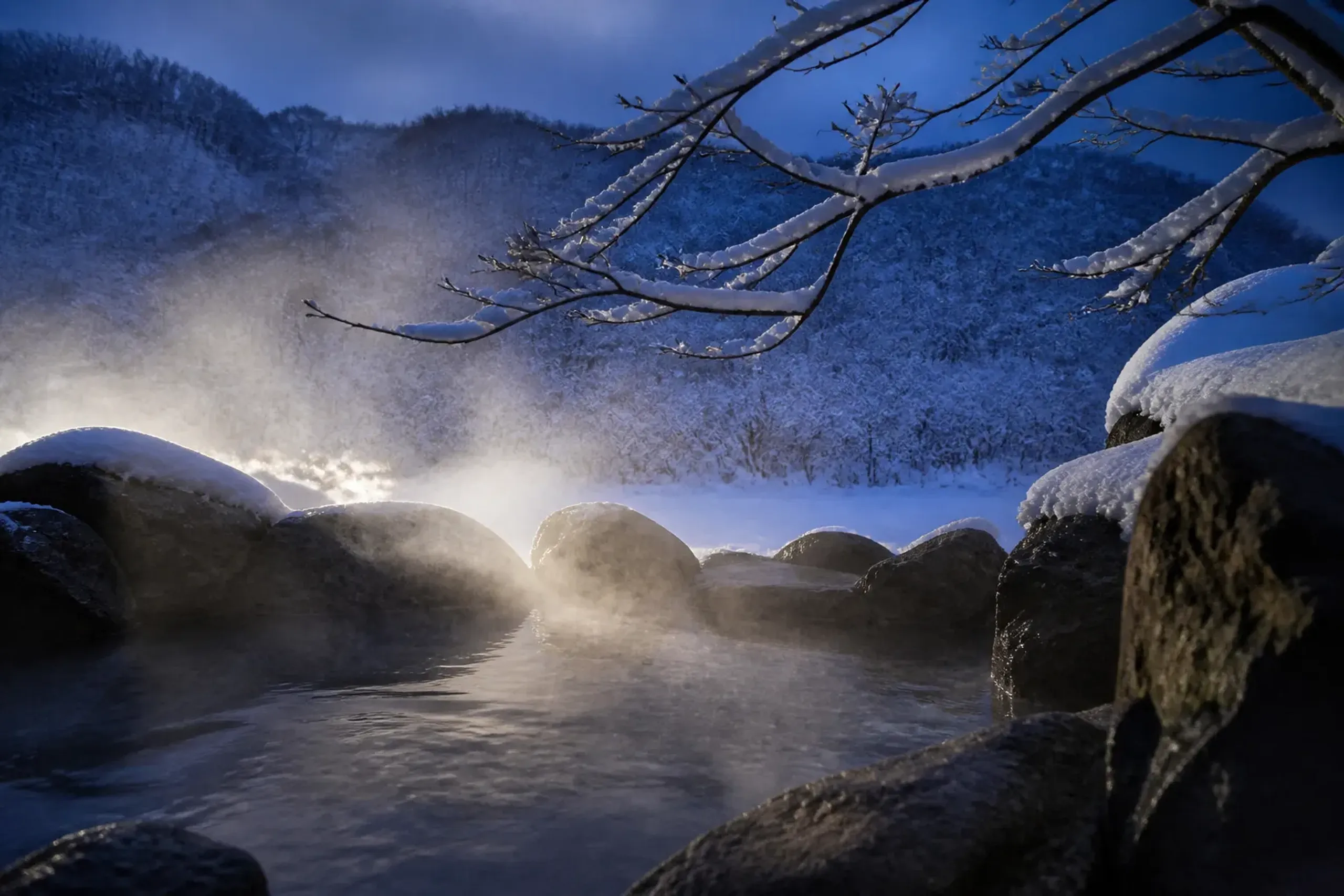
A private hot spring retreat offers true physical recovery after the slopes.
We maintain strict discretion throughout the planning process, ensuring your privacy on and off the slopes. You focus on the skiing; we handle the operational friction. Let us match the perfect base to your party's exact needs.
For private coordination, reach our team directly via WhatsApp or LINE, or contact us here to start planning your bespoke winter journey.