In this guide
- 01What 6 August Means In Hiroshima
- 02Can Anyone Attend The Hiroshima Peace Memorial Ceremony On 6 August?
- 03What Time Should You Arrive For General Seating On 6 August?
- 04Entry, Screening, And What Is Banned (And Why It Matters)
- 05The Morning, Step By Step: A Practical Timeline (Worked Example)
- 06The Hours Between: Museum, Dome, Heat, And Emotional Pace
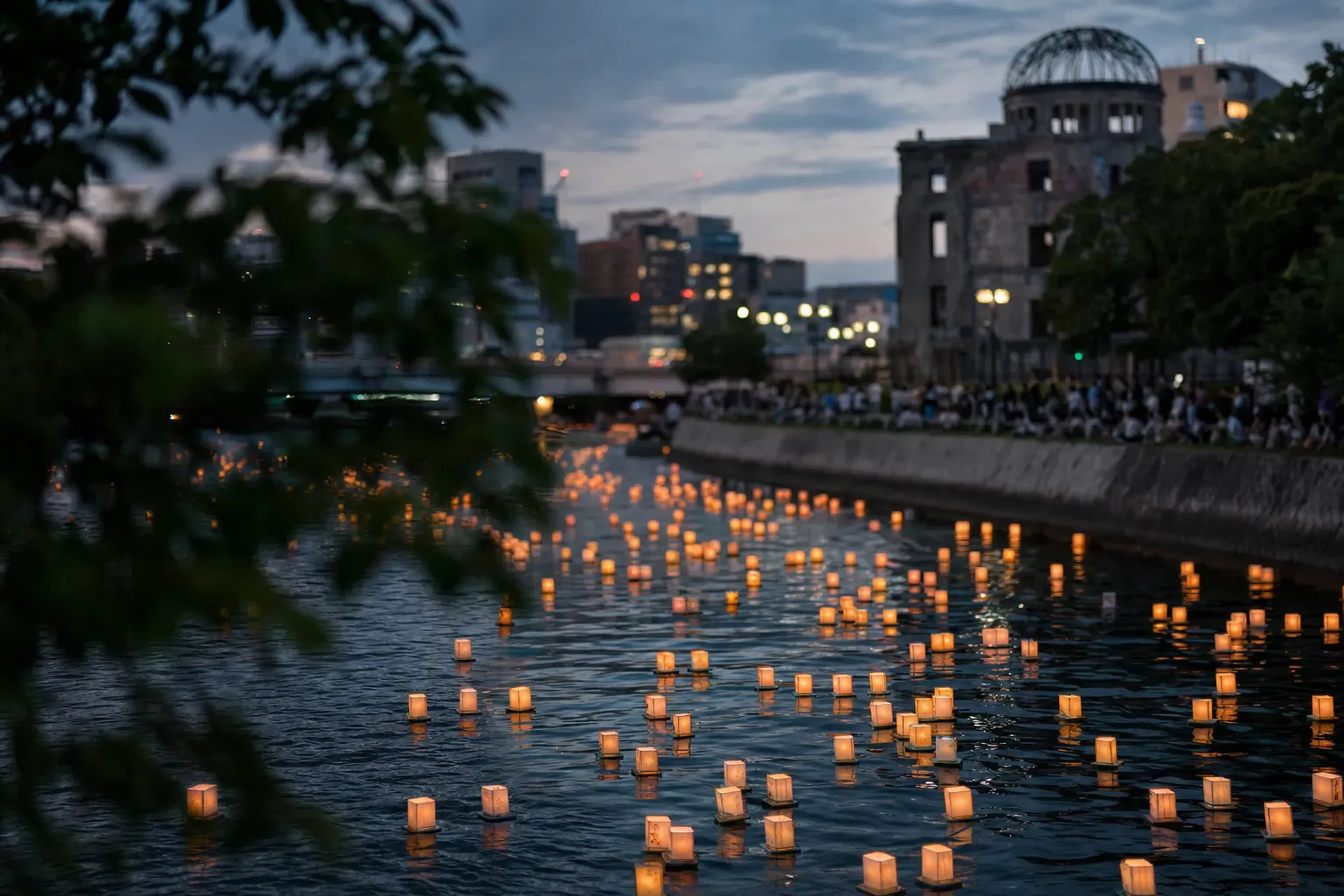
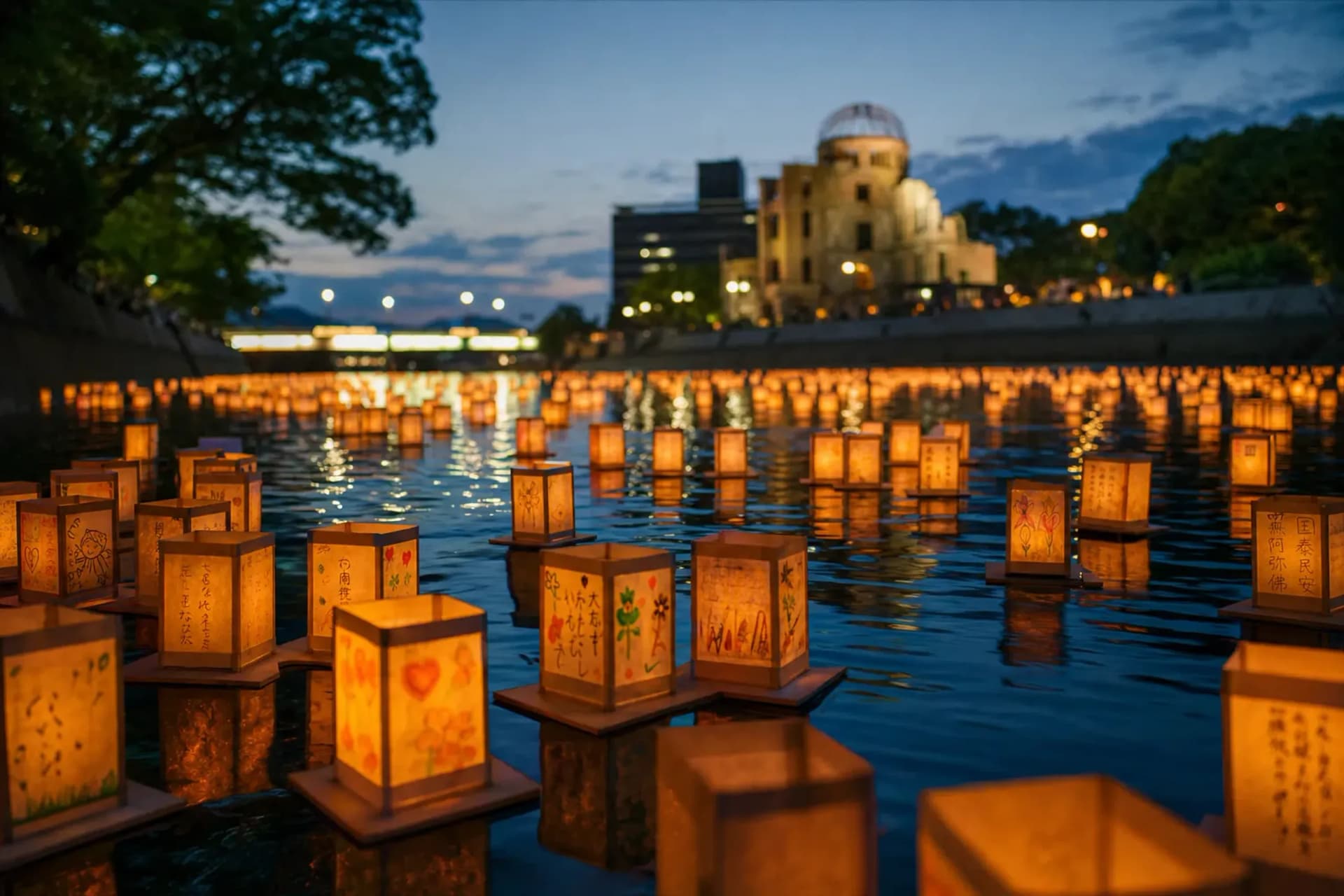
- 07What Is The Hiroshima Lantern Floating On 6 August, And Where Does It Happen?
- 08Getting There: Trams, Airport Access, Road Closures, And Bus Detours
- 09How Our Team Plans A Respectful 6 August Day (Without Overpromising)
The city is already awake, but it is not noisy.
Before dawn, Hiroshima Peace Memorial Park feels measured and watchful, as if even the trees are waiting for the hour that will arrive no matter what you do.
People come in small groups. Some carry a single flower. Many say nothing at all.
If you plan to be here on 6 August, the day asks something simple of you: arrive early, take up little space, and let the meaning lead the schedule. This is a day defined by restraint — the quiet, unadorned dignity the Japanese call wabi — and it rewards those who come prepared to honour it.
What 6 August Means In Hiroshima
On 6 August, Hiroshima gives itself over to remembrance, centred on the Hiroshima City Memorial Ceremony for the Atomic Bomb Victims and Peace Memorial Ceremony in the morning and the Peace Message Lantern Floating in the evening.
This is not a sightseeing day. It is not a day to “fit things in.”
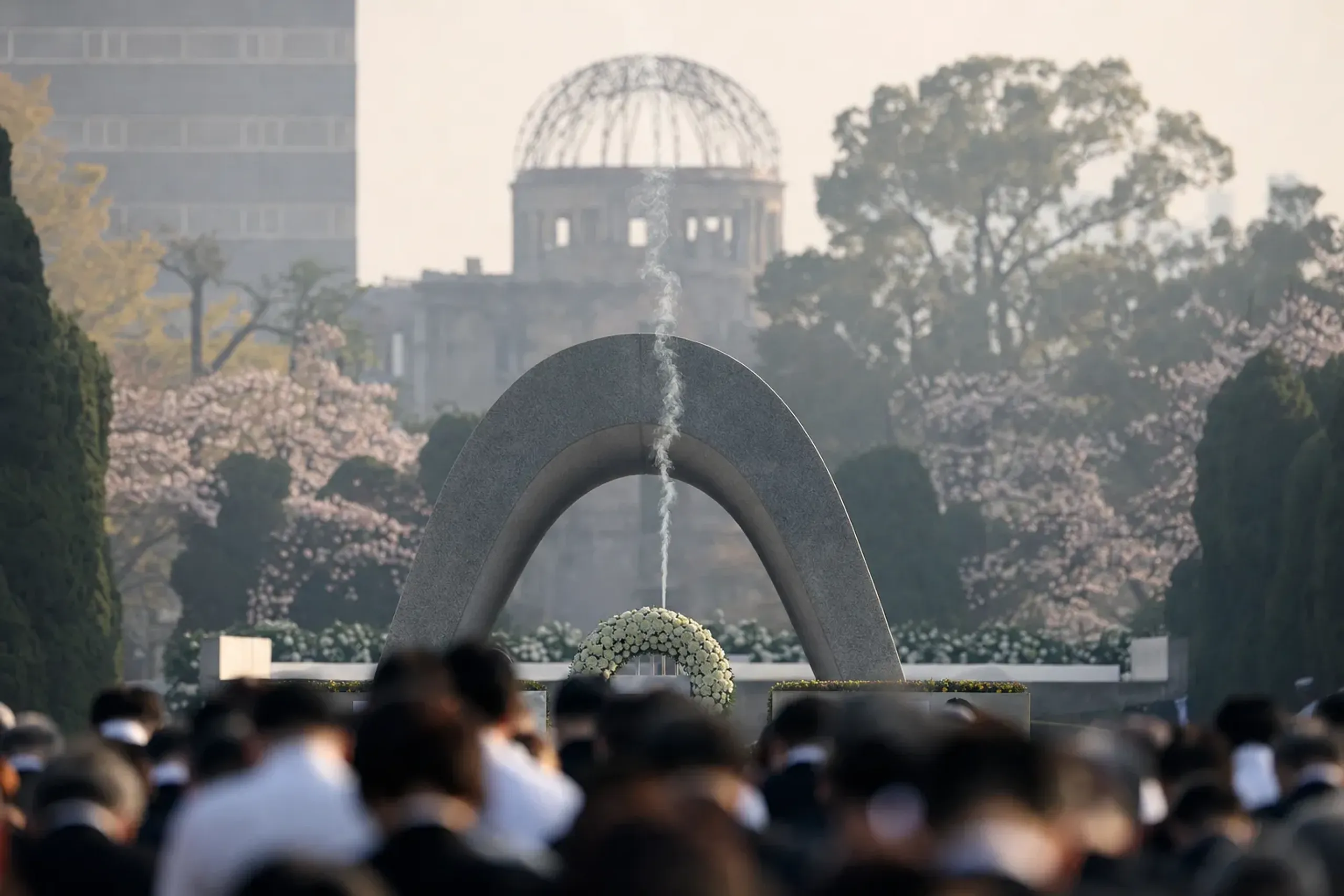
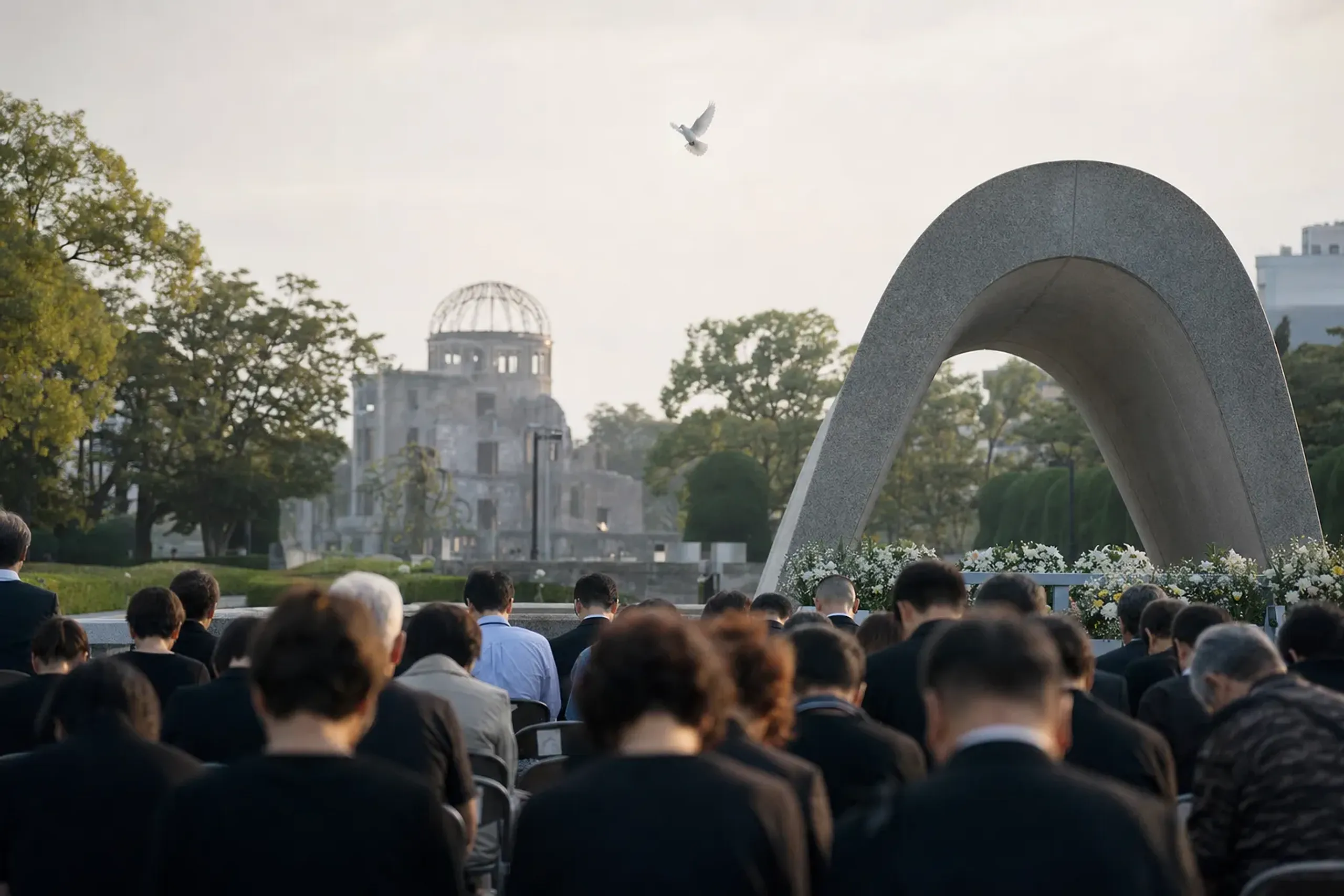
The morning belongs to the ceremony, held in Hiroshima Peace Memorial Park in front of the Cenotaph for the A-bomb Victims. The evening belongs to the lanterns on the Motoyasu River, directly opposite the A-Bomb Dome.
In our experience at Japan Royal Service, guests find the day most meaningful when they plan for fewer movements, softer voices, and a pace that allows the quiet to do its work.
Can Anyone Attend The Hiroshima Peace Memorial Ceremony On 6 August?
Yes—anyone may attend and sit in the general seating area on the day, but seats are limited and fill on a first-come basis.
Hiroshima City holds the ceremony every year on 6 August in Hiroshima Peace Memorial Park.
General seating is free, and there is no advance sign-up for those seats.
For 2026 (a useful example, because the City published detailed guidance), the ceremony ran from 8:00 to 8:50, with the one-minute silent prayer at 8:15—the exact time of the 1945 bombing. Seating figures published by the City included roughly 7,000 outdoor seats overall, of which about 1,200 were general seats.
There is also an indoor relay venue at the Hiroshima International Conference Center with about 2,200 seats offering a live relay. If you are travelling as a couple or family and want a calmer environment, this relay venue can be a considerate choice, especially in intense heat.
What You Will See And Hear (Programme Overview)
The programme is formal, brief, and precise. It does not rush.
Using the 2026 City programme as a reference: the opening begins at 8:00, including the dedication of the Register of the Names of the Fallen Atomic Bomb Victims; there are addresses; a flower offering; and then the moment at 8:15.
At 8:15, a bell sounds and the park enters one minute of silence. After that come the Peace Declaration by the Mayor, the release of doves, the Pledge for Peace by two children’s representatives, and the Hiroshima Peace Song, before the ceremony closes at 8:50.
Children also take part in the flower offering, and the bell is struck by one representative of the bereaved families together with one children’s representative (as described by Hiroshima City).
A Note On The Register And The Cenotaph
The Register of the Names of the Fallen Atomic Bomb Victims is dedicated during the ceremony and offered at the Hiroshima Peace Memorial Cenotaph.
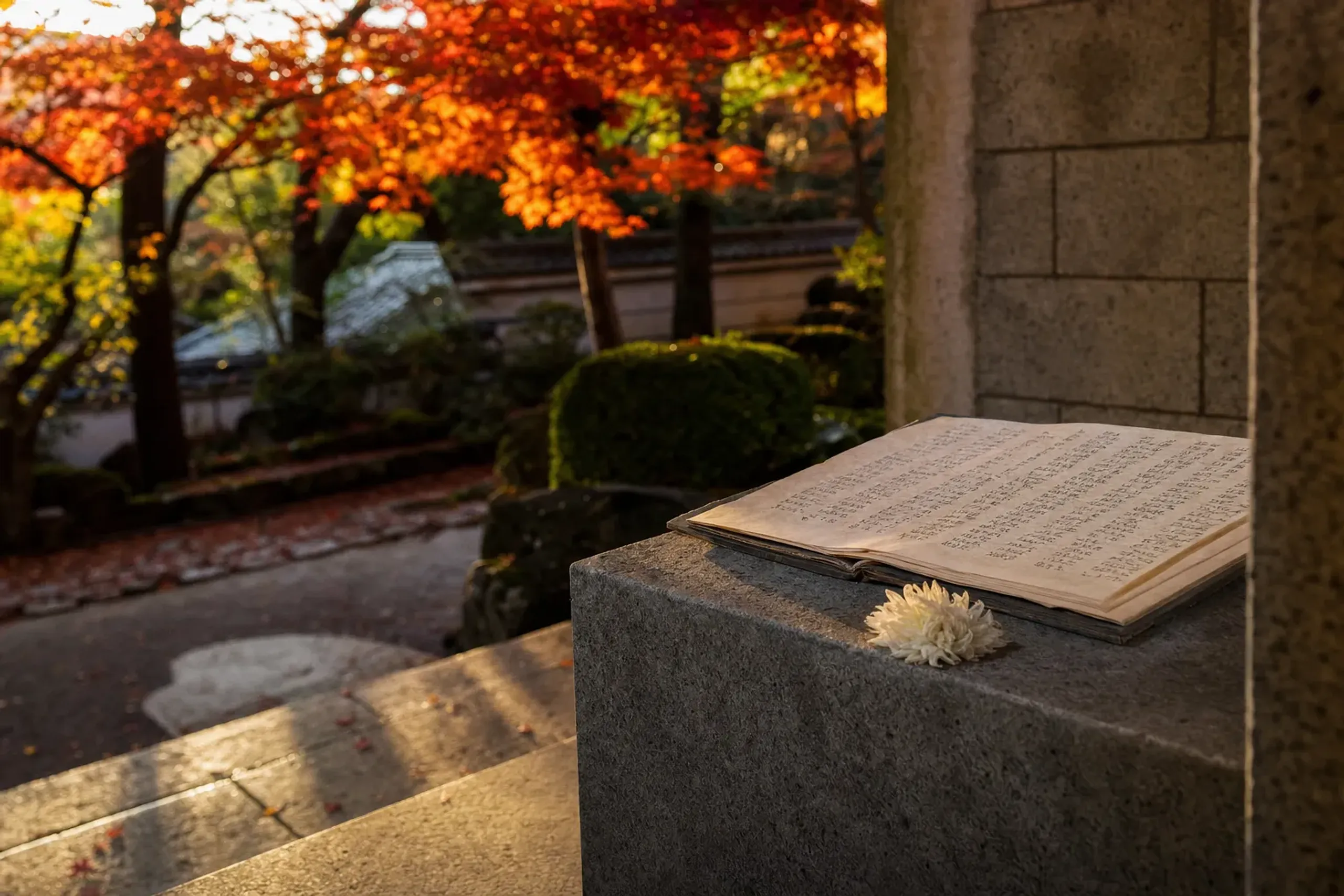
Hiroshima City reports that 4,393 names were added on 6 August 2026, bringing the total registered (as of that date) to 353,639. These numbers change year to year.
The point is not scale. It is presence.
What Time Should You Arrive For General Seating On 6 August?
Plan to be near Hiroshima Peace Memorial Park by around 6:00 to have a realistic chance at general seating and to move without rushing.
Hiroshima City restricts the ceremony area from 5:00 to 9:00, and anyone inside the restricted zone is asked to leave at 5:00. Attendees begin entering from about 6:00.
If you arrive just before 8:00, the City warns that you may not be able to enter before the ceremony begins. If you arrive just before 7:00, you may miss the separate early-morning route for prayer at the cenotaph.
Expect a bag check at the entrance and a metal detector at the seating entrance (for the ceremony seating areas). Bring patience. Bring as little as you can.
Key fact: The ceremony runs 8:00–8:50 (example: 2026), and the one-minute silent prayer is at 8:15.
The Early Cenotaph Prayer Route (One-Way)
Hiroshima City has published (in its newsletter guidance) a separate one-way route for prayers at the cenotaph in the early morning.
In the 2026 guidance, this cenotaph prayer route ran from 5:00 to 7:00, entering from the Motoyasu River side, and it did not require a bag check. It is designed for brief, quiet prayer rather than ceremony seating.
Details can change year to year. Our concierge team verifies the current year’s notice before your visit, so nothing is left to chance.
Entry, Screening, And What Is Banned (And Why It Matters)
Hiroshima City’s rules inside the ceremony area are strict, and the tone is not negotiable.
They exist to keep the morning safe, dignified, and workable for tens of thousands of people moving through a small space.
Travel light. The common mistake is arriving with bulky bags and expecting the park to “absorb” you.
What Hiroshima City Bans In The Ceremony Area
Within the restricted ceremony area (published guidance covers 5:00 to 9:00), Hiroshima City lists prohibited items and behaviours. Follow staff directions and signage at all times.
- Explosives, flammables, blades, scissors
- Microphones, loudspeakers, musical instruments
- Placards, banners, and signs
- Bibs, sashes, helmets, headbands
- Drones
- Throwing objects, shouting, entering restricted areas
- Obstructing others, refusing screening, ignoring staff instructions
People who break the rules may be asked to stop and can be ordered out of the park.
Drone Rules Around Peace Memorial Park
Drone flight is generally banned over the park and roughly 1,000 metres around it on 5 and 6 August, and requires City consent along with prior notice to the police.
This matters even if you are an experienced pilot, even if you believe you will be “quick,” and even if your drone is small.
Leave it at home. The day does not need aerial footage.
The Morning, Step By Step: A Practical Timeline (Worked Example)
For planning, treat 6 August as three quiet arcs: approach, ceremony, and decompression.
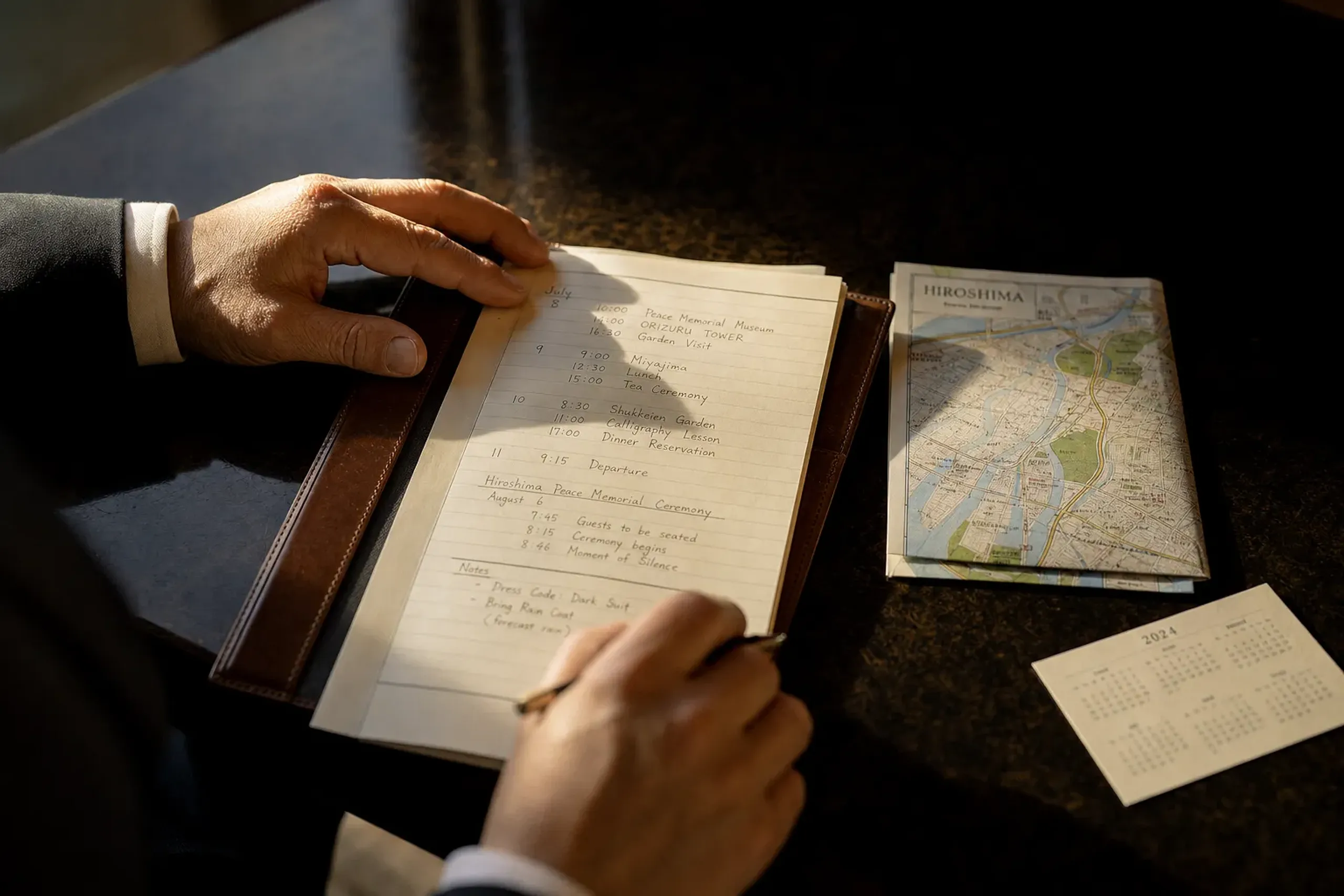
Below is a worked example using the 2026 published ceremony window (8:00–8:50). The City confirms entry rules and seat arrangements closer to the date each year.
05:30–06:00: Approach The Park Edge
Come close, but not into the restricted zone before entry begins.
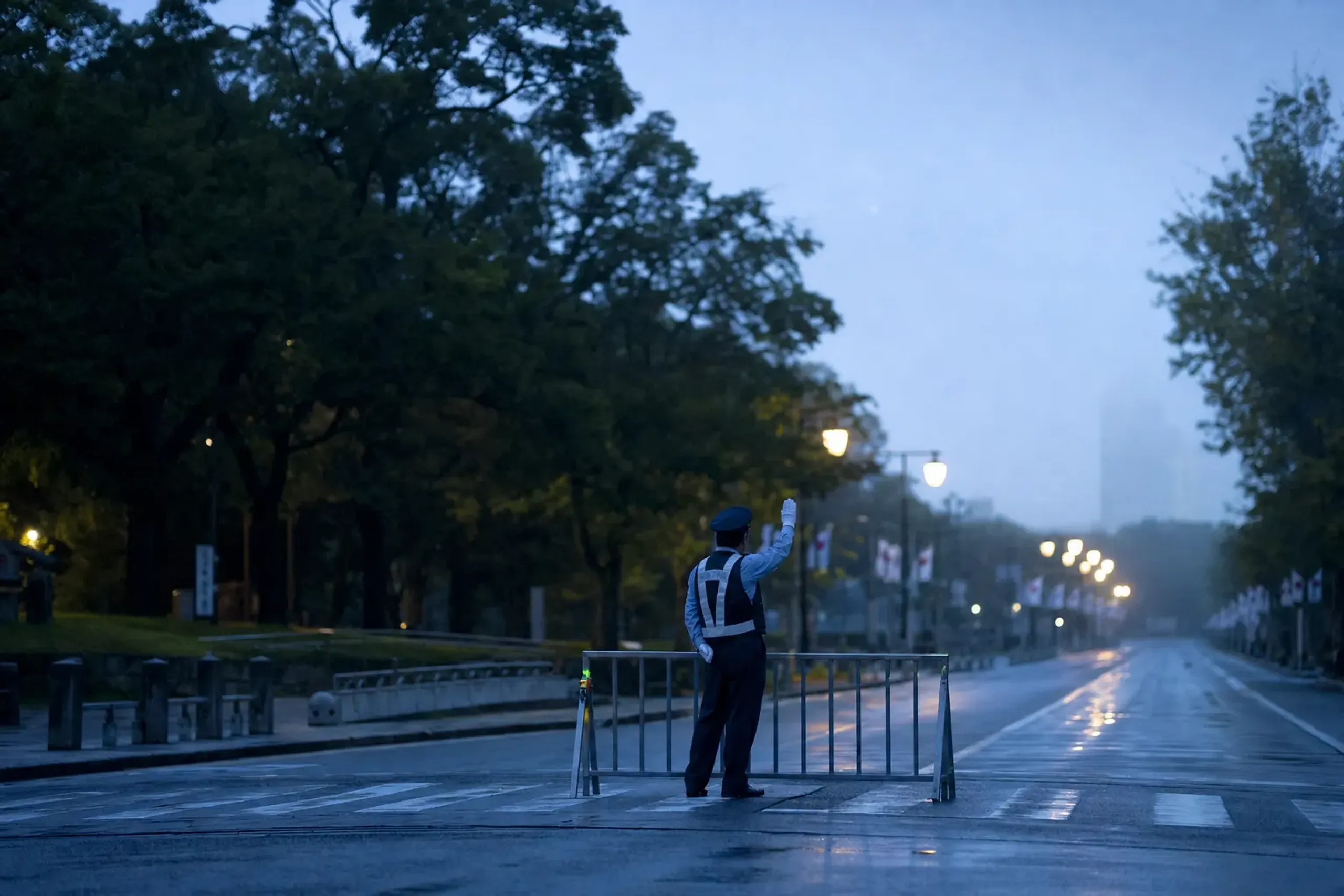
If you are using private transportation, plan a drop-off outside the expected vehicle closures and walk the final stretch. Roads around the park are closed by police, and closures can be extended depending on the ceremony’s progress.
Speak less. Watch more.
06:00–07:30: Entry And Seating
Once entry begins (about 6:00, per the City’s guidance), you will move through screening and toward the seating entrances.
General seating has Japanese-language support only. If you do not read Japanese, a cultural interpreter guide can quietly brief you beforehand, so you understand what is being said and why each segment unfolds as it does. This kind of unobtrusive, anticipatory care—the Japanese ideal of omotenashi—means you are never left guessing in a moment that deserves your full attention.
Do not aim to “optimize” your spot. Aim to be settled, out of the way, and ready for stillness.
08:00–08:50: Ceremony
The ceremony begins at 8:00. It is formal, and it moves in an order that has been repeated, almost unchanged, for decades.
At 8:15, the bell sounds and the park observes one minute of silent prayer. People across the entire city pause with it.
When it ends at 8:50, there is no applause. Let the silence carry you out.
The Hours Between: Museum, Dome, Heat, And Emotional Pace
The middle of the day can feel like a question with no clean answer: what do you do after the ceremony?
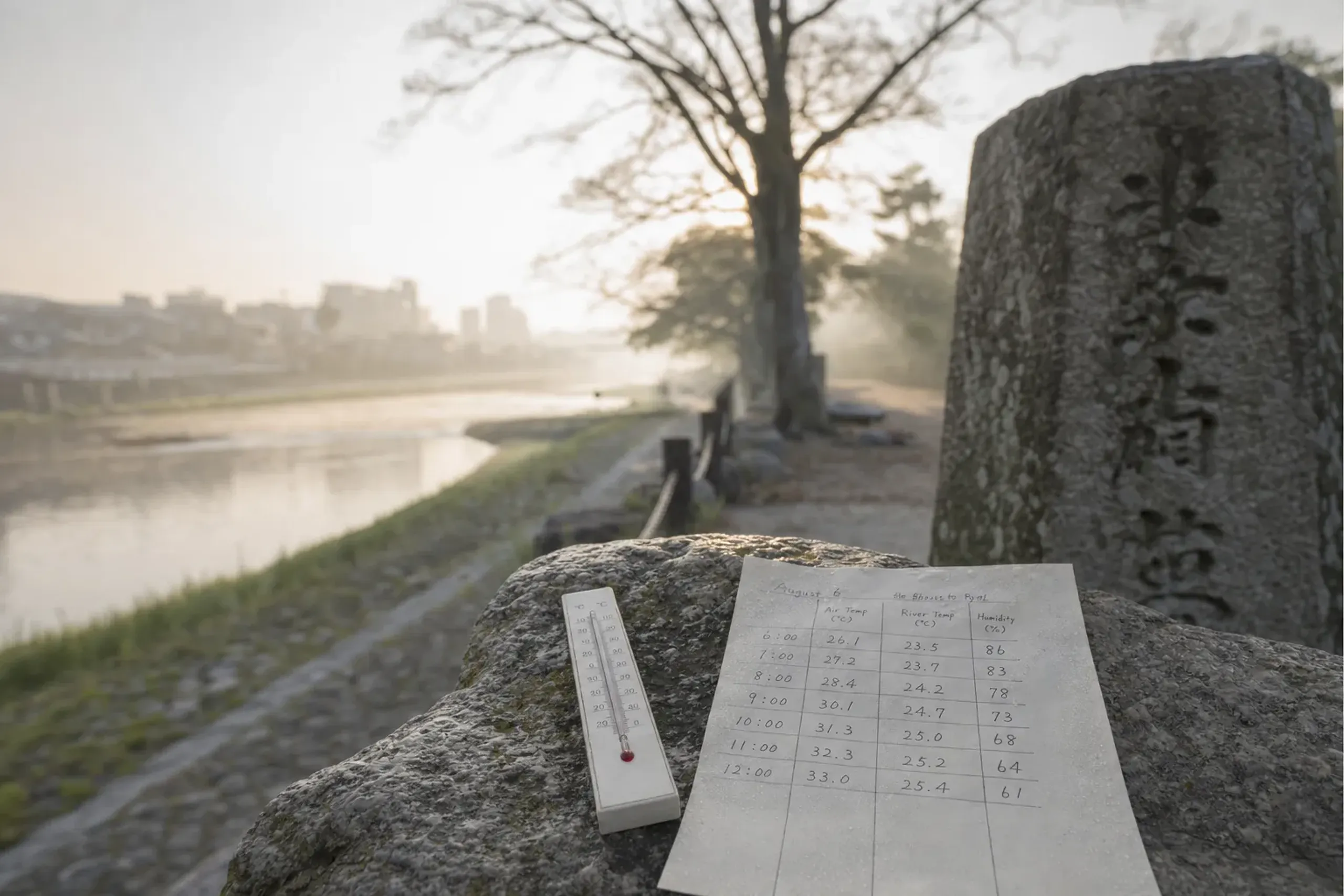
Plan for shade, water, and time to sit. Early August in Hiroshima is hot, humid, and relentless.
Japan Meteorological Agency climate normals for Hiroshima in August (1991–2020) include a mean high of 32.8°C and a mean temperature of 28.5°C.
Dress for heat. Bring a hat.
Three Landmarks, One Line Each (Context Only)
A-Bomb Dome: UNESCO inscribed “Hiroshima Peace Memorial (Genbaku Dome)” under criterion (vi); the inscribed area is the Dome itself, and the park lies within the buffer zone.
Hiroshima Peace Memorial Museum: Hours on 5–6 August may be extended, and some time slots may require prior online reservations; check the day’s official information before you go.
Hiroshima Peace Memorial Cenotaph: The cenotaph stands at the ceremony’s centreline, holding the register of names dedicated in remembrance.
When To Visit The Museum On 6 August
If you go, go with intention. The museum is intense.
On 6 August 2026, published information showed extended hours (and sources differed on the exact opening time). We therefore treat museum hours as variable and confirm them close to the date.
In our experience, guests do best with one of two approaches: either a short, focused museum visit in the afternoon, or a museum visit on 5 August, when extended hours can ease the pressure. Both can work well.
A Gentle Rule: Build A Decompression Block
Schedule a quiet hour somewhere cool after the museum—or after the ceremony, if you skip the museum.
Sit in your hotel lounge. Sit by a window. Write a few lines for yourself.
This is not indulgence. It is how you stay respectful through the evening.
What Is The Hiroshima Lantern Floating On 6 August, And Where Does It Happen?
The Peace Message Lantern Floating is held on 6 August from about 18:00 to 21:00 on the Motoyasu River, opposite the A-Bomb Dome.
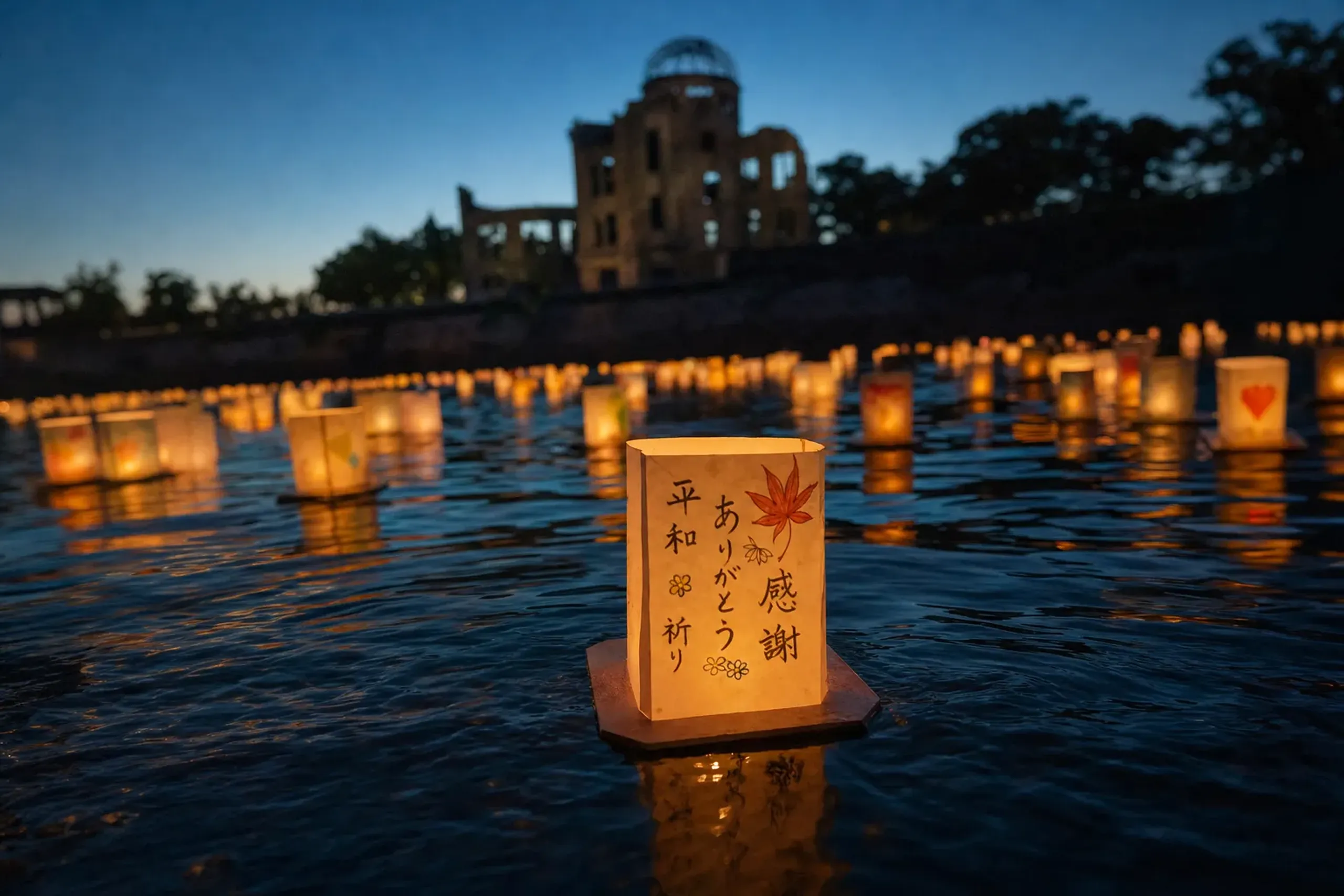
Hiroshima City explains that the tradition began soon after the war, with handmade lanterns floated by bereaved families. Today it is run by a local executive committee rather than by the City itself.
The light is soft, and the river carries it without hurry. People stand shoulder to shoulder, yet the mood remains calm.
If you attend, treat it as participation in a remembrance, not as a spectacle.
How Participation Typically Works (Subject To The Year’s Rules)
Hiroshima City’s guidance has described on-the-day registration at a tent beside the river, open to anyone.
Past guidance has also described options such as floating a lantern by hand, having one floated on your behalf, or sending an online message. Rules can change from year to year.
We do not publish prices or claim guaranteed participation methods. For the current year’s instructions, our concierge team checks the official notices and then guides you through what is actually available—so you participate correctly, quietly, and without missing a step.
Where To Stand Without Getting In The Way
People watch from the Motoyasu riverbanks and around Motoyasu Bridge, and you will see staff and volunteers managing the flow.
Follow their directions even if it means stepping back from your preferred viewpoint. Yield space when families approach the water.
A small courtesy goes a long way on this night.
Getting There: Trams, Airport Access, Road Closures, And Bus Detours
On 6 August, prioritise public transport and walking; the vehicle roads around Peace Memorial Park are closed by police, and closures may be extended.
Hiroshima Chuo Police advises of road restrictions around the park, and the City publishes reminders about bus detours and pedestrian limitations when ceremony vehicles pass.
If you are staying centrally, the simplest plan is often to walk early, then walk again in the evening for the lanterns.
Practical Transit Times (No Fares)
- Hiroshima Station to Genbaku Dome-mae (tram): about 20–25 minutes, then a short walk.
- Hiroshima Airport to Hiroshima Station (limousine bus): about 45–50 minutes.
Train times can change by timetable. If you plan Shinkansen connections, re-check schedules with the operator close to travel.
Bus Detours And Pedestrian Controls
Hiroden and other operators may post detour notices, and the City newsletter guidance has described bus detours in the morning window around the ceremony (example: 6:30 to 9:30 in 2026).
We recommend checking the day’s Hiroshima Prefectural Police and Hiroden notices when they are published. This is one reason we plan the day with generous buffers built in.
How Our Team Plans A Respectful 6 August Day (Without Overpromising)
For 6 August in Hiroshima, good planning is not about access. It is about conduct.
Our team at Japan Royal Service designs the day so that you can participate quietly, understand what you are witnessing, and move through the crowds without becoming part of the problem. We handle the logistics with complete discretion—your identity and your itinerary remain entirely your own—so that you are free to be fully present. That same attention shapes every element of a bespoke itinerary we build around you.
If you are considering being in Hiroshima on this most solemn of days, let us plan it with the care it deserves. To begin a quiet, confidential conversation about your visit, contact us here.