In this guide
- 01What Is The Himeji Castle Night Sakura Paradox In Late March And Early April?
- 02Yozakura-Kai Vs Kanō-Kai: Two Events, Two Rules
- 03When Are Himeji Castle Cherry Blossoms Typically At Their Best?
- 04How Late Is Himeji Castle Lit Up At Night In April?
- 05Sannomaru Plaza: The Honest Free Alternative With A Real View
- 06A Calm, Step-By-Step Plan For Himeji Castle In April (Without Rushing)
- 07Access And Rules That Matter (Trains, Parking, Pets, Fees)
- 08What Quiet Luxury Looks Like At A UNESCO Castle
- 09How Japan Royal Service Approaches Himeji In April
- 10Frequently Asked Questions
- 11Why Choose Japan Royal Service
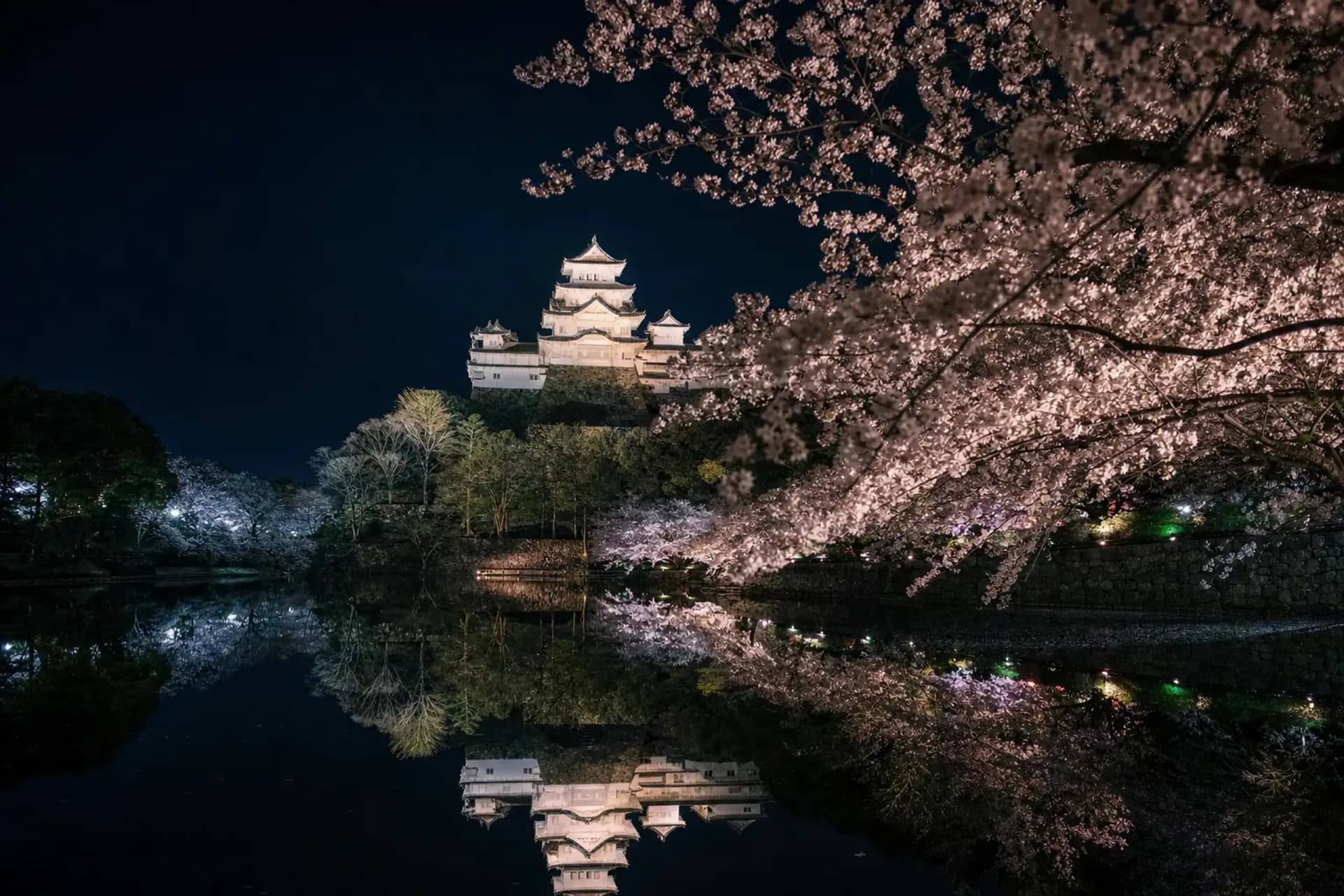
Dusk arrives, and Himeji turns theatrical.
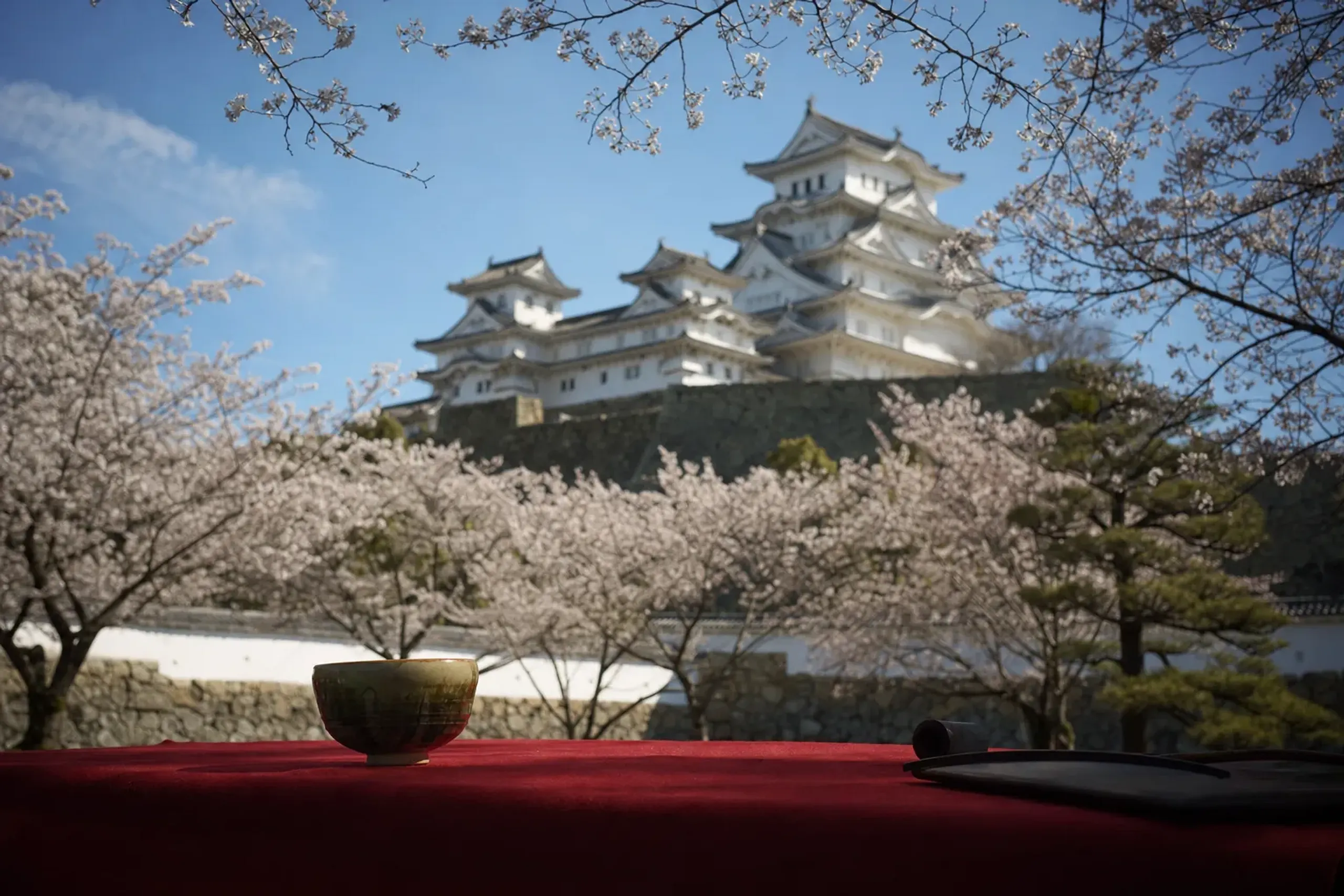
The white plaster of Himeji Castle catches the last light like paper, then the sky goes ink-dark and the keep begins to glow—calm, bright, and oddly modern against 400-year-old timber and stone.
It sounds simple: come for cherry blossoms, stay for the illumination.
Here’s the paradox. The castle is lit every night from sunset to midnight, all year. Yet during the ten nights you would actually plan around—castle plus sakura—the best viewing garden closes much earlier.
What Is The Himeji Castle Night Sakura Paradox In Late March And Early April?
Himeji Castle is illuminated from sunset to midnight year-round, but during the ticketed night cherry blossom event at Nishinomaru Garden, viewing runs only 18:30–21:00 with last entry 20:30.
This is where many April plans quietly go wrong.
Marketing language often implies “lit till midnight” is the blossom experience. It isn’t, not on the nights that matter most. On those peak nights, the castle remains lit, but the west bailey garden that gives you the signature “white castle + pink canopy” view has a firm closing window.
For HNW travelers, that window changes everything: train times, dinner times, and how early you need to be already in position. No scrambling. No last-minute taxi hunt. Just a clean plan built around the real closing time.
Yozakura-Kai Vs Kanō-Kai: Two Events, Two Rules
They sound similar. They are not.
In our experience, most disappointment at Himeji in blossom season comes from conflating these two names and assuming they share the same schedule, access, and atmosphere.
They don’t.
Yozakura-Kai (Nighttime, Ticketed, Nishinomaru Garden Only)
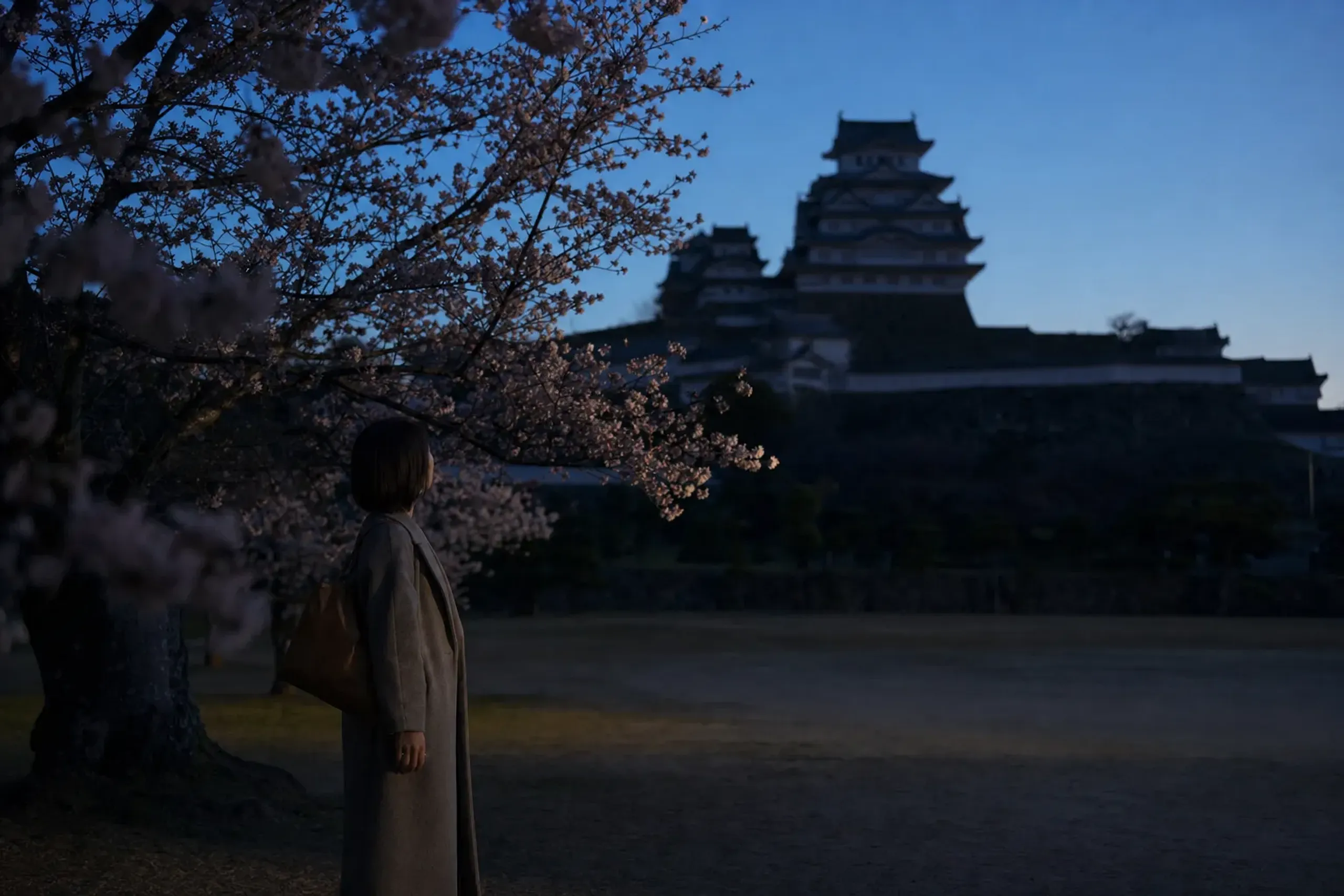
Yozakura-kai (夜桜会) is the evening program held in Nishinomaru Garden, the west bailey. It is the premium vantage point for pairing cherry blossoms with the castle’s white walls.
Projection mapping is part of the evening program, cast onto the castle’s white surfaces. It can feel almost weightless—light playing on plaster—especially when a breeze moves the blossoms and the crowd goes quiet for a moment.
Key fact: No eating or drinking is permitted inside the paid Yozakura-kai area.
Those rules matter for pacing. You eat before you enter, or after you exit. Simple. Plan it once, and the night becomes relaxed instead of cramped.
Kanō-Kai (Daytime, Free, One-Day Window)
Kanō-kai (観桜会) is a separate daytime-only event, free to attend, with a specific one-day schedule.
This is not “night viewing.” It’s a daytime spring gathering in the castle grounds. Different light, different crowd rhythm, different goal.
If you want the classic dusk-to-dark sequence—petals turning gray-lilac, the keep shifting from white to luminous—Kanō-kai is not that. Yozakura-kai is.
When Are Himeji Castle Cherry Blossoms Typically At Their Best?
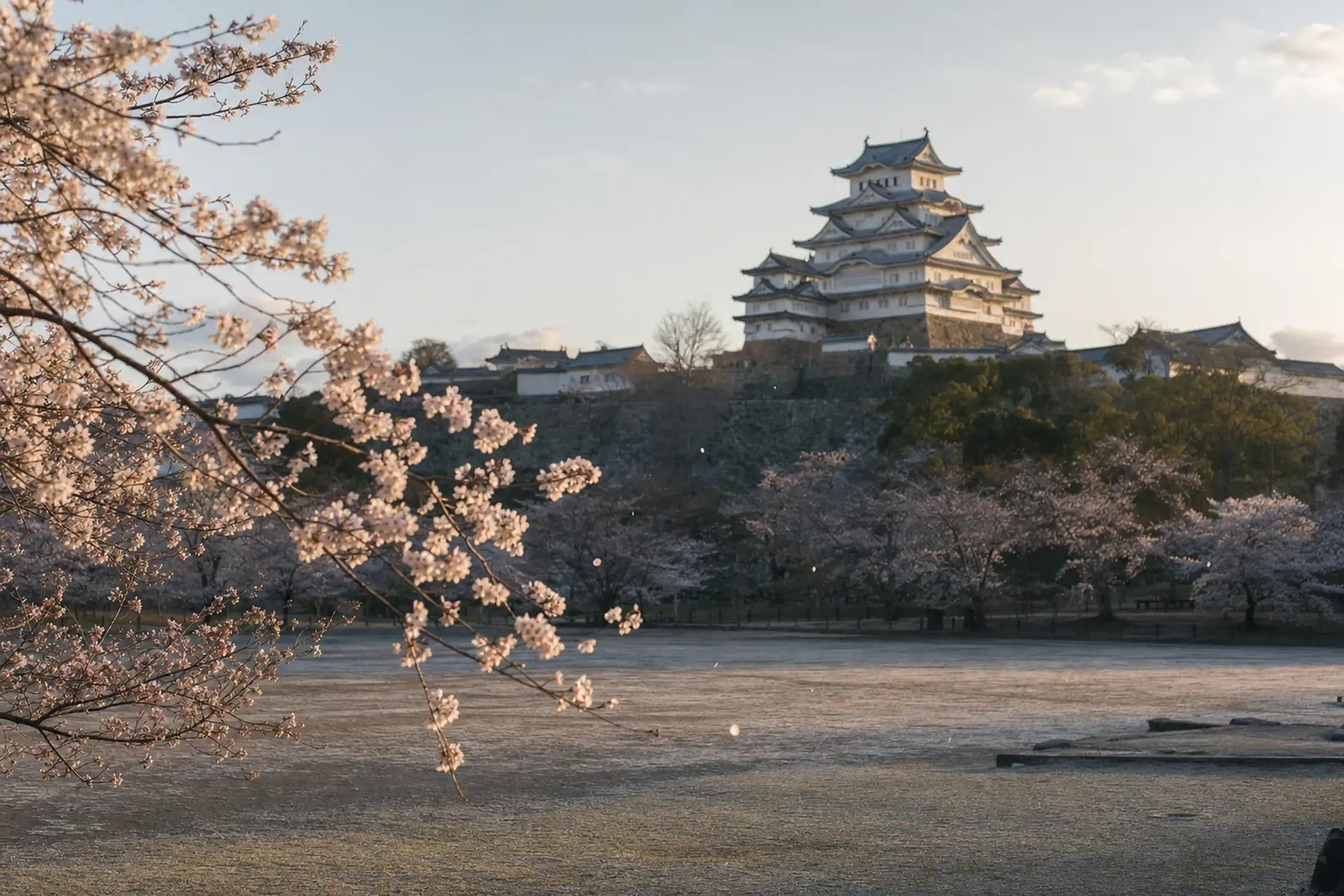
Himeji Castle’s cherry blossoms typically peak from late March into early April, with year-to-year shifts that should be confirmed against the current season’s forecast.
That timing is why the March–April night window is so valuable. It is designed to sit inside the usual bloom band, yet nature never signs a contract.
The grounds are home to roughly 1,000 cherry trees. You’ll see Somei-Yoshino as the main presence, plus weeping cherry and mountain cherry mixed in. The count is not the point.
The point is contrast: pale petals against the castle’s white plaster and dark rooflines, with the stone base holding everything steady. Himeji is also listed among Japan’s “100 Selected Cherry Blossom Spots,” and it earns that spot with composition rather than sheer volume.
If you’ve seen a black castle like Matsumoto in blossom season, the mood flips here—white on pink instead of black on pink. One line, one comparison, and we’ll leave it there: Matsumoto Castle in April is the inverse photograph.
How Late Is Himeji Castle Lit Up At Night In April?
Himeji Castle is illuminated nightly from sunset to midnight, and this year-round lighting is separate from Nishinomaru Garden’s ticketed night cherry blossom hours.
That separation is the heart of the planning puzzle.
The city’s official information describes the “Saiun (彩雲) light-up” concept, with lighting design/supervision by lighting designer Motoko Ishii. The upper keep is lit in white, with lower areas in softer two-color main tones inspired by Himeji’s nature, culture, and flowers.
Practically, this means you can still see the castle glowing later—even after the paid garden closes.
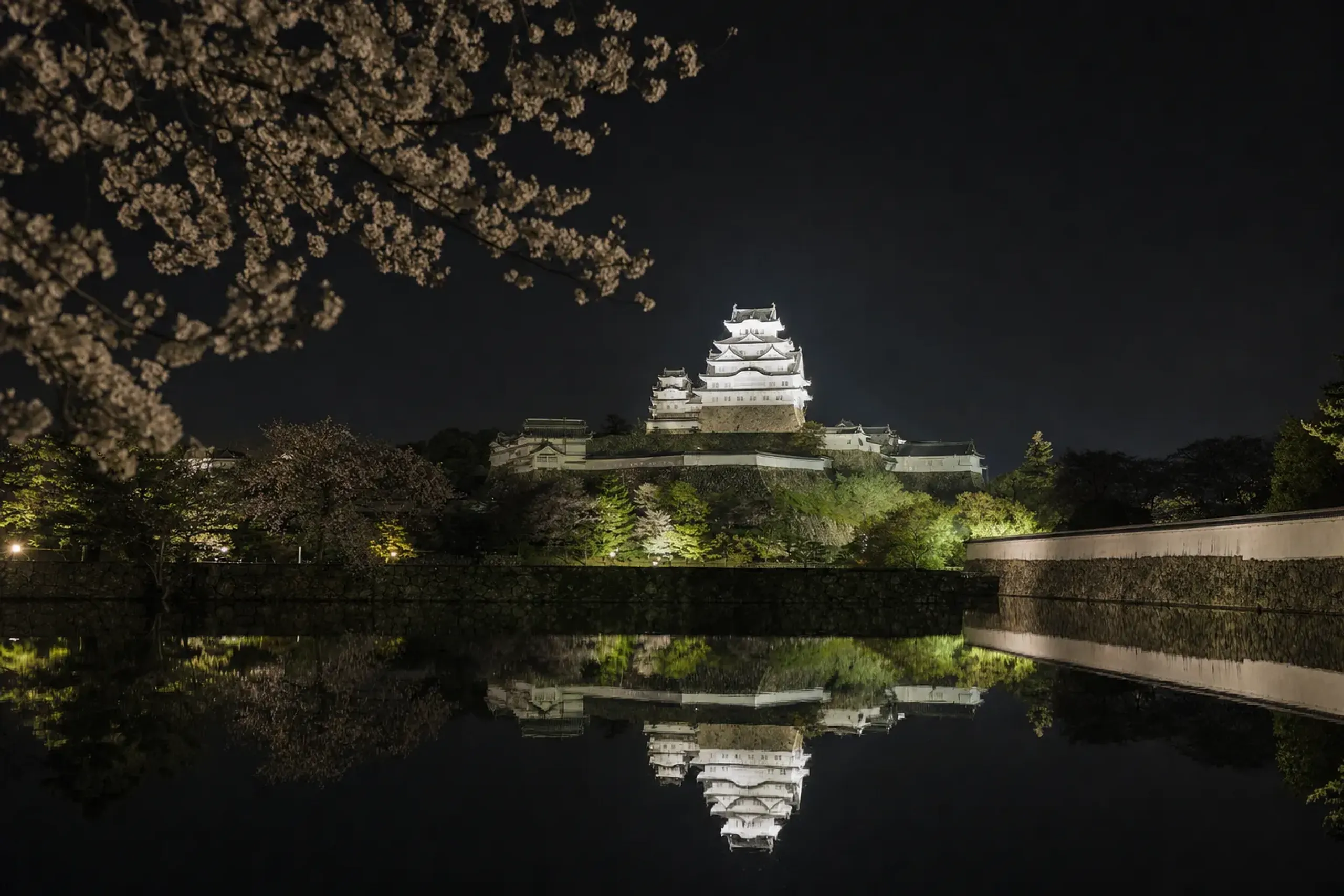
What you cannot do is remain inside Nishinomaru Garden for that later window during Yozakura-kai nights.
If you want a late, slow walk with the illuminated keep as your compass, plan it outside the garden. Let the garden be your focused “main scene,” not the entire evening.
Sannomaru Plaza: The Honest Free Alternative With A Real View
Sannomaru Plaza is a free, unrestricted area where you can walk among cherry trees with Himeji Castle visible as a backdrop.
This is not a consolation prize. It’s a different kind of evening.
When Nishinomaru’s time window feels too tight—or when you prefer less structure—Sannomaru Plaza offers space to breathe. You can arrive earlier, linger later, and let the castle’s year-round illumination do its work.
Our suggestion is to decide what you want before you decide what you buy. If the goal is the iconic west-bailey angle, Nishinomaru is the point. If the goal is an unrushed night with the keep floating above the city, the free areas can be exactly right.
A Calm, Step-By-Step Plan For Himeji Castle In April (Without Rushing)
Arrive by train, anchor your timings to the garden’s last entry, and build one quiet buffer on each side of your key viewing window.
That single rule prevents the most common failure: arriving to the gate at 20:35, watching the staff shake their heads, then spending the rest of the night trying to pretend you didn’t care.
Here is a practical sequence our team at Japan Royal Service often recommends as a planning template.
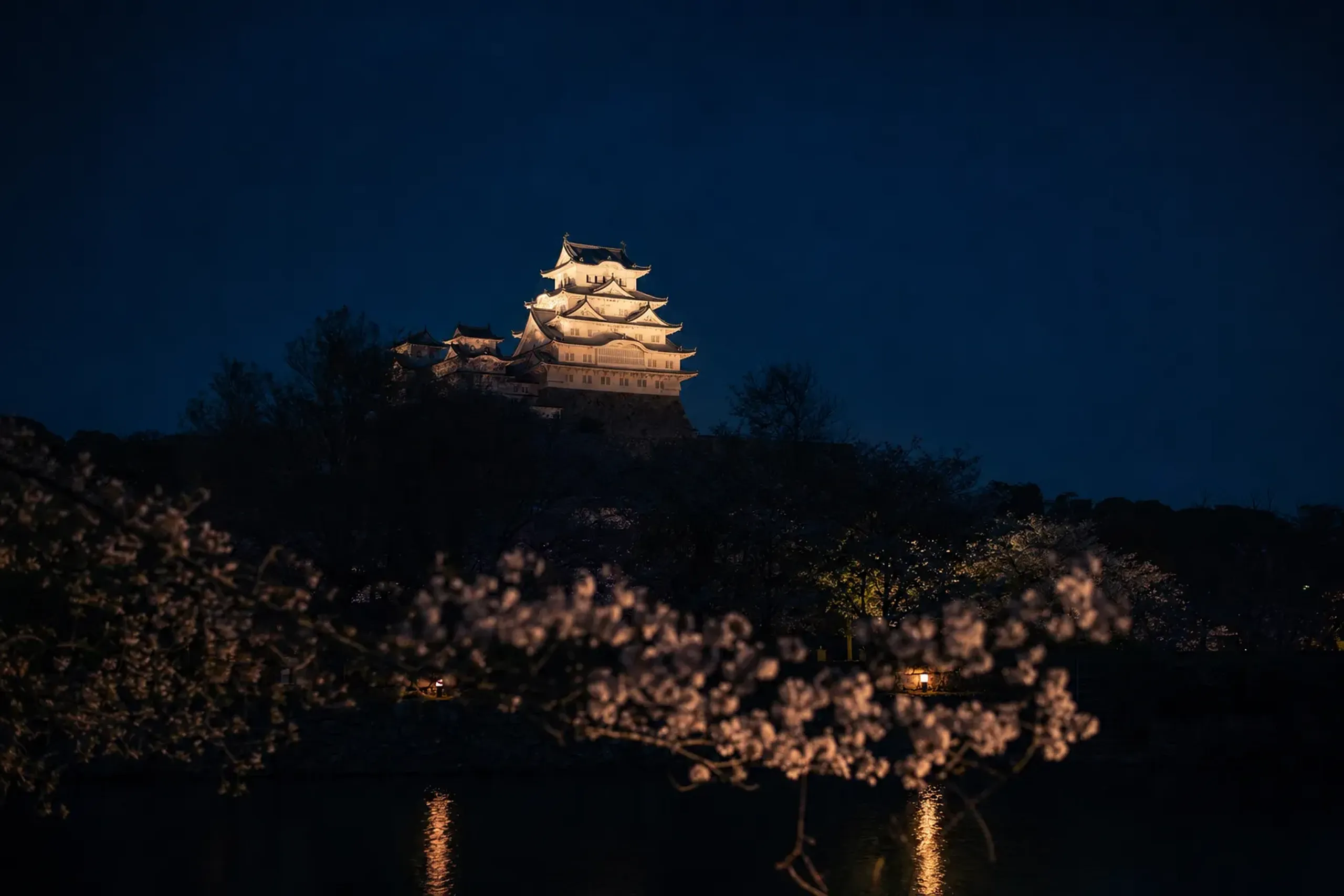
Adjust it to your pace and the day’s bloom and weather.
- Late afternoon: Arrive in Himeji with daylight to spare. Walk slowly. Let your eyes adjust to scale.
- Early evening: Eat before any ticketed night viewing, since food and drink are not allowed inside the paid Yozakura-kai area.
- 18:30 entry window: Enter Nishinomaru Garden soon after opening if you want the dusk transition and fewer people in your frame.
- Before 20:30: Treat last entry as non-negotiable. Build a buffer. Ten minutes is not a buffer.
- After 21:00: Continue your night outside the garden, using the year-round illumination (sunset–midnight) for a final castle view at a calmer hour.
Two small etiquette notes help. Keep your voice low when the crowd thins, and pause before stepping into someone else’s photo line. Japan rewards that restraint.
Access And Rules That Matter (Trains, Parking, Pets, Fees)
Himeji Castle is easy to reach by rail, and during cherry blossom season the train is the smart choice.
Official guidance notes that parking fills quickly in blossom season, and that reservation-based lots are recommended if driving is unavoidable. That is a polite way of saying: do not build your evening around a car park that may already be full.
There are also two updates worth knowing before you travel.
- Admission fee revision: The castle admission fee is revised effective 1 March 2026, with the stated purpose of preservation and restoration funding. (We do not publish rates in this journal.)
- Pets policy change: Starting 1 March 2026, pets are not allowed in the paid admission area at Himeji Castle, per the official FAQ.
These are not minor details.
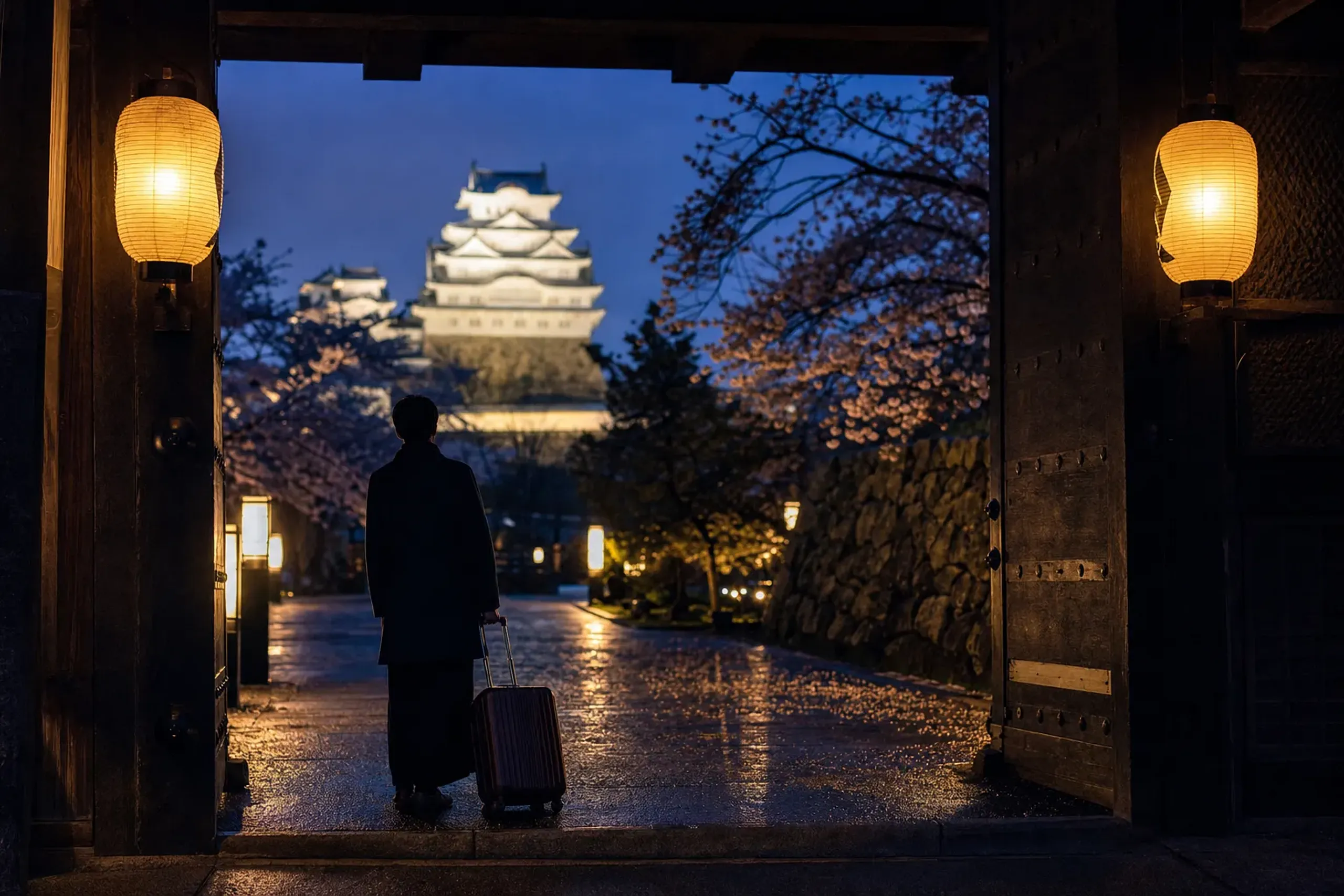
They affect arrival choreography, what you carry, and how you plan a day if you travel with a small pet.
What Quiet Luxury Looks Like At A UNESCO Castle
Himeji Castle is a UNESCO World Heritage Site, registered in 1993—one of Japan’s first. That status draws crowds, school groups, and first-timers with a checklist.
Quiet luxury is choosing not to compete with them.
For HNW travelers, the real upgrade is a calmer frame: fewer decision points, fewer lines, and a pace that leaves room for noticing what is in front of you. The plaster’s texture. The way roof tiles hold shadow. The brief hush when petals fall and nobody speaks.
We also like to place Himeji in its correct emotional register. This is not a place for flashy excess. It is a place for restraint, for deliberate timing, and for respecting the site’s conservation needs—especially when rules and fees shift to support ongoing preservation.
How Japan Royal Service Approaches Himeji In April
Our team at Japan Royal Service builds Himeji Castle April visits around one priority: the true clock of the night, not the marketing headline.
We state the constraints early, then we design the evening so it feels generous. That is the whole trick.
Plainly, once: Japan Royal Service supports guests with accommodation guidance, private guiding, and private transportation for Himeji visits, coordinated discreetly according to your preferences.
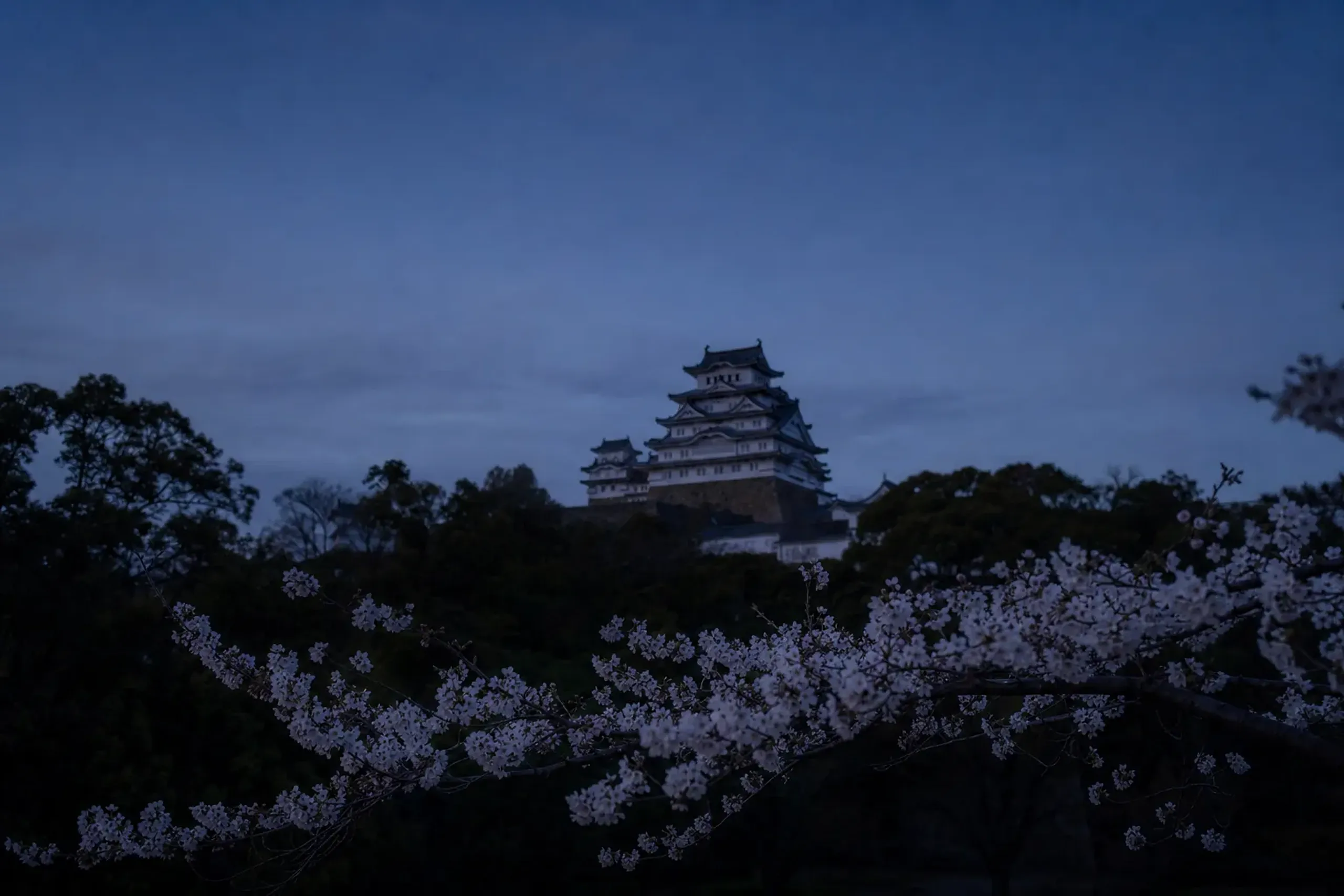
For many HNW guests, the difference versus competitors is not a louder promise. It is discretion, and the willingness to engineer a plan around small realities—like a 20:30 last entry—that decide whether your night becomes a memory or a near-miss.
We also bring a “hidden-Japan” mindset to an iconic place. That may sound contradictory. It isn’t. Even at a famous UNESCO site, there are quieter edges, better angles, and softer timing that Google rarely tells you.
Frequently Asked Questions
What Are The Exact Yozakura-Kai Hours At Himeji Castle’s Nishinomaru Garden?
The Yozakura-kai runs March–April, and it is limited to Nishinomaru Garden.
Dates shift each year with bloom timing, so confirm the current-year schedule if you are traveling outside 2026.
Is The Castle Really Lit Until Midnight During Cherry Blossom Season?
Yes—the castle’s year-round illumination is from sunset to midnight, but the ticketed night cherry blossom viewing in Nishinomaru Garden ends earlier at 21:00.
Plan your “garden time” and your “castle-lit walk” as two separate blocks. That small separation makes the evening feel calm.
What Is The Difference Between Yozakura-Kai And Kanō-Kai At Himeji Castle?
Yozakura-kai is a ticketed night event in Nishinomaru Garden, while Kanō-kai is a free daytime-only event with a separate schedule.
Where Can I See Himeji Castle And Cherry Blossoms For Free At Night?
Sannomaru Plaza offers free, unrestricted access with cherry trees and a clear castle backdrop, making it a genuine alternative to ticketed night viewing.
It won’t replicate the west-bailey angle of Nishinomaru, but it can feel more spacious—and you can stay later.
Are Pets Allowed Inside Himeji Castle?
Starting 1 March 2026, pets are not allowed in the paid admission area at Himeji Castle, according to the official FAQ.
If you are traveling with a small pet, ask our concierge team for tailored guidance on pacing and alternatives.
Why Choose Japan Royal Service
Luxury travelers do not need more information. They need correct timing, watchful discretion, and a plan that doesn’t collapse when the gate closes at 20:30.
Competitors often sell Himeji as a simple side trip. Our team at Japan Royal Service treats it as an evening with a hard edge: ten nights only, a short entry window, and a famous view that rewards those who arrive early and move quietly.
We protect privacy as a default, not an add-on. We work in a restrained, imperial-class register when the moment calls for it, and we keep the experience grounded in what is real on the ground—especially when rules, fees, and event hours change.
If you want Himeji Castle in April without the usual friction, reach our team privately via WhatsApp or LINE, or contact us here.