In this guide
- 01What Is Gion Kōbu And Where Does It Sit?
- 02What Makes Miyagawa-chō Different From Gion?
- 03When Are The Kyoto Geisha Spring Dances And How Do You Get Seats?
- 04The Other Three Hanamachi, Briefly
- 05How Should You Behave In Kyoto's Geisha Districts?
- 06An Evening With Geiko Or Maiko
- 07How Japan Royal Service Arranges Your Hanamachi Days
- 08Frequently Asked Questions
- 09Why Choose Japan Royal Service
Most visitors arrive in Kyoto believing there is one "geisha district." There are five. The city's hanamachi — Gion Kōbu, Gion Higashi, Miyagawa-chō, Pontochō and Kamishichiken — each keep their own character, their own spring dance, and their own quiet rules. Four sit near the Kamo River. Kamishichiken stands apart in the northwest.
Two of the five tend to decide a traveller's itinerary: Gion Kōbu and Miyagawa-chō. One is the district everybody knows. The other is a short walk southwest and far less crowded. This guide at Japan Royal Service compares the pair — where they sit, how they feel, their April dances, and the etiquette both ask of you.
What Is Gion Kōbu And Where Does It Sit?
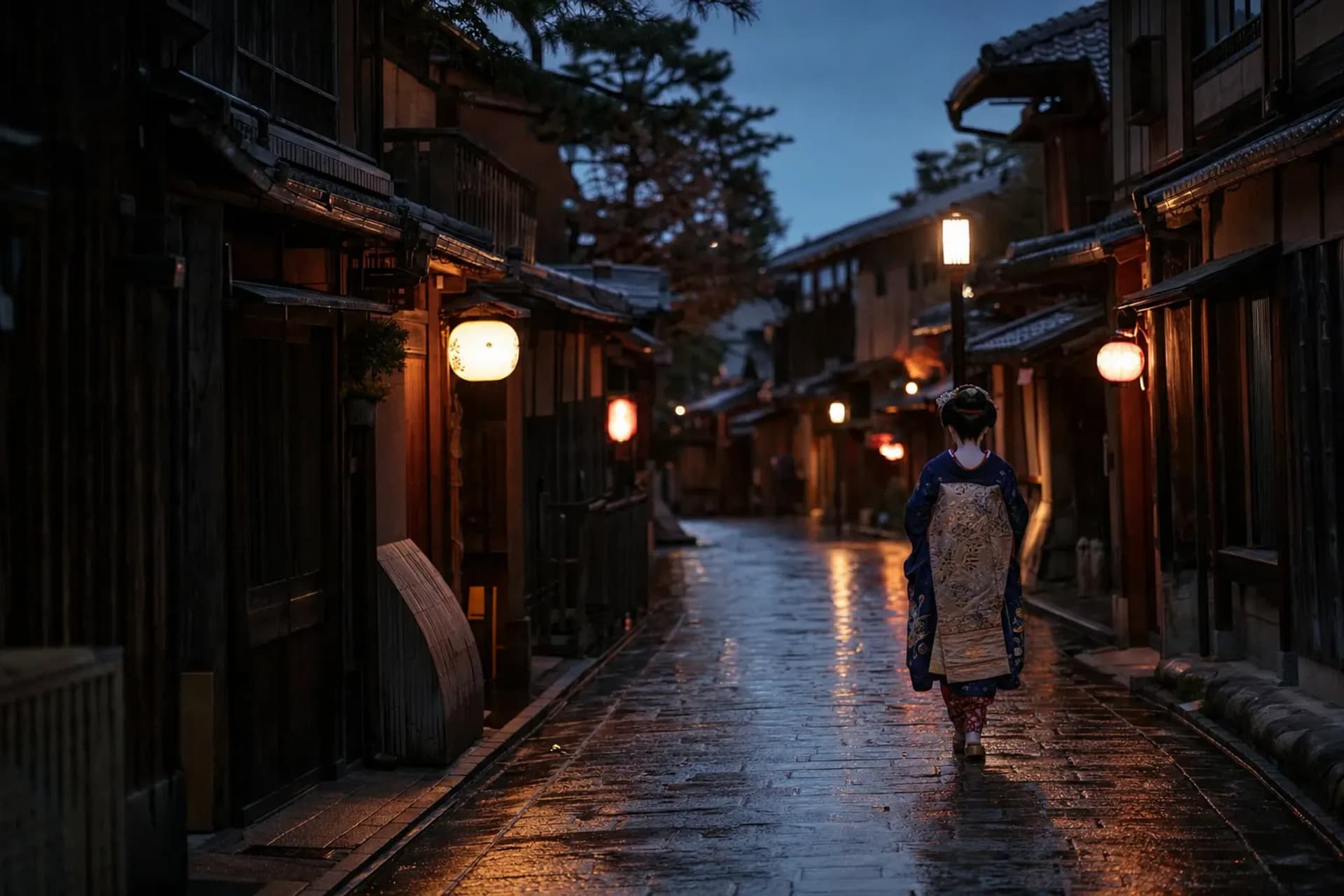
Gion Kōbu is the largest of Kyoto's five hanamachi, set beside Yasaka Shrine in eastern Kyoto. It is the district most travellers picture when they imagine lantern-lit wooden lanes.
You enter it easily. Hanami-koji runs south from Shijō-dōri, lined with machiya townhouses whose lower latticework glows amber after dark. Yasaka Shrine anchors the eastern end. The Kamo River marks the west. In between sits the Kyoto most postcards promise.
That fame carries a cost. Peak-hour foot traffic is heavy, and the narrow private lanes were never built for crowds. Since 2024, entry to certain private lanes in parts of Gion has been restricted, with signage warning of penalties for trespass. The message is plain. These are working residential and business streets, not a film set.
So visit Gion Kōbu on its main thoroughfares.
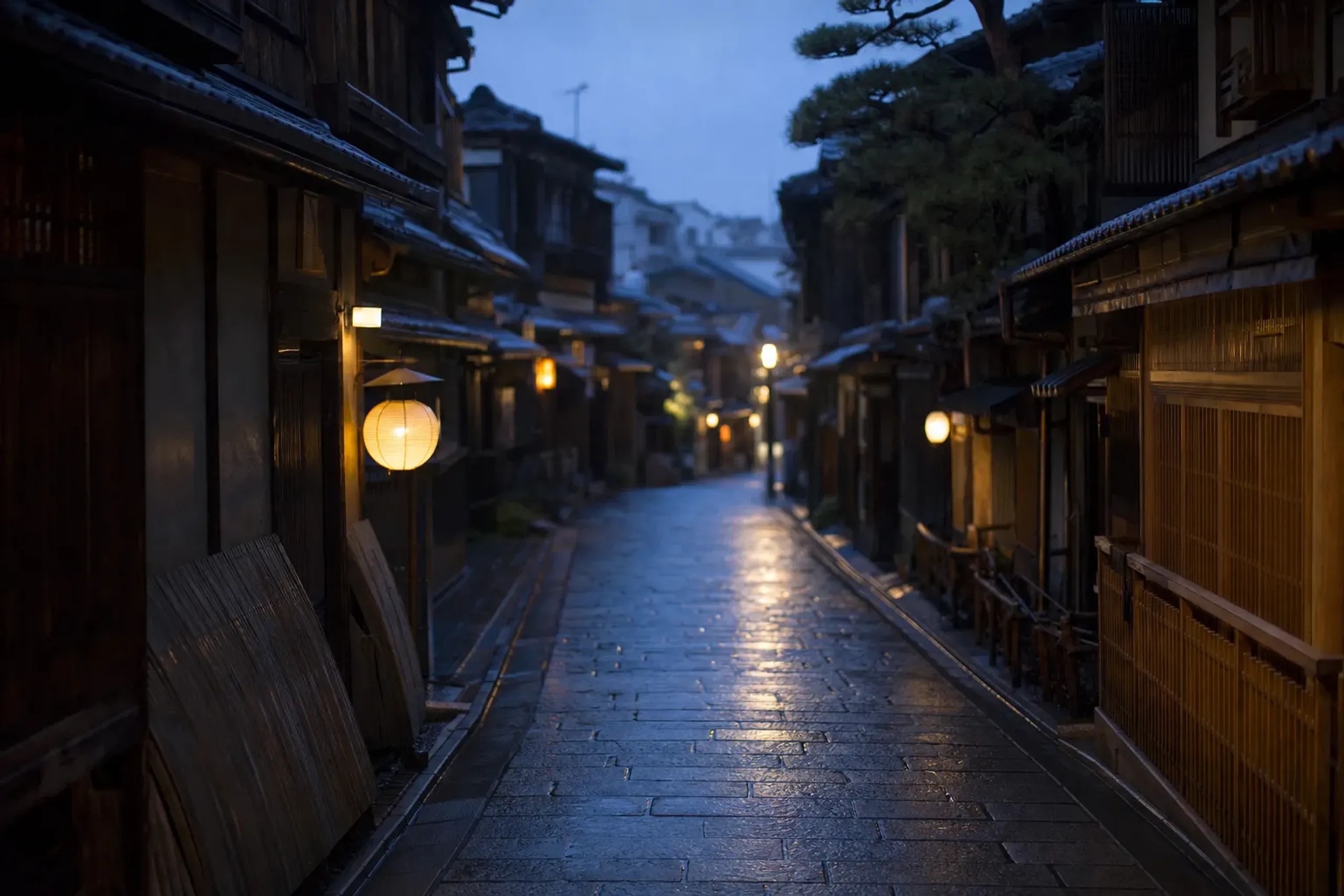
Shijō-dōri and Hanami-koji remain open and rewarding. Walk them in early morning, before the tour groups, when the stone is still damp and shopfronts are being swept. The light is better. The hush is real.
Kyoto's official tourism guidance is explicit here: do not stop, touch, follow, or photograph geiko or maiko without permission, and photography is permitted only in designated areas. Our concierge team briefs every guest on this before they set foot in the district. Respect is not a constraint on the experience. It is the experience, done properly. If Gion is the centre of your Kyoto days, our Gion travel itinerary maps the main streets, the quieter hours, and the sights worth lingering over.
What Makes Miyagawa-chō Different From Gion?
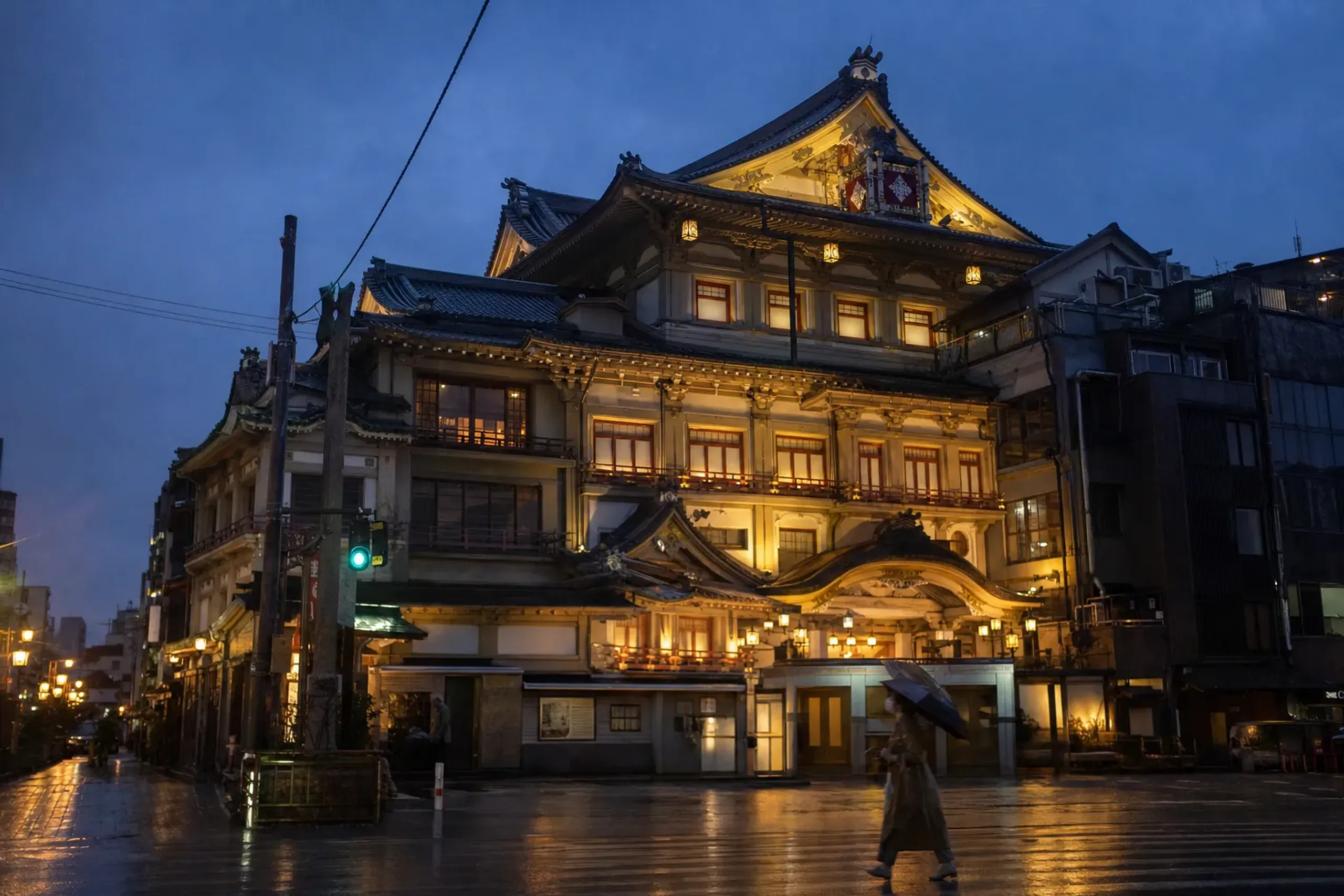
Miyagawa-chō sits southwest of Gion, a short walk across or along the Kamo River. It is smaller, calmer, and carries a direct link to kabuki through the Minamiza Theatre, which stands at its northern entrance.
The Minamiza is one of Japan's oldest kabuki venues, and its presence shapes the district's identity. Where Gion grew around a shrine and its festival, Miyagawa-chō grew alongside the theatre and the performing life that surrounds it. That history still colours the streets today.
The scale changes how the district feels. Lanes are narrower and quieter. You hear your own footsteps. There is less jostling for the same photograph, and more room to simply stand and notice — a sliding door, a swept doorstep, the particular grey of old timber.
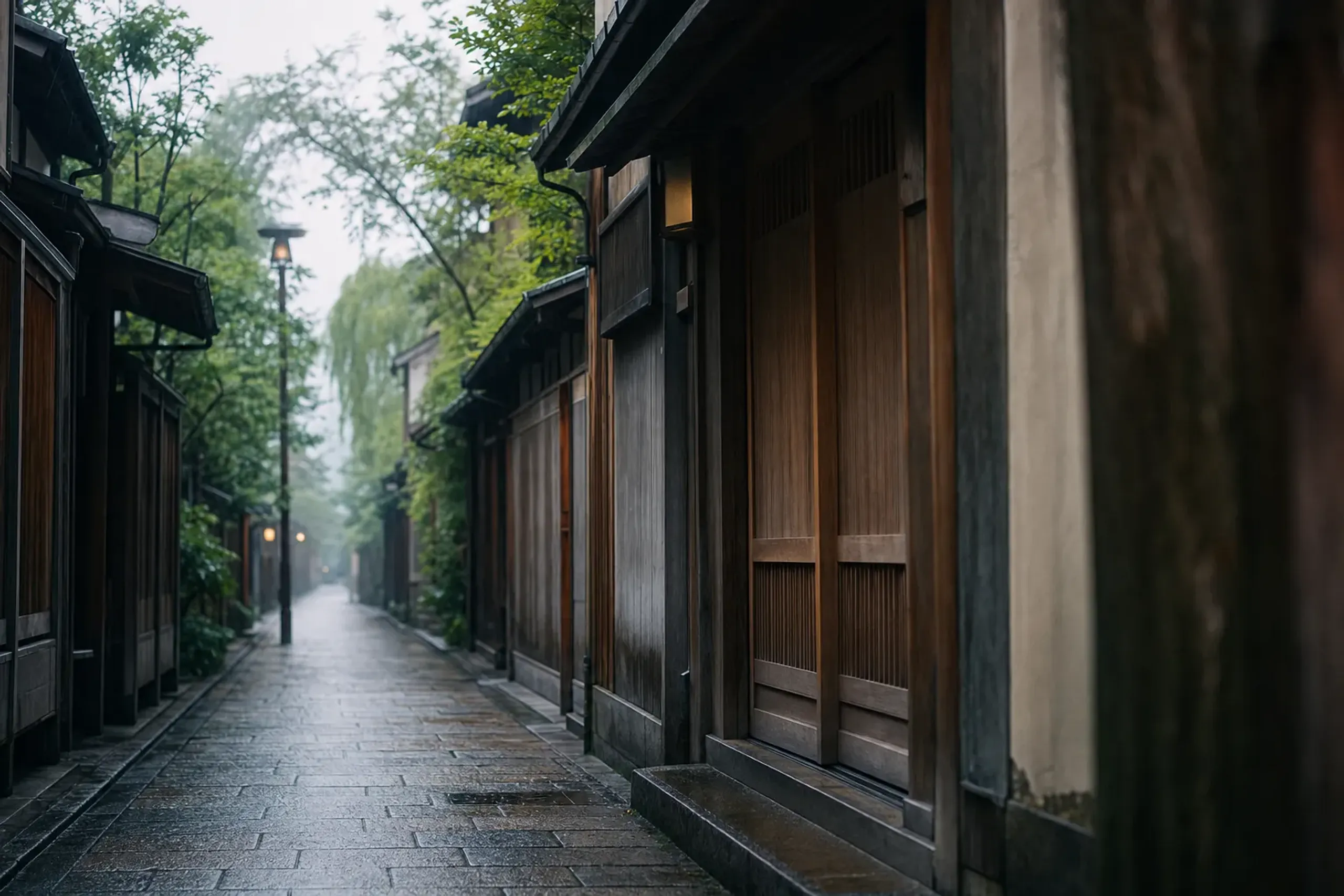
Miyagawa-chō is also having a moment. Capella Kyoto, an 89-room hotel with architecture supervised by Kengo Kuma & Associates, is scheduled to open on March 22, 2026 in the district, beside Kennin-ji Temple. The developer, NTT Urban Development, confirms both the date and the location next to the Miyagawa-chō singing and dancing quarters. Kennin-ji, Kyoto's oldest Zen temple, lies within easy walking distance, with its dragon ceiling and raked gardens.
For a traveller weighing the two districts, the contrast is useful. Gion gives you the famous streets and the energy that comes with them. Miyagawa-chō gives you a smaller stage, a theatrical heritage, and riverside quiet. Many of our guests base themselves here precisely because it stays unhurried while keeping Gion a ten-minute walk away.
When Are The Kyoto Geisha Spring Dances And How Do You Get Seats?
Both districts stage public spring dances in April — the one time of year you can watch the hanamachi's arts on a formal stage. Gion Kōbu presents the Miyako Odori; Miyagawa-chō presents the Kyō Odori, held in the first part of the month.
These performances are the honest, public way to see geiko and maiko at their craft. No following people down lanes. No stolen photographs. You take a reserved seat in a theatre, the curtain rises, and you watch a choreographed programme of seasonal dance, music, and staging refined over generations.
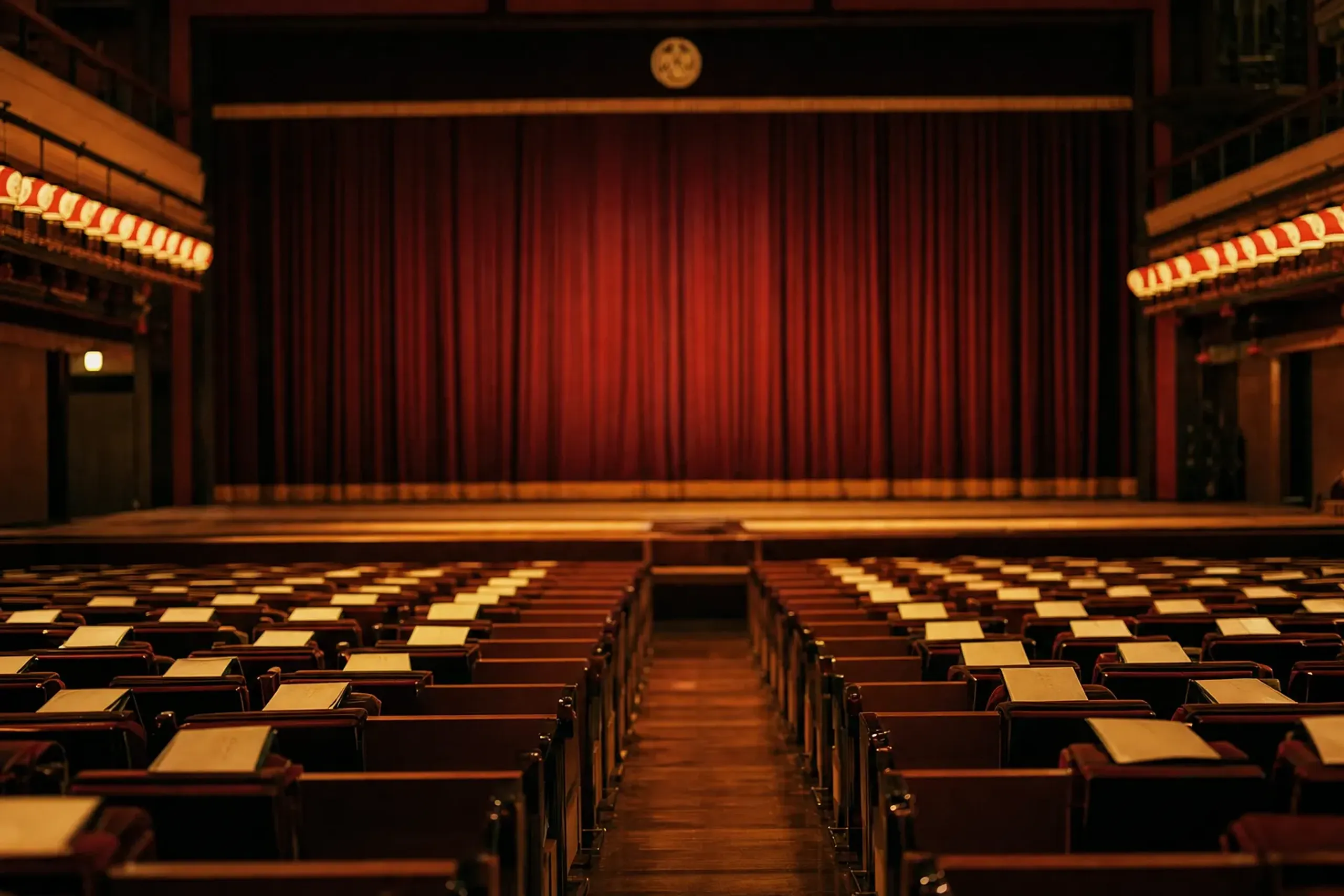
The Kyō Odori is performed at the Miyagawa-chō Kaburenjō, the district's own theatre. For 2026, the Kyō Odori is scheduled to open on April 4 at the Kaburenjō. Some ticket tiers come bundled with a tea ceremony before the performance — a short, seated encounter with the setting that many guests find deepens the afternoon.
Key fact: The spring dances sell well in advance. Seating tiers, exact dates and any tea-ceremony add-on vary by year, so our concierge team confirms current availability and format directly with you at the time of arrangement.
If April is your window, consider a twin-dance plan: the Miyako Odori in Gion Kōbu and the Kyō Odori in Miyagawa-chō across the same week. It is the cleanest way to feel the difference between the two districts, seen through their own performers on their own stages.
Japan Royal Service arranges reserved seats at both dances and a private guide to handle timing, drop-off, and the rhythm of the day. Spring in Kyoto is busy. A plan that respects the crowds — and sidesteps them — is worth more than any single reservation.
The Other Three Hanamachi, Briefly
Kyoto's three remaining hanamachi each hold their own spring or autumn dance. Pontochō sits directly on the banks of the Kamo River, a single narrow lane of restaurants and lantern light; its Kamogawa Odori is held in May.
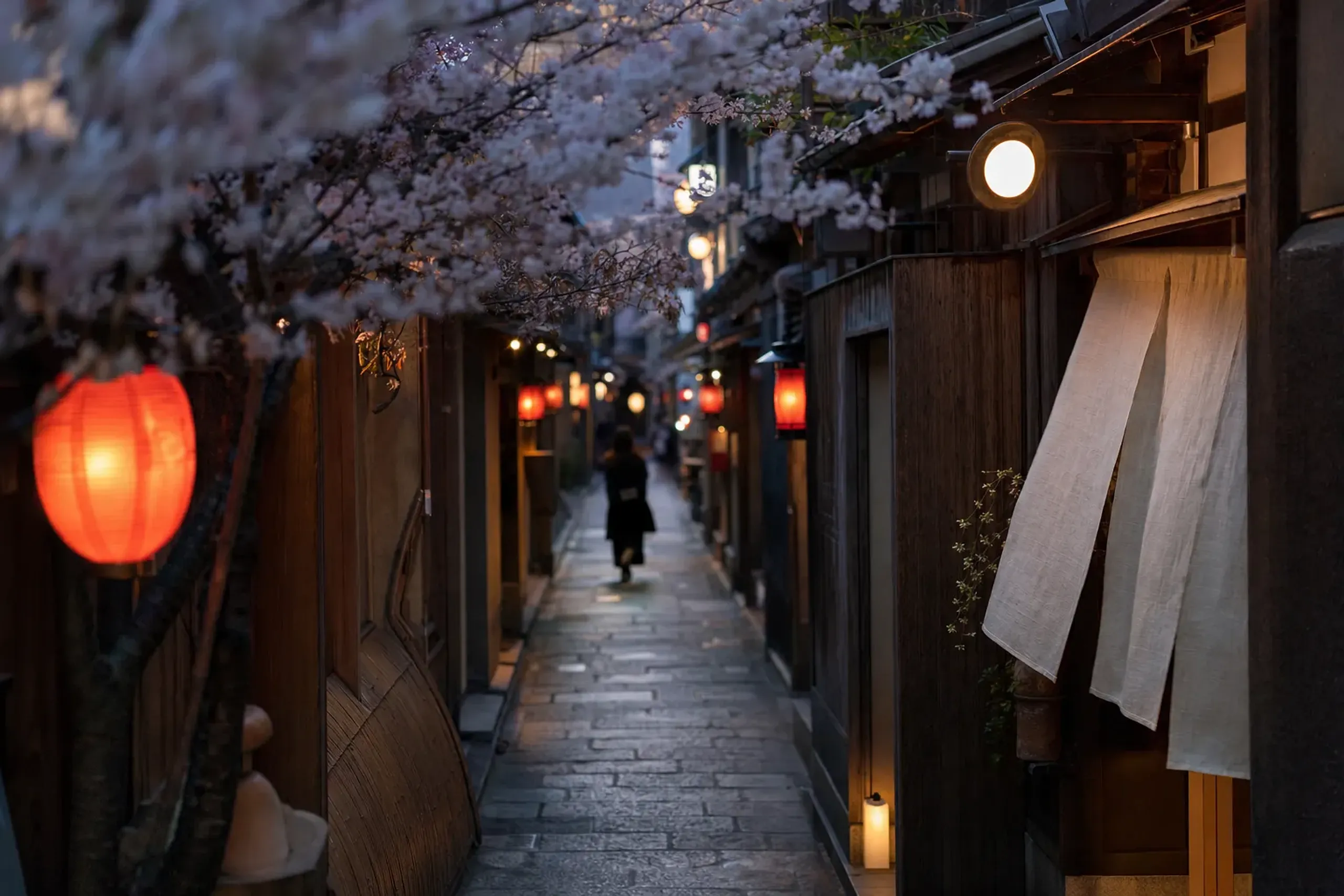
Kamishichiken, the one district set apart in the northwest near Kitano Tenmangū, holds the Kitano Odori in spring. Gion Higashi, the smallest of the five, holds the Gion Odori in early November — a rarer autumn chance to see a hanamachi's arts on stage. Each has its own atmosphere, and a well-planned stay can take in more than one. Our team can weave any of them into a wider Kyoto itinerary.
How Should You Behave In Kyoto's Geisha Districts?
Treat the hanamachi as the living neighbourhoods they are. Kyoto's official guidance asks visitors not to stop, touch, follow, or take unauthorised photographs or video of geiko or maiko, and permits photography only in designated areas.
A few points carry the whole code:
- Do not follow geiko or maiko. They are usually walking to an appointment and have somewhere to be.
- Ask before photographing people. In many lanes, photography of private property is prohibited outright.
- Keep to the wider streets. Narrow lanes are tight, and some private lanes in Gion are now restricted, with signage warning of penalties.
- Do not block doorways or crowd entrances. These are places of business and of residence.
None of this dims the experience. It sharpens it. When you are not chasing a photograph, you actually see the street — the way a figure in kimono moves, unhurried, through a district built for exactly that.
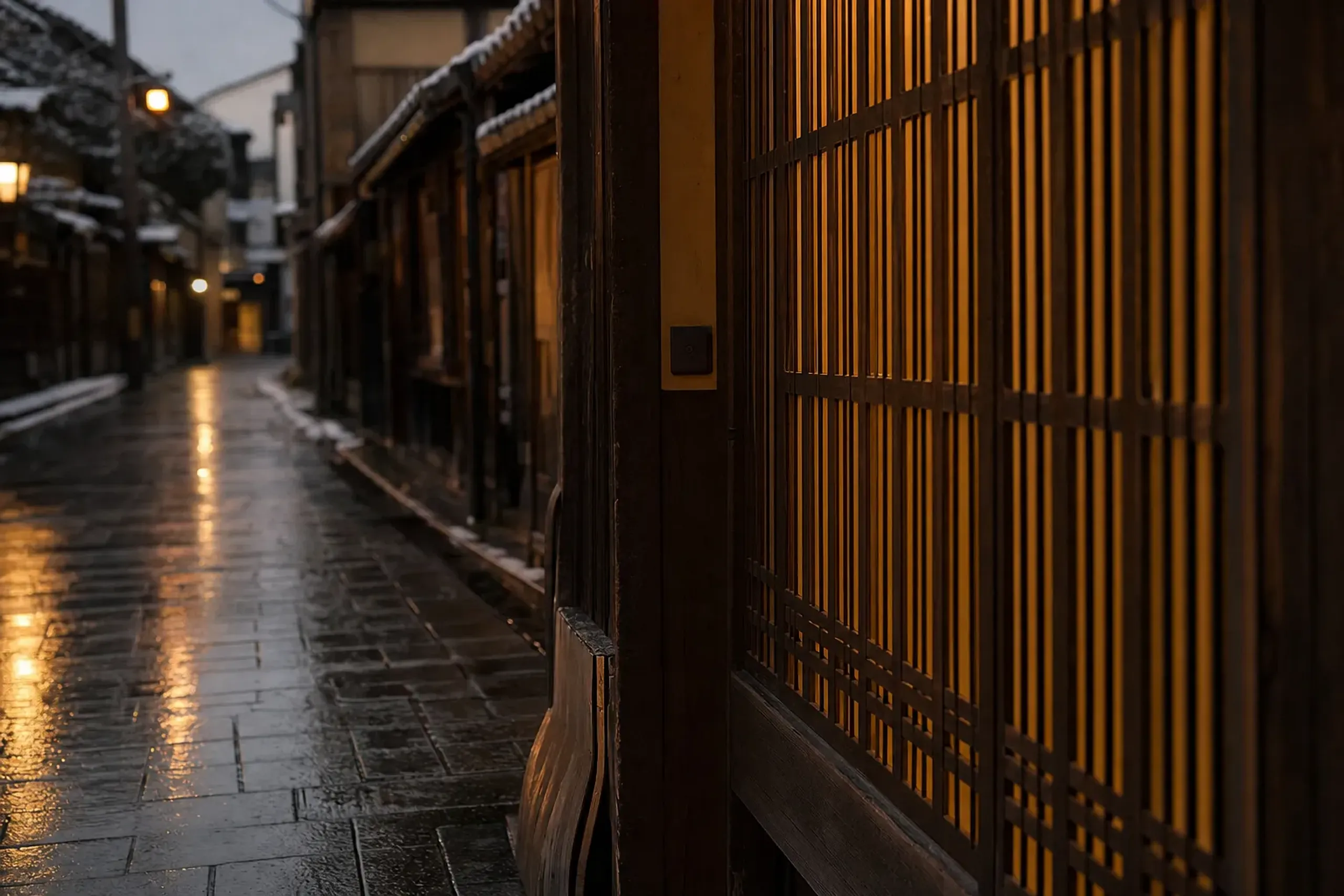
Our guides walk ahead and set the pace, so the etiquette becomes second nature rather than a worry.
An Evening With Geiko Or Maiko
Beyond the public dances, an evening in the company of geiko and maiko is the more intimate way to meet the hanamachi's arts — conversation, dance, music, and drinking games, hosted over a meal.
Traditionally, an ochaya receives guests through an existing relationship rather than walking trade, a custom known as ichigen-san okotowari. We explain what that means, and what to expect from the evening itself, in two companion pieces: our guide to booking a private geisha in Gion and our explainer on the No First-Time Guests: Tokyo's Closed Restaurants.
Japan Royal Service arranges geiko and maiko evenings — at an ochaya, or hosted at a restaurant or ryokan to suit your group and your pace. The format, the courses, and the number of performers depend on the evening, and our concierge team confirms the details with you directly when the arrangement is made.
How Japan Royal Service Arranges Your Hanamachi Days
We handle the parts that are easy to get wrong. Reserved seats at the Miyako Odori and the Kyō Odori. A private, English-speaking guide who knows which lanes are open and which are not. An evening with geiko or maiko, shaped around your table rather than a template.
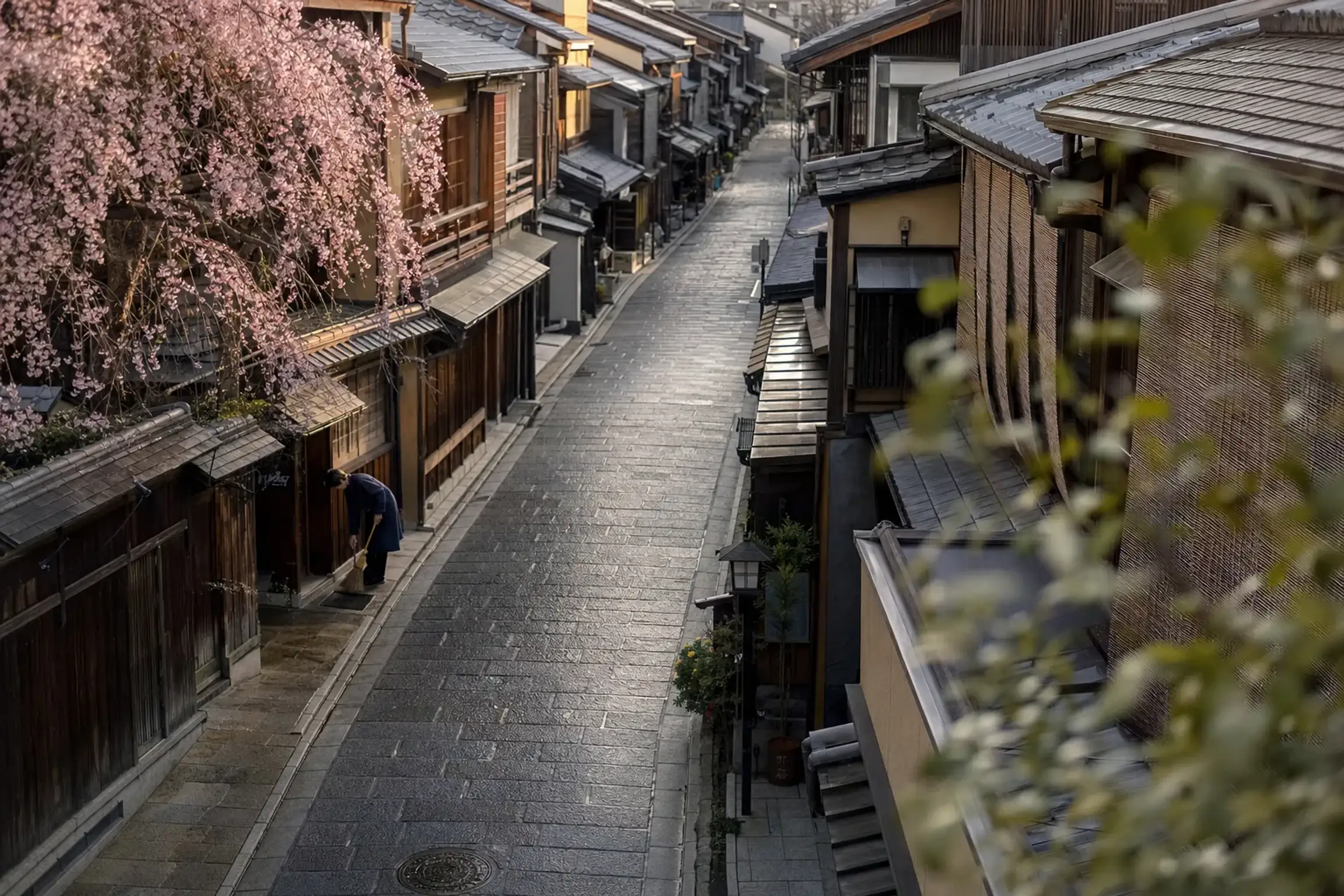
Getting between districts in April matters more than people expect. Kyoto's centre clogs at peak hours, and the streets around Gion close to through traffic. Our private chauffeured transport uses the right drop-off points and timing, so you arrive composed rather than frayed. Every element sits inside a single tailor-made itinerary, paced for how you actually want to spend your days.
Dining is part of the picture too. If you are deciding how to structure meals around a dance or an evening, our guide to choosing between sushi, kaiseki and kappo is a practical companion.
Frequently Asked Questions
Is Gion Or Miyagawa-chō Better For A First Visit To Kyoto?
Both are worth seeing; they suit different moods. Gion Kōbu offers the famous lantern-lit streets beside Yasaka Shrine but draws heavy crowds. Miyagawa-chō, a short walk southwest, is smaller and quieter with a kabuki heritage.
Can You Watch Geiko And Maiko Perform Without Booking A Private Evening?
Yes. The April spring dances — the Miyako Odori in Gion Kōbu and the Kyō Odori in Miyagawa-chō — are public, ticketed performances where you watch from a reserved theatre seat, with no need for a private ochaya arrangement.
When Is The Kyō Odori In Miyagawa-chō In 2026?
The 2026 Kyō Odori is scheduled to open on April 4 at the Miyagawa-chō Kaburenjō. Some ticket tiers include a tea ceremony.
Seating tiers and exact dates vary, so our concierge team confirms current details when the arrangement is made.
Is It Allowed To Photograph Geiko And Maiko In Gion?
Only with permission and only in designated areas. Kyoto's official guidance asks visitors not to follow, touch, stop, or photograph geiko or maiko without consent, and some private lanes in Gion are now restricted, with signage warning of penalties.
Where Should You Stay To Be Close To Miyagawa-chō?
Miyagawa-chō sits southwest of Gion beside Kennin-ji Temple, keeping both districts within walking distance. Capella Kyoto, an 89-room hotel designed with Kengo Kuma & Associates, is scheduled to open there on March 22, 2026, adding a luxury base to the district.
Why Choose Japan Royal Service
Kyoto's hanamachi reward travellers who arrive informed and considerate. Japan Royal Service plans your days in Gion Kōbu and Miyagawa-chō around that principle — reserved seats at the spring dances, a guide who reads the lanes correctly, and evenings with geiko or maiko shaped to your group. Our team is based in Japan, works in English and Japanese, and handles the timing, transport, and etiquette so your attention stays where it belongs: on the street in front of you.
To plan your Kyoto days across these two districts, reach our team privately via WhatsApp or LINE, or contact us here.