In this guide
- 01Why Was Aoshima Island Forbidden Until The Edo Period?
- 02The Myth At The Center: Yamasachihiko, Toyotama-hime, And The Sea God's Palace
- 03Aoshima Shrine: What To See And How To Move Through The Grounds
- 04Motomiya And The Inori No Kodō: The Tunnel Of Prayer Plaques
- 05What Evidence Links Aoshima's Sacred Use To The Yayoi Period?
- 06Two Participatory Rituals To Try: Ame No Hirakanage And Musubi Koyori
- 07Oni No Sentakuita: The Ogre's Washboard That Rings The Island
- 08The Northernmost Self-Reproducing Fan Palms In The World
- 09The Onarimichi Path And Imperial Visits (Historical)
- 10The Yellow Post Box Near Yayoi Bridge
- 11How Do You Get To Aoshima Beach Park From JR Aoshima Station?
- 12Aoshima Beach Park: What's Actually There (And What To Pack)
- 13A Simple Morning-To-Golden-Hour Blueprint For Aoshima
- 14SEA SIDE FES Vol.4 (Sep 19, 2026): A Timely Reason To Revisit
- 15What Japan Royal Service Can Do For Your Aoshima Visit
The bridge to Aoshima is short. The feeling is not.
You step off the mainland and onto ground that, for centuries, was not meant for ordinary feet. Not because it was dangerous, but because it was sacred. Aoshima was forbidden ground until the Edo period, and that single fact changes how the island reads the moment you arrive.
Today, Aoshima Beach Park sits beside the approach. Parasols, benches, and the sound of small waves make it look easy. Look again. The island's center holds a shrine tied to a precise myth, and its shoreline is ringed by rock ridges that look carved with a comb. This is Japan the guidebooks compress into a caption—the Japan a considered eye still finds worth slowing for.
Why Was Aoshima Island Forbidden Until The Edo Period?
Aoshima was off-limits for centuries because it was sacred ground tied to the Yamasachihiko and Toyotama-hime myth, and only opened to general visitors in the Edo period.
In our experience, this is the detail that turns a simple coastal stop into a destination with gravity. The island is small—about 1.5 km around—yet it carries the feeling of a sealed place. Quiet rule. Old boundary.
When you cross the bridge, imagine what it meant for locals to see the island every day and still know it was not theirs to enter. That restraint is part of the story—a quiet, wabi-like austerity that the modern beach park never quite erases. Aoshima does not need spectacle. It already has a past with a lock on it.
The Myth At The Center: Yamasachihiko, Toyotama-hime, And The Sea God's Palace
The heart of Aoshima Shrine is the Kojiki-era story of Hikohohodemi-no-Mikoto—better known as Yamasachihiko—and the sea god's daughter, Toyotama-hime-no-Mikoto.
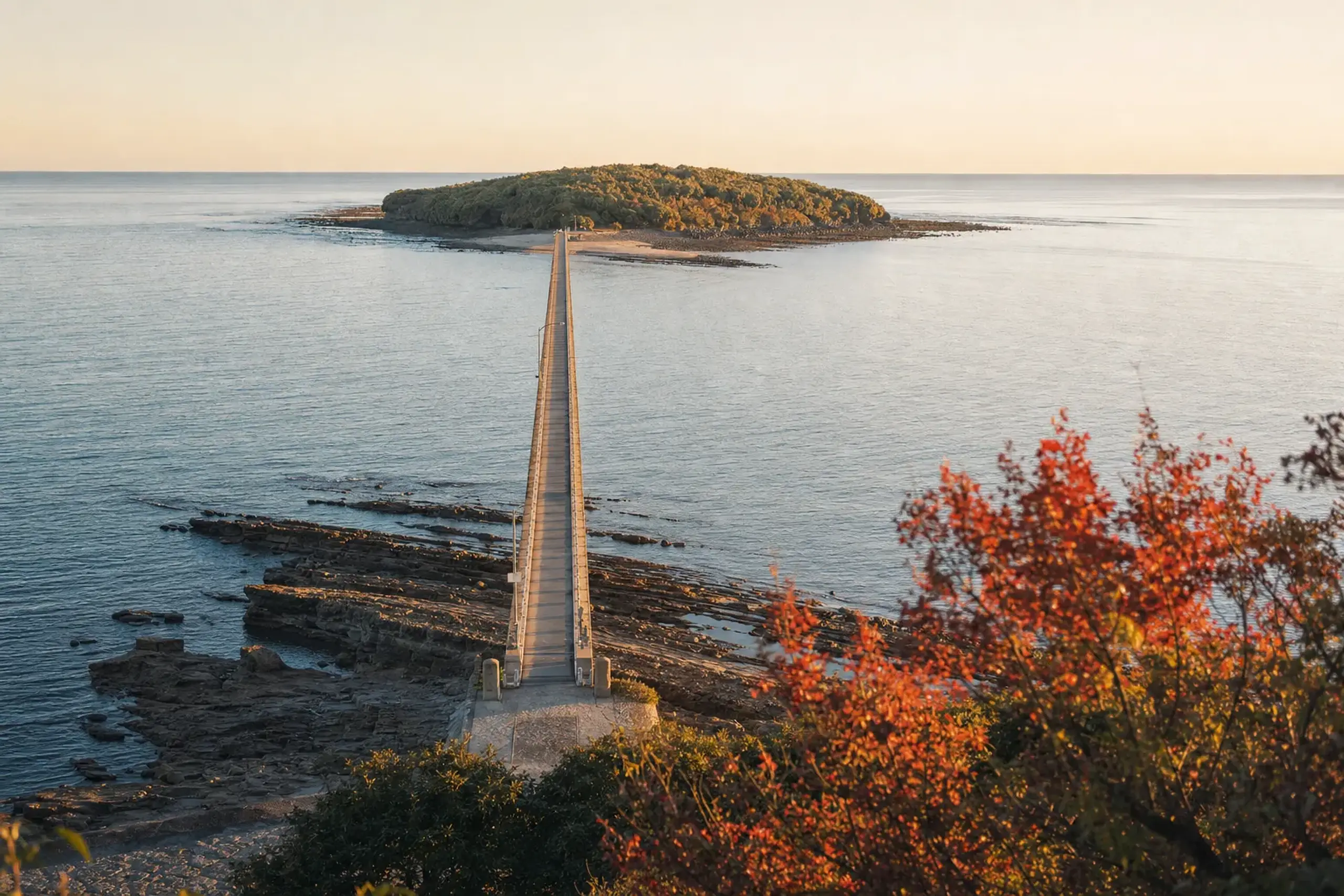
A short bridge, and a long history: the approach to Aoshima Island.
A third figure matters just as much: Shiotsuchi-no-Ōkami, the god of tidal currents.
Yamasachihiko borrows a fishing hook from his brother, Umisachihiko, and loses it. A small mistake with long consequences. Guided by Shiotsuchi-no-Ōkami, he travels by boat to the palace of the sea god, Watatsumi, to search for it, and there meets Toyotama-hime and marries her.
Shrine tradition holds that Aoshima is where Yamasachihiko returned from the sea god's palace and built his residence. That return is not a vague motif here; it is the reason the island was treated as sacred ground in the first place, and why the shrine's location matters.
Aoshima Shrine: What To See And How To Move Through The Grounds
Aoshima Shrine enshrines three deities: Hikohohodemi-no-Mikoto (Yamasachihiko), Toyotama-hime-no-Mikoto, and Shiotsuchi-no-Ōkami. The shrine is widely worshipped for matchmaking, safe childbirth, and safe sea travel.
Some founding details are missing. Records were lost when earlier documents were destroyed in a major earthquake in 1662 (Kanbun 2). The absence is oddly fitting—Aoshima keeps parts of itself private, even in the archive.
Walk slowly, especially as you near the inner areas shaded by subtropical plants. You will notice heart-shaped motifs—inome—worked into the architectural details.
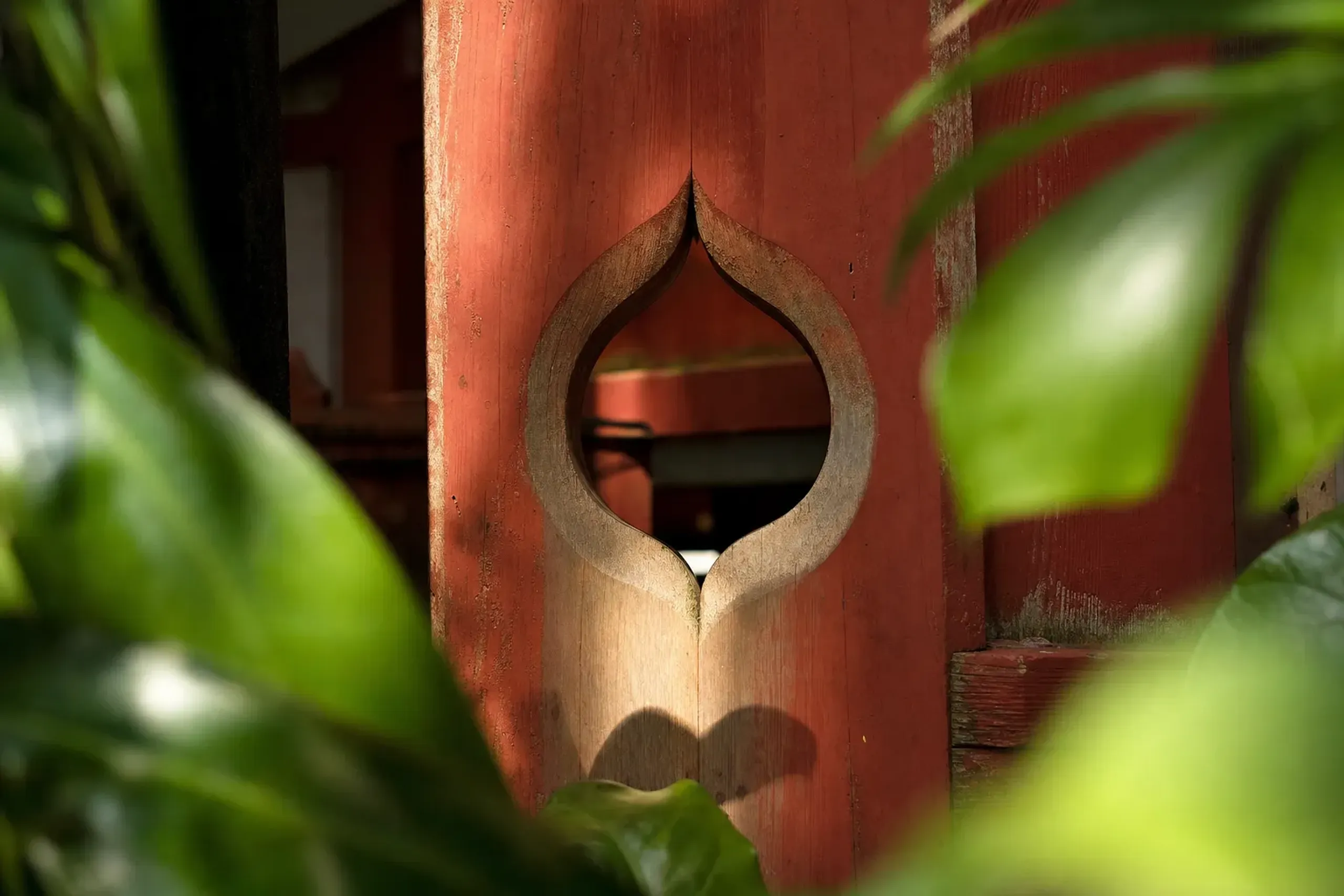
Many visitors make a small game of finding them, but the theme is not decorative; it echoes the shrine's association with matchmaking. These are the fine, near-silent details—the work of generations of shrine carpenters and craftsmen—that a well-briefed guide can help you read rather than simply pass by.
Heart-shaped ema and romance-themed fortune slips (koi-mikuji) are commonly available on the grounds. If you are traveling as a couple, this is where the island turns personal. If you are traveling solo, it can still feel pointed—in a wry way.
Motomiya And The Inori No Kodō: The Tunnel Of Prayer Plaques
The Motomiya (original shrine site) is believed to be the shrine's true original location. Getting there is part of the experience.
You follow the Inori no Kodō, a tunnel-like corridor formed by hundreds of hanging wooden prayer plaques. The light changes. The air shifts. It is shaded, layered, and oddly intimate, even when other visitors are nearby.
Motomiya is surrounded by fan palms. Their shape makes the space feel southern, almost island-Southeast-Asian, yet the ritual logic is unmistakably Shinto. This is where Aoshima's "beach day" mask slips and the older purpose shows through.
What Evidence Links Aoshima's Sacred Use To The Yayoi Period?
Excavations at the Motomiya site have yielded Yayoi-period pottery and animal bones, evidence of ritual activity dating back to the Yayoi era.
This matters because it anchors the island's sacred reputation in physical material, not only story. Pottery fragments and bones are not romantic objects.
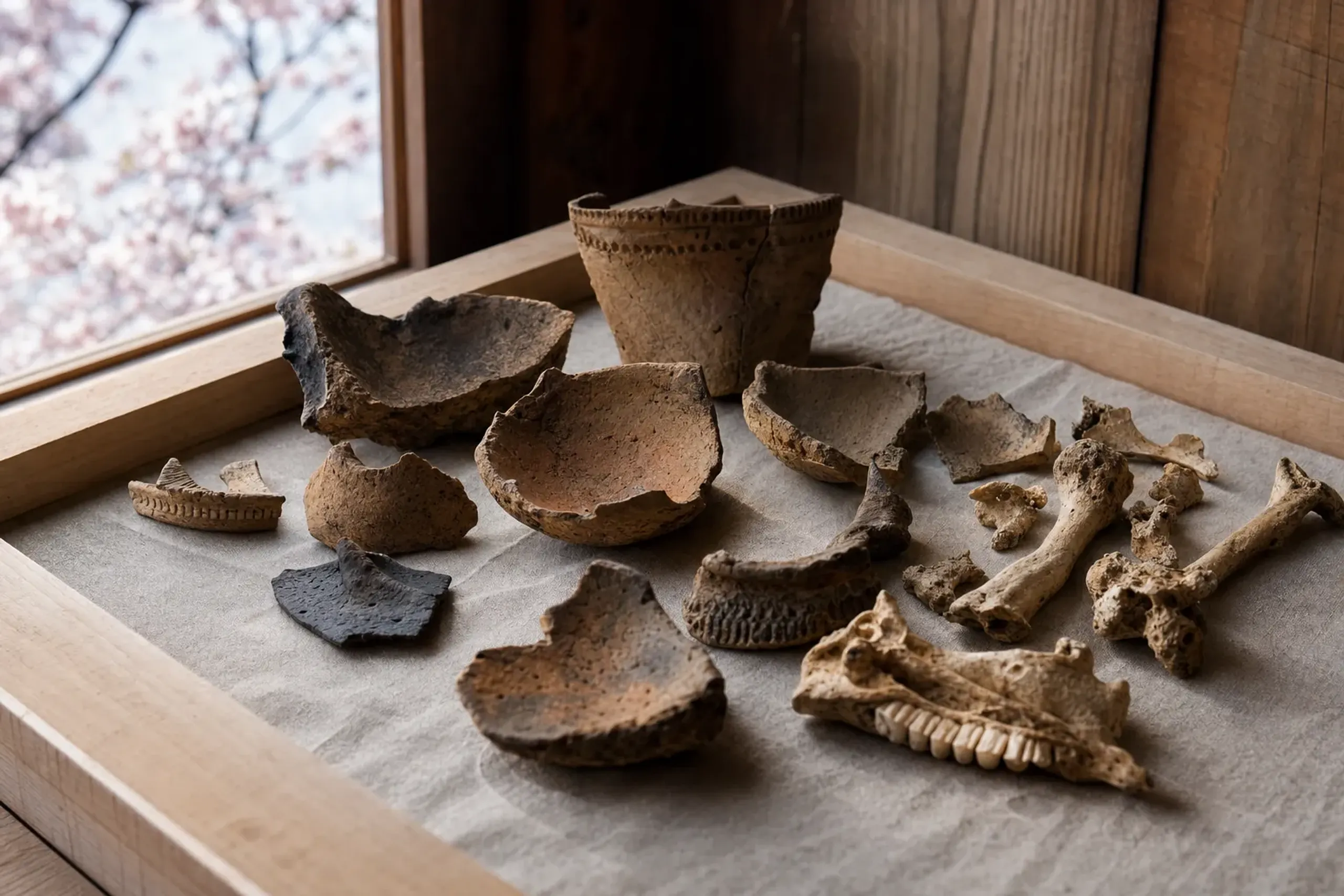
They are stubborn. They do not care what we want the narrative to be.
For thoughtful travelers, this is the moment Aoshima becomes more than a photogenic shrine on an easy day trip. It becomes a site with continuity—centuries of repeated human attention, concentrated on one small island just off the coast of Miyazaki City. That layered sense of continuity is exactly the kind of thing our guides are trained to surface, so that what you walk past has depth rather than being merely scenic.
Two Participatory Rituals To Try: Ame No Hirakanage And Musubi Koyori
Aoshima is not a "look only" shrine visit. There are small, genuine actions you can take that match the place's tone.
Ame No Hirakanage (Throwing Unglazed Clay Saucers)
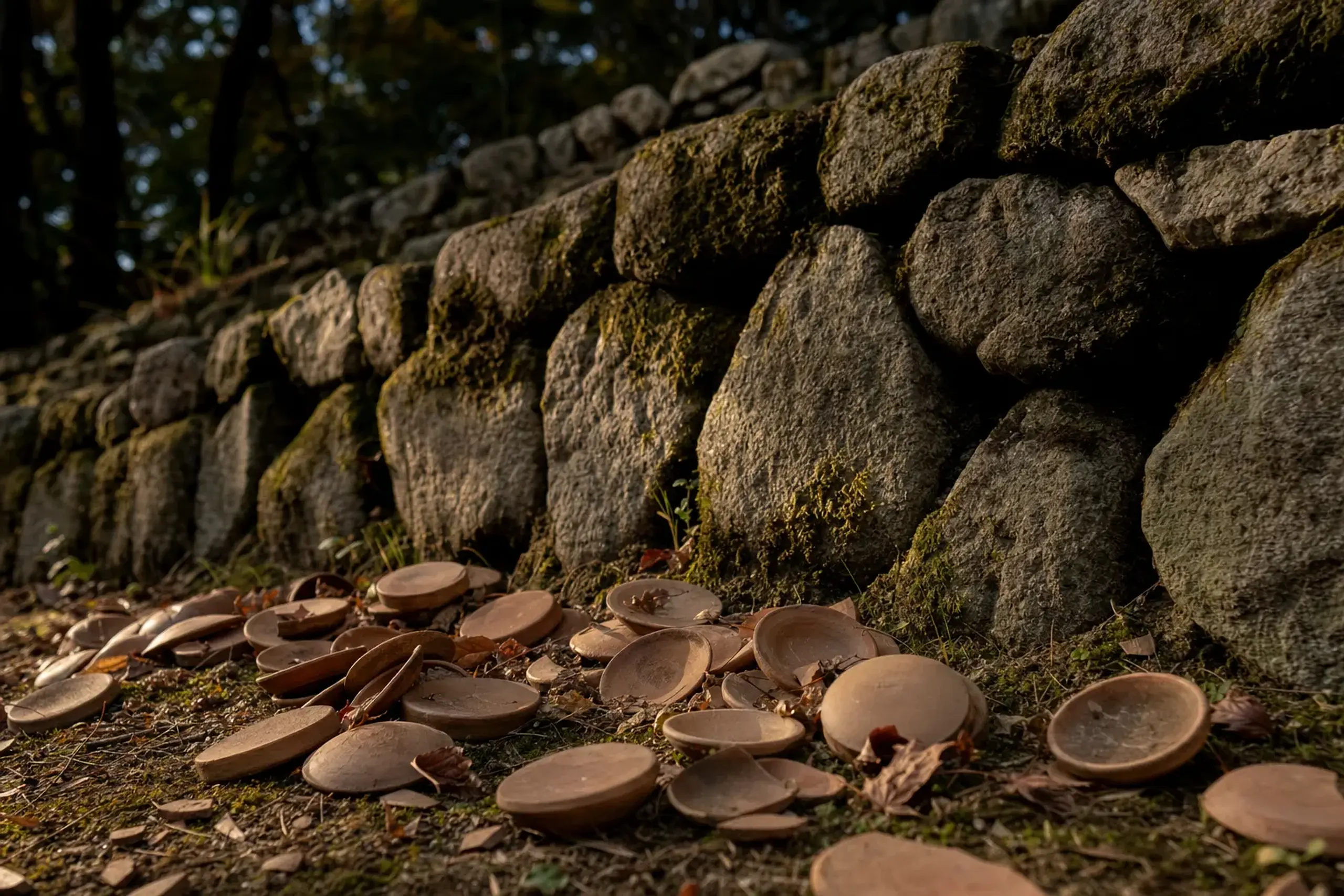
Near the Motomiya, visitors throw small unglazed clay saucers at a rock barrier (iwasaka) while silently making a wish. If the saucer lands within the barrier, the wish is said to come true; if it breaks, it is said to bring good fortune and ward off misfortune.
It is simple. It is also strangely relieving. The gesture asks for focus, not performance, and the sound of clay against stone feels like a clean period at the end of a sentence.
Musubi Koyori (Colored Paper Cords And The Meoto Biroo)
Musubi Koyori uses colored paper cords, with the color chosen according to the nature of one's wish. These are tied to a pair of intertwined fan palms known as the Meoto Biroo—the "Husband-and-Wife Palms."
Do not rush this part.
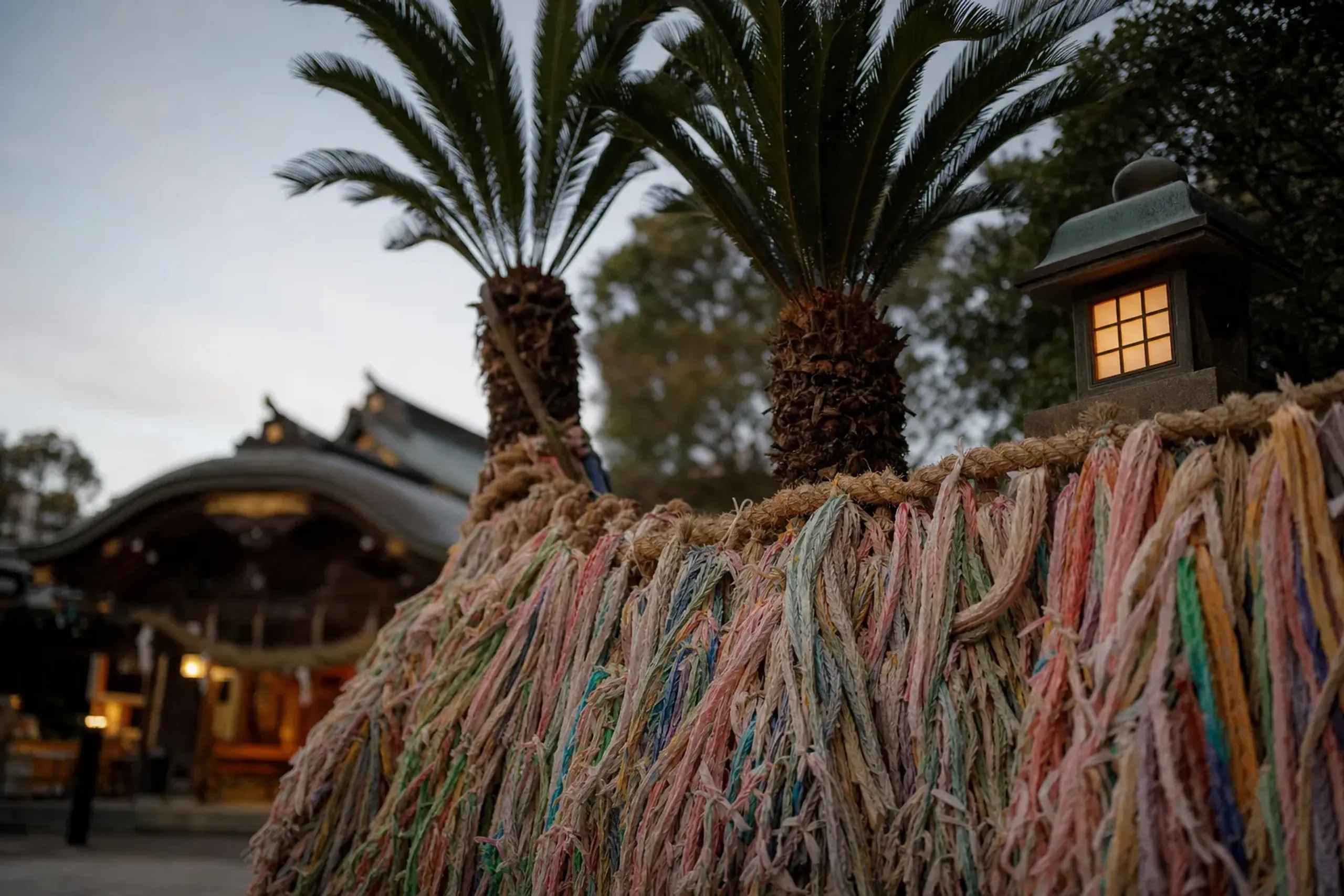
The palms are living, not symbolic props, and the best way to approach them is with a little restraint. If you are traveling with family, it can be a gentle shared moment that does not require anyone to "get" mythology to participate.
Oni No Sentakuita: The Ogre's Washboard That Rings The Island
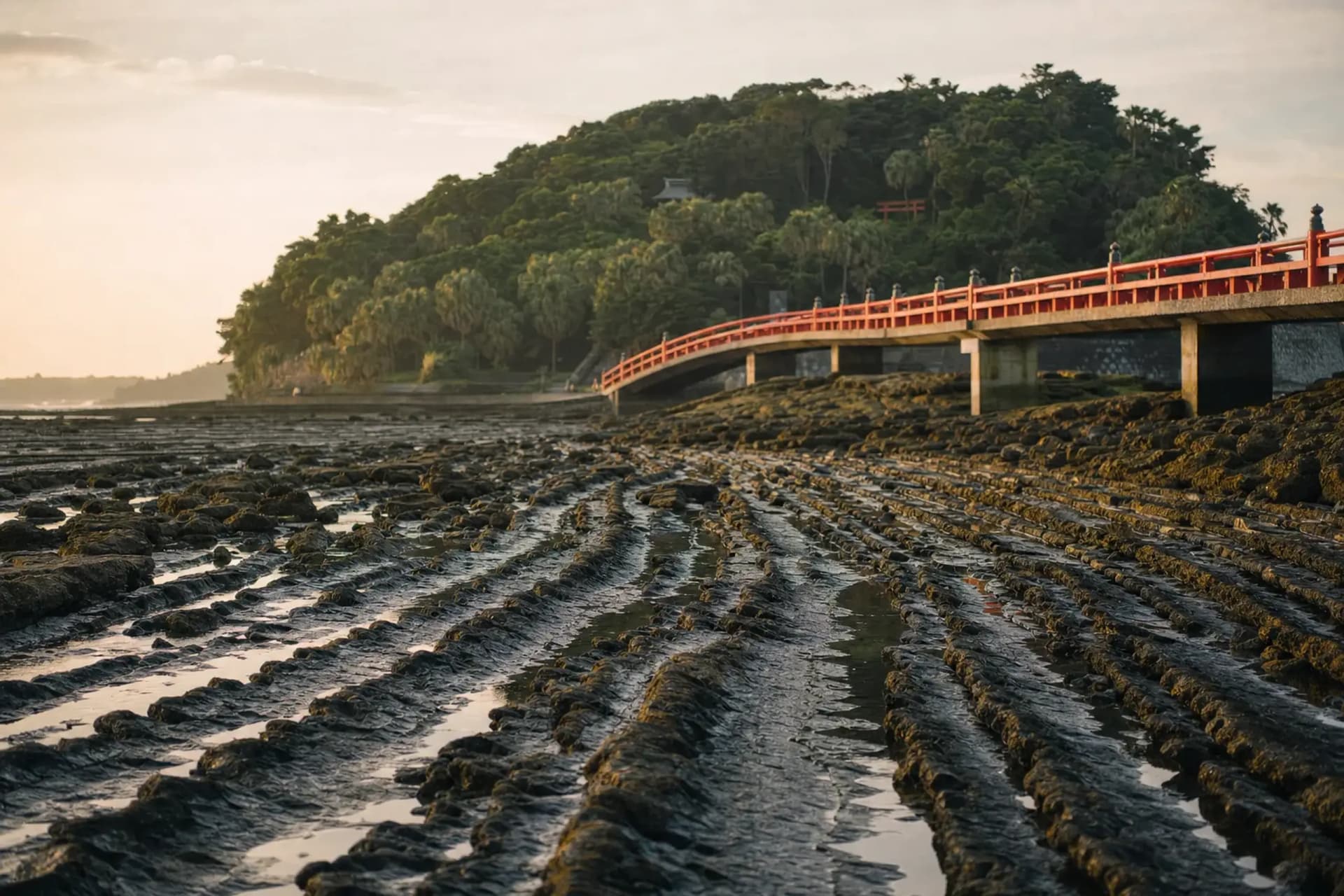
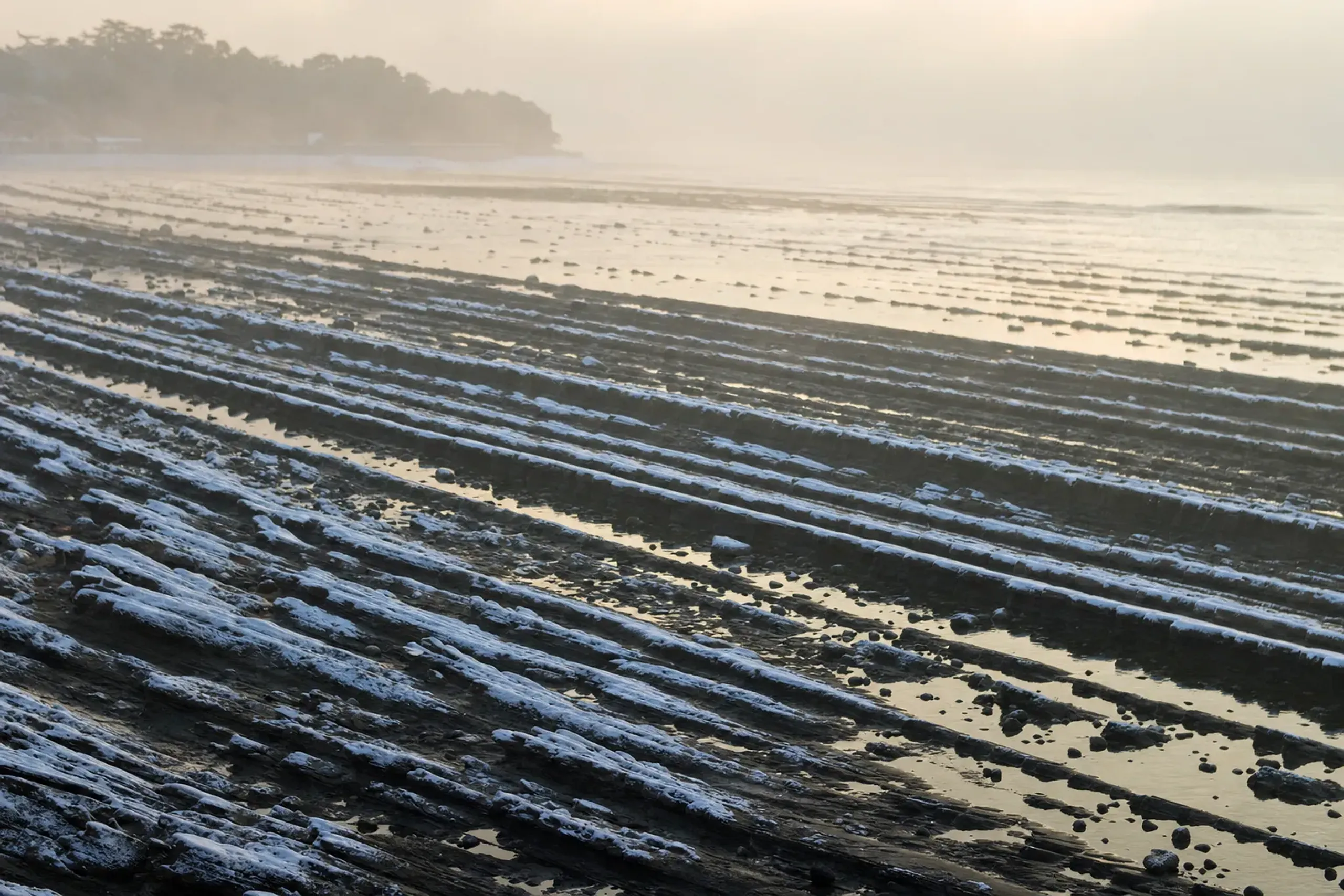
Oni no Sentakuita is Aoshima's distinctive coastal rock formation, created by alternating layers of mudstone and sandstone deposited 24 to 2 million years ago and later uplifted, tilted, and eroded into ridges.
The ridges look man-made from a distance, like a vast washboard laid out for a giant. Up close, you can read the logic: harder sandstone holds its line while softer mudstone wears away faster. Time does the carving. The sea keeps the edge sharp.
This is one of the island's most photographable features, yet it is also easy to mis-time. At high tide, the ridges can feel visually compressed. At lower tide, the pattern opens up and the shoreline walk becomes far more satisfying. Knowing exactly when to arrive—the right hour on the right day—is precisely the kind of seasonal, tidal timing a private itinerary quietly gets right.
The Northernmost Self-Reproducing Fan Palms In The World
Aoshima holds the world's northernmost self-reproducing population of Chinese fan palm (Livistona chinensis), and the island's subtropical plant community is designated a Special National Natural Monument.
There are only two places in Japan with a virgin forest of this species. That is not trivia. It is why the island's interior can feel like a small pocket of another latitude—fronds overhead, humidity held in the shade, a green hush that does not match the bright coastline.
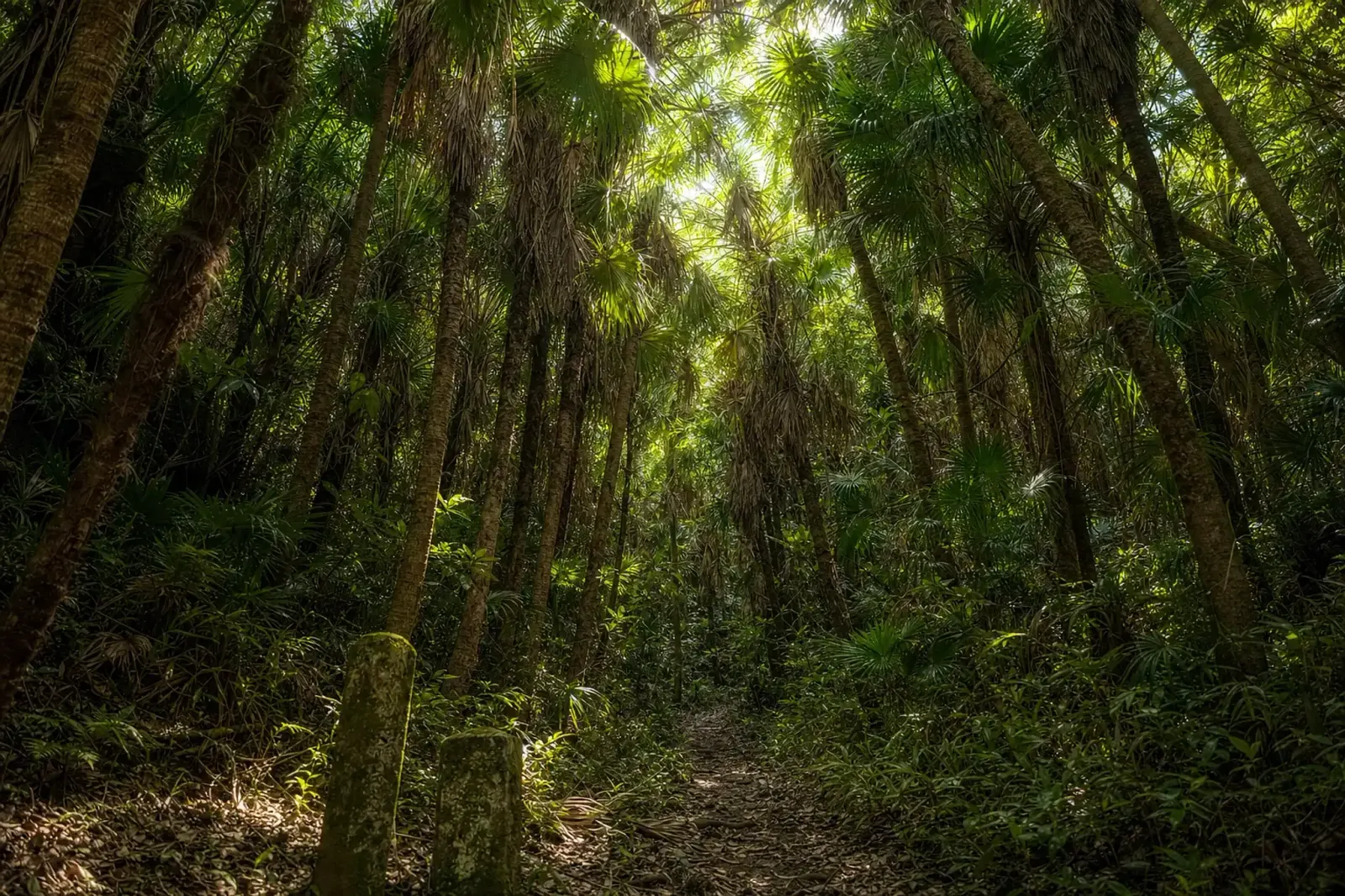
If you care about gardens, plants, or landscape design, this is a subtle highlight. No loud signage. Just botanical fact, expressed as atmosphere.
The Onarimichi Path And Imperial Visits (Historical)
The Onarimichi is associated with a path developed from 31 October 1907, when the then Crown Prince—later Emperor Taishō—visited Aoshima during an imperial tour of western Japan, followed by later imperial family visits.
This is history only. Nothing more. We mention it because it helps explain why some parts of Aoshima's approach feel formally composed, almost like a designed "arrival," even though the island is small and the visit is relaxed for modern travelers.
If you enjoy places that carry layers—mythic, archaeological, botanical, and imperial—this is one more you can hold without needing any special access or special framing.
The Yellow Post Box Near Yayoi Bridge
Near the island's entrance by Yayoi Bridge, you can find a yellow post box that references the myth's exchange of letters between Yamasachihiko and Toyotama-hime. It is painted yellow for its association with happiness, and it remains a functioning post box with daily mail collection.
It is an easy detail to miss. Don't. The post box is charming in a grounded way—myth translated into something ordinary people actually use.
If you like sending postcards, this is the place to do it, because the act matches the story.
How Do You Get To Aoshima Beach Park From JR Aoshima Station?
Aoshima Beach Park is a short walk from JR Aoshima Station—about 5 minutes on some routes, or around 10 minutes depending on the path you take.
Aoshima Beach Park sits on the waterfront next to the bridge leading to Aoshima Shrine, so the geography is intuitive once you arrive. Train, short walk, beach, bridge, shrine. Clean sequence.
For travelers who prefer to avoid small frictions—heat, bags, timing, or coordinating transfers—this is where a private car and driver changes the shape of the day. Our team at Japan Royal Service often sees Aoshima enjoyed best when you control your pace, especially in summer when shade and timing matter.
The first time you plan it, think in blocks: an early shrine approach for quieter paths; late morning for the beach park; late afternoon for softer light on the rock formation. Your feet will thank you.
Aoshima Beach Park: What's Actually There (And What To Pack)
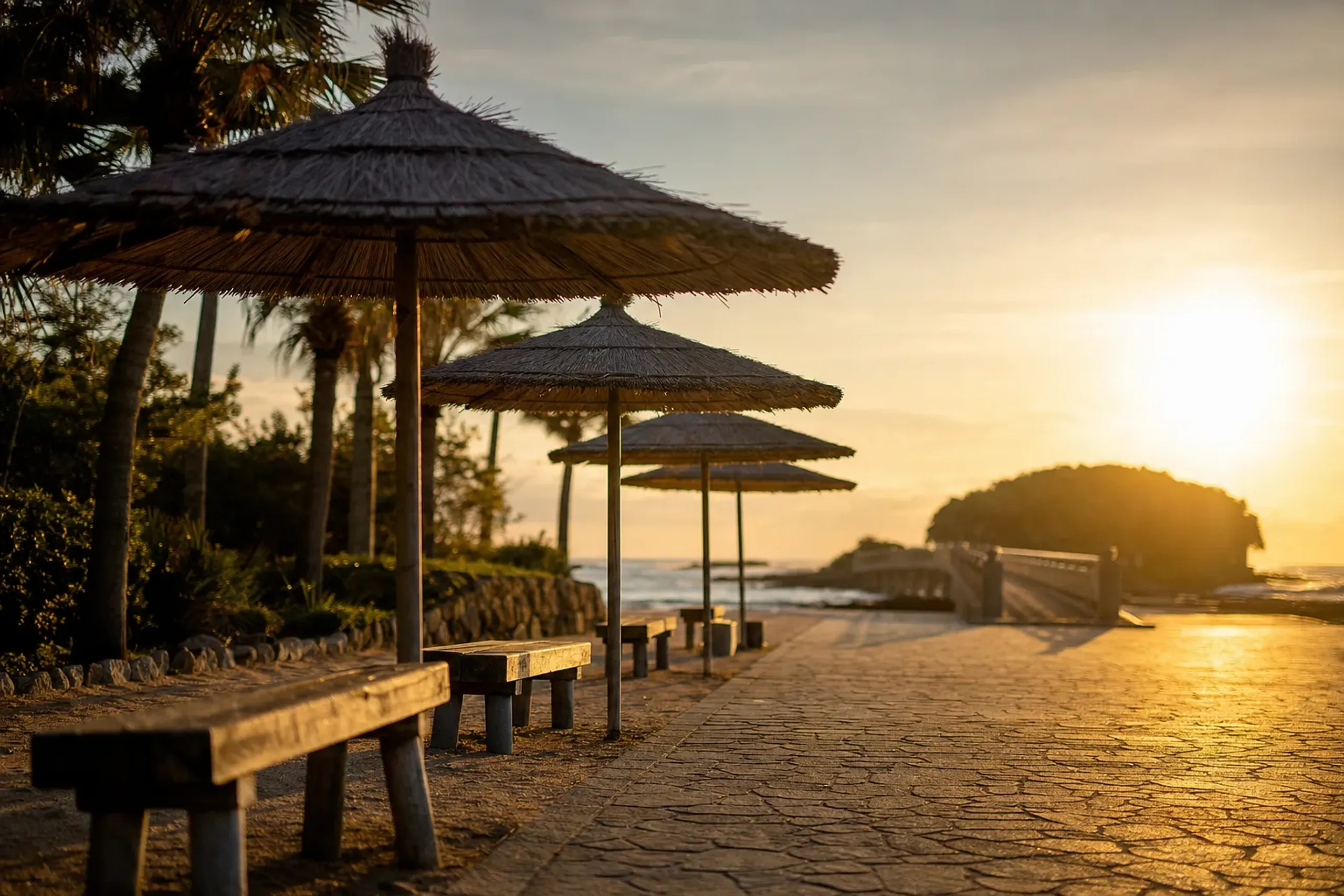
Aoshima Beach Park is open year-round and offers beach parasols, benches, and a cafe called uminoie serving coffee, drinks, and food.
Nearby facilities around Aoshima Beach include toilets, coin lockers (paid), changing rooms, and heated showers.
That one line changes what you can do: a shrine visit, a shoreline walk, then a rinse and reset before heading back to the city or onward in Kyushu.
Pack like a person who expects sun, even if the forecast looks mild. Hat. Water. A small towel. If you are visiting as a family, the coin lockers can be a quiet win—less carried, less dropped, fewer small annoyances.
For those who travel with a laptop, this area has been discussed as a "workcation" stop because Wi‑Fi is available. The key is choosing the right time of day. Midday glare is not kind to screens.
Key fact: Aoshima Beach Park's listed address is 2-233 Aoshima, Miyazaki City, Miyazaki Prefecture.
A Simple Morning-To-Golden-Hour Blueprint For Aoshima
Start early. Always.
In our experience, Aoshima works best as a half-day to full-day micro-journey with a clear rhythm rather than a rushed "check-in." Give the myth its quiet minutes. Then give the shoreline its light.
- Early morning: Cross to Aoshima Shrine, walk with intention, and continue toward Motomiya via the Inori no Kodō.
- Late morning: Return toward Aoshima Beach Park and take a real break—shade, a cold drink at uminoie, and a reset.
- Afternoon: Walk the edges for Oni no Sentakuita viewpoints when the tide and light cooperate.
This is not about doing more.
It is about doing fewer things, with attention. Aoshima rewards that approach.
SEA SIDE FES Vol.4 (Sep 19, 2026): A Timely Reason To Revisit
SEA SIDE FES Vol.4 is scheduled for Saturday, September 19, 2026 at AOSHIMA BEACH PARK in Aoshima, Miyazaki City.
If your travel calendar reaches into 2026, this kind of local activation can be a smart anchor: it gives a clear date, a clear place, and a reason the waterfront may feel more animated than usual. Plan with realism. Crowd patterns shift on event days.
We avoid making promises about third-party events on public pages, because details can change. If you are interested in building your Miyazaki time around this date, reach our concierge team privately for tailored guidance and timing strategy.
What Japan Royal Service Can Do For Your Aoshima Visit
Japan Royal Service provides guiding and private transfers for Aoshima, with planning shaped around discretion, pacing, and the quieter details most itineraries skip.
This is where our approach differs from broad operators who publish Kyushu as a single, glossy loop. We treat Aoshima as a precise place: an island once forbidden, a shrine with named deities and participatory rites, a Motomiya site with Yayoi-era finds, and a coastline shaped by millions of years of geology. It is exactly the kind of hidden Japan that a caption cannot hold—the Japan that reveals itself only when someone knows which hour, which tide, and which quiet path to choose.
If you would like Aoshima woven into a private Miyazaki or wider Kyushu journey—guided with discretion, timed to the light, and free of the small frictions—let us build it around you. To begin a bespoke itinerary designed entirely around your pace, contact us here for a tailored proposal.