In this guide
- 01Why Kyoto’s Moss Gardens Feel Like A Different Kyoto
- 02The “Green Season” Advantage: When Moss Is At Its Best In Kyoto
- 03The Core Moss Connoisseur Route In Kyoto (Real Sites, Real Calm)
- 04Hidden Japan For Moss Lovers: Seasonal Openings And Lower-Visibility Gardens
- 05Garden Evenings In 2026: A Night Walk Worth Pairing With Moss Days
- 06Private Touring, Done Quietly: What You Gain Beyond A Standard Garden Day
- 07Shokunin Encounters That Complement A Garden Day (Without Turning It Into A Theme Park)
- 08Practical Tips: What To Expect On A Kyoto Moss Garden Day
- 09How To Book And Visit Saihō-ji (Kokedera) Responsibly
- 10Frequently Asked Questions About Kyoto Moss Gardens
- 11A Quiet 2026 Pairing: Moss Mornings And Understated Kyoto Stays
- 12Why Choose Japan Royal Service
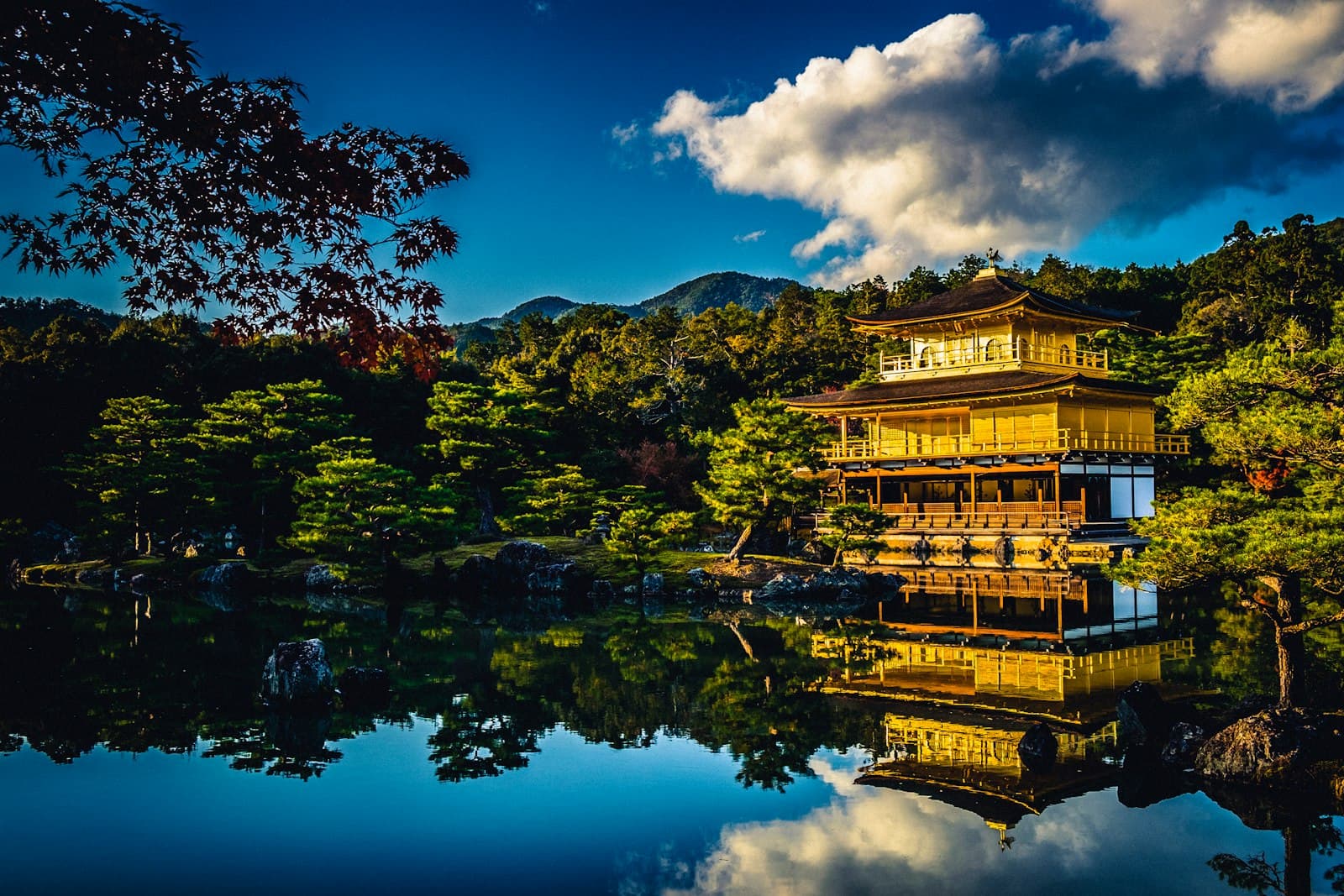
Kyoto can feel like a loud checklist. Lines. Timed tickets. A kind of sightseeing sprint that leaves even seasoned travelers oddly unsatisfied.
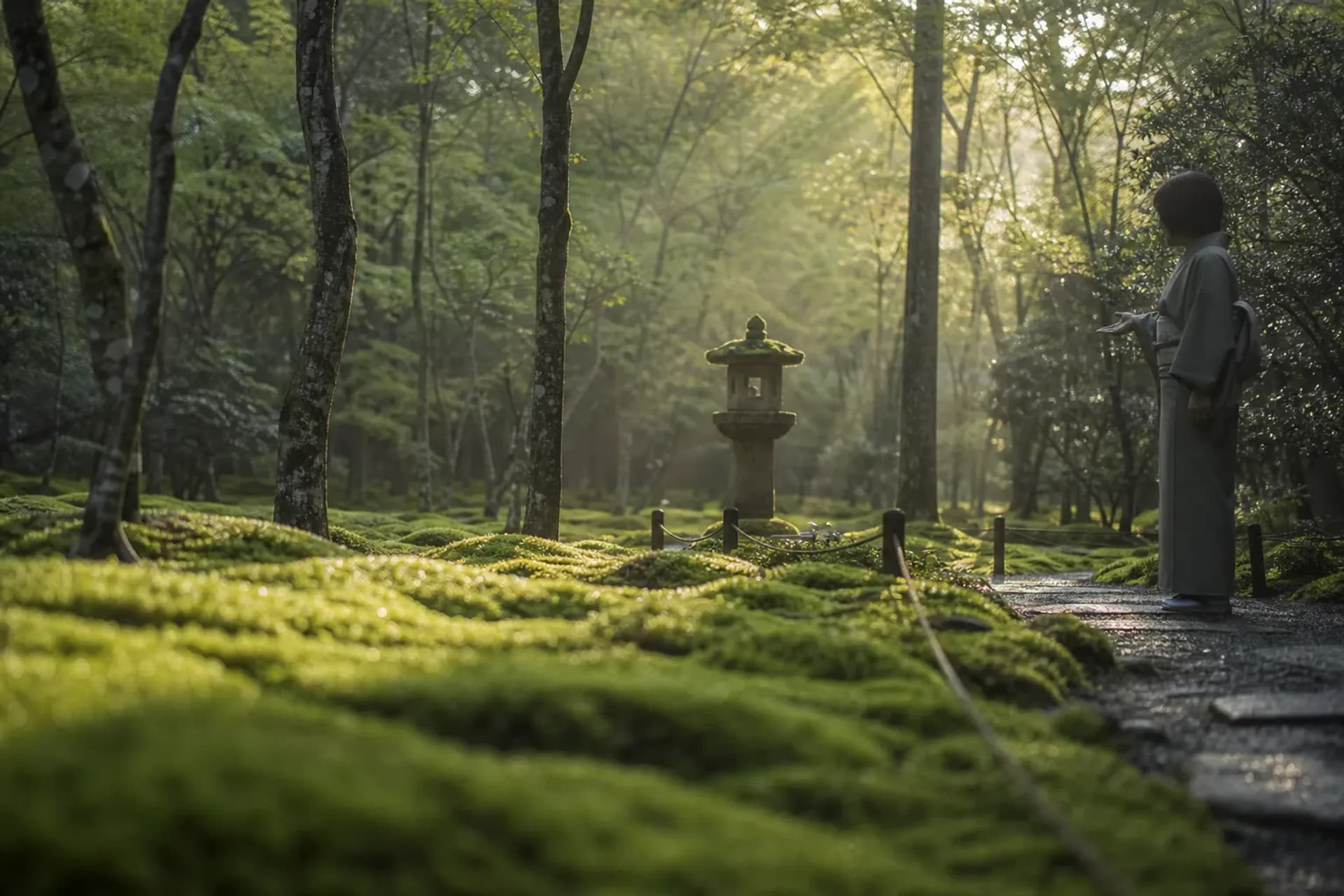
There is another Kyoto. Quieter. Lower to the ground. It begins where stone turns dark after rain and a garden’s “green” stops being a color and becomes a surface.
Our team at Japan Royal Service designs private Kyoto garden days for guests who want restraint, not spectacle. A slower tempo. A route where moss is the main character, and the city’s noise stays outside the gate.
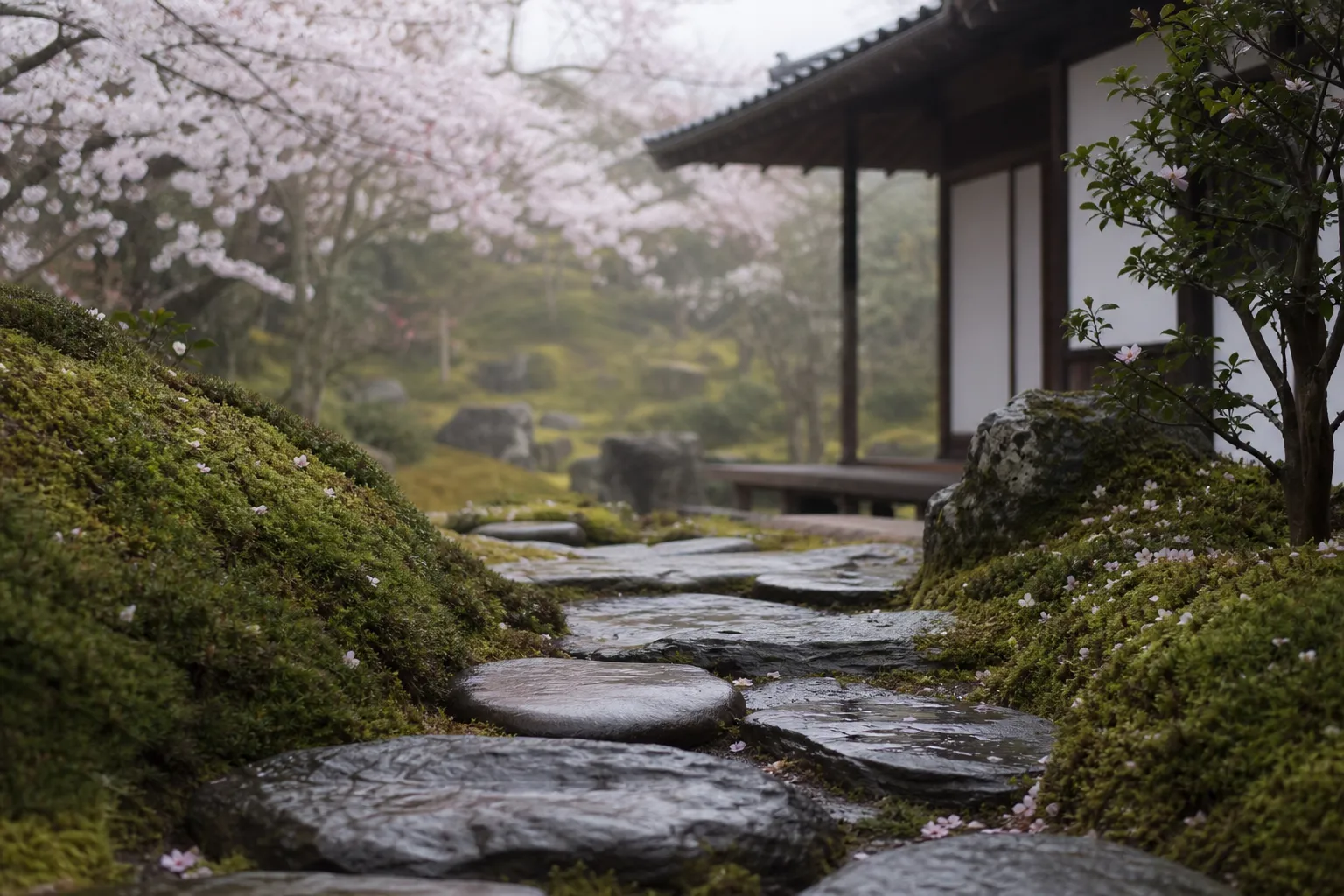
In Kyoto, moss is not a backdrop—it is the pace-setter.
Why Kyoto’s Moss Gardens Feel Like A Different Kyoto
Moss changes how you look. Fast attention doesn’t work here.
In Kyoto, moss is not decoration. It is an aesthetic decision that aligns with wabi-sabi: the beauty of age, shade, moisture, and imperfect edges that refuse to be polished into something loud.
When the garden is mostly green, your eye starts to notice everything else. The rake marks in gravel. The lean of a lantern. The space between stones. Small things. Big payoff.
What “Wabi-Sabi” Looks Like In A Garden, Not A Museum
Wabi-sabi is easy to romanticize and hard to actually feel. Moss makes it practical.
Look for uneven carpets that thicken near a tree’s roots. Watch how a stepping stone disappears into softness at its edges. After rain, even the air changes, and the garden becomes more about silence than view.
Why Moss Rewards Private Touring
Moss is fragile. So is the mood.
In our experience, the best moss moments arrive when you are not negotiating crowds, navigating transit, or trying to “fit in one more temple.” Private touring is not about rushing. It is about protecting attention.
The “Green Season” Advantage: When Moss Is At Its Best In Kyoto
If you want Kyoto at its most velvety, late May through June is a strong bet. Yes, it can be humid. That is the point.
Moss brightens with moisture and shade, and the garden’s texture becomes more pronounced after a rainfall. The light turns softer, the stone deepens in color, and the greens stop looking flat.
Timing matters more than luck. Early hours often feel calmer, and a “morning-after-rain” visit can be extraordinary.
Key fact: Moss gardens are living surfaces. Avoid stepping off paths, keep footwear clean, and treat ropes and signage as conservation tools, not suggestions.
Best Time Of Day For Moss Photography
Midday sun can flatten moss into one bright sheet. Not ideal.
Overcast mornings often give the most detail. After rain, water clings to tips and edges, and you get a faint sheen without glare. Bring a lens cloth. You will use it.
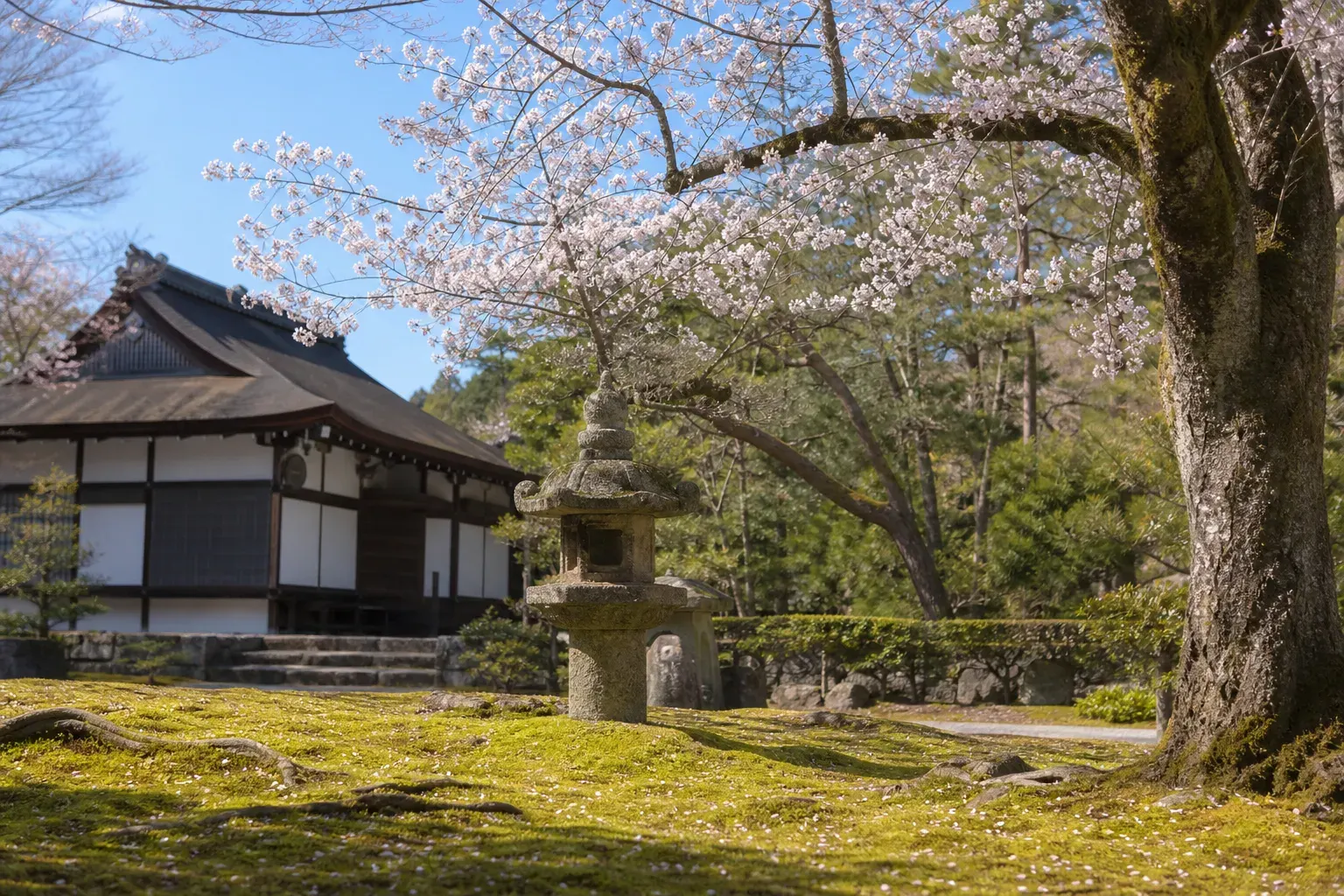
Choose fewer stops, and let each one land properly.
The Core Moss Connoisseur Route In Kyoto (Real Sites, Real Calm)
This is the backbone route we refine privately based on your pace, mobility, and where you are staying. Nothing here is invented. Every site is real and verifiable.
We also keep the day human. One garden too many becomes a blur. Two to three anchor stops, done well, usually wins.
Stop 1: Saihō-ji (Koke-dera / Moss Temple) — Reservation-Based Serenity By Design
Saihō-ji (Saihoji), often called Kokedera, is part of the UNESCO World Heritage listing “Historic Monuments of Ancient Kyoto (Kyoto, Uji and Otsu Cities).” It is also the moss benchmark.
The garden is known for more than 120 kinds of moss. It reads like a library of greens, each with its own density and sheen. Quiet. Intentional.
Saihō-ji has used a reservation-based visitor system with restrictions dating back to 1977 to limit visitors and preserve the atmosphere. That choice is why it still feels like itself.
Stop 2: Giō-ji — A Moss Garden That Feels Like A Whisper
Giō-ji (Gioji) sits in the Saga-Arashiyama / Okusaga area of Kyoto. Its garden is famous for a thick carpet of moss set against a backdrop of hillside trees.
Here, moss is not a “feature.” It is the floor. The calm is immediate, especially if you arrive early and allow five minutes of stillness before you take the first photo.
Because Okusaga is slightly removed from Kyoto’s busiest corridors, the approach itself can feel like a pressure release.
Stop 3: Otagi Nenbutsu-ji — Moss, Stone, And 1,200 Faces
Otagi Nenbutsu-ji is known for 1,200 stone rakan (arhat) statues. They are expressive, weathered, sometimes playful, sometimes severe.
In damp months, moss gathers in seams and shadows. Stone turns soft-edged. The entire place becomes a study in age, patience, and the gentle chaos of nature reclaiming surfaces.
This stop works well when you want Kyoto to feel less curated and more lived-in.
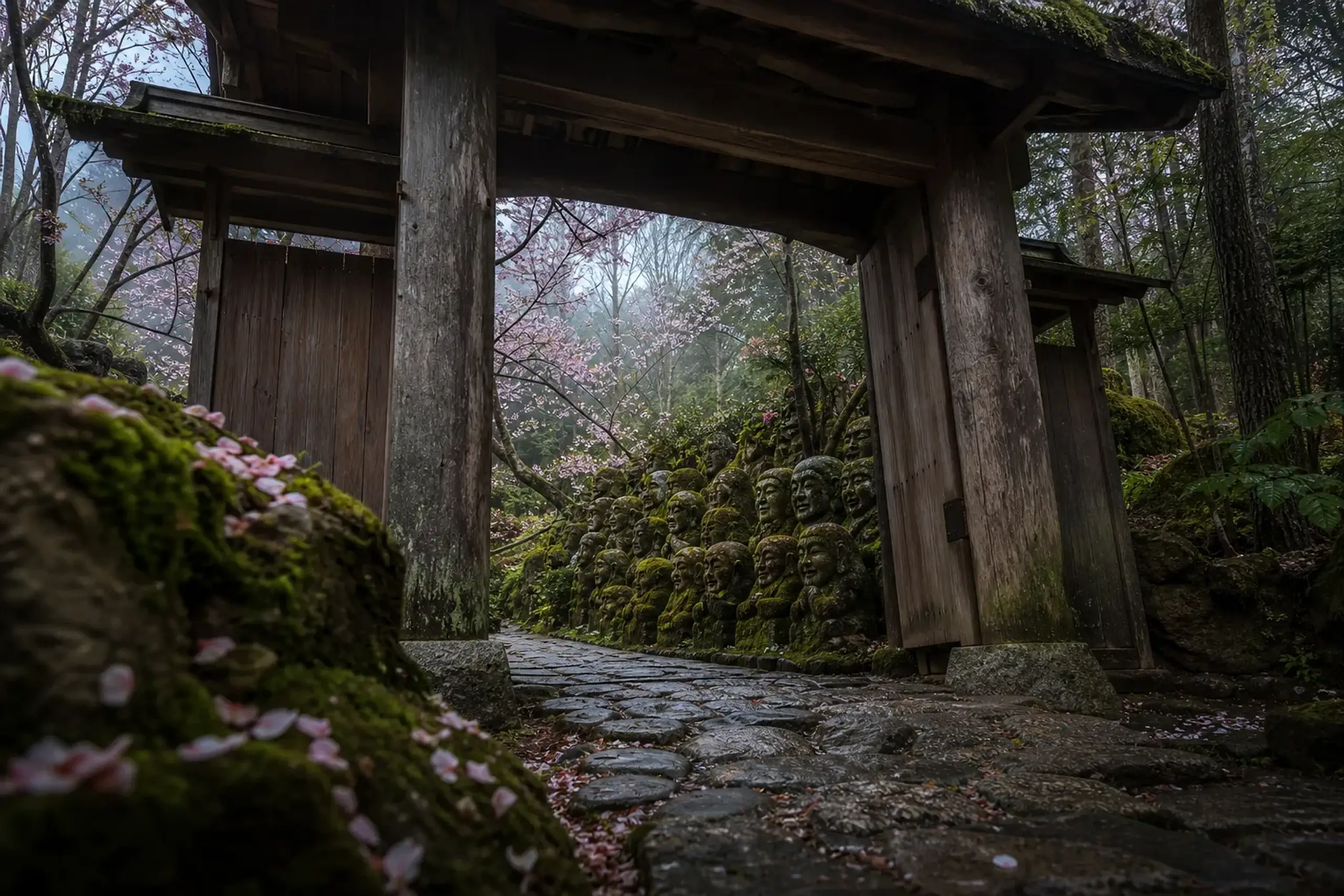
Hidden Japan often begins with a gate you would walk past too quickly.
Hidden Japan For Moss Lovers: Seasonal Openings And Lower-Visibility Gardens
Some of Kyoto’s most compelling garden moments are not “always available.” That is part of the appeal.
For HNW travelers, Hidden Japan is rarely about secrecy for its own sake. It is about selecting places with natural limits: seasonal openings, smaller footprints, and a pace that discourages crowds.
Hakuryūen (白龍園) is often discussed in 2026 coverage as having a spring public opening that runs through June 21. Dates can shift year to year, so we treat timing as something to verify close to your travel window.
How We Think About Limited Openings
Limited openings demand planning. No improvisation.
We build a day that still works if weather changes or entry slots are constrained. The point is not to “collect” places. The point is to protect your calm and avoid wasted transit time.
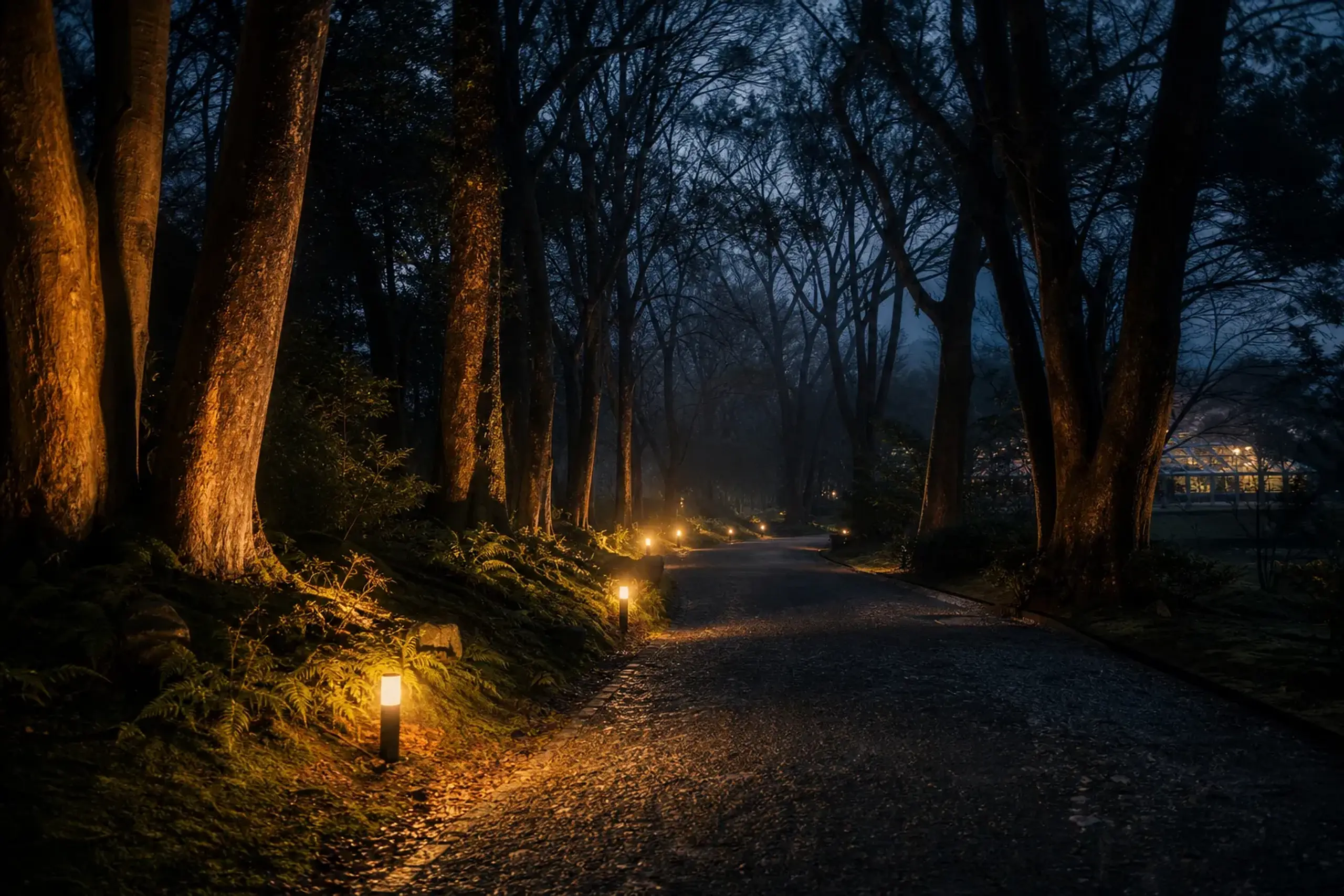
A composed night walk can be the perfect counterpoint to a moss morning.
Garden Evenings In 2026: A Night Walk Worth Pairing With Moss Days
Kyoto’s garden culture is not only daylight. In 2026, the city offers a new contrast that pairs beautifully with a moss itinerary: light, sound, and controlled nighttime pacing.
LIGHT CYCLES KYOTO is advertised as starting February 13, 2026 at Kyoto Botanical Gardens. It is a different kind of garden attention—less texture, more atmosphere.
We like this pairing for guests who want the daytime quiet of temple grounds and a nighttime experience that still feels composed.
Option A: Daytime Moss, Nighttime Light
For travelers who like contrast, this combination works cleanly.
- Day: Saihō-ji or Giō-ji for moss detail and silence
- Night: Kyoto Botanical Gardens for LIGHT CYCLES KYOTO (timed entry and programming vary by date)
- Benefit: You experience Kyoto’s garden aesthetics in two registers—natural and designed
Option B: Daytime Moss, Evening Shrine Culture
If you prefer your “evening” to stay rooted in tradition, a shrine event can be a better fit.
Kitano Tenmangū Shrine lists “KYOTO NIPPON FESTIVAL 2026 – A Garden Where Beauty Blooms Beyond Time –” as running from February 1, 2026 to May 24, 2026. It can pair well with an earlier moss visit, especially for guests who enjoy culture that uses garden space as a stage.

The calm between gates matters as much as the garden itself.
Private Touring, Done Quietly: What You Gain Beyond A Standard Garden Day
Luxury travelers do not need more “highlights.” They need fewer decisions.
With a private car and a measured route, your day stops revolving around train changes, taxi queues, and crowded bus stops. It becomes a sequence of arrivals that feel clean and unhurried.
And yes, discretion matters. For many guests, it is the whole point.
Discretion As A Design Choice, Not A Promise On A Brochure
We treat privacy as a routing problem. That is the practical side of discretion.
In our experience, small adjustments make a large difference: choosing calmer approach roads, timing entrances away from peak arrival waves, and keeping the day’s structure simple so you are not explaining yourself to strangers all afternoon.
Chauffeured Comfort That Matches Kyoto’s Tempo
Kyoto rewards soft edges. Hard logistics break the spell.
Japan Royal Service provides private chauffeured day tours in Kyoto, with a fleet that includes the Lexus LM 500 for the top tier, plus options such as the Toyota Executive Alphard and Mercedes V-Class depending on party size and preference. The goal is not flash. It is quiet ease between gates.
Shokunin Encounters That Complement A Garden Day (Without Turning It Into A Theme Park)
Moss is a craft of time. So is shokunin work.
When guests ask for cultural depth that still feels serene, we often suggest pairing a garden day with a private session focused on a single material: lacquer, ceramics, or calligraphy. Not five workshops. One.
It keeps the day coherent. It also keeps your attention intact.
How To Pair Craft With Gardens
The mistake is stacking too much. Big mistake.
A moss morning can be followed by an artisan visit in the afternoon when the light turns stronger and gardens become busier. The rhythm makes sense, and the craft experience feels like an extension of what you were already noticing: texture, restraint, and the dignity of small details.
Practical Tips: What To Expect On A Kyoto Moss Garden Day
Good planning here is not complicated. It is specific.
Expect uneven stone paths, occasional steps, and damp ground in the best moss months. Dress with that reality in mind, and you will move through gardens with more confidence and less distraction.
Bring patience. Bring a small towel. Leave the urge to “optimize” at the hotel.
What To Wear
- Shoes: Stable walking shoes with grip; avoid slick soles on wet stone
- Clothing: Light layers for humidity; a breathable rain shell in June
- Bag: Small and close to the body for narrow paths and crowded entries
Garden Etiquette That Preserves The Atmosphere
Kyoto gardens are not backdrops. They are living compositions.
- Keep voices low, especially in small temple grounds
- Stay on marked paths to protect moss and roots
- Do not block narrow walkways for long photo sessions
- Accept that some areas are meant to be viewed, not entered
How To Book And Visit Saihō-ji (Kokedera) Responsibly
Saihō-ji is not a “show up and see what happens” site. The calm is maintained by design.
The official visitor information site, into Saihoji, publishes FAQs and guidance for reservations and visit precautions. Kyoto City’s official tourism site also lists the temple and its address as 56 Matsuo-jingatani-cho, Nishikyo-ku, Kyoto City.
Because rules and available dates can change, we recommend checking official information close to your travel dates. For questions and tailored guidance around timing, routing, and what to expect on the day, contact our concierge team directly.
Official resources: into Saihoji (FAQ) | Kyoto City Official Tourism: Saiho-ji | Japan-Guide: Saiho-ji (UNESCO context)
Frequently Asked Questions About Kyoto Moss Gardens
Are Kyoto moss gardens worth visiting if I’ve already seen Kyoto’s major temples?
Yes, especially if you are tired of the “big sight” feeling. Moss gardens shift the experience from landmarks to texture, light, and silence, which can feel fresh even for repeat visitors.
What is the best month to see moss in Kyoto?
Late May through June is often excellent because humidity and rainfall help moss look fuller and more luminous. Early mornings after rain can be especially rewarding.
Is Saihō-ji (Kokedera) hard to visit?
It requires a reservation-based system, in place since 1977, to limit visitors and protect the atmosphere. That “friction” is part of why it remains so calm once you are inside.
Can I visit Giō-ji and Otagi Nenbutsu-ji in the same day?
Yes. They are both in the Saga-Arashiyama / Okusaga area, so pairing them can reduce travel time and keep the day feeling contained.
What should I avoid doing in moss gardens?
Do not step off designated paths, even for a photo. Avoid loud phone calls. And be cautious on wet stone—moving slowly is safer and suits the setting.
A Quiet 2026 Pairing: Moss Mornings And Understated Kyoto Stays
Kyoto in 2026 gains a new anchor for guests who prefer heritage and restraint. Imperial Hotel, Kyoto has an official opening date of March 5, 2026 in the Gion area.
For HNW travelers, this matters less as “news” and more as a staging point. A stay that supports low-visibility mornings, short drives to gardens, and returns to the room before the city peaks.
Our team at Japan Royal Service treats properties like this as part of the itinerary’s architecture, not a trophy. Where you start the day determines how it feels.
Why Choose Japan Royal Service
You can find lists of moss gardens online. The hard part is turning them into a day that feels unhurried, coherent, and private.
Japan Royal Service is built for that gap. We design discreet private tours in Kyoto with a chauffeur-driven approach that protects your time and reduces public friction, and we shape the day around wabi-sabi restraint, Hidden Japan routing, and a watchful commitment to confidentiality.
When you are ready, our concierge team will tailor a moss-focused Kyoto itinerary around your preferred pace, season, and cultural interests—whether that means Saihō-ji as the centerpiece, Giō-ji in a quiet Okusaga loop, or a 2026 evening contrast like LIGHT CYCLES KYOTO.
Reach Japan Royal Service via japanroyalservice.com to begin a private conversation, and we will share tailored guidance for your dates.