In this guide
- 01Why Yamanashi Works For Luxury Wine Travel (Even If You’re Skeptical)
- 02A Sommelier’s Lens: How To Taste Koshu Like A Pro
- 03Katsunuma: The Heritage Core Of Japanese Wine
- 0498WINEs And The New Global Proof For Yamanashi
- 05Private Tastings And Master Winemakers: What “Exclusive” Can Mean Here
- 06Luxury Logistics From Tokyo: Chauffeur Or Helicopter (And When Each Makes Sense)
- 07Bespoke Culinary Pairings: Making Koshu Feel Inevitable At The Table
- 08When To Go: 2026 Timing, Events, And The Calm Way To Enjoy Them
- 09A Sample One-Day “Sommelier’s Choice” Flow (Built For HNW Time Reality)
- 10How To Book: Wineries, Tours, And What You Can Confirm Publicly
- 11FAQ: Yamanashi Luxury Wine Travel
- 12Why Choose Japan Royal Service
You’ve done Bordeaux. You’ve done Napa. You may even know Champagne by producer, not by label.
Then someone mentions Japan. And the questions start. Is Japanese wine truly worth a day away from Tokyo? Will it feel curated, or like a bus tour with a paper cup? Will the language barrier turn “wine country” into guesswork?
Our team at Japan Royal Service plans Yamanashi wine journeys for travelers who value time, discretion, and genuine craft. This is a sommelier-minded way to approach Yamanashi: calm logistics, real producers, and tasting moments that land with quiet precision.
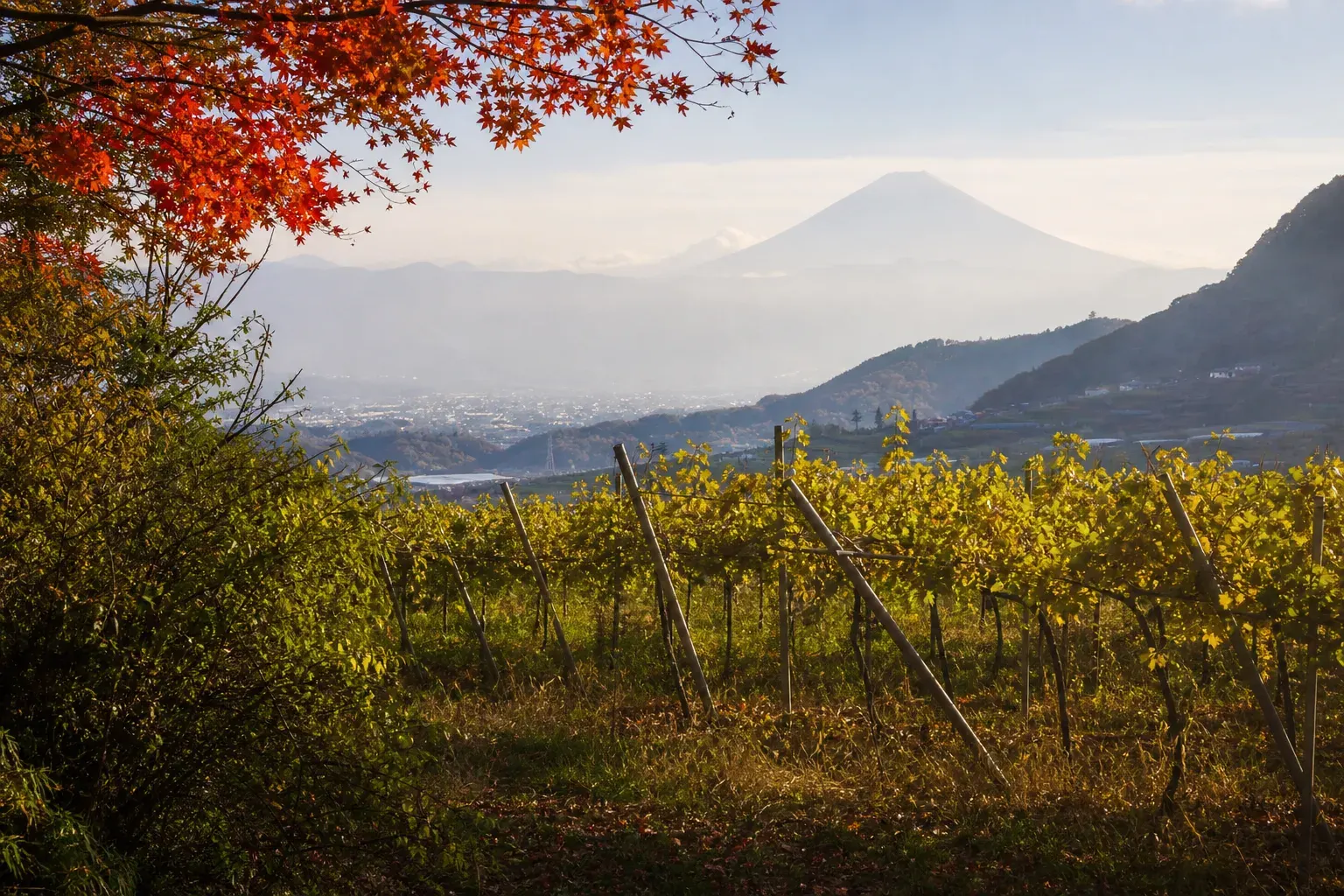
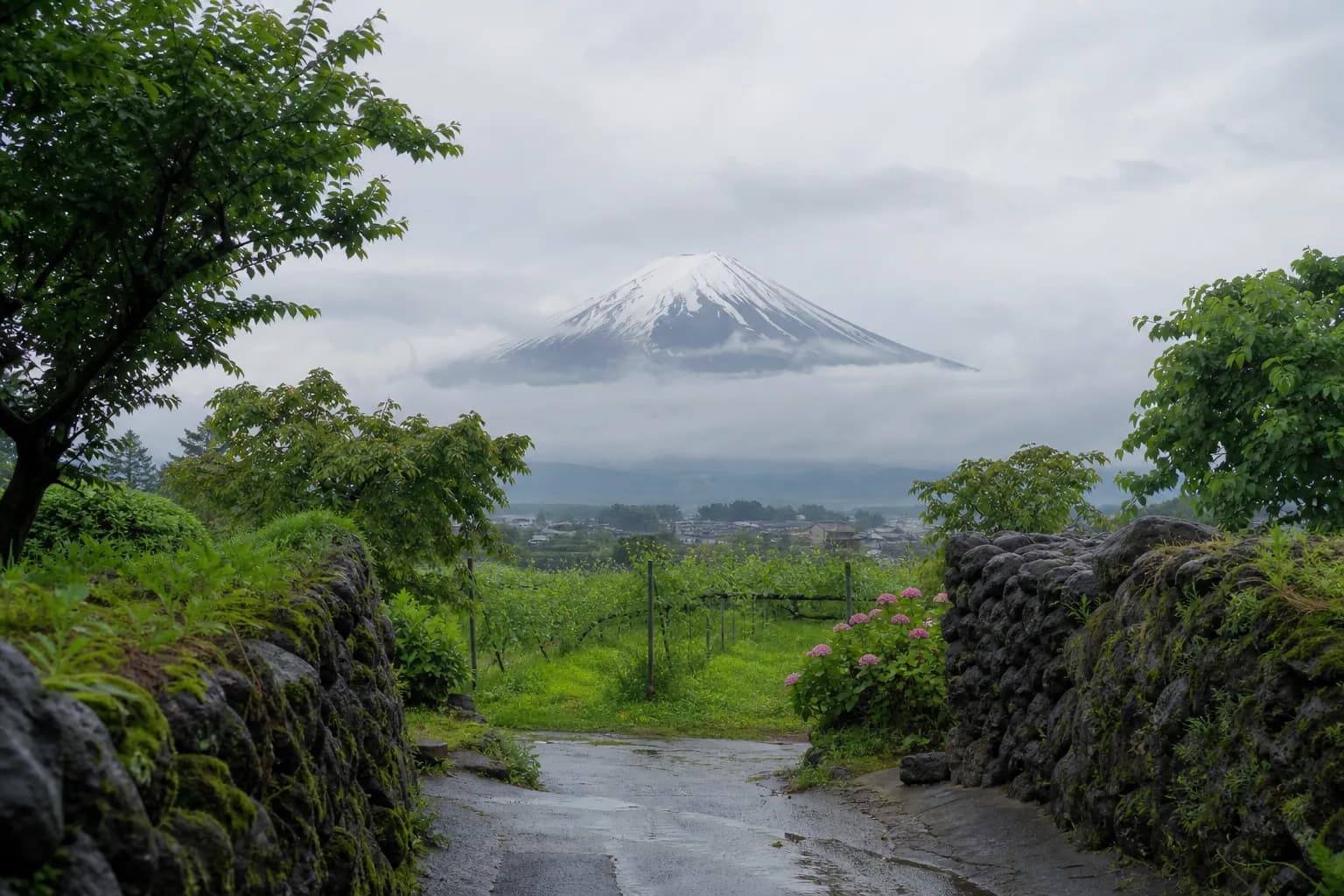
Katsunuma’s calm landscapes are close to Tokyo, yet feel worlds away.
Why Yamanashi Works For Luxury Wine Travel (Even If You’re Skeptical)
Yamanashi is close. That matters. From central Tokyo, you can be in Katsunuma—the historic core of Japanese wine—without sacrificing an entire day to transit.
It also feels private in a way famous regions rarely do. Vineyards sit under wide skies, with Mt. Fuji often present on clear days. The pace changes fast.
Most of all, Yamanashi has a grape that rewards attention. Koshu is subtle. That is the point.
Koshu: A Grape Built For Restraint
Koshu does not shout. It leans toward clarity, citrus peel, white flowers, and a certain saline edge when handled well. Big oak and heavy extraction are usually the wrong move.
That restraint makes Koshu ideal for Japanese cuisine. Think clean dashi, delicate sashimi, seasonal vegetables, and tofu preparations. A loud wine would bully the food.
A Region With Real History, Not A Marketing Story
Yamanashi is not “new.” It has documented roots in modern Japanese wine history, with Decanter noting that Japan’s first modern winery—Dai-Nihon Yamanashi Budoshu Gaisha—was established in Katsunuma in 1877.
That single date changes the tone of the trip. You are not chasing a trend. You are visiting a place that has been working at the craft for generations.
A Sommelier’s Lens: How To Taste Koshu Like A Pro
Most first-time visitors taste Koshu once, decide it is “light,” then move on. Big mistake.
In our experience, Koshu is best understood by style, not by a single pour. Stainless steel expressions show purity and lift. Skin-contact styles show texture and tea-like grip. Barrel-aged versions—when done with restraint—add breadth without losing the grape’s line.
We suggest tasting in a deliberate sequence. Slow down. Let the finish talk.
The Three Koshu Styles Worth Building A Day Around
- Stainless Koshu: crisp, citrus-driven, precise; strong with sashimi and lightly seasoned vegetables.
- Skin-Contact Koshu: more structure; pairs with grilled fish, mushroom dishes, and dishes with sesame or miso depth.
- Subtle Oak / Barrel-Aged Koshu: broader palate; works with richer seafood, crab, or butter-glossed preparations.
Key fact: Decanter reports Koshu was officially registered by the OIV in 2010—useful context when a well-traveled guest asks, “Is this internationally recognized?”
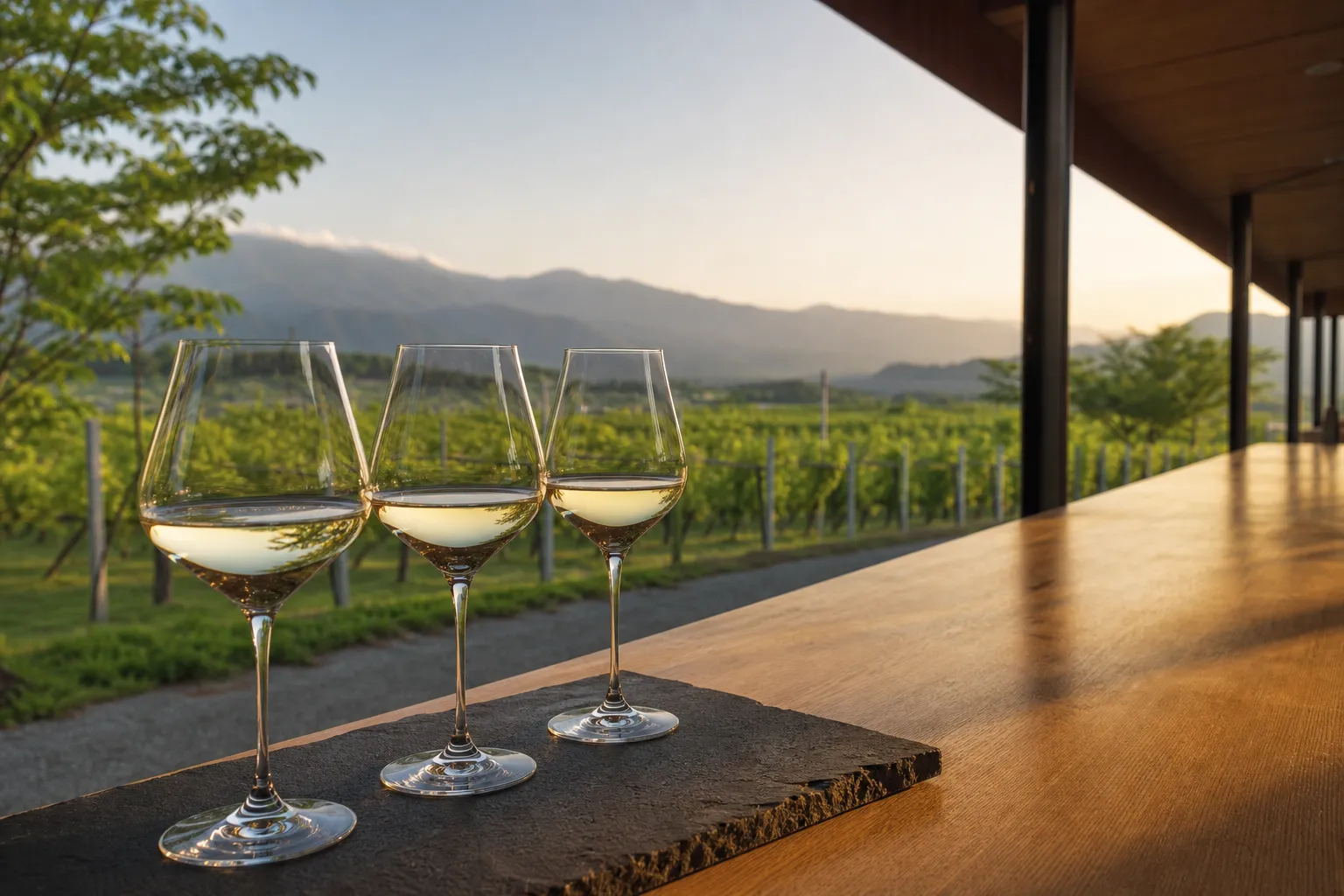
A heritage anchor with a museum, tasting counter, and shop on site.
Katsunuma: The Heritage Core Of Japanese Wine
Katsunuma is where the story becomes legible. You can feel the continuity between historic production and modern hospitality. It is not a theme park version of wine.
For travelers who want one anchor winery with museum-grade context, Château Mercian Katsunuma Winery is a natural starting point. The site includes a wine museum, a tasting counter, and a shop.
The museum matters. It gives you a vocabulary for what you are tasting later, especially if you plan to compare heritage producers with newer, design-forward estates.
Château Mercian Katsunuma Winery: What You’ll Find On Site
Château Mercian’s Katsunuma facility is well set up for visitors. It is also historically resonant: Kirin has noted that the Château Mercian Wine Museum is renovated from the oldest wooden winery in Japan.
Kirin also announced that permanent English tours at Katsunuma Winery began from June 2023. That can reduce friction for international guests who want direct, technical explanations.
Guests who want deeper context can explore the official winery information in advance, then come prepared with questions about Koshu vinification choices and house style.
How This Becomes A Shokunin Experience
Wine is agricultural. Yet the best winemakers in Yamanashi think like shokunin: repeating the same decisions across vintages, refining details most people never notice, and protecting the integrity of the finished bottle.
When we plan a wine day, we aim for conversations that feel like atelier visits, not retail tastings. Small groups. Unrushed pacing. Silence when it helps.
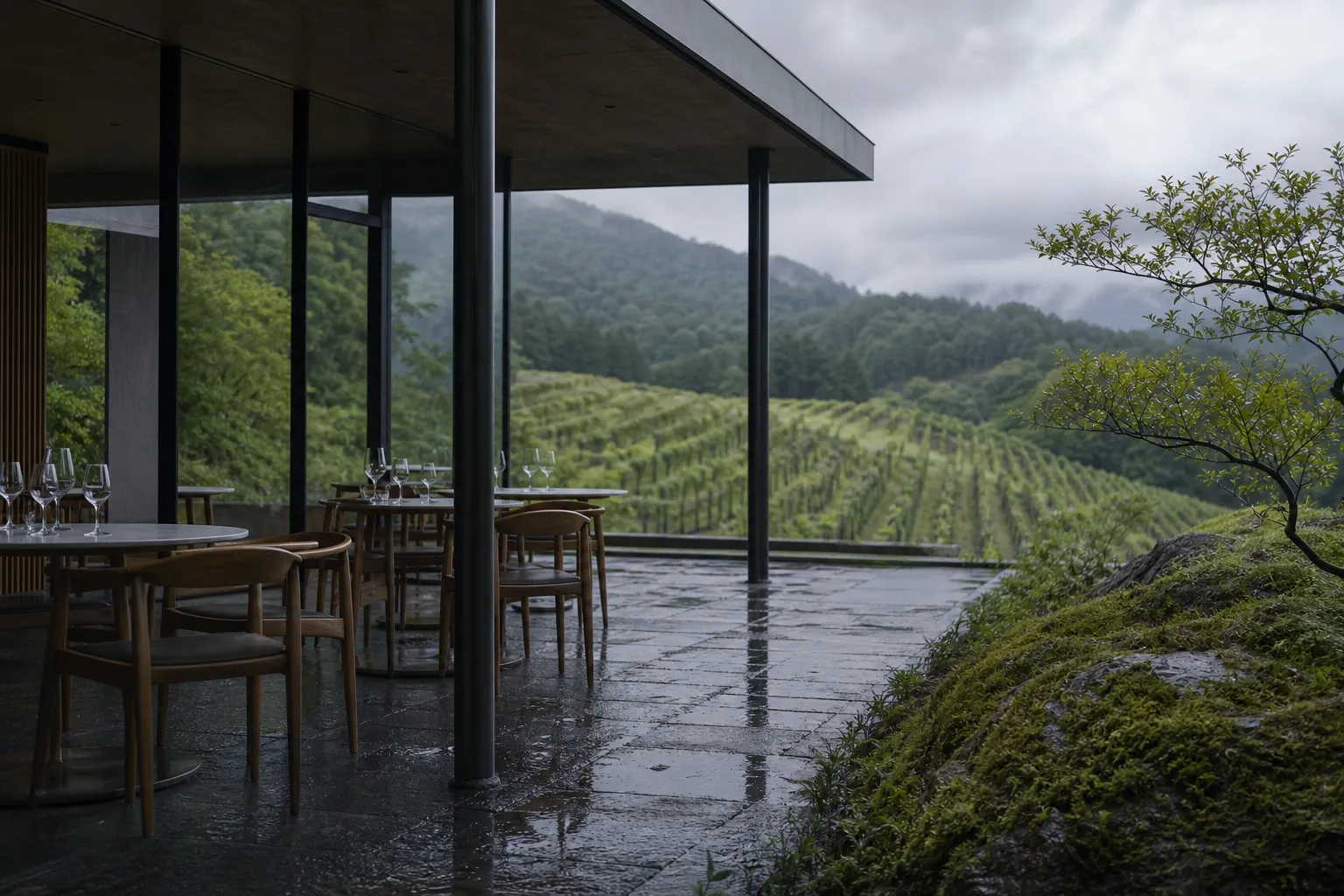
A contemporary counterpoint to Katsunuma’s heritage addresses.
98WINEs And The New Global Proof For Yamanashi
Some guests hesitate because Japanese wine still feels “unknown” internationally. Fair. That is changing quickly.
98WINEs in Yamanashi is listed by The World’s 50 Best Vineyards as Best Vineyard in Asia 2025. The same listing places it 20th on the global list, which Japan-based reporting has described as the highest placement yet for Japanese wine.
This is not a local award. It is third-party validation that many global collectors recognize instantly.
What A Modern Estate Adds To A Heritage Day
Heritage gives you narrative. Modern estates give you contrast: architecture, contemporary hosting, and a different approach to hospitality.
For a HNW traveler, that contrast is the pleasure. You can start with museum and history in Katsunuma, then pivot to a modern, internationally recognized address that proves where Japanese wine is heading.
Private Tastings And Master Winemakers: What “Exclusive” Can Mean Here
“Private tasting” is a phrase that gets abused online. We use it carefully.
In Yamanashi, exclusivity often looks like this: a quieter room, a guided flight with proper glassware, time to ask technical questions, and a host who can speak to vineyard decisions with authority. No crowd. No rushing.
And sometimes it means access by introduction. Hidden-Japan rules still apply, even in wine country.
How We Keep The Day Discreet
Discretion is not optional for our guests. It is the baseline.
Our team at Japan Royal Service designs travel days so you are not exposed to unnecessary visibility. That can include quiet arrival timing, private vehicle positioning, and a route that avoids the obvious “everyone goes here at 11:00” rhythm.
We also keep your identity protected. Always.

The simplest upgrade: door-to-door comfort without self-driving after tastings.
Luxury Logistics From Tokyo: Chauffeur Or Helicopter (And When Each Makes Sense)
Yamanashi is close enough for a chauffeur-driven day trip from Tokyo. That is often the most rational luxury: stable timing, no luggage stress, no public transfers, and no one in your party needing to drive after tastings.
For guests who want to compress time further, helicopter transfers are possible in Japan on appropriate routes and conditions, using licensed operators and approved helipads. Weather rules. Air-traffic rules too.
Either way, the goal is the same. Arrive composed.
Option A: Private Chauffeured Day Trip From Tokyo
This is the default for many HNW clients. It keeps the day flexible and calm, and it avoids the hard edges of rail transfers when you are dressed for a tasting room, not a platform.
- Best for: couples, small groups, families with a clear schedule
- Why it works: you control the pace; you can add viewpoints or a quiet café stop without stress
- Fleet fit at JRS: options range from executive vans to flagship comfort, depending on the day and party size
Option B: Helicopter Transfer From Tokyo (When Time Is The Real Constraint)
This is not about flash. It is about time geometry—especially if you want Yamanashi as a chapter inside a Tokyo-heavy itinerary, with afternoon meetings or a formal dinner back in the city.
- Best for: travelers who value speed and privacy, and who understand weather contingencies
- What to expect: strict baggage rules, ID requirements, and possible reroutes due to conditions
- How to proceed: guests interested in learning more may contact our concierge for tailored guidance
Key fact: Helicopter plans are always condition-dependent. We recommend building a schedule that still works gracefully if the day returns to road travel.
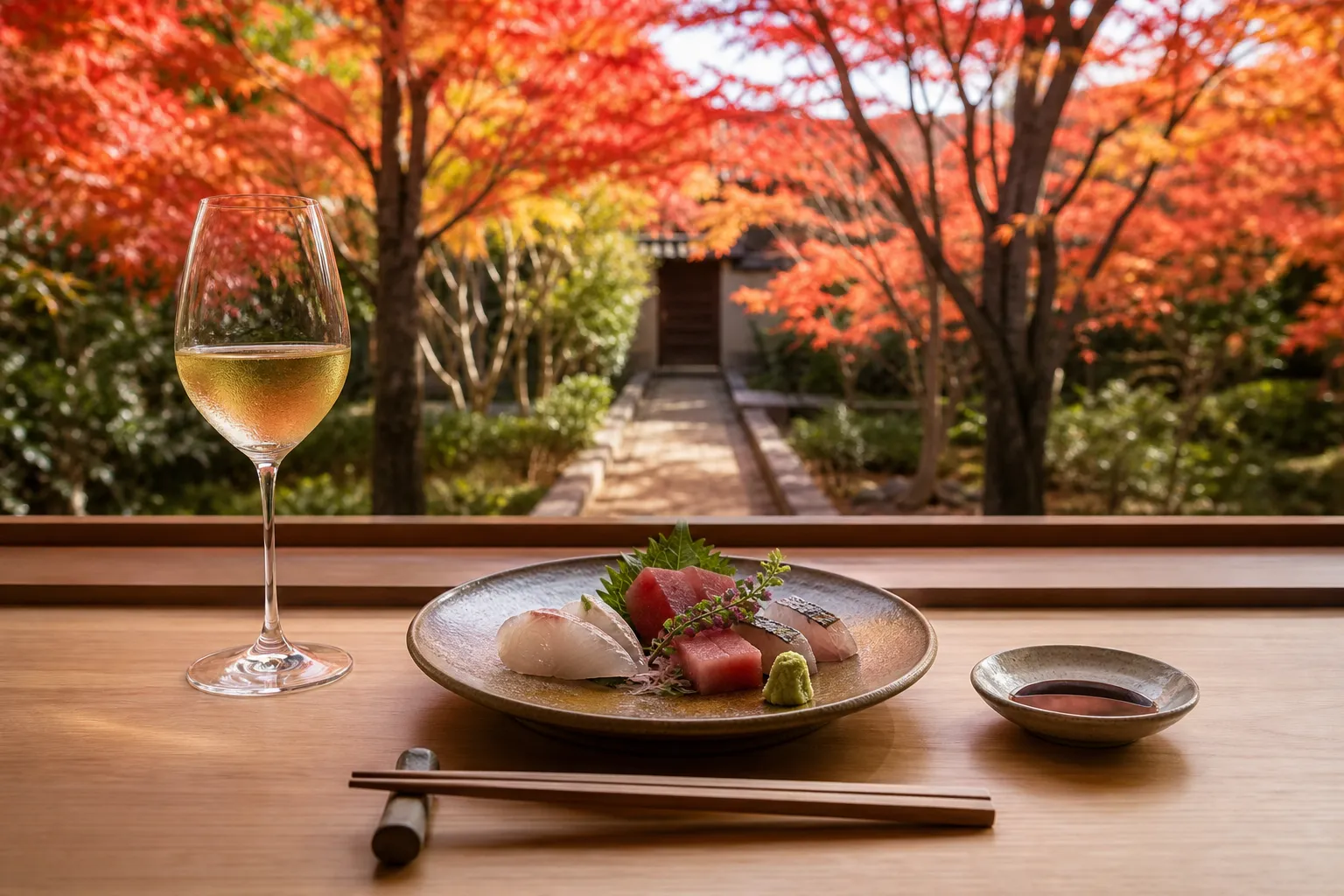
Koshu’s restraint shines when the food is equally precise.
Bespoke Culinary Pairings: Making Koshu Feel Inevitable At The Table
Great wine travel is not only tasting rooms. It is also the meal afterward, when the palate stops analyzing and starts enjoying.
Koshu is a natural companion to Japanese cooking because it respects subtlety. That makes pairing a craft exercise, not a stunt.
Our concierge team shapes the day so your lunch and tastings speak to each other. One clean arc.
Pairing Logic That Works With Koshu
- Raw seafood: choose a linear, stainless Koshu; keep soy and citrus balanced.
- Grilled fish: consider skin-contact Koshu for texture and gentle phenolics.
- Dashi-forward dishes: Koshu’s quiet minerality can echo the broth rather than competing with it.
Yamanashi’s Fruit Culture Adds Depth
Yamanashi is widely recognized for fruit. JNTO has highlighted the prefecture’s food culture and identifies it as Japan’s premier fruit-producing region.
That matters for a wine trip because fruit is not a side note here. It is part of local identity, and it can show up in desserts, seasonal gifts, and the overall rhythm of the countryside.
When To Go: 2026 Timing, Events, And The Calm Way To Enjoy Them
Yamanashi is not a single-season destination. Each period has a different tone, from crisp mountain air to late-summer vineyard energy.
If you want a 2026-specific hook, Yamanashi Prefecture publishes official information for the Japan Wine Competition 2026 (日本ワインコンクール2026). For many enthusiasts, that creates a natural moment to plan a tasting-focused journey.
Events can also bring crowds. We plan around that.
Katsunuma Grape Festival: What To Know About Access
The Katsunuma Grape Festival is one of the region’s most recognizable public events. The official Yamanashi tourism site notes access details, including that it is about a 40-minute walk or about a 5-minute taxi ride from Katsunuma Budokyo Station.
It can be fun. It can also be busy.
If your priority is privacy, we typically treat festival days as optional, not mandatory, and we adjust the itinerary to keep the day comfortable.
A Sample One-Day “Sommelier’s Choice” Flow (Built For HNW Time Reality)
This is a planning template, not a rigid product. It shows pacing that works.
We keep the day readable: one heritage anchor, one modern highlight, one meal with pairing intent, and room for breath. No frantic winery-hopping.
Quiet wins.
- Morning: Depart Tokyo by private chauffeured vehicle; arrive Katsunuma with time to settle.
- Late morning: Château Mercian Katsunuma Winery for museum context and structured tasting.
- Lunch: A reserved, calm dining plan focused on Koshu-friendly flavors and pacing.
- Afternoon: A modern estate visit such as 98WINEs for a contrast in style and global perspective.
- Return: Back to Tokyo before late evening; minimal friction, no self-driving.
How To Book: Wineries, Tours, And What You Can Confirm Publicly
Many wineries and tour providers publish their own visitor information, including tours and tastings, on official websites. Some also offer English-language tour options.
For example, Château Mercian Katsunuma Winery publishes details about its facilities (including the wine museum and tasting counter) on its official site. Public-facing tour information can change by season, staffing, or special dates.
When you are ready to plan at a luxury level—private timing, discreet routing, vehicle standards, and pairing-forward dining—contact our concierge team with your travel window, party size, and wine preferences. We will respond with tailored guidance and a proposed flow.
FAQ: Yamanashi Luxury Wine Travel
Is Yamanashi A Real Wine Destination For Experienced Collectors?
Yes, if you approach it correctly. 98WINEs’ recognition by The World’s 50 Best Vineyards helps answer credibility fast, and heritage in Katsunuma provides historical depth beyond a single tasting.
What Makes Koshu Worth Trying If I Prefer Burgundy Or Riesling?
Koshu can appeal to drinkers who value restraint, line, and food compatibility. It is not built for impact. It is built for harmony at the table.
Can I Do Yamanashi As A Day Trip From Tokyo Without Feeling Rushed?
Yes. With a well-paced plan, a day trip works smoothly, especially if you limit the day to a few high-quality stops and protect time for lunch and transition.
Do I Need To Drive In Yamanashi To Visit Wineries?
We do not recommend self-driving when tastings are part of the plan. A private chauffeured vehicle keeps the day safe, composed, and flexible.
Is The Katsunuma Grape Festival Easy To Reach By Train?
It is accessible, and the official tourism site notes it is roughly a 40-minute walk or a 5-minute taxi ride from Katsunuma Budokyo Station. Expect crowds, and plan accordingly if privacy matters.
Why Choose Japan Royal Service
Luxury wine travel in Yamanashi is not about collecting stops. It is about reading the region like an insider: pairing logic that respects Koshu, shokunin-level conversations where possible, and hidden-Japan pacing that keeps the day quiet even when the region is active.
Our team at Japan Royal Service builds plans around discretion first. Your identity stays protected, your time is treated seriously, and the route is designed to feel composed from the first departure to the final glass.
If you’re considering a premium Yamanashi wine day—or a longer Japan terroir journey—contact Japan Royal Service via japanroyalservice.com for a tailored proposal and private concierge guidance.