In this guide
- 01What “Northern Lights Of Japan” Really Means (And What It Doesn’t)
- 02Why Daisetsuzan Feels Different At Night
- 03Best Seasons For Daisetsuzan Stargazing (Two Luxury Paths)
- 04A Responsible “Night-Sky Circuit” In Hokkaido (Daisetsuzan As The Anchor)
- 05Private Helicopter Charters: What They Change (And What They Don’t)
- 06Elite Astrophotography Guidance: How To Make The Night Worth Keeping
- 07Discretion In The Wilderness: Privacy Is A Schedule, Not A Slogan
- 08What To Pack And How To Stay Comfortable (Without Overpacking)
- 09How To Plan This Trip Like A Luxury Traveler (Not A Lottery Ticket)
- 10FAQ: Daisetsuzan Stargazing And The “Northern Lights Of Japan”
- 11How To Book Key Components (Official Channels Only)
- 12Why Choose Japan Royal Service
You’ve done city skylines. You’ve done beach horizons. Now you want a sky that feels untouched—black, deep, and quiet enough that your thoughts stop competing with noise.
Daisetsuzan National Park in central Hokkaido offers that rare kind of night. Real dark, real cold, real distance. No stage set.
Our team at Japan Royal Service plans ultra-private journeys that treat the “Northern Lights of Japan” as a responsible idea: aurora can happen, but stargazing is the anchor. That distinction changes everything.
What “Northern Lights Of Japan” Really Means (And What It Doesn’t)
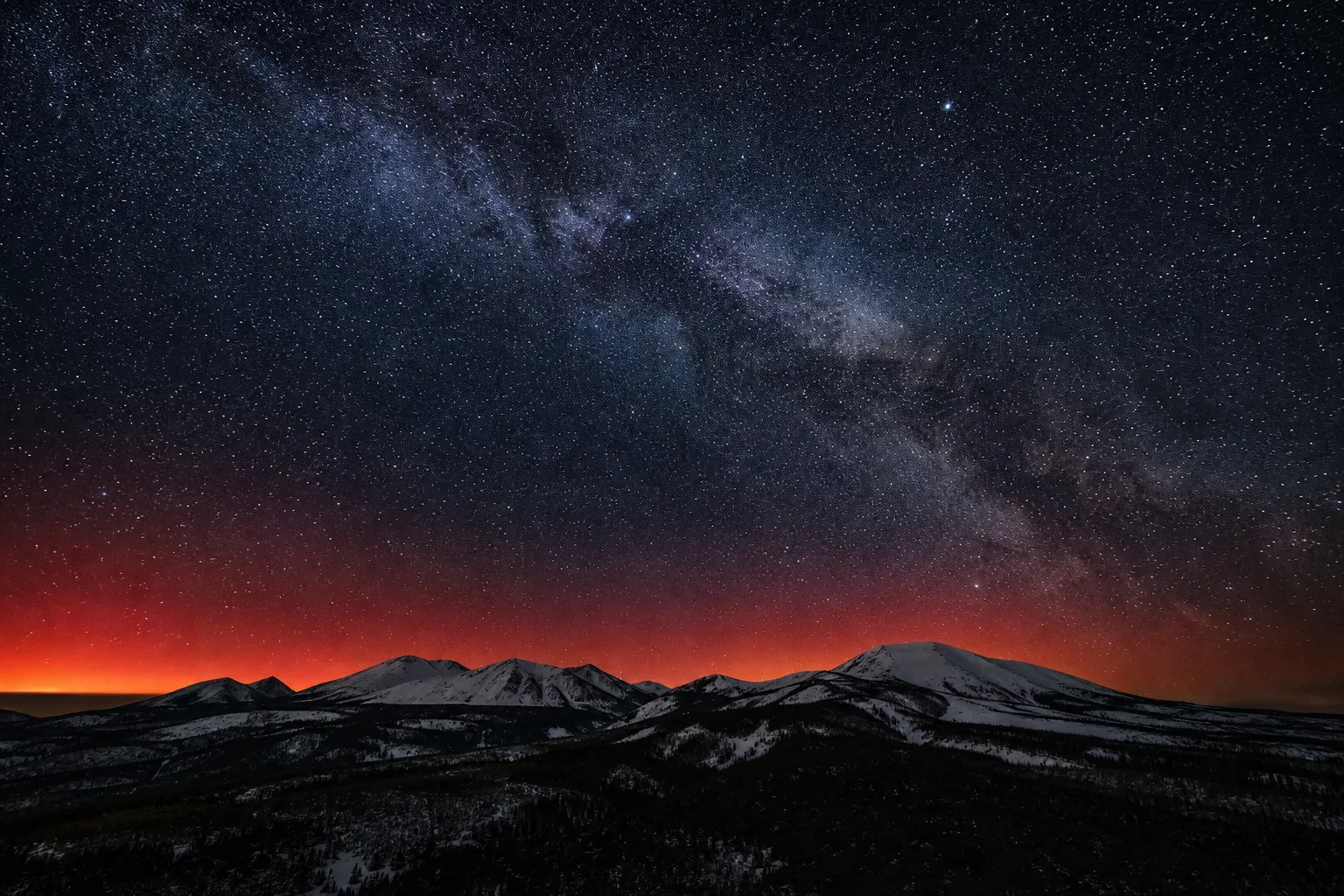
Aurora-like red glows can appear in Japan in rare space-weather conditions—never a guarantee, always a bonus.
Let’s be precise. Japan is not Norway.
True aurora sightings in Japan are possible, but rare, and tied to specific space-weather events. In 2026, research and reporting drew attention to faint red auroras observed from Hokkaido during unusual geomagnetic conditions—newsworthy because it is not routine.
So we plan the trip the way experienced travelers plan anything important: we build a strong base experience, then treat the unlikely bonus as a bonus. No pressure. No disappointment spiral.
Aurora Vs. Stargazing: The Practical Difference
Aurora is an event. Stargazing is a place.
For aurora-like red glows, you’re watching the sky for a short window triggered by solar activity. For stargazing, you’re selecting darkness, altitude, and calm air, then designing comfort around it—vehicle timing, warm layers, hot drinks, and a clean return to onsen.
Key fact: We never present aurora as guaranteed. We design a night-sky journey where stars are the constant, and rare aurora is a possibility.
Why Daisetsuzan Feels Different At Night
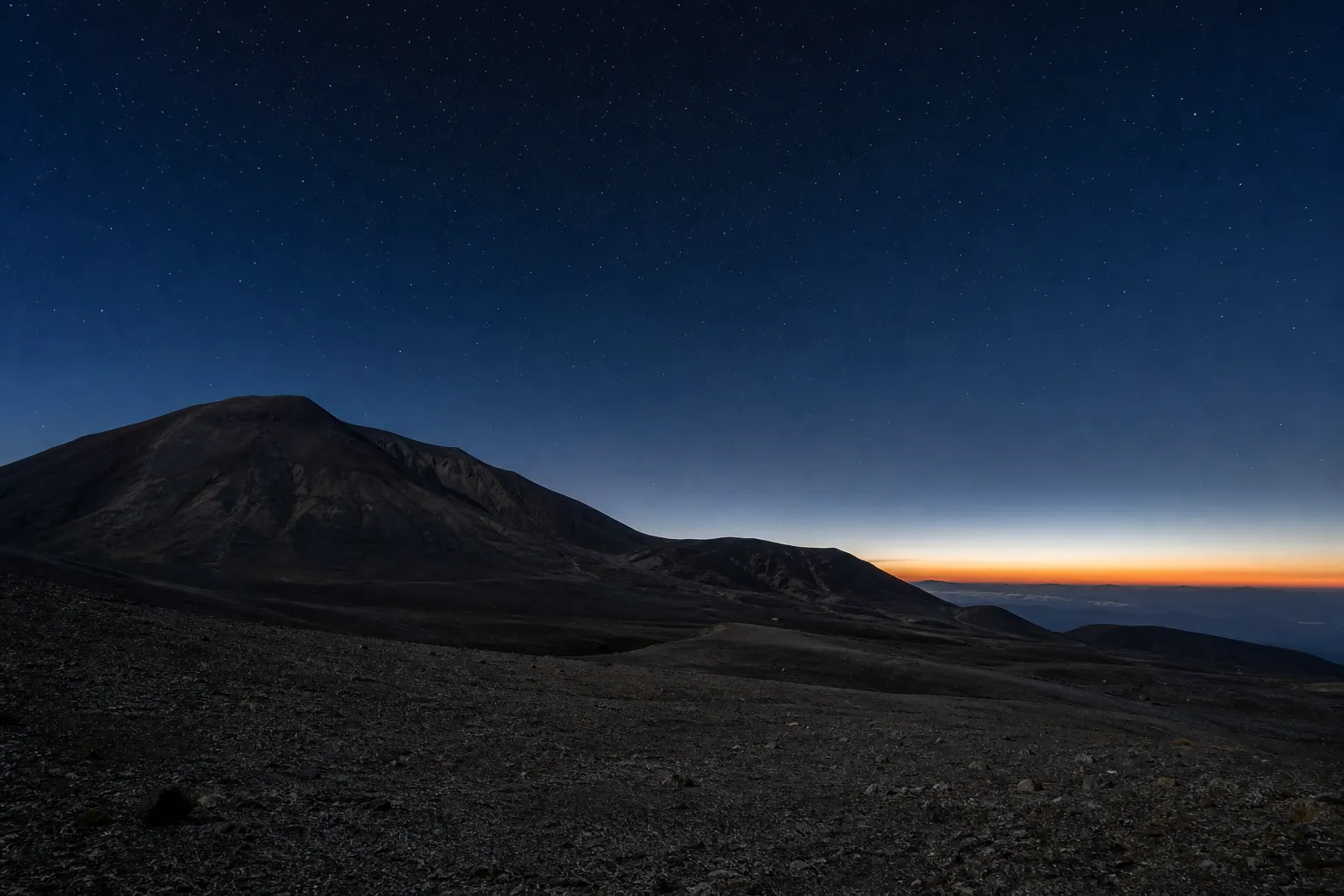
Japan’s largest national park by area gives darkness room to breathe.
Daisetsuzan National Park sits in central Hokkaido and is Japan’s largest national park by area. That scale matters.
It creates room for darkness. It creates room for silence. It creates the kind of distance where artificial light stops bleeding into the horizon and the sky feels close again.
The mood is wabi-sabi in its pure form: restraint, weather, a little hardness, and beauty that refuses to perform. One misstep and it becomes uncomfortable. That’s why planning matters.
Asahidake: A High-Altitude Start Without The Long Climb
Mount Asahidake rises to 2,291 meters, the highest peak in Hokkaido, and belongs to the Daisetsuzan volcanic group. Big presence.
When conditions fit, altitude helps. The Daisetsuzan Asahidake Ropeway connects Asahidake Onsen to Sugatami Station (around 1,600 m) in about 10 minutes, which is a rare gift if you’re designing an itinerary around light, cloud, and timing.
We use that ropeway fact carefully: it supports efficient daytime scouting for later night sessions, and it can reduce guesswork about what the weather is doing at elevation. It does not eliminate risk. Mountains still decide.
Best Seasons For Daisetsuzan Stargazing (Two Luxury Paths)
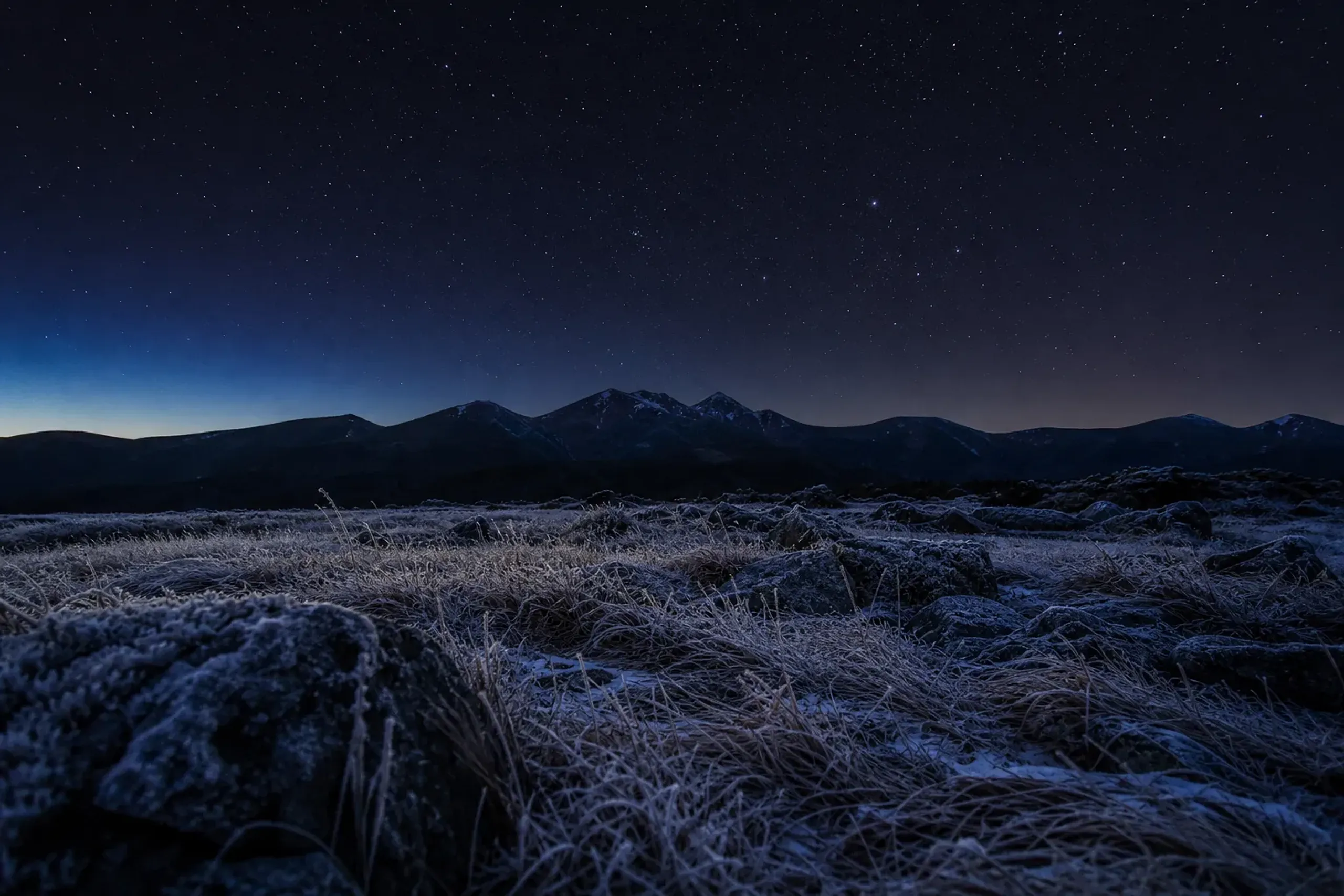
Choose your comfort strategy first; the sky follows.
Season choice is not a vibe question. It’s engineering.
In our experience, HNW travelers enjoy having two clearly different paths: a crisp, mobile autumn circuit or a deep-winter, long-night expedition. Each has its own comfort strategy, and each changes what “private” looks like on the ground.
Option A: Late September To October (Cold Air, Faster Itineraries)
You still have flexibility. That matters.
Nights turn sharp, but travel remains relatively straightforward, letting you link Daisetsuzan landscapes with other Hokkaido sky stops without building the schedule around winter constraints.
- Best for: couples, first-time Hokkaido visitors, travelers who want dark skies without an expedition feel
- Texture: early dinners, long coats, quiet roads, a nightcap back at the onsen base
- Photography advantage: less brutal cold for hands-on camera work
Option B: Deep Winter (Long Nights, Maximum Stillness)
Winter is the hard-edged version. It rewards the disciplined.
Daisetsuzan’s winter season is also tied to real, verifiable regional events: the Daisetsuzan council site highlights the Sounkyo Onsen Ice Fall Festival and Lake Shikaribetsu Kotan (Ice Village) as winter experiences connected to Daisetsuzan. Those can add structure to a trip that might otherwise feel too open-ended.
- Best for: travelers who want long nights, an onsen rhythm, and a sense of remote immersion
- Trade-off: you plan warmth like a system, not an afterthought
- Mindset: fewer stops, done properly, beats a packed checklist
A Responsible “Night-Sky Circuit” In Hokkaido (Daisetsuzan As The Anchor)
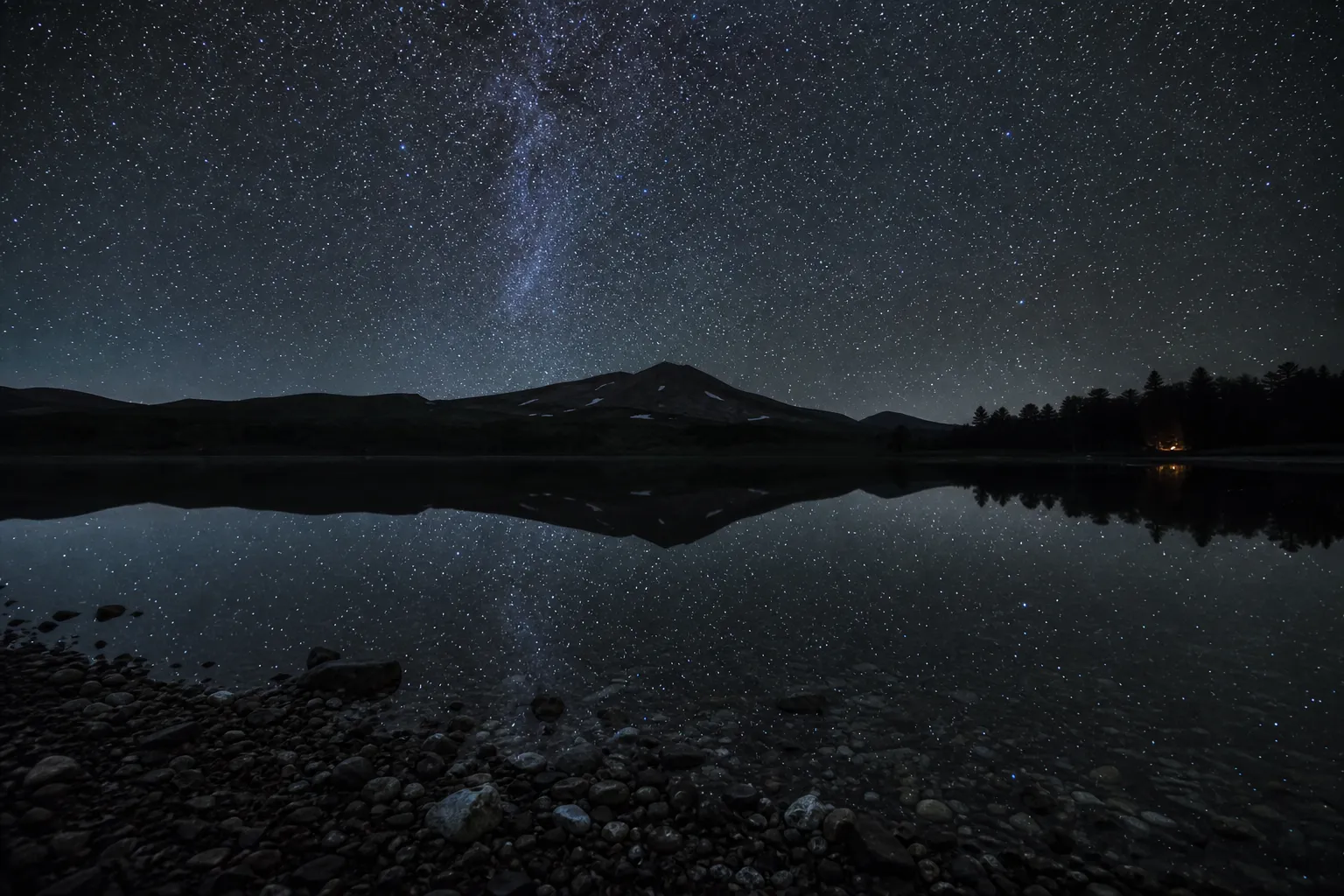
Lake Shikaribetsu is officially referenced for night activities—an elegant complement to Daisetsuzan’s scale.
A single night can be magical. Or it can be clouded out.
So we prefer a circuit. Not frantic. Just smart redundancy with taste—two or three night sessions, each with a different character, so your trip does not hinge on one forecast.
Daisetsuzan Base: Asahidake Onsen Area
You want a base that lets you recover. Full stop.
When you build a stargazing journey, the base is not a hotel decision alone. It’s where your body resets after cold exposure, where you review shots, where you step back into quiet rather than lobby noise.
Our concierge team designs routing so your nights end softly: private vehicle waiting, warm layers staged, and a return that feels discreet instead of public.
Lake Shikaribetsu Night Programs (Officially Listed)
Japan’s National Parks tourism site highlights a Lake Shikaribetsu night tour as a nighttime activity linked with Daisetsuzan. Real program. Real listing.
Lake Shikaribetsu Nature Center also lists a “Night Tour” activity, with a note on its English page that it is Japanese-language only. That matters for planning.
For guests who want context, not just a photo, this is where we guide you on what to expect and how to approach language support—privately, based on your party and comfort level.
Rikubetsu: Ginga No Mori Observatory For Serious Sky Interpretation
If you want astronomy with credibility, go to an observatory. Simple.
Hokkaido’s official tourism site notes that the Ginga no Mori Observatory area (Rikubetsu) is recognized by Japan’s Ministry of the Environment as one of the “Top 10 Starry Sky Towns,” and it also mentions that faint auroras may be seen there in rare conditions. That combination—serious stargazing plus an honest aurora footnote—is exactly the tone we respect.
We use Rikubetsu to give the trip a different flavor: telescopes, interpretation, and a more scientific frame for what you’re seeing. Less romance. More awe.
Private Helicopter Charters: What They Change (And What They Don’t)
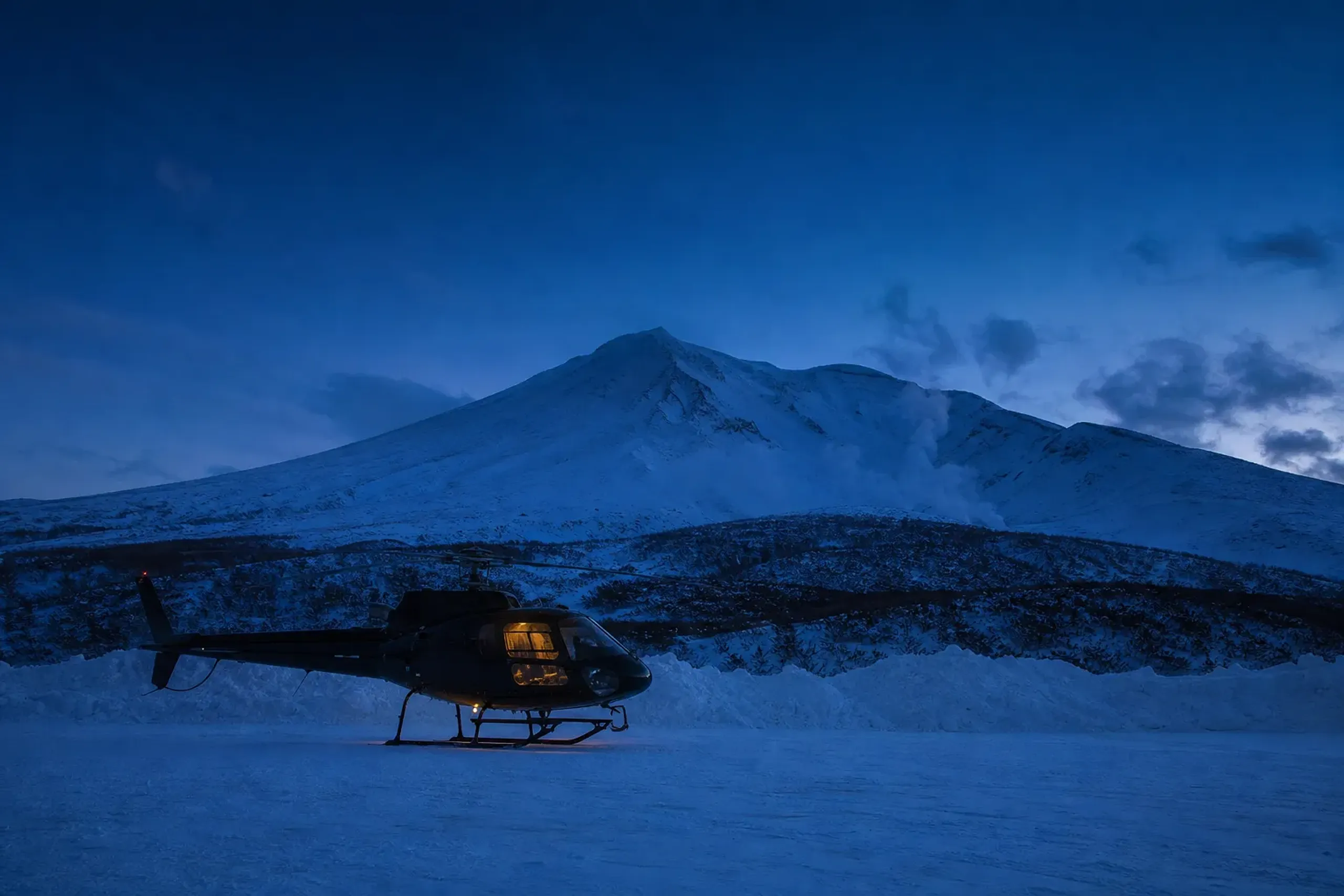
A helicopter can compress distance. It can also compress fatigue.
For certain guests—especially VHNW and UHNW—it may be the difference between “We should do this someday” and “We can do this next month.” It can also create the privacy you actually want: fewer public arrivals, fewer eyes, fewer accidental photos.
Still, aircraft use in Japan involves strict operational constraints, weather dependency, and permissions. A helicopter is not a magic wand. It is a tool, used sparingly.
Where Helicopters Fit Best In A Daisetsuzan Sky Journey
- Daylight reconnaissance: scouting cloud layers and landscape compositions before committing to a night plan
- Remote-feeling arrivals: reducing time spent in public transit nodes when discretion is the priority
- Time protection: turning a long road day into a calm day with room for a late-night session
Guests interested in learning what is feasible for their dates can contact our concierge team for tailored guidance. We discuss options privately, never as public promises.
Elite Astrophotography Guidance: How To Make The Night Worth Keeping
Many travelers return with a memory, then realize their photos look like nothing. Brutal feeling.
Astrophotography is not “point and shoot.” It’s exposure, stability, and timing, plus the patience to work in cold air while your breath turns into a fog bank in front of the lens.
When guests request it, our concierge team shapes the experience around proven needs: workable locations, a pacing plan, and a backup night so you’re not trying to force the sky to cooperate on a single attempt.
A Practical Baseline For Night-Sky Photos (Non-Technical, Useful)
- Tripod: non-negotiable
- Warmth strategy: thin glove liners under heavier gloves, so you can still operate camera controls
- Power: extra batteries kept warm close to the body
- Light discipline: avoid blasting white light; it ruins night vision fast
We keep the focus on your outcome: a calm night, a few strong frames, and a return to comfort without fuss.
Discretion In The Wilderness: Privacy Is A Schedule, Not A Slogan
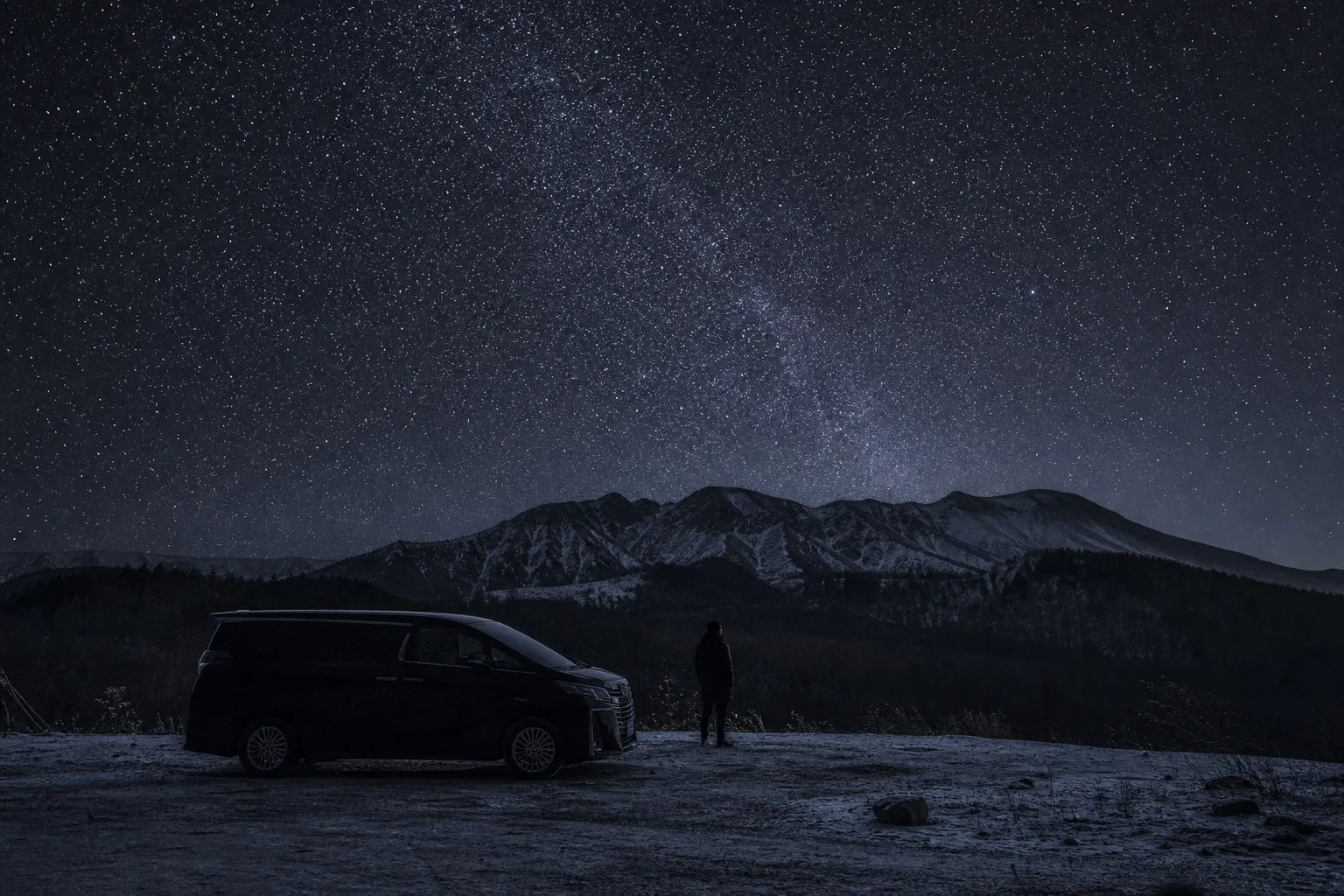
In the mountains, discretion is created by timing, lighting discipline, and calm logistics.
In cities, privacy is about entrances. In the mountains, it’s about timing.
Discretion means your route avoids predictable rush points. It means you aren’t standing around with gear under bright parking-lot lights while other travelers drift over to watch.
Our team at Japan Royal Service treats confidentiality as operational posture: minimal exposure, quiet arrivals, and itineraries that do not advertise what matters to you. No leaks. No chatter.
What Discretion Looks Like For HNW Travelers
- Vehicle-first logistics: door-to-door pacing with private chauffeurs, so you’re not juggling taxis at night
- Low-visibility timing: earlier dinners, later departures, fewer public bottlenecks
- Information control: itinerary details shared on a need-to-know basis
What To Pack And How To Stay Comfortable (Without Overpacking)
The simplest way to ruin stargazing is to get cold too early. Happens fast.
Comfort is not vanity in Hokkaido. It’s safety, patience, and the ability to stay still long enough for your eyes—and your camera—to work.
Bespoke Logistics Requirements For A High-Comfort Night Session
- Layering plan: base, mid, shell, plus a warm hat that covers ears
- Footwear: insulated boots with room for warm socks (tight boots kill circulation)
- Thermal breaks: scheduled warm-up windows, not “push through” bravado
- Food and drink: simple, warm, easy—nothing that becomes a messy distraction in the cold
- Night etiquette: quiet voices, controlled lighting, leave-no-trace behavior
How To Plan This Trip Like A Luxury Traveler (Not A Lottery Ticket)
Most “aurora in Japan” itineraries fail because they bet everything on one headline. Big mistake.
We treat Daisetsuzan stargazing as a crafted journey: multiple nights, varied locations, and daytime experiences that feel complete even if the sky turns stubborn.
This is where hidden-Japan thinking matters. You don’t come to central Hokkaido to copy a popular route; you come to disappear into scale, then return with something private.
A Sample 4-Night Shape (Adaptable, Not A Template)
We keep this high-level on purpose. Your final plan depends on your dates, mobility, and tolerance for cold.
- Night 1: arrive, settle into an onsen rhythm, early sleep
- Night 2: first stargazing session close to base—low friction, low stress
- Night 3: a second session with a different sky character (observatory-style interpretation if desired)
- Night 4: final attempt reserved for the clearest forecast window; celebrate properly afterward
FAQ: Daisetsuzan Stargazing And The “Northern Lights Of Japan”
Can You Really See The Northern Lights In Japan?
In rare conditions, aurora-like phenomena have been observed from Hokkaido, including faint red auroras reported in 2024–2025 events and discussed in 2026 research coverage. It is not a nightly, seasonal guarantee.
Is Daisetsuzan Good For Stargazing?
Daisetsuzan’s scale and central Hokkaido location support dark-sky travel, and Mount Asahidake’s ropeway provides efficient access to high elevation for daytime reconnaissance. Stargazing outcomes still depend on weather and moonlight.
How Do I Use The Asahidake Ropeway For Trip Planning?
The Daisetsuzan Asahidake Ropeway runs from the Asahidake Onsen area to Sugatami Station in about 10 minutes. Check the official ropeway website for current operations and seasonal details before you go.
Are There Official Night Tours Near Daisetsuzan?
Yes. Japan’s National Parks tourism site highlights a Lake Shikaribetsu night tour, and Lake Shikaribetsu Nature Center lists a Night Tour (with language notes on its English page). Availability and operating details can change, so confirm close to travel.
Where Can I Go For A More Scientific Astronomy Experience?
Rikubetsu’s Ginga no Mori Observatory area is recognized as one of Japan’s “Top 10 Starry Sky Towns” by the Ministry of the Environment, per Hokkaido’s official tourism site. It’s a credible place for telescope-based viewing and interpretation.
Do You Guarantee Aurora Sightings Or Clear Skies?
No. Neither can be guaranteed. Our role is to design a plan with strong odds of meaningful nights—plus backup options—while keeping expectations honest.
How To Book Key Components (Official Channels Only)
For anything third-party—ropeway operations, observatory programs, or local night tours—use the official websites and official ticketing channels published by the operators. Rules and schedules can shift.
We suggest confirming operational calendars close to your dates, especially in mountain regions where weather can disrupt plans. Keep your itinerary flexible.
For questions about routing, timing, comfort strategy, and how to combine these official components into a discreet luxury journey, contact our concierge team.
Why Choose Japan Royal Service
Many companies sell Hokkaido as scenery. Our team at Japan Royal Service plans it as a private atmosphere—one built from discretion, hidden-Japan access patterns, and an imperial-class standard of etiquette in how each day is paced.
For HNW travelers, that means a trip that is genuinely attainable without feeling packaged: private chauffeured touring in vehicles such as the Lexus LM 500, thoughtful timing that avoids public friction, and a night-sky circuit designed around your comfort. For VHNW and UHNW guests, it means tighter privacy choreography, quieter arrivals, and planning that stays off the public stage.
We also bring shokunin sensibility to the itinerary itself. Small adjustments, made early, change the entire feeling of the journey.
For private coordination, reach our team privately via WhatsApp or LINE, or at https://japanroyalservice.com/contact.