In this guide
- 01Why Koya-san Belongs On A Serious Itinerary
- 02What "Temple Sages" Actually Means
- 03Choosing Your Shukubo By Experience Profile
- 04Koya-san Calendar Intelligence For 2026
- 05The Sacred Corridor: Koya-san And Kumano As One Journey
- 06Getting To The Mountain In Comfort
- 07Pairing Koya-san With A Wider 2026 Trip
- 08Common Questions About A Koya-san Temple Stay
- 09Why Choose Japan Royal Service
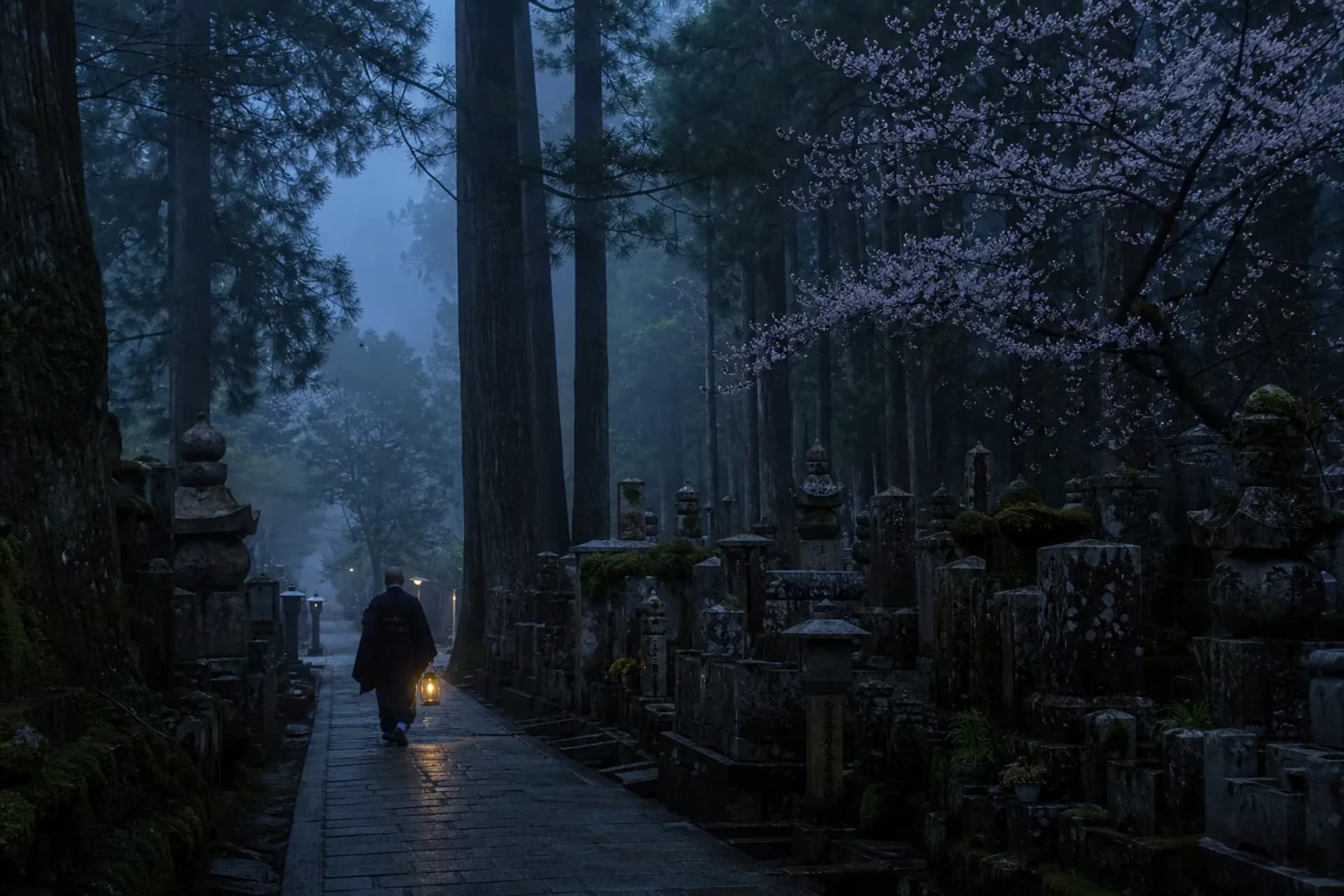
There is a moment on Koya-san that catches even the most travelled guest off guard. The cedars close overhead. The road folds back on itself, climbing nearly 900 metres into the Kii mountains. Then the air changes — colder, resinous, still. You have left modern Japan behind without quite noticing the door close.
This is Mount Koya. A monastic settlement founded in the early 9th century, today one of three sacred sites within the UNESCO World Heritage property Sacred Sites and Pilgrimage Routes in the Kii Mountain Range. More than fifty working temples here offer shukubo — temple lodging — and a handful of them keep a register of senior monks whose days are still shaped by chanting, fire, and silence.
For the discerning traveller, Koya-san is not a checkbox. It is a recalibration. Our team at Japan Royal Service has spent years learning how to bring HNW guests into this world without flattening it into a photo opportunity. This guide explains what is real, what is rare, and how to plan a 2026 visit that honours both your time and the mountain.
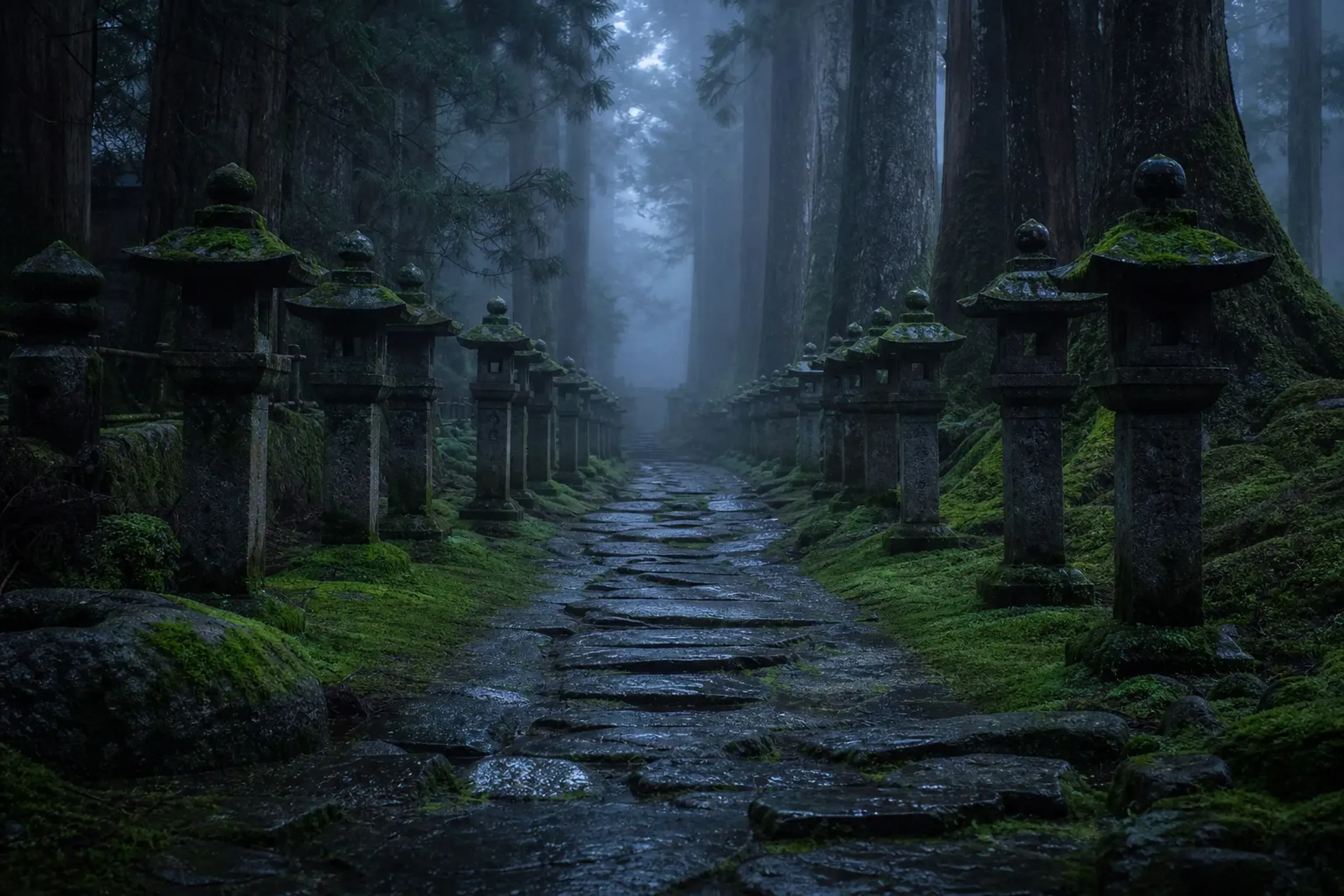
The lantern-lined approach to Okunoin, where the modern world quietly falls away.
Why Koya-san Belongs On A Serious Itinerary
Most luxury travel in Japan trades on motion — the next restaurant, the next garden, the next reservation. Koya-san asks the opposite of you. It asks you to stop.
The mountain is the cradle of Shingon esoteric Buddhism, introduced to Japan from China by the monk Kukai (Kobo Daishi). Twelve centuries later, the tradition is not a museum piece. Monks still rise before dawn for gongyo, the morning service. Pilgrims still walk the stone-lantern path through Okunoin to Kukai's mausoleum, where, by belief, he remains in eternal meditation.
What makes Koya-san extraordinary for a sophisticated guest is the texture of restraint. This is wabi-sabi made literal. Moss on a stone foundation. A single scroll in an alcove. The hush of a temple courtyard at dusk, broken only by a struck bell. No gold leaf shouts at you. The luxury here is depth, not display.
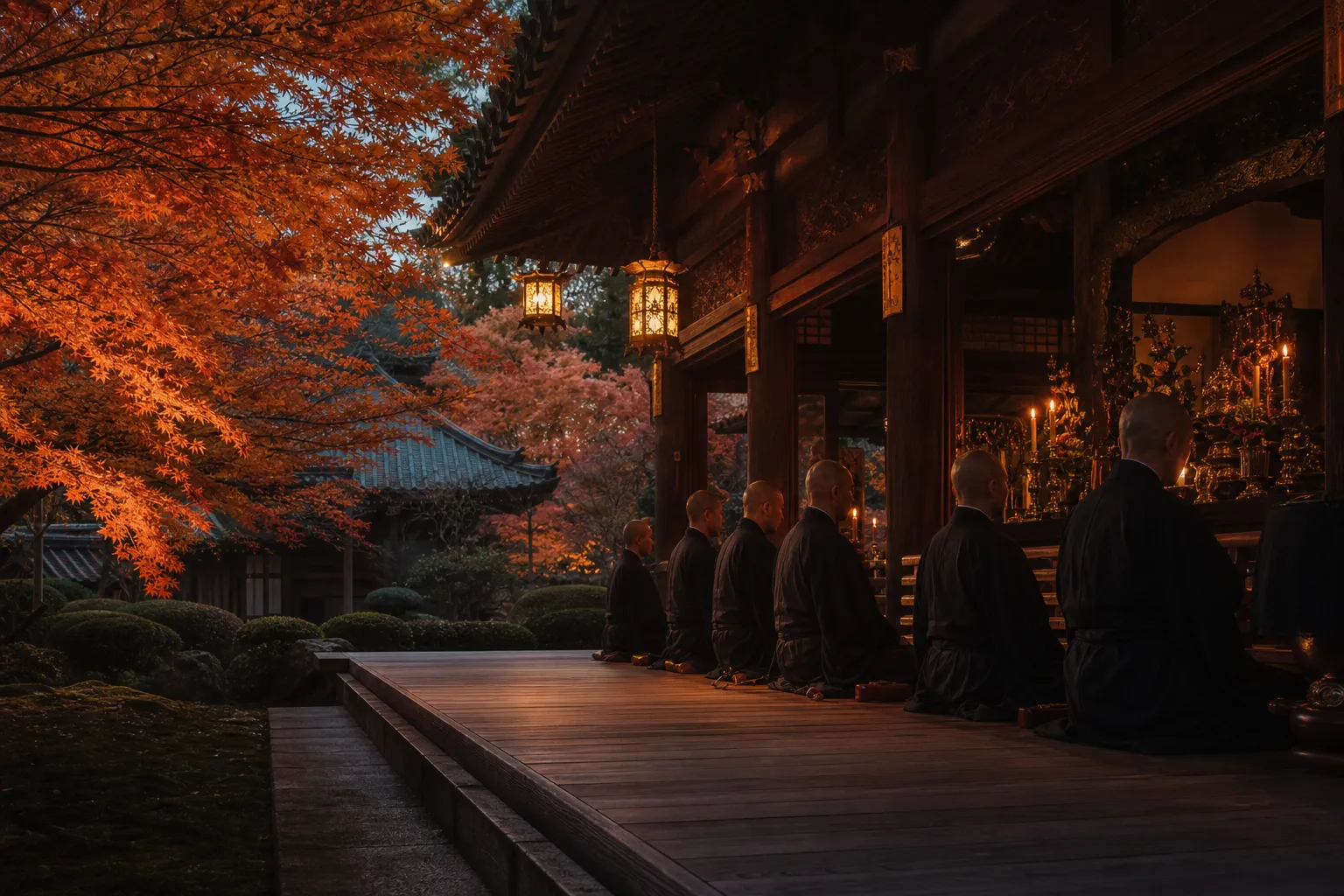
Dawn gongyo: layered sutra-chanting in a cold hall, twelve centuries unbroken.
What "Temple Sages" Actually Means
We use the phrase carefully. A genuine encounter with a senior monk is not a performance scheduled for tourists. It is an introduction — earned, brokered, and treated with respect on both sides.
Several Koya-san temples publicly offer experiences that bring guests into real practice. These are verifiable and bookable through proper channels:
- Gongyo (morning chanting): Most shukubo invite guests to observe or join the dawn service. The sound of layered sutra-chanting in a cold hall is something recordings never capture.
- Ajikan meditation: A form of esoteric visualisation taught at certain temples, including Eko-in, which publicly offers it to guests.
- The Goma fire ritual: A dramatic Shingon ceremony in which cedar tablets are burned to symbolise the destruction of earthly desire. Eko-in is well known for hosting it.
- Shojin ryori: Buddhist vegetarian cuisine, explained by Eko-in as a craft handed down with Koya-san's own history — built on principles of five cooking methods, five seasonings, and five colours.
The shokunin spirit runs through all of it. A shojin ryori meal is not "vegetarian food." It is a discipline. Sesame tofu pounded by hand. Mountain vegetables dressed with restraint. Each plate composed so that nothing is wasted and nothing is wanting.
Key fact: Real access to senior monks comes through relationship and introduction, not transaction. Any operator promising "private audiences" as a packaged product should be treated with healthy scepticism. Our role is to listen, advise, and connect you with the right temple — never to manufacture intimacy that the tradition does not offer.
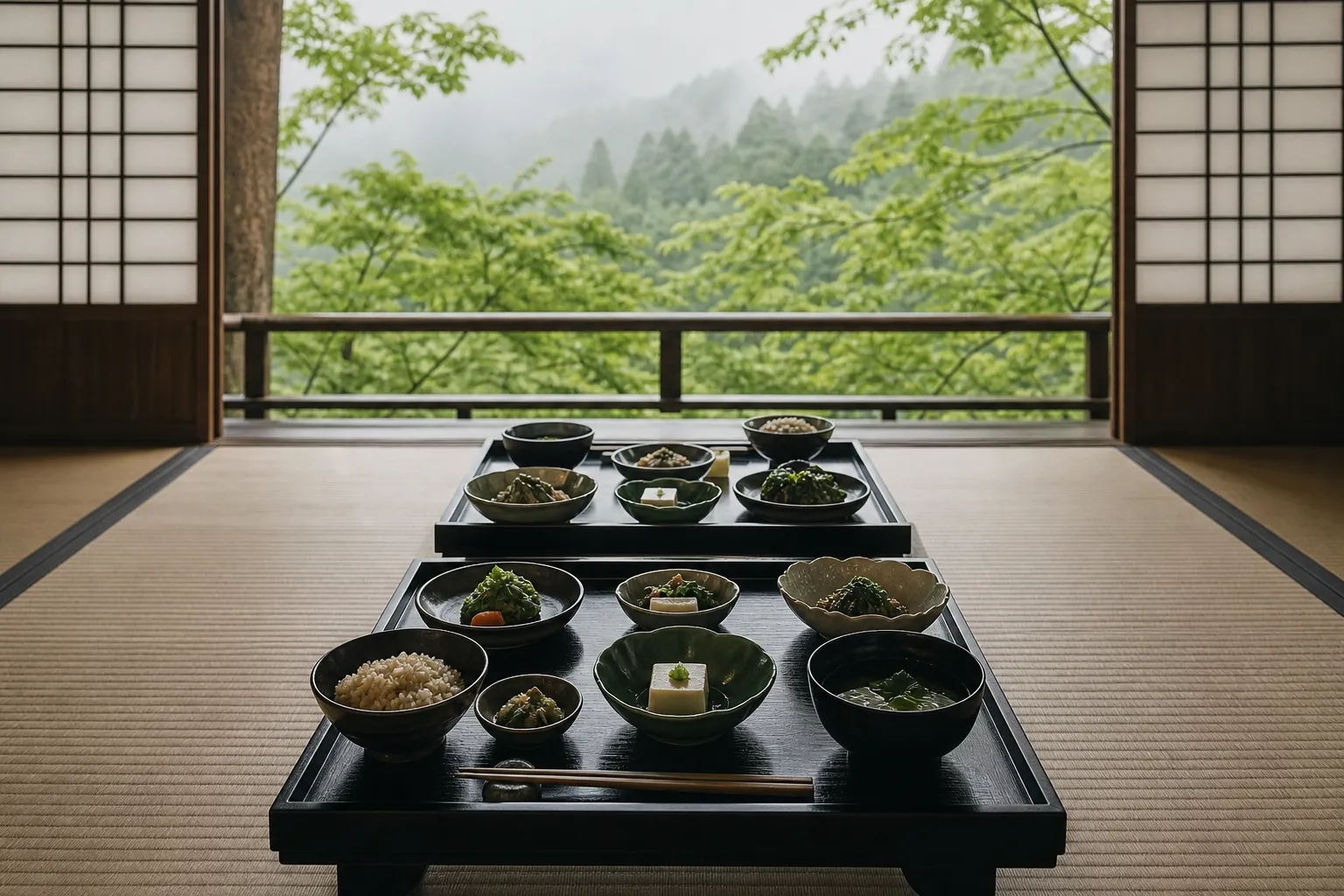
Shojin ryori: a discipline of five colours and five seasonings, not merely a meal.
Choosing Your Shukubo By Experience Profile
The common mistake is to ask "which temple is best." Wrong question. The better question is: which temple suits you?
The Koyasan Shukubo Association operates an official English-language reservation site and has launched a "request reservation" service, where its secretariat listens to a guest's needs and suggests suitable lodgings. That is the trustworthy baseline. Where our concierge adds value is in the vetting that comes after — matching temperament to temple.
Consider these variables before committing:
Ritual Intensity
Some guests want full immersion: Goma fire, Ajikan, dawn chanting, a guided Okunoin night walk. Others want quiet and a single meaningful ceremony. Be honest about which you are. A temple built for deep practice can feel demanding to a guest expecting a gentle retreat.
Comfort And Facilities
Shukubo are working temples, not hotels. Many feature shared bathing, tatami sleeping, and early curfews. Standards vary widely between temples — some have renovated rooms with private facilities, others keep a more austere register. This matters. We set expectations precisely so there are no surprises at 9pm in a cold corridor.
Language And Pacing
English support differs temple to temple. So does flexibility around meal times and the Okunoin evening walk, which is best done after dark when the lanterns glow and the crowds have thinned. If a guest wants that walk, curfew timing becomes a real planning constraint — the kind of detail that quietly makes or breaks a stay.
Koya-san Calendar Intelligence For 2026
Timing on a sacred mountain is everything. Festivals draw crowds and impose traffic restrictions. Halls close for annual rites. A poorly timed visit can mean staring at a roped-off precinct. Here is the verified 2026 picture worth planning around.
| 2026 Date | Event | Planning Note |
|---|---|---|
| June 15, 2026 | Aoba Matsuri | Celebrates Kobo Daishi's birth; includes a parade along the main street. Expect traffic restrictions and crowds. |
| Aug 20–22, 2026 | Koyasan Conference 2026 | Cultural programming on the mountain; lodging tightens around these dates. Book far ahead or route around. |
| Throughout 2026 | Kongobu-ji annual rites & viewing notices | Certain halls close periodically for ceremonies. We track official notices to avoid disappointment. |
This is where a concierge earns its keep. Aoba Matsuri can be a highlight or a headache depending on whether you wanted the festival or the quiet. The August conference dates compress already-limited shukubo inventory. And official viewing restrictions, posted by Kongobu-ji through the year, can quietly close a hall you travelled to see. In our experience, the difference between a flawless visit and a frustrating one is simply knowing the calendar before you commit.
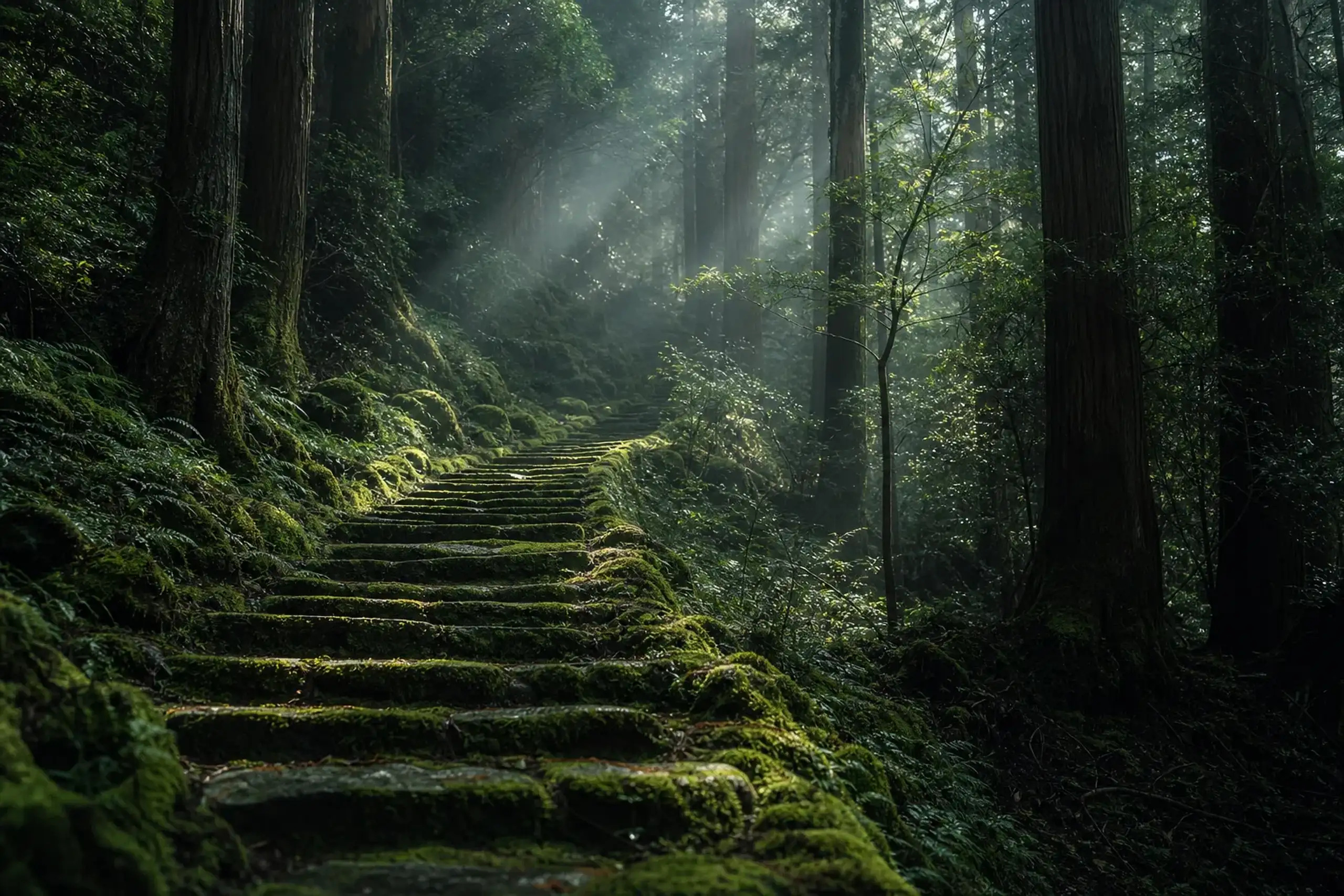
The UNESCO pilgrimage routes that thread Koya-san toward Kumano.
The Sacred Corridor: Koya-san And Kumano As One Journey
Here is the angle most guides miss. Koya-san is one node in a far larger spiritual landscape. The same UNESCO property links it, by ancient pilgrimage routes, to the Kumano sacred sites and on toward the old capitals of Nara and Kyoto.
For 2026, this corridor became markedly easier to travel. Ryujin Bus has published a Koyasan and Kumano Access Bus service for the year, creating an organised transit link between the two regions. That single fact unlocks an itinerary that feels like a true pilgrimage rather than two separate day trips.
Picture the arc. Two nights of shukubo on Koya-san — chanting, fire ritual, the Okunoin walk. Then a descent through the Kii mountains toward Kumano, where the great shrines sit among ancient cedar and waterfall. The narrative carries you the whole way. One thread, two worlds.
The logistics are where comfort meets authenticity. Public transit through these mountains is slow and infrequent. Our chauffeured fleet — the Lexus LM 500 or a Mercedes V-Class for couples and small parties — can run a private parallel route, carrying luggage so you walk the meaningful stretches unburdened. The pilgrimage stays real. The transfers stay effortless.
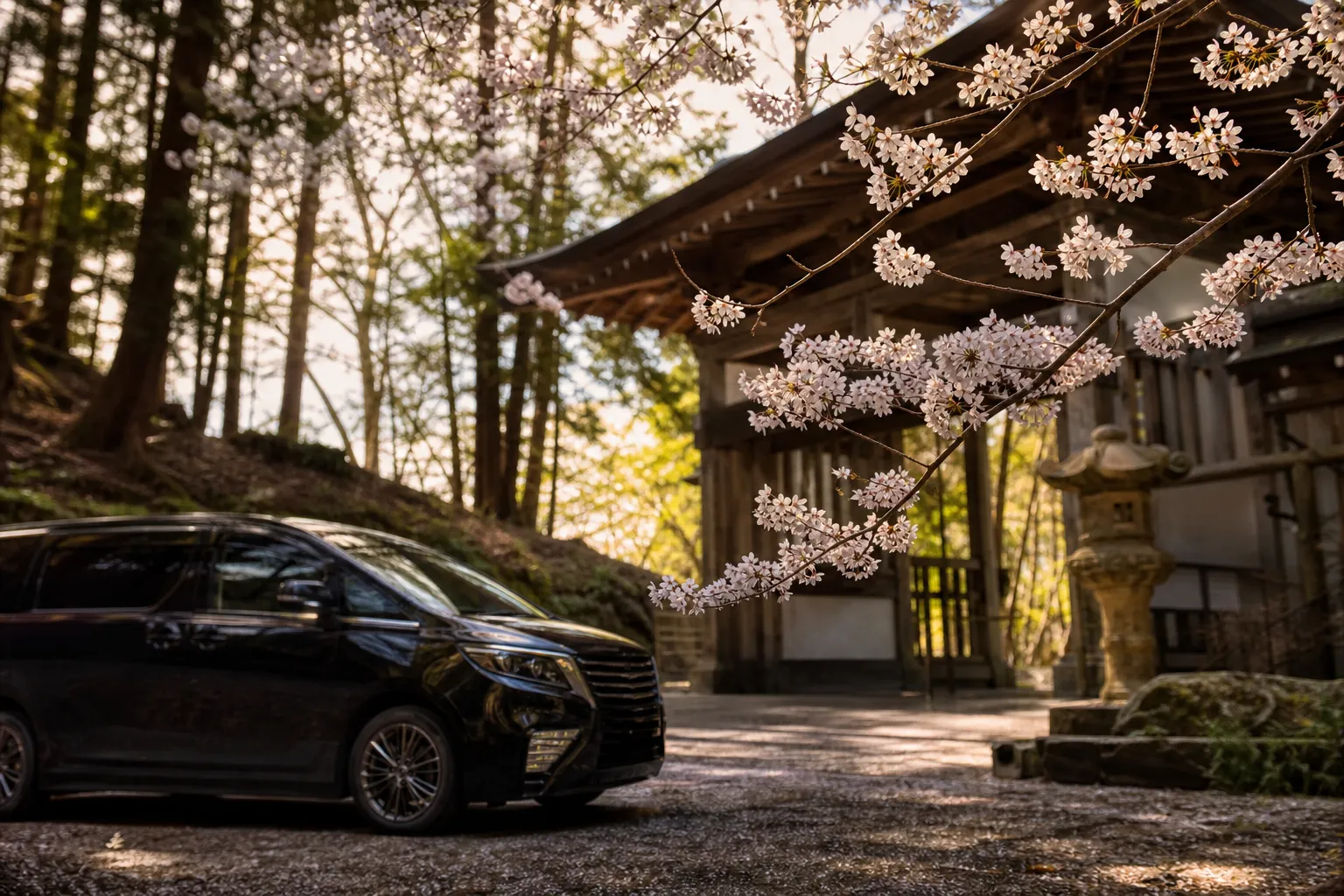
A private chauffeured ascent turns the climb itself into part of the pilgrimage.
Getting To The Mountain In Comfort
Koya-san sits roughly two hours south of Osaka. The classic approach is a train to Gokurakubashi and the cable car up the mountainside — atmospheric, but slow with luggage and tight on schedule.
Our guests usually prefer a private chauffeured ascent from Kansai International Airport or central Osaka, with the road winding up through forest to the temple gate. For UHNW travellers facing tight windows, helicopter transfer into the region is feasible at the apex of the spectrum, dramatically shortening the journey from Osaka or Kyoto. Most HNW guests, though, find the road itself part of the pilgrimage — the slow climb that lets the city fall away.
A practical note our coordinators always raise: the mountain is high and the evenings are cold, even in summer. Temple corridors are unheated. Pack a warm layer regardless of season, and dress modestly out of respect for an active religious community. Small courtesies. They matter here.
Pairing Koya-san With A Wider 2026 Trip
Koya-san rewards being framed by contrast. A few nights of monastic stillness lands deeper when bracketed by Japan's other registers of luxury — and 2026 offers fresh addresses to build around.
Capella Kyoto opened in March 2026 in the Miyagawa-cho district, designed by Kengo Kuma, carrying Kyoto's "quiet and deep" design language. It makes a refined base before or after the mountain. In Kansai, Four Seasons Hotel Osaka, open since 2024, anchors a comfortable city stay for arrivals through KIX. For onsen recovery, new high-end properties near Mt. Fuji and Hakone are opening across 2025 and 2026.
The shape we often suggest for HNW guests: arrive Osaka or Kyoto, two nights of urban polish, two nights of shukubo on Koya-san, then onsen quiet to close. City, mountain, water. Each phase makes the others sharper.
Common Questions About A Koya-san Temple Stay
Can I actually meet a senior monk?
You can genuinely participate in monk-led practice — morning chanting, the Goma fire ritual at temples that offer it, and meditation instruction. A private personal audience is a matter of introduction and relationship, never a guaranteed product. We advise honestly on what is real.
How far ahead should I book for 2026?
Several months, and earlier still around the August conference dates and the June 15 Aoba Matsuri. Shukubo inventory is genuinely limited, and the best rooms at the most sought-after temples move quickly. The Koyasan Shukubo Association's official request service is the proper booking pathway.
Is the food really only vegetarian?
Yes. Shojin ryori is fully plant-based, prepared according to Buddhist principle. Far from a limitation, it is one of the highlights — Eko-in describes its cuisine as a craft carried down with the mountain's own history. Even committed carnivores tend to remember it fondly.
How many nights do I need?
One night gives you a taste — an evening, a dawn service, a morning departure. Two nights let the place settle into you and open the option of an unhurried Okunoin night walk. For a Koya-san-and-Kumano corridor, plan three to four nights total.
Why Choose Japan Royal Service
Koya-san cannot be bought. It can only be entered well. That distinction is the whole of our work.
Our team at Japan Royal Service does not package the sacred or pretend to sell access that no one can sell. Instead, we listen, we vet, and we connect you with the right temple, the right timing, and the right pacing for who you are. We track the official 2026 notices so a closed hall never blindsides you. We arrange private chauffeured transfers through the Kii mountains so the pilgrimage stays real while the logistics stay invisible. And we hold your itinerary in complete confidence — discretion is the one promise we never relax.
This is the Japan that search engines cannot fully show you: a working monastic mountain, entered with respect, on terms that honour both the tradition and your time. Our concierge speaks English, Japanese, Thai, and Filipino, and works quietly in the background so you can simply be present.
To begin a private conversation about a 2026 Koya-san journey, reach our concierge through the contact form or via WhatsApp. We will listen first, then design around you.