In this guide
- 01The 1,300-Year Dance of Fire and Water
- 02The Goryo-Ukai Distinction: Imperial Heritage on the Water
- 03Timing the Season: Shun and the Sweetfish Catch
- 04Gifu City vs. Seki City (Oze Ukai): Choosing Your Atmosphere
- 05Designing a Private Charter Experience
- 06Beyond the Boat: Shokunin and Pre-Boarding Encounters
- 07How to Book Your Ukai Viewing
- 08Why Choose Japan Royal Service
The 1,300-Year Dance of Fire and Water
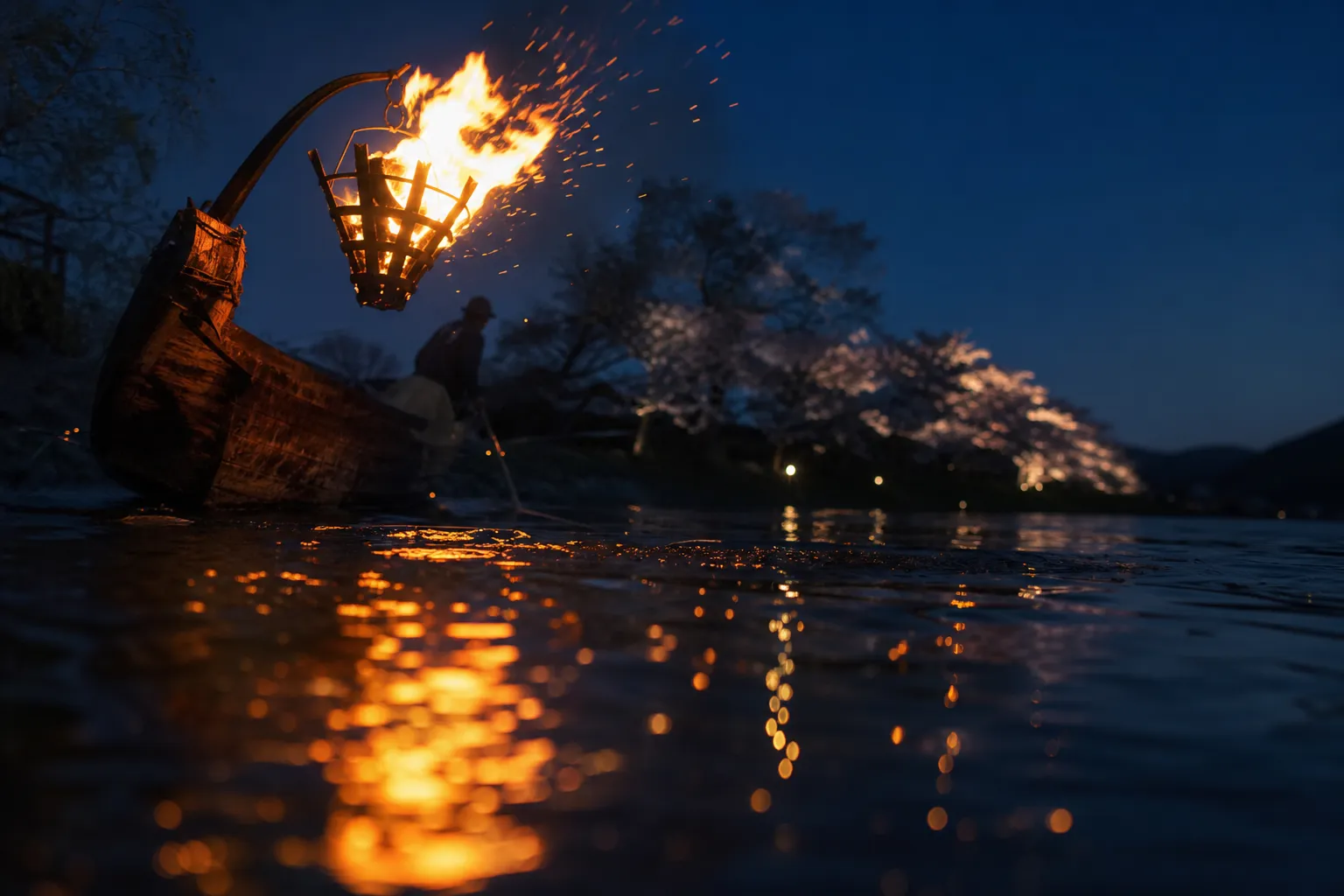
Every May, as evening twilight deepens over central Japan, the Nagara River transforms into a theater of shadow and flame. Pine torches crackle in iron baskets. Wooden boats slice through dark currents. For over 1,300 years, this waterway has hosted an unbroken lineage of cormorant fishing. Most travelers observe the spectacle from crowded riverbanks or packed tourist vessels. We approach it differently.
At Japan Royal Service, our team designs quiet, private access to this profound cultural legacy. True luxury lies in context. Watching a master command a flock of birds by firelight is fascinating. Understanding the imperial heritage, the precise seasonal timing, and the artisan culture surrounding it changes the experience entirely. This guide outlines how to navigate the upcoming 2026 season with watchfulness and refinement.
The Goryo-Ukai Distinction: Imperial Heritage on the Water
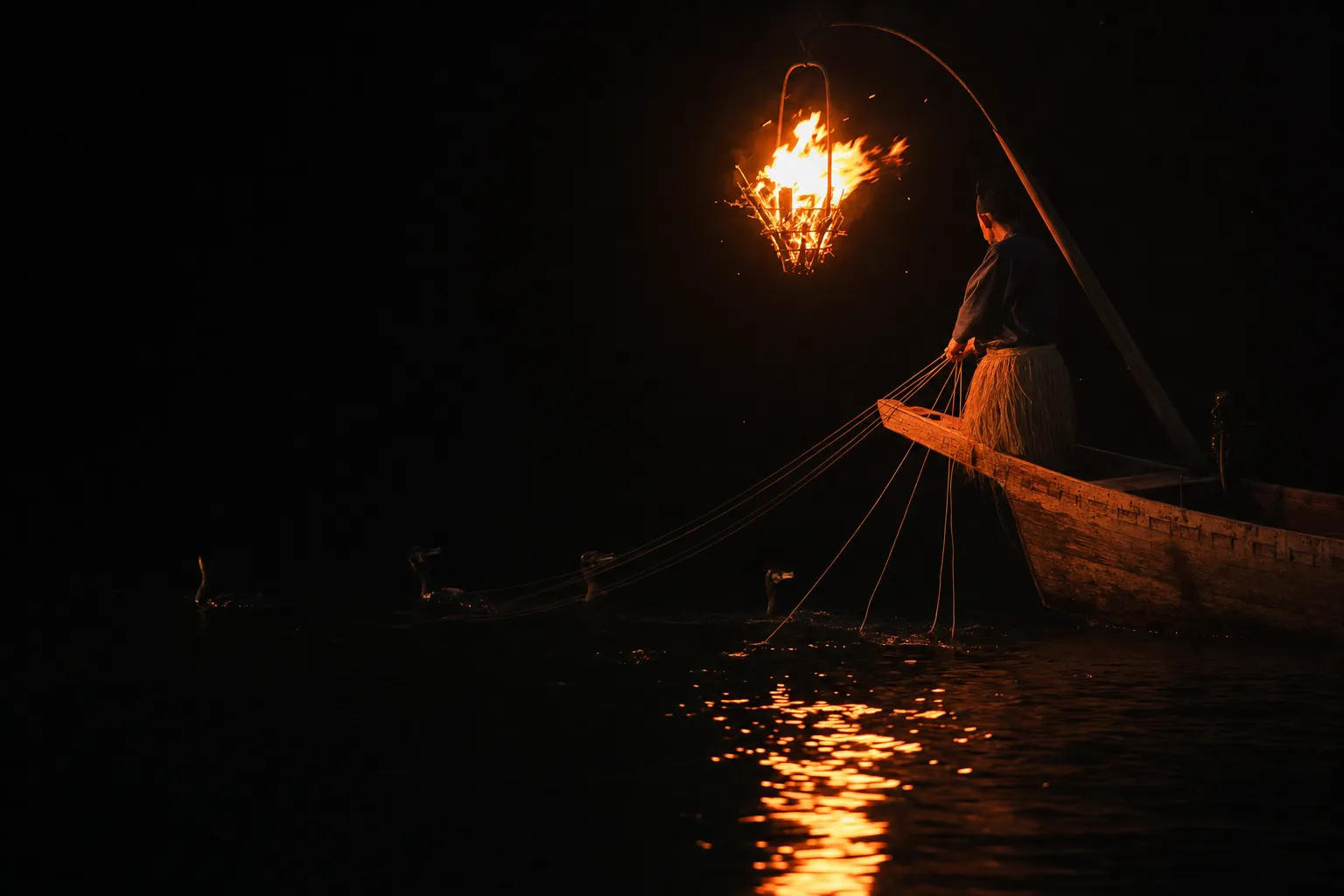
The imperial masters operate under the direct protection of the Imperial Household Agency.
Not all cormorant fishing holds the same pedigree. Across Japan, several rivers practice ukai, but the Nagara River maintains a singular status. It is the only location designated as Goryo-ukai—Imperial Cormorant Fishing. The fishing grounds, known as Goryoba, are formally protected by the Imperial Household Agency.
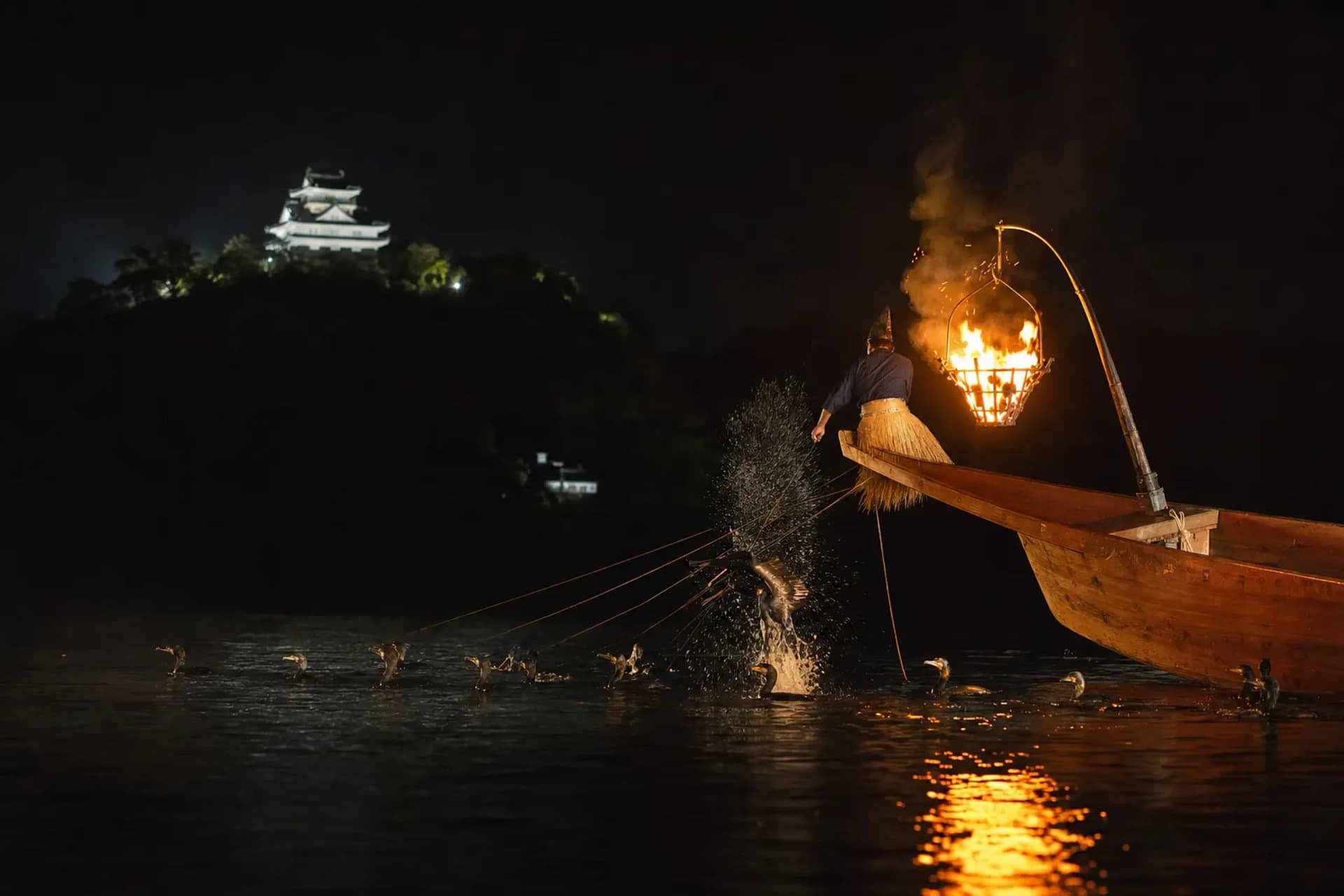
This alters the atmosphere. The masters, or usho, hold hereditary titles recognized by the state. They do not perform for cameras; they execute a mandated historical preservation. When the masters don their traditional dark cotton tunics and woven straw skirts, they are upholding a ritual that once supplied the imperial court with daily catches.
Accessing this history requires nuance. When our clients arrive at the river, they do so with a bilingual cultural host who can interpret the subtle commands spoken between the master and his birds. You hear the sharp taps on the wooden hull. You understand why the fire must burn at a specific intensity. Context matters.
Timing the Season: Shun and the Sweetfish Catch
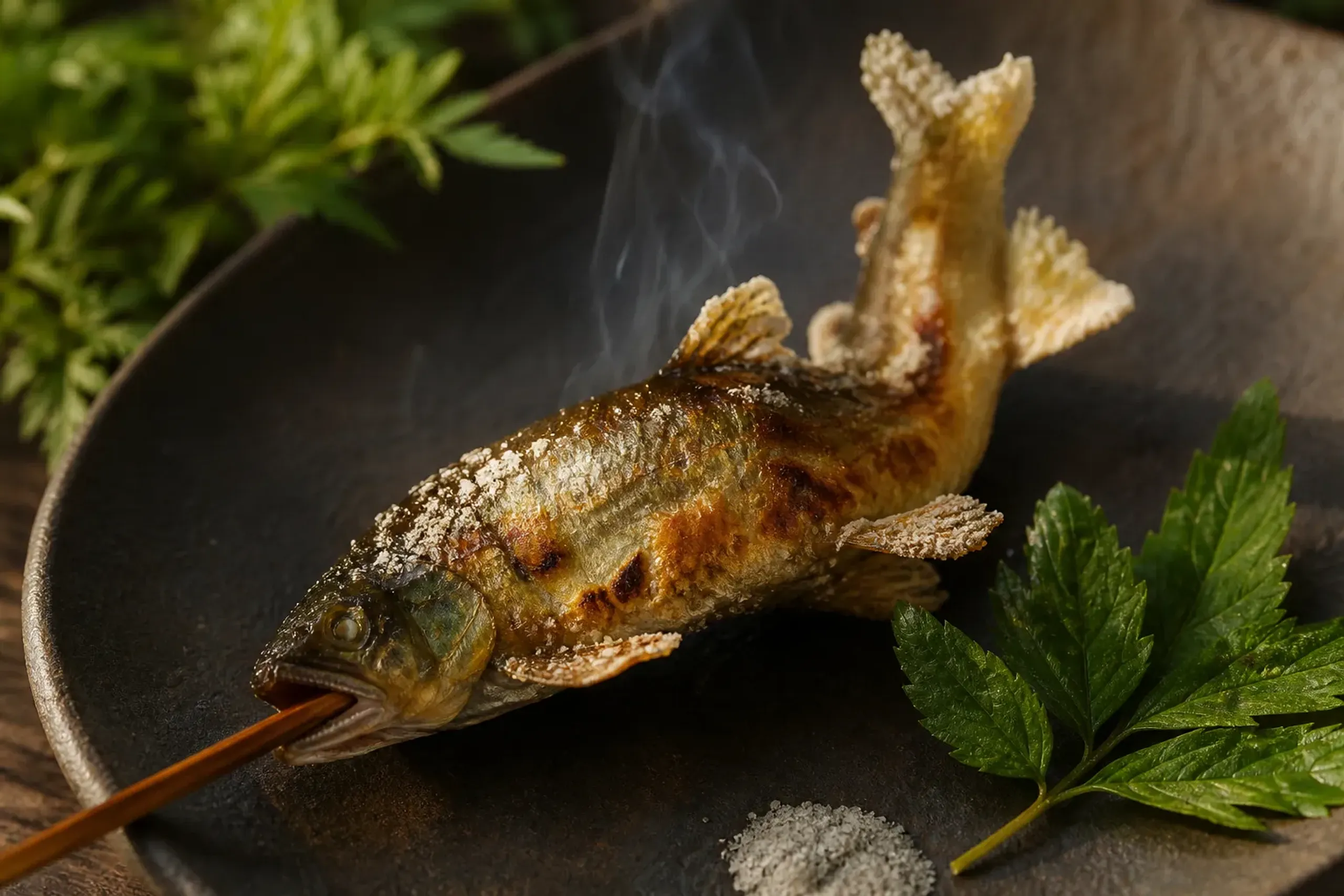
Ayu sweetfish is the culinary cornerstone of the Nagara River evening.
The 2026 ukai season officially opens on May 11 and concludes on October 15. Yet, simply booking a date within this window ignores a vital culinary philosophy: shun, the Japanese sensitivity to peak seasonality. The entire ukai tradition centers on capturing ayu, a freshwater sweetfish celebrated for a subtle, melon-like aroma.
In 2015, the Food and Agriculture Organization (FAO) of the UN designated the "Ayu of the Nagara River System" as a Globally Important Agricultural Heritage System. The fish is a cultural cornerstone. In early summer, the ayu are small and tender. By September, they mature, carrying roe and demanding different culinary preparation. Knowing precisely when to travel depends heavily on your gastronomic preferences.
A true Nagara River evening involves consuming this catch. Instead of standard bento boxes served on public boats, private viewing involves elaborate ayu dining prepared by master chefs from nearby historic ryokans. Charcoal-grilled sweetfish with a dash of local salt, paired with cold Gifu sake, elevates the river excursion into a memorable dining event.
Gifu City vs. Seki City (Oze Ukai): Choosing Your Atmosphere
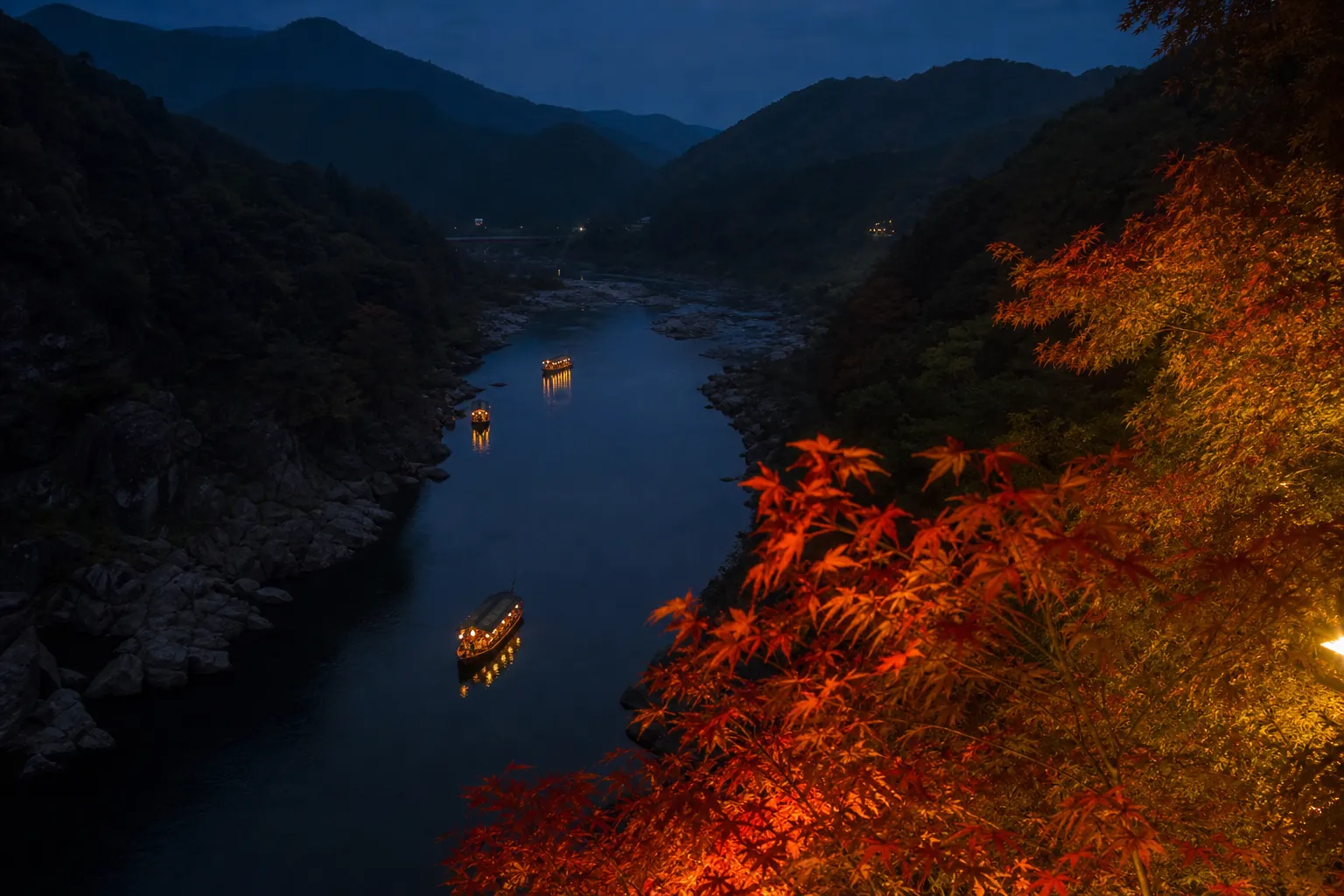
Choosing between Gifu City and Seki City alters the mood of your viewing experience.
The Nagara River flows through multiple municipalities, offering two distinct venues for ukai. Choosing the right location dictates the mood of your evening.
Option A: Gifu City Nagara River Ukai
This is the grand stage. Located near the base of Mount Kinka with Gifu Castle illuminated above, Gifu City hosts the most recognized iteration of the tradition. Six masters operate here simultaneously. The climax of the night, known as sougarami, involves all six boats advancing together in a sweeping line of fire and sound. It is dramatic, historic, and undeniably busy.
Option B: Oze Ukai (Seki City)
Further upriver lies Seki City, home to the Oze Ukai. This is the quiet alternative. The river valley is darker, the crowds thinner. With fewer viewing boats crowding the water, the focus shifts tightly to the single master and the dark silhouette of the surrounding mountains. It appeals deeply to travelers seeking privacy and an unhurried, almost melancholic beauty.
| Consideration | Gifu City Ukai | Oze Ukai (Seki City) |
|---|---|---|
| Atmosphere | Grand, theatrical, historic center | Intimate, quiet, nature-focused |
| Visual Climax | Six boats sailing abreast (Sougarami) | Close-quarters viewing, deep shadows |
| Privacy Level | Moderate (many surrounding vessels) | High (sparse river traffic) |
Designing a Private Charter Experience
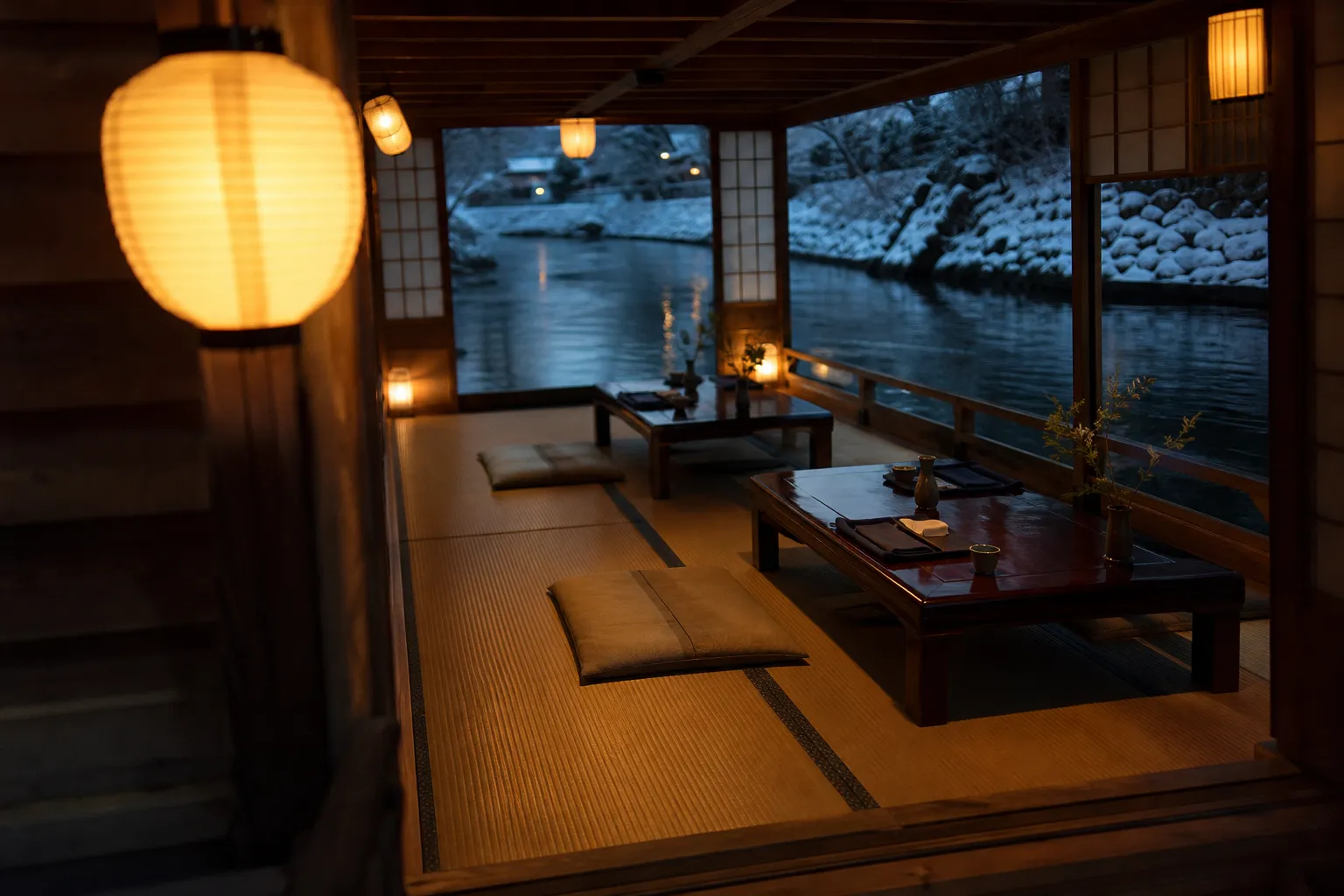
A private yakatabune charter ensures absolute discretion and undisturbed dining.
Standard observation involves shared yakatabune (roofed viewing boats) equipped with public address systems and crowded benches. For our clientele, this compromises the solemnity of the event. We strongly advocate for private boat charters.
A chartered yakatabune changes the trajectory of the night. You board via a discreet dock. The interior becomes a floating dining room, customized with tatami seating or low chairs. Complete discretion forms the bedrock of our logistics; no unfamiliar faces share your space. For an added layer of regional culture, local geisha can be arranged to board the vessel, performing classical shamisen music as you drift downstream awaiting the fishing masters.
Key fact: Ukai is entirely dependent on river conditions. Heavy rains or high water levels will force sudden cancellations, sometimes on the day of the event. A well-designed itinerary always includes a robust secondary plan, such as a private ryokan dining experience with the local masters off-water.
Beyond the Boat: Shokunin and Pre-Boarding Encounters
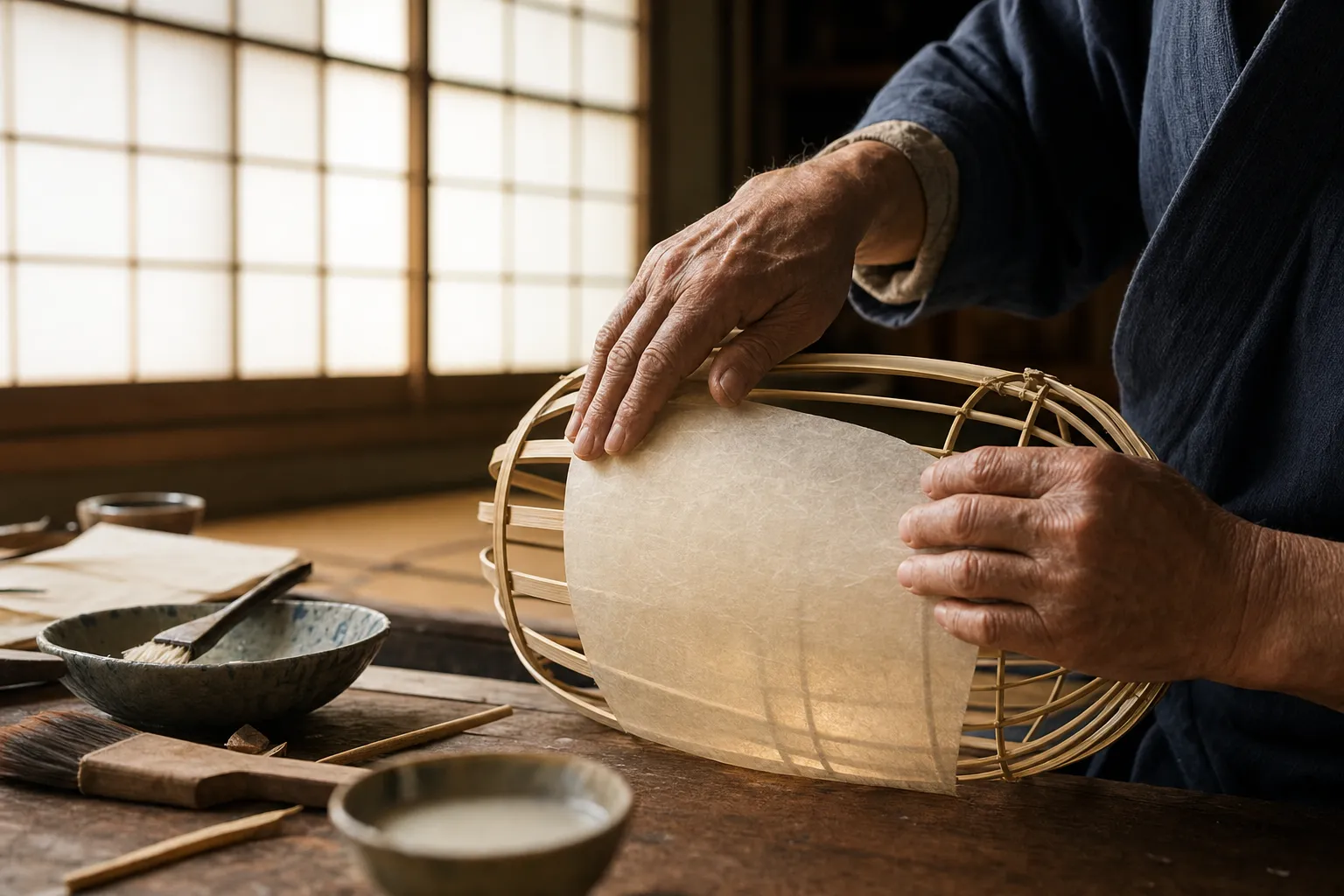
Engaging with regional artisans anchors the evening's narrative in deep cultural history.
The fire on the river is only the conclusion of a broader cultural narrative. Gifu is a bastion of heritage crafts. Before the evening launch, engaging with local artisans—the shokunin—anchors the experience.
We often recommend a private afternoon observing the creation of Gifu lanterns. These delicate paper constructs, notably refined by designer Isamu Noguchi in his AKARI series, rely on the same river waters and local bamboo that define the region. Alternatively, a highly restricted visit to a cormorant master’s private residence offers a rare glimpse into the daily care of the birds. You see the woven baskets. You smell the pine resin. You understand the lifelong bond between man and bird before watching them perform on the water.
How to Book Your Ukai Viewing
The upcoming season begins on Monday, May 11, 2026. Securing access requires an understanding of municipal procedures. Standard shared boat tickets and public charters are distributed directly through the official Gifu City and Seki City spectator boat offices, often requiring Japanese language proficiency to finalize specific dinner requests.
- Eligibility: Open to the public during the May–October season.
- Where to book: Official municipal tourism boards release tickets in advance.
- Deadlines: High-season dates (especially mid-summer weekends) fill rapidly; reservations should be initiated months prior.
For private coordination, exclusive charters, and sophisticated itinerary integration, guests interested in learning more may contact our concierge for tailored guidance.
Why Choose Japan Royal Service
Navigating Japan’s deep cultural traditions requires more than a ticket; it demands a trusted intermediary. Our team at Japan Royal Service operates on the principles of quiet precision and total discretion. We do not deal in loud checklists or crowded itineraries. From securing isolated riverboard dining to coordinating private audiences with reclusive artisans, we handle the intricacies of ultra-luxury travel invisibly. In our experience, true luxury is the absolute absence of friction, allowing you to engage completely with the beauty of the Nagara River.
For questions regarding a bespoke Gifu itinerary or to discuss your 2026 travel aspirations, contact our concierge today.